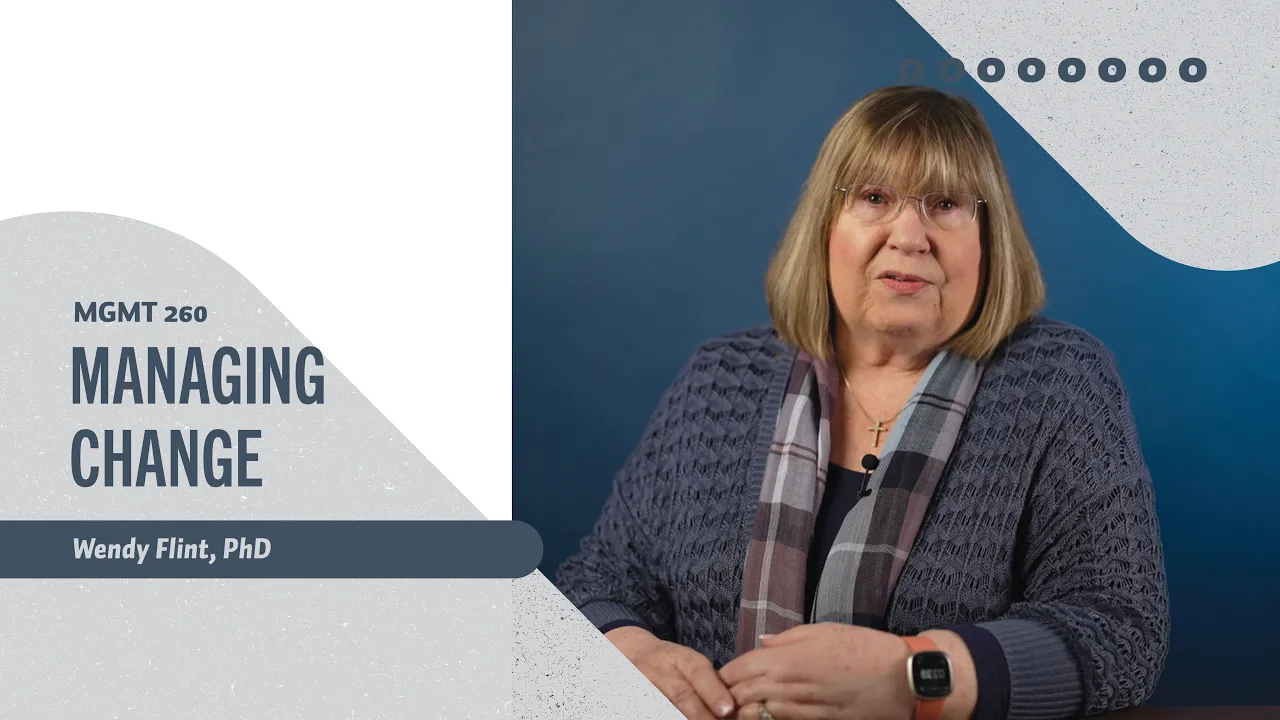
change is inevitable in organizations your ability to adapt to change is critical to your success and your organization's success most of the Gen Z population in this class learned about change during the pandemic public schools and George Fox University had to quickly respond to new regulations reduce Financial income deal with new technology and the need to downsize their employees in higher education and in many businesses the ones who manage change the best survived I recall working in human resources at Hewlett Packard 20 years ago and the number one skill they were looking for in employees
and the managers was flexibility the ability to deal with change Hewlett-Packard knew with the new technologies emerging the only way their company was going to stay competitive was to create a flexible Workforce that could survive change we were building desktop printers at the time and competing with companies like Epson and Canon our competitors would create a new feature and we would have to compete assembly lines were stopped and redesigned to produce a product with that new feature the training Department's responsibility where I worked was to help the employees adapt manage change reduce stress and avoid
non-productive complaining and negativity as much as possible a whole new skill set for managers emerged called change management do you know how we tested employees for flexibility entering into the 21st century at Hewlett-Packard we gave them a Lego kit to build with missing parts and watched how they adapted to the change if they were too angry and frustrated or through the parts we didn't hire them we knew they would not be able to deal with the change that was coming at our company what causes change Market competition constant adaptation to survive new Enterprises emerging threatening
to make your product obsolete the evolution of technology and the new demands of each generation for cultural change and work-life balance benefits for the purposes of this course you will learn about managing change through specific techniques for managing people and understanding their needs during change first you can't help employees get to a new beginning without dealing with an ending you have to help employees deal with the emotion of their loss before they will Embrace change no matter how good the change is as a manager you have to ask who's going to lose what then have
individual conversations with those employees to let them vet and to show your support and empathy employees have to go through a grief process and to deny those emotions will only drive the employee to possibly quitting and moving on if you can get at least 30 percent of employees to commit to the change you can successfully implement the transformation those 30 percent will bring the rest along even though you give your support to those in resistance on those that are upset or dragging their feet most of your time investment should be given to the 30 percent
and identifying ways they can be part of the change it's also helpful to Define an outcome of the change that employees can relate to and embrace create a road map to show the stages and time frame of the stage and monitor your employees throughout the whole process remember our study of the four stages of a team forming storming norming and Performing managing change is similar only you go to storming more often and you have to spend time in that stage before you can move forward the only difference in managing change is that the stages have
different names employees go through pre-contemplation then contemplation then preparation and then action during the contemplation stage employees finally admit there is a problem that needs to be fixed and they begin to prepare to be a part of the solution once the change is implemented it is critical that the manager keeps reminding the team how far they have come and the overall success of the change if organizations want employees to adapt to the change they will need to establish a two-way communication effort make them feel valuable by asking for their opinions be with them through every
step of the resistance establish a strategy that benefits them more than before and finally don't forget to celebrate short-term achievements and quick wins along the way humans like to celebrate the truth is most of you listening to me right now do not like change it is in our human nature to resist change we like being in our comfort zone and we like routine understanding that about human nature will help you manage the humans you are responsible for stay positive and be empathetic it helps to develop a growth mindset where you can see possibilities rather than
limitations in my training programs at companies and in my classes I do a little change activity I ask the students to pair up and observe what they are wearing I then have them turned back to back I asked the group to change three things about the way they look some roll up their sleeves some remove their glasses others take off their coat I then ask them to face each other and find the three changes there's a lot of energy and laughter no big deal that change was fun and then I have them turned back to
back again and I asked them to change three more different things about the way they look there's a little resistance I encourage them it can be similar to what you just did but perhaps in a different way the Creative Minds start working and silence changes to movement and they finally comply I asked them to look at each other again and identify the three new changes this time there is laughter as people get more creative like putting jackets on backwards or borrowing someone else's glasses just as the students start to sit down I say I'm not
done we're going to do this one more time then there is groaning and resistance but this time they are very quick to make the changes and laughter gets louder now they think surely this is as far as we're going to go and I say turn back to back again and I can hear no there is no desire to continue and then I say never mind and have them sit down and they are relieved I then have a debrief that's what we call a discussion in companies let's have a debrief and I have them discuss how
they felt emotionally through every stage by the last stage they actually had thoughts of impossible there's nothing else to change I can't do this this is stupid I'm tired of this I just want to sit down then I asked them if you were required to change 50 things about the way you looked in order to keep your job could you do it is it possible to change 50 things they agreed it's possible this is a growth mindset it's really in the mind and that's where we overcome resistance the next time you face a change or
a pandemic or a financial crisis or a tough course or a difficult manager remember there is always a solution push on through and search for possibilities