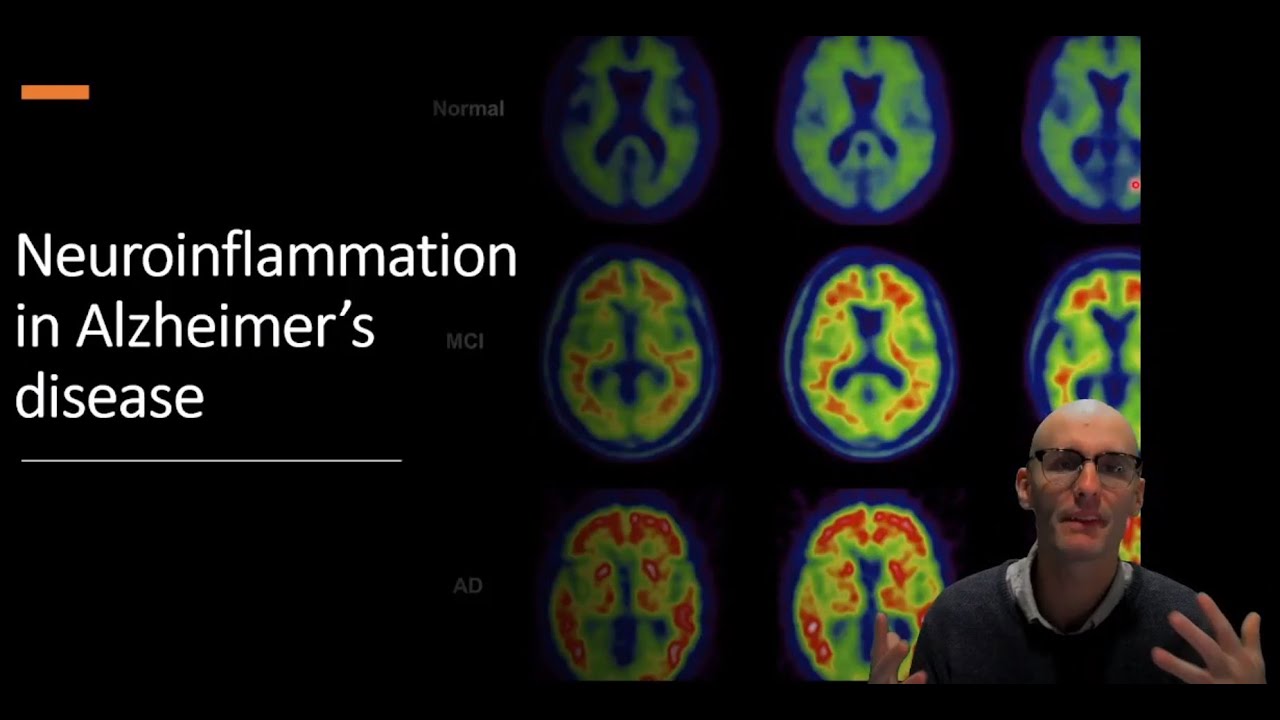
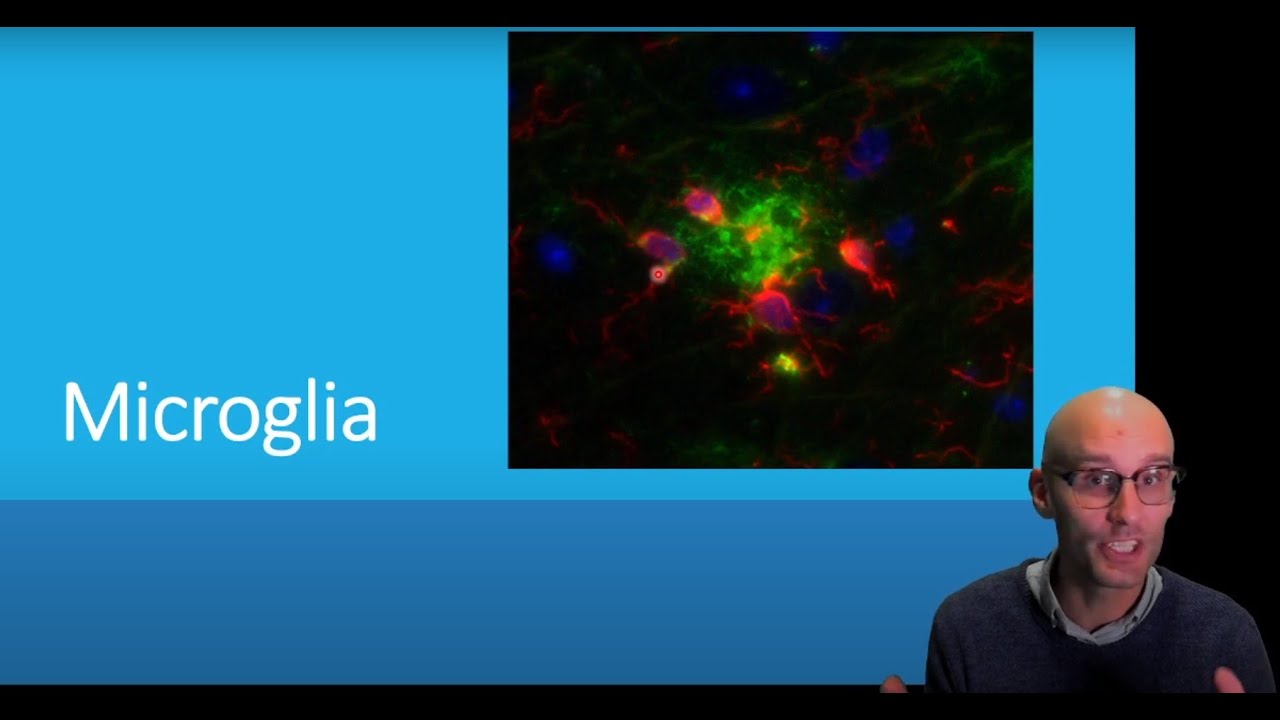
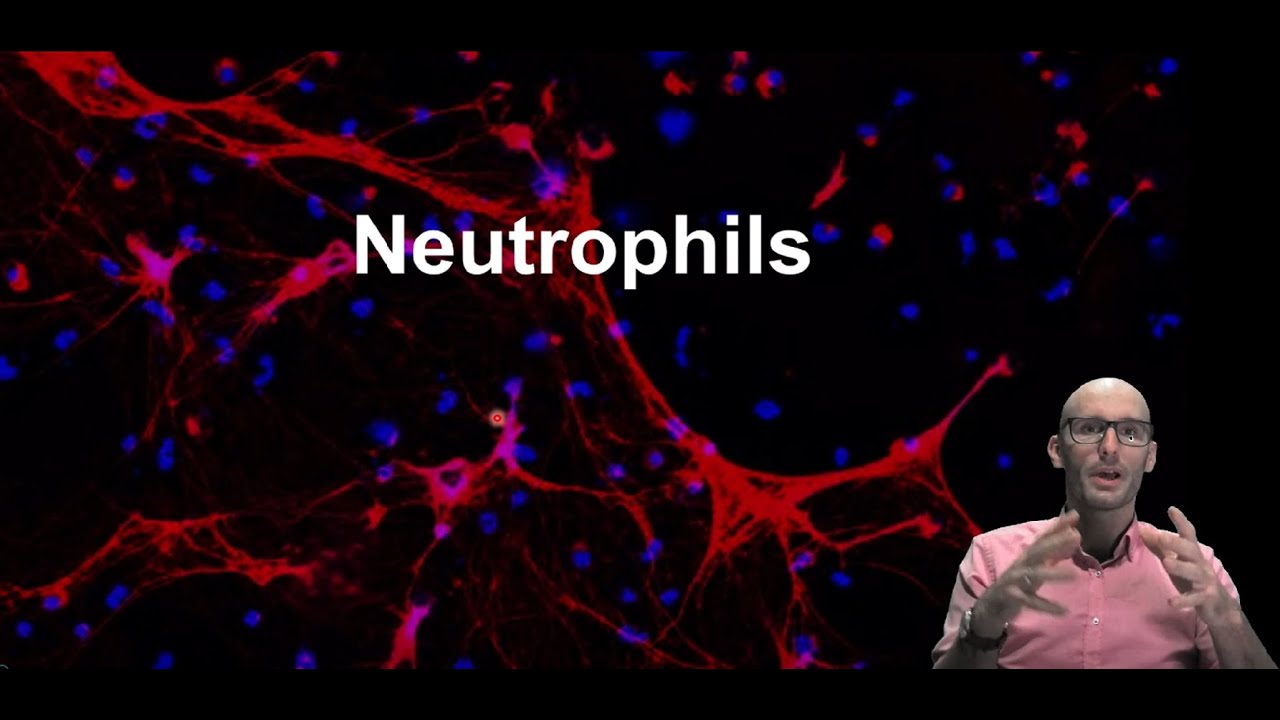
hey team Dr Jay Cordy here and in the previous video I cover how microglare can cause neural inflammation in this neuroinflammation can lead to microglia phagocytosine healthy neurons and essentially killing neurons and this leads to brain atrophy and Alzheimer's disease tissue loss and cognitive decline so how microglia neuroinflammation can lead to cognitive decline in Alzheimer's disease through neuronal phagocytosis now in this video I'm going to cover a different immune cell this is the neutrophil now the neutrophil is the most common innate immune cell in your bloodstream it's the most common white blood cell in your
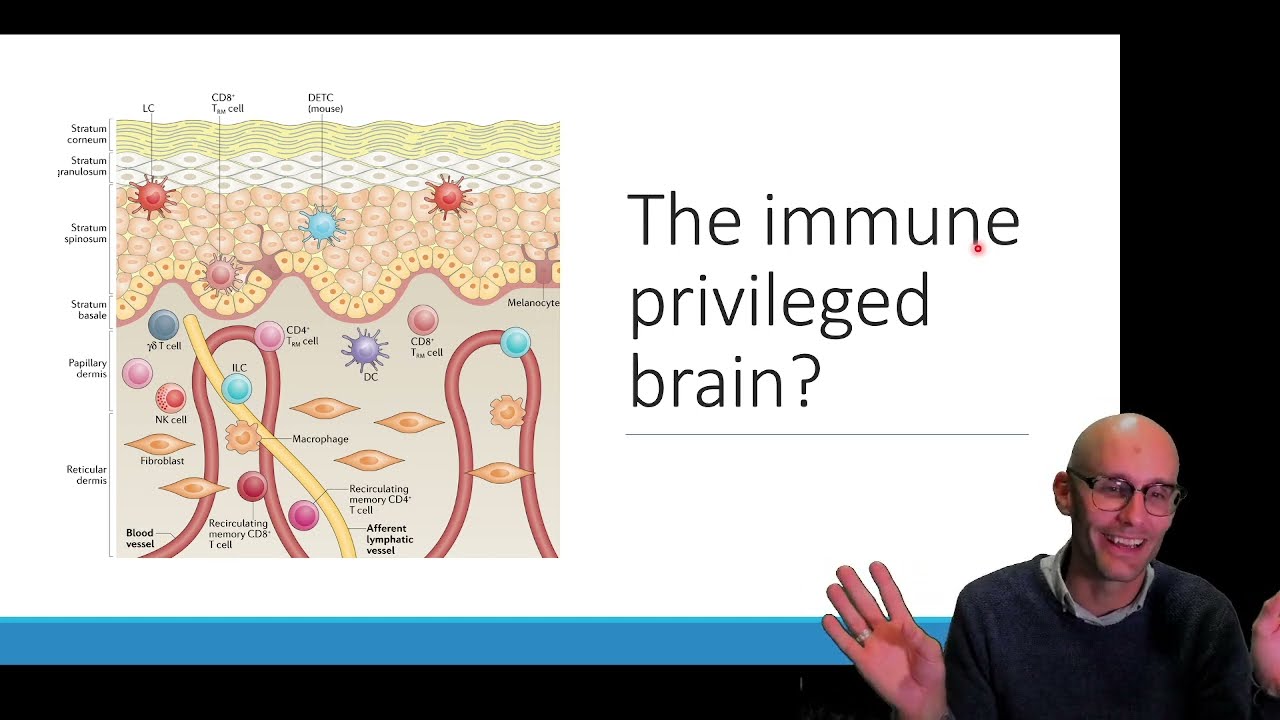
bloodstream and it normally circulates around the body waiting for an invitation to come into tissue to fight bacteria that's predominantly what the neutrophil is about it's about fighting bacteria and fungus it does have roles in viral defense and worm defense as well but it's not normally involved in sterile it's not great for sterile injury at least just say that okay but neutrophils can't get into the brain the brain is an immune privileged organ so it normally doesn't have peripheral immune cells floating around inside it the neutrophils have to be invited into the brain chemically by
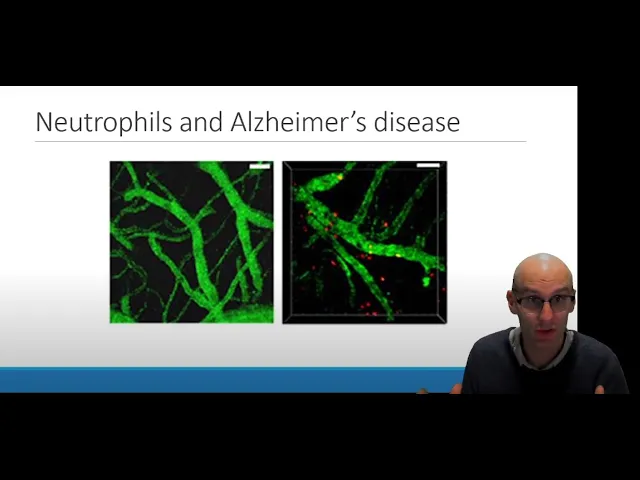
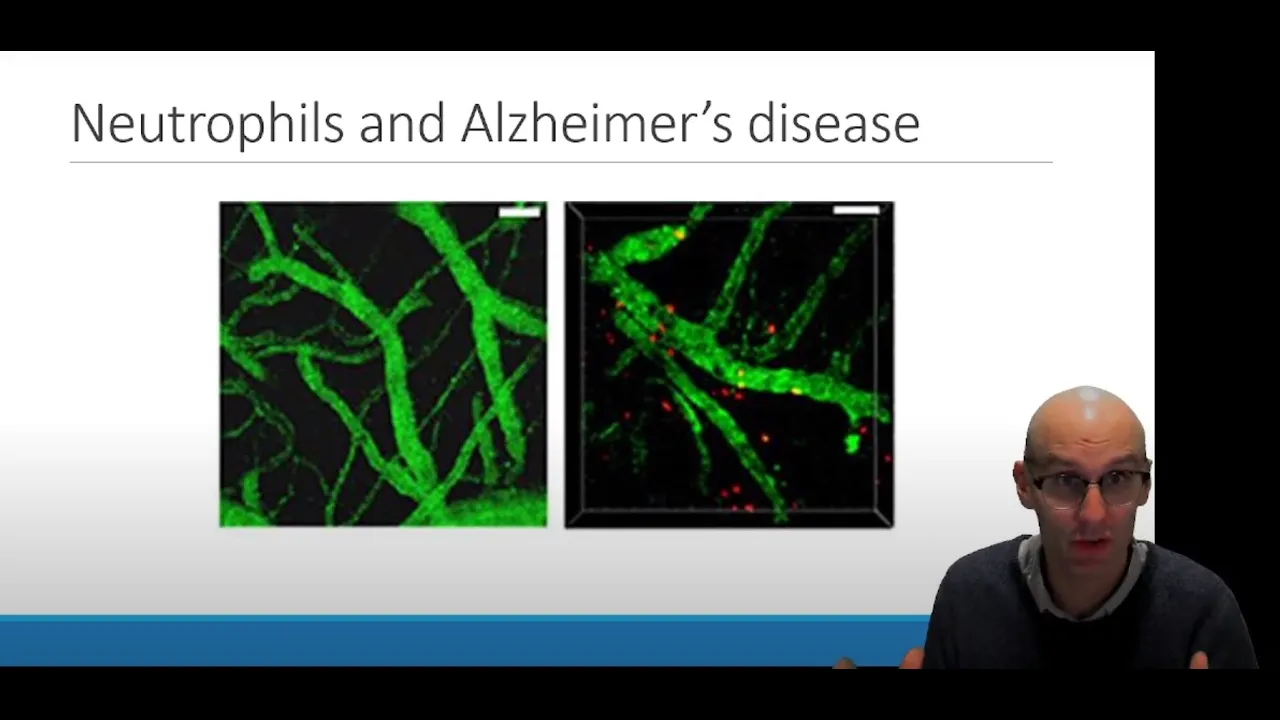
microglare so activated microglare will release inflammatory cytokines and inflammatory signaling molecules like prostaglandins that will change the vasculature and the neutrophils and will cause the neutrophils to come into the brain where problems can occur and the neutrophils can now start contributing to Alzheimer's disease so in my banner image here in green we actually have blood vessels in the brain and in red we have neutrophils and on the left we have a healthy individual so we can see no neutrophils are in this image and in the on the right hand side we can see in Alzheimer's
brain we can see these neutrophils are actually outside the blood vessel and they are in the tissue so they've gone from floating around the blood vessels they've now entered the tissue into the brain where they're gonna cause some problems so let's jump into some of the biology of that so here we have a blood vessel this is just a small segment of a blood vessel we have endothelial cells here and they're normally connected by tight junctions there and the blood would normally flow down there now upon activation endothelial cells such as interleukin-1 the cytokine or
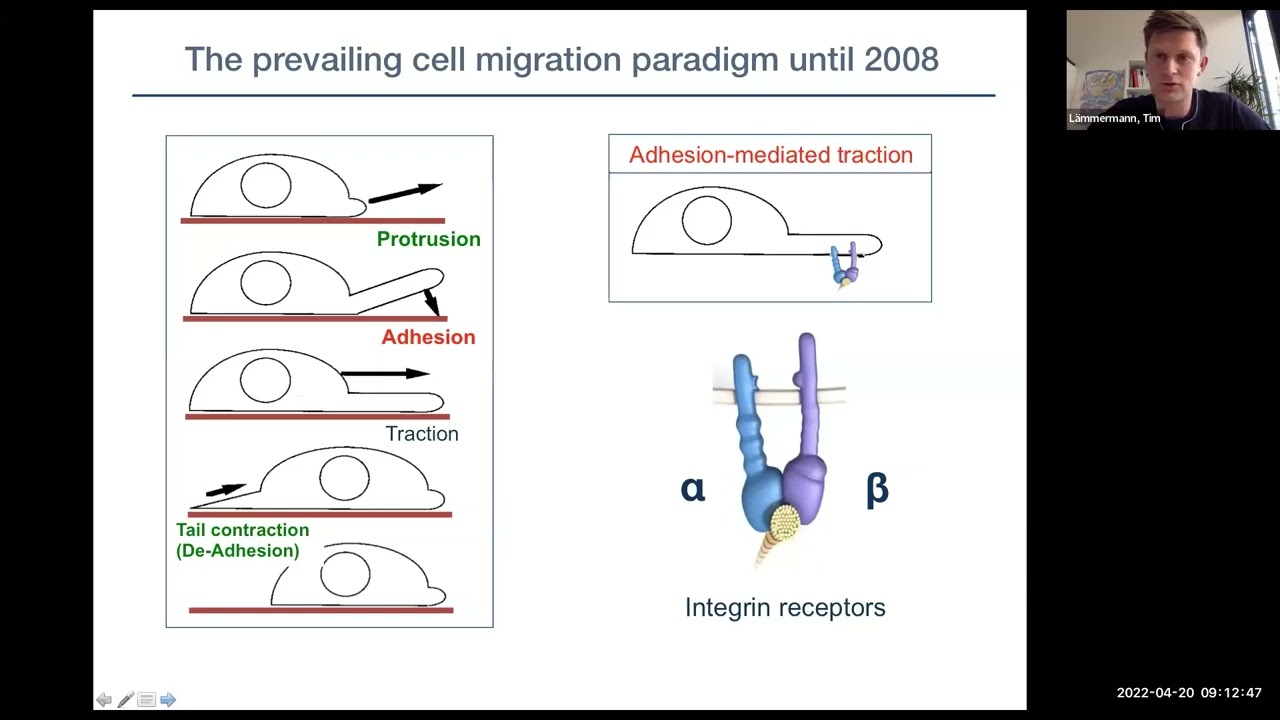
histamine the inflammatory signaling molecule released typically by mast cells we will get the expression of adhesion molecules on the inner surface then the the luminal surface is what that's called of the endothelial cells um and what will happen then is neutrophils were which are expressing adhesion molecules called integrins will now bind to those adhesion molecules and that will slow them down and even stop them now those integrands are not normally expressed to high levels on the neutrophils but they too have received that inflammatory signaling molecule of histamines and inflammatory cytokines or inflammatory cytokines like ir1
so this causes endocrines essentially cause them to stop there's another molecule called silicon which essentially calls them to slow down this is how I remember it select and slow them down and endocrines get them in okay so this is an example of an integrand it's an adhesion molecule that will cause the neutrophil to stop on the blood vessel and it's here it can now neutrophils actually release a little digestive enzymes to break down the endothelial cell Junction and then enter the tissue so here we can see a little neutrophil squeezing through this tiny Gap this
is actually why neutrophils have fungi-shaped nuclei it helps them squeeze through the tiny Gap to get into the tissue which is super cool um so just so I just want to show you this cool video to explain what's going on so in this uh experiment we have a cell culture plate a piece of plastic and on the plate are growing endothelial cells so those are the blood the inner surface of the blood vessel those cells the endothelial cells now flowing over the top are neutrophils in Solutions so they've got neutrophils flowing over top in a
fluid that has been pushed pumped across the surface of the endothelial cells but then they put histamine on which is an inflammatory molecule it probably could have been ir1 that would have also caused the same uh same response so let's have a look the really bright cells flying past those are the neutrophils so let's have a look at what happens so we can see the neutrophils whizzing by and this is one minute after applying histamine you can see the neutrophils are starting to roll this is normally the silicans being involved here because they're slowing the
neutrophils down and if you watch the neutrals are actually stopping now that's the integrines and that will allow them to get in to uh through the blood vessel so after five minutes we've got all these neutral binding to those adhesion molecules and stopping and now we can imagine that the next thing that they do they'll do is the neutrophils will actually release um some granules these tertiary granules that will digest uh the uh bonds and the extracellular Matrix that is connecting these endothelial cells to allow them to go in through the blood vessel wall so
that's super cool oh there we go come on hello next okay here we go oh Jesus okay next we have chemokines so we had cytokines and inflammatory signaling molecules allowing the neutrophils to adhere to the blood vessel wall to slow down and adhere to the blood vessel wall next we have chemokines now chemokines are actually cytokines they're protein signaling molecules so they are cytokines chemicals are cytokines but they're a specific kind of cytokine that attracts um the immune cell up the concentration gradient so here we have an innate immune cell this might be a microglare
and it's releasing a concentration gradient of chemokines chemo attractant cytokines and what's going to happen is the neutrophils going to migrate up the concentration gradient of the chemokine to get to the highest level of the chemokite concentration so when you add these two together you add the adhesion molecules stopping them on the blood vessels then you add the chemokines attracting them up the concentration gradient we end up with something like this now to explain what's going on here in blue we've got the blood vessel so here's the blood vessel in green we have the neutrophils
and in red we have dying cells now those dying cells are going to release damage Associated molecular patents which are going to activate the innate immune cells within this tissue like microglia or macrophages they're going to release cytokines and chemokines which are going to cause adhesion molecules to be expressed on the blood vessels and attract the neutrophils up so remember neutrophils are in green red is dying cells this is actually a zebrafish now that's semi-transparent and allows you to watch these kinds of things live so they're a super cool animal model to use so let's
have a look what happens okay Mom there we go oh my gosh it's a swarm this is so cool so in red let's watch that again in real book of the dead cells and green we've got the neutrophils they're coming along their blood vessel and then they are just leaking out into the tissues they're going up the concentration gradient of the chemokines um and then they are just surrounding the red damaged cells and that's because that's where the damage Associated molecular patterns will be released so they're going up the chemokine concentration gradient and that's how
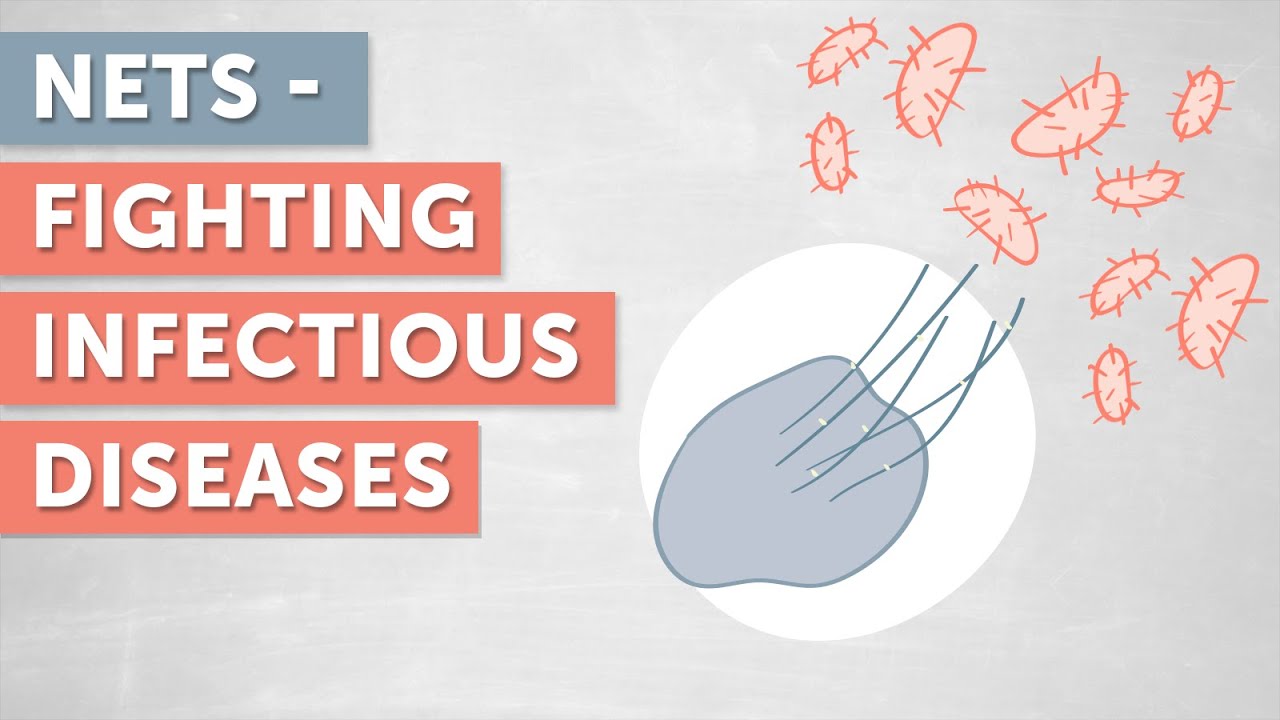
they find look at that swarm there's actually minutes down there so this is over the process of maybe an hour super cool though so this is neutrophils coming into the brain alrighty very cool so what happens once the neutrophils are there well uh they activate now one of the things neutrophils love to do is degranulate now inside those granules are a toxic effector there's one word for it and it's basically enzymes that are really non-specifically toxic and they are inside those granules and so the neutrophil will release those granules in response to activation now one
of the most famous activators of a neutrophil is interleukin-8 which is the chemokine endocytokine and it will activate this receptor and it will allow calcium to flood into the neutrophil the calcium signals for vesicles diffused to the outer membrane this happens all over the body so when neurons have vesicles extra when neurons want to release excitatory neurotransmitters they have them in vesicles and calcium comes flooding in and it causes the vesicles to fuse to the membrane and release their content so the same thing's Happening Here in neutrophils calcium comes in the vesicles will now the
granules the vesicles will now fuse to the outer membrane releasing their contents now what's in those contents well an enzyme called neutral elastase this is the protease that's really non-specific it chops up a lot of proteins there's very few proteins that it doesn't jump up so it chops up the proteins of the bacteria or the virus or the fungus which is great but it also chops up our proteins which are useful um but the role of the neutral really is to kill everything in the area to reset the area maybe you've got a very bad
bacterial infection a very very bad fungus infection they want to kill everything to reset the air the other enzyme now release is myeloproxidase now myeloperoxidase actually converts reactive oxygen species like hydrogen peroxide into bleach hypochlorous acid which is bleach it's chemically identical to household bleach and they release it for the same reason why we use bleach in our toilets it sterilizes the area bleach reacts with everything which disables those molecules so it reacts with proteins and fats and nucleic acids and it changes their molecular structure by reacting to it and as soon as you change
the molecular structure you destroy their function so now the spike protein on a um a lot of the coronavirus will not work because it's three angle with bleach the lipids in the membrane of a bacteria won't work and they'll start to leak ions if it reacts with bleach so bleach just kills everything incredibly quickly now you can imagine new reach for the last days Milo peroxidase bleach is not a great thing to have in your brain right remember neurons are very difficult to replace very few of your neurons will be replaced throughout your lifetime it's
not a great place to unleash these uh non-selectively toxic enzymes myeloproxidas and neutrophone on elastase so you can imagine if neutrophils are entering your brain and activating during Alzheimer's disease that's going to be bad news that's going to be very bad news so let's have a look at some experiments which have established that this is in fact very bad news and this is an important part so here we have an mpo knockout Mouse so this is a mouth that has no myeloproxidase it's been genetically deleted from this mouth here we have an Alzheimer's mouth this
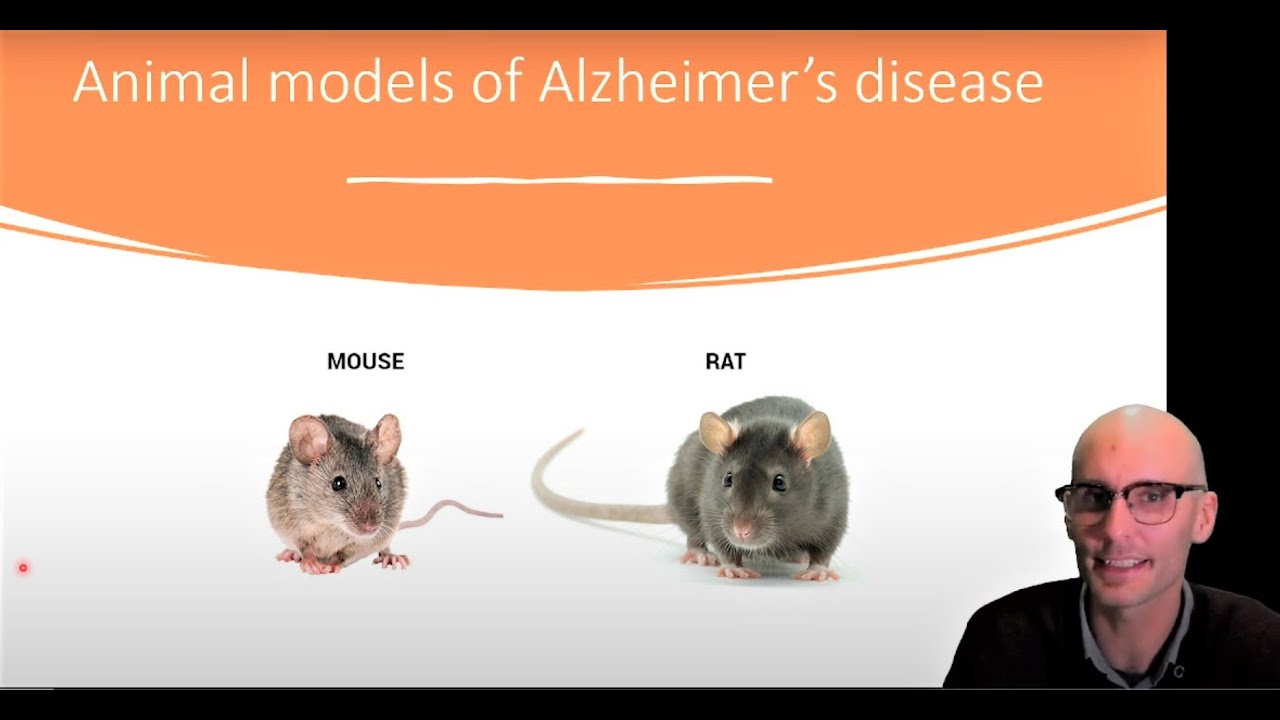
is an animal model of Alzheimer's disease they have a whole video on these if you want to go check it out but this one actually has five mutations that we know cause Alzheimer's disease in humans so one of these mutations will cause Alzheimer's disease in the human this mouse has five different separate mutations that we know cause Alzheimer's disease in humans so it is a very rapid uh Alzheimer's Mouse model and what we do is we cross those so then we end up with an Alzheimer's Mouse um with Milo peroxidase knockout now it takes a
few generations and then you need to build up your numbers but you should end up with a wild type Mouse a Milos peroxidase knockout Mouse and Alzheimer's mouth and an Alzheimer's mouse that is also myeloproxidase knockout and then you can look at what's going to happen to those mice do they have worse Alzheimer's disease they're better Alzheimer's disease what the heck happens so first of all they did the Morris water maze I've got that explained in a previous video but basically it relies on a mouse remembering where a platform is in a pool it's a
swimming pool and it's a hidden platform and you train them over five days so here we have the the training over five days to see how good they are at this water maze task it's called The Morris water Maze and so here's your Alzheimer's Mouse in Reed you can see it has not got better over the day so it's been training for five days normally four times a day for five days and it hasn't gotten any better because they can't remember where the platform is in the swimming pool that's looking down from the top um
in uh dark blue we had the wild time now so it has learned over these five days in green we have the Milos peroxidase mouth that looks a little different but it's not statistically significant so essentially it's following the same line as the wild Thai Mouse and then in yellow we had the Milo's peroxidase knockout mouse that is also in Alzheimer's mass and we can see it's actually following roughly the same trajectory as the wild type Mouse that's not statistically significant their differences but it is statistically significant from the Alzheimer's Mouse so essentially we can
say that by blocking myeloproxidase deleting myeloproxidase these mice have not had the same level of memory deficits caused by the Alzheimer's mutations they have been protected by these Alzheimer's mutations um and so there's just one study that has been repeated you can never rely on one study and it has been repeated a few times there's a a way to knock out all neutrophils in a mouse and they since you've found the same results but this was quite a cool study I quite like it because it's all about the integrines and how neutrophils get into the
brain so in this experiment they take an integrine knockout Mouse so this Mass lacks those adhesion molecules in the neutrophils so the neutrophil now could activate but it can't get into the brain it's stuck inside the blood vessel and again they cross it with a five times fad uh mouse or that said aggressive familial Alzheimer's disease Mouse model two generations later they end up with a wild type and integrine knockout Mouse and Alzheimer's Mouse and an Alzheimer's mouse that is lacking that integrine so the neutrophils are now stuck in the blood vessels they can't get
out into the brain um and so they knock out that molecule there that adhesion molecule right there that is expressed on the neutral so they're stuck in the blood vessel they performed a different uh memory task they didn't do the Morris automates they did a thing called a y maze now a y maze is quite interesting you put a different picture on each of these walls here and we're looking down on the Y maze here and you pop the mouse in and what we find is mice naturally want to go into an arm that they
haven't been to in a while so if he's been in this one he'll look at this picture and then it'll go come out here and he goes oh I haven't seen this picture so he'll go in there exploring that novel stimuli of that picture and then it'll come out and it'll look this way and goes I've already seen that picture and then it'll look this way and goes I haven't seen that picture so I'm now going to go into this arm of the Maze and so it has done all unique um unique uh arm entries
out of those three arm interests it's been all unique and we call those correct alternations now if the mouse goes from here down into here and comes back out again and it looks right looks left and goes I don't recognize either of those rooms so maybe I'll just go back into here it doesn't remember that it's already been in there so it's forgotten that it's been in this room so when it comes out of this room it goes back into the room that it's already gone so we would call that a a b c is
correct and a b a is incorrect and that's how we explore the memory of the mouth it's pretty cool so here we have novel arm Explorations percentage so we can see you know UH 60 of the time a little bit more normally it's around 60 of the time they'll enter an um they haven't been to in a while they'll do correct alternation 60 of the time and in the Alzheimer's mice here so it's actually a three times TG Alzheimer's Mouse not a five times TG but anyway it doesn't really matter they're familiar with Alzheimer's disease
models you can see in the Alzheimer's Mouse model it makes fewer correct alternations it keeps going back into arms that it's already been into before that's because I can't remember that it's already been in them before so it keeps making mistakes so this is an Alzheimer's Mouse that's got a poor memory in this mouth they've knocked out that endocrine molecule so it's now removed the integrine molecule um and so now they will go back out into uh they'll now uh have a much better memory and remember what arms have already been into so we can
see by blocking the neutrophils from leaving the blood vessels the mice don't suffer the same memory deficits caused by this amyloid pathology that's in these familial Alzheimer's disease mice so these mice still have plaques they've still got amyloid but they've got no neutrophils injury in the brain so then they don't have the same level of memory deficits um as the Alzheimer's mice um and so here this is actually cool because this is in human brains so they're taking an image this is an healthy individual um in a human brain now when we take mice brains
we normally flush their blood with saline to clear blood from the brain when we freeze it down to do immune chemistry on we can't do that in humans because they die and then a few hours later we will take their brains out so in a human brain tissue we will see neutrophils but they'll be within the blood vessel so this is a healthy individual and the red dots are the neutrophils and we can see that they're all in the line and that's because they're all in the blood vessel right and so these have been frozen
inside the blood vessel as they died but those are neutrophils and those are within the blood vessel in a healthy individual but what we can see is an Alzheimer's individual this is a subiculum by the look of it which is a region of the brain right by the hippocampus that definitely dies very early on in Alzheimer's disease and we can see it's actually full of neutrophils outside of blood vessels so there's a strong evidence I love this when when researchers go beyond the animal models and they look in actual human tissue so here they're showing
neutrophils do infect into the brain in Alzheimer's disease in human tissue which is very very cool um and this is the quantification so inside of blood vessels they've got more neutrophils inside of blood vessels now you might ask why is that and the answer is probably the neutrophils are slowing down because of the selectins and integrines so when they die there are more neutrophils inside the blood vessel as well as outside the blood vessel because they've slowed down because of the integrins and the solutans and then they migrate through into the tissue so parenchyma means
tissue so there are more neutrophils in the tissue of an Alzheimer's disease person what's really cool with later research which I haven't touched on is that the neutrophils slowing down the capillaries cause real problems because capillaries can only fit one blood cell at a time so the nutribles slow down naturally slow the blood supply to that region of the brain by blocking the capillary so there is actually a lot going on there by neutrophil stopping in the capillary they block the blood flow and that blood flow can cause an issue as well blocking blood flow
and an Alzheimer's brain is a very bad idea we need that blood flow to clear the amyloid and we need that blood flow to neurons to function so slowing blood flow even just a little bit is a huge problem okay so in that video I sort of in this video and the other video about microglia I've sort of covered the response the inflammatory response in Alzheimer's disease but I like to break down the innate immune response to sensing the problem to signaling the response um with prostaglandins and cytokines for example inflammatory signaling molecules then the
response which is the phagocytosis and the neutrophil um migration for example then there's resolution which is the inflammatory inflammation needs to resolve now this is a resolution is a huge problem Alzheimer's disease because we never clear the amyloid so the inflammatory stimuli remains and we end up with chronic inflammation that's a real problem but what I wanted to cover in the next couple of videos is the sensing and the signaling how do the microglia know that there's amyloid there and why do they respond to amyloid and what's the following signals that they release once have
been stimulated with amyloid so that's coming up next in the next video