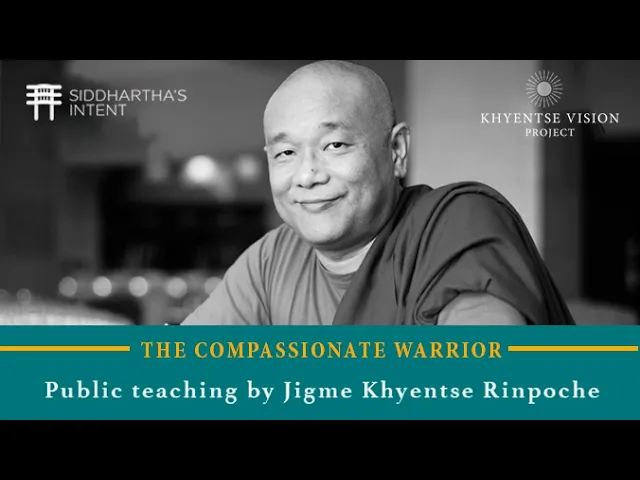
Okay. [clears throat] So, good afternoon to everyone. Thank you for being here. Um, thanks to my friend or shall I say my sitter who brought me here early because of the madigra. [clears throat] He was afraid that we would get late coming here. So Um for once I got here 15 minutes before I think it's quite a at least as far as I'm concerned it's quite a feat. So, thank you very much. And uh so um um a few works weeks ago. Um some of my friends from course Um asked me if I would uh
come and say hello and uh say something. So here I am to I suppose take up some of your time of course um the the theme um that some of my friends have put up It's a very [snorts] Catchy phrase that um I think many of you know um's [clears throat] teaching that he presented in the book called Cutting Through Spiritual Materialism. Um, [clears throat] that is something. >> It's okay. >> I'm just going to move this forward a little bit so they can hear at the back. Oh, okay. >> Yes, that's fine. Okay. Can
you hear? Okay. [cough and clears throat] [snorts] Please don't worry. I'm like one of those old cars. It needs to needs some time to warm up. So my voice will take some time to to develop its own [clears throat] what do you call it its own uh pitch. [sighs] So I suppose for the the title of this speech of today's talk compassionate warrior authentic practice beyond spiritual materialism I am afraid this is something that is really beyond my comprehension. So talking about it, of course we could talk about it like any talk show can talk
about absolutely anything. But I think this um theme might be a good thing for us to to consider for ourselves. What would that be? all of you who um who are present here. I'm sure you must have had some thought of what this could be, what this should be, what this would be. What is it called? This um this intro and this title. I think in slang it's called spiel, isn't it? What actually does this inspire in you? So [clears throat] I suppose [snorts] all of us I suppose we could even say from the Buddhist
point of view all of us sensient beings especially as human beings We are In search of something. What is it that we're searching for? From the moment we open our eyes, the moment we are awake in the morning, what are we searching for? In fact, if you could just remember this morning when you woke up, unless you were late for an appointment, the moment we wake up, before we reach for our um what is it called? indispensable Attribute. What happens in our mind? You know what I mean by indispensable attribute? Before we reach out to
that, what is happening in our mind? The moment you your sleep slowly evaporates, you still have your eyes closed. I wonder if one day Even in our sleep we will have our mobile phones in our hand. What if we get bored while we're asleep? What will we do? What can we do? [clears throat] And what are we searching for? Whether it is [clears throat] your pets, a cat wakes up in the morning. What does it do? I suppose licks itself, stretches, scratches, Wakes you up. Why does a cat wake you up? Why does a dog
wake you up? What do you think is happening in the cat or the dog's mind that is different to ours? Now, I can understand the cat does not speak mobile phone language. Maybe dogs don't. But what makes them wake us up and what makes us choose something? For example, before we reach to our mobile phones, what do you do? Any feedback? What's the first thing you do when you wake up? Panic. >> H what? >> What? >> Panic. >> Panic. [laughter] [snorts] Could be panic. It could be something as simple as Rubbing our face. Next
time when you wake up and you find yourself rubbing your face [clears throat] or scratching yourself, do you think you could think, did I need to rub my face? Did I need to scratch myself? Was I itchy? Or did I just scratch myself? Because what? Why am I looking for something to scratch, something to rub? Of course, if we're not fully awake, we might shake ourselves. At least at that time we might be confident that we have a reason to shake oneself up because we're feeling what is it fuzzy. But prior to that why do
we do those things? Then you get up, brush your teeth, or drink a coffee, eat some bread, or go for a run. Whatever it is, Whatever we do, why do we do that? I'm sure you have a lot of reasons that you can bring up. But are those reasons really why we're doing those things? Are those reasons really valid, legitimate? Of course, when we were children, [clears throat] we woke up. At least in my case, I would wake up. And of course, I grew up in a an era where entertainment was very simple. didn't have
many many toys at that time in the beginning few toys by today's standards I think there was not many toys by a standards at that time I think I had a lot of toys so moment I woke up I would announce my presence to my mother By saying, "Mother, I'm hungry. I want my breakfast and this, this, and this." I remember every day in the morning, I would say, "Mother, I want rice, milk, warmed up." And until I got it, I would keep repeating it. So if it took half an hour for her to heat
up, get the oven hot and then cook, I would just keep repeating it. Why did I do that? because there was this search urge Or an irresistible [clears throat] itch that I scratched by shouting. She would sometimes say quiet I know what you want. She would sometimes you don't have to say it every day but I could not stop doing that. I think many of us do something similar as children. We do things like that. As you get older, you do other things. For example, Today we came here, some of us dressed up. Why did
we dress up? I'm not suggesting that. I'm not I don't mean that I don't appreciate you dressing up. Very much appreciate it because otherwise this room would be impossible to be in because it's hot and you might have sweated and it would be impossible for us. But why did we dress up whatever it is that we do? And then as adults, everyone does something to um fill their life, whatever it is that we're doing. In fact, I feel that There is something that is sort of an itch. It's almost an unexplainable itch. Sometimes it's Pleasantly
itchy. Sometimes it's unpleasantly itchy. Sometimes it's just itchy. We give so many different names to that. We give so many reasons to why we would like to scratch. Sometimes it's just not knowing what to do. Sometimes it's a little anxiety, >> mobile device, >> satisfaction or a loneliness, A sense of we may say meaninglessness. And of course, we would all like to be relieved of that. That's absolutely natural. And also I feel that many of us when we try to explore different ways of scratching that itch is the same and we are not satisfied by
many ways of scratching. So of course we would like to upgrade Our scratching and what is it? I think many in the west upgraded their scratch by doing yoga and then things like what is it? Mindfulness practice. It's an upgrade of scratching. But is it any different? I'm not suggesting that it is or it isn't, but I think that's a question that we need to really ask. Whenever there is an itch, Do we ever actually address the itch? Why is it itchy? In fact, when there is an itchiness, it's so nice to be able to
scratch to the point that sometimes when it is not itchy, it is boring cuz you can't have the satisfaction of scratching and then you you can have that relief. So these are these upgrades that we are seeking [clears throat and cough] sometimes makes us look different. For example, when you get your mobile phone or a computer upgrade, they also upgrade the what is it? The appearance of that app. Otherwise, I don't think we would feel comfortable, satisfied that there was an upgrade. For that matter, we might think, well, I don't really know what they upgraded,
But they said it upgraded. It took some time. So it is so helpful important for them to upgrade the appearance of that particular app like our um tablets, mobile phones, computers whenever there's an upgrade if there is a slight change in the appearance we feel good. I noticed that in the past when many of my father's students came to India many of them upgraded their appearance That I'm sure what else they upgraded I'm not so sure my father had students coming from every profession There were engineers, there were teachers, hippies and then many who were
just completely lost looking for themselves. I think I don't know whether they have found themselves or not but I think it's what is it called search in progress still so one of these was a hippie he would come and see karum every day and he had this what is it called um you know the thing That is it a nonrefugees guilt. Do you understand what I mean? When you see refugees, you feel guilty for them because they're Refugees. He had that towards my father Tibetans. So he was going to preserve the Tibetan culture. So what
he did is whenever he saw any Tibetan selling something or not selling something he would buy it off them and then he would carry it. Whenever my father went to town he used to visit many shopkeepers not necessarily to buy but they really enjoyed his presence. So he would go After him and then buy whatever they had to sell. Sometimes there were robes that some monks or at least some people took it off some monks and then sold. So he had this top part that the monks wear with that flappy thing and different colors and
then he would buy some yogi robes he would wear them and then on top of it wherever there was malers he would buy them. Put it around his neck. If there was some drums he would buy them. If there was some tonkas, he would buy Them. So when he came to seek my father, he would look like um we [laughter] say a father Christmas who got lost. [laughter] Instead of buying presents, it looked like who had gone to a thrift shop. So that was his upgrade. Many of us do that. I bet you you remember
when you first engaged in any Buddhist especially Related to the vajana. What is the first thing that comes in your mind that you should acquire? That thing that you wear around your wrist. Let me show you. This is the first upgrade that you will have if you wear it. Feels like you've done an upgrade to your your app. Of course, to have something is always very One feels secure. Have you have any of you watched these documentaries of hoarders where there is really not much space even to go to the bathroom? Now from the point
of view of somebody who is trying to train their mind. I suppose we can call it somebody on the spiritual path. What actually it means, I don't really know. What does spiritual mean? Actually, I'm not asking you to answer, but I would like to wonder what spiritual means to each of us on that path. The thing is as we are in search for something first it seems that we are uncomfortable with something that with which we are uncomfortable with What is it first thing uncomfortable therefore undeserve desirable. Undesirable. Therefore, what? If possible, sweep it under
the carpet. If possible, if not possible, don't look at it. If possible, maybe have another image to look at. That's what we do when we grow up. As we grow as men, Um if we go gray, we try to go gray bit more slowly. So, what is it called? Dying the hair or possibly going gray beforehand, like when you're 20 or 30. If you go gray now, then when you're 50 or 60, nobody will notice you've gone gray. That can be something that we try to do. And ladies, well, you have so many ways of
dealing with that. Men also, in fact, just recently a a Friend of mine sent me some photos of himself just after a hair transplant. These are natural. These are things that we do. But all of these things when we are doing them there is an element where I think we haven't really had the time to look at what is it that we're running away from. [clears throat and cough] I remember my father used to tell me This story as a child. It's about a rabbit. A rabbit who lives near a lake. is um enjoying [clears
throat] living by the lake, eating grass and once in a while looking at the lake. And one day there was this tree by the lake and then this tree had flowered and then there was a fruit that just fell in the lake. That was the first time he had ever seen that. So imagine what that sound is when the fruit falls in the lake. Can you imagine? I know in English you would say splash, but it doesn't do justice to it. So when the rabbit heard that, of course the rabbit must have been bit spaced
out looking at the water. Suddenly he got a tremendous shock. When he got a tremendous shock from that Sound, he started running. He ran and ran and ran. I think first I don't think he thought I must run. He just got a shock and then ran. And when he ran, what happened was that there was other animals, squirrels, deer, they all saw him run. What did they do? They ran. They asked him, "Why are you running?" He said, "There's this big noise, big sound." I suppose he could Say big explosion. Big splash. Splash doesn't do
justice. Let us say just for our sake. Big explosion. So he ran. They all thought. So when they they were running there were some other animals. I suppose even some predators, leopards, tigers, they all ran. They said, "What happened? big explosion. So then when the deer squirrels talked to each other, everybody started to run. Then elephants started to run. They all ran. They were all running away from the big explosion, big splash. Then they got to this lion. I suppose he was an old mature lion. Maybe he couldn't run. Maybe a good I don't know.
So he saw them running too. So he asked why are you running? And then the elephant said oh there is a big explosion where said I don't know leopard told me. Then again he got the Leopard and said who told you? Said the tiger. Then at the end after a long investigation they ended up with a rabbit. He said, "I saw it. I heard it." So then they searched. They went back. The lake was there. The tree was there. Everything was intact apart from this sort of slightly rotten fruit floating because it had been that
long that they'd been running. So [clears throat] None of them checked, looked back. What made that big explosion? Actually, did the rabbit even hear it? That was a question we can still ask when we are running away from things to run away from certain things. [cough] [clears throat] I suppose we were sent to kindergarten. Who was running away? I don't know. Maybe a parents running away from the children. So send them to kindergarten. Children running away from parents went to kindergarten. Whichever way then that has to be upgraded. Preschool school. Then what? University. Then what?
Specializing in something. And when that doesn't isn't [clears throat] enough, then we have to work produce something. When that doesn't Work, we have to make it a little bit more complicated. And when none of those work, then we look for something called spirituality. all of these things don't work so maybe this will work. The fact that we search in that way it's really um I suppose we could say noble that we don't want to give up. It's our survival instinct in one sense, Wanting to survive the big splash. We want to be free from something,
[clears throat] from the big explosion. But we might notice that actually we have ended up with a project of constructing things around us to feel more secure, to feel more at ease. In fact, our path To freedom becomes a construction of walls around us. Walls that end up becoming a maze. And then we have to have a project of getting out of this maze. So from the very outset from ignoring why we are running this um atmosphere that promotes Oblivion. Not knowing, not seeking why we're running properly. This is the beginning of what the Buddha
taught as being. the cause of suffering. Not being able to notice this atmosphere of Avoidance, ignorance, not knowing. That's not We're not knowing because we're stupid. We're also not knowing because it's uncomfortable to know. Who wants to see themselves in the mirror in the morning after their 40s? I don't think anybody would like to see themselves in the mirror as they are. even less our own mindset mindset is very difficult. So of course it's much Easier to not notice. It's so much easier to look for something else. And that does not change just because we
are wearing a different costume or a different app upgrade. It doesn't change. So that's why many of us might have um encountered the Buddha's teachings, but that doesn't mean that we have managed to benefit from it. In The Buddha's time, he had disciples [clears throat] who were very learned. One of them was his attendant for a very long time. One of them was [snorts] his cousin. They knew apparently as many sutras as an elephant could carry compared to us so much more. Us we think that it is great if you remember the phone book. When
we look at some documentaries of people who are who are savant, they can read a phone book and then can memorize every page, every line. We might think that is great. But these disciples of the Buddha, the Buddha's cousin, for example, Devodata is said to have learned known as many sutras that an elephant can carry. Some of them even more more than one. But that didn't make them awakened. That didn't make them free. it actually made them spiritual materialists. So Devata is one of the most well-known students of the Buddha who knew a lot but
couldn't manage to actually benefit from his teachings. Another one lep in Tibetan good star or good fortune. He served the Buddha for many decades but at the end he said I don't see much difference between us apart from this Light that you shine from your forehead which I don't have otherwise I know as much so he left. These are all I think examples of spiritual materialism. We call it spiritual materialism but it's nothing different. is actually just materialism. Whether it is a cup plate or whether it is ideas, thoughts, It's the same. From a Buddhist
point of view, we might call it spiritual materialists. From a non Buddhist point of view, many people who have a lot of knowledge, they're also as materialists because all that knowledge hasn't helped much more than actually hoarding more things so that we can hide from the big explosion, The big monster which all of us are still running away from. For example, something very simple that we do every day. Whatever it is, why do we do them? Like some of us are fidgeting. Why do we do that? Because it makes us feel something. little bit more
comfortable. It gives us relief. There's nothing wrong with that. But at the same time, why do we need that? I spent many many years in the presence of my father and my teachers such as I do not remember maybe it is just my own memory maybe I'm getting what is it called Alzheimer's but I don't remember any moment when these teachers were fidgeting or uncomfortable just be. I remember traveling within Even when we stopped in the most simple tea shops in India that would uh if we were to do that now we wouldn't feel comfortable
but the moment he sat we sat there everything felt like this is how things should be and we didn't really feel like having to fidget. At least I don't remember them fidgeting at all. And if we look properly, there is of course that fidgeting helps Us numb whatever it is that we don't want to feel. I don't even know that we don't want to feel now. We are so used to it. It has become [clears throat] a habit. But underlying all of that, what is there? Why do we do that? To address that, we all
do something. Some people climb mountains because they can't dampen that. Some people crawl up rocks. Um, what is it called? Rock climbing. Some people jump from parachutes to not feel that. Some people shout and scream at everyone because they just feel uncomfortable. Some people smile at everyone because we feel uncomfortable. Some people dye their hair pink, green, yellow, and every color. I think it's also to to so that we feel at ease. All of that is merely because we don't want to between brackets suffer. We don't want to be uncomfortable. And when we try to
do that by doing things then I think another question we can ask is do I actually just want to be free or do I want to be thus someone that is free? These questions do occur in us. These wishes do occur. These are things that we have to address. If we are on any path wanting to go anywhere otherwise we're like somebody in a boat in a lake with no ors. So, we will go somewhere if we fidget, but it'll just be keeping going round and round. You might realize that sometimes We might know, we
might think, I'm on the path to become free. But if we look within that small uh area, what is the atmosphere like when I think I want to be free? How do I um describe that freedom to myself? What does it feel to me? There is also a certain sense of wanting some confirmation within that search. These are all things We have to notice when we're looking for that. These are things that we have to contend with when we are working with something called the spiritual path. But not just a spiritual path, any path. So
for many of us who have grown up and then met with the teachings of the Buddha, How did that happen the moment we feel that the teachings of the Buddha is a path I want to follow from that moment if you could just reverse a few minutes and see what was it like before and what is it like After if it is exactly the same then what are we doing? Are we actually fooling ourselves into thinking that I am wearing a new Dress? You know, like the emperor's clothes or is there a difference? Is the
emperor actually wearing some clothes? Does he feel the weight of the clothes on himself or not? If he doesn't, he will just have to believe that he's wearing clothes, but with no confirmation. So why does the emperor wear clothes? Is he cold? By wearing those clothes, the invisible clothes, is he actually not getting cold? Is he not getting his skin burnt by the Australian sun or not? If he is getting what is it sunburns, he should ask himself this question. Am I actually wearing clothes or is it the invisible but non what is it called
ultraviolet clothing that he is wearing. So what I mean here is that when we are Following a path this path obviously makes us change how we do things how we see things in a certain way. But that should have an effect on the usual experiences of our life. Like do I get as um annoyed at things? Do I get no do I see people in a different light Or not? So these are really signs that we should look for as to whether I'm wearing the emperor's clothes, whether these clothes are invisible yet there or invisible
and not there. So now what I was trying to say here is that the moment we engage on a path what has changed is that it's possible that I have only changed the focus of my Wow. Focus of my escape mechanism From one thing just to another. But it is still an escape mechanism. If that is the case, then we are fully in what we call materialism. Let's not even call it spiritual materialism, just materialism. It's really like thinking, well, I don't like this chili, so I'll just try another chili. It's still going to burn
my mouth. I don't like this umbrella. So, I'll just Try another umbrella. So, materialism, I don't think I'll even call it spiritual materialism. Materialism in general, it's not only about the things, the possessions, but it's more a habit of [clears throat] using something To to feel more comfortable or to feel um something that strengthens our identity. Basically we feel our own mind feels threatened by uncomfortable uncertain things. Basically we feel uncomfortable because Of the fact that all compounded things are impermanent. It feels uncomfortable. So then if we notice our path, our practice becomes some sense
of self-improvement. [clears throat] Even for example, if we think of things like kindness and compassion, if it's part of self-improvement, Then actually it might be starting to become performance. And when that performance is not good, we feel so depressed. We feel so disappointed. [clears throat] So the question comes back, why do we do things? What am I trying to avoid? So This switch from what we usually call materialism to spiritual materialism, how does it happen? Especially now we're in a the digital age where um let us say spirituality is very accessible for that matter. You
don't have to go anywhere. You just open your AI and you have your spiritual Assistant or teacher right there. There's so many texts that are translated, so many techniques that are available. It might even be more convenient to have an app teaching you how to train your mind than having a teacher. It only requires what? Some of them are free and then you can keep keep what is it? Um cancelling it and then redoing it and you always get a a few weeks free. So you could do that. That's possible. Techniques are abundant. Teachings are
um translated. Retreats are available with a personal coach. Enlightenment is or awakening is packaged in a very digestible form. If possible predigested and if possible not even needing to digest. One day there might be some demand of having a path that is already taken digested. What is it? Pre-digested pre-eaten and also pre what is it? >> Yes. Pre-expelled. So a path like that would be great, wouldn't it? We wouldn't have to do anything [clears throat] actually. Pregrown, Precooked. Then what? Pre-prepared, [snorts] pre- pre- chewed, pre- digested, pre-swallowed. preconstipated pre what is it called IBS and
then well we wouldn't need toilets because it's all pre-done from the very beginning Of course you There's nothing wrong in having accessibility rendered more practical for us. But throughout all that, our consumer mind is unnoticed. And as long as there's a consumer mind that is unnoticed, we will be just a consumer. to the point that I think some of us Even forget that milk comes from, I don't know, cows, beans, oats, whatever it is. [snorts] Then even if we manage to do some things actually, even if we manage to acquire the raw material and we
actually cook and maybe we manage to put it in our mouth and we chew on it. It's not that simple. Our Consumer mind is still there. We compare as practitioners. I'm sure you have uh been guilty of comparing yourselves with others. Whenever us human beings meet each other, what do we do? We say, "Oh, I'm from here. I do this. I did that. I went to that. cause and I did this teaching received that etc etc there's nothing wrong in sharing But also there's definitely going to be FOMO that FOMO how do we deal with
that if it is just comparing then is that our path. What is the difference between that comparison and your neighbor comparing your footmat with theirs? Always trying to up Yours. No, what do you call it? one up >> one up you because they have a new foot mat and then you have to get another one. What's the difference between that and us sitting and doing some practice? Then also we're going to ask each other how much do you sit? How many did you recite of this or that? How many times did you meet the teacher?
Since when did you meet the teacher? All Of that is just I suppose consumer mindset. There's nothing we can do about it. But it is so important to notice that that's the beginning of doing something with it. You can't stop just because you notice it. But at least you notice it. At least we are not able to dup ourselves. We may be a very very Um what is it? Ambitious consumer. But at least I know that I'm a very ambitious consumer trying to not be one. At least aspiring to not be one. I think that's
the safest that we can do. That's the most honest that we can be and then understanding and trying to convince ourselves that all compounded things are impermanent. Even this Mindset of mind is impermanent. It's going to change. Going to change into becoming more intensely materialistic or not. That's up to us. So it really [clears throat] is incumbent on us to notice how we collect things. There's nothing in wrong in collecting as long as we know we are a collector. I'm not suggesting that we shouldn't Collect recitations. We shouldn't collect Buddha. I'm not suggesting that we
shouldn't collect books. As long as we know we are a collector, that there's some sanity in us. As long as we can genuinely tell ourselves, I am a hoarder. big part of this is so that I can feel comfortable. I am a terrible hoarder. I probably can benefit from some uh intervention but at least I know [snorts] whereas if we don't think that then I think it is very very difficult so I suppose we can be a spiritual materialist who absolutely knows What a chronic spiritual materialist we are. And then I think there's some hope.
[clears throat] See when Miller met with um his teacher Mara before that he met another teacher and there Mea I think wasn't quite aware of what a person he was so he mainly slept hung around what is it called [snorts] when you just don't do Anything. What is it called? >> He was just lounging and then his teacher told him, "You have to go and see Marpa. I can't help you." So Marpa made Miller sorely aware of what kind of person he was. First Miller told Maripa saying what he had done and I really maybe
this is just me who thought this think this maybe it's not in the text but Maha really made it so clear to him to Melba that there was Nothing to be proud about. I suppose there is that possibility like many of us we are proud of being honest of how terrible we are and Miller was told that there's nothing to be proud about and I suppose there's also that element of being quite entitled saying I'm terrible person killed 40 of people. He said, "You're a murderer." And that whatever the reason, whatever the reason that made
him do that, it didn't make him more entitled. He really made him sorely aware of what he was. And on that basis, on that premise, he started his path. And throughout his time in [clears throat] the caves where he was practicing, he was fully aware of that. Now that is a sign of a sanity. The sane person who was on the path Who did not get distracted by his paraphernalia there. Everything he had was useful, was utilitarian, not some work of art. For us, many of our teachings that we have received, that we possess, etc.
are like work of art. Applying it is the most difficult especially for many of us who are on Social media. We get so worked up by people doing things at that time. Why not use some of these work of art that we have like mind training, like understanding impermanence? But that's so difficult especially if somebody else steps on our foot at that time. That is when we should wear our construction boots. But we don't wear Them. We just carry around our neck. Like for example, the way of the bodhisattva, the passages on patience. We know
that it has that chapter passage on vigilance. We know that that text has that. But it is locked up in some kind of museum of our mind, in the gallery of our mind. that we can go and look at. It is really akin to looking at a nice sandwich. We can drool over it, but not much else Comes from it. For example, certain foods that I'm not allowed. I dream about them. I even search for it on YouTube and look at it. But at the end it doesn't quench neither my thirst nor my hunger. So
when we're on this path, no, we're not foolish. Our mind is not foolish. It's not idiot. It's very intelligent. [clears throat] But also its habits [clears throat] is something that it identifies with. Changing that habit is not easy. So our mind is able to refine itself. to circumstances. So instead of changing the mindset, it adapts. So what does it do? For example, as a practitioner, we have the first thing That we might ask is, okay, now I'm a Buddhist. What should I do? In one sense, that's a good question. Understandable. But where is that question
coming from? That is actually we would like to have a structure but it the structure becomes something that makes us continuously feel secure. For example, when we do our practices, we can we arrange an environment that is as perfect as possible. We try to follow rules as precisely as we can. We try to cultivate discipline. All of which is very useful, can be very healthy, unless it becomes a wall behind which we can hide, A fortress. We can hide behind, the correct posture, correct learning the correct etiquette, correct language. [snorts] So we can know take
support of that structure. But it's also helpful to know whether we are [clears throat] developing some rigidity on the side in favor of some openness. Instead of openness, We might be We might notice that it is the need for control that is being unnoticed. So on the path as a somebody who is trying to train their mind, we're not trying to re to reject structure discipline, but there might be an element where the structure discipline is being used as Another escape mechanism hiding behind it. It's just like, you know, for us men who have less
hair and gray, we can shave our hair, bald, no beard, but knowing that whether I shave it or not, tomorrow, day after, it's going to be the same. I am gray head, hairless or very sparse hair. That knowledge has to be there. While it's okay to shave, shave everywhere you want. Your eyebrows, your nose, but know that they all grow. Can't escape that. Likewise, there is a causiting part of us. So if we are using our practice as an armor against reality, then again it might be spiritual materialism or just materialism. Not only our discipline,
not only the structure, [clears throat] Even the philosophical parts of our path, whether it is trying to understand interdependence, impermanence, duality, nonduality, we can understand and even expound on the specific um nuances. But then what happens when we hear other other people's point of view? These are What we have to notice when [clears throat] others are talking just usually when we are talking with people in ordinary conversations with people. First of all, what is a con conversation? Human conversation is [sighs and gasps] nothing more than these Venetian parties wearing a mask. Whether you're actually wearing
a mask Or not, it doesn't matter. What we say is a mask that we're wearing. And when this mask of ours is not noticed, how do we feel? Whether it is a philosophical mask, intelligence that we have or understanding that we can expound. When it is unnoticed, how do we feel? When it is noticed, how do we feel? When it is ignored, we feel a little bit Disappointed. When somebody makes a slightest um comment on it that sounds positive, then we can't help but become inflated. There again our philosophical views have simply become a mask
behind which we are hiding. Our understanding neither of the view nor the uh conduct, the practices have made us less Um less like a cactus. In Tibetan there's a story of example we give of a bush a thorn bush. If you go near a thorn bush especially if you're wearing a nice nice thin shaw everything gets stuck to it. Our mind isn't free. If it is not free from these or at least is not aware that it isn't, then again our Knowledge, our attempt to discover wisdom becomes more of a performance. And from that point
of view, what can be more materialistic than that? Ideally, from a point of view of a Buddhist practice, if our conduct and our understanding can make us less um Prickly or less less easily prickled, that would be great. And if it can at least make us understand that our selfcentered concerns, maybe something that we should look into that we might consider that it is something that that isn't all perfect. So our mind uses things [clears throat] every p aspect of our life As some as a fortress as a performance. And then when we practice, we
chase um experiences whether it is um clarity or luminosity, bliss, spaciousness. It energizes us. And of course when they do happen Occasionally we feel they were almost awakened enlightened. So another thing is that we relate to things as something that we can own. These are all signs of I think spiritual materialism or just plain materialism. So that might not quite be the goal of the Buddhist path. It's not liberation. It is basically refining our preference rather than training our mind. That happens. I think even sort of what is it called? Natural selection does that. You
know these humming be hummingbirds. They have a very long beak. Have you seen them? That's because through throughout many many many many many years And centuries and I don't know how long you need to develop a long enough beak. Let's just refine it. This also happens on the path with our mind. So when we're training our mind on the path amongst the four noble truths, the first thing that Buddha said was there is suffering. Suffering is something you need to understand. you need to know about. So training on the path is it should be um
exposing us to reality to how things are. The first noble truth, the noble truth of suffering is just exposing us to how things are at this moment to us. But that is difficult to see. Who wants to Do that? And we have a very uncanny ability to sell ourselves something to oversell ourselves something. So even that sometimes is twisted in such a way that for many of us meditation training the mind has become a technology for improvement. Just all we need to do is look up mindfulness and how is it sold to us. Not so
much how is it sold to us, but How is it that we want to buy that? We have that ability to want to buy it so easily. And of course, some of the side effects of training the mind can reduce stress, sharpen our attention. But that is not the only reason why we train our mind. In fact, As many of you might have noticed, when we start training our mind, for example, when you start to train your mind through things like shamatan, what do you first notice? What is the first thing that you notice? >>
Distraction. after a while knee ache, back ache. It's not because it's not incompatible with us. It's just that that is not what we have gotten used to from the very beginning. First thing we realize notice is truth of suffering, restlessness, boredom, resentment. Depending on what kind of person we are, resentment or criticism, thinking this doesn't work, this is not for me or self-criticism. And then sometimes just straight fear because we don't have control. And of course we're used to thinking That that's failure but that is just exposing truth of suffering to us. Also it's important
to know that that is not newly produced. It's just part of how we are right now. Now imagine when we are like that. Imagine that our eyes, face, nose have different colors. Without knowing that, if you do makeup, you're not going to cover up all of Those things. You're not going to cure yourself of whatever it is. So that knowledge of what we are, how we are is very important. So exposing that that is actually part of the practice. It's not that our practices are meant to make us feel uncomfortable. It's not that at all.
It just so happens that that we are uncomfortable. There is a big difference. Many people Might say, "Oh, the Buddhist path, it's tough. It's difficult." It's not difficult. It's not tough. If that were the case, if all the toughness and difficulties came from doing Buddhist practice, wouldn't that be simple? Just don't do it. Then everybody would be happy. But even without doing that we do have such difficulties. That's just our inability To relate to our own everyday reality of our own perception of our own experiences. Recognizing that, noticing that, being exposed to that is the
first noble truth. We cannot keep on ignoring that. In fact, [clears throat] training the mind makes should make us more honest with ourselves. It doesn't mean that anybody Who's training their mind or supposed to train their mind is honest, but we would like to be. There needs to be that element of becoming honest with oneself. In fact, many of these tools that we use such as jam or practicing loving kindness, compassion or any deity practices that you're doing, they should wake us up. And they should basically strip away the trippiness that we have, the distracted
part of our mind where we are constantly preoccupied by ourselves. I'm not suggesting that that preoccupation is bad, but mainly that preoccupation that does not allow us to be present to our own experiences. [clears throat] So in the beginning, the first part is really noticing our immediate desire to fix everything. fixing, analyzing, or even escaping. Just noticing that if we are able to be exposed to that and become a bit more accustomed to that, maybe something can change. Now, when we say maybe something can change, we might think maybe we're going To get better. I
don't think so. I think we're just going to become a little bit more honest. Honest with what is happening rather than getting better at avoiding them. So basically it's about being with our selves, exposing ourselves to how we are and what we're doing, not avoiding oneself. So exposing oneself to oneself I suppose it's really relating to one's own vulnerability to our own discomfort to realize ing. [clears throat] But rather than being [clears throat] um a bodybuilder that's really got big muscles, tough muscles. Which is actually what we're trying to do through our throughout our life.
Trying to become more musly, more strong strength. And what is that strength doing? It's trying to strengthen our identity. And we might be using that also with our practice. So one part of the theme of this talk was compassion. So that through noticing our own Vulnerability, our own um Our own ability to soften the fortress, soften the walls of protection that we're holding to protect ourselves even from ourselves by softening them, by loosening them, those boundaries, those uh frontiers, those fortresses. that we hold up. Usually that is how we equate with a warrior. But here
we can't do that. That kind of toughness, sharp, stiffness is actually just hiding behind something. So here this tenderness, the softness, the vulnerable part that becomes our um approach To oneself and to others. That is why we could use this word compassionate warrior. in the sense that a warrior is meant to disarm the opponent. But there's many ways of disarming the opponent. Here it's just disarming [clears throat] our own toughness, our own Walls. >> [clears throat] >> By developing the ability to be present to that first question that we started with. Why do we do
things? What are we trying to escape towards all of them being present? If I'm feeling a little bit uncomfortable, I might scratch myself. I might do this. You might not call it fear, but if we don't do it, for example, if I just sit like this, I might think now it's time to lower my arms. [snorts] That would be the natural thing to do. That's the kind of profile that I have. What would have I just said like that? That urge to lower my arms or the urge to actually bring it up. That urge. Have
we got any [clears throat] time or opportunity to address that? Can we be more present to fear? Can we be more present to our own discomfort to our own [clears throat] uncertainty to our own possible loss or even vulnerability or tenderness. So why Can we call that a warrior? Warrior it's more somebody who has the courage. So here the courage it's the courage to feel to be present without constructing a wall of narratives against things. The ability to acknowledge truth of suffering. What is it? How is it? Without that we might understand that the Buddha
has taught the four noble truths. But then what will it be? It will be just another maxim that we can um write, we can post on our social media the four noble truths. The Buddha taught this. He said everything is suffering. Then what? So here the courage of the warrior that can be compassionate. It's the ability to be with our own experiences without having to or at least knowing that I am just constructing a narrative to protect myself from this from reality in which case this narrative is just creating a wall of lies against how
things Instead of thinking for example when you feel that discomfort and you can expose yourself for towards that for a few minutes. How would you describe that experience? If you had to have a caption for that, what would it be? If you had to post it on your Instagram account, what would you call it? You experiencing your own discomfort and not running away from it. What would The caption be? What would the title be? It could be I'm anxious. I'm afraid. But if we can do that a little bit further in a manner that is
the most um what can we say like these documentaries when they have these you know um when they see some of these documentaries in Africa where you see this fragile, gentle Form and then this no tiger about to jump on them. I suppose as a documentaries or as a journalist, you're supposed to be what is it called? Not interfere with whatever that is called. So they just sit there and then you can see this tender form being chewed on and regurgitated by the tiger. So we need to do that here Instead of being the narrator
because even if it is David, what is his name? Atra is still never going to be unbiased. He's going to put his own narrative on it. So here when we experience that when we say I am anxious that is already David Atenburgh trying to make his own thing based on his idea of how the world should be according to the colonial British way of thinking that's Going to be that if that documentary was made by an Asian there would be a different narrative Likewise here when I am experiencing this discomfort and I'm exposing myself to
it not because um I want to but because this is the reality of my mind of my life which I have been avoiding since beginningless time now I'm actually being exposed to that Could One actually say instead of I am anxious could one say anxiety is arising but that doesn't feel so nice does it you don't get to be the star of that movie the narration you can't be the poor what do you call poor Cinderella you might end up going towards the awful sisters. So of course we have to say I am anxious. Anxiety
is arising. If one can expose oneself to that using the the different skillful means then when one feels disappointment there's this option of writing our own story saying I am a failure I've always been a failure I will always be one or can we be a little bit more we say unbiased Like I am aware that a wind of disappointment is blowing. It could mean the same thing, same description, but a different experience. There we notice that being [clears throat] exposed to truth of suffering is not um an optional thing. It is not um For
fun. It's just how I am configured at this moment. Knowing our own configuration is not a punishment. It's just a diagnosis. And then based on that exposure to truth of suffering and especially how we relate to truth of suffering. We relate to truth of suffering usually With a lot of um our own baggage, a lot of history. I was told that when Westerners first came to Tibet because they looked so different, blonde or what is it? Red hair. And in the descriptions in some of the texts, that's how we describe cannibals. red hair and I
suppose many of these westerners came to Tibet got burnt and their faces Must have looked quite windbeaten. So the first reaction that some of these Tibetans had was these must be monsters. Likewise we relate to truth of suffering through our own ignorances. We relate the truth of suffering first with denial. What is denial other than ignorance, ignoring truth, ignoring reality. So we relate to truth of suffering, our own pain and suffering with ignorance. And then that denial isn't just Nothingness. We would like it to be something else. So we are actually actively wanting a different
um what is it called? Different reality. And we are actively passionately pursuing that. That's called attachment. And when that doesn't happen or when that happens, we're also afraid That this won't happen in the way we want. And that's called aggression. This is how we relate to truth to anything actually. So this again requires that we actually take some time and reflect on how we are relating to these things. It doesn't matter whether we are vajrian a practitioner or may a practitioner or even [clears throat] just not even a Practitioner. How we relate to it physically,
emotionally, mentally informs how we're affected by things. Therefore, [clears throat and cough] through exposure to truth of suffering, we also need to be able to acknowledge that how we relate To this discomfort is informing how [snorts] we are actually becoming or who we are, whether we are relating to things in a dignified way or are we just constantly escaping and it's based on that that the Buddha has taught that the cause of suffering, truth of suffering is our own inability to act in accordance with what we want. basically we are acting against our own Uh
benefit. So this way of looking at things in usual uh Buddhist vocabulary is called disengaging from negative actions and engaging in positive actions. But that cannot happen without being exposed to truth of suffering. Through that we'll also notice what truth of cause of suffering is. And if we have that understanding Then eventually we will have the wish to refrain from truth of cause of suffering because we don't want truth of suffering. When there is that genuine understanding and a wish to be free from that, then we have what is called renunciation in the Buddhist tradition.
Until then, renunciation is an English word. That's about it. What we are actually renouncing, we have no idea. So in that sense when we actually develop that ability the wish to renounce then what we're actually going for the freedom that we're seeking will become clearer. For some of us according to the Buddhist teachings freedom is simply not experiencing pain and suffering. That's also legitimate. That's also fine. In the Buddhist tradition, in the Tibetan Buddhist tradition, we call that kind of wish to be free. The wish it's called in Tibetan. The path towards the experience of
being born in the higher realms such as the God realms and human realm. When we see the consequences of the cause of suffering be being actually truth of suffering and that they are within us then that wish should grow At that from that point point on then the idea of freedom becomes clearer. Freedom from what? Freedom from suffering upon suffering. Then eventually there's also going to be an understanding of freedom from suffering of change, happiness, pleasantness, joy. I'm afraid from the Buddhist point of view, maybe you don't want to hear this. This kind of Thing
is called suffering of change. So most of the time when we're thinking may all sensient beings become happy, may I become happy, we might be simply saying may I have suffering of change. It's like somebody who is really hungry almost dying of hunger saying may I get some poison food. Now that may be okay at that time but we have to know poison food is poison food. So the wish to be free from that has to be something again that we can Develop. And then if you go further, what is the cause of all of
this? It is my relation [clears throat] of course to everything outside but also to myself. How do I relate to myself? What is the truth of my relation to myself? Who am I? Like right now if I ask you who do you think you are? What do you think you Are? If for your own sake, if you had to be, let's say, posted to some other world, what would you say? How should you take care of? Don't put upside down like if it's these glass things they say they show you which is up which is
down fragile. Would you like that or not? In the way we usually think There's sometimes there's an idea of fragility but most of the time there isn't. There is a sense that we're going to last forever and ever. that I am going to last. Not only that, I act as if I am independent like I want this. This is how I am. I am not dependent on anyone. There is a certain Suggestion of independence in the way we think of ourselves. There's definitely some sense of unchangingness and absolutely there's a sense of uniqueness with reference
to ourselves. Don't we hear that everywhere saying everybody is unique? Everybody is beautiful in their own way, good in their own way. I suppose we should add to it shitty in Their own way. Very uniquely shitty. But of course that's not how we see it. So if that is how it is, is my relation with myself also true or not? That is something you'll have to address. When you do that, it is said that one will develop a wish to be free from the misconceptions, the bad relation we have with our own Identity, misconstrued projection
that we have. wanting to be free from that and everything that is connected with that everything that is connected with that identity if it is mistaken for example if I think that I Um, slender, slim, and I totally believe that. And whenever I go into any clothing shop, none of them fits me. Whenever I try to go into through any door, I don't fit through it. One day if I experience that again and again, expose myself to that truth that my belief of myself does not correspond to reality, then I will one day [clears throat
and cough] develop a wish to be free from this Misconception. Not only that, but everything related to that because actually my world is built on that. All of our worlds are built on the idea of who we think we are, how we think we are, independent, singular, unique, unchanging. But unfortunately this unchanging is really something we can't fight against. Although many of us are trying to do that whether it is shaving our hair, resurfacing our chins and removing our double chin. We all do that. That's a sign that we're not permanent. That's a sign that
we need being exposed to that. So when that happens again and again, when we get tired of that disappointment that our own misconception of ours is creating, we will have a wish to be free from that. When we have a wish to be free from that, then we talk about liberation from suffering and cause of suffering. Here when we're talking about suffering, we're talking about all three types of suffering. Suffering of change, suffering of compounded nature, and suffering upon suffering. Whereas the previous two is not doesn't include all suffering. When we want to be free
from that that chain reaction between suffering and cause of suffering when we have that then that is what we refer to as freedom from samsara. That is the goal as a follower of the Buddha who wants to be become free from samsara. A follower of the Buddha who wants to become free from the lower realms. It's a different thing. Who wants to still be in samsara? Who wants to still Have suffering or change? That's different. But to be completely free from the cycle of existence, that wish is important. Once you have that wish, it is
said that that wish is the result of being exposed to truth, to how things actually are. And we want to extract ourselves from that. That's a natural thing. When we want to extract ourselves from That, we can become [clears throat] somebody who is on the path to liberation. Now that alone is something really great. But when we talk about compassionate warrior. It is about not only are we have we exposed ourselves To [clears throat] our own vulnerability, but we have pushed it to the point that we are simply aware that we're just vulnerable and that
that vulnerability is actually our state, how we are. But actually we might have to change the definition of vulnerable. Especially here vulnerability is just something very tender, very soft, very gentle. It's just part of our being. When we are able to expose ourselves to that, if we look at everyone from that point, then when we are able to diminish the power of our self-centeredness, we're able to see others through that lens. When we're able to see others through that lens, then we have a beginning of an understanding of what bodhichitta might be. We don't have
we are not yet fully bodhicattas then that can benefit all sensient beings. But we have a sample of that of what it actually means. Basically, this vulnerability is no more just vulnerability. It's just tender. It's soft. But at the same time, it's not afraid. It's not protecting oneself against anything. Because at the same time as one feels that towards oneself, we feel that every single ascension being is vulnerable To their own ignorance, to their own delusion, to their own silliness. You recognize the same patterns that you are following is actually what everyone else else is
following. this at this point because we see it isn't going to produce [clears throat] a superiority complex but just a very Very tender soft vision towards others. And It might even be something that is quite destabilizing for our own I suppose we could call it identity or ego because our ego would like to usually feel in control above things. But this Um compassion erases that um that line between [clears throat] ourselves and others. At that point, we're not running away from anything. At least that is what I heard from my teachers that they're not it
actually looks like they're not running away from anyone. They're just there present. So, I think that's more or less all I have to say. I hope you didn't fall asleep. If you have questions, I'm open to it. actually when when you say um I have two questions. One one of you described was all the ways that we treat ourselves and all the tools that we use experiences. So first question is how do we actually know first question the second one was do we how do we Because you said we open ourselves up to go beyond
our limits. >> How how do we know when we've gone too far? We're harming ourselves and it's not actually helping us in what we're trying to do anyway versus [clears throat] we're pushing ourselves enough to actually go beyond self intention. In my case, I actually like to feel, no, this is always going to trick me. I'm always going to trip and I'm not afraid of tripping but I would like to be aware that tripping is going to happen. So whenever I'm escaping from something I like to be aware that there's always going to be some
escape that's going to happen. That's just part of the path. But I need to be aware that that is happening. And then the other part Harming ourselves. We will be always harming ourselves until we are free from us. There's going to be that >> there's a practical component. Therefore, therefore harming ourselves we need no only ourselves know more or less what is going to destabilize this boat or not. So there I think we just just like the story of you know the boat As long as you're still on the river the the boat is still
a priority. Once you get to the other side then it's not but until then we have to make sure that the leaks are not too um overpowering. So I think there we need to have some clarity in making sure but at the same time knowing that this is just a boat that I think is also very important. Sometimes we might protect the boat and then we forget that is a boat then I Think is very very difficult for a path. But as long as we're on the path and we know this is a boat and
it is an important part of my path but nonetheless a boat that I am repairing not because this is going to be my forever palace but it is something that I need to get to that part that much I think we do have to [clears throat] for example I've seen my teachers eating sleeping Why did they do that? Well, I suppose if they didn't do that, they wouldn't survive. So, that definitely did do that. Even for example, one of my teachers even went as far as uh amputating his legs and fingers so that the boat
can continue a little bit further. Like I think he some of you might know him. His name is Dangarashi. Every time you know towards the end of His life he would come to France we would invite him. He kindly would come. First time he came his four limbs were intact. Next time he came he came with less fingers. Next time was less. Next time minus beneath the knees but still continued and he kindly completed the the teachings you were giving. that is really you know protecting the boat and I think for each of us it's
going to be different and while we're doing it we Need to know okay today it is this tomorrow it is this this this year it's going to be this if this is too much well I'm going to have to have a rest from this that doesn't mean I'm not going to cross that just means at this point this is what I can and that doesn't mean that I am a failure. It just means that this is how I'm relating to the reality of this configuration. But throughout all of it, I think it is Safe to
know, safe to check again and again, is there delusion? Am I tripping? Just like many of us, I think many of you get um what do you call it? me message from the health. What is it? Medicaid to to is sorry what >> what is Australian what >> Medicare? >> Medicare tells you if you're a lady you need to check your screening. They remind you of it even though you might Not have it. You're told to screen. Like for us, you know, we're told after certain age, check your prostrate every this year or that time.
That doesn't mean that that there's something wrong with us, but it just means that that can happen. As a practitioner, we need to know that there is we are vulnerable to being trippy. We are vulnerable to all of this. So that kind of radar should be open all the time not only towards Others but especially towards ourselves. >> Yes. >> Can we take a question? >> Yes. >> Yes. Yes. Please say it. >> My aspiration at the end of my every session is may I be born as a master who will be able to help
other beings. Is this aspiration wrong? >> No, it's not wrong but very limited. [laughter] You know, Shandi Deva's aspiration is not only being a master or a mistress, but he's saying for those who want who need a breeze, may I be a breeze. For those who need a bridge, may I be a bridge. And you know, I suppose you could say for for those who need what do you call it? A piece of May I be a piece of something for um take for example something belongs to Themselves instead of saying oh [clears throat] if
the words change and oh want appeared then those things disappeared. The feeling might be a lot better because there's not the pursuit of who all of those mental but that is please. Is that still a bandage to me? I felt >> yes it is >> it was yes >> it is a bandage. >> Yes it is. >> What does one do? >> One doesn't do anything. One just keeps going noticing that. But there is a difference in noticing I'm like this because there you're noticing your own [snorts] uh cultural bias, education bias, societal bias and
also your past lives bias that says I am. It's important to notice that Slowly slowly you might notice oh fear is arising. That doesn't mean at this moment that it's gone but it just shows a little bit of a um what do you call it a progression in how we are labeling things. in the caring um in the west we have a tendency to selfhate or self guilt or whatever [snorts] and Could you expand >> oh I don't think it's just the west east has it as much >> three words on how to apply compassion
you were speaking of kindness without indulging and self complacency. I'm afraid I don't have a pre what do you call it preformulated easy to swallow easy to say thing. The first thing I think first of all it's really helpful as a follower of the Buddha to remind ourselves with a framework the four noble truths truth of suffering truth of cause of suffering those are not our framework and when they are not our framework what is our framework it is what we have developed in this life what we have learned with that framework it's very difficult
to um to launch anything. It's like if you Want to launch a rocket, you don't launch it from anywhere [clears throat] depending on but you have to launch it from specific places, depending on the atmosphere, depending on where you want to go. And that is what we have to do here. Even though not everybody has to understand but if you are actually willing wanting to tread this path then some basic framework or a map of this path is Really helpful how we're seeing things. So when we're talking about self-care, self-love, um most of the time
self-care, self-love, it's seen from a from the point of view of something lovey, dovy, cushy, nice, possibly romantic with a what do you call it? February the 13th being of being being no 13th being for this particular one [clears throat] It's going to be a February the 13th you're going to send something that kind of thing is not what we call self love self-care it is actually uh it really depends on where we are at what point some things that you say you can say at a certain point. If you have a toddler who is
2 years old, who's clever enough and gets hit by a by the door, you can punch the door and the Child will be happy. But that's not something you're going to do with somebody who's 20 years old. If they hit themselves on the wall and got a concussion, you're not going to sit there and punch the ball so that he is happy. So it really depends on what type what kind of mindset you are in at that point. If you're in such a self deprecating part where thinking or you know you can be uh lifted
up by saying you're such a wonderful person, you're So young. There's nobody as young as you. There's nobody as beautiful as you. There's nobody with such good kind character as you. If you are in that point, okay, that's good. But you have to see what where you are. There are certain points on the path. If you do that, you're just fooling yourself. Especially if it's so difficult to fool oneself in that way, then we just have to be honest with oneself. You are a miserable shortteer person. [laughter] Just pull your socks up. That would be
the best to to do at that time. [laughter] So really self love, self-help cannot be predigested. It has to be according to the moment. >> Yes. What should I do if I refuse to acknowledge my own suffering, always stubbornly enduring it, and therefore despise the suffering of others? If you know it, [clears throat] that's Already doing something. You're acknowledging it. I think you should keep knowing that. Keep acknowledging that because that kind of belief also is impermanent. And as long as that kind of belief is confronted with the truth, it's going to wear out. >>
And then I would say grow up. >> Yes. Do you mind bringing it closer to your mouth, please? Yes. >> And the contemplation of the low eye that thing when you were talking in the Beginning about what you search for. Yes, >> I think I search for running away from emptiness which feels like a big abyss. So whenever I do practice it says contemplate emptiness is quite scary and when you're also talking about nonself I find it scary in the same way not that it's it's not there but that it actually doesn't exist that it
feels in the same category of >> my Yes I think that's the problem with linguistics and also So if there is that fear, what's wrong with it? >> It's not comfortable. >> Yeah. [laughter] >> Exactly. >> It's a whole rash. >> Yes. The problem with that is that we're not saying something that is not true. That's the problem. We're not saying >> we're not saying something that is untrue. That is the problem. When we're saying that there is no self, we're not saying there's nothing. But first of all, you have to think, don't worry about
what other people think self is. What do you think self is? Have a clear idea of that. Jot it down with every possibility of that thing from every angle. And then once you've condensed it to Something that is easy for you to actually agree that is me myself. Now investigate, scrutinize does that exist? Don't worry about somebody else's self. that's not bothering you. >> Okay, but yours is also bothering you. So, we need to really get to the bottom of that. So, don't worry so much about what Philosophical texts say. First worry about what you
propose as being self. The self that is being attacked by these. What is it like? If you want to protect it, you have to know that because otherwise you might suffocate it and might actually die. So you better know what it is, whether it needs oxygen, whether it doesn't need oxygen, whether it needs feeding or not. What feeds it, what doesn't. That is why for example I was saying When we say I, what are the uh consequences of this belief. Where where are the tentacles of this belief? What does it mean to me? I so
for example the philosophical text they do say that we uh grasp at a permanent self. I can't argue with that. It does say also that you are grasping At an independent eye. I don't argue with that either. Forget about the self. Even sharing a chair is difficult with others. I need to be independent. That's why we have boundaries in our houses between your neighbors and yours. If your neighbor uses your doormat, you're not going to be happy after a while. So, there is some independence in the way we believe things are. So if they can
withstand your own scrutiny, great. If they cannot withstand your own scrutiny, every argument that you're making, then we'll have to agree that either we will upgrade our belief that at least those particular beliefs do not hold water. But we have to be clear about that. And if they don't hold water then everything that I have been basing on those beliefs Also cannot hold water. If for example I don't believe in the ceiling that I didn't believe before then anything that is hanging on that ceiling will also fall. That's something also I have to acknowledge basically
because we are intelligent human beings or sensient beings at that time. You might not have any argument against that but you'll still feel Uncomfortable. You'll still feel some loyalty. That is something normal. We all experience phantom pains. Have you seen on on um on YouTube there are these things where they cover one arm. They have a wall there and then they make you believe that they put a fake arm and then after a while when they hit the fake arm you hurt and when they pierce the real arm with needles they don't Seem to feel.
That's really interesting. I I think I saw a part of it on a Netflix show. It's a magician. He does that and his is really really interesting. Basically our belief is so strong that it also even though we have established that our certain beliefs are not at all reasonable and do not have any basis. We'll still have some belief in that because it's habit. Until that habit is gone, it won't go. Therefore, it'll be uneasy. The uneasiness doesn't come from self. It comes from the discrepancy between my feeling, my attachment and my understanding. My understanding
that it is not and my feeling that it is. But you can live with that for some time with that discrepancy. We live with so many discrepancies. But that discrepancy is actually something really close to us. And also you have to know no [clears throat] one is telling us we have to that's something you have to know. And anybody telling you you have to they cannot. If that were the case the Buddhas and Buddhist Satwa's work would be so simple. All they would have need to do is tell all of us followers from now on
you shall believe this and then we'll be free. But it can't. That Is why the Buddha has said I have shown you the path. The path depends on you. You your obscurations, delusions cannot be washed by the Buddha. You cannot be pulled out of samsara. You just have to be with that. So that fear that you experience is actually not a bad fear. It's a healthy fear. You don't have to force yourself to be exposed to that. But it's also good to know that it is there. For example, um if you had forgotten to lock
your door, your house or your car, we wouldn't say, "Oh, forget that. That's terrible." we would say yes let's go and close the door. So that fear is just like that. So actually whenever you feel that fear you should sell it to yourself as actually a healthy fear which it is. [snorts] It's nothing bad. That is why The whole premise of the four noble truth is based on the four noble truths. First one, truth of suffering. See, the Buddha could have said, "There is suffering, but forget about it. Don't think of it. Let's all ignore
it. Life is short. So, let's enjoy and let's go to Greece." Is it or Roman Rome and then, you know, [clears throat] frolic in this thing. But he didn't. That's the um the fearless quality of the Buddha's Teachings. There is suffering and there is cause of suffering and what you're describing happens to be part of the cause of suffering. In fact, it might be the very basis of it. So as long as we feel that little discrepancy little bit not unable to cover it up it means that our spiritual materialism is not very successful. So
that might be actually good. >> I have another question online. >> Yes. What is the point of Buddhist practice in the face of illusion? And how is evil illusion different from good illusion? >> What is the point of >> Buddhist practice in [clears throat] the face of illusion? >> To not be deluded. That is the point of Buddhist practice to not be deluded by that illusion. And what is the difference between pleasant and unpleasant? >> Evil illusion. >> And >> how is that different from good illusion? I just have a little blank in my mind
at the moment. [snorts] And in so far as they are illusions, they're exactly the same. I think the answer would be depends on like like a nightmare whether you're having a nightmare or What what is the opposite of a nightmare? >> Dream >> dream doesn't seem enough. >> Pleasant. >> Pleasant. Okay. Let's say okay. All right. nightmare and a pleasant dream. From the point of view of being awake, exactly the same. No difference from the point of view of being caught in the dream. Then the difference is obvious. Okay, I think that's all. You can
see your eyes.