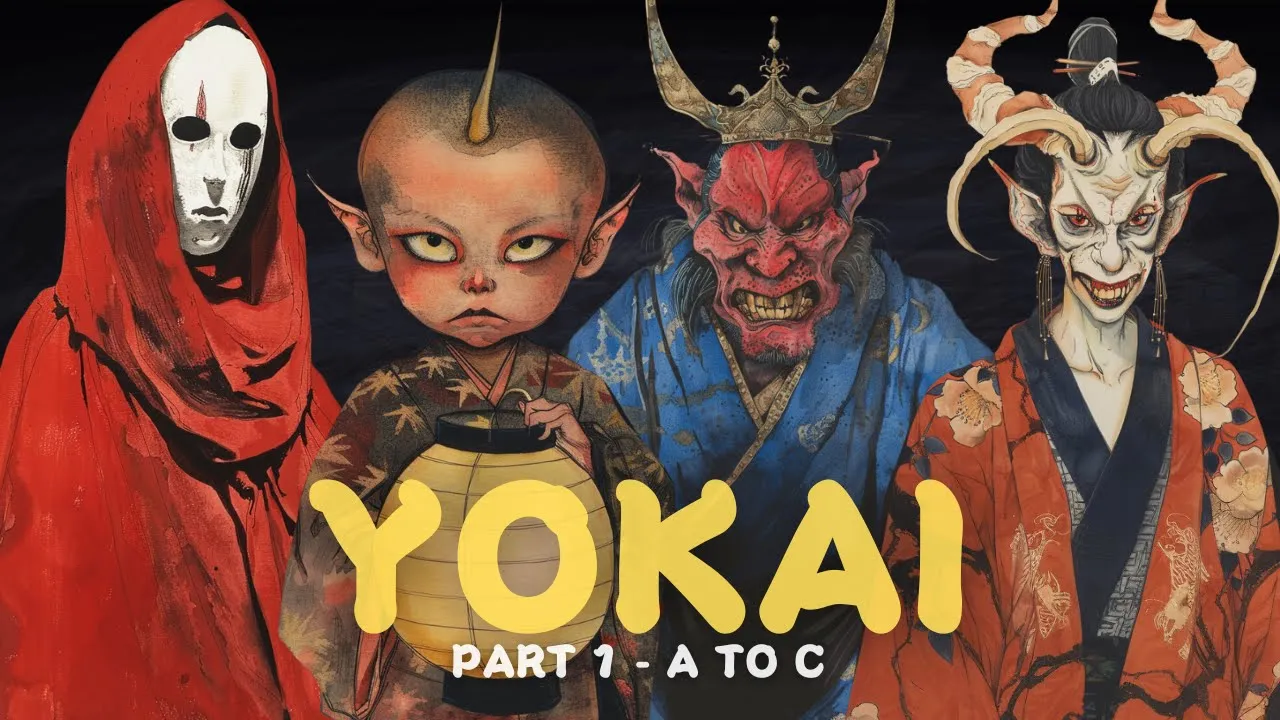
yo-kai are supernatural creatures or phenomenon from Japanese folklore the term yo-kai is often translated as ghost Phantom or Monster but it encompasses a wide range of entities yo-kai can fall on the side of evil good or simply mischievous coming in various forms including spirits of the deceased animals with supernatural abilities and shape-shifting entities yukai have been a central aspect of Japanese culture for centuries appearing in countless Legends artworks and folktales this is Pantheon mythology and this is The Ultimate Guide to Japanese yo-kai just quickly before we begin if you love yourself some mythology and folklore
then head on over to Pantheon apparel you'll find designs inspired by deities beasts and legends from across the Mythos we're rated excellent on trust pilot and ship worldwide Link in the description abura a cargo yukai from Omi Province appear as Fireballs or babies they drift as orbs transforming into infants to lick oil from lamps then revert and fly away originating from oil thieves they symbolize the punishment for their sins like other oil related Yokai abura sumashi a rare Yokai from Kumamoto prefecture resembles a squat humanoid with a large head and wears a straw raincoat they
inhabit mountainous areas where wild tea plants grow little is known about their behavior but they are reclusive and rarely seen by Travelers appearing briefly in response to mention Legend suggests they are the spirits of oil thieves punished for their Crimes by reincarnation as aburas sumashi Abu migui were once stups of a warrior who perished in battle left forgotten on a battlefield disheartened by the loss of their purpose these soldiers tools can undergo a transformation into suku Mami similar to Loyal companions abum maguchi linger in the fields awaiting their masters who unfortunately will never return AAR
are massive fish resembling stingrays reaching lengths of 10 to 12 kilomet often mistaken for Islands they spend most of their time on the ocean floor but surface occasionally creating dangerous whirlpools Sailors mistaking them for land often faced fatal consequences originating from a 19th century picture book a legend tells of sailors finding what they thought was an island only for it to sink beneath them they had been walking on an aayi's back akaname are small Goblin like Yokai found in dirty homes and baths they resemble hunched child-sized creatures with greasy hair and skin coming in various
colors and eye configurations with long sticky tongues they feed on filth in unsanitary environments akaname avoid humans and dislike cleanliness spreading disease thus emphasizing the importance of maintaining clean spaces to deter them akanto the urban legend of akanto prevalent in Japanese elementary schools revolves around a deadly encounter in haunted restrooms typically a student in desperate need of a toilet Ventures into a specific stall only to be presented with a fatal choice of red or blue paper by a mysterious voice choosing either option leads to a gruesome demise often involving Bloodshed or strangulation variations include different
colors and outcomes but the Fate is usually inevitable the Legend's origin dates back to the 1930s reflecting the anxiety of students facing impossible situations Ain in to test questions aramant to's appearance has evolved over time with the modern depiction featuring a figure in a long Red Cloak though historical interpretations vary akashita is a mysterious spirit that manifests as a dark cloud with sharp claws and a hairy bestial face notably characterized by its long bright red tongue it emerges during the summer months residing within dense black clouds and is of often regarded as a harbinger of
Retribution particularly in disputes over water rights its primary role is to punish those who engage in water theft a serious offense in agricultural communities reliant on irrigation for successful crop cultivation these water Bandits who may cunningly divert water from their neighbors Fields risk facing the wroth of their community and the violent intervention of the akashita this spirit with its ominous presence seeks out the perpetrators draining their ill-gotten water and ens snaring them with its menacing tongue as a form of divine Justice the AKO is a red disembodied child's Hound found hanging in Japanese Honey Locust
trees it surprises passes by by dropping down from trees but doesn't cause significant harm some witnesses report seeing a fever inducing Fury sod wearing girl under the same trees though her connection to the AKO is unclear originating from a tree in Hain no amori prefecture variations of this yukai are also found in Fukushima and Kagawa prefectures akoro kamui is a colossal red octopus God residing in hokkaido's Ura Bay spanning over one hectare with its legs extended it's feared for its ability to swallow boats and whales whole turning the sea and sky a deep red when
it appears look locals avoid the water during this time carrying sides for protection if necessary originating from Inu folklore it's revered as the Lord of uchiura bay stemming from a legend where a gigantic spider transformed into the octopus deity it's known as today after being pulled into the Bay by the Sea God reun camoi akuu is a perilous insect that targets the spleen using its Flex segmented body and Broad tail to navigate its host's body equipped with six sharp claws it firmly attaches itself to the spleen this invasive bug sustains Itself by stealing the host's
food with its hooked Bill making weight gain and nourishment challenging for The Afflicted individual however infections of akutu can be effectively treated with moroco a type of Chinese medicine derived from a species of thistle augo are large mermaids found found in Japanese Waters featuring human-like heads and arms with fish-like bodies covered in gold and silver scales they possess two white horns and can spew fire from their mouths spending most of their time underwater their behavior remains largely unknown fearful encounters with a kugio by fishermen are rare but dangerous as boats can become ens snared on
their backs leading to capsizing and consumption of the occupants in a famous incident off the coast of ich province in 1805 Lord Matsu of kaga led a successful mission to slay an 11 M long ugio with 60 cm horns another tale tells of a tao Master Uya kroko whose boat became stuck on an augo's back but he miraculously escaped by playing his drum with such Vigor that it shook the boat loose akuru is a monstrous fish and evil God featured in Japan's oldest mythological texts dwell dwelling in the Sito Inland Sea of present day okama
prefecture this giant creature capable of swallowing ship's hole was slain by the legendary Warrior Prince Yamato teero son of Emperor Koo the origin of aku's name remains mysterious with its tale appearing in ancient Chronicles like the kojiki and nion Shoki and later in local folklore yamat teo's exploits in subjugating various Spirits including a Kuru are believed to symbolize his campaign to establish central government control some interpretations suggest that these gods were actually Bandits or Rebels transformed into Yokai for symbolic effect in a famous Legend yamat teero confronts akuru while sailing through the Sato Inland Sea
ultimately slaying the creature after a fierce battle amabi is a mermaid-like Yokai with human and fish features glowing with a bright light visible from Shore believed to offer protection against his disease it was encountered by a government official in Hao province in April 1846 the amabi prophesized a bumper crop and instructed the official to distribute its picture for disease protection this encounter similar to other prophetic Yokai reflects a trend during a period of widespread diseases like chera amabo mysterious yakai emerging from the sea resemble apik creatures with protruding mouths large round eyes and thick long
hair often depicted with three legs sightings occasionally report four legs these elusive beings deliver prophecies foretelling periods of plentiful Harvest followed by disaster and disease believed to reside in the Seas surrounding Japan sightings have been reported in kushu along the Sea of Japan's Coast amabo sightings peaked during the 19th century epidemics attributed to the belief that displaying images of powerful good spirits could ward off evil spirits responsible for disease am man jaku are ancient Japanese monsters known for inciting mischief and wickedness in humans they originate from Shinto mythology and are depicted as evil spirits provoking
impious Desires in people's hearts often associated with spiritual pollution they have roots in myths of wicked Shinto deities like amoaku and amas sagume in one famous tale a childless couple adopt a girl named uro hee found in a melon before leaving for town they warn her not to open the door despite this an amaku tricks her into opening the window and attacks her the demon then wears her skin to deceive her parents however a crow reveals the truth of her new identity and the villagers Chase and kill the demon amanaz zako a fearsome demon goddess
resembles a human with a bestial face featuring a long nose dangling ears sharp teeth and protruding tusks her vile contrary nature leads her to to possess humans inciting Pride or anger she becomes enraged when things don't go her way capable of hurling Gods great distances and rendering even the strongest blades useless with her powerful teeth Legend says she emerged from the storm God susu's pent up emotions making her an ancient deity believed to be the ancestor of various Yokai her son amaku shares her obstinate traits and eventually became a ruler over disobedient Kami amazaki Baba
is an elderly woman from North Eastern Japan nearly indistinguishable from an ordinary old woman making her very difficult to recognize as a Yokai until it's too late she appears on winter nights going from house to house asking for amazaki those who respond whether affirmatively or negatively fall terribly ill hanging a cedar branch over the door is believed to Ward her off a variant called amasaki banba in yamanashi prefecture said sells sake and amazake door too with similar consequences for those who engage originally considered a deity of disease particularly small pox amazaki Baba sighting surge during
outbreaks across Japan today she is associated with spreading sickness especially the common cold and statues of her are still visited by mothers who leave offerings to protect their children from illness urri Koo are youthful beings resembling boys CLA in traditional children's garments and wide brimmed hats or umbrellas they are believed to summon rain wherever they go although they rarely interact with humans directly Legends link them to playful Antics like stealing umbrellas and causing unexpected rain showers originating in printed literature during the Ido period they became popular characters in satirical comics in folklore they are associated
with unique meteorological events like Fox weddings where rain falls while the the sun is out amasu or wh spotted cha is a species of trout found in Northeast Asia popular for game fishing and aquaculture these fish primarily inhabit Rivers streams and some coastal areas with some Legends attributing their massive size to mythical proportions in Anu folklore they're considered Guardian deities of certain Lakes such as Lake mashu and Lake shikotsu in Hokkaido Legend has it that can transform into human form often appearing as beautiful women to seduce young men however their cold clammy skin gives away
their true nature Legends also tell of their involvement in creating whirlpools and causing earthquakes am Ona are rain summoning Yokai that appear on rainy days and nights blamed for kidnapping children they resemble haggish women soaked in Rain licking water off their hands related to minor rain deities they wander The Villages seeking newborn girls to snatch away mothers of stolen babies May transform into amona desperate to replace their Lost Child originating from ancient folk beliefs corrupted rain bringing goddesses became these malevolent Spirits amik Kiri are small crustation like Yokai resembling shrimp or lobsters with a red
segmented shell and birdlike Beak shy and rarely seen by humans they are known as net Cutters for their mischievous habit of slicing fishing nets screen doors or hunging mosquito Nets though not directly harmful their actions can devastate fishermen's livelihoods their origin is uncertain and legends tell a fishermen whose Nets or mosquito Nets were mysteriously shredded by these elusive creatures the hour andon is a manifestation of collective human fear taking the form of a demonic woman with blue skin black hair and Eerie blue light during the Ido period Aristocrats held Gatherings called Haku monogatari Kiren Kai
where guests shared ghost stories by candlelight until only one candle remained Legend has it that extinguishing the final candle summoned the AO andon a spirit that emerges from the darkness to attack the guests this belief stemmed from the Superstition that disgusting Spirits could conjure them into reality aosu are enigmatic Yokai depicted as large oneeyed blue skinned priests with magical connections but local accounts vary in detail like size and habitat in some regions they inhabit abandoned homes Wheat fields or lonely roads they interact differently depending on the area snatching children in shizuoka fields threatening women in
Kagawa or challenging travelers to Sumo matchers in Yamaguchi their origin is unclear but they're linked to Old Spirit Worship and resemble the hitsumi Koo Yokai various accounts make it challenging to pinpoint their true nature among other priest Yokai aobo in the desolate Halls of long abandoned mansions dark and ominous Spirits dwell among them the aobo this spectral entity embodies the essence of destitution and Ill Fortune manifesting as a decrepit Noble woman adorned in tattered Moen kimono reminiscent of ancient aristocracy she Bears the Visage of faded Beauty with a palid complexion and weathered features residing within
the Forsaken confines of ruined abodes she incessantly awaits the arrival of phantom guests consumed by an eternal vigilance that belies her wretched existence any Intruder who dares to cross her threshold is swiftly met with a wrathful hunger becoming yet another victim of her insatable appetite originating from the realm of former Court ladies the term a denotes a state of Perpetual longing and unfilled aspirations echoing the tragic fate of those who once graced the illustrious Halls of Imperial Society a sagii as certain Birds particularly the black crowned n Heron reached the Twilight of their years they
undergo a remarkable transformation into yakai called AOS sagii these enigmatic entities are frequently observed during the nocturnal hours in secluded locals abundant with dense foliage emanating a ghostly bluish white luminescence and exhaling ethereal blue Fireballs from their beaks despite their Eerie Visage a sagii are creatures of timid disposition and harbor no ill intentions towards humans nevertheless it is prudent to exercise caution to prevent misidentifying them amidst other mystical luminosities the aosa a frightening creature resembling a red or with dark kelp likee hair emerges annually in koshino Village fukui prefecture during the Koso gatsu Festival these
sea dwelling monsters roam the streets banging iron kettles and demanding food while threatening children the tradition is said to stand from a foreign sailor's shipwreck with aosa possibly originating from The Plea for moi similar to other Oni like Yokai along the Sea of Japan's Coast such as the namag and Amame apha are considered marabito Divine Spirits from the world of the Dead visiting our world Arya a prophetic aquatic yukai resembling seaons with bulbous bodies shiny scales and long necks little is known about them due to one recorded sighting they dwell in the ocean delivering prophecies
and driving away evil spirits the sole sighting reported in 1876 followed a pattern similar to other prophetic Yokai of the time for telling a Bountiful Harvest and an epidemic Legends described their appearance in the Hao Province where one instructed a government official to hang its image for protection before Vanishing back into the sea the Shay yashiki a part of the seven wonders of honjo in Ido during the Ido period tells the tale of Aji Kus a high-ranking samurai his Mansion was visited by a mysterious booming voice demanding its foot be washed terrified servants obliged washing
the giant foot each night until kinos ordered them to stop the Mansion was then thrashed by the foot until Kos swapped residences with a friend after which the visits ceased the cause of this phenomenon remains uncertain with speculation ranging from mischievous Tanuki to allegorical punishment for kin's potential wrongdoing ashir are low-ranking kitsun essentially ordinary foxes until they reach the age of 100 when they develop magical abilities their training includes studying occult practices and shape-shifting using objects like human skulls and natural elements to transform once they acquire their magical powers they may seek revenge on humans
who wrong them or their allies the term ashay originates from the 3dr Century Chinese Legend of azi a fox Spirit known for luring men away from their duties Ashura formidable demon deities embody the epitome of strength and martial prowess with their multiple faces and arms their insatiable thirst for battle and ponon for Destruction sets them apart driven by an unyielding ego and Relentless desire to prove their superiority despite their immense power and Longevity Ashura are plagued by internal conflict and unfulfilled desires trapped in a Perpetual cycle of jealousy and discontent in Japanese Buddhist cosmology they
inhabit the realm of Ashura do representing a state of existence marked by Perpetual conflict and the inability to transcend Earthly passions to attain enlightenment atoui kakura a colossal sea cucumber residing in hokkaido's uchiura Bay seldom emerges from its deep sea habitat despite its elusive nature it poses a significant threat to ships in the bay capable of capsizing vessels when startled or mistaking them for driftwood and pulling them under Legend traces its origin to an iy muru garment that was transformed into a massive sea cucumber upon settling in the bay azuki arai also known as Azu
kogi are mysterious yakai found in the mountainous areas throughout Japan they are described as short squat beings resembling Buddhist priests with round eyes silly smiles and large three-fingered hands these creatures are often heard near streams washing red azuki beans while singing A peculiar song passers by who hear them may accidentally fall into the river as the sound of the splash scares the isuki away they are Elusive and shy rarely seen But believed to bring good luck if spotted azuki Baba a Sinister variation of the azuki Yokai family is a fearsome old hag in Miyagi prefecture
appearing at Twilight especially on rainy or Misty Autumn nights she sings A ghastly song while washing beans in the river threatening to catch and eat humans Witnesses describe her as an eerie white glow through thick Mist as they hear hear her haunting voice despite being rare stories of azuki Baba are used to scare children into proper behavior believed to be shapes shifted evil creatures imitating harmless Yokai azuki hakari possibly related to auki aray are poltergeists known for the sounds they make in homes and temples heard but never seen they dwell in attics or Gardens most
active after midnight their distinctive traits separate them from other auki related yukai they create rhythmic sounds resembling scattered beans splashing water and walking in wooden sandals often leading to unexplained noises that cease upon investigation some encounters attributed to azuki arai may actually involve auki hakari especially near homes or away from Rivers Bak ichon no spirits of jeno trees manifest as towering figures with bright yellow bodies resembling Autumn Leaves adorned in tattered black kimonos and wielding small gongs they appear near ancient jeno trees striking their mallets to evoke a sense of strangeness or shock originating from
an 18th century yukai scroll and further elaborated by Mizuki Shigeru they are linked to Old superstitions about jeno trees which while revered for their beauty and resilience are deemed inauspicious in home gardens due to their potential to disrupt energy flow and bring Misfortune bucka kujira are spectral whale skeletons haunting the Sea of Japan surfacing during rainy nights near Coastal whaling villages in folklore they believed to be the souls of hunted whales seeking Revenge cursing those who witnessed them with calamities like famine and plague Legend has it that fisherman once encountered a colossal sceletal whale of
shim man Peninsula surrounded by Eerie fish and birds despite their efforts there are oons couldn't touch the sceletal form leading to a terrifying realization of encountering a Bak kuira this encounter brought forth strange calamities to neighboring Villages marking the curse of the vengeful ghost whale bakano cats in Japan whether domestic or feral are ubiquitous in old age some cats developed Supernatural powers and become Bako these y K start small but can grow as large as humans and possess shape-shifting abilities they often disguise themselves as cats or humans sometimes even imitating their own masters despite their
playful appearance buck and Ekko are dangerous they can eat large objects consume poison without harm and even assume the form of their owners after consuming them they are known to cause Misfortune summon ghostly fireballs and reanimate corpses for their own purposes bakano typically emerg due to age size or consumption of lamp oil with an elongated tail being a Telltale sign of their transformation leading to the practice of tail bobbing to prevent it bakori mischievous sandal Yokai emerged from neglected Zori traditional Japanese straw sandals these Yokai take on humanoid forms with arms legs and a large
eye scurrying around Homes at night causing disturbances they chant a favorite time as they move referencing their unique features which include three eye holes and two wooden clogs on the underside of Japanese sandals the Baku a revered holy Beast possesses A peculiar form for combining features of various animals a bear's body an elephant's head a rhinoceros eyes an ox's tail and a tiger's legs despite its monstrous appearance the Baku is revered as a powerful force for good and protector of Humanity it acts as a guardian Spirit consuming bad dreams and driving away evil spirits and
yukai symbols of good Lu baku's name and image adorned talismans charms and Temple structures Legend holds that Baku were fashioned from leftover parts during the world's creation explaining its unique appearance and divine favor basan are rare birds exclusive to shikoku ahime mountains res resemble turkeys in size and chickens in shape known for their vibrant red comb and Flamel likee plumage they emit breath resembling dragon fire though it lacks heat or ignition nocturnal and Elusive they reside in remote bamboo Groves feeding on charred wood and Embers startled they create a rustling sound with their wings before
disappearing Into Thin Air leaving little known about their behavior Basha no are spirits of Japanese banana trees often appearing as a human face among the broad leaves while not overtly hostile they startle humans by suddenly appearing nearby some Legends suggest that they can assault and impregnate humans leading to demon Offspring stories about these Spirits are widespread across Japanese Chinese and Ruku folklore with observations recorded by Ido period herbalist saturio Legends caution against walking near banana trees at night linking them to encounters and Supernatural occurrences Becca Taro is a short pu Yokai known for pulling down
its lower eyelids and sticking out its tongue originating from various yakai Scrolls its backstory was later developed by Mizuki Shigeru a prominent figure in Japanese folklore and manga according to Legend a baby named Taro with an insatiable appetite resorted to eating people after being abandoned by his parents transforming into the Fearsome B Taro yakai babasan are spectral entities known solely by their distinct sound the betoo clacking of wood and clogs encountered by solitary pedestrians at night they mimic footsteps growing closer with each step causing unease though unsettling they pose no harm a simple phrase after
you BTO ban allows Escape in matsuoka a town located in Northern fukui prefecture during sleet storms a variant called bisha guku characterized by bisha bisha sounds appears biron are ghostly Yokai with long tails and gelatinous bodies while they enjoy scaring humans by caressing their heads with their tails they can be easily dispelled with salt their Origins are uncertain with some Legends attributing their creation to a failed magical transformation spell the oldest written record of biron dates back to a 1972 yakai ins enyclopedia with its origin claimed to be from hean or Ido period picture scroll
although no such scroll has been found ban are large sea creatures resembling chubby cows with horns and dragon-like beards living in okan waters locals believe their image holds magical healing properties with hanging a picture of ban said to cure headaches instantly a practice observed on takaomi island where headaches are rare for first mentioned in the 1832 publication Ruku kitan by bezan Shi a traveler from suu China ban a reminiscent of the rokugo from the Chinese encyclopedia shanhai Jing although no direct connection is established Legends attribute the origin of bitan or bintara to a housemade in
the Royal Palace during the reign of Toni the first dynasty of the Ruku Islands who transformed into a miraculous Secret creature bami bakam mono are audio phenomena originating from beneath a house's floorboards named after the sweet rice Street botamochi they mimic the voices of inhabitants perplexing residents documented in tachibana Nan's 1797 work toyi one Legend tells of a farmer's house in shinjo Village now Sabai fukui prefecture where a mysterious voice echoed everything said inside various guesses at its origin from Tanuki to Kitsune proved fruitless until one jesting youth dubbed it botamochi to which it agreed
despite government investigations The Voice remained silent disappearing a month after official inquiries ceased leaving villagers baffled Buu Buu dubbed the spirit of cowardice induces fear by causing people to shudder typically emerging from acts of cowardice like fleeing battles they cling to individuals touching their necks making their hair stand on end and sending shivers down their spines the name buuu originates from Japanese onam matapa for shivering and the chill of fear biao a white fur Kitsune associated with Shinto and devoted to serving the deity in nari revered as messengers of the gods they are depicted in
statues and sold as charms at Inari shrines also depicted as a Celestial white tiger who dwells in the Western sky and spans Seven Chinese constellation he's a part of xiin guarding the West associated with metal Autumn Venus and white color representing righteousness he controls the wind introduced from China in the 7th Century bako and other shiin influenced Japanese mysticism City Planning and burial art while belief in astrology faded their symbolism persisted boobo nooki another worldly entity emerging from folding screens Towers over 2 m in height spotting a slender physique white attire long black hair and
darkened teeth though it Bears resemblance to a spectre it's actually a Suk Mami born from objects reaching a certain age or undergoing unique circumstances its primary activity involves peering over screens especially during intimate moments conceived by torama seain it's linked to aged screens witnessing prolonged periods of sexual activity with a fanciful connection to Chinese history infusing both amusement and authenticity to its origin story shimi a nature Spirits with human-like faces and bestial bodies dwelling in mountains forests and other natural areas they feed on the dead especially their innards and may bring disease they are mischievous
towards humans tricking Wanderers and leading them astray often resulting in attacks and fatalities the term chimi originates from combining the names of ancient Chinese mountain and swamp Gods evolving into a general term for monstrously shaped nature Spirits in Japan where they are considered a type of mountain Kami chinua are ghostly Okinawan Spirits resembling women with long black hair and large breasts they dwell near rivers and graveyards where children are buried nurtur ing the spirits of deceased children with their milk however they can be dangerous weakening and even causing the death of living children if approached
offerings are made to them to protect the spirits of deceased children chinua are believed to drown children who wander too close to their watery homes and precautions like avoiding mirrors are taken to prevent accidents Legends tell of encounters with these Spirits such as a story from the village of orimi where chinua caused a death death of a baby by luring him with a smile chizuka CAO is a red hairy demon resembling a small Oni and often seen wearing tattered clothing and a crown he is known as the king of the Dust Heap and associated with
tuuku Mami animated spirits of trash and discarded objects in Scrolls depicting the night parade of 100 demons he's shown releasing tukum magami from a chest his name originates from puns found in historical texts connecting him to the idea of worldly attachments piling up like dust he is interpreted as the leader of the tuo magami spirits chimi are fiery orbs resembling handheld paper lanterns that hover over footpaths between rice patties in rural Japan they signify the presence of other Yokai and are believed to be created by Kitsune or other magical creatures they float lazily in rows
and vanish when approached by humans chin Koo a young boylik yukai with red round cherry-like faces appearing in areas of violent murders they are benign and harmless known for following people on rainy nights with lanterns repeating A peculiar behavior until they vanish originating from a neighborhood in sandai Miyagi prefecture their sightings correlate with a gruesome murder in the 18th centur suggesting a connection to the victim's Spirit coochin aak when old paper lanterns or coochin age they may transform into coochin orak these yukai have split paper forming a mouth with a tongue popping eyes and sometimes
limbs they enjoy surprising and scaring humans but may occasionally be Ono in Disguise posing a greater threat choyo are exceptionally beautiful version of zashiki warashi childlike Spirits believed to bring good fortune and prosperity glowing with radiant white light they reside in homes where a cherished only child has passed away bringing prosperity and happiness to the household these Spirits require more attention but bring greater wealth and luck originating from the tradition of lavish funerals for deceased children chiraco inhabits specially prepared rooms in affluent households some ins in Japan claim to host zaziki warashi or chiro to
attract guests seeking spiritual encounters or good fortune