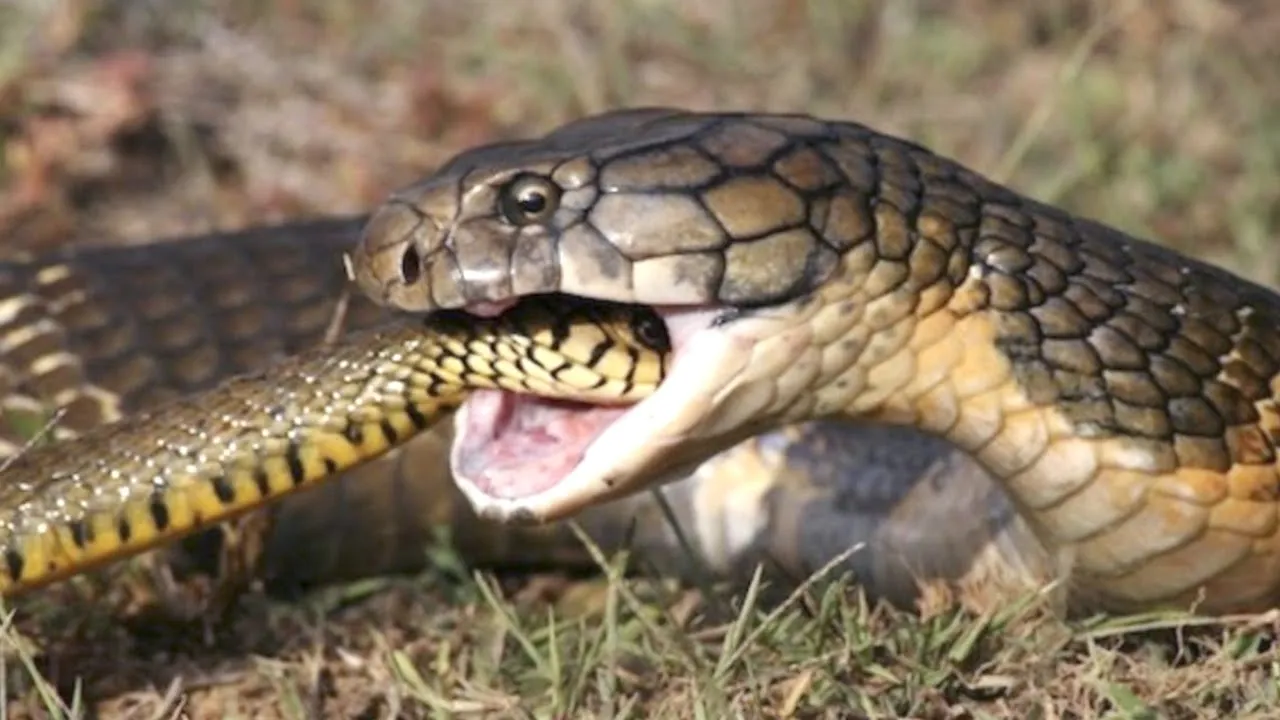
Not the longest, but its size is really impressive, not the most poisonous, but the dose of poison is enough to kill an elephant, not the fastest, but meeting it inspires horror and leaves no chance for potential prey. And if a lion can be called the king of beasts, then among the reptiles there is also a royal personage who is not accustomed to stand on ceremony even with her own kind. Hello friends, your time on the channel is useful and today we will talk about one of the most famous venomous predators - the king cobra.
Let's get down to business! The king cobra is the largest of all venomous snakes on the planet. Adults are typically 3 to 4 meters long, but given that snakes grow throughout their lives, record sizes can approach 6 meters!
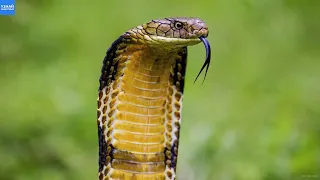
Moreover, the average weight rarely exceeds 9 kg. Despite the name, the snake does not belong to real cobras; it is classified into a separate genus, in which it is the only representative. It is difficult not to recognize the king cobra thanks to its peculiar hood with dark shields, which inflates in case of danger.
The brown or olive color along the entire length of the body is complemented by yellowish stripes. The king cobra has a vast habitat that spans the tropical forests of South and Southeast Asia. Despite its size, it is a rather secretive snake that prefers to while away its time in burrows and caves.
In addition, it easily climbs trees and easily overcomes water obstacles, but the reptile spends most of its time on the ground. The forked tongue is the most important organ of perception; molecules from the air enter the Jacobson's organ, through which information is transmitted to the brain, allowing the snake to better navigate in space, for example, when it comes to searching for prey. The Latin name of the king cobra means “snake eater”, hence it is clear what constitutes the basis of its diet.
The thin-tailed climbing snake is a non-venomous snake that reaches two meters in length and feeds on small birds and rodents. Captivated by the search for prey, she does not suspect that a deadly predator is hiding in the branches of the trees. The prey has disappeared, but will the snake escape?
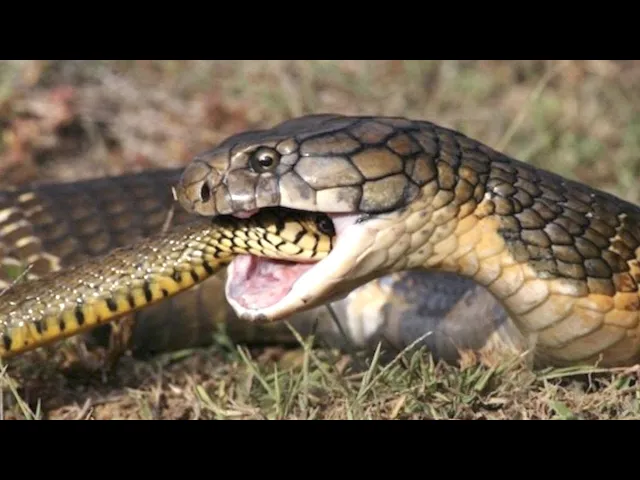
It's too late, because the cobra is already preparing to attack. A sharp lunge and a cocktail of neurotoxins paralyzes the victim, turning him into a hearty meal. The rat snake is another formidable hunter, measuring over 2 meters in length, and is a favorite treat of the king cobra.
The victim rises above the ground, trying to look larger, but in comparison with the cobra, it clearly loses. Resistance is futile. A minimal dose of poison is enough to cope with such prey, but the cobra acts for sure: bite after bite, more and more deadly substances are introduced into the enemy’s body, and this undoubtedly speeds up the process.
Toxins block muscle contractions, which ultimately leads to paralysis of the lungs and rapid death. Cobra venom is far from the most toxic, but its quantity is what matters here. A snake can release about 600 mg of venom per bite, which is a lethal dose for 20 people or an adult Indian elephant.
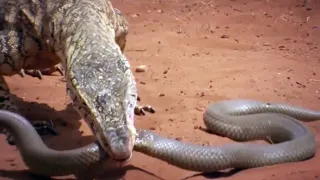
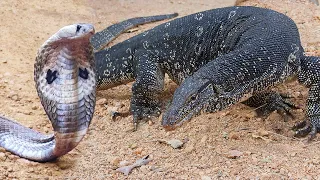
Among the cobra's victims there are even poisonous snakes, and in some cases it is not averse to eating a monitor lizard. And although the cobra almost always carries out its plans, a fight with such a strong opponent as the python can end in tragedy for both: the queen snake dies from suffocation, and the python dies from a lethal dose of poison. The king cobra has excellent vision; it can see a target at a distance of one hundred meters, which is more than enough to make a decision: to attack prey or to hide from danger.
Developed muscles and tendons allow the snake to raise its body by a third, which is used not only for visibility, but also to intimidate the enemy and even its own relatives, especially during the mating season: biting is prohibited in a duel; a snake that is pinned to the ground accepts defeat and is deleted. The king cobra is the only snake that builds a nest for its eggs, which is a 1 meter high mound of leaves. During the incubation period, which lasts 3 months, the female does not leave the clutch; at this time she is especially aggressive and attacks any potential enemy without hesitation.
By increasing or decreasing the heap, the cobra maintains the required temperature in the nest. All this time the snake can do without food. Offspring are born, and now everyone for myself.
Snakes are still weak and defenseless, but already quite poisonous. Many of them will become victims of birds of prey, mongooses and larger relatives, in the end only one in ten will survive. At the age of one week, the cobra already has all the skills to hunt other snakes.
The lifespan of a cobra is about 20 years, but under ideal conditions it can live more than 30. Every year in India, about 50,000 people die from the bites of poisonous snakes, of which only a few die from the venom of the king cobra. The point is the snake’s amazing ability to control the dose of poison released.
Humans are not part of its diet, so the cobra prefers not to waste precious weapons on trifles, using an attack only to intimidate. But in the event of a full-fledged bite, the victim has only a few minutes left to administer the antidote, otherwise he has no more than half an hour to live. But over the years, meetings between people and king cobras occur more and more often, and certainly not through the fault of the latter.
By cutting down forests, cobras are deprived of their natural habitats. In addition, the increase in crop areas attracts more and more rodents. It turns out that people attract rats, rats attract rat snakes, and they, in turn, ensure the presence of cobras.
During the year, the snake molts up to 6 times, at which time it becomes vulnerable, and in search of a warm, secluded place, it often crawls into the home. In India, the king cobra is considered a sacred animal; the wanton killing of a snake faces serious punishment, but even without radical measures, humanity has many ways to reduce the number of not only cobras, but also many other inhabitants of the evergreen forest. If you liked the episode, support it by liking, subscribing and have a good time!
See you later!