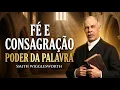
The fasting of power. Three days that change everything. The lesson of Smith Wigglesworth.
Smith Wigglesworth was a plumber. He had no formal education. He learned to read as an adult using the Bible.
The hands that fixed sewage pipes were the same hands that would one day be placed upon the paralyzed, and they would rise. But this did not happen overnight. Before the power, there was the altar; before the miracle , there was the emptying.
And before the emptying, there was the fast. Not the fast of religious appearance, not the fast of someone who skips breakfast and calls it consecration. The fast that Wigglesworth practiced and taught was different.
It was a fast of power, a fast that didn't just silence the body, but opened a dimension of the spirit that common prayer cannot reach. And today I am going to show you what he discovered about three days of fasting that can change the rest of your spiritual life. Stay until the end , because what you will hear here will challenge your comfort zone, but will also open a door you perhaps never knew existed.
The man who knew what true power was. To understand Wigglesworth's fast, you need to understand who Wigglesworth was. He was a man who, when he entered a train, people around him would begin to weep with repentance , not knowing why; who preached in crusades where doctors who came to prove it was a fraud ended up converted ; who documented more than 40 cases of raising the dead throughout his ministry.
A man who once said a phrase that never left the heads of those who heard it. I do not read newspapers, I only read the Bible. Because the more you read what the devil is doing, the less you believe in what God can do.
That was Wigglesworth. And when a man like that speaks about fasting, you stop everything and listen, because he wasn't speaking of theory; he was speaking of what had shaped his own spiritual power over decades. Why three days?
Wigglesworth did not arrive at the number three by chance. He arrived through scripture, experience, and the revelation of the Holy Spirit. The pattern of three days appears repeatedly in the Bible in moments of radical spiritual transition.
Jonah was three days in the belly of the fish. When he came out, the entire city of Nineveh repented. Paul was blind for three days after his encounter with Jesus on the road to Damascus, without eating, without drinking, without seeing.
And when Ananias laid hands on him, something fell from his eyes, not just physically, but spiritually. And he rose as a different man. Esther fasted for three days before entering the king's presence, before the most important audience of her life.
And what was destined for death became victory. And naturally, Jesus Himself remained in the tomb for three days. And on the third day, the impossible happened.
Eaglesworth taught that the number three is not superstition, it is a biblical pattern. Three days of total consecration carry a spiritual weight that goes beyond math. It is the time needed for something to break inside you, for the flesh that fights to survive to finally stop fighting, so the spirit that was suffocated under the weight of daily worries can breathe deeply.
Isaiah 58: 6 says the fast that God has chosen is one that loosens the bonds of wickedness, undoes the heavy burdens, and lets the oppressed go free . That word "loosen" in the original Hebrew is "natar. " It carries the idea of something that was bound, being set free with force, with controlled violence, with intention.
Three days of a powerful fast do exactly that. They do not just reduce food intake; they loosen what was once trapped. What did Eaglesworth understand about the body and the spirit?
There is something Eaglesworth repeated in his sermons that most believers today do not want to hear. He used to say: "The body is the slave of the spirit, but if you do not discipline the body, it will become the master of the spirit. " This is uncomfortable because it is true.
When the body is well-fed, well-rested, and fully satisfied in all its appetites, it takes charge, it dictates the rhythm , and it determines when you pray and when you stop. It decides whether you persist at the altar or go to bed. It chooses comfort over the fire.
And while the body is on the throne, the spirit stays at its feet. Fasting reverses this order—not permanently, and not because the body is evil in itself, but because there are moments in the spiritual life where you need to make it absolutely clear to yourself, the enemy, and heaven that it is not the body that rules, but the spirit. First Corinthians 9:27 says: "But I discipline my body and bring it into subjection.
" The apostle Paul was talking about an intentional discipline that put the flesh in its proper place. Fasting is the most radical expression of this mortification. Not self-mutilation, not spiritual masochism, but a clear declaration.
Flesh, you are not the boss here. Eaglesworth understood this in his own skin, literally. It was this understanding that led him to develop what he called the power fast, a specific period of total consecration, which wasn't about depriving the body, but about freeing the spirit.
First day , the day of silence. W. Eaglesworth taught that the first day of a three-day fast is the hardest and the most important.
On the first day, the body protests, the head aches, the stomach grumbles, thoughts become agitated, the flesh refuses to cooperate, and the temptation to break the fast is stronger here than at any other point. But the first day isn't just about enduring physical discomfort , it is the day of inner silence. Eaglesworth taught that most believers bring the world's noise into their prayer.
Worries, plans, mental lists, unresolved conversations, unspoken fears. All of this inhabits a person's interior and saturates the space where the Holy Spirit wants to speak. The first day of fasting begins to silence that noise.
It is like when you turn off a fan that has been on for so long that you no longer noticed the sound. And when it stops, the silence is shocking. It reveals how much noise there was before.
Psalm 46:10 says: "Be still, and know that I am God. " The Hebrew word for "be still" is rafah. It means to slacken, to let go, to cease from striving.
It is not passive quietism, it is an active surrender, an intentional abandonment of control. The first day of fasting teaches you to do this, because when you can no longer use food as an escape valve, as emotional comfort, or as a social distraction, you face what is really happening inside you. And that can be uncomfortable, but it is necessary, because you cannot pray with power over what is still hidden inside you.
The practice for the first day is this: besides abstaining from food, abstain also from unnecessary entertainment, social media, and empty conversations. Use the time that would normally be spent on food for prayer and reading the Word. Not necessarily long and elaborate prayers.
Silent, listening, open prayer. And when the physical discomfort comes, do not fight it. Use it.
Let every pang of hunger be a reminder that there is a greater hunger you are seeking to feed. Second day, the day of breaking. Eaglesworth described the second day as the day of breaking.
It is when something inside you stops fighting. The flesh that was resisting with all its might on the first day begins to give way, not with sad resignation, but with a surrender that makes room for something greater. It is also the day when the Holy Spirit begins to bring to the surface things that were buried.
Unconfessed sins, unresolved offenses, fears you learned to hide behind daily busyness, doubts you never had the courage to acknowledge out loud. This is no coincidence; this is the process. Eaglesworth taught that you cannot move the power of God toward others while there is an impediment in the channel where that power must flow.
And fasting exposes these impediments with a clarity that no other spiritual discipline achieves. Psalm 139: 23-24 says: "Search me, God, and know my heart. Test me and know my anxious thoughts.
See if there is any offensive way in me and lead me in the way everlasting. " The second day of a power fast is this psalm being answered in real time. And when things come to the surface, you do not hide them, do not justify them, do not minimize them.
You present them to the Lord with an honesty you may have never practiced before. This is what Eaglesworth called being stripped bare before God. No performance, no manufactured emotion, just radical honesty about who you are without the spiritual ornaments you present to the world.
And in this place of total honesty, something happens. The grace that was always available becomes accessible in a way that was previously blocked by the layer of religious self-sufficiency most of us carry without realizing it. James 4: 6 says: "God opposes the proud but gives grace to the humble.
" The second day of fasting produces a humility that is not performance; it is the natural result of hours on your knees with an empty stomach, carrying the real weight of your true condition before God. And from this humility is born an openness to the power of God that comfortable prayer rarely produces. The third day, the day of fire.
Eaglesworth used to say that those who reached the third day of fasting, with a heart prepared by the first two days, experienced something they would never forget. A visitation, not necessarily visible, not necessarily accompanied by intense emotional experience, but a tangible presence of the Holy Spirit that saturated the spirit in a way different from anything experienced before. He described it as if the walls between the natural and the supernatural became thinner, as if the veil that normally separates the spiritual dimension from everyday experience were almost transparent.
Scripture, which had already gained new life in the first two days, on the third day seemed to literally burn. This is not vague mysticism. There is biblical foundation .
When Elijah was exhausted and lying under the tree, the angel touched him and said: "Get up and eat, for the journey is too much for you. " 1 Kings 19: 7. With the sustenance he received, Elijah walked for 40 days to Horeb.
The third day of a power fast is the point where spiritual sustenance arrives in a way that sustains far beyond the moment . Acts 2: 1-4 describes the disciples in one accord in the upper room: 10 days of prayer and fasting. And when the fire fell, it fell upon all, not just some, because all had been in the process, all had reached the third day and beyond.
Wigglesworth taught that the third day is the day of taking a stand. It is not just a day to receive; it is a day to declare. The practice of the third day is this: silent worship and surrender; begin to pray in declaration, not just in petition.
Take the promises the Holy Spirit highlighted to you in the first two days and declare them over your life, over your family, over the people you are interceding for, with authority, with unwavering faith, with the voice of one who knows they are standing on the Word of God and that this word does not return empty. Isaiah 55:11 says: " So shall my word be that goes out from my mouth; it shall not return to me empty. " On the third day, you declare this word and something in the spiritual realm responds.
What happens after the third day? Wigglesworth was emphatic about this. The three-day fast does not end on the third day.
What you carry from the third day onward is what determines if the fast was just a religious experience or a real turning point. He described three things that remain after a genuine power fast. First, an increased sensitivity to the Holy Spirit.
After three days of inner silence, of emptying yourself, of honest exposure before God, the spirit becomes more sensitive. You begin to perceive the direction of the Spirit with more clarity. That urge to pray for someone specific that you might have ignored before, you now recognize and obey.
That gentle warning that something is wrong that previously went unnoticed, you now feel clearly. John 10:27 says: "My sheep hear my voice. " The power fast tunes the spiritual ear, not in a temporary way, but in a way that, if cultivated, becomes a growing ability.
Second, an authority in prayer that was not present before. Wigglesworth described how, after periods of fasting, his prayer for the sick had a different quality. It was not confidence in his own ability; it was confidence in who was behind his prayer.
The difference between a man who speaks words and a man who carries authority. Luke 10:19 says, "Behold, I give you authority. " This authority is not acquired in seminary; it is conferred by the Spirit.
And fasting creates the internal conditions for this authority to manifest without the obstacles of pride, doubt, and self-sufficiency. Third, a hunger for God that surpasses any previous hunger. This seems paradoxical.
You fasted to draw closer to God, and in the end, instead of being satisfied, you are hungrier. But not with the agonizing hunger from the beginning, but with the healthy hunger of one who has tasted and discovered that He is good. Psalm 34: 8 says, "Taste and see that the Lord is good.
" Whoever has spent three genuine days before God does not return to spiritual mediocrity voluntarily, because they have tasted something that has no equivalent in the natural world. And this experience changes your frame of reference. That which used to satisfy—superficial services, brief prayers, a lukewarm spiritual life— ceases to satisfy because you have already tasted the real thing.
How to prepare for a three-day fast? Eaglesworth was not careless with preparation. He taught that a power fast is not begun on impulse.
It is prepared. Before starting, resolve what can be resolved. If there is a conflict with someone that depends on you to be resolved, resolve it before entering the fast.
Matthew 5: 23-24 is direct. Before bringing your offering to the altar, reconcile with your brother. You cannot carry the burden of unresolved offense into a power fast and expect full results.
Notify the people around you. Not to show off, but so you don't have to explain in the middle of the fast, and to avoid unnecessary social pressure that could sabotage the process. Prepare your Bible.
Before starting, identify specific promises of God regarding the situations you will be interceding for. Write them down, take them into the fast. They will be the foundation of your prayer during the three days.
As for water, Eaglesworth fasted from solid food, but not from water. Drnking water does not break a power fast. In fact, proper hydration helps maintain the mental clarity needed for intense prayer.
As for work, in most cases, the three-day fast happens in parallel with daily responsibilities. Eaglesworth did not teach that you need to isolate yourself from the world. He taught that you carry the fast within you while fulfilling your responsibilities, and that the space that would be occupied by food—the meals, preparation, and social time around the table—should be replaced by prayer.
The mistake that ruins the fast. There is one mistake that Eaglesworth observed repeatedly in believers who fasted without results. Fasting with your body, but not with your mouth.
I’m not talking about food; I’m talking about words. A believer can go three days without eating while badmouthing a neighbor, complaining about life, criticizing church leadership, and spreading negativity. And that fast will produce nothing.
Isaiah 58: 3-4 is devastatingly direct about this. The people of Israel complained to God that they had fasted and He hadn't answered. And God replied: "On the day of your fasting, you do as you please and exploit all your workers.
""Your fasting ends in quarreling and strife, and in striking each other with wicked fists. " In other words, you abstained with your stomach, but not your tongue; the body, but not the heart. The power fast includes the mouth from destructive words, the eyes from contaminating content, the heart from empty entertainment, the time from needless distractions.
This isn't legalism; it's consistency. It’s understanding that a fast isn’t just a spiritual diet, it’s a total consecration. And total consecration doesn’t stop at the refrigerator.
There is a promise that Wigglesworth carried as the foundation of his entire life of fasting and prayer. Isaiah 40:31. But those who wait on the Lord shall renew their strength; they shall mount up with wings like eagles, they shall run and not be weary, they shall walk and not faint.
The word "wait" in Hebrew is " qavah," it isn't passive waiting; it’s twisting, intertwining, gathering strength around something. It is the image of a rope being twisted to become stronger. It is the waiting that strengthens.
The power fast is a way to "qavah," to twist your spirit around God’s promise until the promise and your spirit become one, until you can no longer separate what you believe from what God promised. Because the two are so intertwined that they form a single reality. And the person who emerges from three days with this genuine intertwining does not come out the same as they went in.
They rise with wings like eagles, not metaphorically, but spiritually, with a higher vision, a cleaner faith, more accessible power, and deeper clarity about who they are, what they are called to do, and who is with them. The testimony that Wigglesworth never forgot. There is a testimony that Wigglesworth told in various sermons that defines, better than any explanation, what the power fast produces.
It was a woman who had prayed for her son addicted to alcoholism for years without seeing results. She went to Wigglesworth in desperation. He did not pray for her immediately.
Instead, he said something that shocked her. First, three days, just you and God, nothing else. She spent three days in fasting and prayer, with real hunger, real tears, and real surrender before God.
On the fourth day, while she was still on her knees in prayer, she heard the door open. It was her son. He entered the room where she was and, without her saying a word, he fell to his knees beside her, crying, asking what he needed to do to be saved.
Wigglesworth said his mother had never prayed with such eloquence as during those three days of fasting. She had never used the most perfect words. In fact, at several moments, the words simply stopped coming, and what remained was groaning, was burden, was presence.
And that was exactly what broke the son's captivity. Not eloquence, not technique, not sophisticated spiritual strategy, but a genuine burden in genuine surrender, sustained by three days of genuine consecration. This is the fasting of power.
One last word before the prayer. Smith Wigglesworth lived to be 87 years old. He died preaching, he died serving , he died with the same fire in his eyes that he had when he laid hands on the sick decades before.
And when people asked him the secret, he would reply in the same way: "It's no secret, it's in the Bible, but it costs everything. ""The fasting of power costs everything. " It costs three days of hunger, of discomfort, of facing what is inside you without the distraction that usually serves as anesthesia.
It costs the radical honesty of seeing yourself without a veil before God. But the return is disproportionate, because you are not negotiating with a company. You are placing yourself before the God who raised Jesus from the dead, who parted the Red Sea, who spoke to the universe and the universe appeared, who knows every hair on your head and every detail of the situation you carry.
And this God answered the fast of Jonah, and Paul's, and Esther's, and Daniel's. And that of countless servants throughout 2,000 years of church history. He will answer yours as well.
Final prayer. Father, in the name of Jesus, I pray now for every person who has reached this point, for those who heard about the fasting of power but are afraid to start. Give them courage.
May the discomfort of three days not seem greater than the promise that waits on the other side. For those who have fasted before, but never with this intentionality. May this be the turning point: that next time they stand before You in fasting, they enter with a real burden, a specific promise, and an unshakeable faith, because they carry a situation that seems impossible, a son who hasn’t returned, a marriage that seems dead, a crisis that won’t yield , or a spiritual battle that has lasted for years.
Send the Holy Spirit upon them with clear direction on when and how to enter these three days. May what Smith Wigglesworth discovered about the power of fasting remain more than just historical information. May it become a personal experience for everyone listening, for those who will share this message, and for those who will begin it this very week.
And may Brazil see men and women who fast with power, who pray with a burden, who live with authority, and who transform cities not with programs, but with presence. In Jesus 'name. Amen.
If this content touched your spirit, comment below. Have you ever done a three-day fast? What happened?
Tell me about it. I read every comment. If you know someone going through an intense spiritual battle who needs a word about fasting and power, share this message with them now.
Subscribe to the channel, turn on notifications, and next week we will continue this series on the men and women who discovered dimensions of God’s supernatural power that most still don't know. God bless you. Pray with fire.
Fast with purpose. Don't stop. Revived word.
Because revival is not nostalgia, it is an available inheritance. Oh.