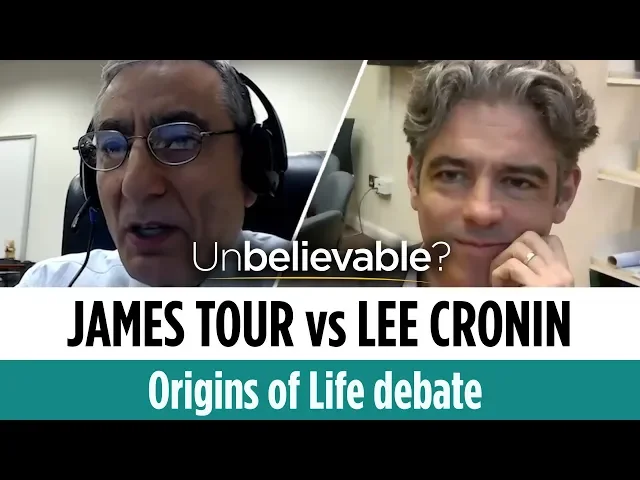
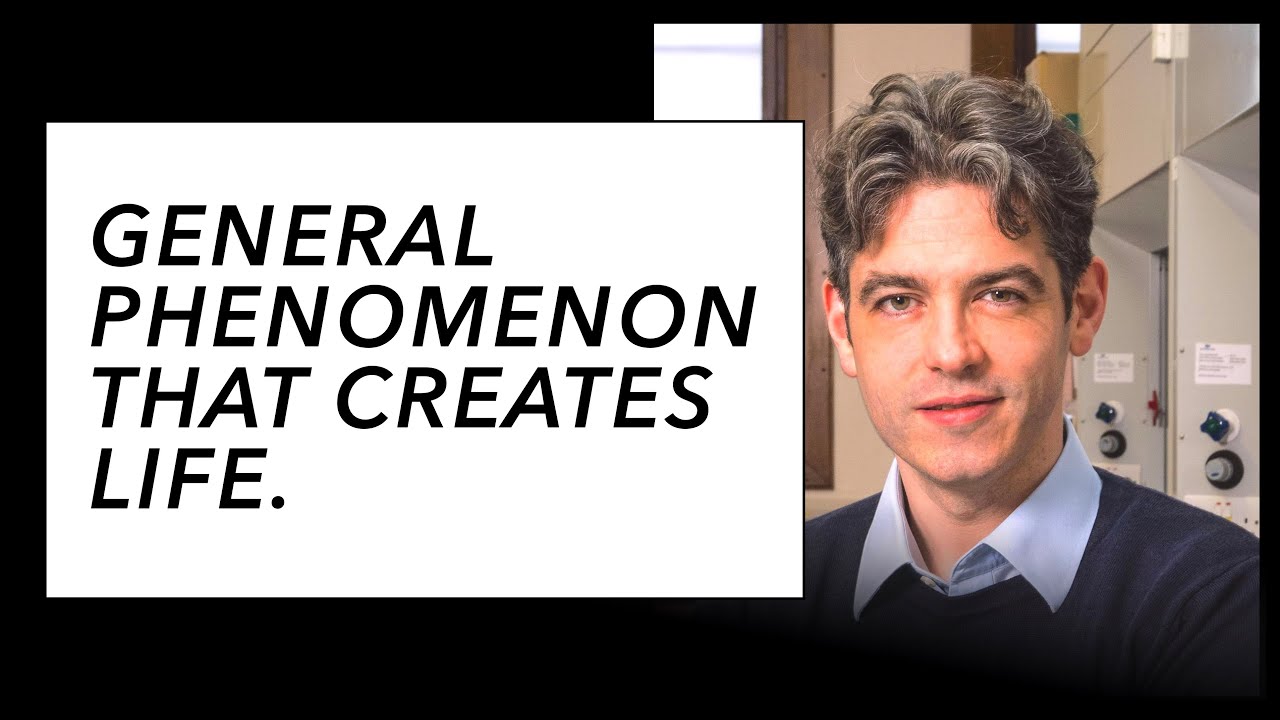
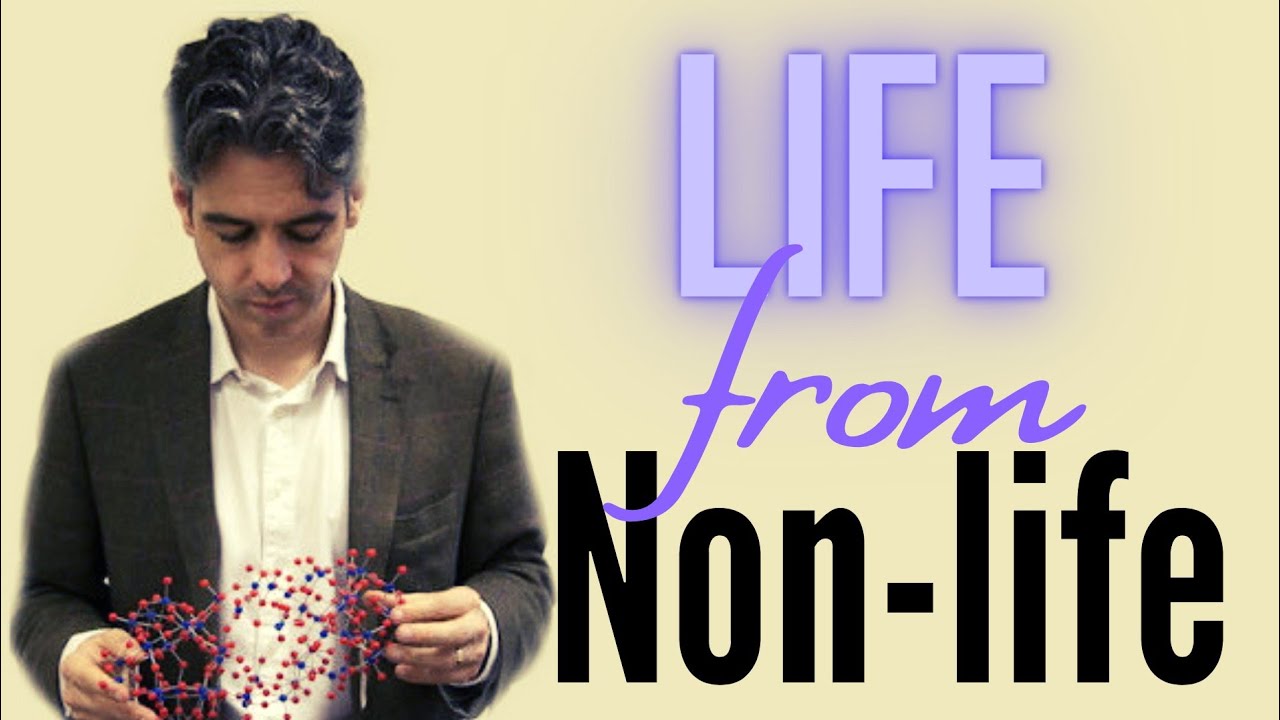
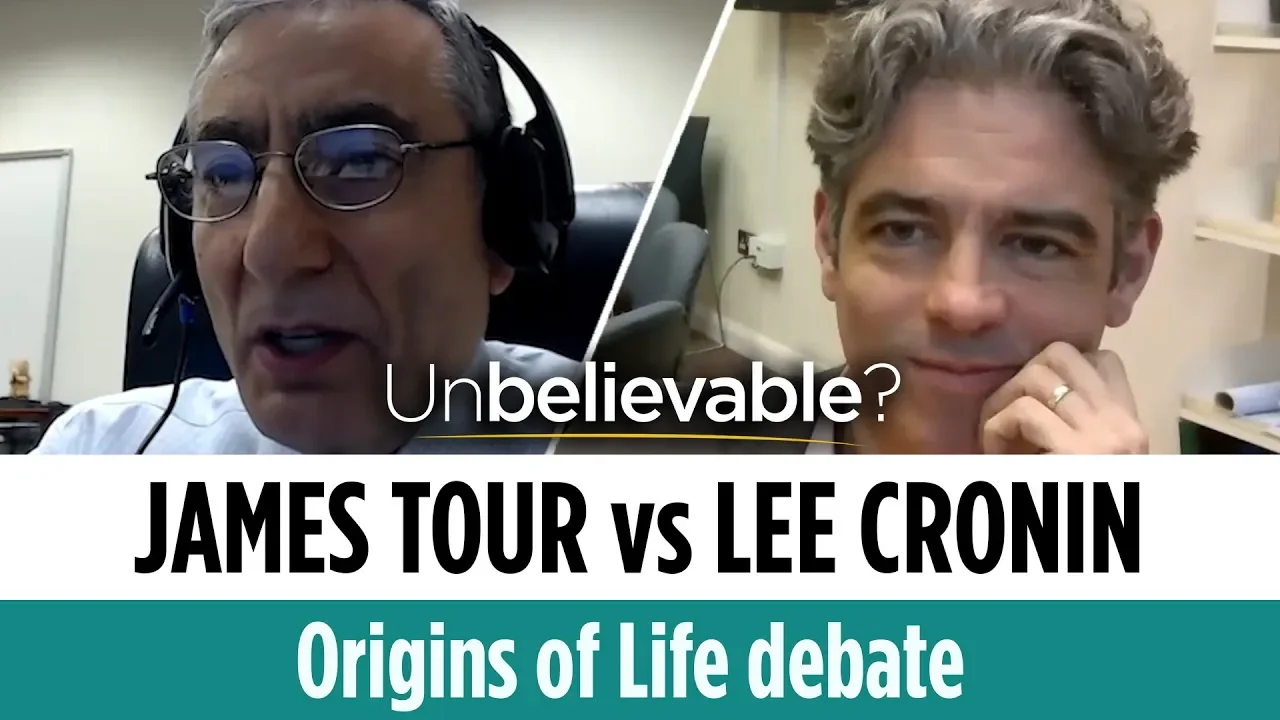
[Music] well today on the show it's round two debating the origins of life James tour and Luke Ronan join me on the show today now in November last year I brought you an unbelievable discussion on how on earth did life begin featuring Lee Cronin who's Glasgow lab is working to crack the mystery of the origins of life now Lee believes his research group is on the cusp of giving A purely natural explanation for how inorganic chemicals turned themselves into the first self-replicating form of life now following that discussion I was inundated with a request to
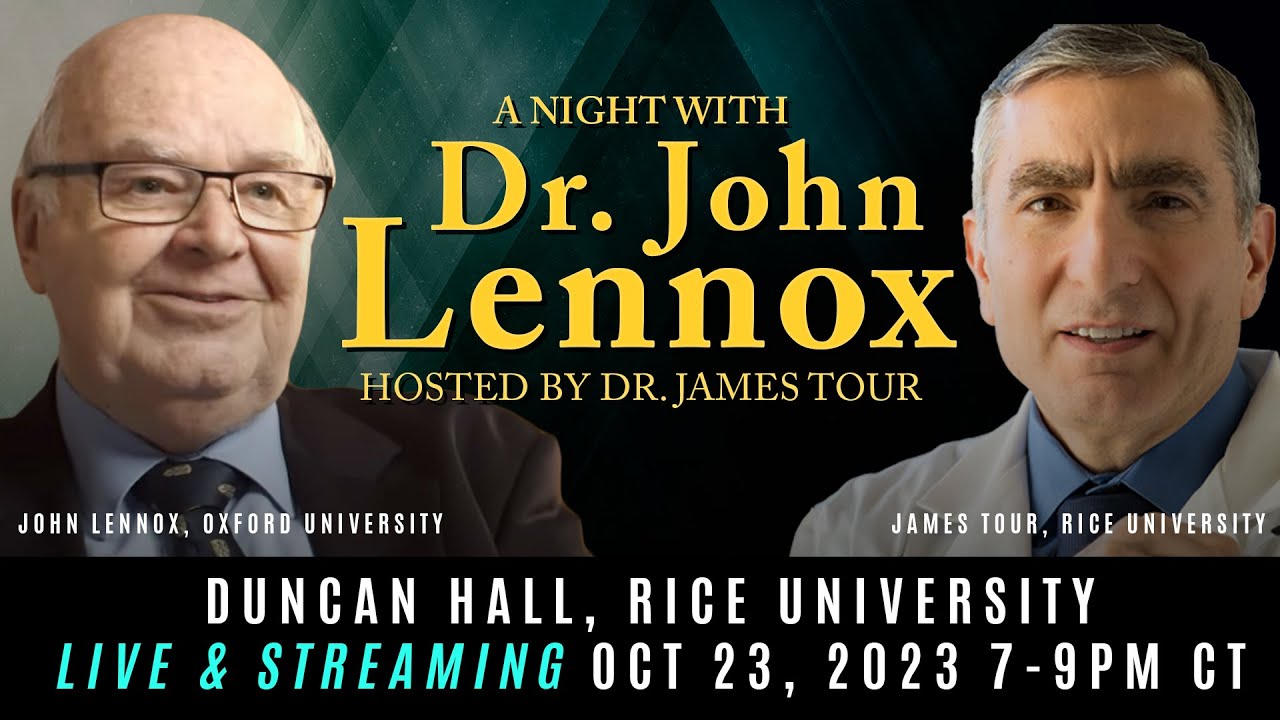
bring one person on oppositely to make the case for why current research into origins of life he's nowhere near to overcoming the complexity and odds involved in getting life going now his name is James tor though he goes by Jim he's professor of material science and nano engineering at Rice University in Houston and Jim is regarded as one of the leading voices in the world responding to origins of life research so today is a rather unique show bringing together two people who are leaders in their field in this fascinating and much disputed area of science
so where Jim and Lee welcome along to the show it's great to have you both with me today perhaps we'll come to you first of all Jim as someone I've long wanted to have on the show really pleased that in one way or another the last discussion on this sort of facilitated you eventually making the time to come on the show I'm really really pleased about that tell us firstly before we get into the the subject today a little of your scientific background and the sorts of work that you undertake in the laboratory when it
comes to nanotechnology um train is a synthetic Organic chemist and worked for the last thirty years moving that more away from natural products and more toward material science and nano engineering trying to build systems that can function and and operate as machines where we will use for example of light input and have those machines operate more recently we're having them drill into cells and do cancer treatment in that way plus we have a large program in in graphene and carbon materials Everything from medicine to to aircraft wings to just making making new materials possible things
that had never been made before so we span across several different areas you are a Christian in terms of your personal faith commitments does does that make any difference to the way you do your science in the laboratory and the way you approach issues for instance around origin of life research well actually I don't work in their area of origin of Life I just started reading about origin of life about four four years ago and and trying to understand where people were coming from I was studying evolution and and that brought me to evolute to
origin of life and then as I started to look at the organic chemistry that's been done in the origin of life I came to the conclusion that were clueless that humankind is clueless on where life began and as I started to study the work I felt that so much was Being said that was untrue that was just hyped up and and not only are young students mystified and and and bewildered by this but professors themselves don't know and professors themselves are lost in these issues they think that all of this has been figured out that
the carbohydrates came from the foremost reaction and life built up from from an RNA world because they've never studied it they were just like me I had never studied it and I took these things For granted I trusted people and I see that I shouldn't have trusted them because when I looked at the data it wasn't wasn't there and I wrote one article on the topic calling people out on it and then that snowballed from there I started being invited to give talks on this and and it's interesting that none of my colleagues privately would
disagree with me they'd all agree with me that they didn't know but I don't personally work in the area of Origin of life now you asked whether I'm a Christian not only am i Christian but I love Jesus tremendously he is the best he is everything to me I am much more than just a Christian and name I I come from a Jewish background so when I came to the Lord at the age of of 18 and they came to see that Jesus was the Messiah it was a huge change for me it is not
just something a name so how you asked how does it affect my research but it affects my research and The way I interact with people I'm held to a higher standard because of Jesus Christ I ask God to give me insight to give me wisdom to give me creativity in my work the Scriptures are are filled with people like Bezalel where God specifically filled them with the holy spirit and gave them wisdom and for example in Exodus chapter 31 across many different disciplines and so in that sense I pray and I seek the Lord but
but still that doesn't mean that I have to Neglect the bookwork I mean I have to study the the work and for me it's just asking God for wisdom is what it is sure um let's turn to you now Lee so welcome back we didn't scare you off too much in the last show I'm glad to say and it's great to have you back on the program just be interested to know what sort of reactions you got from being on the show whether you kind of heard back from any of your colleagues in the area
or others to to the discussion that we had last Time on the origins of life actually I got some quite unexpected feedback from some of your listeners actually some scientists who are christians christians and and they actually because i come across as quite a forceful character they were pleasant rise by the consideration i gave their religious point of view not in that i mean i'm an atheist but i don't think that is a excuse for me to Damir on someone's ideas or beliefs right as I talked about I don't believe that belief and falsifiability and
science actually interact belief you know false a bit with where falsifiability ends belief begins and so I kind of do react against people like Richard Dawkins who kind of assert that religious people are somehow not smart enough okay that's just lie and offensive what I would like to say though is I think what is important is to really as Jim was saying is do the book work but I do think there is it's Not just about a point of view I think whether you if you have a point of view where there was a creator
some religion obviously we believe in God you believe in God as a creator of some description and that's however God affects the universe well I think there is a unity in us there is a mystery in terms of how was the universe set up I don't think there's anything magical in the physical universe at all Actually I think can all be described by science and that Jim might disagree and we can talk about that but I think it's really important to have the frame of this discussion respectfully and also on the basis of what we
can interrogate using the rules of science yeah is there you know and I think there is an interesting problem about the his story of origin flight but I'll let you well and I was gonna say Jim I think you're you're keen to stress yourself that You're at the end of the day interested in the evidence just-just-just likely is aren't you oh absolutely and this is where I think I was miss characterized by by you Justin in your last broadcast when you were on with Lee and with Dennis Noble so for me I I have never
brought in God into any of my arguments on origin of life I've never done that in I've sent all the the four papers that I've written on this topic I sent them to to Lee and and that he can Attest that I don't mention God in this I use purely naturalistic explanations for what I have to say about the evidence I am just merely critiquing the evidence of others I never bring God into this if you look at any of my scientific papers I don't bring God into this and so so I'm quite able to
to speak like that and that's all I wanted to address in this in in in in in this discussion was to only address it in that way I only just mentioned God in Jesus Christ because there you ask us to show and and I mean will maybe come back to this towards the end of the show as well but obviously they're the parts of the world where these issues are being contested sometimes Invo the intelligent design community and I know you have spoken on but you know at conferences run by the Discovery Institute and so
on so and obviously Some scientists see them as somehow having a god agenda what's your view is for you could could it be that if the naturalistic explanations in origins of life and we'll come to them in a moment aren't working that one option is well maybe there is a designer or some kind of cosmic designer that's that's a at work here well let me just make a distinction and this gets back to to address in why I even am on your show today hmm It's because I want to correct things that were said that
were said about me in your last program when I wasn't there you said it's that fifty four minutes into your talk you said James tour quote fits with the intelligent design view you cannot get a naturalistic explanation that does justice to the origin of life there's too much improbability too much complexity unquote so that's what you were suggesting that i i speak on and that's Just not true and then these response to that was quote i'll give you one word nonsense unquote so you set up this straw man a gym tour is and then lee
came in and kick the thing down well so just come in there and say i mean i well i think we can discuss about because you do design what you call nanomachines but they're not machines and we can we can talk about narrative and design and what that means and i think we can do that in a Very productive way and i think I mean justin can talk about his mischaracterization or not but what I was saying is actually the whole idea that intelligent design has any scientific basis is for me the answer is not
just nonsense but demonstratable nonsense and we can discuss the reasons for that and I think actually from some of the things that you're discussing I think we agree a lot on that and it's quite important I think from both our Point of views whether you're religious or not to have a fair and well grounded debate and so we can actually make progress well I think a and B and and I will hold my hands up wholeheartedly Jim if if any misrepresentation took place I was speaking off-the-cuff and and were in a sense that's exactly why
I've got you on the show today so that you can speak for yourself and and make and be clear on what you actually do believe what you are saying about the research Before we come to that could you for the sake of people who maybe hat can't remember or didn't catch the first time roundly just very briefly what your research essentially boils down to and is saying about how life got going on earth so okay so I'm an inorganic chemist and I'm always been faced with the complexity of crazy kind of reactions and understanding what
goes on in a in a reaction vessel in an experiment and What I was trying to convey in the last discussion is that although that's the the presence of life on Earth seems like it's a miracle of complexity what I was trying to convey is I think that we have begun to develop a pathway to understanding how that not only how that complexity arises but creating that process in laboratory not identically because not about identically kind of trying to check a historical historical account of a time machine Showing the laws of the law of the
universe allows us allows life to come into being and to explore explain that that's just a gradual process and also I think we might vigorously agree but we'll wait until Jim and I discuss to express some frustration in the origin of life community where people watch talk set themselves up for an improbable discussion to say if this molecule was present at this concentration on this day and then this would happen this Would happen and and scientists want to have mechanistic control and I would argue it's not people aren't being disingenuous they're just using a narrative
to explain their experiments and this actually is happening in nanotechnology people building nano machines no they're not they're they're looking at the formation of architectures from the top down and bottom up same in the origin of life debate lots of people were in top-down I Think this happens I imprint my narrative on it Ron going bottom-up how do we actually see what features of the universe are now complexity such that evolution can get going and I think what I can do today is carry on the discussion about how those experiments can be used productively to
kind of have a new debate because it's important for the young scientists coming into this that they don't get sucked in by a narrative that we asked The question in the new way and I think again I don't want to speak for Jim but I think he and I would might agree on there is a need for displacing a narrative with more interesting in unifying questions let me come back to you first then Jim it might be helpful for you to sketch out how you have understood Lee's research and and what he seems to be
saying in it and an equally use this time feel free to obviously address any other issues that Came up in that first recording we did where you feel either the research or yourself were not being represented adequately yeah okay so let me just just address that I think I think that I was not being represented adequately by you Justin and I just corrected that but but also also by Lee Lee's said of me quote number one he's just trying to provoke people to see how they will react unquote and that's just not true that's absolutely
not true I think now that I've sent him my papers and he's read them he might say yeah I'm just I'm putting forth arguments I'm not just trying to elicit a reaction from people so but but I really want to say also I respect Lee for coming on here he is the first origin of life scientist willing to speak to me in a public forum and others have spoken to me in private but he's the first one willing to speak to me in a public forum and I think that that's telling in and of itself
that That uh that that the community is is is avoiding me in the sense that they'll they'll avoid a discussion with me on the very topics in which they are publishing and and it's not that I haven't tried to speak with them so first of all let me thank Li for for being willing to stand up and do this and I'd like to just go through and and and go go through step by step the things that I heard in the last program and addressed these things Lee spoke for about 45 minutes in the last
program he said a number of things and I tried to track with him I really did want to understand I tried four times to go I went through four times that that program four times at four hours I went through this program to try to understand where he's going and then he kindly sent me five papers which I've gone through to try to understand where he is on the origin of Life and what he's trying to do and and and then then I'd love to be able to discuss with him the things that he's trying
to address and give my critique on it well let's start just maybe with one of them let's say what you know give us tell us what what you understood to be the basic thesis of Lee and I'm just this lovelies have to be a sketch but just generally what where you find it problematic ultimately yeah I find it problematic in that there's an Extrapolation from a very small experiment in a laboratory there's an extrapolation to giving people an idea that we really understand more than we do and what I preach about is appreciated about Lee
is that he said he's a scientist and he likes to have discussions where he can any quote he says and I like to have discussions where I can have arguments about evidence unquote that's what he said I'm all for that So Justin you then said that you in GCSE biology which I had to look up if I didn't know what GCSE is and I figured I found out that that's sort of like equivalent to our high school yeah you said there was some kind quote there was some kind of primordial soup billions of years ago
on the surface of the earth chemical swimming around maybe bolts of lightning going off and somehow something happened and poof you got your first sort of very simple cell or Something swimming around in the ocean and then you ask Li am i right and li said you asked that you said is this view essentially correct or fundamentally wrong on quote and Lee said you're not wrong your GCSE chemistry is not too bad at all and I'm like what where is the evidence for this here is a man who just said that he likes to discuss
evidence you tell him that there's there's a primordial soup and some house things sort of got going And that's how life formed and and you ask Lee is that right and Lee being the authority on origin of life says you're not wrong quote you're not wrong your GCSE chemistry is not too bad at all unquote and and I'm like this is the type of extrapolation that I'm talking about from one of the premier people in the world in origin of life and I'm saying okay you got evidence for me help me give me the evidence
for that leap give me the evidence I'd love to have it So okay well well let's just take a step back so it's clear the chemicals on earth that the before life was simpler because there's no machinery to make chemicals the debate yeah I think you're digging into a debate that origin of life people have that I was giving just in a GCSE not a not a degree in chemistry and I don't care whether atmosphere is oxidizing and reducing we simply don't know we can look at the fossil record and geological record so On so
forth mass those questions however from meteorites that we have from the solar system from where the birth of the solar system is we know what type of chemicals are present and basically when you look at say Murchison or other meteorites carbonaceous chondrites we find very simple organic molecules with some nitrogen oxygen from carbon some hydrogen maybe a bit of sulfur you know the elements that we'd expect we find on earth Very simple versions so all I was saying was that now I think that Jim you've got to be careful here because you are trying to
build a narrative and building narratives and what I'm not I'm not interested in I didn't that his GCSE chemistry was fine GCSE high school chemistry was their simple chemistry on earth was there was there some energy on earth all those things to the best of our knowledge yes there was energy there was a lot of things going on there's a Great deal of evidence for large the large a heavy the late heavy bombardment and all that stuff but if you want concrete you can get meteors that have 4.7 billion years old which have simple chemistry
on them and I think the thing that we are you're maybe creating a straw man here because I think we basically agree that in the past chemistry looks to have been simpler we have seen no evidence of complex Chemistry emerging before life on Earth and complex I would say large molecules you can hold in your hand maybe you can manufacture in your lab and there is good evidence for that plenty of peer-reviewed publications which talk about that that information now it doesn't doesn't suggest it doesn't there is not evidence what the lifetime is of arisia
and the half-life of that complexity however we are beginning through very Radioactive carbon dating heavy atom atom carbon dating and looking at the entropy of material the disorder the material to kind of piece together if there was something complex there but that is a very very hard problem so I disagree with you that Justin's chemistry is just fine I don't know what the precise nature of that is and maybe what you're getting at is some original like people says look it was reducing then it was oxidizing Then there's phosphorus and then there was sugar and
there was RNA no we have I would agree with you there is no evidence about what sequence of small molecules were there but was there a super simple molecules air on air for the beginning yes and we can trace it back to the Big Bang where there we have proof that there was a big bang and then we have stars forming and those stars explode and when those stars exposed they produce Elements in their elemental form and when they increase on a planet they then gain complexity mmm ok yes feel free to respond there Jim
okay so so Lee that's not what you said and that's not what you put forward I agree we have small molecules by centralizing no I did not say anything else that's exactly what I said Justin said was there prebiotic soup and I said yes the evidence says so no and Justin said then cells came forth life came forth from That all right so you're a little bit myself let's get more specific but what I'm saying is you are the authority here when you tell him he asked you specifically he says DeRosa primordial soup and life
came for and you're very simple cells came forth from this we have no evidence how this thing happened laughs mama you know itself we don't know how it happened but the evidence on earth says in the fossil record that life appeared very very Quickly okay after the late heavy bombardment so that is evidence in the fossil record that is not disputable I think we both agree planet earth formed rocks simple chemistry no life right we don't know all the details of that but then within a few hundred million years there's evidence in the fossil record
that life formed simple cellular life those two facts are not as far as I know disputed by us though those are not contestable How we got from the point A to point B absolutely but I didn't laid I did not say so I saw you're agreeing you and I agree Lee that how we got from the simple molecules to life it happened but we don't know how okay now now I'm trying to understand what what you were what you were teaching us here you said there's nothing magical about the emergence of life it's really simple
that's what you said and and so I looked up you know because I'm not a biologist So I looked up what are the what are the what are the characteristics of life so it's just googling what are the characters life is responsive to the environment growth and change ability to reproduce have a metabolism and breathe maintain homeostasis which just just I I can give you a definition for that if you if you need it being made of cells and passing traits on to offspring now we may or may not agree on that definition that is
a textbook definition Of the characteristics of life and you said that if you have information you have life universes you said quote universes without life our universes without information so I just want to understand you I'm asking you a question information itself is not life would you agree with that life has information but information itself is not life I can have a piece of paper and write on that piece of paper that piece of paper bares information but that piece of paper does Not have life no no no so that's I think so that information
so that information on the paper isn't much alive as you are actually but let me frame that properly because I think again we're gonna end about I think most of our argument today maybe semantics if you did not exist you would not be outright on that piece of paper so someone brings to me a piece of paper with words on it that just tells me that's evidence of life somewhere the problem we have it with life and the Origin of life and definitions we don't actually know what life is and that's a problem so and
so that's why I made that very well-thought-out statement that universes without life that can't have information because there's no syntactic information there's a no encode or no decoder universe is about life of course have the laws of physics in them and the laws of chemistry but I'm really interested in that transition to a agency or a decision-making entity like How many chemicals do you need an apart and we've begun to see in mind the buret tree how that can be steered and I think that's counter all the debate counter what you're saying is possible counter
what the origin life says is possible but we're just doing experiments to ask those questions but so I would say the piece of paper you're right on isn't alive is not metabolizing not in your definition but you put that there therefore if I found that piece of paper On another planet and I was able to discount that from background entropy I would know that a living thing had put it there and that's all I can do right now I know so little about what life is that I'm able to understand I think I kind of
view myself a bit like before Isaac Newton wrote down how gravity works I knew that gravity I know that gravity exists I can see it but I don't you have the equation for it and isn't it Interesting that you know it took a Newton and then Einstein to quantify the law of gravity and then obviously people could then apply that everywhere in the universe but we knew existed and I'm kind of excited because we're doing this like pre quantum mechanics world for biology pre understanding the equations the physical laws that give rise to biology but
confident I am that will find them and I can give you many reasons for that but confidence is Nothing without evidence and what we have to discuss today is the evidence trail that is leading me down this track obviously it's not finished yet I haven't made life in my lab yet I will the argument will be that life that I made in the lab did it just come from me and where did I come from and so what we have to work really hard to do is not obsess about the origin of life but how
can we create complex chemistry from simple chemistry and what are the laws That turn that context chemistry hmm one comment I'll say is like in nano machines we're never ever going to make nano machines deterministically we have to evolve them the cell is a good example of that and even today we're all this work in nanotechnology Jim that you work in there is not one functioning nano machine in our technology made from the chemist up is all from the electric let's go engineer down well I'm just gonna go to a quick break and we'll We'll
return with Jim responding fascinating discussion so glad I'm able to bring both Lea and Jim together for today's conversation on the origins of life it's a part to really to the conversation that Lee took part in at the end of last year so this is unbelievable where we aim to stretch your mind and oh we're doing that with a with a scientific debate on the origins of life today come back again for part two in a short moments time what I want To invite Roger to comment on is why couldn't the mental realm include an
infinite consciousness it's too much like us yes like the Greek music for gods in something much like over finite we're talking about a metaphysically necessary source I'd mother's noble aspiration to find the highest possible ideal it's almost as if you're proposing a new religion yeah to meet this new challenge it's not a new religious what it is is something that Sits in the same place it addresses some of the same needs but it is not founded on the same principle if the New Testament says that Jesus did X Y & Z did he do it
or not I don't think it's a story that's made by committee am I gonna have a later literary genius who comes up with a great story like this or am I gonna say no Jesus is the genius and somehow that story has basically been preserved welcome back to today's show really Excited to be bringing Lee Cronin and Jim tour together for another debate on the origins of life this was following a session we did on this with Lee as one of the guests last year on unbelievable and I had so many requests to bring on
Jim tour opposite Lee Jim is professor of materials science and nano engineering at Rice University in Houston and one of the leading critical voices really in terms of current origins of life research and whether it Really is gay leading towards a naturalistic explanation for how life arose on earth and we heard in that last section Lee trying to give an explanation of why he yes sees the information is key but it's understanding sort of the laws ultimately that lead you know from inorganic chemistry to to these complex forms of chemistry that ultimately results in life
and and it sounds to me like Lee is saying at the end of the day It's whatever the theories are behind this what we're seeing happen in the laboratory is is evidence that it happens that there is a kind of you know and it's just getting to grips and understanding those laws ultimately it's not it's not magic it happened and it can happen again if we you know create the right kind of conditions and do the right kind of research so yeah what are your responses here to all of this Jim right so it's at
least said that we may Come down to a matter of semantics in our discussion I don't disagree with that let me just say also upfront the reason I have never supported intelligent design although I'm sympathetic to the arguments is the first line on my website under the evolution creation page I don't support ever intelligent design because I have no tool to measure it I have not a tool to measure that something has been intelligently designed so I hold my Colleagues to the same tools and standards that it that I'm gonna have to hold myself that's
why I don't support because I have not a tool to measure it I'm not against it I just have not a tool to measure it secondly I've never said that this cannot happen by a naturalistic explanation in I've gone on to say is I have no idea what we're going to discover in 50 years 100 years 300 years from now if 150 years ago you asked somebody where's Information stored in the cell they would have said I have no idea must be God no well we understand that the information is stored in the cell and
the DNA so we learn things with time and that's what I'm saying as of now there's many things that we just don't understand so to project as if we understand them and the project is if we understand them whether we're speaking about high school students or professors is wrong we just have to say this is an Open discussion we can't address this now as far as information that Lee was talking about that life has information and yes if you find a piece of paper written on it you know that that that life was there I
agree but life has information life has matter we have to deal with both of these we have to deal with information and we have to deal with matter matter is a huge huge problem 99% of what I talk about in my papers is the matter I might have a Paragraph on information Lee says my biggest problem is I don't understand information that's what he said in the last thing and I will confess I am NOT a I'm not an aficionado of Informatics that I am NOT you had a Perry marshal on there he is I
don't deal with information most of my argument has to do with the matter in order to have life you have to have the matter around life it is not merely information and so so Lee has said biology all that biology is Is chemistry with history and and I look at this and I'm thinking well biology is really complex biology has Kempton has chemistry with history but it is not chemistry with history it is enormous Lee more than just chemistry with history it's extremely complex and what I feel that Lee is doing is that he is
putting out a definition of of life that would allow him to try to get at say this evolution 2.0 Prize but it's not a definition of life that I buy any Biologists would look at this and say that that this is indeed life now again maybe I'm wrong at least we can correct me on this but biology is the science of life and living organisms an organism is a living entity consisting of one cell for example bacteria or several cells for example animals plan fun John that's what biology is and that definition that I just
said is something that and that I will listen what is the definition here This is you've got to have a cell in order to have life you want to you just want to say that I have a recursive information system that itself is not life and and it is before Lee comes in you know from what I understood and again Lee can correct this but but what Lee has achieved in his lab in terms of what he's a witnessed in terms of these replicating I think his salt Molly by Needham crystals or whatever fefe you
what he sees is the beginnings Of an explanation of how life arose and how a complex system could ultimately emerge you you believe simply are nowhere near presumably what actually constitutes life and therefore we shouldn't be talking about it in in terms of being some sort of approach to the origin of life well you know he is bursting to comment but you just asked me a question so let me answer that question I you know I wanted so much to understand from Lee what he was talking About I listened very carefully on the last broadcast
and he talked about salad dressing and life he says life formed in bubbles and these bubbles are like salad dressing they get stuck something gets stuck and then all of a sudden he starts to talk about flipping coins I was trying to track with him and then when he said there's a paper on this and he was kind enough to send me this paper I with great enthusiasm went to that paper with great enthusiasm because I wanted To see and you know I I feel like I was told this is gonna be the greatest show
on earth and I went in there and there was an old poodle standing on his hind legs I mean there was nothing this is just an autocatalytic reaction you're forming some clusters and other clusters can use those as templates to form around them auto catalytic reactions have been around a long time in chemistry for over 100 years Oswalt came up with these over 100 years Ago I don't see how that is giving you in from of life the day his student walks in that laboratory by walking into that laboratory he's influenced that experiment by choosing
a chemical off the shelf he's influenced that experiment and then all he set up was an auto catalytic reaction I think that there's nothing there there's nothing there that points me toward anything of life that any Biologist looking toward what is defined as life not by these definition but by anyone else's definition where you have to have example one sound like a bacterium anything like that anything close not even close to that okay so I think it's been totally overblown okay Lee strong criticisms there then this is your chance to defend I really respect Jim
he's making a narrative as he did in the documents anything I didn't I don't really expect him to kind of be so I Would say I know anyway look let me address the first point the right stuff is not enough right if I take a cell and grind it into atoms my eight chemicals out so of course information in the cell is how you get biology the thing that I am perhaps a bit more humble than Jim Jim thinks in those law biology is well I don't that's why I'm doing experiments so biology isn't necessarily
defined by a cell biology isn't necessary designed by that all I know is that if I take a Cell when I grind it up I get Assam cell so reductionistic aliy I put in my Assam grinder now Jim is choosing to not understand my argument because I now know he's making a narrative that people make narratives from an ideological point of view I'm not going to go there their ideology I'm just going to give you the evidence experiment and then the listeners and then watch it viewers can judge what I showed to Jim was audit
he's right that auto catalysis has been Around for hundreds of years so what Jim is talking about is the way that basically thing can self promote but they have no information in them and he talked about a thing called arts world ripening which the the listeners that are listening might want to look that up and also world writing is a macroscopic technique where there's no information the paper I showed Jim in that she's on the archive shows of molecular information that is a template like the DNA does with itself can basically template at a molecular
level one structure that's impossible to form about that template so it's almost like you have a you're able to put a template into an archway like a Roman archway and put in a key and then on that template you can build another one and there's a hierarchy of templates and what we show is you can make what's called an autocatalytic set and the word set is really important there is no Example outside of biology of a catalyst that makes a catalyst that makes a catalyst that makes a catalyst they work together maybe Jim is jealous
because he wants to do it his nano stuff but no one's managed to engineer it we managed to discover one by scratch by searching and yes I would agree with Jim we went and got pure molybdate off the shelf the human being did that deterministically and we have to account honestly for the information that we put into the Material into the experiment and that's a valid comment it's not a criticism it's a assumption that you have to make now I think that Jim is saying it's impossible to know what give rise to biology because it's
complicated and I'm just saying that's a fairly poor argument and we should say let's make it less agree on our assumptions we both assume that chemistry the origin of life was simple and there was today that's an assumption that we tested I'm not I'm Happy to write down all my assumptions and test them at every stage that's what a good scientist does first assumption no life second assumption simple chemistry third assumption a little bit of time fourth assumption bit of energy and then fifth assumption some kind of selection in the environment some kind of persistence
what is that and I try to help the listener understand and I was where that not everyone is a professor of nanoscience so I put it in terms I Think in listener could get some kind of analogy metaphor out of and Jim is kind of lambasting me for not having the correct term he's really admitted it's not going to understand the mathematics if I write it down so the point is that we are talking about only one point of biology on earth we don't know what biology is so it's ridiculous to kind of say I'm
gonna make biology I'm actually if anything an inorganic biologist or maybe an astrobiologist I have made to Counter Jim's argument a detection system this can allow us to distinct alien life from nan a lien life on other worlds and also use that in laboratory and I'll give you I'll give Jim a working assay for biology or not which which you can try and attack which is if I have a system a magic back box and there's a bar in that black box there could be a living cell or there could be some random chemistry I'm
not allowed to know what the only way I can tell when I When I get stuff out of that box is by looking at the complexity of the molecule and we've done some good mathematics and some good arguments I've sent Jim that other paper but maybe he's going to tell me that's all nonsense as well that explains when you use a pair of scissors if you cut up the molecules whether that has been generated in a genetic system or an informational system because genetics is a strong word or not so we Have developed a test
for finding chemistry that's becoming more complex with they're developing a model to go and search for that and now with an instant she ating that in the lab of good experiment or assumptions and we're gonna go back and say is that far they deserve fun it what we're not doing which I hope Jim will give us some credit for is saying it's RNA it sugars it's this it's this it's this we're saying no we have no idea what the Pathway to life was but we know that living systems create complex artifacts be them molecules proteins
ribosomes or the works of Shakespeare so let's look use those as a encoding for a experiment and that's the falsifiable thing that we're doing because the origin of life isn't even a falsifiable question I can't even go back I don't know what happened I never will in fact I actually don't care what happened at the origin of life what I Care about is if I can create a life form in the lab now with minimal interaction with it or even better can I see a life form naturally emerging on another planet as an observer that
would be a dream hmm that would wouldn't it okay I need to respond to there I'll let you go for a gym okay so I think I think this this is where it's going I think Lee is is becoming a a lot more practical right now so so he says that the reason he was Saying things the way he was in the last broadcast because he was lowering it to the explanation of the common person making accessible and not making it accessible across you know okay okay okay so so um Lee I did look at
your other papers and I have no problem with those I think it's great if you can come up with a testing system to see what is life and I can see why NASA would support such a system because they're Looking for life and so what are the what are the signs of life I have no problem with those papers at all in fact I know that there's others that are trying to come up with a system to be able to test for intelligence that there was intelligent design in a system and I have no problem
with that let them try to develop a model to look for intelligence again I don't go there I never use intelligent design as an argument in what I'm doing I'm just Critiquing the science and the problem is Lee that a lot of the times that people hear these things they hear people from the origin of life community say things and they believe it and in the origin of life community may be saying well I was just trying to make that accessible to you because when I asked them for details on it the details seem to
go away I think he's got you out on that window the nanotechnology community you say that they've made nano Machines and we say we've made these robots they're going to fix you and you've done this as well and I've written some of your papers and I would argue it's not the origin of life community aren't seeking to be duplicitous they're simply trying to get people excited about the possibilities and what I'm trying to do is to take a middle road to say look you're in your nano work trying to get people excited about the possibilities
for Nanotechnology that's brilliant let's make the extrapolation maybe we can give that accommodation to the our alien life sorry to interrupt yeah but is that a fair criticism that we all you know in nanotechnology as well you're making claims that may seem something in the public but obviously need more looking out in in in in the laboratory well possibly I mean there's a company now started around the nanomachines to Drill into these cells to to affect the cells to deliver to the we've demonstrated that through these nano machines we can deliver it antibiotics that were
formerly outdated they couldn't get through the the bacterial membrane and now they get in and they they kill those those bacteria beautifully so so we are showing that they are indeed working and we've been working on this for all of just a couple of years with these cells and already We're getting this to work the problem with origin of life community is this is a hard target so so Lee has said all of life is pretty all life is quote all life is is pretty boring if you think about it life is complex is a
complex chemical system that can persist over time unquote and so me I'm trying to just follow what you say so in one sense you say it's pretty boring and in the same sentence you say it's a complex chemical system and I agree with you it Is a complex chemical system it entails lots of complex molecules the origin of life community is trying to make a complex molecule and another set of complex molecules most of the time they make them racemic anyway they never deal with the they rarely deal with the purification problem and they won't
take what they've made and bring it on to the next step it's all real a synthesis over and over again it's it's very complex it's hard to do but but Lee as I Understand your network you're not trying to do with many other people are doing you're not trying to make yet another way to make amino acids another way to make a nucleotide another way to try to hope you're not doing that you're trying to bring us back to the fundamentals of what is life and can you begin to make something that's lifelike in your
lab and so I appreciate that I didn't know anything about that or that's why I've never critique your work In any of my writings because because it's it's it's new to me and so that I understand better what you're doing there so I'm not holding you to account for what these other people have written I mean it does just before only comes back in just because you obviously have responded to other people in the origin of life community Jim has your criticism being you might want to sketch out some examples of people who you think
are basically painting a sort Of just so picture of how in organic chemistry went to you know a sort of RNA or whatever and you just think that they're they're massively simplifying or brushing over the complexity that's involved in that process I think you had a particular critique of an article that went in nature I'm afraid I forget the name of the person who who who wrote the article and so on but but you you as you say lately is doing something a bit different to those guys but you've Obviously had quite strong words for
others in the community who are trying to make out that there is this naturalistic explanation that we're kind of pretty close to understanding yes so when they when they take their little experiment in the lab and they extrapolate it and they bring it to life it makes the layperson feel that we understand what's going on that's not the case at all and it's not just a layperson even my faculty colleagues Have been have been confused by these things and the extrapolations are way overboard and I think Lee would agree with me and a lot on
this as I've read his work these work is very different I think yet you know now getting back to Lee's work I think it's oversimplified I think that that he's nowhere near life but what he's trying to do and and and and I and I see this he said this on the last broadcast he said he said what we can't agree on what life is he says There's no agreement among different people he says quote what I've come up with is forgetting what life is but looking at what life does unquote quote again what does
life do that is different than say a nonliving plant life makes things unquote again he says quote living systems tend to make stuff and that is what we call life and we are looking for it unquote and so so I I see what he's trying to what what Lee is doing he is trying to step back because I just read to you a googled definition of what biology is biology says you've got to have a cell there and Lee is stepping back from his mathematical background he's stepping back what I see is to something much
more basic okay does life have to be a cell or can life come from something simpler and then we move on toward this and so what I feel that he's done though in doing this is is he projects that that what he's doing is He's making life and now he's telling us he's saying yes it's not life as we would understand it as a cell it's doing things that life might do life tends to make a lots of lots of chemistry makes sense I think that's a very good point I can be very constructive on
and if I may just please do I don't know what like I don't even know if life really exists right that's a really massive physical discussion we even have another day what I think is really important is to say Look if I looked at the asteroid belt right way and just zoomed in and I didn't do anything about the laws of gravity and I was a let's just say I was a someone who liked asteroids I'd say oh man that's really complicated and then a physicist says oh no actually I'll just go write down the
equation the gravity rising inverse square law you know 1 over R squared sum of the masses between them boom the asteroid belt is a really bad place to discover gravity but if you Then go and look at a big gravity well and there's an asteroid falling into it suddenly that simpler explanation can then be applied in a more complex context so I want to talk just quickly speak to one apparent contradiction life is boring on the it's life is boring in life is complicated well I'm saying is I think it's boring to try and imagine
what the chemistry could be at the origin of life by just taking cells apart because we've got an existence Proof problem I'd rather zoom out and say let's just put what we have available guess in a can and see what complex comes out and say does that fall our Turing test for life and then when it does we then go okay we now care and we're going to go and do that detail mechanism and we know be a organic chemist we're going to do what all those amazing prebiotic chemistry but we'll do them in the
context of having made an observation that we find Interesting rather than doing a historical narrative based experiment so at the good news for the people a chemist and they're fantastic chemists is that there is work for them to do the bad news is we might have to change their narrative but that's great because we get closer to the problem and I'm saying I think I'm discovering gravity what the equivalent of the force that produces life and what is the natural phenomena that does it I don't haven't Done it yet I've got indications it might work
your listeners must not take my words as proof we've made life most certainly not and I didn't say that in the last episode and how do you listen to the last you know Jim recount the last episode word for word I would explain seen that explain very honestly that I am as confused as a next person that's why I'm doing experiment if I already knew the answer why would I do it there Are some people out there who are engineers doing chemistry and you know because they want to bake make stuff and make machines and
do all that and there are other people are going from the bottom up and saying what is it about physical reality that gives me complexity and that's what we're homing in on and it's a very important problem that hasn't been addressed correctly and I'm pretty sure we're going to be really astonished that the outcomes from what I'm seeing in my lab but great claims neither absolutely fantastic evidence two completely transparent two argument and that's one of the reasons why I came on and we're happy to debate with Jim because I think this is incredibly productive
to basically lay bare our assumptions and prop them and poke them and say why and I think the prebiotic chemists at doing that now to their credit and I think that Jim hopefully will become more and more satisfied Either but Jim's earlier critique of you Lee that the auto catalytic kind of things that you've been able to create in the lab are at some level the very early foothills if you like of what it will take for more complex systems to develop an old to become this you know have all those those facets of biological
life that that Jim outlined earlier and he's I think he's what I got from him was that that that is a huge extrapolation right Though no I can explain why in one second I think thing what we've got in our system is this if you can imagine a system where you have a monkey on a typewriter and you say we've got a universe full of Minecraft monkeys one day they're gonna make Shakespeare mm-hmm you have to have a universe full of monkeys what we've done in this system have we shown okay we use pure sodium
molybdate actually on earth there is a spring in Idaho that has these Molybdate switch naturally form so there that we could go and find them right in the natural environment these molybdenum to them they form a catalyst template that has information associated with it which reads out a bigger structure that's impossible to form on its own what does that mean it's the template gives the monkey the information to write Shakespeare and we get some Shakespeare out now here's what I'm gonna drive around is really important For Jim and I hope to convince him this Shakespeare
that we've written means nothing because Shakespeare doesn't exist so what we've got is we've got a cat a small template that's randomly forming that then has something that is able to template a molecule this massive that can't form randomly that there is a molecular information but now this molecule forms this molecule can then act on itself and that information then becomes information so what I'm trying To say is that the act of creating information is what we're trying to capture here and we're showing a naturalistic process and that's why I guess Jim is uneasy quite
rightly like I'm shuffling a card deck and getting Royal Flush and using that royal flush to make another royal flush and I am excited because there's a first time outside of biology that coupled catalytic sets have been shown to emerge people have made them in DNA and Proteins but the amount of sequence information required requires you to create it whereas in our salt system yes I have to get some sodium molybdate which is one compound and I have to add some lemon juice awesome acid but then the rest goes it's and yeah it's it I
think that's why you're obviously very excited that for you this is a breakthrough and and that obviously there's a lot of work to be done in in where that goes altum Utley But the principle you seem to be saying is is what's there I I'm gonna go to another break sorry to cut in on what is a really fascinating discussion I'm fascinated to hear what Jim will say in response in the next section of today's program we're talking about the origins of life round two with Lee Cronin and my guest James tor on today's edition
of unbelievable if you listen to unbelievable Justin brierley on premier Christian radio and enjoy the Conversations between Christians and skeptics then this is the perfect app for you for the latest updates podcasts videos articles bonus content and much more download premier unbelievable app today [Music] so what an interesting discussion today quite a deep dive on the scientific issues surrounding the origins of life it's round two really of a program that really catalyzed all this if you'll Allow me to use a scientific metaphor when Lee Cronin came on the show along with Perry Marshall and Dennis
noble to talk about his research in origins of life and the name Jim tor came up during the course of our discussion and well a lot of people wanted to have Jim represent himself and in the end Jim said he was available and he's been on the show today airing some of his both concerns with the way things were put across in that First show the way he believes that by and large in the origin of life community complex issues are not being treated fairly they're being represented in the popular literature and so on and
but also appreciative of Lee Cronin's work which he says is sort of tight to tackling things from a different perspective he's not making quite such grandiose claims as as people as Jim believed some of his colleagues sometimes make and and yeah we got to The end of that last section there Jim and and Lee essentially saying look it seems to me that what what he has managed to do in the lab and these catalytic sets and so on that have been established are are at least thus beginnings of the principles you need for life in
the sense of something that can exist in a complex system through time you're you're you're at the very beginnings of seeing something like that and and from everything that Leah said He sees that it's going to be something like the law of gravity it's going to be the kind of biological equivalent of a law simply enacting itself in the universe you don't have to invoke anything special or magical it will just happen given the circumstances so yeah where do you want to begin take it away Jim okay let me start by by agreeing with Lee
that those that are working in the origin of life community the synthetic chemists are amazing Synthetic chemists they have they've tied one hand behind their back because they restrict themselves to aqueous systems they restrict themselves to very simple basic chemicals they're great chemists and they they make amazingly complex things using all of their intellect and then suggesting that this could be how life formed which is a big extrapolation from the one little molecule that they've made but they're great chemists I have no problem With that and and I see that Lee is is trying to
get a today fundamental piece of life and that is being able to construct to have have information come from from these these little molybdate reactions and um and that's great I'm happy for him and and that's a wonderful thing I still think the extrapolation is just huge and and that the target is hard look I I don't work in the era of words of life this is a hard target and what Happens is since miller-urey and I've written about this that was that was 67 68 years ago since they came up with with the miliary
experiment many people thought we were very close the problem is the target gets further away as we understand what life is what life as a biological life where we live where most origin of life people are trying to direct toward the target moves further and further away so we're not getting closer with time we're getting further Away with time because every year there's more found out about a cell and how a cell communicates how information is transferred within a cell and you're like whoa this is utterly amazing and what Lee has done is he's trying
to get at the very basics of how could you get information to build up from this random system that is he's trying to approximate randomness with a pseudo random system in his lab and build up information that's wonderful Lee I'm not Contesting with you on that I have no contest with that but to suggest that that is a form that is going to give us some understanding of how life as we know it in a biological system this is a very very long way away I don't know what that evolution 2.0 prize man's I don't
know what this requirements are I've tried to look it up it seems kind of nebulous to me but but it's just so far from life and I'm Glad that Lee is here today and he's saying that look we haven't made life uh he does he doesn't he thinks he's going to be able to to make what have telltale signs of the beginnings of life but I'm glad that he's admitting maybe maybe he's not me he'd like to correct me on this that he's very far very far from what we look at as a biological definition
of life that has to have a cell whether that be a eukaryotic cell or a bacterium bacterium is still a Highly complex structure that we're very very far away from that and and to project like we understand this or like we're somehow close to this is just a wrong project projection I would direct the answer that I think is I think thanks Jim for for those comments I think there's a lot we agree on I don't think it's such a stretch but I do understand your your your reservation about from the comment because for I
think you're correct saying look you're Saying look the cell is so beautifully intricate doing all these things it has all this orchestration of all this machinery we we call it machine with this stuff going on but I would remind us what does a cell actually do a cell is a collection of atoms that when you feed it simpler atoms it's able to then metabolize and work and then what distinguishes a cell from a lump of sand and other stuff is it can copy itself that's what fascinates us the fact the Cell is able to copy
itself faithfully not perfectly it's not a clerk it's not like a molecular clone or so I like a copy of a van Gogh where it's slightly different and everything's a different place but the functioning it functions like a van Gogh you know if you see what I mean so that's really interesting I actually do think we might make a life form but I think we need to set ourselves a high standard so Jim I would love you to be you know around in the Next five years when we maybe show that we can go from
a sand to a cell I'm saying hey Jim look his sand shake the sand in our pot and out comes the cell and then you look at the cell and we do a cheering test and we put the cell under a microscope and you feed it food and it divides and you look at a normal bacterial cell and it does the same thing you're like wow I can't tell the difference but you look at the chemistry in there and you see the Chemistry is more primitive because what gives me hope is that evolution has taken
a large number of years to sequence space and make enzymes and the machinery very sophisticated to the environment but if we basically make the environment in the lab very forgiving so we're like a nursemaid but not a prescriber like maybe we'll get in the origins of life community right now we might see something new so I think that's really cool and I and the reason I'm excited is one reason and one reason alone is that the for me finding the gravity force or the phenomena gives life is understanding how the universe creates random objects that
these random objects can then go on and become information giving and act on random objects because then that gives context and that creates information in the universe when there was none before and for me it's a natural consequence that cells will then come into being so what I would love to show Jim in a few years as I sell with polymers in it which to changing their sequence producing structures with function which help the persistence of that cell and then showing the lineage of how that cell then emerges from a soup that has evolution occurring
either at the cellular level first and then the molecular level and you go on and make those nano machine I'm sure Jim would love you to show him that as well I mean My question is Li do you anticipate that's what we are gonna get in five years time I I would share Jim's kind of well let's say I'm not as pessimistic as Jim but I'm is as realistic I don't know if it's gonna work on the timescale I'm pretty sure we're seeing that there is a phenomena but I don't know how much time how
much stuff I'm gonna near it well I'm optimistic be interested again in your response Jim and and the other question is striking me as well as you Know we haven't told much about evolution in a sense the you know what happens after the point at which you do have some kind of you know because from what I hear Lee saying he's fully confident that this process time and simply the the ability for things to continue in an evolution process will develop the kind of complexity we see you know as you've described in the cell those
those extraordinary information processing centers that exist and I just Be interested in your general has a nano technician what you make of the evolutionary count in the largest scale as well as well as this origin of life stuff in terms of the complexity that does ultimately come out of it but yeah happy for you to begin where you want to begin in terms of responding there Jim yeah I just hope that that what we will have at the end of the day is is really something that does have these signs of life so Lee has
mentioned a couple of Times the Turing test Turing was very specific as to what we would need if we had a computer that that that is really lifelike and and so so the last paper I wrote said let's let's get the community together and let's define what are the targets that we would have to to hit to really define that we're beginning to describe origin of life that is a real problem here and so if if we can put some parameters on this somebody thought thought that that that so so they were Explaining something and
I showed them that look I caught some olive oil in a pan and I added a drop of soap to it and immediately that that olive oil glob just started to move around and it really looked like it was alive it's just moving around on the surface of the water and I told them that is not alive that is not alive there are chemical effects happening it's moving around but it's not alive so there are things that might look like they're living that They're not that there's really no life there so if we're gonna define
some things and have a Turing test let's put some parameters on it this is what we would have to show that this would begin to suggest a living system but everything that Lee is talking about everything is very far from a by Allah Juuko sell in the complexity of the simplest cells that we have and the simplest cells that we have signs of having so in other words the simplest Cells that we have have in in the record are about the same complexity as our simplest cells today there have been estimates that you have to
have at least 256 protein coding genes and this level of sophistication if we're going to talk about where it's the origin of life of biological systems as we look at them Lee is going way back before this and how much this is going to suggest about the bio biological systems that we see today I don't know But but I'm fine with Lee working on what he wants to do but let's put some parameters of what we're gonna have to say that this is going to have life because things that look like metabolism may not be
metabolism we can have lots of chemical reactions that occur and we can say hey that's metabolism or what do we mean by that what is replication what is self replication and all around there's a parameter zuv fidelity uh-uh It doesn't only have to make one copy of itself and then die and so there are parameters about this and and and these things are open to discussion so I'm open to that now leaves Justin you talked about evolutionary things and I think evolution is actually an argument for another day it's not something that I've spent a
lot of time addressing I've spent short amount short amount of time addressing that's that's that's another problem ok we'll we'll leave that kind Of wound unopened for the moment the end of perhaps for another time as it stands Lee you know I think I'm glad in a way that we've had some rapprochement between you both towards the end of today's recording because I think you're you want to be modestly about what it is exactly that your research is showing Jim is encouraging you to be as modest as possible and say let's remember this is a
long way from from anything that Looks like even the very simplest form of cellular life and ultimately we don't know really what direction this might go in now it strikes me though Lee that you you're highly confident about something which is that there's a principle at work in the universe and it's just a case of finding that principle it's a case of finding the natural principle of which you seem absolutely sure that complex life humans bark Beethoven Shakespeare Are all the result of this principle simply acting throughout history essentially and and I'm interested to know
what what because I think at one level I'm it takes me back to that sort of discussion we had on the first program about this this were teleology this idea that there is a kind of a drive in the universe towards life and not even just life maybe conscious life towards life that ends up understanding itself as we do so exist okay so I so Look in the last few weeks we have bottom we have got the beginnings of a new theory which explains how we can get measure complexity objectively in molecules that gives us
something very interesting and I I think the evolution be up is a phenomena that goes beyond biology so I I don't want to start the last discussion but I would reassure James and Jim and you to say that actually the universe is evolving or uses chemistry to evolve and that's Where all that complexity comes from now I at the moment I'm finishing my calculations and I think I know how much time it can take to generate a ribosome the minimal ribosome from that now for your listeners the ribosome is the minimum machine that takes genetic
material and is able to produce the molecular machines of the cell and literally orchestrate the production of cell and many people thought while looking at the the bit the information Content of the ribosomes is just so high you can't possibly arrive at it well we have worked out how now I'm not going to claim that we can do this in one day one month one year what I'm gonna say to you is like look I think we have a theory how and we're gonna go in the lab and do it we should get us excited
because it starts again back to experiment where people are saying there's this complexity for free how did it appear there must be some non Natural explanation on one hand or what Jim is rightly saying and he doesn't want to be mischaracterized that we just don't know how and there could be a naturalistic one and I'll take a nice comment that Jim made early like a hundred years ago we had no idea that DNA was the way that information is flowing through cells now we know so I think that we are we are starting to do
this and I think that we will make primitive ribosomes in the lab and I Think now I have to be optimistic and modest but there is a reason for a little bit of a modesty and it's not about being grounded it's about doing something very important that chemists are not doing very well I think we can develop a new theory which understands how biology exists not just on earth or anywhere in the universe but it's hard I think that we need to get young people coming into chemistry and thinking big and thinking about making molecules
and How molecules can make themselves and it's hard and we need to have a level playing field and all argue constructively so we can actually make a massive effort for Humanity to understand the same way that humanity understands the Higgs boson exists how what principle in the universe gives allows life to emerge and by and why I came on this program is nothing that I respect Jim as a scientist I respect the fact his right to argue and from other People not engaging with that argument I think is disappointing because they need to engage with
him because if we are going to bring young people and taxpayer money and people's time and effort from public to get enthusiastic beyond this we need to show how we're working together the gravity waves experiment was a 78 plus year experiment 30 years of building constructing no prospect of success and then suddenly we discovered gravity waves and only by working Together did we do it so if part of our discussion can inspire people to work together to reframe the problem and to accept that we just don't know how hard or easy it's going to be
we'll get people exciting so I'm gonna try I'm gonna try right now I'm telling Jim I'm gonna try I've got a method I've got a plan I've got a theory I'm gonna test it could be wrong leads to an experiment leads to some objective evidence and we go attack and go around the cycle and See what happens right Jim in some ways leaves almost casting is you know I'm the optimist and I'm and maybe you're a bit too much the pessimist when it comes to what what could happen what what we might just find out
in the lab about origins of life so I mean you've said though clearly that you you you are all for what Lee is doing in trying to explore the naturalistic explanation and presumably if he did and if he did you know come up with something that met Those criteria passing some kind of a test of what life is you would welcome it with open arms Jim and because you want to know as well if if there is a naturalistic route to to forming life absolutely a naturalistic explanation doesn't bother me at all and it doesn't
upset my faith at all I would just say Wow gods all the more magnanimous so that's how he did it I mean it wouldn't wouldn't upset my faith at all so I welcome a naturalistic Explanation and I think in life we're going to continue to see naturalistic explanations to things and and it doesn't shake my faith at all I mean this is why this is why we're here I I sorry I was can come back to that last discussion a lots of people think these discussions about science and religion arguing I were to say science
and religion can exist perfectly well if one respects the other science is false about viable a religion is not and how Dare I as a scientist say to someone who hasn't believes in something you're not allowed to believe in that and I think that if we respect those boundaries and their construction we can kind of push one another because as I said in the last broadcast I'm not religious but that doesn't mean I don't think the universe is an incredibly beautiful and marvelous now Jim might say oh well that's because you don't understand God and
this is you just manifesting the way Might be but I'm as an atheist I really exist in the universe that is my universe I want to ask why do things happen and I think that that's not anti religion it's not anti belief but and also it also allows Jim to embrace a naturalistic explanation because you know at the end of the day if there was a big bang God could just be in the person that made the flick ah set everything up well the visit would have the officer For that right yeah do you adjoin
respond to that Jim as we start to close out our program today yeah I mean God God God said let there be light I mean in in and there is a naturalistic explanation that then comes in after all of this so I think that that's that's perfectly fine I'm fine with natural naturalistic explanations and and and so I've never been opposed to that and and I'm glad to see these things come forth And I appreciate and all and all you're doing then in in a sense Jim is simply pointing out for people that there's still
a gaping gap between the current naturalistic explanations that are being put on the table and and the reality and for you it could well be that someone likely does eventually make something that's more convincing if he doesn't if and if you know we say we could all be sat here in five hundred years time and that target has moved Even further away in your estimation would it raise the possibility that well maybe it's not a naturalistic explanation maybe there is a design somewhere it may be there someone has been prodding the bits into place that
were needed to for life to get going on earth no I don't think that you could ever make that jump I don't think that that's possible I mean just because we don't come out in 500 years maybe it'll come out in 600 years I mean so that's Why I never use this god of the gap argument that the that what we don't know must somehow be God because because I get surprised all the time every time I read the literature I get surprised I'm like whoa that's interesting I didn't know that so so I'm quite
open to naturalistic explanations because God has set up a natural world and that there's an a naturalistic explanation for everything that we see I'm fine with that I'm absolutely fine with that so so Um anyway I appreciate now joining me on this show I this was this I mean this is a first that an origin of life researchers willing to sit down and talk with me about something well I appreciate you doing that as well Lee so thank you very much for coming back on the show I should point people to both your websites Cronan
lab comm find out more about lee's research and dr. james tour comm for more about Jim's work and his Speaking and so on in the meantime I'm sorry the time is over so quickly I've had a fascinating and fun time myself though so Thank You Lee and thank you Jim for being on the show today for more conversations between Christians and skeptics subscribe to the unbelievable podcast and for more updates and bonus content sign up to the unbelievable newsletter you