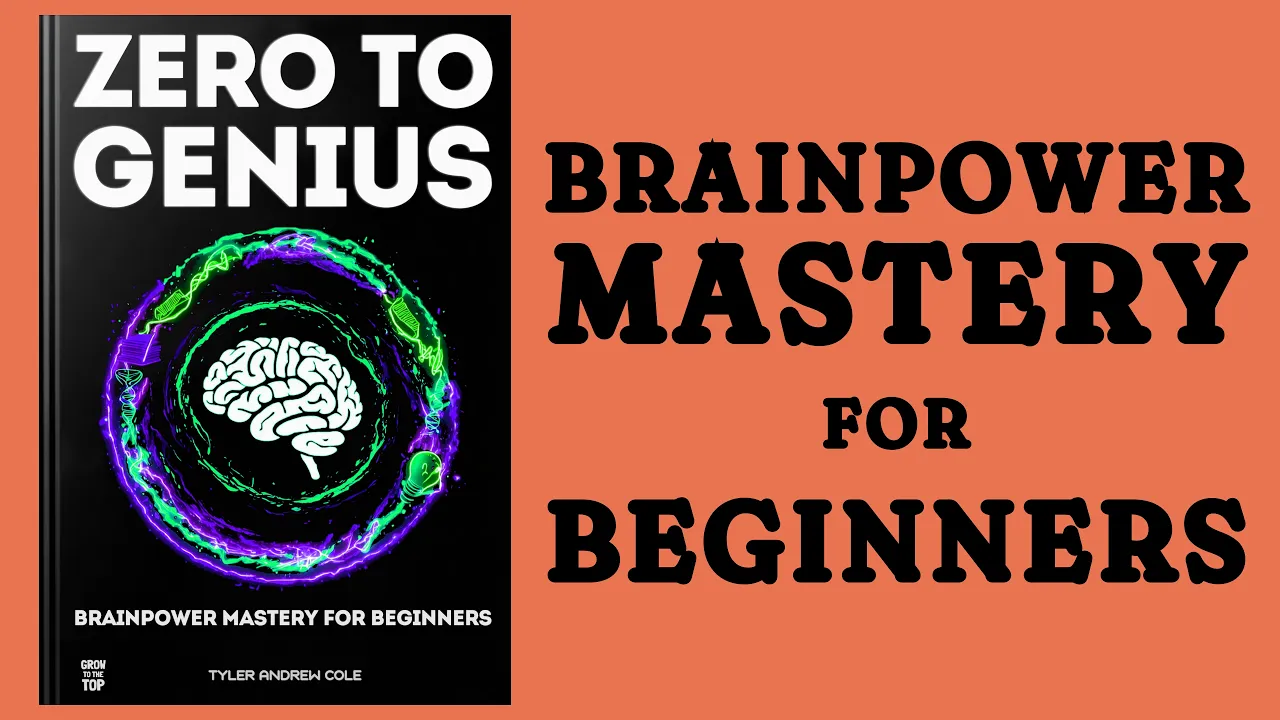
Ever felt like your brain was running on autopilot barely scratching the surface of its true capabilities what if you could unlock the hidden potential of your mind transforming from an average thinker into a cognitive Powerhouse zero to genius brain power Mastery for beginners is your key to unlocking that potential this book doesn't just promise To make you smarter it provides a step-by-step road map to rewire your brain for Peak Performance whether you're a student struggling with exams a professional aiming for that next promotion or simply someone who wants to keep their mind sharp this book
has the tools you need inside you'll discover memory techniques that will make information stick Like Glue Focus hacks that will have you powering through tasks with laser-like concentration and Cognitive enhancement strategies that will boost your problem solving skills to new heights but this isn't just about becoming a human calculator it's about transforming your entire life imagine approaching every challenge with confidence learning new skills with ease and navigating complex situations with Clarity and insight that's the beauty of true brain power Mastery in today's fast-paced information Rich World your Cognitive abilities are your most valuable asset they
determine how quickly you learn how effectively you solve problems and how successfully you na navigate both personal and professional challenges by enhancing these abilities you're not just improving your mind you're opening doors to Opportunities you might never have considered possible but fail to develop these abilities and you risk being left behind struggling to keep up in your Career missing out on opportunities and watching others achieve the success you desire so Embrace this journey and you'll be amazed at what you can achieve from from acing that crucial presentation to finally learning that skill you've always dreamed
of mastering the possibilities are endless are you ready to Unleash Your Inner genius your journey from zero to cognitive Mastery starts here don't let another day go by with your incredible potential lying Dormant open this book and take the first step towards a smarter sharper more successful you chapter 1 introduction to brain power Mastery the human brain is an extraordinary organ capable of Feats that continue to Astound scientists and researchers yet most of us barely scratch the surface of our cognitive potential imagine a world where you could harness the full power of your mind effortlessly
solving complex problems remembering vast Amounts of information and maintaining laser sharp Focus this isn't Science Fiction it's the reality that awaits you as you embark on your journey of brain power mastery as you delve into this book you'll discover the keys to unlocking your brain's hidden capabilities from the very first time you engage with these Concepts and techniques you'll begin to notice subtle shifts in your cognitive abilities you'll find yourself grasping new ideas More quickly recalling information with greater ease and approaching challenges with Newfound creativity these initial improvements are just the tip of the iceberg
a tantalizing glimpse of what's to come as you continue to develop your mental prowess but what exactly can you expect to achieve as you work through this book first and foremost you'll gain a solid foundation in the science of brain power and cognitive enhancement you'll learn About neuroplasticity the brain's remarkable ability to rewire itself and how you can leverage this knowledge to boost your mental capabilities you'll also acquire a toolkit of practical strategies for improving memory and enhancing focus and stimulating creativity by the time you reach the final page you'll have established a basic routine
for implementing these brain power techniques in your daily Life however the true magic happens when you commit to this journey over the long term as you continue to practice and refine these methods you'll experience a Cascade of benefits that extend Far Beyond Simple cognitive enhancement your problem solving skills will reach New Heights all allowing you to tackle complex challenges with confidence and Ingenuity your creativity will flourish opening up new avenues for personal and professional growth perhaps most Importantly you'll develop a level of mental agility that will serve you well in all aspects of life from
academic Pursuits to career advancement and personal relationships the importance of brain power Mastery in today's world cannot be overstated we live in an era of information overload where the ability to quickly process analyze and synthesize data is more valuable than ever in the workplace cognitive skills Are increasingly prized with employers seeking out individuals who can adapt to rapidly changing environments and Innovative Technologies on a personal level a sharp and agile mind is essential for navigating the complexities of Modern Life from managing finances to maintaining healthy relationships at the heart of our ability to enhance our
cognitive abilities lies the fascinating concept Of neuroplasticity for many years scientists believe that the brain structure was largely fixed after childhood however groundbreaking research in recent decades has revealed that the brain remains plastic throughout our lives constantly forming new neural Connections in response to experiences and learning this discovery has revolutionary implications for cognitive enhancement as it means that We can activ shape and improve our mental capabilities at any age the history of neuroplasticity research is filled with fascinating discoveries in the 1960s researchers began to observe changes in the brains of animals in response to different
environments later studies in humans revealed that the brains of London taxi drivers who must memorize the city's complex Street layout showed increased gray matter in areas associated with spatial navigation These findings and many others have conclusively demonstrated that our brains are not static organs but Dynamic systems capable of profound change and growth understanding neuroplasticity is crucial for anyone seeking to improve their cognitive abilities it means that with the right techniques and consistent practice you can literally rewire your brain for better performance whether you're looking to enhance your memory sharpen your focus or boost your problem
Solv Ving skills the principles of neuroplasticity provide the scientific foundation for Effective cognitive training as we set the stage for your journey to cognitive Excellence it's important to establish clear goals and expectations this book is designed to provide you with a comprehensive toolkit for brain power Mastery but it's up to you to put these tools into practice consistency and dedication are key the brain like any other part of the body Responds best to regular exercise and challenges throughout this book you'll encounter a variety of key Concepts and strategies these include techniques for enhancing memory methods
for improving focus and concentration exercises for boosting creativity and practices for managing stress and promoting overall brain health each chapter builds upon the previous ones creating a holistic approach to cognitive enhancement that addresses all aspects of mental Performance to get the most out of this book it's recommended that you approach it with an open mind and a willingness to experiment not every technique will work equally well for everyone so feel free to adapt and customize the strategies to suit your individual needs and preferences keep a journal to track your progress and note any changes You
observe in your cognitive abilities remember the journey to brain Power Mastery is a marathon not a Sprint celebrate small victories along the way and remain patient as you work towards your larger goals now let's take a closer look at what's involved in this process and the most important steps you'll be taking the Journey Begins With cognitive enhancement techniques which form the foundation of brain power Mastery you'll learn methods for improving analytical thinking boosting creativity and Accelerating information processing these skills are essential for tackling complex problems problems and adapting to new challenges in both personal and
professional contexts next we'll delve into memory improvement strategies a powerful memory is a Cornerstone of cognitive Excellence enabling you to retain and recall information more effectively you'll discover pneumonic devices spaced repetition techniques and other Advanced Methods for enhancing both short-term and long-term memory focus and concentration are crucial skills in our distra action filled world and you'll learn a variety of hacks to sharpen your ability to stay on task from creating an optimal work environment to practicing mindfulness these techniques will help you achieve deeper levels of concentration and productivity to keep your brain in top shape
you'll explore a range of Exercises and activities designed to challenge and stimulate your mind these include puzzles games and learning new skills all of which contribute to cogn nitive growth and flexibility throughout the book we'll also address the importance of lifestyle choices in maintaining brain health you'll learn about the critical role of sleep and physical activity in cognitive function and how to optimize these aspects of your life for Peak mental Performance finally we'll explore mindfulness and stress management techniques chronic stress can have a detrimental effect on cognitive function so learning to manage stress effect actively
is crucial for long-term brain health and performance you might be wondering why these particular steps were chosen and arranged in this order the sequence is designed to build a strong Foundation of core cognitive skills before moving on To more specific techniques and lifestyle factors by starting with General cognitive enhancement strategies you'll develop a broad base of mental skills that will support your progress in subsequent areas the memory and focus techniques build upon this Foundation providing you with the tools to retain information more effectively and apply your cognitive skills with greater Precision the brain exercises and
lifestyle factors discussed later in the book serve to reinforce and enhance the skills you've developed while also promoting long-term brain health by addressing Stress Management and mindfulness towards the end we ensure that you have the tools to maintain your COG nitive gains and continue progressing even in the face of life's inevitable challenges each step in this journey is Backed by scientific research and has been carefully selected for its Effectiveness in promoting cognitive growth by following this structured approach you'll be giving yourself the best possible chance of achieving significant and Lasting improvements in your mental capabilities
as we conclude this introductory chapter you might be be feeling a mix of excitement and perhaps a touch of apprehension about the Journey ahead rest assured that every great achievement begins with a single step and you've already taken that step by opening this book the path to cognitive Excellence is one of continuous growth and Discovery filled with moments of insight and breakthrough that will transform the way you think and perceive the world around you in the next chapter we'll dive deep into cognitive enhancement techniques exploring powerful methods to Supercharge your problem solving abilities and Unleash
Your creative potential get ready to push the boundaries of your mental capabilities and discover just how far your mind can take you before we go on make sure to subscribe to grow to the top and hit the notification Bell to receive more exclusive insights and Powerful techniques that will accelerate your personal growth and help you unlock your full potential Chapter 2 cognitive enhancement techniques the human mind is a Marvel of nature capable of extraordinary Feats of reasoning creativity and problem solving yet for many of us our cognitive abilities remain largely untapped like a powerful engine
idling in neutral in this chapter we'll explore a range of techniques designed to rev up your mental engine and unlock your full cognitive potential cognitive enhancement is more than just a buzz Word it's a scientifically grounded approach to improving the way our brains function at its core cognitive enhancement is about optimizing the brain's natural processes to achieve higher levels of performance this isn't about becoming superhuman but rather about reaching the upper limits of what your unique brain is capable of achieving the importance of cognitive enhancement in the pursuit of brain power Mastery cannot be Overstated
in today's fast-paced information-rich world the ability to think quickly reason effectively and solve problems creatively is more valuable than ever whether you're a student striving for academic Excellence a professional aiming for career advancement or simply someone who wants to navigate life with greater mental acuity enhancing your cognitive abilities can be transformative one of the key principles Underlying cognitive enhancement is neuroplasticity which we touched upon in the prev previous chapter this remarkable property of the brain allows it to form new neural connections and reorganize existing ones in response to new experiences and learning by engaging in
targeted cognitive enhancement exercises we can effectively rewire our brains for improved performance it's important to understand that cognitive enhancement is not about Cramming more information into your brain rather it's about developing more efficient and effective ways of processing analyzing in and utilizing information think of it as upgrading your brain's operating system rather than simply expanding its hard drive as we delve into specific cognitive enhancement techniques keep in mind that consistency is key just as physical exercise yields the best results when practiced regularly cognitive exercises Require ongoing commitment to produce noticeable improvements the good news is
that many of these techniques can be seem ly integrated into your daily routine making cognitive enhancement a natural part of your lifestyle let's begin by exploring techniques for enhancing problem solving skills problem solving is a fundamental cognitive ability that impacts virtually every aspect of Our Lives from tackling work-related Challenges to navigating personal relationships the goal is to develop a systematic approach to problem solving that allows you to break down complex issues into manageable components and identify effective Solutions one powerful technique for analytical thinking is the five yse method this approach involves asking why five times
in succession to dig deeper into the root cause of a problem for example if you're consistently running Late for work you might start by asking why am I late the answer might be because I can't find my keys in the morning you then ask why can't I find my keys and so on until you've identified the underlying issue and can develop an appropriate solution another useful tool for problem solving is the ideal framework identify the problem Define the context explore possible strategies act on the best solution and look back and learn this Structured approach ensures
that you consider all aspects of a problem before jumping to conclusions or implementing Hasty solutions to put these techniques into practice try applying them to real world problems you encounter in your daily life start with relatively simple issues and gradually work your way up to more complex challenges you'll likely find that with practice your ability to approach Problems systematically and generate effective Solutions improves significantly while analytical thinking is crucial for problem solving it's equally important to develop your creative thinking abilities creativity allows us to generate novel ideas make unexpected connection and approach problems from fresh
perspectives contrary to popular belief creativity is not a fixed trait but a skill that can be cultivated and Enhanced one effective technique for boosting creativity is called random word association start by selecting a random word you can use a dictionary or a random word generator online and then try to connect this word to the problem or task at hand for example if your brainstorming IDE ideas for a new product and your random word is butterfly you might think about how the concept of transformation could apply to Your product or how you could incorporate wing-like elements
into the design another powerful creativity boosting technique is reverse brainstorming instead of trying to solve a problem directly start by listing ways to make the problem worse this counterintuitive approach can help break you out of conventional thinking patterns and lead to innovative solutions for instance if you're trying to improve Customer satisfaction you might first brainstorm ways to make customers extremely disatisfied this exercise often reveals insights that can be reversed to create Positive Solutions to overcome mental blocks and stimulate Divergent thinking try the six thinking hats technique developed by Edward debono this method involves approaching a
problem from six different perspectives each represented by a different colored hat white facts and Information red emotions and intuitions black potential negative outcomes yellow benefits and positive aspects green creativity and new ideas and blue process and big picture Thinking by consciously adopting these different viewpoints you can generate a more comprehensive and creative set of solutions as you work on enhancing your problem solving and creative thinking skills it's also crucial to improve your ability to process information quickly And effectively in our information Rich world the capacity to rapidly absorb analyze and synthesize data is invaluable one
technique for accelerating information processing is speed reading while it may sound like a gimmick speed reading is a legitimate skill that can be developed with practice start by using a finger or a pen to guide your eyes across the page gradually increasing your pace focus on expanding your visual field to take in More words at once rather than reading word by word with consistent practice you can significantly increase your reading speed while maintaining good comprehension effective note taking is another crucial skill for processing information efficiently the Cornell method is a popular and effective note-taking system
divide your page into three sections a narrow left column for main ideas or questions a wider right column for detailed notes and a bottom Section for summarizing during a lecture or while reading take detailed notes in the right column after you're done use the left column to jot down key ideas or questions that relate to your notes finally summarize the main points at the bottom of the page this method encourages active engagement with the material and makes it easier to review and retain information later to further enhance your information processing skills practice summarizing complex Ideas
in in your own words after reading an article or listening to a podcast challenge yourself to explain the main Concepts in a few concise sentences this exercise forces you to identify the most important information and articulate it clearly improving both your comprehension and retention as you work on these cognitive enhancement techniques it's important to engage in regular practical exercises to reinforce your skills set aside time Each day day for targeted brain training this might involve solving a challenging puzzle engaging in a brainstorming session for a personal or professional project or practicing speed reading with a
variety of texts one effective daily exercise is the random topic challenge each day select a random topic you can use online random topic generators for this and spend 10 to 15 minutes researching and writing about it this exercise enhances your ability to Quickly process ESS new information think creatively about unfamiliar subjects and articulate your thoughts clearly another valuable exercise is the 30 second summary throughout your day after any significant conversation meeting or reading session challenge yourself to mentally summarize the key points in 30 seconds or less this practice sharpens your ability to quickly identify and
retain essential information to improve your analytical Thinking try and incorporating logic puzzles or brain teasers into your daily routine Sudoku crossword puzzles or apps designed for brain training can all be effective tools for sharpening your problem solving skills as with any skill development you may encounter challenges or setbacks in your cognitive enhancement Journey it's important to anticipate these potential obstacles and have strategies in place to overcome Them one common Pitfall is the expectation of immediate dramatic results cognitive enhancement is a gradual process and improvements may be subtle at first to avoid frustration focus on consistency
rather than rapid transformation keep a journal to track your progress over time noting even small improvements in your thinking skills or problem solving abilities another challenge you might face is hitting a plateau in your Progress when this happens it's often helpful to introduce new types of cognitive exercises or to increase the difficulty level of your current practices for example if you've been doing sodoku puzzles regularly try switching to a different type of logic puzzle or increase the difficulty level of your sodoku grids maintaining motivation for consistent practice can also be challenging to address this try
setting Specific achievable goals for your cognitive enhancement efforts for instance you might aim to increase your reading speed by 20% over the next month or to solve increasingly complex logic puzzles celebrate your achievements no matter how small to keep yourself motivated it's also worth noting that cognitive enhancement techniques may not work uniformly for everyone we all have unique brain structures and cognitive strengths if you find that a particular Technique isn't yielding results don't be afraid to experiment with different approaches until you find what works best for you as we conclude this chapter on cognitive enhancement
techniques take a moment to reflect on the powerful tools you've acquired from analytical problem solving methods to creativity boosting exercises and information processing strategies you now have a comprehensive toolkit for enhancing your cognitive Abilities remember the Journey of cognitive enhancement is ongoing each time you apply these techniques you're not just solving a problem or generating an idea you're actively reshaping your brain forming new neural connections and expanding your cognitive capabilities with consistent practice you'll likely find that tasks that once seemed challenging become increasingly manageable and your capacity for complex Thinking continues to grow as you
move forward maintain a sense of curiosity and openness to new cognitive challenges seek out opportunities to apply your enhanced thinking skills in various aspects of your life you might be surprised at how your improved cognitive abilities can transform your approach to work relationships and personal growth in the next chapter we'll explore another crucial aspect of brain power Mastery memory improvement strategies You'll discover powerful techniques to enhance both your short-term and long-term memory allowing you to retain and recall information with greater ease and accuracy these memory skills will complement and enhance the cognitive abilities you've developed
creating a powerful Synergy that will elevate your mental performance to new heights as you stand on the cusp of unlocking your memory's full potential take a moment to appreciate how far you've already come The cognitive enhancement techniques you've learned are the foundation upon which you'll build an extraordinary memory prepare to be amazed by what your mind can achieve when you apply the right strategies and techniques chapter 3 memory improvement strategies picture this you're in an important meeting confidently recalling key facts and figures without hesitation or perhaps you're acing an exam effortlessly retrieving information you Studied
weeks ago these scenarios aren't just fantasies they're the reality that awaits you as you master the art of memory improvement memory is the Cornerstone of cognitive function underpinning every aspect of our mental lives from recalling important dates to retaining complex information for work or study a robust memory is essential for success in virtually every area of life yet for many of us memory can feel Frustratingly unreliable with important information slipping through the cracks at crucial moments the good news is that memory like any other cognitive skill can be dramatically improved with the right techniques and
consistent practice in this chapter we'll EXP explore a range of powerful strategies to enhance your memory allowing you to retain and recall information with greater ease and precision than ever before before we dive into specific techniques it's Crucial to understand how memory works at its most basic level memory is the process by which information is encoded stored and retrieved in the brain this process involves complex interactions between different parts of the brain particularly the hippocampus and and the prefrontal cortex memory can be broadly categorized into two main types short-term or working memory and long-term memory
short-term memory allows us to Hold and manipulate information for brief periods typically up to about 30 seconds it's what we use when we're trying to remember a phone number long enough to dial it or when we're mentally calculating a tip at a restaurant long-term memory on the other hand is our brain system for for storing information over extended periods potentially for a lifetime this is where we keep our knowledge of facts events and skills long-term memory can be Further divided into explicit memory conscious Recollections of facts and events and implicit memory unconscious memories like how
to ride a bike understanding these different types of memory is important because different strategies may be more effective for enhancing short-term versus long-term recall as we explore various memory improvement techniques keep in mind how they might apply to different types of information And different memory processes one of the most powerful tools in the memory improvement Arsenal is the use of pneumonic devices pneumonics are memory aids that help you encode and retrieve information more effectively by creating meaningful associations these can take many forms from acronyms and acrostics to Rhymes and visual imagery let's start with one
of the most common pneumonic devices the acronym this Involves taking the first letter of each word in a list or phrase and creating a new memorable word or phrase for example many people remember the colors of the rainbow using the acronym ryg Biv red orange yellow green blue indigo violet to use this technique effectively try to create acronyms that spell out actual words or phrases that are easy to remember acrostics are are similar to acronyms but instead of just using the first letter you create a sentence where Each word begins with the letter you're trying
to remember a classic example is Every Good Boy Does Fine to remember the lines of the treble cleff in music e g DF when creating your own acrostics try to make them Vivid humorous or personally meaningful to enhance their memorability rhymes and songs can also be incredibly effective pneumonic devices particularly for remembering sequences or lists think about how easily you can recall the alphabet Thanks to the familiar ABC song When creating your own Rhymes or songs focus on creating a catchy Rhythm and rhyme scheme even if you're not musically inclined simple rhyming phrases can be
very effective visual imagery is another powerful pneumonic technique this involves creating Vivid mental images to represent the information you want to remember the more unusual exaggerated or emotionally charged the image the more Memorable it tends to be for example if you need to remember to buy milk eggs and bread you might visualize a cow milk laying an egg on a giant slice of bread the absurdity of the image makes it more likely to stick in your memory to practice using pneumonics start by applying these techniques to everyday tasks create an acronym for your grocery list
make up a rhyme to remember a friend's birthday or use visual imagery to recall where you Parked your car as you become more comfortable with these techniques you can apply them to more complex information in your work or studies while pneumonics are excellent for remembering specific pieces of information another crucial aspect of memory improvement is understanding how to retain information over the long term this is where the technique of spaced repetition comes into play spaced repetition is based on the Py ological principle that we are more likely to remember information if we review it at
gradually increasing intervals instead of cramming all your studying into one long session you space out your reviews over time with the gaps between reviews growing longer as the information becomes more firmly embedded in your long-term memory here's a simple spaced repetition schedule you might follow when learning new information one first review immediately After learning 2 second revieww one day later 33d review 3 Days Later 44th review one week later five fifth review 2 weeks later six sixth Review 1 month later of course you can adjust these intervals based on the complexity of the material and
your personal learning style the key is to review the information just as you're starting to forget it which strengthens the neural Pathways associated with that memory to implement spaced repetition Effectively consider using flashcards or a digital spaced repetition system SRS many apps and software programs are available that can automatically schedule your reviews based on how well you remember each piece of information when using spaced repetition it's important to actively engage with the material during each review don't just passively read over your notes Instead try to recall the information from memory before checking your Answer this
process of active recall strengthens the memory much more effectively than simply rading as you progress in your memory improvement Journey you may want to explore more Advanced Techniques one such method is the Mind Palace technique also known as the method of Loi this powerful pneumonic system has been used for thousands of years and is still employed by memory Champions today the Mind Palace Tech technique involves Creating a mental map of a familiar place like your home or a route you often walk and using it as a framework to store information to use this method first
choose a location you know well and mentally walk through it identifying specific spots along the way these spots will serve as your Losi or locations for storing information next take the information you want to remember and create Vivid Unusual images to represent each piece place these images at your chosen locations in your mental map when you need to recall the information simply take a mental walk through your mind Palace retrieving the images and thus the information from each location for example let's say you need to remember a list of US presidents in order you might
imagine George Washington chopping down a tree in your front yard first location John Adams Taking a bath in your kitchen sink second location Thomas Jefferson writing the Declaration of Independence on your living room wall Third location and so on the Mind Palace technique can take some practice to master but it's incredibly powerful once you get the hang of it start by using it for relatively short lists of information and gradually work your way up to more complex sets of data another Advanced memory technique Is the major system which is particularly useful for remembering numbers this
system works by converting numbers into consonant sounds which can then be turned into words or images that are easier to remember than abstract digits in the major system each digit from 0 to 9 is associated with one or more consonant sounds 0al s or z 1al t or d 2 = N 3 = M 4 = R 5 = L 6 = J or sh 7 = k or g 8al f or v 9al p or B to use this system you first convert the number You want to remember into a word or phrase using
these sound associations for example the number 314 could become Mother 3al m 1al t 4al r you then create a vivid image or story using this word with practice you can use the major system to remember long strings of numbers like pi to hundreds of decimal places or important dates and phone numbers as you work on improving your memory it's important to engage in Regular practical exercises to reinforce your skills here are a few exercises you can incorporate into your daily routine one the memory Palace walkth through each day take a mental walk through your
mind Palace reviewing any information you've stored there this not only reinforces the memories but also helps maintain the clarity of your mental map two number word association practice converting numbers to words using the major system start with Two-digit numbers and work your way up to longer sequences three daily recap at the end of each day try to recall as many details as you can about your day from what you had for breakfast to conversations you had this exercises your episodic memory and encourages you to pay more attention to daily experiences four random word memorization each
day day choose 10 random words and give yourself 5 minutes To memorize them using any technique you like after an hour see how many you can recall five grocery list challenge before going shopping try to memorize your entire grocery list using neonics see if you can recall all items without checking the list while shopping as with any skill development you may encounter challenges as you work on improving your memory one common issue is the feeling of being over overwhelmed when first learning new Memory techniques remember that it's normal for these methods to feel awkward or
difficult at first start with small manageable chunks of information and gradually increase the complexity as you become more comfortable with each technique another potential Pitfall is neglecting to review and reinforce memories over time even the most vividly encoded memory can fade if it's not periodically Revisited make sure to Incorporate regular review sessions into your memory practice using spaced repetition to maintain and strengthen your memories you might also find that certain techniques work better for you than others this is perfectly normal everyone's brain works slightly differently if you find that a particular method isn't yielding results
don't be afraid to experiment with different approaches until you find what Works best for you it's also worth noting that factors like stress lack of sleep and poor overall health can significantly impact memory function as you work on improving your memory skills pay attention to these lifestyle factors as well ensure you're getting adequate sleep managing stress effectively and maintaining good overall health to support your cognitive function as we conclude this chapter on memory improvement strategies take a Moment to reflect on the powerful tools you've acquired from pneumonic devices and spaced repetition to Advanced Techniques like
the Mind Palace and major system you now have a comprehensive toolkit for enhancing your memory capabilities remember improving your memory is not just about remembering more information it's about transforming the way you engage with the world around you as your memory skills improve you'll Likely find that you become more observant more Curious and more engaged with your experiences you'll be able to make connections between ideas more easily enhancing your creative and analytical thinking moreover a strong memory can boost your confidence in Social and professional situations imagine being able to recall names faces and personal details
with ease or to discuss complex topics without constantly referring to notes These abilities can significantly enhance your personal and professional relationships As you move forward maintain a sense of playfulness and experimentation in your memory practice the human brain thrives on novelty and challenge so continue to push your boundaries and try new memory techniques you might be surprised at just how much your mind is capable of remembering when you apply the right strategies in the next chapter we'll Explore another crucial aspect of brain power Mastery focus and concentration you'll discover powerful techniques to sharpen your attention
minimize distractions and Achieve deeper levels of concentration these skills will complement your enhanced memory capabilities allowing you to not only remember more but also to engage more deeply and productively with the information and tasks at hand as you Stand on the brink of mastering the art of focus take a moment to appreciate how far you've come the memory techniques you've learned are not just tools for remembering they're gateways to a more engaged more aware and more intellectually vibrant life prepare to channel this enhanced mental Clarity into Razorsharp focus and unwavering concentration chapter 4 focus and
concentration hacks in a world teeming With distractions the ability to focus intensely and concentrate deeply has become a superpower imagine being able to dive into complex tasks with laser-like Precision tuning out the noise of the world around you picture yourself maintaining unwavering concentration for hours effortlessly entering a state of flow where your productivity Soares and your best work emerges this is not a pipe dream it's a skill that can be developed and mastered With the right techniques and consistent practice the importance of focus and concentration in our cognitive toolkit cannot be overstated in today's fast-paced
information saturated World our attention is constantly Under Siege from the endless ping of notifications on on our devices to the Myriad tasks vying for our attention at work and home maintaining Focus has become increasingly challenging yet it's precisely this ability to concentrate Deeply that separates High Achievers from the rest in virtually every field of endeavor before we dive into specific techniques for enhancing focus and concentration it's crucial to understand what we're up against our brains are not naturally wired for the kind of sustained singular Focus that many modern tasks require throughout most of human history
being easily distracted was a survival Advantage it allowed our Ancestors to quickly notice potential threats or opportunities in their environment in our current world however this tendency towards distraction can be a significant hindrance common distractions we face today include one digital interruptions emails text messages social media notifications and other digital alerts constantly pull at our attention two environmental distractions noise visual clutter and Activity in our surroundings can disrupt our Focus three internal distractions our own thoughts worries and Daydreams can pull us away from the task at hand four multitasking the myth of effective multitasking has
led many to constantly switch between tasks fragmenting their attention and reducing overall productivity understanding these challenges is the first step in developing strategies to overcome them By recognizing the sources of distraction in our lives we can begin to create environments and habits that support deep focus and concentration one of the fundamental principles of enhancing focus is understanding and working with our natural attention span while the of cited statistic that humans have an attention span shorter than a goldfish is more myth than fact it's true that our ability to maintain Focus does have Limits research suggests
that most people can maintain intense Focus for about 90 minutes before needing a break this aligns with our natural Ultra Rhythm a cycle that governs our energy and attention levels throughout the day by working with this Rhythm rather than against it we can maximize our periods of peak focus and productivity one effective technique for leveraging this natural rhythm is the pomodoro technique this time management Method involves working in focused 25-minute intervals called pomodoros followed by short 5minute breaks after four pomodoros you take a longer break of 15 to 30 minutes this technique works well because
it aligns roughly with our natural attention span allowing us to maintain Focus during the work periods while giving our brains regular opportunities to rest and recharge to implement the pomodoro Technique One choose a task to focus on Two set a timer for 25 minutes three work on the task with full concentration until the timer Rings four take a 5-minute break five repeat steps 1 to 4 four times then take a longer break of 15 to 30 minutes while 25 minutes is the standard Pomodoro length feel free to adjust this based on your personal Focus capacity
and the nature of your work some people find that 50-minute work periods with 10-minute breaks work Better for them creating an environment conducive to focus is another crucial step in enhancing your concentration abilities your physical workspace can have a significant impact on your ability to maintain attention here are some strategies for optimizing your environment one declutter your workspace a cluttered environment can lead to a cluttered mind regularly clear your desk of unnecessary items keeping only what You need for your current task two minimize visual distractions if possible position your workspace so that you're not facing
high traffic areas use room dividers or plants if necessary to create a more secluded space three control noise levels if you're working in a noisy environment consider using noise cancelling headphones or playing white noise or instrumental music to mask distracting sounds Four optimize lighting ensure your workspace is well lit to reduce eye strain and maintain alertness natural light is best but if that's not available use full spectrum light bulbs to mimic natural daylight five maintain a comfortable temperature being too hot or too cold can be a significant distraction aim for a temperature between 68 to
72° F of 20 to 22° cells for optimal comfort and focus in addition to physical Environment optimiz ation it's crucial to create a digital environment that supports Focus rather than undermining it here are some strategies one turn off notifications disable push notifications on your devices for emails social media and non-essential apps during focused work periods two use website blockers tools like Freedom rescue time or stay focused can help you block distracting websites during designated work Times three implement the two-minute rule if a task will take less than 2 minutes to complete do it immediately rather
than letting it linger and potentially distract you later four practice digital minimalism regularly audit your digital tools and apps keeping only those that truly add value to your work and life while creating an optimal environment is important true Mastery of focus and concentration comes from within mindfulness practices can be Incredibly powerful tools for enhancing your ability to concentrate mindfulness at its core is the practice of bringing your attention to the present moment without judgment this skill directly translates to improved focus and concentration in all areas of life one of the simplest and most effective mindfulness
practices is mindful breathing this technique involves focusing your attention on your breath noticing the sensation of air Moving in and out of your body when your mind inev ably wanders as all Minds do you simply notice that it has wandered and gently bring your attention back to your breath to practice mindful breathing one find a comfortable seated position two close your eyes or soften your gaze three bring your attention to your breath noticing the sensation of air moving in and out of your nostrils or the rise and fall of your chest or abdomen four when
you notice your mind Has wandered gently bring your attention back to your breath without judging yourself five start with 5 minutes and gradually increase the duration as you become more comfortable with the practice regular practice of mindful breathing can significantly enhance your ability to focus and resist distractions in all areas of life it's like a gym workout for your attention muscles another powerful mindfulness technique is the body scan this practice Involves systematically bringing your attention to different parts of your body noticing any Sensations present without trying to change them this helps develop a deep level
of body awareness and trains your mind to stay focused on a single point of attention to practice a body scan one lie down or sit in a comfortable position two close your eyes and take a few deep breaths three Begin by bringing your attention to your toes noticing any Sensations present four slowly move your attention up through your body feet ankles calves knees thighs hips abdomen chest back shoulders arms hands neck and head five if your mind wanders gently bring it back to the part of the body you were focusing on six spend about 20
to 30 minutes on a full body scan as you develop your mindfulness skills you'll find it easier to maintain focus and concentration in All areas of life you'll be better able to notice when your mind has wandered and bring it back to the task at hand while mindfulness practices are powerful tools for enhancing Focus sometimes we need more immediate strategies for maintaining concentration especially when working on challenging or tedious tasks here are some additional Focus hacks you can employ one use the five more rule when you feel your focus waning commit to Doing just five
more of whatever you're doing this might be five more minutes of work five more pages of reading or five more math problems often this small commitment is enough to push through a lull in concentration two implement the 22nd rule make distractions take at least 20 seconds to engage with for example put your phone in another room or log out of social media accounts this small barrier can be enough to discourage mindless Distraction seeking three practice active listening when in conversations or meetings Focus intently on truly understanding what the other person is saying this not only
improves your interpersonal skills but also trains your brain to maintain Focus four use visualization techniques before beginning a task take a moment to visualize yourself completing it successfully this mental rehearsal can help prime your brain for focused Work five employ The Ready Set Go meth method before starting a task take a moment to gather all necessary materials and clear your workspace this ready phase helps signal to your brain that it's time to focus six practice monotasking instead of trying to juggle multiple tasks commit to focusing on one thing at a time give it your full
attention before moving on to the next task seven use a focus Mantra develop a Short phrase that you repeat to yourself when you need to refocus such as I am fully present or I am focused and productive developing strong focus and concentration skills also involves building habits that support cognitive function more broadly here are some key habits to cultivate one prioritize sleep adequate sleep is crucial for cognitive function including the ability to focus aim for 7 to n hours of quality sleep each night Two exercise regularly physical activity has been shown to improve focus and
concentration aim for at least 150 minutes of moderate intensity exercise per week three practice good nutrition a balanced diet rich in fruits vegetables whole grains and lean proteins provides the nutrients your brain needs to function optimally four stay hydrated even mild dehydration can impact cognitive function aim to drink water regularly Throughout the day five take regular breaks paradoxically take taking regular breaks can improve overall focus and productivity use techniques like the Pomodoro method to structure your work and break times six engage in challenging mental activities regularly engaging in activities that challenge your brain such as
learning a new language or solving puzzles can improve overall cognitive function including focus and Concentration as you work on enhancing your focus and concentration you may encounter some common challenges here are some strategies for overcoming them one mind wandering if you find your mind frequently wandering try the noting technique when you notice your mind has wandered simply make a mental note of what distracted you EG planning worrying remembering then gently bring your attention back to the task at hand two difficulty getting started if you're Struggling to begin a task try the two-minute rule commit to
working on the task for Just 2 minutes often this is enough to overcome inertia and you'll find yourself continuing beyond the 2 minutes three fatigue if you're feeling too tired to focus try taking a short power nap 15 to 20 minutes or going for a brisk walk both can help rejuvenate your mind and boost Focus four overwhelm if you're feeling Overwhelmed by a large task break it down into smaller manageable steps focus on one step at a time rather than the entire project five technology addiction if you find yourself constantly reaching for your phone or
checking social media try using App blockers or setting specific technologyfree times during your day remember developing strong focus and concentration skills is a journey not a destination it's normal to have good Days and bad days the key is to be patient with yourself and to keep practicing consistently over time you'll notice significant improvements in your ability to maintain focus and concentration as we conclude this chapter on focus and concentration hacks take a moment to reflect on the powerful tools you've acquired from creating an optimal environment for Focus to practicing mindfulness techniques and implementing specific Focus
hacks you Now have a comprehensive toolkit for enhancing your ability to concentrate deeply and resist distractions remember the ability to focus intensely is more than just a productivity hack it's a gateway to deeper engagement with your work your relationships and your life as you develop your focus skills you may find that you not only accomplish more but also experience a greater sense of presence and fulfillment in your daily Life in the next chapter we'll explore the world of brain exercises and activities you'll discover a range of engaging exercises designed to challenge your mind promote cognitive
growth and and keep your brain sharp and agile these activities will complement the focus and memory skills you've developed creating a well-rounded cognitive enhancement program as you prepare to dive into these brain boosting exercises remember How far you've come the focus and concentration skills you've honed are the perfect foundation for engaging deeply with the cognitive challenges ahead get ready to give your brain the workout it deserves and unlock even more of your COG nitive potential chapter 5 brain exercises and activities imagine your brain as a magnificent complex machine a supercomputer capable of extraordinary Feats like
any High Performance Machine your brain requires Regular maintenance and targeted exercises to operate at its peak in this chapter we'll explore a variety of engaging and effective brain exercises and activities designed to challenge your mind promote cognitive growth and keep your mental faculties sharp and agile the importance of brain exercises in the pursuit of brain power Mastery cannot be overstated just as physical exercise strengthens our muscles and improves our overall health mental Exercises strengthen our cognitive abilities and enhance our brain's performance engaging in regular brain training can lead to improvements in memory problemsolving skills processing
speed and even creativity but why exactly our mental exercis is so crucial for cognitive enhancement the answer lies in the concept of neuroplasticity which we've touched upon in previous chapters neuroplasticity refers to the brain's Ability to form new neural connections and reorganize existing ones in response to new experiences and learning when we engage in challenging mental activities we're essentially giving our brains a workout encouraging the formation of new neural Pathways and strengthening existing ones research has shown that people who regularly engage in mentally stimulating activities throughout their lives have a lower risk of cognitive decline
as they Age these individuals tend to have what scientists call cognitive reserve a kind of mental resilience that helps the brain adapt and compensate for age related changes or potential damage now that we understand the importance of brain exercises let's dive into some specific types of mental challenges and activities you can incorporate into your cognitive enhancement routine puzzles and games have long been recognized as excellent tools for Cognitive stimulation they challenge various aspects of our mental capabilities from logical reasoning and pattern recognition to spatial awareness and memory let's explore some types of puzzles and games
that are particularly effective for brain training one Sudoku this number placement puzzle is excellent for improving logical reasoning and concentration as you progress to more Difficult Sudoku grids you'll find your pattern recognition skills and ability to think several steps ahead improving two crossword puzzles these classic word games are great for enhancing vocabulary verbal fluency and general knowledge they also exercise your memory as you recall words based on Clues three jigsaw puzzles while often overlooked jigsaw puzzles are powerful tools for improving visual spatial reasoning in short-term memory they also Promote the production of dopamine which can
improve concentration and mood four chess this strategic board game is a cognitive Powerhouse enhancing problemsolving skills concentration pattern recognition and the ability to plan several moves ahead five Rubik's cube solving this three-dimensional puzzle improves spatial awareness hand eye coordination and problem solving skills it's also an excellent exercise in developing and following Algorithms six memory games whether digital or physical memory games like concentration or Simon are excellent for improving both short-term memory and concentration to get the most out of these puzzles and games try to engage with them regularly and progressively increase their difficulty start with
easier versions and gradually move to more challenging ones as your skills improve remember the goal is to challenge your Brain so if a puzzle or game becomes too easy it's time to step up to a more difficult level while puzzles and games are excellent for brain training learning new skills is perhaps one of the most powerful ways to promote cognitive growth when we learn something new our brains form new neural connections enhancing our cognitive flexibility and overall mental capacity here are some skills that are particularly beneficial for brain Health one learning a new language bilingualism
has been shown to have numerous cognitive benefits it improves executive function enhances attention control and may even delay the onset of dementia in older adults whether you choose to learn Spanish Mandarin or Klingon the process of acquiring a new language gives your brain a comprehensive workout to get started with language learning consider using apps like dualingo or Babel which make The process fun and interactive commit to practicing for at least 15 to 20 minutes each day as you progress try watching movies or TV shows in your target language or find a language exchange partner to
practice speaking two musical training learning to play a musical instrument is another powerful way to enhance cognitive function it improves hand eye coordination boosts memory enhances executive function and may even increase The volume of of gray matter in certain brain regions if you're new to music start with an instrument that interests you many people find the piano or guitar to be good starting points begin with the basics learning to read music understanding Rhythm and practicing scales as with language learning consistency is key aim for regular practice sessions even if they're short three art and crafts
engaging in Artistic activities whether it's painting sculpture knitting or origami can have significant cognitive benefits these activities enhance fine motor skills improve spatial awareness and promote creative thinking try exploring different art forms to find one that resonates with you you might start with adult coloring books which have gained popularity for their stress reducing and focus enhancing effects as you become more Comfortable you could move on to more complex forms of art or crafts four four coding learning to code is like learning the language of the Future IT enhances logical thinking problem solving skills and attention
to detail moreover the process of debugging finding and fixing errors in code is an excellent exercise in analytical thinking and patience to begin coding you might start with a userfriendly language like python Or JavaScript websites like code academy or free code Camp offer free interactive coding lessons for beginners start with simp simple projects and gradually increase the complexity as your skills improve five dancing learning new dance moves is not only a great physical exercise but also a cognitive one it improves spatial awareness enhances memory as you learn and recall sequences of moves and promotes neuroplasticity
you can start by Following dance tutorials on YouTube or joining a beginner's dance class focus on learning the basic steps of a particular dance style then work on combining these steps into longer sequences remember the key to reaping the cognitive benefits of skill learning is consistent practice and gradual progression don't be afraid to make mistakes they're an essential part of the learning process and contribute to cognitive Growth while structured puzzles games and skill learning are excellent for brain training you can also create your own brain exercises that you can incorporate into your daily life here
are some ideas for DIY brain activities one the Alphabet game choose a category EG animals countries foods and try to name an item in that category for each letter of the alphabet this game enhances verbal fluency and quick thinking two Mental Math instead of Reaching for a calculator try to do simple calculations in your head start with basic addition and subtraction and work your way up to more complex operations three sensory deprivation exercises try performing simple tasks with one of your senses turned off for example try identifying objects in a bag without looking or navigating
a familiar room with your eyes closed this enhances your other senses and promotes Neuroplasticity four story creation take three random objects and create a short story that incorporates all of them this exercise boosts creativity and narrative thinking five reverse spelling try spelling words backwards start with shorter words and progress to longer more complex ones this enhances your working memory and concentration six drawing with non-dominant hand try sketching simple objects using your non-dominant hand This challenges your brain and can improve neural connections between the right and left hemispheres seven Memory Palace expansion building on the Memory
Palace Technique we discussed in the memory chapter try regularly adding new rooms or locations to your mental Palace this not only improves your memory but also enhances visualization skills to make these DIY brain activities more effective try to incorporate them into Your daily routine for example you might play The Alphabet game while commuting practice Mental Math while grocery shopping or engage in story creation before bed the more you can seamlessly integrate these exercises into your life the more consistent your brain training will be as you engage in these various brain exercises and activities it's important
to maintain a balanced approach while it's great to focus on areas where you want to improve don't Neglect other aspects of cognitive function a well-rounded brain training regimen should include exercises that Target different cognitive domains including one memory both short-term and long-term memory exercises two two attention and concentration activities that require focused attention for extended periods three processing speed exercises that challenge you to think and react quickly four executive function tasks That involve planning decision- making and problem solving five spatial reasoning activities that involve mental manipulation of objects or navigation six verbal skills exercises that
enhance vocabulary verbal fluency and language processing by engaging in a diverse range of cognitive exercises you ensure that you're giving your brain a comprehensive workout and promoting Overall cognitive Health to help you get started with a balanced brain training routine here's a sample weekly schedule you might follow Monday Sudoku puzzle 20 minutes plus language learning 15 minutes Tuesday crossword puzzle 20 minutes plus mental math exercises 10 minutes minutes Wednesday chess game 30 minutes plus reverse spelling practice 10 minutes Thursday memory game 15 minutes Plus coding practice 20 minutes Friday jigsaw puzzle 25 minutes plus story
creation exercise 10 minutes Saturday learn a new dance move 20 minutes plus Alphabet game 10 minutes Sunday art or craft activity 30 minutes plus Memory Palace expansion 15 minutes remember this is just a sample schedule feel free to adjust it based on your interests available time and cognitive goals the key is to maintain variety and consistency in your brain training Routine as you embark on your brain training Journey you may encounter some challenges here are some common issues and strategies to overcome them one lack of time if you're struggling to find time for brain exercises
try integrating them into your existing routine for example you could do a quick puzzle while having your morning coffee or practice Mental Math during your commute two boredom or lack of Motivation if you find yourself getting bored with certain exercises don't be afraid to switch things up try new types of puzzles or games or explore different skills to learn remember novelty is good for your brain three difficulty level if you find certain exercises too challenging it's okay to step back to an easier level conversely if exercises become too easy make sure to increase the difficulty
to keep challenging your brain four Inconsistency like any form of training consistency is key for brain exercises if you're having trouble maintaining a regular routine try setting reminders on your phone or linking your brain training to an existing habit EG always doing a quick brain exercise after brushing your teeth five measuring progress it can be challenging to gauge Improvement in cognitive function consider keeping a log of your brain training activities Noting things like completion times for puzzles or the number of words you can remember in memory games this can help you track your progress over
time remember the goal of these exercises is not Perfection but progress every time you engage in a brain training activity you're giving your cognitive functions a workout and promoting brain health as we conclude this chapter on brain exercises and activities take a moment To appreciate the incredible potential of your mind the human brain is a Marvel of adaptability and resilience capable of growth and Improvement throughout our entire lives by engaging in regular brain training you're not just enhancing your cognitive abilities you're investing in your future mental health and well-being the exercises and activities we've explored
in this chapter are powerful tools for cognitive enhancement But they're most effective when combined with the other strategies we've discussed in previous chapters your improved focus and concentration skills will help you engage more deeply with these brain exercises your enhanced memory techniques will allow you to retain and build upon the Knowledge and Skills you gain together these various aspects of brain power Mastery create a synergistic effect elevating your over overall Cognitive performance to new heights As you move forward maintain a sense of curiosity and playfulness in your brain training approach each puzzle game or new
skill as an opportunity for Discovery and growth celebrate your progress no matter how small it may seem remember every mental challenge you undertake is contributing to your cognitive Reserve building resilience and flexibility into your brain that will serve you well throughout your life In the next chapter we'll explore how lifestyle choices impact brain health and cognitive function you'll discover how factors like sleep physical activity and social interaction can significantly influence your brain power these insights will help you create a holistic approach to cognitive enhancement optimizing not just your mental exercises but your entire lifestyle for
Peak brain performance as you prepare to delve into these lifestyle factors Consider how you can integrate the brain exercises and activities we've discussed into your daily routine the cognitive skills you're developing are not just for solving puzzles or playing games they're tools that can enhance every aspect of your life from your work performance to your personal relationships get ready to discover how a brainhealthy lifestyle can amplify the benefits of your cognitive training and Propel you Further on your journey to brain power mastery chapter six lifestyle choices for brain health imagine your brain as a high-
performance sports car no matter how skilled the driver or how advanced the engine without proper maintenance and the right fuel that car will never reach its full potential similarly while the cognitive enhancement techniques and brain exercises we've explored in previous Chapters are powerful tools their effectiveness can be significantly Amplified or hindered by our everyday lifestyle choices in this chapter we'll delve into the critical role that lifestyle factors play in maintaining and enhancing brain health we'll explore how seemingly unrelated aspects of our daily lives can have profound effects on our cognitive function and we discover practical
strategies for optimizing our lifestyle to support Peak brain Performance the importance of lifestyle choices in brain health cannot be overstated research has consist consistently shown that factors such as sleep physical activity and social interaction have a direct impact on cognitive function neuroplasticity and even the physical structure of our brains by making informed choices in these areas we can create an environment that not only supports our current cognitive abilities but also promotes Long-term brain health and resilience let's start by examining one of the most crucial yet often overlooked aspects of brain health sleep sleep is far
more than just a period of rest it's an active time during which our brains perform critical maintenance and consolidation tasks during sleep our brains clear out toxins consolidate memories and form new neural connections adequate quality sleep is essential for cognitive function emotional regulation And overall brain health to understand the importance of sleep for brain health it's helpful to familiarize ourselves with the sleep cycle a typical night's sleep consists of several 90minut cycles each composed of different stages light sleep stage 1 and two during these stages your body temperature drops your heartbeat slows and your brain
waves become slower two deep sleep stage three this is when your body repairs tissues builds Bone and muscle and strengthens the immune system thr rapid eye movement sleep this is when most dreaming occurs REM sleep sleep is crucial for memory consolidation learning and emotional processing each of these stages plays a vital role in brain health and cognitive function deep sleep for instance is when the brain's glymphatic system its waist clearance system is most active flushing out potentially harmful proteins that can accumulate during waking hours REM Sleep on the other hand is critical for consolidating procedural
memories like how to ride a bike and for processing emotional experiences chronic sleep deprivation can have serious negative impacts on cognitive function it can impair attention slow reaction times and reduce both working memory and long-term memory formation moreover persistent sleep issues have been linked to an increased risk of cognitive decline and Neurodegenerative diseases later in life so how can we optimize our sleep for better brain health here are some key strategies one stti to a consistent sleep schedule try to go to bed and wake up at the same time every day even on weekends this
helps regulate your body's internal clock two create a sleep conducive environment keep your bedroom dark quiet and cool consider using blackout curtains White Noise machines Or earplugs if needed three establish a relaxing bedtime routine engage in calming activities before bed such as reading gentle stretching or meditation this signals to your body that it's time to wind down four limit exposure to Blue Light before bedtime the blue light emitted by screens can interfere with your body's production of melatonin a hormone that regulates sleep try to avoid screens for At least an hour before bed or use
blue light filtering apps or glasses five be mindful of caffeine and alcohol intake both can interfere with Sleep Quality try to avoid caffeine in the afternoon and evening and limit alcohol consumption especially close to bedtime six exercise regularly but not too close to bedtime regular physical activity can improve sleep quality but vigorous exercise too close to bedtime can make it harder to fall Asleep seven practice stress reduction techniques high stress levels can interfere with sleep techniques like mindfulness meditation or deep breathing exercises can help calm your mind before bed remember everyone's sleep need needs are
slightly different some people function well on 7 hours of sleep while others may need nine the key is to find what works for you and to prioritize getting enough quality sleep consistently now let's turn our Attention to another crucial aspect of brain health physical activity the connection between physical exercise and brain health is profound and multifaceted regular physical activity has been shown to improve cognitive function enhance mood mood reduce stress and even promote the growth of new brain cells when we exercise several things happen in our brains one increased blood flow exercise Boosts blood flow
to the brain delivering more oxygen and nutrients to brain cells two release of neurotransmitters physical activity triggers the release of neurotransmitters like dopamine serotonin and norepinephrine which play crucial roles in mood regulation and cognitive function three production of growth factors exercise stimulates the production of proteins like bdnf brain derived Neurotrophic factor which promotes the growth and survival of brain cells four reduced inflammation regular exercise can help reduce chronic inflammation which has been linked to cognitive decline five enhanced neuroplasticity physical activity has been shown to enhance the brain's ability to form new neural connections a key
aspect of learning and memory the cognitive benefits of exercise are wide ranging regular Physical activity has been associated with improved executive function better memory faster processing speed and enhanced creativity moreover exercise has been shown to be one of the most effective ways to reduce the risk of cognitive decline and neurodegenerative diseases like Alzheimer's so what kind of exercise is best for brain health while any form of of physical activity is beneficial Research suggests that a combination of aerobic exercise and strength training may offer the most comprehensive benefits aerobic exercise also known as cardio includes activities
that increase your heart rate and breathing such as brisk walking jogging cycling or swimming aerobic exercise is particularly effective at increasing blood flow to the brain and stimulating the production of growth factors strength training on the other Hand involves activities that build muscle strength such as weightlifting or body weight exercises strength training has been shown to improve cognitive function particularly in older adults and may help maintain brain health as we age here are some strategies for incorporating brain boosting exercise into your routine one aim for at least 150 minutes of moderate intensity aerobic exercise per
week or 75 minutes of vigorous Intensity exercise this could be broken down into 30 minutes of exercise 5 days a week two include strength training exercises at least twice a week targeting all major muscle groups three try activities that combine physical exercise with cognitive challenge such as dance classes or martial arts these activities engage both your body and mind potentially offering enhanced cognitive benefits four incorporate balance and coordination exercises Especially as you get older these can help maintain the brain's white matter which is crucial for information processing five make exercise enjoyable by choosing activities you
like or exercising with friends this increases the likelihood that you'll stick with your exercise routine six break up long periods of sitting with short bouts of activity even a few minutes of movement every hour can be Beneficial remember remember when it comes to exercise and brain health consistency is key it's better to engage in moderate exercise regularly than to have occasional intense workouts interspersed with long periods of inactivity next let's explore another critical factor in brain Health social interaction and engagement in Hobbies humans are inherently social creatures and our brains reflect this social interaction plays
a crucial role in Cognitive function and brain health regular social engagement has been linked to a lower risk of cognitive decline and may even help protect against neurodegenerative diseases when we interact with others our brains are engaged in complex processes we're interpreting facial expressions and tone of voice recalling shared memories formulating responses and navigating social norms all of these activities provide a workout for various Parts of our brain promoting cognitive flexibility and maintaining neural connections moreover social interaction often involves activities that are cognitively stimulating in themselves like engaging in discussions playing games or solving problems
together these activities can enhance cognitive function and promote brain health here are some ways to boost your social engagement for better brain health one maintain regular contact with Family and friends whether in person over the phone or via video calls two join clubs or groups related to your interests this could be a book club a sports team or a hobby group three volunteer in your community this not only provides social interaction but also gives a sense of purpose which is associated with better cognitive Health four take classes or workshops learning new skills in a group
setting combine social interaction with Cognitive challenge five engage in intergen generational activities interacting with people of different ages can provide diverse cognitive stimulation remember quality of social interactions is as important as quantity engaging in meaningful positive social interactions is more beneficial than superficial or stressful social encounters hobbies and leisure activities also play a significant role In brain health engaging in enjoyable activities that challenge your mind can enhance cognitive function reduce stress and promote overall well-being different Hobbies engage different parts of the brain for example reading engages language processing areas and stimulates imagination playing musical instruments
activates multiple brain regions simultaneously gardening combines physical activity with planning and Decisionmaking creating art stimulates visual spatial processing and creativity the key is to choose activities that you enjoy and that provide some level of cognitive challenge here are some strategies for incorporating brain healthy Hobbies into your life one try new activities regularly novelty is good for the brain so don't be afraid to step out of your comfort zone two engage in a mix of solitary and Social hobbies to get a range of cognitive benefits three choose hobbies that align with your cognitive goals for example
if you want to improve your memory you might take up memorizing poetry or learning a new language four make time for your hobbies regularly even short periods of Engagement can be beneficial if they're consistent five challenge yourself within your hobbies as you become more Skilled look for ways to increase the difficulty or complexity of your chosen activities now let's consider how we can create a balanced lifestyle that incorporates all these brain healthy elements here's a sample schedule that integrates various aspects of a brain healthy lifestyle morning 30 minute brisk walk afternoon 15minute mindfulness meditation evening
read for 30 minutes before Bed morning 30 minute strength training session afternoon call a friend or family member evening engage in a hobby for 45 minutes Wednesday morning 30 minute yoga session afternoon 15-minute power nap evening attend a book club meeting Thursday morning 30 minute high-intensity interval training afternoon work on a puzzle during lunch break evening practice a musical instrument for 30 minutes Friday morning 30 minute swim or cycling afternoon 15-minute mindfulness meditation evening social gathering with friends morning 45-minute hike or nature walk afternoon volunteer in the community evening try a new recipe or craft
project morning 30 minute gentle stretching or Tai Chi afternoon visit a museum or Art Gallery evening plan for the week ahead and prepare for a good night's sleep Remember this is just a sample schedule the key is to create a routine that works for you incorporating regular exercise social interaction cognitive challenges and relaxation activities as you work on optimizing your lifestyle for brain health you may encounter some challenges here are some common issues and strategies to overcome them one time constraints if you're struggling to fit everything in try to combine activities for example you could
Catch up with a friend while going for a walk or listen to educational podcasts while exercising two lack of motivation remember why you're doing this for better brain health and cognitive function keep track of improvements in your mood energy levels and cognitive abilities to stay motivated three difficulty forming new habits start small and build gradually focus on one new habit at a time and Give yourself at least a month to solidify each new routine before adding another four Stress and Anxiety if lifestyle changes are causing stress remember that the goal is to enhance your well-being
not add pressure be kind to yourself and adjust your approach as needed five physical limitations if health issues limit your ability to exercise consult with a healthc care professional to find safe appropriate activities remember even gentle movement Can be beneficial six social social anxiety if you find social interactions challenging start small online forums or small group activities can be less intimidating Stepping Stones to more extensive social engagement as we conclude this chapter on lifestyle choices for brain health take a moment to reflect on the incredible power you hold to influence your cognitive well-being every choice
you make from How much you sleep to how you spend your free time has the potential to impact your brain health and cognitive function remember the goal is not Perfection but progress small consistent steps towards a brain healthy lifestyle can lead to significant improvements over time be patient with yourself celebrate your successes and view setbacks as opportunities to learn and adjust your approach the lifestyle choices we've discussed in this chapter form the Foundation upon which all other cognitive enhancement techniques can build quality sleep allows your brain to consolidate the memories and skills you've been working
on regular exercise increases blood flow to your brain enhancing the effectiveness of your mental workouts social interaction and engaging Hobbies provide real world applications for your improving cognitive abilities As you move forward consider How you can integrate these lifestyle factors with the cognitive enhancement techniques and brain exercises we've explored in previous chapters for example you might practice mindfulness meditation before bed to improve both your sleep quality and your focus skills or you could join a chess club combining social interaction with a cognitively challenging game in the next chapter we'll explore the crucial topics of mindfulness
and Stress Management you'll Discover how these practices can not only improve your cognitive function but also enhance your overall well-being as you prepare to delve into these techniques consider how they might complement the lifestyle choices you're implementing for brain health the journey to brain power Mastery is a holistic one encompassing not just specific cognitive techniques but your entire way of life by making choices that support your brain health you're Creating an environment in which your cognitive abilities can flourish get ready to discover how mindfulness and Stress Management can take your brain power to the next
level building on the strong Foundation you're establishing through your lifestyle choices chapter 7 mindfulness and Stress Management imagine your mind as a calm Clear Lake reflecting the world around it with perfect clarity now picture what happens when a Stone is thrown into that Lake ripples spread across the surface distorting the reflection this is what stress does to our minds it creates ripples of anxiety worry and distraction that disrupt our c cognitive functions and Cloud our mental Clarity in this chapter we'll explore powerful techniques to calm these Ripples and maintain a state of mental Clarity and
focus even in the face of life's inevitable challenges the connection between stress and cognitive Decline is well established in scientific literature chronic stress can have devastating effects on our brain health and cognitive abilities when we're stressed our bodies release cortisol often called the stress hormone while short-term cortisol release can be beneficial helping us respond to immediate threats chronic elevation of cortisol can lead to a host of problems prolonged stress can one impair memory formation and recall two reduce Our ability to concentrate and focus three decrease cognitive flexibility and problemsolving skills four contribute to mood disorders
like anxiety and depression five accelerate cognitive aging and increase the risk of neurodegenerative diseases given these serious consequences effective Stress Management is not just beneficial for our general well-being it's crucial for maintaining and enhancing our cognitive Abilities recognizing the symptoms of stress is the first step in managing it effectively while we often think of stress as a purely psychological phenomenon it manifests in various physical emotional and behavioral ways common symptoms of stress include physical symptoms headaches muscle tension or pain fatigue sleep problems digestive issues emotional symptoms anxiety or restlessness lack of motivation or Focus Feeling
overwhelmed irritability or anger sadness or depression behavioral symptoms changes in appetite procrastination or neglecting responsibilities increased use of alcohol drugs or cigarettes nervous habits EG nail biting pacing by learning to recognize these symptoms in yourself you can catch stress early and Implement management strategies before it significantly impacts your cognitive function now that we understand the Importance of Stress Management for cognitive Health let's explore one of the most powerful tools at our disposal mindfulness mindfulness is the practice of being fully present and engaged in the current moment aware of our thoughts and feelings without judgment it's
a state of active open attention to the present this might sound simple but in our fast-paced distraction filled World true mindfulness can be challenging to achieve the benefits of mindfulness for Cognitive function and stress reduction are profound regular mindfulness practice has been shown to one reduce activity in the amydala the brain's fear Center decreasing Stress and Anxiety two increase gray matter density in brain regions associated with learning memory and emotional regulation three improve focus and attention span four enhance cognitive flexibility and Creativity five boost working memory capacity six reduce rumination and negative thinking patterns one
of the most accessible and effective mindfulness practices is mindful breathing this technique involves focusing your attention on your breath noticing the sensation of air moving in and out of your body here's a simple guide to get started one find a comfortable seated position either on a chair or Cross-legged on the floor two close your eyes or soften your gaze three bring your attention to your breath notice the sensation of air entering your nostrils filling your lungs and then leaving your body four when your mind wanders and it will gently bring your attention back to your
breath without judgment five start with 5 minutes and gradually increase the duration as you become more comfortable with the practice another powerful mindfulness Technique is the body scan this practice involves systematically focusing your attention on different parts parts of your body noticing any Sensations present without trying to change them here's how to do it one lie down or sit in a comfortable position two close your eyes and take a few deep breaths three Begin by bringing your attention to your toes notice any Sensations warmth coolness tingling or Perhaps no sensation at all four slowly move
your attention up through your body feet ankles calves knees thighs hips abdomen chest back shoulders arms hands neck and head five if you notice any areas of tension simply observe them without trying to relax them forcefully six if your mind wanders gently bring it back to the part of the body you were focusing on seven spend about 20 to 30 minutes on a full body scan mindful walking is Another excellent practice that combines the benefits of mindfulness with light physical activity here's how to practice one find a quiet place where you can walk back and
forth for about 10 to 15 Steps two stand still and become aware of your body feel the weight of your body on your feet three begin walking slowly paying attention to the sensation of each step notice how your weight shifts As you move four when you reach the end of your Path pause take a breath and turn around five continue this back back and forth maintaining your attention on the physical sensations of walking six if your mind wanders gently bring it back to the sensation of walking start with 10 minutes of mindful walking and gradually
increase the duration as you become more comfortable with the practice while mindfulness is a powerful tool for Stress Management it's not the Only technique at our disposal let's explore some other effective strategies for reducing stress and promoting cognitive Health one progressive muscle relaxation PMR this technique involves systematically tensing and then relaxing different muscle groups in your body it can help reduce physical tension and promote a sense of calm here's how to practice PMR lie down in a comfortable Position starting with your toes tense the muscles as tightly as you can for 5 seconds relax the
muscles completely and notice the feeling feeling of relaxation move up to your calves thighs buttocks stomach chest arms hands neck and face tensing and relaxing each muscle group in turn two visualization this technique involves using your imagination to create a mental image of a peaceful calming place or situation here's a simple visualization exercise Close your eyes and take a few deep breaths imagine a place where you feel completely at peace this could be a beach a forest or any location that feels safe and calming to you use all your senses in your imagination what do
you see what sounds can you hear what does the air feel like on your skin spend 5 to 10 minutes immersed in this peaceful Scene Three journaling writing about Your thoughts and feelings can help you process emotions and reduce stress try spending 10 to 15 minutes each day writing about your experiences worries or things you're grateful for four time management often stress comes from feeling overwhelmed by our responsibilities effective time management can help reduce this stress try techniques like prioritizing tasks using the Eisenhower Matrix urgent important grid breaking large tasks into Smaller manageable steps using
the Pomodoro Technique 25 minutes of focused work followed by a 5-minute break five social support connecting with others can be a powerful stress reducer make time for friends and family or consider joining a support group if you're dealing with specific stressors six cognitive restructuring this involves identifying and challenging negative thought patterns that contribute to stress when you Notice a stressful thought ask yourself is this thought based on facts or assumptions am I catastrophizing or jumping to conclusions what's a more balanced way to look at this situation seven biof feedback this technique involves using electronic devices
to gain awareness of physiological processes like heart rate or muscle tension with practice you can Learn to control these processes reducing stress while professional biof feedback equipment can be expensive there are now many apps and wearable devices that offer similar functionality now that we've explored various mindfulness and stress management techniques let's consider how to integrate these practices into daily life remember the goal is to make these techniques a natural part of your routine not another source of stress Here are some strategies one start small begin with just 5 minutes of mindfulness practice each day gradually
increase the duration as it becomes more comfortable two create triggers link your mindfulness practice to exist habits for example practice mindful breathing for a few minutes before each meal three use technology wisely there are many apps available that can guide you through mindfulness exercises or Remind you to take stress reduction breaks four make it a family activity introduce mindfulness to your family you could have a daily quiet time where everyone practices mindfulness together five mindful moments incorporate brief moments of mindfulness throughout your day for example take three mindful breaths before answering the phone or starting
your car six stress check-ins regularly check in with yourself about your stress levels a Simple 110 scale can help you track your stress over time and identify when you need to employ more active stress reduction techniques seven create a Stress Management toolkit have a list of go-to stress reduction techniques that work for you when you feel stressed you can choose the most appropriate tool for the situation eight practice self-compassion remember that stress is a normal part of life be kind to yourself when you feel Stressed and view your Stress Management Journey as a process of
growth rather than a test to pass or fail as you work on incorporating these mindfulness and stress management techniques into your life you may encounter some challenges here are some common issues and strategies to overcome them one I don't have time for mindfulness remember that even a few minutes of practice can be beneficial look for small pockets of time in your day while Waiting in line during your commute or even in the shower two my mind won't stop wandering mind wandering is normal especially when you're new to mindfulness the practice is not about stopping thoughts
but about noticing them and gently bringing your attention back to your focus point three I fall asleep during relaxation exercises if this happens try practicing at a different time of day when you're more alert you could also try seated or Standing practices instead of lying down four I feel more anxious when I try to relax sometimes slowing down can initially increase our awareness of anxiety this is normal and usually passes with continued practice start with short sessions and gradually increase the duration five I can't stick to a regular practice don't aim for Perfection if you
miss a day simply start again the next day Consider finding an accountability partner or using a habit tracking app to help you stay consistent six I'm not sure if I'm doing it right there's no perfect way to practice mindfulness or stress reduction as long as you're taking time to pay attention to your present experience you're on the right track consider attending a class or working with a mindful teacher if you want more guidance as we conclude this chapter on Mindfulness and Stress Management take a moment to reflect on the powerful tools you've acquired these techniques
offer more than just stress relief they provide a way to fundamentally change your relationship with your thoughts and experiences promoting not just cognitive Health but overall well-being remember mindfulness and Stress Management are skills that improve with practice ice don't be discouraged if you don't See immediate results like physical exercise the benefits accumulate over time with consistent practice the mindfulness and stress management techniques we've explored in this chapter compl and enhance the cognitive skills we've developed in previous chapters by reducing stress and increasing your ability to focus on the present moment you're creating optimal conditions for
your brain to learn remember and problem solve Effectively as you move forward consider how you can integrate these mindfulness and stress management practices with the other aspects of brain power Mastery we've explored for example you might start your brain training sessions with a short mindfulness practice to enhance your focus or you could use stress management techniques to help you stay calm and focused when tackling challenging cognitive tasks in our final chapter we'll bring Together all the elements of brain power Mastery we've explored throughout this book we'll look at how to create a comprehensive plan for
ongoing cognitive enhancement integrating cognitive techniques brain exercises lifestyle choices and mindfulness practices into a cohesive approach to lifelong brain health and cognitive growth as you prepare for this final step in your journey to brain power Mastery take a moment to appreciate how far you've come From enhan enhancing your memory and focus to optimizing your lifestyle and managing stress you've acquired a powerful set of tools for cognitive enhancement get ready to bring all these elements together and chart your course for continued growth and learning chapter 8 conclusion your road map to genius as we reach the
culmination of our journey through the Realms of cognitive enhancement it's time to step back and Marvel at the extraordinary Potential you've unlocked within yourself the techniques strategies and insights you've gained throughout this book are not just isolated tools but components of a comprehensive system for transforming your cognitive abilities and by extension your life let's take a moment to recap the key areas we've explored one cognitive enhancement techniques you've learned powerful Methods to boost your problem solving skills enhance creativity and accelerate information processing two memory improvement strategies you now possess a toolkit of techniques to dramatically
improve both your short-term and longterm memory three focus and concentration hacks you've discovered how to create an environment and mindset conducive to deep sustained Focus four brain exercises and activities you're equipped With a variety of engaging exercises to keep your mind sharp and agile five lifestyle choices for brain health you understand how sleep physical activity and social interaction can significantly impact your cognitive function six mindfulness and Stress Management you've learned techniques to calm your mind reduce stress and enhance your overall cognitive performance each of these areas Contributes to your cognitive enhancement in unique ways but
their true power lies in their Synergy when combined these elements create a holistic approach to brain power Mastery that is far greater than the sum of its parts so how can you harness this Synergy to truly transform your cognitive abilities and your life here's a road map for integrating all these elements into a cohesive ongoing practice of brain power Mastery one daily routine start your day with a short mindfulness practice to Center yourself engage in a brain exercise or puzzle to wake up your cognitive functions use memory techniques to review and reinforce important information practice
Focus techniques during your most challenging tasks end your day with a Stress Management exercise to promote restful sleep two- weekly Practice set aside time for more intensive brain training sessions try new cognitive challenges to push your boundaries reflect on your progress and adjust your strategies as needed three monthly review assess your cognitive goals and progress experiment with new techniques or adjust your routine celebrate your achievements and set new challenges for ongoing lifestyle Optimization continuously refine your sleep habits for optimal brain health maintain regular physical exercise to support cognitive function seek out social interactions and new
learning experiences by integrating these practices into your life you're not just enhancing your cognitive abilities you're fundamentally reshaping your brain and your potential but the true power of what you've learned goes far beyond improved Memory or sharper Focus as you apply these techniques and strategies in your daily life you'll likely notice profound changes that extend into every aspect of your existence one enhanced learning ability with your improved memory focus and cognitive processing speed you'll find yourself able to acquire new skills and knowledge at an accelerated rate this enhanced learning ability can open up new opportunities
in your career and Personal life two improved problem solving the cognitive enhancement techniques you've learned will allow you to approach problems from multiple angles seeing Solutions where others see only obstacles this can lead to breakthroughs in your work and personal projects three increased creativity by training your brain to make novel connections and think flexibly you'll likely experience a surge in creative ideas and innovative Solutions four greater emotional intelligence the mindfulness and stress management techniques you've learned can enhance your self-awareness and emotional regulation leading to improved relationships and communication skills five increased resilience your enhanced cognitive
abilities combined with stress management skills will make you more resilient in the face of life's challenges six improve decision-making with a sharper more focused mind you'll Be better equipped to analyze situations we options and make sound decisions seven greater sense of control as you master your cognitive abilities you may experience a greater sense of control over your mind and by extension your life eight lifelong cognitive Health the habits and practices you've developed will contribute to long-term brain health potentially reducing the risk of cognitive decline as you age but perhaps the most profound transformation Will be
in how you perceive yourself and your potential as you continue to enhance your cognitive abilities you may find yourself shedding self-imposed limitations and embracing a growth mindset that opens up Endless Possibilities imagine a future where you approach approach each day with a sense of Limitless potential where your enhanced cognitive abilities allow you to learn grow and Achieve at levels you once thought Impossible picture yourself navigating complex challenges with ease coming up with innovative solutions that others Overlook and continuously expanding your Knowledge and Skills this future is not a fantasy it's the natural result of consistently
applying the principles and practices you've learned in this book you've not just enhanced your brain power you've unlocked a new way of engaging with the world around you as you stand at the threshold of This exciting future remember that the Journey of cognitive enhancement is ongoing there will always be new challenges to tackle new skills to master and New Heights to reach Embrace this journey with enthusiasm and curiosity you started this book as a beginner seeking to enhance your brain power you end it with the knowledge tools and mindset of a cognitive Master the genius
you sought to become it was within you all along you've simply Unlocked the door and now a world of infinite potential stretches out before you the greatest payoff of this journey is not just the cognitive skills you've gained but the transformation in how you view yourself and your capabilities you are no longer bound by perceived limitations you have the power to continuously grow learn and evolve you have the ability to shape your mind and through it to shape your reality as you close this book know that This is not an ending but a beginning you're
stepping into a new chapter of your life one where you're equipped to face any challenge seize any opportunity and continuously expand the boundaries of what you thought possible the cognitive skills you've developed are powerful tools but to truly harness their potential you'll need to apply them strategically in every aspect of your life the genius you've awakened is ready To be channeled into achieving your greatest aspirations but to fully leverage this newfound cognitive power you'll need to master the art of strategic thinking and execution after all a sharpened mind is most effective when Guided by a
Clear Vision and purpose to take your journey of personal growth to the next level and truly transform your life don't miss the essential companion to this book how to win at everything you do this audio book Will teach you how to apply your enhanced cognitive abilities to achieve remarkable success in all areas of your life tap the center of the video now to continue your transformation Journey [Music]