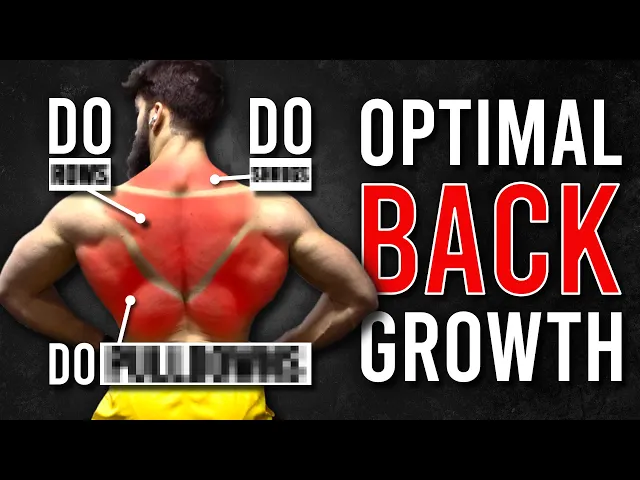
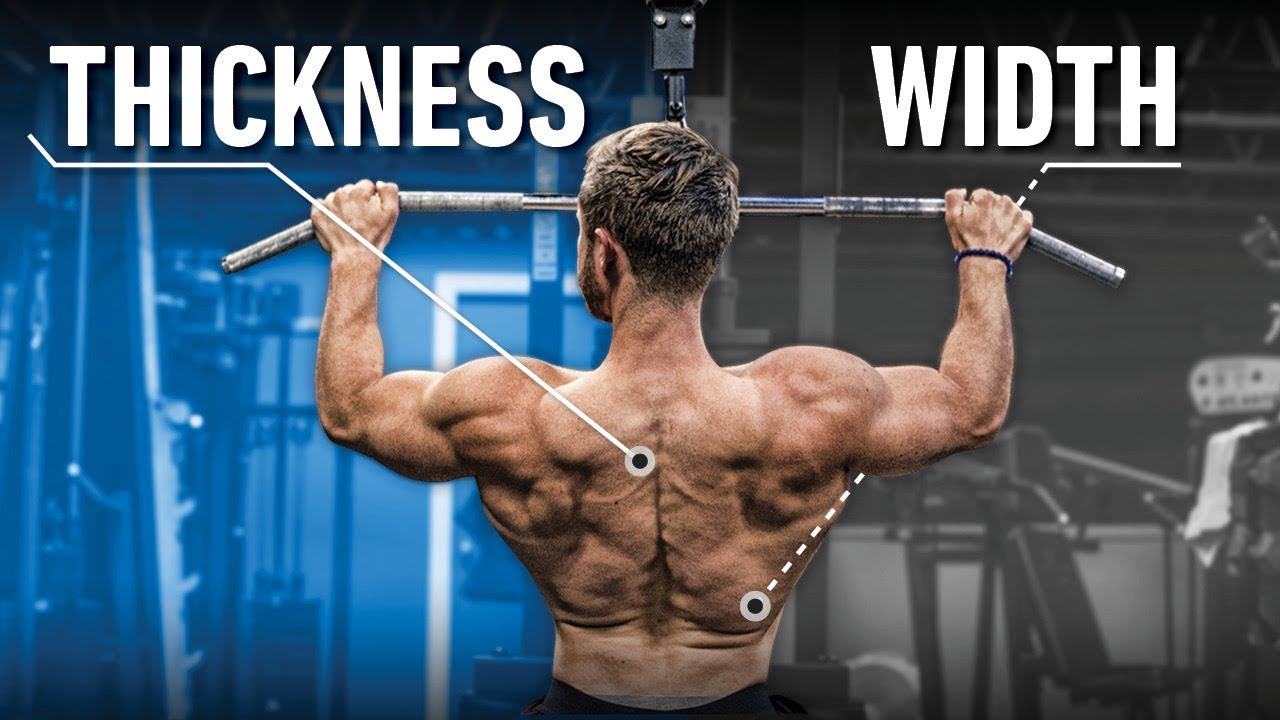
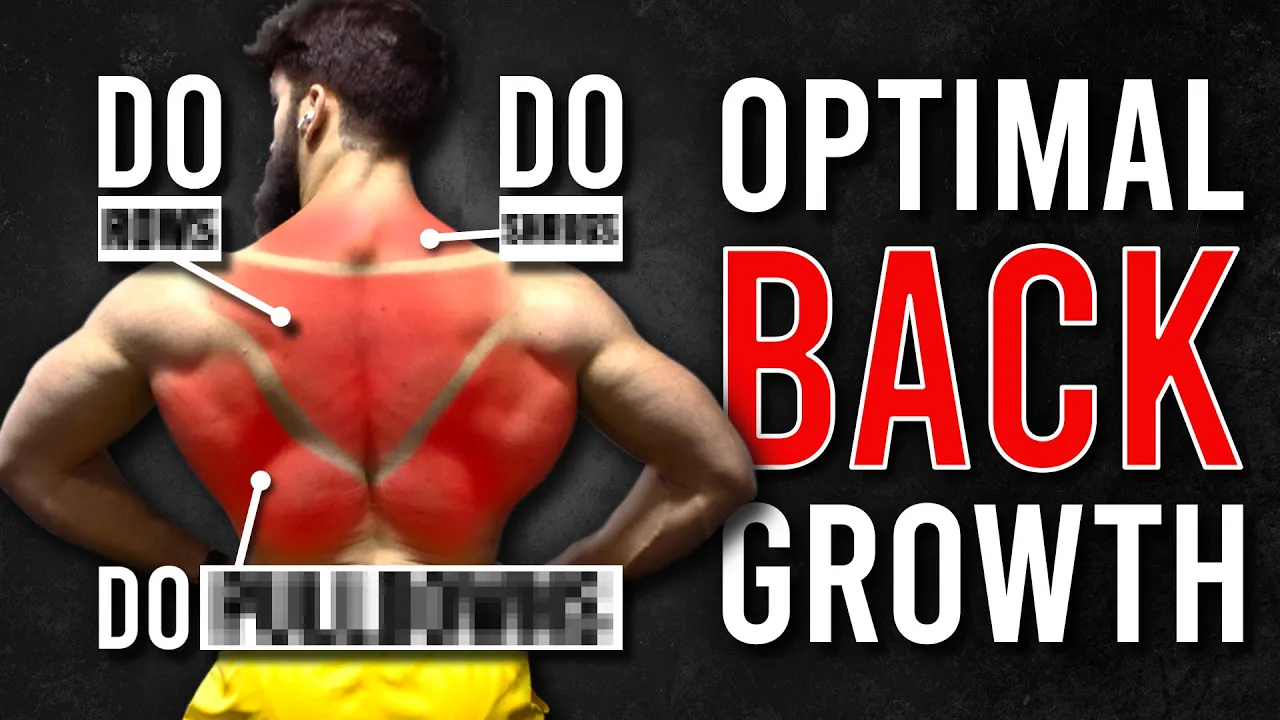
what are the best back exercises for muscle growth to understand the answer we first need to look at the anatomy of the back muscles first off it's worth understanding that the back is arguably the largest set of muscles with a variety of functions indeed there's a lot of muscle groups involved and they all have different functions so if we want to maximize growth of the back we would want a selection of different exercises to effectively Target different muscles within the back in this discussing Anatomy will simplify things and focus on the main functions of larger
muscle groups indeed many of the smaller muscle groups often have the same functions as larger muscle groups for example the terce major and the lats actually share many of the same functions and so we can simplify things quite a bit by including these muscle groups together first the lats or latissimus dorsi and terce major are predominantly responsible for shoulder extension and adduction the lower and middle traps are responsible for adduction of the scapula and upward rotation meanwhile the ROM voids also contribute to adduction of the scapula but instead contribute to downward rotation of the scapula
besides some functions at the neck the upper traps are basically only responsible for elevation of the scapula and so sem isolation work for your upper traps is likely warranted the final major muscle of the back that we need to account for that most people don't is the erector SP muscle and it's responsible for spinal extension of a variety of sections of the spine so let me give you a brief summary on each of these muscle groups and their functions for the lats we primarily want to Target shoulder extension and adduction for the lower middle traps
and rhomboids we primarily want to Target adduction of the scapula and upward and downward rotation of the shoulder blades for the oper traps we want to primarily Target elevation of the scapula like in a shrug and finally for the erector spin muscle we want to Target extension of the spine compared to other muscle groups I've covered previously like the triceps and shoulders you might have noticed that there's a variety of functions here so we'll definitely want a variety of exercises to Target all these muscle groups effectively at least one per category another implication of this
complex Anatomy is that we likely want to involve a variety of grips when training your back as I mentioned your lats for example are responsible for both shoulder extension but also adduction and the grip you select for example on a lat pull down can impact the joint function you'll be targeting for example if you adopt an underhand grip you'll be mostly targeting shoulder extension whereas if you adopt an overhand grip you'll be mostly targeting shoulder adduction so because the grip you use can impact which function you target I would recommend using a variety of grips
across the week for example try an overhand grip on Monday an underhand grip on Wednesday and a neutral grip on Friday with that being said if you only focus on the function of the muscle you might think that a variety of exercises can work and they do however we need to figure out which is the best exercise and that's where criteria to gauge exercises buy for muscle growth comes in there's a few things to pay attention to the first is that we definitely want to Target one of the primary functions of the muscle we're trying
to Target across your whole exercise selection we want to make sure we target a variety of functions often times a compound exercise can Target multiple functions at once the exercise we pick for hypertrophy should also be reasonably stable as too much instability can compromise Force production next one big thing for hypertrophy is that we want to make sure the target muscle is the limiting factor in the exercise when you look at something like a snatch grip RDL or even an RDL more broadly it isn't going to be your best choice for upper back growth why
because plenty of other things can and usually do give out first like for example the hamstrings or the glutes or the adductors which are actually responsible for lifting the weight off the ground and to lock out contrast this to something like a machine row where the main functions involved are shoulder adduction or extension and scapular movement making it much more likely that your upper back will be the first thing to give out this will make sure that your back muscles are being trained sufficiently close to failure to maximize hypertrophy next we want to make sure
whichever exercise we pick for hypertrophy is stretched friendly let me break down what that means there are three components first we want to make sure that it places the target muscle group in that lengthen position so we get a good stretch on the target muscle group in that exercise the second thing is we want to make sure there's a decent amount of tension involved in that lengthen position it shouldn't feel like there's no resistance when you're in that stretch position instead it should feel challenging as an example compare the cable pullover to the dumbbell pullover
and the cable pull over there is some resistance throughout the whole range of motion however the lift will typically be hardest around midpoint of the lift to the shorten position this is where most people will fail a cable pullover in contrast with a dumbbell pullover the resistance is greatest when your lats are most lengthened thus potentially offering more hypertrophy finally the exercise we pick should also be lengthen partial friendly because most exercises that you train your back with have a pretty difficult resistance curve in that they're hardest in the shorten position but quite easy in
the lengthen position and this is the opposite of what we desire for hypertrophy in our likelihood we want to pick excise exercises where you can perform just a lengthened part of the movement to make that part of the range of motion more challenging and potentially promote greater muscle growth indeed because the resistance curve on most back exercises like pull-ups pull Downs row variations are all such that it's hardest in the shorten position length and partials are probably most applicable in muscle groups like the back we also want to pick exercises that minimize involvement of other
muscle groups for example when you're picking between a bent over row and a machine chest supported row the bent over row will involve more muscle groups that are required to stabilize the weight and the motion in this case the hamstrings the glutes the adaptors will all be involved isometrically not only does this not add anything to stimulus for your upper back muscles it also creates a little bit of additional fatigue for your hamstrings glutes and adductors wherever possible we want to sit down or lie down and minimize the involvement of stabilizing muscle groups this can
also be seen in the cable pullover versus the dumbbell pullover in the cable pullover failure is often harder to gauge because you are standing up whereas in the Dumbo pullover you can often tell when you failed simply because there are fewer moving Parts here are a couple of bonus points to consider more carefully depending on your situation the first is is the exercise time efficient certain exercises are more time efficient than others typically when you're doing a dumbbell exercise or a stack loaded machine exercise this is more time efficient than something like a barbell exercise
where you have to set up the barbell load up plates and then get started the second point is microl loadability or essentially how small is the smallest increment that you can adjust load by week to week to progress this isn't a huge issue for hypertrophy because you can simply add reps week to we before adding weight which is what we call a double progression but it is worth considering if you have the choice to pick an exercise that is more microl loadable rather than not so now that we understand what the back actually does in
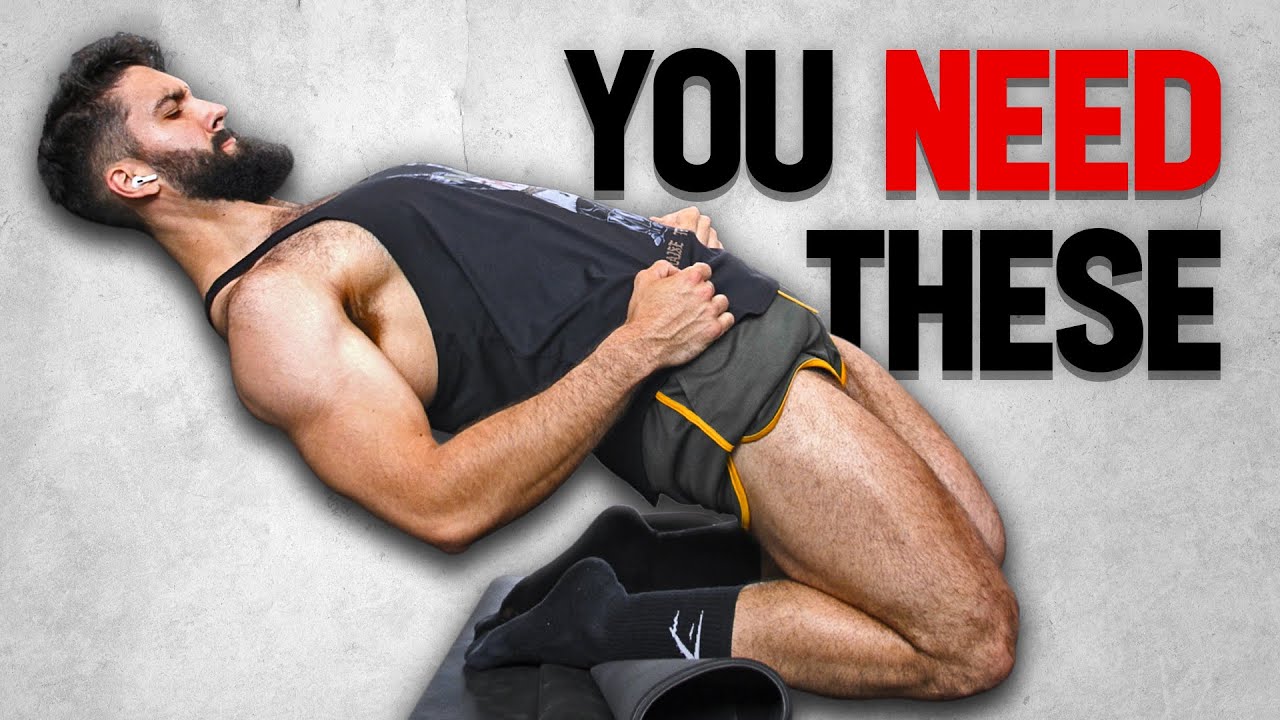
terms of functions and what some criteria for exercise selection are let's break it down to three categories lat Focus upper back focus and upper trap Focus first let's hit on lats the single best exercise for lat growth in my opinion is the dumbbell pullover and here's why first as I mentioned earlier it's substantially more stable than something like a cable pullover indeed the only real moving part is to an extent your torso but mainly just your shoulder and elbow joint this makes it easier to gauge failure compared to a cable pullover where your hip position
might be shifting around to make the lift easier there are fewer stabilizing muscle groups involved potentially reducing fatigue overall and it's far easier to get a full stretch in the dumbb pull I find than in the cable pull next I think the lats will be the limiting factor I know there have been claims made online about differences in internal leverage between for example the sternal chest and the lats leading to the chest being the first thing to give out or get the main stimulus during a dumbo pullover however it's worth pointing out that to my
knowledge there are no actual studies looking at hypertrophy showing that differences in internal leverage truly do lead to differences and hypertrophy so while I would consider it to some extent in my excess selection I would value something like getting a full stretch in your lats and having a good deal of tension there more important as we do now have about a couple of dozen studies broadly showing that lengthen training is beneficial for hypertrophy so we don't want to miss out on an exercise that offers these benefits in favor of something that we have no evidence
for at present indeed the dumbbell pullover is hugely stretch friendly one it offers the most resistance in that fully lengthened position two the resistance gets easier as you shorten the lats and you don't even get to a fully shortened position and therefore it becomes a length and partial by Design indeed you get a full stretch on the lats at the bottom but you only get about halfway up about a halfway shortened position for the lats the Dumbo pullover also very obviously targets one of the main functions of the lats and that's shoulder extension now the
Dumbo pullover isn't the only good lat exercises here are a few on Ru mentions honestly I think most pull down variations will do a decent job of training your lats especially if you adopt a somewhat narrower grip in order to lengthen the lats even more and if you try some lengthen partial indeed one of the main shortcomings of pull Downs as opposed to pullovers is that the resistance curve gets harder and harder as you shorten the L for hypertrophy we likely want the opposite and so by doing length and partials and only targeting the lengthen
portion of the full range of motion we can load the that pull down a little bit more heavily and make that lengthen position more challenging than it would usually be you can use an overhand grip for more shoulder adduction or a neutral or underhand grip for more shoulder extension likewise pull-ups are cool but they suffer the same ations as pull downs and they are slightly more fatiguing relatively speaking due to the amount of stabilizing muscle groups involved for example your abs might be involved to stabilize your spine and they have a little bit less rep
range flexibility all right for most people while you can do sets of pull Downs for 20 to 30 reps if you wanted to most people won't be able to do pull-ups for 20 to 30 reps unless you're super jacked which if you're watching this channel you should be it's worth mentioning that because of the complexity of the lats I would get one to two lat focused exercises a weekend at least least with a variety of grips don't just stick to one grip like a neutral grip try a variety maybe you do overhand once a week
and maybe you do underhand once a week maybe do neutral once a week and overhand once a week just switch it up to a decent extent within the week next let's move on for the best exercise for upperback growth and here's what I think it is I think the three best upper back exercises are the ink dumbell rope the seal rope and the chest supported tall row and here's why the incline dumbbell row and the seal dumbbell row are both highly time efficient you don't need to load a bar if you have a seal bench
at your gym you don't need to set anything up if you don't you can use the inkline boru instead set up properly all three of these exercises offer a good stretch on the upper back and by providing chest support all three of these variations minimize fatigue generated in the Alors hamstrings low back glutes etc for the upper back rowing variations are generally good just like with lat focused exercises try and get one to two a weekend at least again just like with vertical pulling try and get a variety of grips in don't just use the
same grip every session since rows have the same limitation as pull downs and pull-ups where the resistance gets higher and higher as you reach that shorten position there are a few things to keep in mind one consider using lengthened partials to make that lengthened stretch position more stimulating two if you have access to Prime machines I've used Prime row machines in the past use them and selectively load the lengthen position when it comes to rows you kind of fall into one of three categories and here's what they are you're either looking to maximize time efficiency
stimulus or minimize fatigue if you're looking to minimize fatigue from rowing try chest supported variations like the ones I just mentioned if you're looking to maximize time efficiency pick dumbbell or machine variations specifically stack loaded machines where you don't need to load the plates on yourself finally if you just want more stimulus out of your rows for your upper back try exercises like the t- bar row or the chest supported t- bar row which on account of the way the bar moves during a T Bar Row the resistance will be larger in that lengthen position
compared to something like a barbell row and so you might notice that generally some something like a chest supported t-bar row offers a lot of the benefits for stimulus and minimizing fatigue but it doesn't offer the benefits of time efficiency you have to consider the trade-offs whenever you select your best exercise and finally the category no one actually wanted to hear about what's best for your upper traps I think the seated dumbbell shrug is the single best upper trap exercise provided you have sufficiently heavy dumbbells around personally I try and do seated dumbbell shrugs once
to twice a week they work great as a fatigue efficient time efficient drop set by sitting down you're minimizing involvement and fatigue of the glutes hamstrings adductors and lower back stabilizing the weight likewise using dumbbells minimizes time cost you can simply grab the dumbbells do a couple warm up sets and get straight into your Lu set no need to set up a barbell in a rack load the plates Etc most shrug variations ultimately have very similar resistance curves offer a pretty similar amount of stretch on the upper traps and so any shrug variation really will
do that being said a seated variation will minimize fatigue using dumbbells or a stack loaded machine will maximize time efficiency so seated dumbbell shrugs or seated machine shrugs if you have them are great if not if you're not too strong you can try cable shrugs for time efficiency anyways that's the video I think the dumbbell pullover some sort of chest supported row and some sort of seated dumbbell shrug will be your best options when it comes to the lats the upper back and the upper traps respectively put a lot of thought into this video researched
a lot of anatomy hence the uh anatomy chart in the background here left right it's all very confusing to a sports S software like myself I hope you enjoyed the video if you did please consider commenting liking subscribing if there are any other muscle groups you want me to break down for you as far as the best exercises according to the science leave a comment down below and I'll get to it in the meantime enjoy your day and I'll see you next time peace