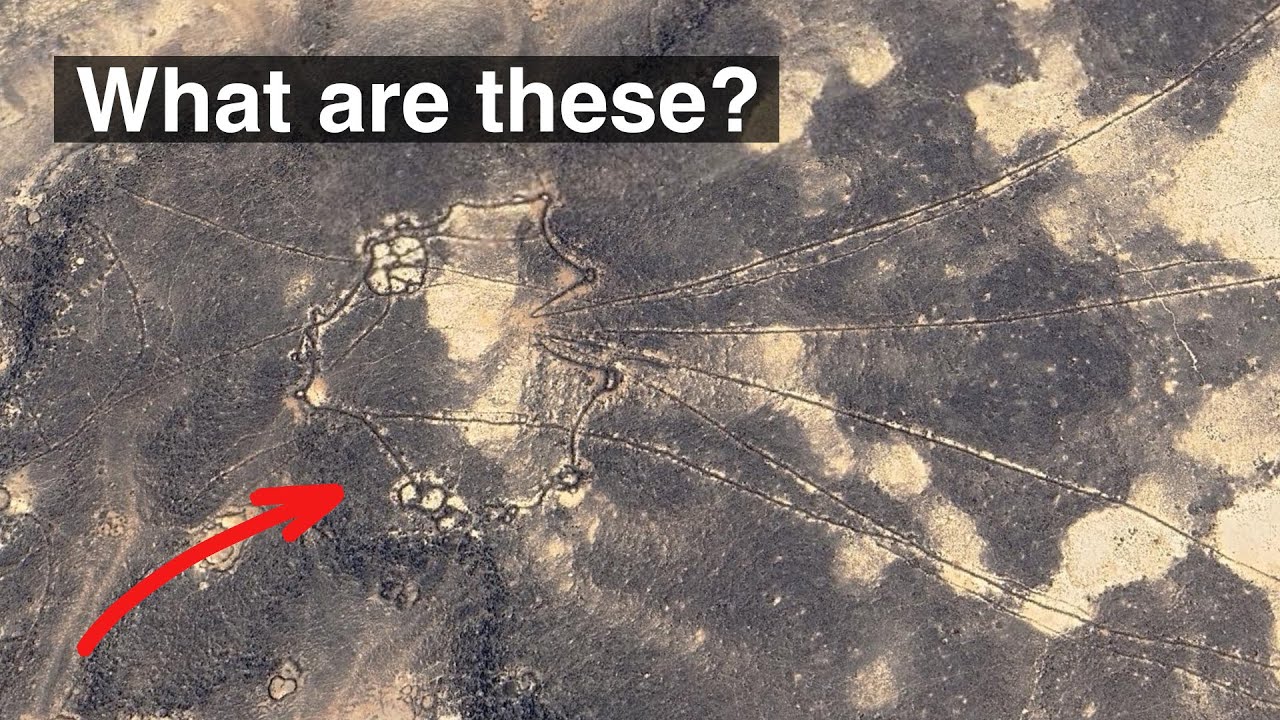
It's often the case in archaeological scholarship and actually good science that whenever an adventurous and unusual new thesis is published attempts will be made to falsify it Graham Hancock America before that's what we're going to do today I'm going to provide my humble critique on Graham Hancock's new show ancient apocalypse is that what it's called I wrote 59 pages of notes And didn't double check the name Graham Hancock in his latest Netflix show continues to argue for the existence of a lost Advanced civilization at some point in the Ice Age yeah does anyone will know
who who watched the show 99 of archaeologists reject these ideas today I'm going to try my best to explain why with no personal insults or attacks or anything like that I know people aren't interested in those uh We're just going to discuss the evidence it really does speak for itself we'll start off with some fundamental criticisms of this idea and then we're going to break it down Episode by episode and I'll I'll give you my thoughts I actually think I'm well placed to offer Graham these criticisms in a way because I'm not an expert I
don't have this dogmatic view that I've kept to for my whole career my job doesn't depend in any way On maintaining some archaeological Orthodoxy not that anyone's job does but mine certainly doesn't um I'm not even motivated by money at sponsored by morningbrew the number one free newsletter on Tech Finance business the industries that move our world before I start I don't want anyone watching the show who's a fan of Graham Hancock or who stumbled upon upon the show and thought well maybe there's something on YouTube about criticizing These ideas um I don't want anybody
who saw the show who likes his books to think that I think you're an idiot I I definitely don't uh it's it's a shame like we don't really learn about pre-history in school big media companies they so rarely make anything about pre-history especially prehistory outside of Europe or outside of like the Mediterranean area um it's just so rare I don't know for Loads of people the sites that we saw in the show that's the first time you've ever seen them and ever heard about them and they're spectacular they're absolutely incredible I don't blame you one
bit for finding it exciting enthralling uh appealing because seeing what uh ancestors were up to way deep in history it's just uh fascinating obviously I love it I've dedicated my education and my career to it Um and I just want you to continue that passion continue exploring and learning about it don't just listen to Graham Hancock listen to stuff that everyone's saying just learn as much as you can about pre-history because I absolutely love it there is this annoying sort of rhetorical trick in a way when you're criticizing someone else's ideas that I'm going to
sound sort of negative uh in this video I can't help It you know because I'm saying I disagree but I do love all of these sites that like what our ancestors are up to is incredible they were uh just as a smart and human and thoughtful and caring and all of these things as we are now maybe they're even better in some ways in a lot of aspects um certainly in working with their hands I'd be useless compared to them I just wanted to get that out of the way I just Wanted to get that
out of the way I don't think you're an idiot for liking the show or agreeing with graham um because prehistory freaking rocks and a lot of people are only introduced to it through him so yeah welcome check out some of my other videos and uh it's gonna be cool this is just gonna be like a podcast man you guys might not shouldn't even bother what's Going watching what's going on on screen just put this on and go to sleep listen to my doll set tones as you drift away let's get into this let's get into
this we've got to start with what does Graham Hancock actually believe that's kind of tricky to pin down I think what Graham Hancock says he believes in a fancy Netflix show is very different to what he would say he believes if he was 10 pints deep in the pub I think if you caught him at That moment he's going to have a very different story to tell but basically that sometime in the Ice Age there was an advanced Globe spanning civilization including Antarctica specifically mentions Antarctica in both his books in the show they at least
mapped Antarctica so quite Advanced ancient civilization exactly how strong this civilization exactly how much of a presence they had on each continent is always vague I think if you ask Graham he would say he Would he didn't know but that he just believes there's like enough evidence of a connection how advanced this civilization is is again very vague certainly from his books in the tone of the show certainly he believes they were farmers that's for sure he definitely believes they were agricultural in some way um building with megalithic Stones you know making large constructions pyramid-like
constructions Very strong understanding of astronomy but I think like when Graham means Advanced he means like psychologically Advanced it in his books and stuff uh he really believes that they had achieved a different level of advancement to us not technological but spiritual travel through parallel Dimensions um see into the future maybe move rocks with their mind stuff like that he's pretty deep in there if you catch Graham 10 pints deep he's telling you a crazy story for sure this civilization was wiped out during the younger dryas which was a sudden return to Ice Age conditions
between 12 900 and 11 700 years ago it was sort of the last hurray of the Ice Age ever since that point we've been living in a much more warm and stable climate and before that time point in the place to seeing the climate was much more variable much colder and the younger dryas was This sort of last 1000 year stretch of Ice Age you could say to call a spay to Spain he believes in Atlantis he sincerely believes that Plato's Atlantis was not an allegory to teach the Athenians to be more humble and blah
blah blah uh he believes that there is a grains of Truth grains of historical truth within that story that the Atlantis really existed or that some civilization like Atlantis existed and you can see this throughout this show His evidence for this civilization is not really archaeological you can watch all eight episodes and he will never show you one single artifact from this civilization one single building person piece of genetic evidence all Eight Episodes he won't show you anything with the possible exception of the Bimini Road I don't know who he thinks built that but what
he really believes in is myths that myths contain historical truths in them and that Flood myths from around the world Comet myths myths of giants uh things like that they're all referring back to this younger driest period which wiped out the civilization and we've forgotten about it we're a species with amnesia is what he loves to say many archaeologists would agree by the way that myths contain historical truths myths are created by humans humans are shaped by their environment their experiences the Lines between myth and oral history is blurry I couldn't tell you the difference
between them I do think Graham accepts meth too uncritically and we'll get into that later but this is all really deeply connected to his new age religious ideas I think I could be wrong I've never spoken to the guy but it seems pretty obvious this is all connected to his personal spiritual religious ideas Um he hinted that throughout the show when he starts talking about how Quebec is a time capsule and stuff like that and you start to see the elements of his spiritual beliefs creep in but he doesn't really bring it up in the
show as I said in this book America before that I quoted from at the start he does wonder if this civilization had psychic powers that's his definition of advanced he I think beliefs that sort of the Pinnacle of man's achievements is not the technology that we have today but uh a more Spiritual Development and that this Society you know prepared itself for life in the afterlife that was their their number one goal I only bring this up this actually doesn't matter and I don't mind what Graham Hancock believes I actually share a lot of his
opinions about psychedelic drugs I do think our society Has criminalized them too much and that yeah we could have a much healthier relationship to them to these things that could really truly be medicine for people with things like PTSD and stuff like that like uh I I agree with them I bet if we sat down at the pub we would agree about a lot but I mention it because in the show he really sort of paints this picture of a man who is just following the clues Wherever they lead and I don't think that's true
I think in a way he reminds me of biblical archaeologists in that his starting point is a sincere belief in this text and Plato's Atlantis and these other myths and he's going around the world to find pieces that that fit that puzzle in the same way a Biblical archaeologist is in a way trying to find you know sites that relate to the Bible they're not so interested in other stuff Any sites that really contradict Graham's ideas uh he doesn't really bother with them I feel like and obviously I've got lots of examples today uh but
yeah we're not gonna dig into his new age religious beliefs because so many of his fans don't share them uh if you go on the Hancock subreddit Graham Hancock subreddit a lot of people who like what he's got to say don't believe in any of that they just Want to know if there was an advanced civilization and so that's all we're going to focus on but as I say I just mentioned it because I do feel like he's got a big bias when he's looking at these things a really big bias we're gonna just take
the strongest possible interpretation of his ideas we're not going to make any straw man which is what he does throughout the show is the straw man is so ridiculous they're not even straw man it's just Loose hay we're gonna take the strongest possible interpretation of his ideas that there was just any form of Globe spanning like transcontinental Urban Agricultural Society in the Ice Age that's all we're talking about was there anything like that which existed and what would archaeologists consider evidence of that [Music] and the modern world with all the Technology we have uh the
best source of evidence for connection between different people's now and in in pre-history is going to be DNA that's what archaeologists that's what geneticists would really expect to see if there was this globe spanning civilization somewhere in prehistory uh I think we would see a lot of genetic evidence for that not just in ancient human remains but still within us today if you think about how advanced uh Ancient genetics has gotten you know we're looking for really tiny percentages of archaic admixture from archaic humans tens of thousands hundreds of thousands of years ago we've gotten
so good at that if we were sort of interconnected on like an urban scale I think we would see a lot of evidence within that in our DNA it's like if if you're ever scrolling on Tick Tock or something And you see someone from like Honduras do An ancestry DNA test and they're related to absolutely everyone in the world it's like eight percent Cameroon three percent Morocco four percent Russia blah blah blah blah they're just related to absolutely everyone because you know the history of all the people traveling to the Americas I think I think
if we were connected on a large scale in prehistory that's the kind of thing we would expect to see now people Did move a lot in pre-history we have a lot of evidence for that archaeologically genetically sometimes they move really far distances thousands of miles um and and I don't wanna say that we know everything about genetics especially ancient genetics we for sure do not know everything there's still so much we can learn from that but if we're talking about a civilization as I say on a global scale I think we'd see Genetic evidence of
it the fact that we don't have that um it has to keep Graham Hancock and and people that really support his ideas up at night that has to really bother them I can't believe that it doesn't that is the strongest piece of evidence we would need to prove the connection between groups of people and it's basically missing if you think About all the shows that he took all the places he talks about in the show Malta North America South America Antarctica Indonesia turkey Malta really this really places that are really far away from each other
I think we'd find a genetic signal of that I really think so it's got to keep him up at night it's got to absolutely keep him up at night that is in my opinion just a a baseline fundamental objection To this idea uh uh the other biggest fundamental objection I have is food um especially as Hancock believes that this civilization of his was Agricultural and taught everyone how to farm and do all of these things we all know before the 15th century before Christopher Columbus and and the Spanish and Portuguese made their voyages around the
world that the major crops that people ate were largely geographically distinct Especially when it came to you know the old world versus the New World you know in the Americas you had corn potatoes Tomatoes tobacco uh stuff like that turkeys chocolate and Europe and Eurasia and Africa things like wheat rice cows pigs chickens horses if a civilization traveled around the world teaching everyone to farm why would they be separate you're not going to turn up to teach someone to farm and not bring any crops Or animals with you because what what are you going to
say to them you're going to say Hey you see that wild grass uh keep harvesting it because in two three thousand years your ancestors are really going to appreciate it it's gonna have loads more seeds it's going to be delicious um if you were going to teach someone to farm you would have to bring these sorts of things with them and yet all these Foods they were geographically separate they were disconnected the obvious conclusion for why everything was so separate is that these people had domesticated the native plants and animals in their environment uh not
that they were taught how to farm by a civilization why agriculture really took off after the younger driest is probably just down to a warmer and more stable climate there's no real need for this Lost Civilization it's just a warm Stable climate is great for farming Hancock throughout this whole show he never even mentions or speculates about what the people of this Lost Civilization would have eaten he doesn't mention it at all because he can't he can't all the plants and animals that we know about with the exception of the dog were domesticated after the
younger dryas so any civilization that existed before then yeah what were they eating what were They eating we don't know he always focuses on the connections between spiritual ideas which is all well and good for sure it's all very well and good but But You Gotta Eat you've got to eat every day and we can't understand this Lost Civilization if we don't make any attempt to try and work out their economy however much they were focused on spiritual stuff they still had to eat every day and the fact that Graham Hancock never really Investigates what
they eat doesn't really discuss the science behind the domestication of plants and animals is again really damning it's really damning for this whole idea that there was a an urban agricultural civilization existing before the younger driest as I said the only exception is the dog the dog was definitely domesticated in the Ice Age so they could have eaten dogs all the time Maybe maybe I don't know those are my two biggest most fundamental objections and you might think well only two that's not so bad but making babies making food those are things that's going to
happen on a daily basis if you're lucky the fact that we don't have any evidence of either of those things is uh is a big problem for Graham especially because we have a real life case study of a civilization trans Oceanic civilization uh in pre-history The Polynesian people for a long time it was debated whether the Polynesians ever reached it to the Americas and one of the principal pieces of evidence in favor of that idea was that sweet potatoes which are of course native to the Americas were widely eaten across Polynesia when the first Europeans
turned up so that's a pretty big sign that someone had made it there um it's still possible that Seeds and stuff get carried across the ocean but it's a pretty good sign that someone was there now modern genetics have also revealed that Polynesian people have a pre you know Colombian genetic link to Native Americans as well particularly people from like the north east no north west coast of South America so in a real life case study of a seafaring of a pre-industrial trans Oceanic people culture The food has you know been traded swapped and genes
have been traded and swapped that's just what we would expect to see uh the fact that we see it in the Polynesians and we don't see it in pre-history I don't know I don't know how Graham feels about this this is what archaeologists would want to see as evidence of this civilization [Applause] what's the problem with the evidence That Graham presents archaeologically the love of pyramids veneration of water you know a good understanding of astronomy and changing of the seasons and all of these things um I would say the problem with these is that they're
they're Universal to All Humans the pyramid truly I know people disagree with this line of reasoning but a pyramid truly is the best way to build build a tall building With the technology that prehistoric people had available to them water is essential for all human life so it's no surprise that people in prehistory venerated Springs um you know they had no Taps back then they had nothing like that a spring coming from the ground fresh water coming from the ground that's literally life pouring out of the earth and they would be well aware of that
they would be so much more aware of it than we are Today it's no surprise that they would consider that a special spot the night sky you know again they're living in a time of absolutely no light pollution they're going to be very familiar with the night sky we don't need an advanced civilization to explain these things could it be possible sure anything's possible absolutely anything's possible but do we need it to explain what we see in the archaeological record absolutely not we Just don't Graham often asks if these things are a coincidence and the
answer is no because all of these things are made by the same species we don't sit there and wonder if ant nests have similarities across the world because they were shown how to build ant nests by an advanced civilization of ants we accept that they have similarities because they're produced by the same animal different species but the same animal and even though humans Are way more complicated than that it is basically the same they're going to be fundamental similarities across all human societies because all human societies are made by humans so if Graham wants to
prove the existence of his civilization we just have to come up with more evidence than than than pyramids and and water and astronomy and stuff like that any human can work out how to do these things the other problem with this Hypothesis that the idea behind these things not necessarily the actual monuments we have surviving today but just the idea for agriculture the idea for astronomy the idea that water is important I don't know um that these ideas came from an older civilization is that it's not falsifiable we can never prove it right or wrong
we can never we can't radio carbon date an idea we can't travel back in time and ask someone in 11th century Mexico who was the real Quetzalcoatl we can never ask them that these it's just not falsifiable it's not the kind of question archeology can answer like let's say we do find a site that's like a megalithic site with all these things as 50 000 years old and he says aha this is Atlantis or whatever I could just say yeah but did the idea for these things come from an older civilization you know you could
you could keep doing that for Forever and it's just not falsifiable in any way archeology can never tell you where an idea came from we just can't ask them so that's just another fundamental problem with his idea I don't know how could we ever prove Graham correct I don't know um I just don't know as for the similarities between myths all around the world at first glance it does seem very compelling you know and The show it goes through all the similarities between these different myths from all around the world this really isn't my strength
I don't know much about mythology so I can't really offer much in that regard but I would say that we can't accept them uncritically just because different societies all around the world have uh flood myths it doesn't mean that they're all referring to the same flood first of all again it's not falsifiable we can Never go back in time and ask them which flood they're talking about so again how how would we ever prove Graham correct I don't know I will say one thing about flood myths though there's probably like a flood myth in the
region of Western Asia in the Middle East that spawned like the flood myth and Gilgamesh and Noah's Ark and all of these things probably any flood myths in India to those two regions traded and We're in contact in pre-history definitely you could say that maybe those flood myths all have uh you know their origins in an older story uh perfectly willing to accept that and believe that I think we would underestimate the reach of that original story for a couple of reasons firstly we know that that's the region where agriculture the Fertile Crescent first developed
it developed in Lots of different regions independently all around the world but the Fertile Crescent is certainly one home region of Agriculture the people that lived in that region spread across Europe probably to North Africa to probably to other places as well and brought agriculture with them over thousands of years they've just spread out and spread out and spread out as far as the north of Scotland orkney in the north of Scotland Farmers the Neolithic Farmers that lived there were related distantly to the Neolithic Farmers the first originated in Turkey in in the Aegean region
so you could literally have a flood myth from the far north of Scotland that has a lot of similarities to the flood myth of nowhere and Gilgamesh and all of these things a lot of similarities and that's not because they're referencing the same Global flood but because the people have like An ancestral relationship to that region you know with this the spread of farming that we now know was carried largely by migration out of these sort of centers of domestication uh I think we can underestimate the initial spread of these myths like literally all of
these myths could have come from one flood in Turkey as for when it gets to the new world uh you know it's complicated this isn't my area of expertise world of antiquity has done great videos on this Dr David Miano I'm sure if you know my channel you know him you love him he's a legend he's made much better videos about this but a lot of these myths come to us from Spanish accounts you know we can't go back in time to 15th century Mexico and get an idea of these beliefs that wasn't filtered through
a Spanish monk who sincerely believed in Noah's flood and maybe he's like trying To tie two and two together with flood myths that he's learning about you know we just can't accept them uncritically we can't accept them uncritically we can't assume that all these you know phenomenon like floods and stuff are referring to one specific flat we have no evidence for that and and it's just not falsifiable so how will it how will we ever prove Graham right I don't know and then of course what about myths and origin stories that don't mention floods or
knowledge Bringers or anything like that um how do they fit into this picture I don't know I don't know I just think we can't accept them uncritically I do believe that their grains of historical truth in myths and those grains of historical truth could go back 10 000 years I don't know uh but We can't accept them uncritically we can't accept them uncritically for me personally if there's a contradiction between like a myth and an archeology I would go with the archeology because it's just not falsifiable I'm probably gonna say that so many times in
this whole episode I can't believe I'm 40 minutes in and I haven't even talked about a single episode yet this is crazy how am I doing here battery wise All right episode one once there was a flood I think one of the biggest differences between Graham Hancock and archaeologists is that I think Graham Hancock is sort of forced into this position where he has to believe hunter-gatherers are simple you see it straight away in the first episode where he says this the so-called experts say that only people who lived in the Ice Age were simple
hunter-gatherers no archaeologist who studies that period Would describe hunter-gatherers as simple they were incredible artists uh they created really large monuments out of things like mammoths like at kostenki in Russia even neanderthals would explore deep into caves and seemingly create like circles out of standing mites or stalactites I don't know which which way round it is in East Asia hunter-gatherers were making Pottery in Europe they were making like ceramic art the Venus figurines female figurines in The region of the Fertile Crescent people in the natoofian culture were already starting to build in stone before the
younger dryas they're building you know houses with stone floors Stone foundations things like that they created all sorts of things out of wood which have been absolutely lost to history you have to bear that in mind how much stuff have we lost simply because wood isn't preserved we see little glimpses of it with the sugar Idol which has just been preserved by fluke because of the conditions in that specific area but how many huge statues and totems and things like this were made out of wood which have been lost to history so many undoubtedly just
because a society isn't farming it doesn't mean that they are simple people that's just not the opinion of archaeologists Graham Hancock has to kind of take this position a little bit though because he needs a really as big a gap as possible Between the developments in the Neolithic period like farming like towns and Villages and Monumental architecture things like that he needs there to be as big a gap as possible between that and lives in the Paleolithic because he needs this civilization to have taught people how to do it they have to appear out of
nowhere as if they were just shown how one day so any discussion of how sophisticated life was in the Paleolithic he sort of has to relegate It a little bit he can't really talk about it or discuss it because then you might start thinking oh you know why do we need Atlantis to explain the existence of Quebec they're already building with stone like two three thousand years before then so we'll see it time and time throughout this series if you watch it Graham Hancock will always refer to hunter-gatherers as sort of simple and blah blah
blah and that's just not how Any archaeologist would view them at all I say no archaeologist I don't know there's probably a few snooty people that do the Roman Empire who think the Paleolithic is absolute garbage but anyone who studies their time period would never describe them as simple anyway focus of the episode one is uh gunung Padang truly incredible megalithic site in Indonesia Hancock kind of sets up a little bit of a straw man straight from the get-go I would say By saying for a long while archaeologists thought it was just another Hill in
the jungle uh I don't know what he means buy this I'm not an expert on the site uh it was first visited by Europeans in 1890 and they immediately recognized it for what it was yeah this this is coming from 1890. on the Mountain Top Gun malathi a succession of four Terraces connected by steps of rough Stone paved with rough flat stones and decorated With numerous sharp and columnar upright and the side stones on each Terrace a small Mound probably a grave covered with stones and topped with two pointed Stones so immediately as far long
back as 1890 archaeologists didn't think it was just a hill so I don't know what Graham Hancock means when when he says that about archaeologists yeah I already feel like six minutes into the first episode we've been misled as to what on two occasions as to what archaeologists Would actually say or believe uh doesn't bode well I would say for the series uh anyway we meet Ali Akbar an archaeologist who worked at gunung parang in 2012 and Graham's argument of dogmatic archaeologists who won't change their mind because this you know existence of the civilization threatens
everything they've taught us for the past hundred years goes away um so we have to stick to the dogma and Literally the first appearance of an archaeologist on screen he freely admits that they don't know that absolute dating of the site he doesn't stick to it dogmatically at all um this archaeologist also I think was behind the discovery that the blocks had been carried up the hill from another location maybe 50 000 blocks so certainly a huge expensive time and effort again perfectly happy to believe that that People did that can you guys say my
baby crying I might have to pause this a second uh I'll just finish this point and they realized that there was two episodes of activity at the site one from 500 BC the other from 5200 BC so again they're willing to project the life of this site back in time five thousand years it doesn't seem very dogmatic of the Archeology profession to discover all these things and then again he seems to dunk on simple hunter-gatherer saying the people of the region weren't builders on an epic scale uh 5 000 years ago despite standing in a
building from that region potentially from that time sometimes with graham Duncan on hunter-gatherers like that feels a little bit like I'm watching a show from the 1920s not the 2020s uh you know That's just not the modern opinion of archaeologists let me check on my baby one second all right I'm back sorry I had to help put my kids to sleep if you hear a noise it's because they're not sleeping yet all right so we're gonna putang we meet Ali Akbar and then we meet then we meet Dr Danny Hillman Nat word Jaja natto net
Dr Danny Hillman NATO with Jaja please forgive me for saying that incorrectly Uh he was a geologist and author of Plato never lied Atlantis is in Indonesia Hancock says the Dr Dany discovered the fact that the basalt wraps around the slopes I don't think that's true I don't know but I doubt that's true in photo from Ali akbar's excavations earlier rocks on The Terraces are clearly visible early reconstructions before Dr Danny's work show the site as terrorist um the first description in 1890 said The site was Terraces so I don't know where this claim comes
from to be fair to Dr Danny he doesn't make this claim only Graham says that so uh I don't know if he would say that but I don't think it's true I doubt that that's true Dr Danny the geologist was given a sort of big Grand by the Indonesian government at the time to explore this and and one of the ways that they researched gunung parang is through like ground penetrating radar Where Dr Danny believes it shows that there are three interior Chambers under the hill uh which is possible it's entirely possible that those exist
are they man-made though I don't know in this whole episode they keep calling gnung parang a hill they never mention as far as I'm aware that it was an extinct volcano I think I'm right in saying that uh volcanoes of course famous for their inner Chambers uh I think that they if I'm right in thinking that this was a volcano I think they deliberately emit that to make the case for inner Chambers sound a little bit more convincing um but anyway no archaeologist would mind if there were Chambers in their pyramids in Egypt Mexico lots
of places have Chambers inside them so there's no like archaeological objection really to the fact that there are chambers there how do you know those chambers are man-made would be the question then a Graham is annoying me like oh if only the archaeologists would excavate I got so much to say about that like archeology departments universities worldwide really underfunded okay it's not up to archaeologists whether they get to excavate these sites or not has really not a fair criticism and the other issue is now archaeologists are really interested in site preservation the days of just
dynamiting Your way into a pyramid unfortunately long gone we have to think about preserving these sites it's all excavations ultimately destroy the site sometimes in a big way sometimes in a small way and we have to think carefully about when to do that do we have the right to so badly damage gunung parang to satisfy our curiosity these are not easy questions to answer but it's certainly if you think that's just archaeologists Being offered the time and money to excavate these sites and they're refusing to do it I promise you that is not the case
uh anyway the other thing that Dr Danny did was core drilling to try and get to the age of the site and he claims there are layers in the site that could date back to 11 600 years ago to the younger driest all roads lead to the younger driest in the show but maybe it's even older maybe 20 000 years ago and I would say I don't believe he's Submitted that report for peer review which is very important because no one doubts a gnung Padang was and it's been a natural hill or volcano that's been
terraced if you're digging down with a core you can keep drilling for forever really um and the dates are just going to keep getting older and older and older I think the dates where it's like 20 000 years older between like 15 and 30 Meters very very deep and how do you know that the soil that you're dating that there is any human activity at that time you can date the soil and get the date of 20 000 years the point is we're humans there then building Padang but you can you can hear the difference
when Ali Akbar is talking about the site and Graham and Dr Danny are talking about the site Ali Akbar dated the site on the oldest cultural layer the oldest Layer they found that still had human remains um but as for what Dr Danny dated at that twenty thousand year old layer we don't know we don't know if he's correct though if he's correct archaeologists don't have a problem with that it's younger than that big Mammoth enclosure in the kostenki Russia that I mentioned earlier and archaeologists don't have a problem with hunter-gatherers organizing each other and
You know creating complex megalithic structures big buildings like that um there's no archaeological objection really the point is just do you know that do you know that what you've dated is truly 20 000 years ago and on top of that just because maybe people were living there twenty thousand years ago does that mean the whole site dates that time period yeah you have to prove those things you can we can speculate all day but you have to prove Those things uh even let's say even all of that is proven is it evidence of A Lost
Civilization I would say no it's just evidence of people in that location doing crazy stuff so even if everything Dr Danny said was correct it's still not proof of this globe spanning civilization in my opinion I don't know I don't know I do Wonder though you can judge for yourselves is the man Who published Plato was right Atlantis was Indonesia he published that at least a couple of years before he started working on this site you can't help but wonder if if he had a Target in mind when he's trying to get these dates I
don't know was he biased I don't know I don't know it's definitely a possibility though okay final point of the episode all right episode two what's the name of this one episode two Survivor in a time Of chaos wherever in mesoamerica now after Cholula truly incredible site in Mexico I'm the least familiar with everything they talked about on the show I'm the least familiar with mesoamerica so I was so Keen to watch this one honestly like I told you at the start I just want to see these things these sites being given the attention they
deserve and uh I I just wish someone made an eight-part series on the civilization that built Cholula a part Series on the Aztec empire I just wish Netflix had done that and it would be incredible but anyway that's where we are Mexico Cholula again as I said at the start this is the idea that pyramids and the veneration of water are a legacy of Atlantis a legacy of this Lost Civilization and I just disagree you know I just disagree it's not falsifiable what's the evidence for that Mexicans drink water I've seen it firsthand it's it's
just why is that evidence for for Atlantis um the chambers inside the pyramids again why why is that the exclusive domain of this Lost Civilization the fact that the building is aligned with the solstice again they're perfectly capable of working these things out the people that built Cholula um there's literally like sun and water two things we can't live without the Idea that any human anywhere in the world needs their inspiration to consider these things important is uh to me silly it's it's silly we need to come up with better evidence for Atlantis than this
I think I think with the pyramids this is a bit of Graham Hancock's New Age religion coming in again when he says you know all pyramids are associated with what happens after you die and he's showing like a Hindu temple temple built Around the year 1000 Mexican pyramids Egyptian Pyramids there's loads of subtle differences between them Egyptian pyramids were tombs I know lots of Graham Hancock fans will disagree with me on that but Egyptian pyramids were definitely tombs um Mexican pyramids some were tombs some Mayan pyramids were tombs but they also had temples on the
top of them and and yeah we can't ignore that sort of ritual Aspect and as for the the Hindu temple you know I'm not super familiar with uh Hinduism and and these temples but I imagine there's a lot of differences between their religion why they built that Building compared to why an Egyptian built a building like that or why someone in Cholula built a building like that we can't really ignore all the Nuance Behind These beliefs how can we ignore those things yeah but I think this is Graham Hancock having sort of a religious semi-spiritual
belief in the power of pyramids I I think so I think that's creeping in and uh again we meet an archaeologist what's his name let me pull that up should have written her down sorry sorry sorry sorry sorry Jeff McCafferty yeah so we're joined by archaeologist Jeff McCafferty who Graham asks if we have enough information to be confident About Mexican prehistory uh he freely admits no just like Ali Akbar just like every archaeologist you're going to see in this whole show there's such a contrast between how Graham talks about archaeologists this is dogmatic close-minded profession
and then every archaeologist he meets will freely admit that we don't know everything we need to do more work there's loads more questions we need to answer it's such a contrast and and that's really all there Is to say about Cholula in this episode that is an incredible sight I shouldn't I should make a video on it honestly but the Graham doesn't really dispute any of the archeology behind the site uh uh it's just that he feels that as I said Sun water pyramids these are a legacy of Atlantis and I just disagree next part
of the episode we're off to text cutzingo I had never heard of this place so this was really interesting uh again he's really stretching the definition of Pyramid here he mentions this in the first episode you know and he's like sort of tentatively admits we're dealing with uh the question of definitions here when he describes a terrorist Hill as a pyramid julula is a true pyramid um and then texasingo again he describes as a pyramid but this really just seems like they've sort of flattened some areas of a hill uh I doesn't look like a
pyramid to me but I'm not yeah I'm not Super familiar with it uh but the interesting thing about this site is that this is really modern from the 15th century it's not really from the ancient times it's built a lot more recently than many of the medieval buildings across Europe across England it's really from the historical time period and and Graham always goes with a what if it's older what if what if what if Yeah if you're Auntie had Wheels should be a bicycle but she doesn't we could ask what if for forever buenos what
does the evidence say Graham calls upon author Marco vergato author of Empire of Atlantis to to provide us with evidence of this ancient site they didn't really come up with any evidence uh uh what is it they said just that they point to an old like a rock that's clearly on top of like the 50th Century Architecture it seems just a cursory glance they say this Rock shows that it's older then they're talking about the Aztecs carving in talking about how there's been a section carved into Bedrock as if the the Aztecs couldn't do that
They Don't Really provide any evidence that the site is older than the 15th century Graham's decision to put this Marco vergato character in the show is really Questionable this guy's a real crackpot I actually bought empires of Atlantis and read like the first I would say three chapters of it the first I don't know third of it this guy is real crackpot okay he speculates that you know Crow manions which there's always a red flag when someone talks about chromanion because there's just a very old term archaeologists don't really use the term Crow Manion anymore
it's just the fact That the oldest Homo sapiens in Europe when they were first discovered we've since found older ones but when they were first discovered in Europe were found in in the crow Manion cave I believe and it's kind of a red flag there are people out there who believe that Crow Manion is not Homo sapiens or that they're the original Homo sapiens and that Africans are not really Homo sapiens bit of a red flag Um but yeah and this book is talking about how early humans were genetically engineered to be atlanteans to be
slave laborers uh humans didn't evolve as such where the bodily Incarnation on the physical plane of higher spiritual entities and then again he starts talking about anatomically modern people emerge from the North Pole two million years ago or maybe Homo erectus evolved on Atlantis into humans under the guidance Of Highly spiritual early hominins still more ape than human that's a quote by the way and these people created the races of man it's real it's real psychobabble it's really taking people's like visions and hallucinations and just creating this fantasy of human prehistory around it he also
worryingly talks of modern humans belonging to the Aryan root race talks about ancient Aryan Empires it's so weird like to the Point where if you told if you showed me this book you said some weird guy from 1939 Berlin had written it I would I would probably believe you it's really it's really crazy nonsense as far as I'm concerned totally unscientific don't even look for any evidence to anything this guy talks about in there yeah it's really odd the Graham in this Netflix show big Netflix show Eight part series on Netflix would choose to highlight
the works of this man and and this man's interpretation Mesoamerican art how can you trust and like someone has such a loose grasp on pre-history how can I trust his interpretation of anything Mesoamerican it's really bizarre that Graham would choose to highlight this man's work um I don't personally think Graham Hancock is a racist just to put that out There yeah his wife's African mixed race son who happens to be an executive at Netflix small coincidence there I'm sure Sean Hancock but yeah it was a Sean Hancock chap he wrote a book about the struggles
of growing up in rural England as a mixed race child Graham's of course familiar with this I obviously know absolutely nothing of their family Dynamic but I don't believe Graham Hancock is a Racist man but I think he's just got blinders on for anything that'll slightly support his opinion he's gonna he's gonna look into it he's gonna investigate it even if it means working with some really odd characters yeah and then back to the myth of Quetzalcoatl which you know Graham Hancock describes him as a foreigner bearded and that's just as biased there's no reason
to believe that because he had a beard he wasn't A Mexican a Native American they can grow beards uh he doesn't mention it in the show but Quetzalcoatl is described as white I don't know if he's described like that in every myth but he certainly does get described like that sometimes uh I'm starting to get out of my depth again here world of antiquity Dr David Miano he did a much better video than I could ever do on this subject I'll I'll link it in the description but let's let's just think critically for a moment
About the myth of Quetzalcoatl and and this I ripped like verbatim from uh David miano's video so go check that out but it's a very good point that he made let's say the idea of a white Quetzalcoatl is not the invention of Spanish conquistadors but truly came from the original uh religion of the Mexico of the Aztecs of the nawaddle people uh or of all Mesoamerican people it's Probably a very widespread widespread belief let's say that the Spanish didn't invent that they still chose to preserve that myth they still wanted to promote the idea of
quetzalcoatlers white and foreign they were burning codices Aztec and Mayan codices all the time destroying them no hesitation to destroy them why Reserve this one is it because they recognize the sort of political value of this legend for them And and we're still falling for the same trick now 500 years later it's certainly possible certainly possible again we can't just accept these myths of face value we have to remember who is passing them on that's and why and what are their motivations for doing so it's key key piece of evidence um and and again they
don't when they're with the Aztec site they speculate that it's older don't really provide any Evidence with the Mayan's sights and the myth of Quetzalcoatl they you know they're just resorting to myth again in this episode I feel like we've been presented with no evidence of A Lost Civilization no actual evidence only it's only evidence if you believe that the idea for these things pyramids water the veneration of water the veneration of light uh Things like that it's only evidence if you believe those ideas could have only come from Atlantis and that that ancient Mexican
people couldn't work these things out on their own um so two episodes deep we've not had a single artifact human remain or anything of this Lost Civilization as an aside as a smaller side with the fact that text cuts and go is so recent like 15th Century Construction I would love it if there was a Mexican Graham Hancock character who came around Britain and was like sure the English say they built Westminster Abbey sure they say they built the Tower of London or Windsor Castle or Saint Paul's Cathedral but could they have done it without
the help of Atlantis other seeds of these buildings really hidden in some lost information and they're just going around buildings so you know a relatively modern and you know we know About in the historical record it would be so funny maybe I'll I'll have to get a Mexican guy to work on a parody of this idea with me you can't help but Wonder do they pick on these sites because people are so unfamiliar with Mesoamerican history why doesn't Marco vergato walk around the Vatican and talk about a legacy of Atlantis I don't know I don't
know [Music] Episode three serious rising over in Malta this episode starts with Graham Hancock rejecting the notion that our current time as the Pinnacle of human achievement that we view our ancestors as simpler again as I said Graham's definition of advanced I think is spiritually Advanced but still he believes in this globe spanning civilization yeah I think we can sort of negatively view our ancestors I do kind of agree with this point our ancestors Were not simpler than us or dumber than us in any way they achieved so much with with way less than what
we have you know we're really standing on the shoulders of giants to use that expression all of our achievements are based on hundreds of years of scientific development um thousands of years of scientific development the fact that our ancestors could build pyramids could do all these crazy things Without inheriting all that knowledge just by working out themselves is a is a testament to how smart they are we do definitely live in the most technologically advanced time though for sure no doubt about that anyway we're over in Malta to the Neolithic temples there I was actually
really surprised to see this as a topic for his series because I've seen other interviews with graham like this one on London reel But in this interview on London rail Graham doesn't doubt for one second that Stonehenge was built by Neolithic farmers and yeah he goes into how Neolithic societies they're producing a surplus of food blah blah blah they're able to you know with that surplus of food devote part of their time in the year to building these monuments Stonehenge is of course a megalithic structure very orientated to the solstice and to the Alignments of
the sun and the stars and so I just feel like why why is Malta different to that Malta these Maltese temples were built by Neolithic Society too producing a food surplus spending so they're spending some of their year producing these monuments yeah what's the difference between a Maltese Temple and Stonehenge really why is why is Stonehenge so accepted and these Maltese Temples are not when there's very little fundamental difference between them and there's very little difference in the societies that produced them I would love to know how Graham like accepts an archaeological conclusion or rejects
it because now Graham is very anti-anction aliens but he didn't used to be Ancient Aliens he wrote a book the Mars mystery I actually got it over there sorry be bothered to get it off the table fine Weather oh it's right here next to me yeah he wrote a book the Mars mystery basically the civilization on Mars in this book is the like the role of Atlantis spreading knowledge with Earth and this time it's NASA who was sort of close-minded and secretive and not archaeologists and now he's very against Ancient Aliens so I would just
love to know how he rejects an idea what's his criteria For rejecting idea why did he reject Ancient Aliens why does he accept that Stonehenge is a Neolithic construction when the megalithic stonehenes are huge they're massive and and they were carved with joints and everything to keep the beams on top in position and it's the only Neolithic like Stone Circle where there's like a Cross Beam across the top of two stones so it's a truly unique Neolithic Monument made out of massive stones and Yet he accepts that and and rejects Maltese temples I don't know
I would love to know how he decides these things uh whatever the reason malter is in his sights his Central premise here is that the temples uh are only dated to sort of like 5600 BC he picks on a temple gigantia because of artifacts found there match artifacts from other simpler sites yeah there's no radiocarbon dating or anything like that And and that's not true we're going to go into that but he says think about could those farmers who archaeologists tell us never built anything bigger than a shack really have achieved all this it's such
an odd Turner phrase because archaeologists don't tell you this farmers only Built The Shack they tell you they built these temples and anyway the lifestyle of these Farmers is no different to the lifestyle of farmers in Britain at the Same time and you're perfectly happy for them to build Stonehenge I don't know how that works I don't know how that works in Graham's mind archaeologists did not tell you these people only lived in chat because archeologists literally tell you that they built these temples you're the one saying that they only live in shacks and and
couldn't have done these things but his idea is that if people can't move 20 to 30 ton megaliths without practicing First prehistoric people couldn't have worked this out you know you have to start with moving a one-ton block and then you build up through time as your skills develop into moving 30 ton blocks I just don't think that's true I just don't think that's true if if a whole town of people wanted to do something a whole village of people wanted to move a block like that they could work it out they could work it
out there's no reason to think that they couldn't I think Modern people would be capable of working it out if you've got 100 Modern people together and they were really determined to do it they could carve and move a block like that and and prehistoric people were exactly the same they were just as smart as us and then and then he says Malta has too many temples for them to have been built on such a small island that it would have required too much Manpower but these temples are not built at the same time The
Maltese Temple period lasted 1400 years archaeologists believe so again he's just creating these sort of straw man arguments that prehistoric people couldn't have moved large blocks yes they could have archaeologists said they only lived in Shacks no they don't we think we built the temples you know there's not enough manpower to build all these temples on a small island well they were built over a period of over a thousand years I don't know just straw Man arguments I feel like he doesn't actually doesn't actually present to you what archaeologists think about these things anyway this
idea that these sites are not radio carbon dated as wrong archaeological study between 2013 and 2018 specifically aimed at examining the culture behind Maltese temples 155 useful radiocarbon dates from across Temple sites across Malta were obtained we're going to stick to gigantia just Because I don't have time to talk about all of them but in those two trenches open just outside the main Temple of gigantia to see what was going on there they dated the soil underneath the megalith to 8770 BC plus or minus 600 years uh way older than the Neolithic period older than
the Neolithic period by a few thousand years but crucially thousands of years after the younger dryas as well several thousand years after the younger Dryas and this doesn't indicate when the temple was built as such but it indicates the oldest possible date that that megalith could have been put there the soil and you can't date Rock left there Dayton Rock isn't actually that useful you need to be able to date when The Rock was put where it is and it kind of been put there before 8000 BC I still think it was put there in
the Neolithic period there's no reason to doubt that because in the other trench They had radiocarbon dates that uh dated to the Neolithic period 2300 BC again just outside gigantia they excavated like a Causeway with these megaliths up to the site yeah right at the sort of end of this Neolithic period they're still working on the site there um and again there's there's like Neolithic Pottery underneath these megalithic stones that they excavated so you know let's say Graham Hancock's right that this site is only dated on Artifacts well you're aware of those artifacts you know
those artifacts are under the megalithic Rocks then those rocks were put there like after those artifacts were made point is this fundamental point that the dating of these sites is very questionable it's not on Solid Ground there are a lot of dates 155 dates there's artifacts Neolithic artifacts from under megalithic Stones uh the dating of these sites is on way more solid ground than He would suggest he chats to a chap called Dr mifsud to sort of set the same how archaeologists ignore Malta Dr mifsud has been investigating these teeth that were found in 1917
and discussed in this paper from 1924 seems like these are Neanderthal teeth and I think Graham and Dr Smith said uh write that this discovery was largely ignored I think they're correct about that at this point in time when Neanderthals were living like this is way deeper in the Ice Age um Malta was still attached to Sicily yeah no archaeologist would really claim I think or would die on the hill that there was nobody in Malta when it was still attached to the mainland I think we're sort of confusing two different questions here were humans
living in Malta when it was attached to the mainland I think archaeologists would agree with that they might not be Investigating it much but I think they would definitely agree separate question were humans living on Malta when it became an island or did they locally die out but anyway Dr mifsud sort of bring these teeth back into the Limelight uh paid for his own research into them with experts from Britain's Natural History Museum confirmed for sure one of these teeth to be a neanderthal tooth and I don't have any smart comment to make about it
I Think fair play to Dr mifsud for being like a citizen scientist and pursuing that and and not letting this moment in Maltese pre-history slip by and be ignored which seemingly it was being ignored yeah I don't have any smart comment to make about it I really respect him for doing that putting his own money in to exploring the history of of Malta I presume his Maltese so shout out to to Dr miffford but yeah where people living in Malta when it was an island once it is separated from Mainland Europe it's an interesting question
they're hard the hard thing with a small island like Malta is that the same areas of land are constantly being reused so any trace of Paleolithic life sort of hunt together a life before Neolithic Farmers got there would be really small really subtle because so much development has happened since then Archaeologists don't have a problem with even archaic humans like neanderthals traveling on boats many archaeologists believe neanderthals were on Crete Crete was an island in the Ice Age so they had to get there somehow so archaeologists don't have a problem with archaic humans traveling short
distances on water obviously modern Homo sapiens who've lived in Europe for at least 45 000 years can produce boats and sail across that it's just hard to say for sure Because of the intensity of activity on a small island like Malta the intensity of human activity but I think archaeologists would be open-minded to that possibility for sure next thing he wanted to talk about on Malta are these mysterious cart rats they're all these they're called cart rats I don't know that we know that that's what they are but I think cartwrit is a good description
for them they're zigzag across Malta some leading Up to the water which doesn't strike me as hard if they are cart rats because it could just be easily explained by people loading and unloading boats at the same dock Hancock claims that he has found them out to sea as far as one kilometer and 25 meters deep which would for sure mean that they had to be made when Malta was attached to Sicily um I don't know if that's true I don't know if that's true it could be true I wonder if Graham submitted anything to
Research you know sometimes I wish he would do that I wish he would try and create a report I know he doesn't pretend to be an archaeologist but he doesn't actually have to write the report he could just do what Dr mifsud did and fund like a trip to investigate these things he's definitely got the money for that thanks to all his book sales and this Netflix series and his other documentaries and tours and speaking engagements he's for sure A Millionaire for sure I don't know it would be good if he funded something like that
and that would be a real Legacy for him I just we just have to take his word for it that that's what they are you know but carvets are a bit of a mystery it's hard to know when a rut was created in the land did the people of Malta sort of independently invent the wheel and and that's why these things exist there's all sorts of possibilities all sorts I Think archaeologists would definitely admit that we don't really know why these cartwrites were made I think that's fair to say final point on Malta is that
we should push back the dating of these temples push back the dating of these temples back to basically the younger driest surprise surprise uh based on their alignment to the Stars even though we know we have radiocarbon dates there's very good evidence that they are much younger than that Does their alignment prove that they were built at this earlier time over the 10 000 years and here Graham is talking to Lenny redike Lenny redike I think and her idea is that all these temples in Malta have a slightly different orientation because they all wanted to
point to the star Sirius which has changed its position over the night sky as the Earth wobbles through space obviously we're not just spinning we're orbiting the Sun and the Earth's also wobbling so the Stars change their position in the night sky very slowly and she wonders if all these temples have different orientations because they're all pointing to sirius and she says that Sirius moves across the sky one degree every 72 years so very very slowly and here's what I wonder about this idea someone can explain to me in the comments if I'm thinking about
this Wrong but if something's moving one degree across the sky every 72 years extremely slowly moving by one degree isn't everything going to line up at some point like if you just accept that they're pointing a serious and you're willing to rewind the clock rewind the clock until they all are pointing to serious it seems to me like you're starting with the Target and working backwards I just Don't get like if you do it that way if you accept that they're going to point it serious and you're willing to just rewind the clock until they
all line up aren't they all gonna line up at some point this is what I don't understand let me know in the comments if I'm thinking about that wrong and anyway the orientation of these temples is all vaguely South Southeast um all vaguely south facing could we Come up with another similar explanation for that orientation Maybe they're just wanting a south facing Temple because that's where the sun's going to rise and it's kind of dark inside these buildings maybe they're not really fixed to any orientation other than they just want light um some of these
temples maybe they're responding to features in the landscape yeah I think we could come up with much simpler explanations for the fact that They're vaguely all South Southeast Southwest facing other than the fact that they're all pointing to a star um I just don't really get that about that argument let me know in the comments if I'm thinking about that wrong another idea is that they all sort of face South because what was important to the people in Malta is that the rear wall was facing north back towards Sicily where They would have known where
that they had sailed from however long ago and that it is perhaps like an ancestral connection you know a connection to their ancestral land in the same way that mosques point to Mecca these temples are all pointing to Sicily just their rear wall uh I don't know if that's true or not we we can't really prove it either way we can't prove it either way really the point is I think they're a much simpler explanations than They are all aligning with Sirius especially considering the fact that we do have dates and radiocarbon dates that show
these buildings are much younger than that episode 4 the Bimini Road what's the name of this episode ghosts of a drowned world this one in all honestly I don't have as much to say about I'm not a geologist I found it there are two episodes I found the least convincing Out of all of them this is definitely one of them for those who haven't seen it at the Bimini Road is the stretch of really unique Rock off the coast of the Bahamas Hancock says it's a deliberate construction because of the the layout of these blocks
they're in a very uniform shape stretching away from the coastline um geologists disagree and argue that it's natural Beach Rock I'm not a geologist nature can make some pretty Insane looking rocks I don't see any reason to massively doubt that it's natural you can actually radiocarbon date Beach Rock because it uh when it's forming like absorbs organic matter from the sea like mollusks and stuff uh and it was radio carbon dated to 3 500 years old other people used uranium thorium dating to uh data and it came to 15 000 years old there's been some
criticism about What's the right dating technique to use for this rock I don't know I don't know I'm not a geologist this is why peer review is so important because I don't know what is the correct methodology for dating B truck did see an article the Mystique of beach rock and that has some other examples in the Bahamas of these sort of rectangular blocks being formed on different Islands so it doesn't actually seem like it's a Unique construction it's just that this rock is being formed and the Sands eroding away and then The Rock's snapping
and The Rock tends to snap at 90 degree angles like you've seen people Split Rock before it does split very straight and then it's just sitting in the sea getting eroded away the sand underneath it is being washed away it's slipping down into the water I don't know geologists have lots of explanations for it I'm not a geologist I can't really comment but one I found really weak about this episode was Graham using 16th century Maps to try and prove the existence of Atlantis and uh one of the maps he pulls out is the piriris
map map Bay made by ottoman General Perry Reese in 1512 based partly on ancient maps and based partly on the maps that Christopher Columbus created very old map Um he singles out an island on this map and says it's an image of the Bahamas from 10 000 years ago this struck me as odd because up until this point in the show Graham's been very sort of tentative with the evidence of his civilization you know he hasn't presented any artifacts hasn't presented any DNA or bones or anything like that it's all been about ideas the idea
from agriculture is being passed down the idea for megalithic Construction has been passed down but in this one for this theory of his to be correct a map a physical map would have had to have been passed down from the younger dryas all the way to the 16th century surviving 12 000 years roughly I just don't think that's possible it's a really odd claim because we have ancient maps from Roman times and earlier in the medieval period there don't show America at all because they didn't know it was there don't show Antarctica at all because
they didn't know it was there for this claim to be correct we'd have had to have these ancient maps that were passed down until the 16th century and yet at no point in between the 16th century and the younger driest did anyone make a copy of them a surviving copy of them are they survived until the 16th century just as Europeans are starting to explore the world you know the parts of The world they're choosing to illustrate like the Caribbean and Antarctica and stuff for the parts of the world that we're just starting to tentatively
explore I don't know it just doesn't make any sense it doesn't make any sense um well really I feel like there's a huge piece of information that Graham left out of it uh is that next to the island that Graham thinks is the Bahamas because of That orientation and all of this that you know it's this Grand Bahama Island that's 10 000 years old uh Perry Reese wrote on the map Hispaniola the island that today contains the Dominican Republic and and Haiti and Graham's right that there is some debate among Scholars as to whether Perry
Reese really was trying to talk about Cuba but he wrote Hispaniola I don't know but next to Hispaniola that He literally wrote was Hispaniola Perry Reese wrote there have been several discussions about the place and location of these islands so right next to this island that Graham Hancock is claiming to be the Bahamas from 10 000 years ago the literal creator of the map wrote It's Hispaniola and you know there's some debate about the location and place of this island so we're not sure about it so yeah I mean Graham didn't mention this in the
show but you're basically Left with the choice do I trust Graham's interpretation that would so convoluted or do I trust the literal creator of the map you know I'm going to trust piri Reese and his annotations there is another possible explanation for why he got the orientation of Hispaniola or Cuba wrong and um as we all know Christopher Columbus was trying to get to Asia and when he got to the Americas he thought he had Done it basically he was like boom Asia let's go and Europeans already kind of knew from like the travels of
Marco Polo and all of this stuff and the intermittent contact they'd had with fire Asia that Japan was an island orientated you know north to south and Christopher Columbus apparently thought he had reached Japan or Japango as he might have called it and we can see still This labeling of Hispaniola as Japan even in later Maps like here's a map uh the Kasper vopal world map underneath Hispaniola he wrote zapango and this is a map from 1548 after they'd been a lot more explanation people were still like oh is this Japan you know his Espanola
Japan and obviously they knew Japan was orientated north south so they're sort of thinking like how should we portray this on the map and then you know also he says that The period race map illustrates the coast of Antarctica when there was no ice there or something like that rather than just piriris you know running out of room and so it's just moving the coastline of South America down across the paper you know you could believe Graham Hancock that this is evidence of a lost map but what very reason X wrote next to this thing
that he's calling Antarctica It's like this is where all the snakes live and it's known to be very hot that's why the Portuguese haven't explored there so that would be a really odd thing to write if you knew that the region was Antarctica I feel like the fact that Graham Hancock has left out the annotations on the map is kind of misleading I could be wrong because I can't read Turkish in the modern alphabet I Certainly can't read it using the Arabic alphabet I'm relying on other people's translations so I could be wrong but if
this is what Perry Reese wrote on the map it's kind of uh annoying to not have that context included that's so crucial to this whole thing but Graham Hancock says this you know designation of Antarctica is supported because in other Maps Antarctica appears and it pulls out the orontius Phineas map you know once again first thing to note about this map We have a rectangular Hispaniola again suggesting that interpretation of periris map is uh is correct uh um that's around Antarctica as for why Antarctica appears on the Run orontius Phineas map my understanding could be
wrong my understanding though is that people had long worked out the circumference of the Earth and they knew there was all this land in The Northern Hemisphere and so they had assumed there would be all this land in the southern hemisphere they thought the Earth had to be sort of balanced out like that and they called this region like Terror Australis or Terra Australis Incognito and you can see uneven later Maps even as they know way more about the world they're still putting Terra Australis incognita on the map Graham shows you on the orontius Phineas
map that they had called this land mass Antarctica but he doesn't translate any of the other words which is Terror Australis recenter inventor said nondem plene cognita which according to Google Translate means southern land found recently but not fully known again I feel like that's just a crucial piece of context that Graham deliberately misses out I can't help but feel like he's so so determined to prove the existence of a civilization that is even clutching a very weak evidence This is clearly a guy who's creating a map from bits and pieces that he's getting from
other incomplete world maps is trying to assemble a whole thing Milo of many many many Minuteman Fame uh did a good video on this go check it out shout out to him I hope I've beaten them into making this Graham Hancock video uh competition in the archeology YouTube world yeah I just feel like Graham's Really misleading us here really not providing any context to help us understand these maps and as well if these Maps were from the Ice Age um why is Europe shown with a modern Coastline uh where's Atlantis you know clearly these maps
are created by people that had a good understanding of Europe in the Mediterranean and as it gets further and further away the map gets less and less accurate that's Exactly what we would expect from these early days of exploration [Applause] all right episode five quebeckley Tepe Legacy of the sages well I've probably got a lot to say about this because I know more about this time period than than most others it could be wrong I'm not an expert could be wrong uh let's start on a positive I do 100 agree with graham where at the
start of the episode he's talking about How light pollution has really cut us off from understanding and observing the night sky that's really something that we lack in our modern world compared to our ancestors and it's a big tragedy I 100 agree with graham there at the start of the episode um as Graham says you know people in ancient times would have had an unfiltered view of the night sky every day of their lives unless it was cloudy obviously and and they'd have been Extremely familiar with the positions of all the stars and everything and
their movements this is why I find the fact that he uses astronomy as evidence for this Lost Civilization so uncompelling because as he says right there at the beginning people would be so familiar with the night sky so it's really odd he almost lays the case for why we don't need Atlantis straight at the start of this episode but then again he's back to what if it's more than that what if it's More than that what if it's a connection to an ancient Society I don't know if your auntie at Wheels should be a bicycle
and I said that already if your auntie had balls she'd be your uncle the first thing he wonders is that why would people go to all these lengths to build these monuments is it to warn us of something uh this idea I really have to push back on they made these monuments because they're important to them and they Sincerely believed in their worldview as strongly as we now believe in our worldview and we would create big monuments and big buildings and things like that so the idea that you know we have to question their motives
why would they do this in pre-history is really odd they would do it for the same reasons we do it we do these kinds of things because it's cool and we believe in it um I absolutely guarantee though that they weren't thinking of us when they did it you know this whole idea that it's a warning for us that to me I strongly disagree with we're not that important man they built it for their own reasons they did not build it for us yeah I'm reminded that at the very start of this season Graham Hancock
said that viewing our time period now is the most advanced point in human development can make us Be arrogant and dismissive of the past and that's 100 true but I also feel like it's very arrogant to assume that people 10 000 years ago cared about us in any way to imagine that we're involved in their story seems to me kind of arrogant and self-centered as well like we're putting our time into their story and I just really strongly disagree with that they built it for their reasons it has nothing to do with us not to
warn us uh Then he says that the Sumerians were the first civilization as crying out to be re-written I would say in the same way that Graham is really dismissive of hunter-gatherer societies and that's sort of an old way of speaking describing constantly talking about civilization is not really the language that archaeologists would use anymore as civilization is such a vague term it's hard to Define tends to promote eurocentric view of human development The example always I like to think about is like Anglo-Saxon England is roughly contemporary with teoti wakan and a teoti wakan they
were building these enormous monuments huge cities incredible stuff uh but as far as I'm aware they didn't have writing meanwhile in Anglo-Saxon England we are abandoning our cities at least in the early period and yeah we're really going back to a much simpler form of life the population Of Roman Britain has crashed we're really taking a step back in many many ways but we do have writing so it's in the traditional view of civilization like you know we would maybe England would be more civilized maybe because we have writing even though at that period of
time we're just doing way less it's just so hard to Define and vague this like Civilization what is a civilization it's just not how archaeologists speak about The past anymore definitely used to but that's the kind of language that they would avoid now I would say you know even though we know a lot about prehistory now and we know so much more about what our ancestors are up to and it's amazing stuff I would say let's not throw the baby out with the bath water Sumerian civilization if that's what we're going to call it Society
was incredible they really are the first literate society and they really Achieved a lot so you know even though we have you know we know about sites like quebecue Tepe and all of that stuff oh it's not get dismissive about how awesome the Sumerians were they really were you know a key moment in the development of humanity anyway go back to tapi for those that don't know it's uh one of the oldest megalithic sites in the entire world when it was discovered I believe It was the oldest megalithic Society uh megalithic site in the world
really stunning place Graham describes it as recently excavated I don't know it was 1995 recently I kind of feel like agreeing with him just so I sound young and relevant uh but even when I was at University 12 years ago studying the Neolithic we're talking about gebekli Tepe I don't know Graham always goes on about how it's you know defies Everything we've been taught about pre-history we're just not being taught about prehistory I think that's a shame I think we should be taught more about prehistory I've wrote a children's book about prehistory available from all
good retailers excellent Christmas present for any children 8 to 11 years old in your life that love prehistory we cover the whole world we talk about Gobekli Tepe but yeah we're not really taught about pre-history so and when Graham Went to school in the 60s so definitely our view of prehistory has changed a lot since he was taught about it in school I don't know I just don't know what he means by that but certainly in the education I've received 12 years ago we're talking about Gobekli Tepe but yeah actually thinking about it even in
Graham Hancock's day we knew that a Neolithic people were constructing megalithic monuments obviously we knew about Stonehenge but Even in that region there was the Tower of Jericho which even in like the 1950s era where dated to like the early Neolithic period again I don't know why why Graham Hancock always brings up this phrase uh we've known that Neolithic people have built megalithic constructions for a long time I think how gebekli's Tepe did change our understanding is that we probably would have thought that there were some more Urban Development Before they built these huge monuments
uh Klaus Schmidt the main person behind its initial excavation sadly passed away R.I.P um but here this famous phrase zirst cam the temple then the start like first came the temple then the town and probably before Quebec the topic maybe we'd have thought about that differently so it did change our understanding of prehistory I don't want to diminish its uh impact one thing that did annoy me is Graham said archaeologists accept that it is to 11 600 years old makes it sound like archaeologists are dragging their feet and talking about it like that archaeologists are
literally the people who discovered it dated two back then um so I just dislike that turn of phrase putting archaeologists down man who were making discoveries that are so Central to his ideas he's just putting them down it seems like it to me another really misleading phrase is when he describes Older than the domestic location of the horse that's so misleading because the horse is like the last animal we domesticated it's older than the domestication of pig cow chicken sheep goats wheat rice barley corn potatoes it's older than the domestication of all of those but
again Graham Hancock can't really talk about food because then the next question is well what did people eat on Atlantis you know so again that's just a Really misleading turn of phrase he definitely deliberately picked horse because he doesn't want to raise those questions yeah that's definitely deliberate I would say what there is an interesting debate as to whether quebecley Tepe was built by hunter-gatherers though because it is described as that a lot and that's because all the greens that have been found there are wild grains not domesticated because before the Domestication of wheat the
animals that were found there are gazelles I believe mainly not no domesticated animals but I think what we have to keep in mind is that domestication was a really long process took thousands of years the people that built quebeco Tepe just because they're consuming Wild Grains doesn't mean they're not participating in the cultivation of them uh or managing the landscape so they'll the people that build Quebec the Tepe I Still imagine their lifestyle having a lot more in common with a Neolithic farmer than a fully nomadic hunter-gatherer they're definitely I'm sure leading more sedentary lives
helping participate in the cultivation of these Wild Grains I would have thought this is the early days of plant domestication you wouldn't expect domesticated grains to appear in the record as soon as people started Living a lifestyle like that because it's going To take a while for the selection of greens to leave like a genetic Trace you see what I mean Graham can't really concede all of this Nuance because he needs people to have been taught agriculture inside are these enormous pillars Hancock describes it as Noah's Ark and stone I mean he's trying deliberately to
link it to those myths one thing he really zeroes in on is that enclosure D is the biggest enclosure it's probably the oldest enclosure and It's the most elaborate enclosure he has all these phrases that you know you can't just wake up and build the largest enclosure that anyone's ever built and you know the fact that the oldest enclosure is the biggest means that someone else has taught them how to do this I really disagree with this idea like if you look in your town like in my hometown of Worcester the biggest and most elaborate
building is a cathedral that was built 800 years ago and the Whole history of our town since then we haven't built a more elaborate building and yet Society still goes on and that's because people have different motivations at different times to build different things and Society changes and the cost of things changes and the cost of Labor changes and they're all these factors that can affect why you make a bigger building a smaller building and all of this doesn't mean that you were taught how to do it by someone else you Know a simple explanation
for why they never made an enclosure like enclosure D again is because they still had enclosure D and these rooms are being you know renovated and reused throughout the life of Gobekli Tepe it's a very complicated site just because enclosure D is oldest doesn't mean they they learn these things from someone outside there's no reason to think that really as for just waking up and deciding to do that that that's obviously a ridiculous Phrase on Graham's part or how did he put it you know succeeding brilliantly at their very first attempt at making a megalithic
structure come on that's so such a lack of nuance there who's Graham to say that this is their very first attempt at a megalithic construction he can't go back in time and ask them it ignores the fact that people have been building with stone for thousands of years before this as I've already explained it ignores the Possibility that they were creating monuments out of wood before this time and most importantly of all it ignores the really obvious point that the archaeological record is incomplete we could discover a smaller Quebec attack tomorrow a smaller an older
one uh who scrammed to say that this is their very first attempt at building a megalithic structure that's ridiculous uh and then He literally just one minute later in the show mentions that possibly earlier sight uh karahan Tepe I don't know how you have this can you can have these two ideas in his head or talk about them side by side in the show like that you know you can't wake up in day one day and make a Begley Tempe with no prior skills you know you need to work on things and get better and
better oh by the way here's a possibly even older site how can those two scenes in the Show sit side by side next to each other I don't know uh Caravan Tepe is a crazy side though another megalithic site I do definitely agree with graham that head poking out of the rock really has a Sinister feel to it um but it's not even the only earlier site that archaeologists have found you know I mean following a lot of archaeologists shout out to all of them on Twitter who've been talking about this idea yeah Ohan ayaz
of [Music] haran University shout out to him for sharing this information here we have sites 300 years older than Gobekli Tepe using wooden poles uh stones that are not t-shaped you know just flatter simpler is this not evidence of of the development that Graham is looking for anyway we go back to Quebec de Tepe this time Graham's joined by Dr Sweatman who believes that the symbols on pillar 43 are depictions of Star signs and he creates this really elaborate idea that if you look if you say these are star signs and you look at their
position and then you look in the sky to when the stars will last in these positions and it's going to point to um 10 900 BC the start of the younger dryas this is just pure gibberish in a show where I disagree with most stuff this is really gibberish talk about starting with a Target and working Your Way backwards I love prehistory I really love prehistory as much as the next guy but let's be realistic what the symbols meant to the people that built gebekli Tepe we will never ever ever ever ever ever ever ever
ever ever ever know we can never ask them they're long dead they didn't write anything down we can only come to very simple conclusions you know is this vulture in scorpion a star sign and it's pointing to the sky At this particular time and blah blah blah and it's holding a comet or something or the sun you know we'll never know we'll never know it doesn't mean that or did they just live in an environment with vultures and scorpions and they're you know representing their life and their environment in their art that's obviously you know
Occam's razor would suggest that that's what they're doing I forgot to say archaeologists no longer believe That it was deliberately back filled either there's just a much more likely explanation of it being filled in slowly considering the fact that it's in an earthquake zone considering the fact that quebeco Tepe is on the a sort of hollow not at the very top of the hill it's just much more likely that it was just gradually filled in over time than deliberately buried that was one of the hypotheses when the site was first being excavated but that's not
really what Archaeologists think anymore to conclude episode 5 on the Neolithic didn't happen overnight it really took thousands of years building these monuments didn't happen overnight the idea that Graham said they just woke up and decided to do it it's not supported by the archaeological record we now have simpler sites that are hundreds of years older than quebecue Tepe and it just ignores the fact that we could discover More and that they were building the stone and that they were building with wood and blah blah all these nuance and caveats that Graham ignores the idea
that it it's some sort of Time Capsule trainer tell us about a comet impact at the start of the younger dryas we just can't ever know that that's really Way Beyond the scope of archeology Way Beyond what we can ever hope to understand about them and again it's sort of putting us in their story is Kind of a very arrogant self-centered view I would say my camera died I'm gonna do two episodes on my phone whilst I let it charge episode 6 over in America now I'll start by agreeing with Graham Hancock obviously it's a
tragedy how many Native sites have been destroyed Across America people too obviously um but yeah thinking of archeology and the history that was lost it's terrible Really terrible so I agree with graham there to start the video uh First Site we visit is poverty point huge massive site down in Louisiana it's a series of Mounds connected by concentric Rings covers absolutely Acres it's massive massive place there's definitely some parties going on in the middle of that Circle I'm sure some feasting going down I would bet and you know It's the same argument that we've heard
in all the other episodes uh alignment of poverty point matches various alignments in the sky Graham thinks he's a you know seeds and knowledge from Atlantis I don't it's the same argument as all the other episodes uh he does get into uh a funny moment with the manager of the site Mark Brink Jr about the purpose of these circles these sort of circles of post holes that they find across poverty Point and about whether these had any astronomical significance if they're aligned to any points Mark Brink does not think so we don't know why because
they cut it out annoyingly I would love to know why he didn't think that but we won't know and then Graham tries this funny gotcha moment where he's like why do you think the people of this poverty boy weren't interested in the sky and Mike's like what I never said that I Bet they were and uh yeah but we don't know what the circles are for we just don't know again there's such a contrast between how Graham says archaeologists and historians are and how they actually act you know he just freely admits we don't know
which is true uh in defense of Mark Brinks here I will say that um with a circle when we can't see the monument we're just left with the silhouette of a Circle post holes of a circle we could probably make it aligned to anything couldn't we we could probably make it aligned to anything we wanted to it is hard when the monument is gone when we can't ask anyone what they were doing how to align a circle up to points a circle of just post holes so Graham things there's some sort of calendar could be
absolutely correct we'll never know Then we move on to Serpent Mound out of Louisiana up to Ohio home of the Logan and Jake Paul the great state of Ohio Graham starts off by being annoyed that the sign outside says serpent moundates to 1000 A.D whereas some radiocarbon dates say it might date to 300 BC uh this is true the dating of the site is currently debated the updating of the sign I didn't really think archaeologists had a blame for That uh there's lots of signs all around the world that could probably do it being updated
but Graham wants to push this site back 10 000 years because he believes Serpent Mound is is illustrating Comet flying across the sky and he believes a comet caused comet impact caused the younger driest so he wants to project it back 10 000 years in time he also believes the alignment of the mound would be better ten thousand years in the past Uh this way it gets kind of interesting let's take the date of 1000 A.D when people are for sure still renovating Serpent Mound and you know using it as a ritual Center that is
about the time that Haley's comment flew through the sky famously it flew through the sky in 1066 just before the Norman invasion of England is considered a big omen and um yeah so the date if Serpent Mound is Intended to illustrate a comment and we don't know that but if it is a thousand A.D approximately is a good date for it to have been made as for those earlier radio carbon dates 300 A.D we don't know what if it was renovated later on at 1080 we don't know what they changed maybe they added that sort
of egg-shaped Comet at the front of the serpent we don't know that's those kind of stuff is really hard to say but it is funny that The 1080 does line up with a with a known comment that regularly flows across the sky uh as for the alignments of the other bends in the serpent you know corresponding to different moments in the year I don't think archaeologists have a massive problem with that uh you know this is Graham portrays just again how do we know how do we know it definitely could be that And I think
that's pretty good hypothesis honestly because people do like to track the passage of time it's important for all sorts of reasons as for the alignment as for the alignment it's two degrees off pointing towards this Valley is where you know the solstice is you see the solstice or the Equinox the hard thing with an earth mound like Serpent Mound is Earth can slip and slide and do all sorts of things Um it's hard to arrange Earth precisely rather than a stone I think a stone is easier to place precisely than an earth Mound I think
that's maybe that's my own bias there so for Earth Mound I would honestly forgive it being two degrees off especially when you consider the fact that it's been renovated many times probably uh it's certainly been like renovated back at the end of the 19th century when people finally started to Care a little bit about preserving native sites so I would I would forgive an earth and man being two years two degrees off I certainly wouldn't feel the need to project it back in time 10 000 years to account for two degrees of angle now Graham
is not happy with the current custodians of serpent man though because they refused his access to film and which he describes as censorship is it since do archaeologists practice Censorship is Graham Hancock being censored here best take on this I heard was from Miles greb uh from the plastic plesiosaur podcast which he does with tray the explainer they had me on as a guest we've been talking about Graham Hancock's show he put it like this it's not really academic censorship because Graham isn't proposing a study to be done he's not submitting a plan for research
or anything like that he just wants to film a documentary so it's not Really academics censorship in that sense I think the key piece of context here the Graham misses out is that Serpent Mound is a religious site still very important to Modern native people modern Indians in the area and for some reason there are some like extremist Christian groups who believe it's like a portal to hell they turn up and they pray and they claim it in the name of Jesus and the native groups really dislike that they really really dislike That um and
rightly so because then it wouldn't be allowed to go into a church and perform their traditional rituals and Superman is a religious sight to them you know when we view it in that context we can be empathetic to the idea that they don't like someone coming along and saying that the idea behind this mound was you know the product of another civilization empathetic and understand Why that that would annoy them Graham calls it an archaeological site which is true obviously in one sense but you know to them it's not just an archaeological site it's a
religious site and considering the big Spiel Graham gave at the start of the episode about how many Native sites have been destroyed how much information has been lost blah blah blah you would think he would be a bit more sensitive to that you would think he could understand that Position better I don't know I think I think it was a bad luck to be hating on the fact that he wasn't allowed to film a Serpent Mound if he really wanted to get to the bottom of the mystery there I think he would have to work
with Native people and building like some trust and in building a plan to do some proper research not just film a big budget documentary funny that one didn't like that one honestly didn't like how he Phrase that I don't like how all context is removed from Graham's discussions final part of this episode though setting up to discuss the younger dryas which he describes as an apocalyptic event that Humanity barely survived he absolutely has to portray the younger driest this way for Hancock the younger dress is the reason why every trace of this civilization is gone
every single trace and so for him it has to be the most apocalyptic Event that humans have lived through for archaeologists don't share that opinion the the civilization was wiped out so we can take a lot more nuanced look at the younger driest and its effect on people but for Graham and people that believe in Atlantis it has to be the biggest cataclysm to end all cataclysms because otherwise how can we explain the lack of evidence for this civilization think about it now this is an eight-part series we're at The end of episode six still
not a single artifact from the civilization that's hard to explain Young address has to be terrible episode seven to me it's like the Bimini Road uh this one I just found so unconvincing unrelated really to Graham's arguments I don't know uh we're back in Turkey Cappadocia region site called Darren kuyu incredible underground complex that People have chiseled out of the soft rock you know dating a site like that is really tricky obviously said in the show that parts of it seem to date to the 8th Century because the artifacts found in there but you know
just because part of it dates to that time period doesn't mean all of it does like we saw with Mexico and places like That mesoamerica quebecue Tepe Malta sites are expanded on for long periods of time who knows what was built in the 8th Century it's probably been added on for literally centuries uh there's an interesting exchange between Hancock and the and the historian where Hancock is saying like Academia has gone too far saying a state from the 8th century and the historian just goes yeah it could be it could be that's just the Most
plausible Theory not the only Theory once again it's just such a contrast between how Hancock talks about people in Academia and how the people in Academia behave on the show it's just always so funny the animal I really found funny about this particular one is that about 21 minutes in he says only a highly motivated culture would build something like this And and to him that motivation is a is a comic impact I don't know if Graham thinks that uh this is the survivors of the comet impact that built there in kuyu or if it
is people that live before that time who could predict that the comet impact is coming and so they're going to build a bomb shelter and maybe I missed that in the show I don't know which way around he thinks That is but why not so funny is because earlier on he had said how bad the Assyrians were like that you know part of the rationale were building in the 8th Century BC was that that was a time when the Syrian Army was rampaging around the region and they would impale you flail flail your skin burn
your children alive is that not motivating if all of that's going to happen to you if you don't avoid this Army that seems uh extremely Motivating do we have a single artifact to suggest that it dates from an earlier time no any reason to push it back in time 10 000 years no it's just we just have to accept Graham's word for these things I don't know I just this in the Bimini Road I feel like could have been cut from the whole show didn't need to be in there all right here we go episode
eight the last episode the last episode for Graham Hancock to prove the existence of his Civilization cataclysm and rebirth as I said before Graham Hancock needs this younger driest to be as big an apocalyptic event as possible because he has to explain the The Disappearance of Atlantis of this civilization yeah we start with the line that our ancestors suddenly started farming after the younger dryas that's not true it took thousands of Years it really took thousands of years for a true farming lifestyle to develop let me give you a specific example specific example this is
uh the first farmers of Europe by Stephen Shannon an evolutionary perspective pretty much summarizing the latest research on the development of farming and the Neolithic yeah so here we're talking about a couple of sites we've got 11 700 years ago a site called tell caramel in Northern Syria 22 of the Wheat chaff seems to have come from a domesticated species so 78 is still Wild an Anatolia by 8 700 years ago 95 of the chaff seems to come from domesticated species and only five percent from wild species so that's 3 000 years it took four
domesticated grains to be like the vast majority of the grains in a in an archaeological assemblage that's what I mean when I say it took thousands of years People were intensively using wild grants for a long time before that but for True farming to develop and domestication traits to appear it really took thousands of years all right last episode cataclysm and rebirth Graham Hancock's last chance to really wow us with their evidence for this Lost Civilization I'd like to point out that so far seven episodes in we have not seen their single artifact Monument bone
DNA result radiocarbon date anything that proves the existence of this civilization just the idea that the ideas behind civilization came from them and you know myths various myths which again we can't take uncritically what about all the myths that don't talk about a cataclysm you know all of this stuff so many things to consider but this is it last episode we're talking about the younger dryas and uh you know we're talking About the catastrophic flooding and and possible comet impact I don't really have much to say about the causes of the younger dryas as far
as I'm concerned if it was caused by a comet that's fine if it was exacerbated by a comet uh that's fine too you know it was an absolutely terrible climatic event that's all fine point is from an archaeological perspective how did humans react to this um so it starts off with his friend Randall Carlson yeah so over in the the Scablands over in Washington state with Randall Carlson he is another very famous figure kind of like Graham Hancock in these circles he's big into the geology though the scablands are this enormous Valley I suppose you
could call it in in Washington that seemingly was caused by a catastrophic flood a series of catastrophic floods no one really doubts that randallcast some things that Happens in one flood seems that other geologists think it might have been a couple of floods I don't know three four maybe one I don't know the I think the debate is still out on that point one interesting thing though is that Graham Hancock and Randall Carlson don't like the dating Behind these events um it seems that the first flood was maybe around 18 000 years ago the last
flood was maybe around 14 000 years ago At least according to this paper I read but Randall Carlson Graham don't really love that because that doesn't really line up with their ideas that the younger dryas was the cause of all these all these bad things and if the dates change the the dates change it doesn't bother me point is how do humans react but for the sake of argument let's say everything they say is true that this event was during the younger dryas that it was the biggest flood in human History that the second scientist
agreements with Alan West is right that that a comet caused the the younger driest big fires Across America let's for the sake of argument concede all of those are true even though they are very heavily debated and uh you know the dates for these events don't line up let's say that they're all 100 True was that enough to wipe every trace of this civilization off the planet let's start With uh flooding and sea level rises because the civilization has to be under the water um if they were building cities and farming Inland we'd have found
them we'd found them so they have to be like an exclusively Maritime civilization uh there is a debate amongst geologists how much sea level Rose around the younger driest of the younger driest was preceded by a period of sharp warming and and then it you know something Caused the younger dryas how did this affect sea levels and there was seemingly a faster than average rise in sea level at that time it's called melt water pulse one B uh if you're imagining a giant tidal wave sweeping across the Earth though you're going to be sorely disappointed
most of the estimates I've read They're talking about millimeters of sea rise a year and this one study from 2016. they're estimating a sea level rise of 40 millimeters a year four Centimeters um which let's call it spade a spade if they're right that wouldn't be enough to scrub every trace of the civilization off the planet would it that's still a lot though imagine how much water is in the ocean raising that by four centimeters that's a huge amount of water so it's not to be underestimated as such but that's plainly not enough to scrub
every trace of this civilization off the planet could they be wrong sure They could be wrong but multiple studies seem to be suggesting that it that it's millimeters a year let's say the scablands was a major source of all of this water uh anyone living in that region is for sure going to be having a terrible time of it I have no doubt that people that uh lived around there certainly felt the impact of those floods that would be crazy to argue what if this civilization was in Sunderland and Indonesia are they Going to feel
the impacts of all that water rushing into the ocean I don't think so I don't think they would I don't think they would notice the young address it seems only really drastically affected the Northern Hemisphere there's actually a debate as to whether it was noticeable in the southern hemisphere at all the final Extinction of a lot of megafauna in the Americas with the young adrias suggests that something was going on but many of these Animals are in a long-term decline it seems before the younger dryas maybe they survived after it in isolated refugia certainly in
some islands around the world mammoths did survive after the younger dryas but it does seem that a lot of species of megafauna became extinct at that time and if you're a human I'm sure you're going to notice that worst case scenario does seem that some regions of the world were depopulated around the Great Lakes Probably because of all this flooding uh it seems like nobody's living there anymore northernmost island of Japan Hokkaido seemingly abandoned burials in Britain human burials in Britain stopped so if there are people living in Britain certainly something has really affected their
lifestyle to the point where they've stopped burying people they're disposing of them in a different way or maybe the population of Britain has has declined a lot in that Time so I think for people that lived in areas where there was maybe some flooding uh in very Northern regions they would have noticed a return to the conditions of the Ice Age that seems to be true but in other regions it's more complicated you know as archaeologist Matthew boulanger points out in the north east of the USA we don't seem to have people living There until
the younger dryas it kind of been that bad for them in in that region if they're moving there and that's the first appearance of people it seems like kind of been affected that badly across the USA at this time there was this Clovis culture it doesn't really persist after the younger dryas um but if we take a look at say the Western USA the successor the successor culture to Clovis was called the Folsom Culture by archaeologists by the way these are just archaeological terms for material culture we don't have any idea how these people like
envisage their ethnicity or anything like that these are just names for groups of tools uh basically um but there but you can see Clovis tool Folsom tool there's a lot of similarities I think it's extremely reasonable to believe that whoever created Folsom tools were the Descendants of people who made Clovis tools and the fact that they're they're switching it up a bit maybe is down to the fact that they're hunting different game the megafauna are now gone Folsom Hunters seem to have been really into hunting bison who obviously survived that time period because bison yeah
very famously lived across the Prairies in America and yeah Folsom people don't seem to be struggling that much maybe there are sites like the original Folsom Site uh it's like a mass killing of 32 bison that's not going to be easy they seem to be you know focusing their hunting strategy on areas of the areas of America where they can trap bison or send bison over uh bison jumps maybe so they're doing okay I think they're capable of hunting on quite a large scale very mobile adaptable groups of hunters doesn't seem to me like they're
in the midst of an apocalypse clinging to life the only person actually found In association with Clovis tools was a child called the anzic child and they're an ancestor or a relative of modern Native Americans for sure so there's clearly some genetic continuity between that time and the modern times over in Japan I mentioned the Northern Ireland was depopulated by another areas of Japan life seems to be going on pretty much as normal they're still hunting Seeker deer they're still making Pottery maybe there is a decline in population That's probably expected with a sudden 1
000 year return to the Ice Age conditions the population might decline but it doesn't seem like people's lives are that affected I think it would be fair to say that the response to the the younger dryas varied a lot around the world that's probably the fairest summary and because of that when archaeologists are Excavating a site in that time period I don't think they can Take anything for granted if you know we have to prove everything basically we have to look at this site in this specific location and try and work out how people were
adapting to this climate change the idea that it was so devastating to human life that we're Clinging On and that everything is scrubbed from the planet just isn't that it just is not there and that's a huge problem for this Theory because this is it this is the the last episode Eight episodes in let's think about what evidence Graham Hancock has provided any material remains whatsoever from the civilization no any uh human remains no any genetic evidence of this civilization either in humans or animals or plants any idea what they were eating at all no
no evidence of this just the notion that the idea is underpinning the Neolithic like Monumental architecture uh farming agriculture just that these ideas came from this earlier Civilization just the vague notion of that but do we even have a good explanation for why it was scrubbed entirely off the Earth no I don't believe so I don't believe so the younger dryas just wasn't that bad for some people it probably was but not on a global scale there's just no evidence for that level of Devastation it all really comes down to myth you just have to
believe sort of unquestionably that Flood myths around the world uh referring to the same flood not that can't just be lots of different floods you have to believe that any sort of mythical founder of any civilization or Kingdom or religion or anything like that uh uh you know not myths not people trying to explain their history or to you know give importance to their history by aligning it with gods and things like that you have to believe that these were Real atlanteans that's the only thing really going for this argument and and I I don't
feel like you can accept that uncritically honestly this video was brought to you by morning brew a free daily newsletter that in five minutes it's going to tell you everything you need to know about Tech Finance business the industries that dominate our world that drive our modern society it's a great way to start your day don't wake up and doom scroll On social media that's an absolutely terrible way to start your day morning Brew is going to keep you informed keep you entertained with witty relevant articles I don't know if you can read that I
learned today that the first cannabis dispensaries are opening up in New York City which is uh been delayed by over a year partly because of lawsuits but also partly because the first 150 licenses have been set aside for people who had cannabis convictions Or their families to start businesses and also for non-profits and they were trying to make sure those licenses went to the right people I'd have never learned that if I'd have turned on the news or scrolled through social media and that's a feel-good story to start my day that's societal progress as far
as I'm concerned there's no reason not to subscribe if you're interested in Tech Finance business all these things it's going to give you the gossip it's going To keep you informed it's entirely free totally free just takes a few seconds to sign up link is in the description link is in the pin comment thank you so much to morning Brew for making this possible Atlantis was not real guys it just was not real I'm sorry I'm sorry maybe me morning bro we'll do an article about it they should do