What is a business model? A business model is the way your company creates, delivers, and captures value—that is, who your customers are, what you offer them, how you deliver your products or services. And, of course, how you'll make money from it.
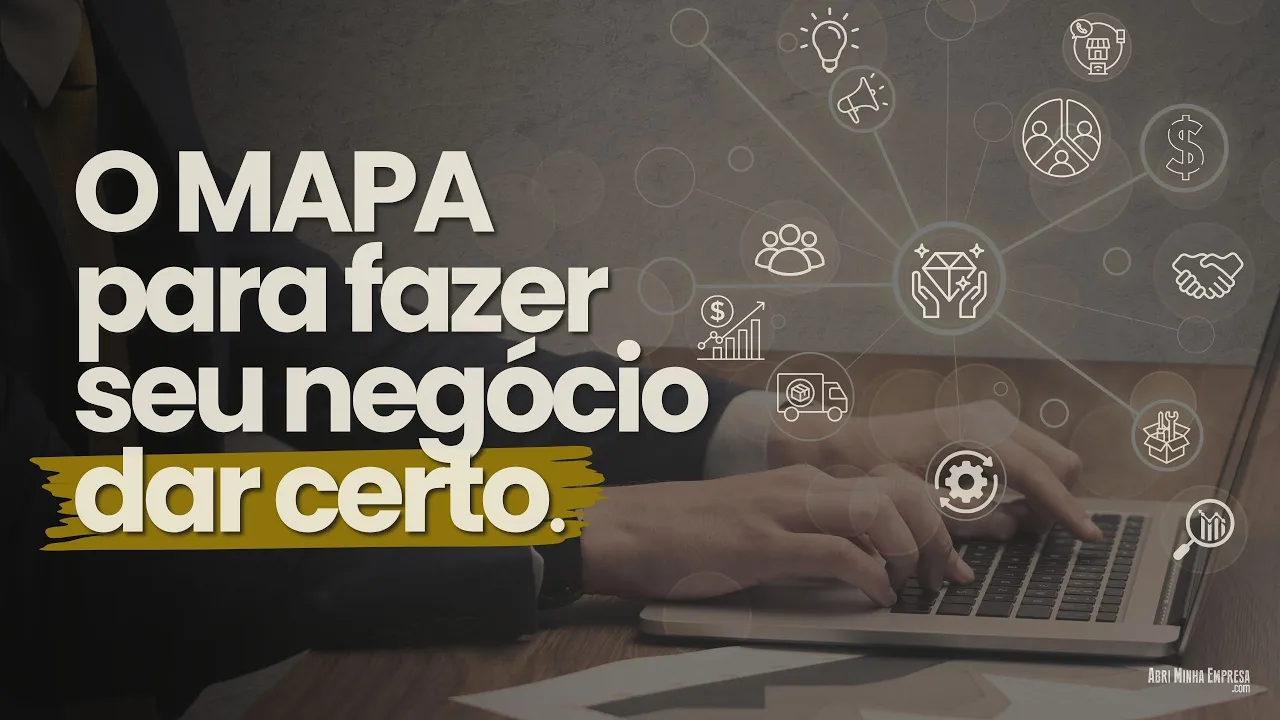
Literally, it's the map that shows how your business works. That's what we'll explain now in a practical and straightforward way. WHAT IS A BUSINESS MODEL?
THE IMPORTANT POINT THAT MANY CONFUSE AND HOW TO SET UP YOURS THE RIGHT AND PROFESSIONAL WAY. So, let's get started! 1.
WHAT IS A BUSINESS MODEL? Basically, it's how your business will add value to deliver to your customers. In other words, it's about identifying your business's value proposition and how it will be implemented.
In practical terms, the business model describes the company's main activities to understand whether the value it will generate is truly valuable and viable. Literally, how to deliver the best product or service to your customers in the right way and make a profit for your business. Both in the short, medium, and long term.
As you develop and work, the business model will provide important definitions and information. It builds a macro vision of your business idea. From this vision and information, you can delve deeper into other very important pillars of viability.
Such as delving into the product or service in question, studying the target audience and competition, assessing the market in general, and developing strategies (such as marketing, financial, and others). Therefore, we can say that the business model builds a framework to guide a company along a safer, more organized, and planned path. Simply put, a business model is the logic behind how your company creates value, delivers value, and captures value.
Where: Creating value: developing something that solves a problem or meets a desire of your customers. Delivering value: making that something reach customers in a practical and enjoyable way. Capturing value: sustainably receiving money or other benefits in return.
Think of it like a recipe for a dish: you can have an incredible ingredient (your idea), but without a clear way to prepare, serve, and charge for it, no one will try or pay. And that's exactly what a business model works on. BUT BE CAREFUL: The big difference between a Business Model and a Business Plan is that a Business Plan is a more detailed document that aims to analyze the real viability of a business idea.
Above all, a business plan aims to minimize the project's risks and uncertainties. As mentioned earlier, based on the relevant information provided by the Business Model, the Business Plan must, above all, identify the business's potential, as well as potential flaws, threats, and project errors before launching it into the market. In other words, a business plan is the set of information and analyses that need to be studied and processed to determine whether the business idea is, in fact, viable and profitable.
It addresses aspects such as required initial investment, costs and expenses, marketing strategies, growth, sales, profit projections for the short, medium, and long term, and so on. AT THE SAME TIME, THEY ARE COMPLEMENTARY. .
. Thus, we can say that the Business Model and a Business Plan are complementary. One can be the answer to the other.
In other words, the business model structures the idea and analyzes whether its value proposition is relevant. At the same time, it understands how it will generate revenue, how it will be delivered to customers, how it will be operated, and how all this information relates to one another. And the Business Plan structures everything that the Business Model initially developed, in a more in-depth and detailed way.
Exploring points such as costs, sales, processes, structure and necessary team, marketing and sales strategies, and so on. So, in a way, we can say that based on a Business Model, it is possible and very important to work on the Business Plan. Therefore, if you want to understand even more about the Business Plan, we have a very complete playlist that covers everything on this topic with very practical videos.
If you want to watch it, just click this button here. above or in the link provided in the description. AND HOW TO BUILD YOUR BUSINESS MODEL: One of the most widely used frameworks for building your business model is the Business Model Canvas.
It consists of representing the business model visually on a board. It's very practical and assertive, which is precisely why it's widely used. Basically, it addresses nine topics that represent the main points that must be taken into consideration in any type of business or company.
These are: Value Offering, Customer Segments, Customer Relationships, Channels, Key Activities, Key Partnerships, Key Resources, Cost Structure, Revenue Streams. By answering these questions, you 'll have a very solid model for your business. Identifying whether your idea or plan has a chance of success, identifying potential flaws or areas for adjustment, and, most importantly, ensuring that everything is consistent and coherent.
So, if you want to understand how the Canvas works in practice, watch this video that demonstrates exactly how it works. Click the button above or the link provided in the description. Thus, developing a business model isn't bureaucracy, it's not a fad, and it's certainly not just a "big company thing.
" It's actually the map that will guide your every decision, from the price you charge to the way you communicate with your customers. When you dedicate time to designing and validating your model, you're doing three powerful things simultaneously: Clarifying your vision. You know exactly who you serve, how you serve them, and why it makes sense.
Avoiding waste. Testing ideas before spending a lot of time and money. Preparing for growth.
With a solid foundation, it's easier to scale, attract partners, and even investors. Furthermore, a good business model is alive: it changes when the market shifts, when your customers ask for something new, or when you discover a better way to deliver value. It's like a compass you adjust along the way to avoid getting lost.
Ultimately, the biggest benefit is that you stop "running the business in the dark" and start building strategically. And this increases your chances of creating something that not only turns a profit but also remains strong and relevant for many years. So, if you want to learn about the main types of business models for even more inspiration, watch this video that highlights the 11 most popular types today.
Understanding each of them will make all the difference, believe me. To watch, just click the button above or the link in the description. We hope you enjoyed it!
And if you enjoyed this video, please like and share it to help this channel. Thanks, and see you next time!