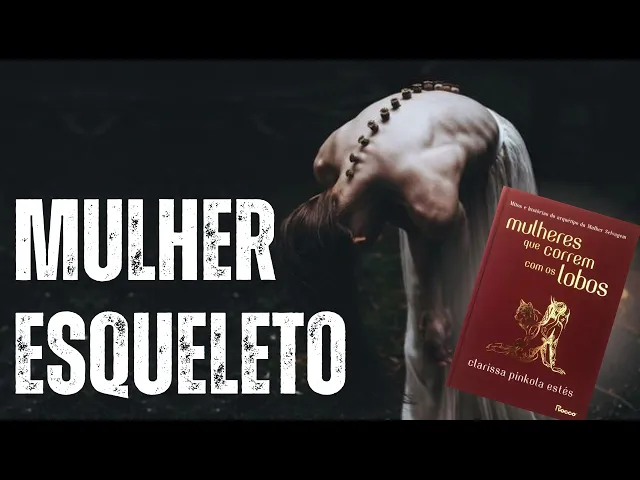
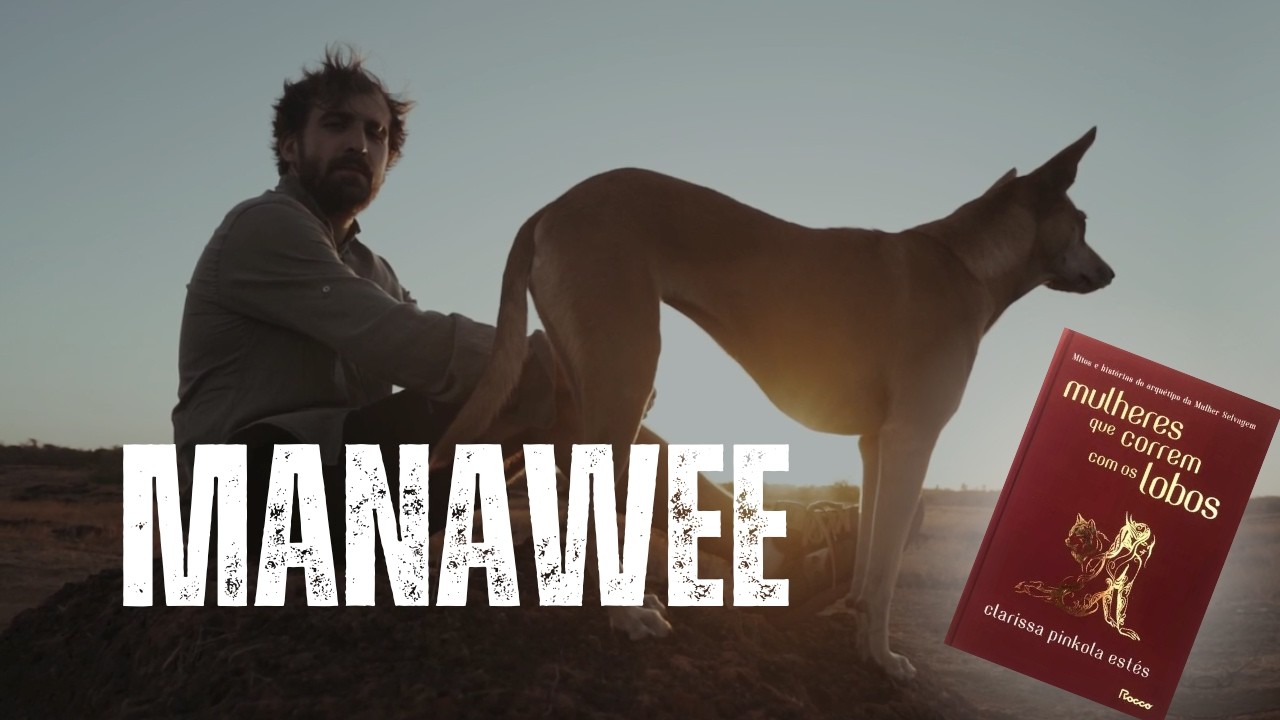
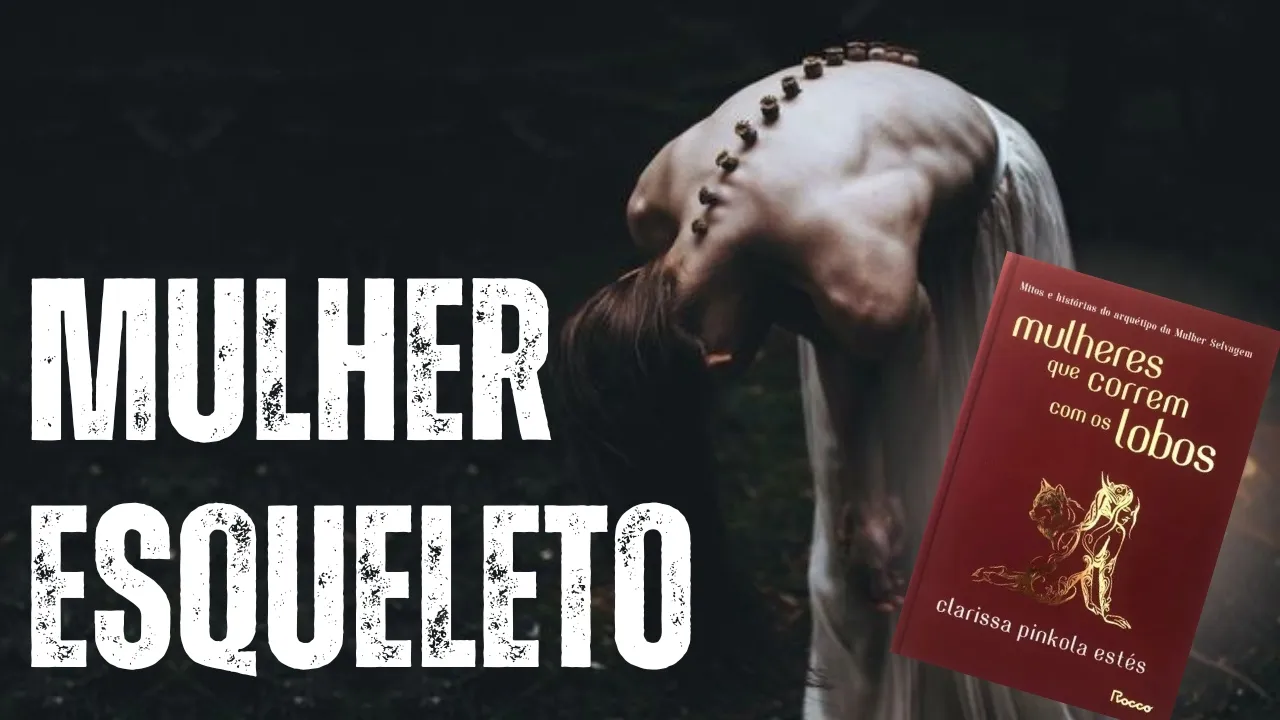
We continue here in our series of videos about the book Mulheres que Correm os Lobos" by Clarissa Pinkola Estés. If you parachuted here and haven't seen the previous content, at the end of this video you can watch other content from the series in this same playlist and I recommend that you do this at the end. Today we will talk about the fifth chapter of the book, entitled "The Hunt: When the Heart is a Lonely Hunter" and in it we will explore the short story “The Skeleton Woman: Facing Nature of life-death-life of love.
” This chapter, in particular, in addition to talking about how we seek and form a relationship, is one of my favorites because it contains a legend from the Inuit people. And here I take a brief moment to talk about it. Inuit people.
The Inuit are one of the original peoples who inhabit the Arctic regions of Canada. They are known for their rich culture and history, as well as their remarkable adaptations to life in extremely cold and challenging environments. hunting seals, whales, walruses and other marine animals, as well as caribou and other land mammals.
The Inuit have their own languages, which vary depending on the region. Inuktitut is one of the most spoken languages. Their culture is rich in oral traditions, including stories, legends and songs that are passed down from generation to generation.
The Inuit are known for their art, which includes stone, ivory, and bone carvings, as well as tapestry and pottery. His creations often depict everyday life, nature and cultural themes. For almost nine years, I lived in Canada and in recent years I have had the opportunity to work and interact with some of the many First Nations who continue to seek to recognize that their territory was unceded and their culture decimated, among other even deeper issues that continue to have consequences for new generations.
Back to the book. . .
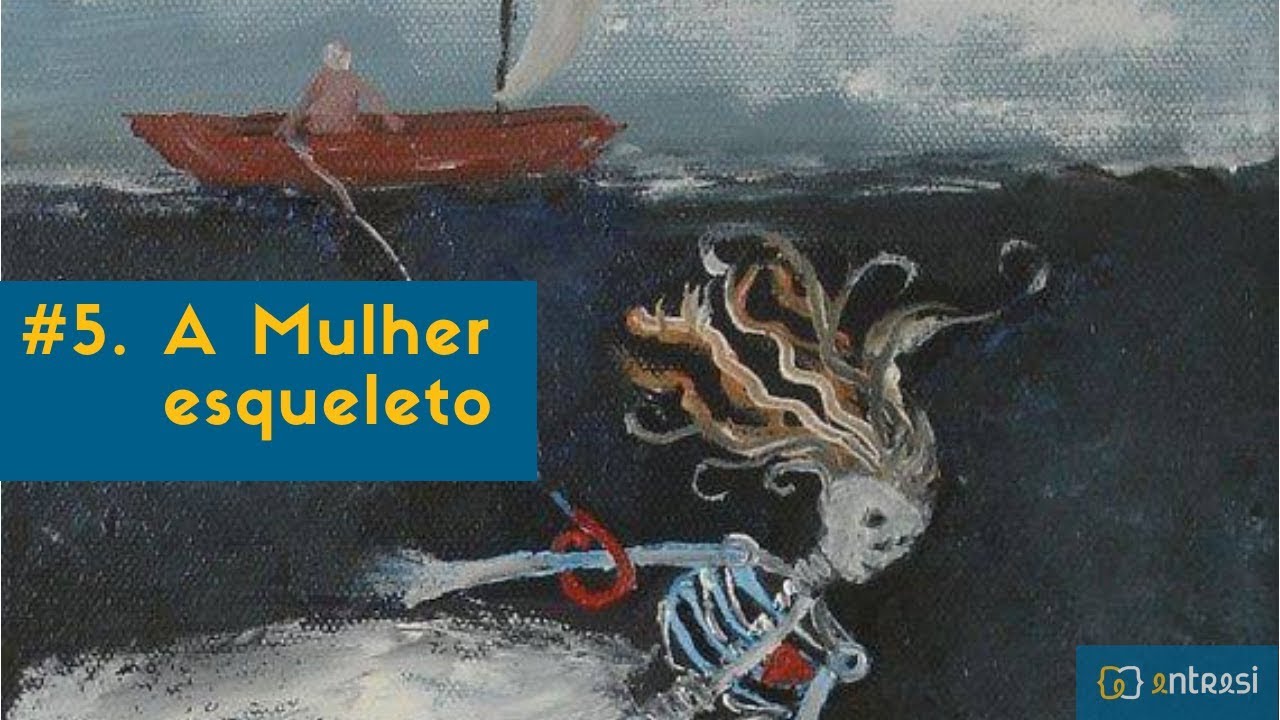
In the story, an Inuit is ice fishing when he suddenly feels something big on his fishing line. The more he struggles to bring what he believes to be a large fish to the surface, the more the line becomes tangled around the skeleton woman's ribs. When the skeleton woman finally reaches the surface, the fisherman comes across a bald head, small corals in the skull's sockets and crustaceans in the old ivory teeth.
When he realized, she was already inside her kayak. Frightened, the fisherman began to row towards dry land. Not realizing that the skeleton woman was tangled in his line, he had the feeling that she was standing, running behind him as the fisherman ran towards his igloo.
There, in the darkness of his igloo, the fisherman remained silent, believing he was alone. When he lit his whale oil lamp, there she was, with one heel on one shoulder, one knee caught in the ribs, one foot over the elbow. Like a lonely man and still surprised by what he saw, he began, without knowing why, to release her from her fishing line.
In the end, he covered the bones with skin to keep them warm. After working so hard, the man felt sleepy and was soon dreaming. As sometimes happens as we dream, a tear ran down his face.
Seeing the glow of the tear illuminated by the fire, the skeleton woman put her mouth next to the tear and that single drop was like a river that she drank until her thirst for so many years was quenched. Lying next to her, she removed her heart: a drum. She sat down next to him and began to drum and sing “meat, meat, meat.
. . .
and as she sang, her body became covered with flesh, her hair appeared, her eyes gained shine, her legs separated and her breasts took shape. When she was ready, she sang to undress the man and got into bed, letting their skin touch. And that's how they woke up together.
Ready to explore this story with me? Often in northern stories, love is not a romantic encounter between two lovers. Stories from regions close to the pole describe love as the union of two beings whose combined strength allows one or both of them to enter into communication with the world of the soul and participate in destiny as a dance with life.
is the death. Love means a visible bond that prevails in abundance or austerity. For this union to happen, it is necessary to bring a third element into the relationship.
This element is precisely the skeleton woman, also known as “Death”. Of course, we cannot fail to make reference here to the death card in the tarot, which talks precisely about the transformation we need to go through to be “reborn”, like an oracle that knows exactly when a cycle begins and ends. In order to create lasting love, the skeleton woman needs to be accepted into the relationship and embraced by both lovers.
The inability to face the skeleton woman and untangle her is what causes the failure of many relationships in the world we live in. While those who are initiated are not afraid of death, culture often encourages us to throw the skeleton woman off a cliff, not only because she is terrifying, but also because it takes a long time for us to learn to deal with her. We are increasingly accelerated and discarding everything that we don't like at first glance.
But. . .
for love to establish itself, it takes time to untangle your bones and eyes to assimilate the beautiful. It is said that everything we seek is also seeking us; that if we stay very still, what we are looking for will find us. And that is the way to approach the nature of death: with confidence of spirit.
The image of innocent sleep there shows that the fisherman is entering a transition that will take him to a deeper stage of maturity, that everything will be as it should be. The critical moment there is precisely when a person allows themselves to love “despite”. .
. despite having their anguish, despite being nervous, despite having been hurt previously, despite fearing the unknown. Sometimes there are no words to encourage courage, you simply need to trust and dive in.
For it is better to trust the direction in which love takes us than to remain confined in some cracked bed of the dry river of the psyche. When a life is excessively controlled, there is less and less life to control. We have all made the mistake of thinking that another person could be our cure, but it takes time to understand that this does not exist as we place our wounds on the outside instead of healing them within.
There is nothing that a woman wants more from a partner than the attitude of him/her dismantling his/her projections and facing his/her own wound. Estés continues his reflection by bringing the first phases of love, which are divided into seven different moments. You can grab a pen and paper to understand a lot about your own current or previous relationships through the words of these.
. . In the first phase, the accidental discovery of love takes place.
The fisherman doesn't realize it, but he is bringing to the surface the most terrifying creature he has ever seen. This phase marks the first stage of being in love: we are all blind. We are hungry, we bait the hook, but we don't know exactly what we are looking for.
Estés, as a psychologist, reports stories of patients who arrive at her office saying with happy dread: I met someone. I did not want. I was in mine.
I wasn't even looking, when. . .
suddenly, I met someone. And now? " Before they know it, the skeleton woman has appeared on the surface, climbed into the canoe and is heading towards the igloo.
For most people, this is the time to run, just like the fisherman did. It's natural to act like this, but not for long, not forever. In the second phase, hunting and concealment attempts occur.
It is at this stage that people hide in the den, trying to remain invisible to the skeleton woman. At this stage, the more we try to escape a relationship, it seems to come back to life. The more life is generated, the more scared we become.
This is where we try to rationalize love. This is when we say “I can get along better with someone else”, “I don’t want to give up xy or z (and here we fill in all kinds of things), “I don’t want to change my life”, “I don’t want to face my wounds or from someone else”, “ I’m not ready yet” or “I don’t want to allow this without first knowing what will come next”. In fact, the famous “taking a break” in modern times is similar to a fisherman’s igloo: warm and safe.
The conclusion is that those who enter into a relationship with the skeleton woman will gain a lasting talent for love. And those who refuse will achieve nothing. There's no way to avoid that.
The truth is that there is no feeling of being completely ready or the time being right. As with any dive into the unconscious, there comes a time when we simply hope for the best and leap into the unknown. If we want to love, there is no way to escape learning to embrace the skeleton woman.
The third phase is when we untangle the skeleton and when we understand the aspects of life-death-life. When the fisherman sees the skeleton woman all tangled up, he also sees a glimpse of something he doesn't know exactly what it is. If before he ran away, now he can touch her.
Even though we feel scared, we are willing to touch the non-beautiful in others and in ourselves, our shadows. This is precisely the teaching of Libra's archetypal energy: only when we share our shadows and listen to the shadows of others are we able to relate. A person who has untangled the skeleton woman knows patience, knows how to wait.
She is not shocked by scarcity, nor is she afraid of it. Your need for immediacy is replaced by the time needed to untangle love. In the fourth phase, confidence occurs, which generates relaxation.
When the fisherman lets himself be carried in Morpheus's arms, he relaxes. Sleep is a symbol of rebirth. In creation myths, souls fall asleep while a transformation takes place.
In the fifth phase, we share future dreams and past sadness. While the fisherman sleeps, a tear comes out of the corner of his eye. The skeleton woman, full of thirst, drinks the fisherman's tears.
In mythology, tears hold creative power and represent sincere union. In herbal folklore, tears are a binder to unite ingredients and souls. In fairy tales, when tears come out, they scare away thieves, cause rivers to flood or summon spirits.
When they touch a body, they heal and restore vision. When touched, they cause conception. Now stripped of all the thorns, hooks and knives of the daytime world, the man attracts the skeleton mukher to lie down beside him, to drink and nourish himself with his deepest feeling.
When the tear falls from his face, the fisherman becomes his own healer and does not look to the woman as a painkiller. He has come across his own pain (or shadows) and recognizes it when he touches it. The fisherman's tears attract to him the skeleton woman who wants to participate more in his life.
In the sixth phase, we begin to heal archaic injuries. When a man gives his heart completely, he becomes an amazing force. The heart there symbolizes its essence.
When the woman sings of generating flesh for herself, the person whose heart she is using feels what is happening, is filled with creation, overflows with it. In tradition, drums made from human bones summon the dead. Drms made from the hides of certain animals are good for summoning animal spirits.
A drum made from the heart, as in the tale, will invoke the spirits that are linked to the human heart. And here I bring more information that I consider essential to share today. It is common to see white women and men playing drums on social media as cultural appropriation, without the slightest idea of the depth, meaning and responsibility that this act has for First Nations.
Playing a drum requires a culture, an initiation or even permission from those who have this rich culture by right. It is common to see stores (especially in Canada) that sell drums or even people who are not from First Nations playing or, worse, teaching other people how to play the drum. Be very careful when you see this happen, question and respect the culture of the first nations who had and continue to have their culture decimated today.
And finally, in the seventh phase of love, when we have the fusion of body and soul. We often run away from the life-death-life nature because we believe that love is just a gift. However, love at its essence is a series of deaths and rebirths.
Passion dies and returns. The pain is chased away and comes to the surface later. Love means embracing and at the same time enduring countless endings and countless new beginnings – all in the same relationship.
New activities are a cure for boredom, intimacy is a cure for loneliness, solitude is a cure for feelings of lack of space. Without knowledge of this dance, we may have the tendency to try to cure ourselves with excessive spending, exposure to risks, irresponsible choices and the search for a new partner. For women who read the book "Women Who Run with Wolves", this short story can be interpreted as a message about the life-death-life that we go through when we choose to have a relationship with someone.
Even though there may be discord, we seek partners for life. The bonds formed must be able to allow us to overcome harsh winters, abundant springs, long walks, new litters, ancient predators, tribal dances and chorus songs. The nature of life-death-life is a cycle of animation, development, decline and death that is always followed by reanimation.
If you've ever had an astrology or tarot consultation with me on the topic of relationships, that's what I call contracts. When we start a relationship with someone, we sign an imaginary contract with the other person. From time to time, we need to re-read this contract together and decide: Does it continue without change?
Do we need to make a contractual change? Or does an addendum or annex solve everything? Or even, when we stop reviewing the contract for a while: is it time for a termination?
This is the dance that Clarissa Pinkola talks about. And also the realization of life-death-life in relationships, which is nothing more than embracing and at the same time enduring countless endings and countless new beginnings in the same relationship. Estés also talks about the importance of all phases and our tendency to “skip” or accelerate some of them.
It is these phases that allow us to create an immortal soul-to-soul bond. This is how a romantic relationship should work: with each partner transforming the other. Each person’s strength and power are untangled and shared.
If you liked this content, like, comment, share so that I can continue my mission of sharing the keys to knowledge with you. If this is your first contact with me, in the description of this video you can find out more about me and my work with astrology and tarot, how my consultations take place and online courses with open registration. And so, we will continue together in this quest to transform lead into gold.