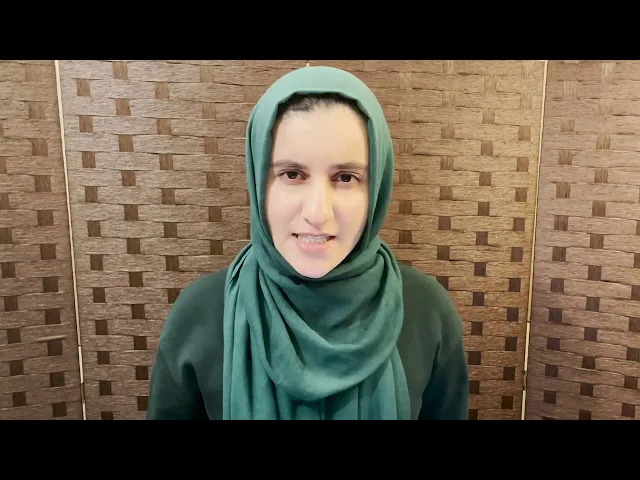
[Music] as students employees and colleagues most specifically at this institute of mit we talk about technology the products we can make the sciences the political events affecting our economy the nature of our friendships and relationships but there are a series of topics we are told to avoid god creation afterlife conversations on spirituality and religion in our minds don't seem to have any apparent utility so much so that no one deems it necessary to ask me why i as a practicing muslim step out of my day-to-day activities to pray or that the biggest motivation for studying
computer science for me comes from my religion more often than not our religion and spirituality is practiced in the confines of our bedrooms we are afraid to share the valleys we were taught because it might offend others call it a repercussion of the scientific era or because we believe these conversations may lead to animosity heated debates arguments i would like to make the case that avoiding the differences and similarities between ourselves leads add best to our brittle and artificial unity and at worst to blatant intolerance in our communities in any case it towards the potential
of our partnerships whether it be a group project at school or a multi-million dollar deal at a company these conversations on where we have come from and where we are going are so fundamental to the way that we work and conduct ourselves in our professional and personal lives our friendships and relationships that it becomes essential to have conversations on our beliefs values and worldviews to create a more understanding world since 2018 i have participated in weekly dialogues with students of other fates at mit when i joined the adir interfaith community at this institute i was
a bit skeptical i joined as per the recommendation of my muslim chaplain and was primarily set on dispelling myths and misconceptions of my faith of islam so how would i go on to benefit from dialogue over the past two years i have experienced incredible growth in the way that i communicate with others how now i am better able to listen to empathize and understand rather than to persuade and impose my own view it is informed so much of my practice of my religion and its relationship with other faith traditions as someone who grew up muslim
with not so many non-muslim friends i am now aware of my inherent assumptions and now experienced holy envy loving a practice of another group and incorporating it into my own world view people often believe that these conversations happen simply for the sake of conversion but it is only motivated strengthened and empowered my love for humanity and our shared unity my mormon friend hope reminds me to pray my five daily prayers my hindu friend sarbari keeps my values as a muslim in check and my friend jay who is agnostic reminds me to reflect on my day
and the origins of my morality at the same time each one is respectfully able to question my world view and assumptions and allow me to reflect on the world view that i choose for myself my experience with interfaith dialogue is encompassed in a very special relationship that i have with hope dargan hope and i met in a class on islam and the middle east after class one day hope came up to me and suggested that we should grab lunch as she didn't have a muslim in her dear small group and wanted to learn from my
experiences hope challenged me with a series of tough questions on my faith and at the very beginning of our conversation we presented the very best version of our faith to one another over time as we realized the essence of a deer we began to become more vulnerable with one another and realized that indeed we both had challenges and struggles with the certain aspects of our faith although we didn't intend on it for the past two years hope and i have continued to grab weekly lunches on the surface our friendship doesn't make much sense as a
hijabi muslim woman in a bisexual latter-day saint we grew up in very different communities with a very different set of beliefs and values and you could even say our personalities even aren't that similar but we both are very determined loyal have a strong commitment to our faith and can relate as we navigate the differences between culture and religion hope and i have also been able to share many practices with one another during the holy month of fasting ramadan for muslims hope has attended community dinners to break fast with me and has even fasted a couple
days of the month i have attended her services and have engaged with many of her community members together we organized the muslim latter day saint dinner where others can engage in conversations similar to ours and for the past two years have organized a deer's interfaith banquet dinner where mit students can engage in interfaith dialogue adir has taught us to explore different sets of values and find meaning in what is most important to us it has taught us to respectfully engage in dialogue by setting the motivation for conversation and developing signals to indicate when certain people
are uncomfortable with the topic of conversation pope and i had misconceptions of one another's faith traditions that we were able to dismantle with simple conversations we have seen in recent history the consequences of misconceptions and intolerance of religion in society for example anti-semitism in europe and the holocaust happened only half a century ago and we see a rise of islamophobia in this country i call my home as well as my country of revision in india we need to look past media and stereotypes and take control of the narratives that we believe in if we hope
to dismantle the wall that divides us we need to take the hand of the person on the other side dismantle the misconceptions together and experience an open-hearted connection with the other so if we in our busy universities can take some time to understand who we are our beliefs and values and our motivations in safe spaces we can make a lot more progress as a society and inculcate a spirit of cooperation between different fates and realize we are a lot more similar than we are different coming back to the question of what interfaith dialogue means to
me i am a graduate student at mit studying robotics surprisingly my work in interfaith dialogue is actually not too disconnected from my technical field every day i think about how robots can continually learn into the future while retaining previous experiences and learning new skills eventually myself as well as my colleagues will have to begin to consider the value system that a robot operates with for example if a robot takes part in a negotiation it will have to choose whether or not it is ethical to deceive or not deceive or whether something that it says to
its counterpart will be deemed as offensive all of these decisions that a robot or artificial agent makes are inherently biased by the value system that may or may not be influenced by a pre-existing religion these are all decisions that technologists will have to make in the future and i see interfaith dialogue playing a huge role in the key research objectives that i create in the future at the end of the day most of us would like to make an impact on this world acquire an education have a family live a comfortable life these are all
objectives we share whether we are muslim hindu christian or atheist conversations on the objectives we have chosen for ourselves and how we hope to achieve these objectives are so fundamental to the way that we interact with one another on a daily basis students especially we spend most of our time consumed by our problem set or solving a really big research problem so i leave you with this if we as mit in one of the most diverse and talented universities in the world are not contemplating the meaning of our existence the origins of our morality and
the value sets that we have chosen for ourselves who else will thank you