[Music] [Music] after the Feast of Christmas one of the most popular days of the year for Catholics to attend Mass even Catholics who don't frequently go to mass is Ash Wednesday uh which is the first day of the season of L uh and yet at the same time despite its popularity and High attendance rates it's also one of the most puzzling days of the year because it's one where Catholics do things that are very strange right so first of all we have ashes put on our foreheads in the shape of a cross and lots of
people wonder what is the meaning of the ashes why do Catholics get ashes put on their foreheads and then other people even often challenge us and say why do you Catholics put ashes on your forehead uh to show everyone that you're fasting when Jesus explicitly says in the gospels that whenever you fast you shouldn't let anyone know you should wash your face um and anoint your head with oil and don't let anyone know that you're fasting and do it in secret I mean doesn't Ash Wednesday contradict in that sense the teaching of Jesus in The
Gospel itself and so what I want to do in this video is try to answer some questions about Ash Wednesday some common questions that people have by looking at two things first I want to look at the Jewish roots of the ashes in other words like what would the use of ashes have meant in a first century Jewish setting because like many things in Catholicism that are often at first glance strange or uh confusing this is one of those things where uh the Catholic church has a tradition that actually goes back to Judaism goes back
to the Old Testament and if you put it in its Jewish context it will show us the true meaning of what we're supposed to be doing on Ash Wednesday the second thing I want to do is look at a couple of the readings for Ash Wednesday from the lectionary so that you can see why the church has uh picked particular passages from the Bible to explain what we're actually supposed to be doing not just on Ash Wednesday but actually as a key to the entire season of Lent so if you've ever wondered about the meaning
of Ash Wednesday or if you've ever just wondered what am I supposed to be doing this Lent how can I get ready for Lent then this video is for you so I'm going to begin here uh by going back first and foremost to the Jewish roots of the symbol of Ashes what did ashes represent uh in the Old Testament period and we'll start there so the first thing we want to look at is if you do a study of ashes in the Bible especially ashes in the Old Testament you're going to see a few consistent
themes that point up the symbolism of Ashes so just to give you a first example uh first of all in the Book of Genesis chter 3: 19 uh God says to Adam after he falls after he commits a sin you are dust and to dust you shall return so this verse is one of the actual uh verses quoted during the Ash Wednesday service so the first symbol that we're going to use for dust and Ashes if you say someone is dust and Ashes it's a symbol of mortality it's a symbol of the fact that after
the fall after the uh Commission of the first sin we are now subject not just to suffering but to suffering and death so every human being is mortal and we go back after our death to a state of being dust and Ashes so that's the first text a second text that I would highlight is from The Book of Job in J in the Book of Job chap 42 verse 6 this one gets a little more to the heart of what we're doing during Lent uh as job is standing before the Lord he says this therefore
or I despise myself and I Repent in dust and Ashes so now we have another layer of meaning not only does dust symbolize mortality but ashes and dust symbolize mortality and repentance from sin so repentance is the second meaning of the of the of the symbol of Ashes we'll see that elsewhere uh in the Book of Daniel for example so in Daniel 9:3 Daniel is praying and interceding for his people and even though Daniel himself is a righteous man he does penance for the sins of his people and the way he expresses that Penance is
through fasting sackcloth and Ashes so this is what it says chapter 9:3 I Daniel turn my face to the Lord seeking him by prayer and supplications with fasting sackcloth and Ashes so one of the things that ancient Jews would do is when they were entering into a particularly intense period of prayer penitence for sin uh and and supplication they would wear sackcloth which was a kind of rough cloth that would actually not would be uncomfortable it would scratch the skin it would irritate the skin so it would cause suffering and it would be a kind
of penance they would also fast so that would cause a kind of suffering abstaining from food abstaining from drink and so they would suffer in that way and then they would also cover themselves in ashes as a sign of their mortality and as a sign of repentance right so all these things together uh were common practice in the Old Testament during intense periods of fasting and prayer uh we also see the same thing in the uh book of macbes this is interesting in first mccabes chapter 3 in fact this is more than interesting this is
very significant uh 1 mccabes 3:47 um although it's not in the Protestant Old Testament it's only in the Catholic Old Testament uh it gives us this image and it gives us the origin of Ashes not just anywhere on the body but on the head in particular so it says that when the the macab bees were interceding and and entering to this time of prayer it says quote they fasted that day and they put on sack cloth and sprinkled ashes on their heads and rent their clothes right so the tearing of clothes is also a sign
of penance and mourning but in this case notice they don't just fast and pray they put the ashes on their heads right so uh again in the Catholic church one of the things we're going to do is we're going to take the ashes that are a symbol of repentance from sin and we're going to place them on the the forehead in particular and then finally one of my favorite Old Testament roots of the practice of Ashes is from The Book of Esther right so in Esther 14: 1-3 we see that Esther who is uh Married
To The King The Pagan King who's going to kill all of the Jews but unless she intercedes for them and gets him to save them she enters into a time of intense prayer and fasting and supplication for her people and this is how she does it watch what she does uh 14: 1-3 says this Esther the queen seized with deathly anxiety fled to the Lord she took off her Splendid apparel and she put on the garments of distress and mourning and instead of costly perfumes she covered her head with ashes and dung and she utterly
humbled her body and every part that she loved to Adorn she covered with her tangled hair and she prayed to the Lord the God of Israel so notice what Esther is doing Esther herself is very beautiful she's a queen she ordinarily adorns herself in Precious garments and beautiful Jewels but in this case she takes off all those garments of joy and instead she puts on uh humbling clothes and she takes away her perfumes and she covers her head with ashes and dum right so I mean this is this is radical radical pennis why because she's
ing into an intense period of prayer for the Salvation of her people if she doesn't save them they're all going to be massacred by the Pagan King now um thankfully thankfully the church in her wisdom has only chosen here the symbol of Ashes for uh Ash Wednesday and for the season of Lent um and I think that's probably a good idea because dung Wednesday probably wouldn't be as popular as Ash Wednesday so uh we're thankful for that selective Pro process uh in the church's uh tradition but obviously all of this goes to show that by
the time you got to the first century ad any first century Jew would have recognized that when a push person put ashes on their forehead what were they doing they were recognizing their mortality like Adam they were repenting for sin like job uh and they were interceding for others like Daniel or like Esther okay that's why in the gospel of Matthew and some people might say oh well that's in the you know that's in the uh Catholic Old Testament it's not in the Protestant Bible no no no even Jesus says this and Matthew 11: 21
we can see that the Jews did this because he actually says uh in one of his woes against the cities of Galilee that rejected him he says woe to you kassen woe to you Betha for if the mighty Works done in you had been done in tire and sidon they would have repented long ago in sackcloth and Ashes right so even Jesus recognizes this practice of Ashes as an outward sign of inward repentance so the first and most important point we want to make here about Ash Wednesday is that when the church inculcates the tradition
of putting ashes on our forehead this is an Ancient Ancient biblical sign of remembering our mortality repenting for our sin and also very importantly of interceding for others and of uniting our intense time of prayer to a period of fasting and supplication to God drawing closer to God by by detaching oursel from the pleasures of this world in particular food uh and drink as well as the the pleasure of a of an appearance that is um you know well adorned and beautified uh with oils and and that kind of thing so that's the meaning of
the ashes repentance from sin now when we turn then to Ash Wednesday and we look not just at the symbolism of the day but at the spir scriptural readings for the day it gets even more interesting and even more powerful okay so for this uh Wednesday of the year the first reading the Old Testament reading is from The Book of Joel CH 2: 12- 18 so if you turn with me to the Book of Joel every year on Ash Wednesday the church will read these verses and this is a proclamation from the prophet Joel to
the people of Israel this is what he says even now says the Lord return to me with all your heart with fasting with weeping with mourning and ren your hearts not your garments return to the Lord your God for he is gracious and merciful slow to anger and abounding in steadfast love and repents of evil who knows whether or not he will turn and repent and leave a blessing behind him a cial offering and a drink offering for the Lord your God so blow the trumpet in Zion sanctify a fast call a solemn assembly gather
the people sanctify the congregation assemble the elders gather the children even the nursing infants let the bridegroom leave his room and the bride her chamber between the vestibule and the altar let the priests the Ministers of the Lord weep and say spare thy people O Lord and make not thy Heritage a reproach a by word among the Nations why should they say among the people where is their God then the Lord became jealous for his land and had pity on his people all right so why is that the reading that we that we hear every
year at lent well this is so important the primary reading the primary reason is because the description that Joel is giving us here in this passage is of a public fast of a public day of fasting in other words of an official fast day where the priests and the prophets of Israel would call all of the people to unite together in solidarity in communion with one another in a collective fast so that all of the people would um would fast would put on sackcloth and Ashes as a corporate Community sign of repentance for their own
sin but also of Supplication for the sins of others so that God might have mercy on a sinful people and you can see there that already in the go in the Book of Joel God's making very clear to his people that the ultimate reason for fasting and this kind of prayer is so that people will come back to god notice what he says at the beginning return to me with all of your heart with fasting and weeping and mourning so that's what God is doing in the time of Joel and also that's what the church
is calling us to every single lent see lent is a great time for people to come back to God it's a great time for people who have maybe been away for the church for a long time maybe they haven't gone to mass for a long time maybe they're going to mass and they've been you know caught in a sin in habitual sin what the church does in is at the beginning of Lent takes the words of the Prophet Joel puts them on her lips and says to all of the people in the church come back
to me return to me right with weeping and with fasting with mning on this great solemn day of a fast and although the church calls us to an outward sign ultimately though what is she inwardly want what does she want she wants not just the external sign but the interior repentance and that's why why we have these verse here this powerful verse Rend your hearts not your garments that doesn't mean that God doesn't want the people to do the external sign you can see in context he just commanded them to do fasting and sackcloth and
mourning right it's not but what it does mean is that in addition to the external sign what God really wants is for them to tear open their hearts he wants them to open their hearts in Repentance from their sin to turn away from their lives of sin and to come back to him and love love him with all their heart with all their soul with all their mind and all their strength and in order to do that one of the things we have to do is use our bodies to help focus our souls on God
because the reality is We're Not Angels We Are Body and Soul Composites and so fasting is a very powerful way to get your mind off of pleasing the body with food and drink and get mind on repentance for sin and focusing it on God and this is very simple if you've ever fasted you'll know this especially if you're not used to fasting once you start fasting once you abstain from food and drink like say for half a day and you're used to eating all the time your body is going to become very quickly aware of
the fact that you're not feeding it like you're like you normally do and it's going to start shouting at you hey feed me give me something to drink and so what it does is it puts you it into a sense a state of alertness right now if you know why why you're fasting I'm fasting because it's Ash Wednesday I'm fasting because the church has called for a public fast then guess what happens all day long you're thinking about what season it is all day long now you're thinking about the church you're thinking about the requirement
that's been given to you and it is a Perpetual reminder to you that you're now starting a new season of the year you're starting a season of penance a season of fasting and so it helps you to pray it helps you to focus it helps you to um stay in a state of prayerful State a state of alertness of spiritual alertness that you wouldn't have if you were just going about the ordinary day you know eating breakfast and then getting a snack and then getting lunch and then getting supper or whatever so fasting is a
very powerful way to unite your soul and your body in the in the the time of prayer of intense prayer that the church is calling us to um and the Jews did this by the way uh not just in the Book of Joel but they did this every year every year they had a public day of fasting it was called yam kipor it was the day of atonement and on that day every every single Jewish person was called to deny themselves The Book of Leviticus chapter 16 says um and they would abstain from food from
drink from bathing from any anointing and they would even abstain from marital relations right in order to completely devote themselves to prayer and to penance for that day so this is a totally Jewish thing the idea of having this one day where everybody fasts and um you have a kind of public assembly a public fast uh that is visible to everyone else that's what Ash Wednesday is it is a kind of like New Testament equivalent of the day of atonement now so that's the first reading for the day and that reading explains the public nature
of our fast so if people want to know well why are why are you telling everybody that you're fasting uh well it's because just like the Jews did in the Old Testament when you have a a public day of fasting it's something that's outward and visible so that everybody unite in doing it however that's not all Ash Wednesday is about Ash Wednesday although it is a day of public fasting is also the beginning of the season of Lent and lent is not going to be an entire season of public fasting it's now going to be
a season of private fasting of secret fasting of secret prayer and of secret almsgiving so in addition to the Old Testament reading on the public fast the church also wants to make sure that throughout the season of Lent we're doing our prayers and our p practices quietly and secretly as well so she gives us another passage and this is from The Sermon on the Mount the gospel for this day is Matthew chap 6 Matthew chapter 6 veres 1-6 and 16- 18 so let's read this gospel and we'll ask ourselves why does the church give us
this on Ash Wednesday and you'll find there's a really interesting answer to the question so Jesus says in The Sermon on the Mount Matthew chapter 6 beware of practicing your piety before men in order to be seen by them then you will have no reward from your father who is in heaven all right stop there notice this I'll never forget the first time I realized this I I remember I had one of my non-catholic friends attack me or not attack but criticize me like why do you Catholics um contradict the words of Jesus by putting
ashes on your forehead so everybody can see when he said to do it in secret you know um don't you know what the Bible says and then I went to the Ash Wednesday service and I realized not only does the church hide from that passage in the Bible she actually makes sure we read that passage on Ash Wednesday precisely because we're going to enter into a season of Lent and she doesn't want us to tell everybody about what our penances are but she wants us to do them quietly and in secret so I just laugh
we actually don't hide from that this is the reading for Ash Wednesday but let's keep going so watch because watch what Jesus says he's going to give three spiritual practices here and he's going to tell us how to do them uh verse two thus when you give alms sound no trumpet before you as the Hypocrites do in the synagogues and in the streets that they may be praised by men amen I say to you they have their reward but when you give alms don't let your left hand know what your right hand is doing so
that your alms may be in secret and your father who sees in secret will reward you second discipline and when you pray you must not be like the Hypocrites for they love to stand and pray in the synagogues and at the street Corners that they may be seen by men truly I say to you they have their reward but when you pray go into your room shut the door and pray to your father who is in secret and your father who sees in secret will reward you now it skips down to verse 16 third discipline
and when you fast do not look dismal like the Hypocrites for they disfigure their faces that their fasting may be seen by by men truly I say to you they have their reward but when you fast anoint your head wash your face that your fasting may not be seen by men but by your father who is in secret and your father who sees in secret will reward you all right end of the Gospel so why does a church pick this gospel for Ash Wednesday let me give you a few key points number one as I
already said but I'm going to say it again lent Ash Wednesday is the beginning of the season of Lent so one of the things we'll be doing during the Linton season is private acts of repentance so the church makes clear to remind us of Jesus's exhortation here not to quote do righteousness that's the actual Greek he says don't do righteousness in order to be seen by other people okay so one of The Temptations of engaging in Pious practices like prayer and fasting is that we can get spiritually prideful and we can want to tell other
people about what we're doing so that we can seem holy or Pious or venerable to others right and Jesus knows that that's a temptation to spiritual Pride so he wants to cut that off at the knees and say don't make sure that when you do these don't do them in order to be seen by somebody else so how do we how do we do it he says I want you to do them in secret all right now notice this this is important although Jesus tells us not to do them in order to be seen by
men he doesn't tell us not to do them okay he still tells us to do them in fact these are the only three spiritual disciplines spiritual practices that he explicitly commands in The Sermon on the Mount so let's look at them very carefully um first he talks about alms giving notice this he says when you give alms not if you give alms that's very important so what is Al giving alms giving is giving money or clothing or possessions of some sort to the poor to the needy or to the church so you could give alms
to the temple in the first century or you could give it to the poor so Jesus expects this is the key Point Jesus expects his disciples to be regular alms givers he expects his disciples to be people who give to the poor not occasionally but regularly and his command to them is that when you do this do it in secret don't let your left hand know what your right hand's doing so that your reward will be from your father in Heaven and not from the praise of others second prayer notice this Jesus does not say
if you pray he says when you pray right so he expects his disciples to be regular prayers not occasional prayers but regular prayers so you know it's so tempting in in our day and time for people to say oh I believe in Jesus oh that's great how often do you pray well you know every now and then no no no no no a disciple of Jesus is supposed to be a person who regularly prays and what Jesus is saying here is don't just do that in public like at Mass you should be praying in secret
in your home in private go into your inner room that's the literal Greek there and pray to your father who's in secret and when he sees in secret he'll reward you so prayer and then third and finally and this is really important in our day and time because fasting has fallen on Hard Times Jesus says when you fast not if you fast fast right so Jesus expects his disciples to fast regularly so what does that mean well what is fasting man we could do a whole video just on that um fasting is a Biblical practice
you'll see it all throughout the Old Testament and you'll see it in the New Testament as well the basic meaning of fasting just to kind of sum it all up is to abstain from either all food or to abstain from food and drink okay so it takes different forms sometimes it's absen from food and drink sometimes it's just absence from food but in the tradition of the church like in the rule of St Benedict you look at the history of the church the ordinary meaning of fasting would be to abstain from food and drink until
the evening so it would be one meal per day and usually a very simple meal so that the monks like the monks of St Benedict would go throughout the entirety of the day without food or without food and drink until the evening and then in the evening they would break their fast with a small meal um and Jews in the first century practiced this uh we know from um the gospels that Jesus talks about the scribes and the Pharisees fasting twice a week we also know that the Disciples of John the Baptist were known for
fasting in fact it was so common to practice that when people saw Jesus disciples not fasting on one occasion they said hey why aren't your disciples fasting like the FES and John's does and he gives a reason for it he says he says that as long as the bridegroom is with them they don't fast but the days are coming when the bridegroom is taken away from them meaning himself and then they will fast on that day or they will fast in those days so Jesus anticipates that after his passion and death his disciples will be
men of fasting and in the early church it became traditional for Christians to fast twice a week um normally they would do it the most ancient evidence was on Wednesdays and Fridays those were the traditional days of fasting so Jesus expects his his disciples to fast and he says when you do this private regular fasting which by the way notice is different from a public day of fasting in like the day of atonement or like with us for Ash Wednesday or Good Friday when you engage in your private F fasting don't let anybody know you're
doing it keep it secret wash your head wash your face anoint your face with o wash your head anoint your face with oil and don't let your fasting be seen by others so that your father who rewards in secret who sees in secret will reward you in secret right all right so why does the church give us this gospel well um two key things first and this is probably uh the most important of all first it tells us that lent is not hear me lent is not just about abstinence see in our day and time
most people have reduced lent to a season of abstinence what does abstinence mean abstinence means to give up uh either meat or um milk products or even just to give up some some something that you like so I'm going to give up chocolate I'm going to abstain from chocolate I'm going to give up coffee these are pretty regular things or I'm going to give up sweets or ice cream whatever it is so I'm going to abstain for that for 40 days during the Linton season and that's great like two thumbs up you know good job
it those things can be real sacrifices that are important and Powerful but we don't want to reduce the season of lint to just the spiritual practice of abstinence that's never been the tradition of the church this passage from The Sermon on the Mount was for centuries associated with lent because lent was always a series a season sorry of three spiritual disciplines not just absence but fasting prayer and almsgiving right so the idea was that during the Linton season you would increase your regular prayer intensify your regular fasting and intensify your regular practice of almsgiving so
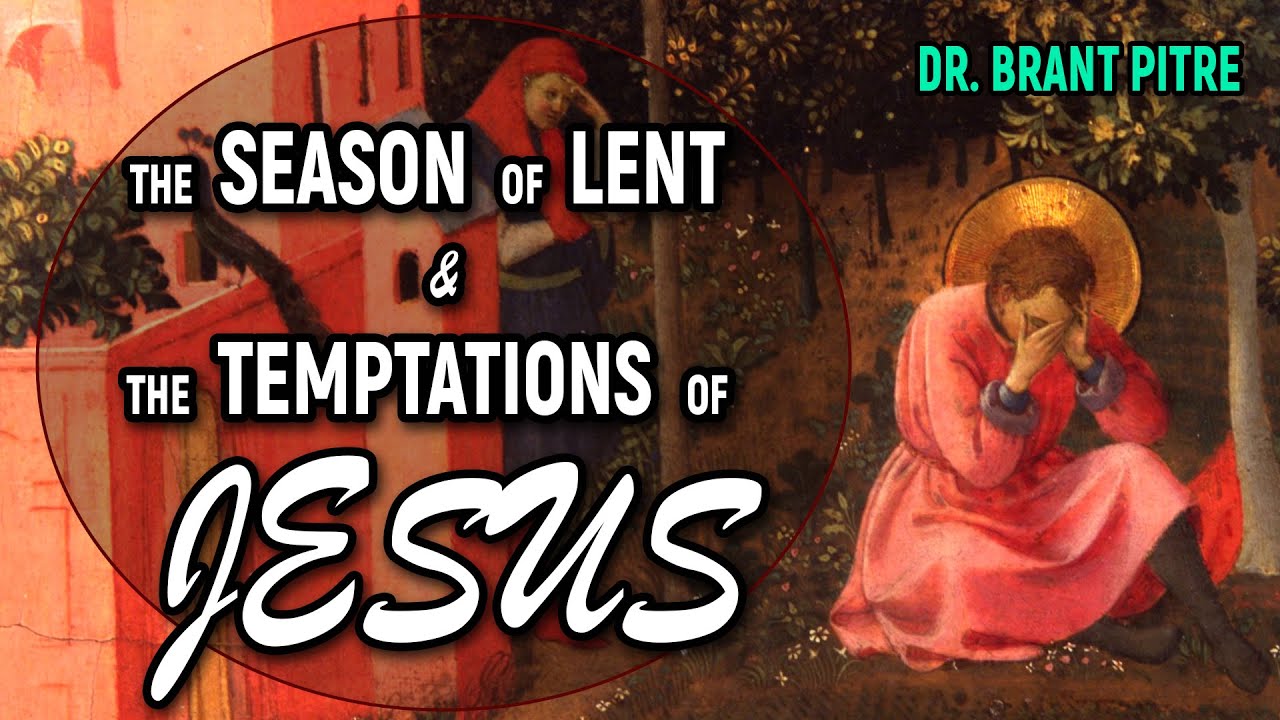
that it would be a particularly intense spiritual season of purification of repentance from sin and of sacrifice um of offering sacrifice little sacrifices of love to God um and the reason we do this during Lent is because Jesus did it during Lent so to speak um when what you might be thinking what are you talking about well I'm talking about the story of Jesus in the desert right so if you go back to the Gospel Matthew chapter 4 Jesus goes out into the desert and the devil tempts him with these three Temptations to turn Stone
into bread to possess all the kingdoms of the world and then also to publicly show that he's the Messiah by jumping off of the temple and and the angels carrying up now I don't have time to to get into this a lot of detail but uh what I've shown elsewhere in other presentations and all other videos is that what Jesus is doing there is he's undoing the three Temptations of the Fall because if you go back to the Book of Genesis it said that Adam uh and eve took the fruit of the tree of knowledge
because it was good for food which St John calls the lust of the flesh it was pleasurable uh it was a delight to the eyes what St John calls the lust of the eyes like the desire to possess it and then finally it was desirable to make one wise what St John calls in his letter first uh John Chapter 2 he calls the pride of life so these three temptations that we all face uh pleasure possessions and pride right uh some people call it the Unholy Trinity money sex and power okay so these these three
Temptations lay at the root of all human sinfulness and what Jesus does is he goes out into the desert for 40 days and 40 nights and he does battle with those three Temptations the temptation to pleasure the temptation to possessions think about his hunger right with pleasure to possessions uh to possess all the kings of the world and the temptation to Pride or vanity to prove that he's the Son of God and unlike Adam who Falls to each one of The Temptations Jesus overcomes the lust of the flesh Jesus overcomes the lust of the eyes
and Jesus overcomes the temptation to Pride with humility and so what he calls us to do during Lent is basically fight those same three three struggles and overcome those same three Temptations so for 40 days what is the church doing she calls us to fast why to overcome our disordered attachment to physical pleasure for 40 days the church calls us to intensify our giving of alms why to overcome our disordered attachment to possessions to money to things right and then finally for 40 days the church calls us to intensify our prayer why to overcome our
disordered self-love our vanity our pride and to put in the place of that Pride the growing gift in the virtue of humility so these three spiritual disciplines are at the essence of what it means to be a disciple of Jesus Christ and so what we're doing on Ash Wednesday is we should be making our plan making our program how during this Lent am I going to pray more fast more and give alms to the poor so that I can grow in overcoming the the the lust of the flesh the lust of the eyes the pride
of life the triple concupisent that we all struggle with and that we all um deal with and when we do that what you're going to find is that this the lent and season becomes so much more meaningful so much more powerful so much more filled with grace than just you know I'm going to try to lose some weight this year so I'll give up you know ice cream or I'm going to exercise a little more this year or I'm going to give up um drinking alcohol or whatever it might be those are all important and
they can be part of the fasting but regular fasting regular alms giving uh and regular prayer intensifying all three of those is really what L is all about and that's why the church gives us this gospel those are all very Jewish very biblical Concepts so in closing then I just like to end with the um the second reading for Ash Wednesday it's from 2 Corinthians chapter 5 verse 20 we beseech you on behalf of Christ be reconciled to God and then it goes on to say behold now is the acceptable time whole now is the
day of salvation why does the church read this on the first day of Lent well because she's saying don't wait to repent if you're if you've been waiting for years to come back to church when's the time Now's the Time if you haven't been to confession in a long time if you haven't been to confession this year if you haven't been confession in 10 years when's the time to go to confession now is the time now is the day of salvation now is the day to be reconciled to God in fact in the catechism the
Catholic Church paragraph 2042 it actually tells us one of the laws of the church is that we should go to confession at the very least at least once a year so if you haven't been to confession and it's Ash Wednesday now is the time go to confession be reconcile to God and begin to prepare yourself for this time and this season of prayer fasting and almsgiving when we will enter into the mystery of Jesus in the desert and over the course of these 40 days and 40 nights struggle with him at our side and with
his grace so that we can grow in Holiness so we can grow in love and God and so that Our Father who sees in secret right sees what we do in secret will also reward us with the great gift of eternal life and of the Resurrection that we'll be celebrating on Easter Sunday [Music]