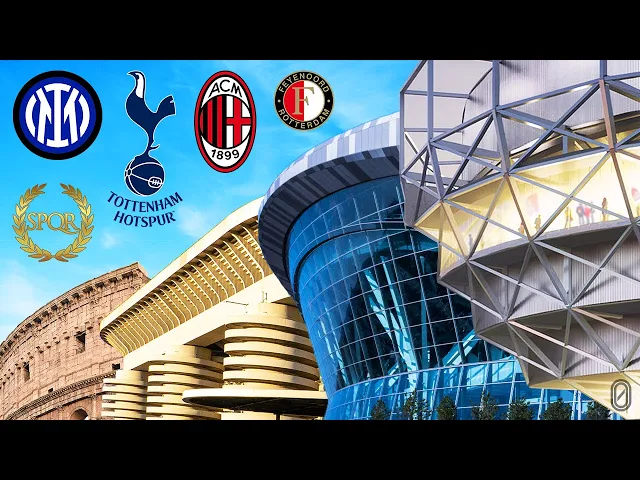
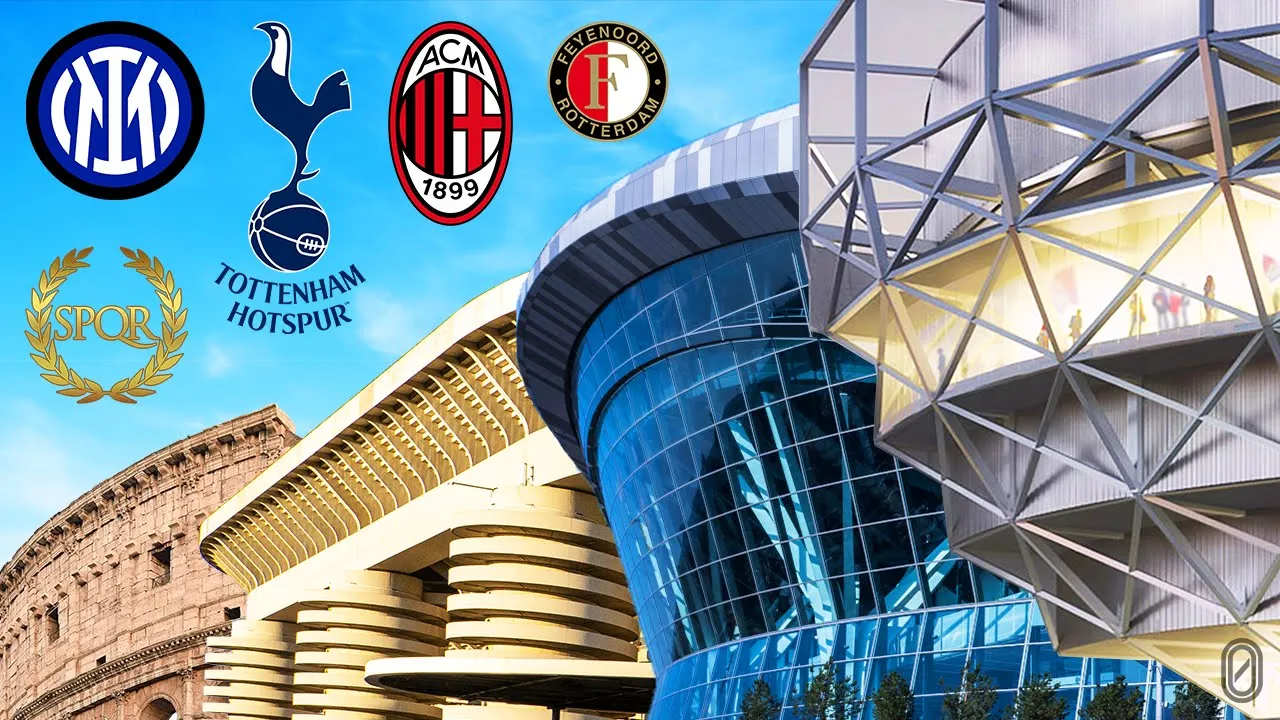
This is San Siro in Milan, Italy, one of the most legendary stadiums in the world. And this is „The Cathedral“. The new stadium that is planned in Milan.
The name „The Cathedral“ is actually quite fitting. For large parts of history, cities in the western world poured all of their wealth, resources, artistic vision and civic pride into building cathedrals. But with Religion in decline, that same wealth and vision is now being used to build stadiums.
One city after another is announcing epic plans to rebuild their arenas. Cathedrals still dominate the skylines today, and act as monuments to the rich history of their cities. Football stadiums play the same role: they're the manifestation of the modern identity of the city, showcasing what a city is capable of and how much they care about their team.
Welcome to Athletic Interest and the incredible evolution of stadiums. Let’s break down the weird relationship between sports and religion by taking a trip back in time. The Roman Colosseum may have been built almost 2 thousand years ago but it is remarkably similar to our modern stadiums.
The Colosseum could fit over 50 thousand fans, who were directed to their seats via individual tickets. The more expensive the ticket, the better the view. Fast food stands, betting shops and bars lined the entrance to the arena.
Fans could even buy oil lamps with depictions of their favourite gladiators. Talking of merchandise, many gladiators were hired to endorse brands of olive oil and wine before their fights. The ancient Roman equivalent of a Nike boot sponsorship.
As the Roman empire fell, and the age of Christianity took hold, sport became far less important. The beautiful arenas of ancient Greece and Rome fell into disrepair while an increasingly religious society focused on building churches and cathedrals. There was even a plan to build a church within the structure of the colosseum.
Since its last Gladiotorial fight in AD 438, the Colosseum has not hosted a single sporting event. Instead it has been used a factory, a hospice, and a cemetery. Luckily, the people’s passion for sport did not die with their fallen arenas.
In the 12th century an early form of football, known as mob football, became popular in England. Members of local villages would quite literally attack each other while attempting to move an inflated pigs bladder to the doors of their opponents church. Interestingly, the game was often played during religious holidays.
Church leaders became so concerned with the popularity of football that many attempts were made to ban the sport, all eventually failed. One bishop even threatened to excommunicate players if they didn’t stop with the devils’s game football. It is almost as if they knew what was about to happen.
As people moved away from towns and villages during the industrial revolution, sport moved from mass participation to mass consumption. Young families living in cities wanted a new form of entertainment. It was at around this time that the Olympic movement was revived, leading to the building of new stadiums in host cities across the world.
With a new - less violent - form of football spreading across the globe at the same time, soon almost every town and city had its own stadium, and this led to something very strange… Stadiums have always been microcosms of society. Even in Ancient Rome, rich were separated from poor through VIP boxes and ridiculously high ticket prices. But it goes even deeper than that.
Walk into any stadium and you will feel the heartbeat of the local community. With the fall of colonialism, many latin American countries began searching for their own national identities. This search coincided with the rise of football and the construction of new stadiums in many local communities.
As it turned out, it was far easier to evoke a sense of national pride and identity through football than it was with politics. In the words of Historian Eric Hobsbawm: “The imagined community of millions seems more real as a team of eleven named people. ” Football lacked the perception of snobbery that infected the likes of tennis, golf or rugby.
People from all walks of life, regardless of economic status or political views, felt like they could come together to watch football and this helped create an atmosphere of national or regional pride within stadiums. For many, football became an emblem of their national character. The Brazilians, stylish and quick.
The english, hard and tough. The americans…confused as to why no one is picking up the ball. Talking of Americans, their hostility towards football, and unique love for Baseball, basketball and beer pong, originates from a desire to differentiate the U.
S. from British and European culture. The rise of sport as a cultural barometer has coincided with the dramatic fall of religion.
In the footballing powerhouses of Brazil and Argentina, Church attendance has been steadily falling for decades. In the U. S.
less than 50% of the population are members of a church, synagogue or Mosque. Of that number only 22% go to a religious service every week. In contrast, more than half (57%) of Americans regularly watch NFL games either on TV or at the stadium.
Similar to how churches and religion replaced stadiums and sport during the medieval period, modern sport is replacing religion as a guiding force in society, and stadiums have become the new cathedrals. The bond between a fan and a stadium is intense. For many they act as a second home.
A sanctuary for like minded people who want to feel connected to something bigger. They might even sit in the same seat as a parent or grand parent. The same seat they plan to hand down to their child.
The ongoing saga over Feyenoord’s new stadium is the perfect example. The Dutch club has been trying to build a new stadium for over a decade. Each time a new proposal is put forward, thousands of fans protest with banners and social media campaigns.
Thanks to years of pressure, and the rising costs of construction, Feyenoord scrapped their plans to build a new stadium in early 2022. In contrast, one in five churches in the Netherlands have been transformed into non-religious buildings. This includes book stores, nightclubs, and even gyms.
When Cathedrals wanted to make money from their patrons they introduced monthly donations and the letter of indulgence. A certificate that absolved a church member of any sins…in return for a cash payment. You can get the same on our Patreon.
Stadiums may not be able to prevent a trip to hell, but the humble ticket has become just as lucrative. The economics is simple, the more fans you can fit into a stadium, the more money you make. Demand for tickets is growing and most major sports teams have responded by increasing ticket prices while expanding capacity.
Tickets at Tottenham Hotspur’s new stadium are 30-50% more expensive than they were at White Hart lane. With the new stadium’s increased capacity, Tottenham are set to double their matchday income over the next few seasons. Once the fan has entered the stadium, modern technology helps to drain even more money from their pockets.
Anyone that connects to the Wifi at the Tottenham Hotspur stadium will receive a notification at half time informing them of deals at their nearest food or drink stand. Some teams have begun developing applications specifically for their stadiums. Most offer detailed information on entertainment and concessions, while others provide fans with the ability to place bets during the game.
It has been estimated that the most committed Premier League fan will spend over 2 thousand euros a season attending football matches. With so much money at stake, no wonder that clubs are trying to enhance the matchday experience. Keeping fans entertained is a challenge as old as time.
Even the Roman Colosseum decided to build an artificial lake in order to host mock sea battles for the entertainment of the waiting crowd. While rising ticket prices could force some people to stay away from the stadium, nothing, not even God, has been able to stop stadiums from becoming the centre of the community. Clubs will be aware of the importance of this incredible eco-system and hopefully will do their part to preserve it for future generations.
You cannot make it to the stadium because you’re travelling? With today’s video sponsor Sport24, you can take the game with you. If you’ve ever travelled on a plane, you might have tried to entertain yourself by watching a movie on board.
It’s also likely that you failed because you had already watched Die Hard and that one episode of Friends that were the only things available in the library. Sport 24 lets you watch live sports like the Premier League, US Open, NFL, UEFA Champions League and much more live onboard of a plane or cruise ship. And the best thing: it’s completely free.
Even when you’re 40,000ft up in the air or in the middle of the ocean - through state-of-the-art technology, Sport 24 delivers the finest line-up of sports right to your seat or cabin. To find out which airlines and cruise lines offer Sport 24 go to sport24live. com or click the link in the description.
Thanks a lot for supporting us!