One in four countries on the planet does not have a sovereign outlet to the ocean. They are sometimes seen as having more financial difficulties, and we set out to find out if this is true. Below we invite you to discover all the curiosities about landlocked countries.
Of the 195 countries that have international recognition, there are 44 that are landlocked. Strictly speaking, they are landlocked countries, because some of them can send ships to the ocean by river. There is only one continent that does not have a single landlocked country: Oceania.
It is not very striking, since almost all the territories are islands, so they have coasts that face all cardinal points. Of the rest, there are some that border each other and form a kind of landlocked region. As happens in Central Asia with this entire group of countries ending in -stan.
To this we can add nearby Mongolia in the east and Armenia and Azerbaijan in the west. This last country, although it has a coast on the Caspian Sea, is considered a landlocked country, since it is strictly speaking an endorheic lake that does not have a channel to the ocean. Towards the east, Bhutan and Nepal join, in the middle of the Himalayas and surrounded by India and China.
And also Laos, the only one in Southeast Asia that has no coast. Africa is another continent with a large number of landlocked countries. This entire group of states, many of them with a presence in the Sahara, do not have their own ports.
Among them, there are five with a certain advantage: they have access to the Mediterranean thanks to the Nile River. Further south there are four other contiguous African countries that also have no coastline: Zambia, Malawi, Zimbabwe and Botswana. The nearby Eswatini and Lesotho are added.
Most of those missing are in Europe. Some are loose, since all of their borders do have a coast: such as Belarus, Moldova, San Marino, Vatican, Andorra and Luxembourg. The rest are grouped together and range from North Macedonia in the Balkans to Liechtenstein in the Alps.
This country has a special record: it is one of the two that has extra isolation. Since all its borders also have no coastline, it must cross two borders to reach the coast. In this case, it is surrounded by Austria and Switzerland.
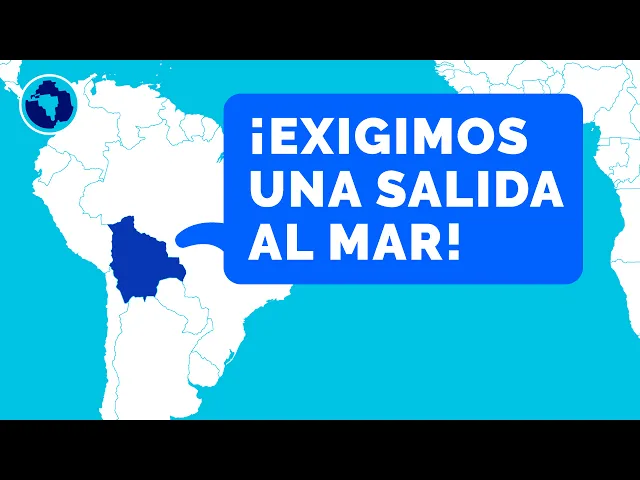
The other country in this situation is Uzbekistan, which is surrounded by five other landlocked states. The only two countries that need to be mentioned are in America: Bolivia and Paraguay. Although they do not have their own coastline, both have an outlet to the Atlantic thanks to the waterway that flows into the River Plate.
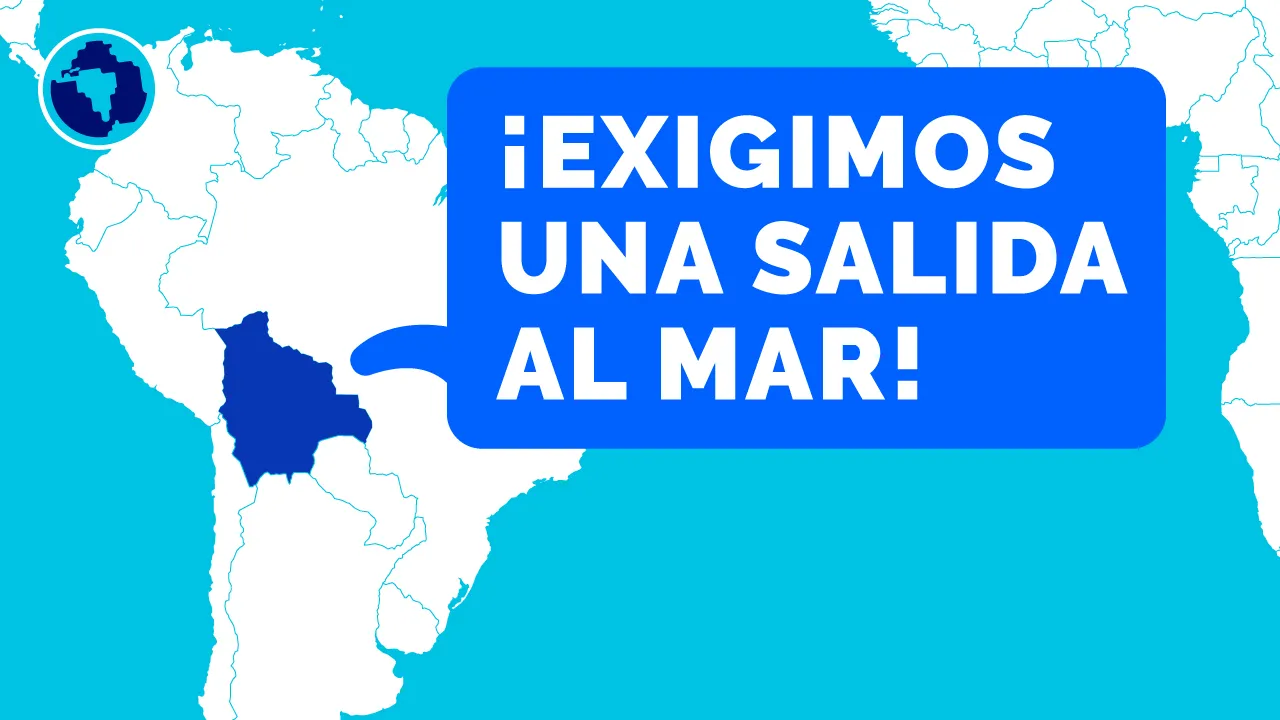
Bolivia has Puerto Quijarro as its most important place for boat departures. However, this country does not look towards the Atlantic as much as towards the Pacific. Although it does not have rivers that connect it to the western coast of South America, this country considers that it should have its own coastline in the largest ocean in the world.
The story is known: at the end of the 19th century, after a war with Chile, Bolivia lost part of the territory it controlled and thus became a landlocked country. However, the claim is still alive among the Bolivians and they even took it to the International Court of Justice, which in 2018 agreed with the Chileans and kept the situation as it was. In addition to the exit to the Atlantic, Bolivia has facilities in Pacific ports.
Peru granted him a 7-kilometer strip in Ilo for commercial purposes without sovereignty. However, due to infrastructure difficulties, Bolivians have resorted more frequently to the Chilean ports of Antofagasta, where they do not have to pay customs or tax surcharges. Some of the countries on this list have relatively little experience with being landlocked.
Due to geopolitical and border changes, several have been added in recent decades. In 1991, with the breakup of the Soviet Union, no less than nine countries declared their independence and became landlocked. Two years later, with the independence of Eritrea, Ethiopia stopped having its own ports on the Red Sea.
But the most recent case is in Europe: in 2006, with the separation of Serbia and Montenegro, the Serbs became a landlocked country. In the same region, Bosnians narrowly escape being on the list. They have a small territory that divides Croatia in two.
Other states with a small gap to reach the ocean are Iraq, in the Persian Gulf, and the Democratic Republic of the Congo. Currently, these 44 landlocked states are home to 6% of the world's population and have 10% of the planet's surface area. The most populous of all is Ethiopia, where 107 million people live.
It is the thirteenth most inhabited on Earth. But it is not the largest of all those that have no coast, since Kazakhstan, with 2. 7 million square kilometers, is the ninth largest on the planet.
In addition to not having vacation beaches or ports facing the ocean, these countries have one thing in common: an extra difficulty for international trade, since they depend on their neighbors. This obviously has economic consequences. It is evident that the financial realities of these 44 states are very diverse.
The standard of living in Luxembourg or Liechtenstein, the two richest countries in the world, is not the same as in Burundi or the Central African Republic, the two poorest. But, beyond specific cases, there are studies that have explored the difficulties of landlocked countries in inserting themselves into the global economy. For example, a UN agency estimated that they have between 30% and 40% more costs in their international trade compared to those that do have their own ports.
Along these lines, it is estimated that landlocked countries are 20% less developed than they could be if they had a sovereign outlet to the ocean. This is not only explained by the fact that they must cover greater distances, but also by the existence of bureaucratic and health obstacles or by the uncertainty of meeting delivery deadlines. There are some indicators that are in line with these calculations.
For example, of the ten countries with the lowest Human Development Index, six are landlocked. On the other hand, of the ten that top that list, only one has no coast. Similarly, if we take the GDP per capita of the 44 landlocked states, it gives us an average of $23,315, 15% less than those that do have a coast.
But hey, these numbers are obviously averages and do not describe the reality of all landlocked countries, among which there are several that are really rich, such as Luxembourg, Liechtenstein, Austria or Switzerland. These countries have been successful in diversifying their economy, generating resources, promoting innovation and tourism. Furthermore, they are close to large markets and have not suffered from a colonial past, like many of the Mediterranean African countries.
Each state seeks to deal with this situation as best it can, according to its geographical location, possibilities and resources. Ethiopia is one of the great countries in Africa, but to get its products into the ocean it pays little Djibouti every year no less than 1. 5 billion dollars for the use of ports and infrastructure.
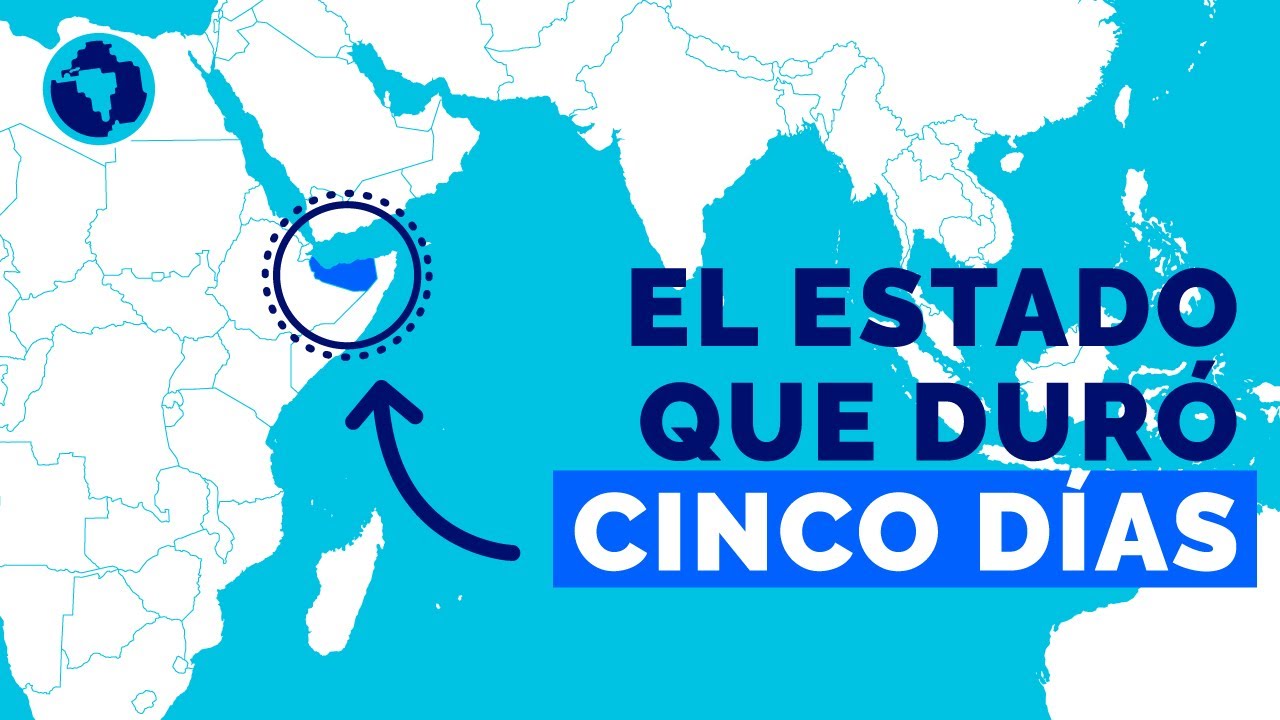
In 2024, Ethiopian authorities looked for an alternative. Although the international community considers that all of this territory is Somalia, in practice this part is administered by Somaliland, a state that has almost no recognition. The Ethiopians reached the following agreement: they obtained a 20-kilometer maritime access for 50 years over the port of Berbera that allows them to export their products.
In exchange, they recognized the sovereignty of Somaliland, which in this way took an important step to insert itself into the international community. In short, although there are many success stories of landlocked states, these countries generally start at a certain disadvantage compared to the rest. How else do you think landlocked countries can deal with improving their development?
Leave your comment below. And if you made it this far, we invite you to support us so that we continue to grow: You can buy our book or our t-shirts, become a member of the channel or like this video. Until next time.