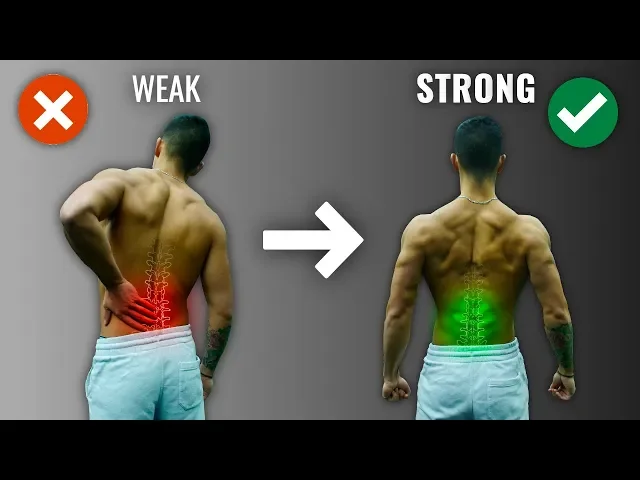
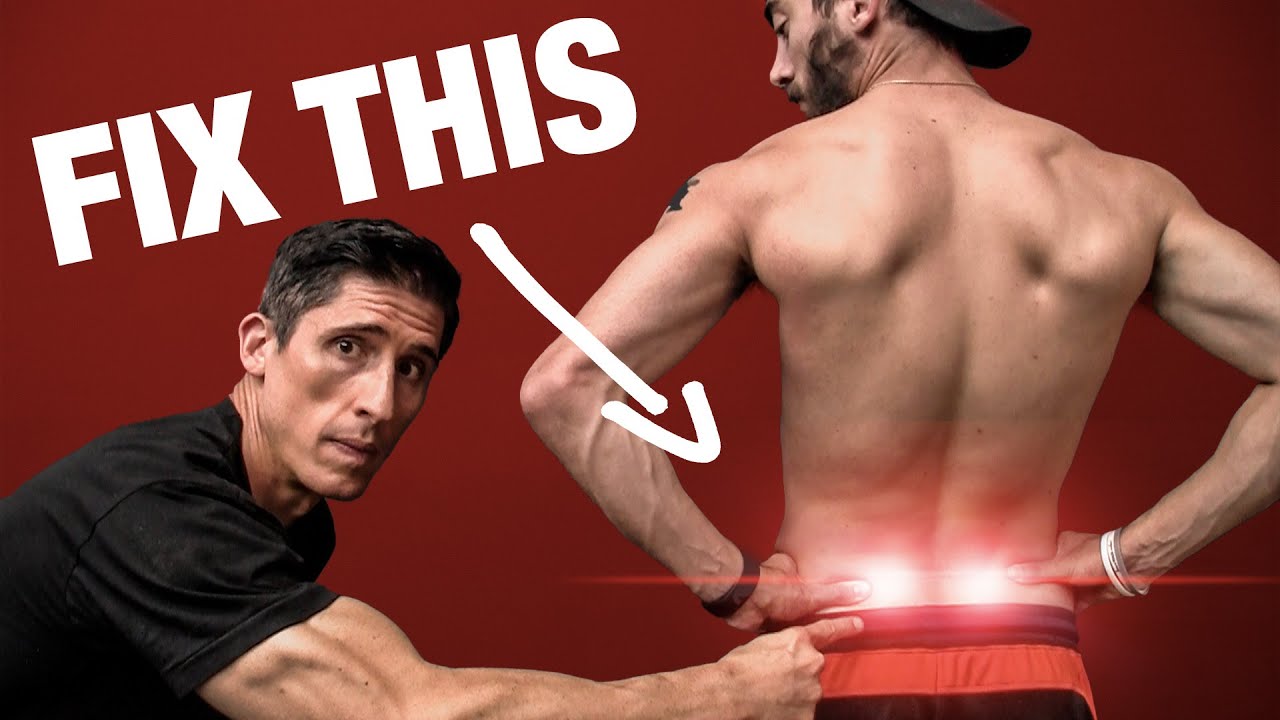
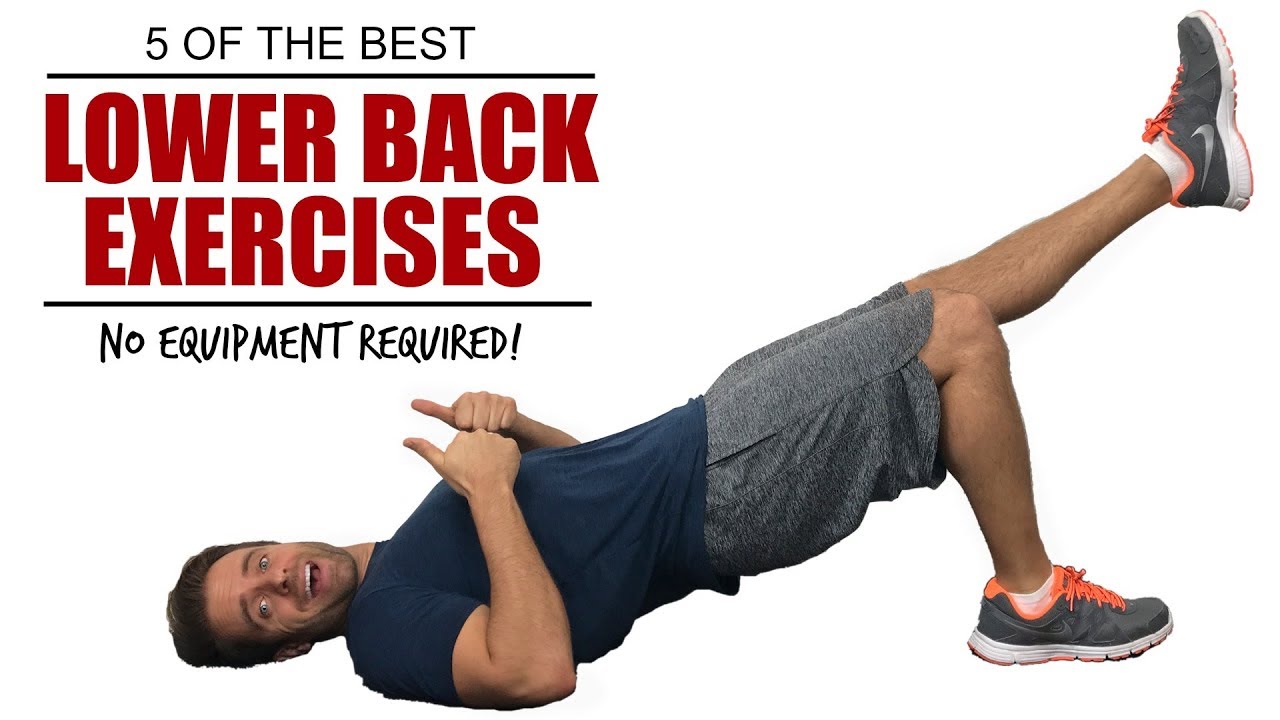
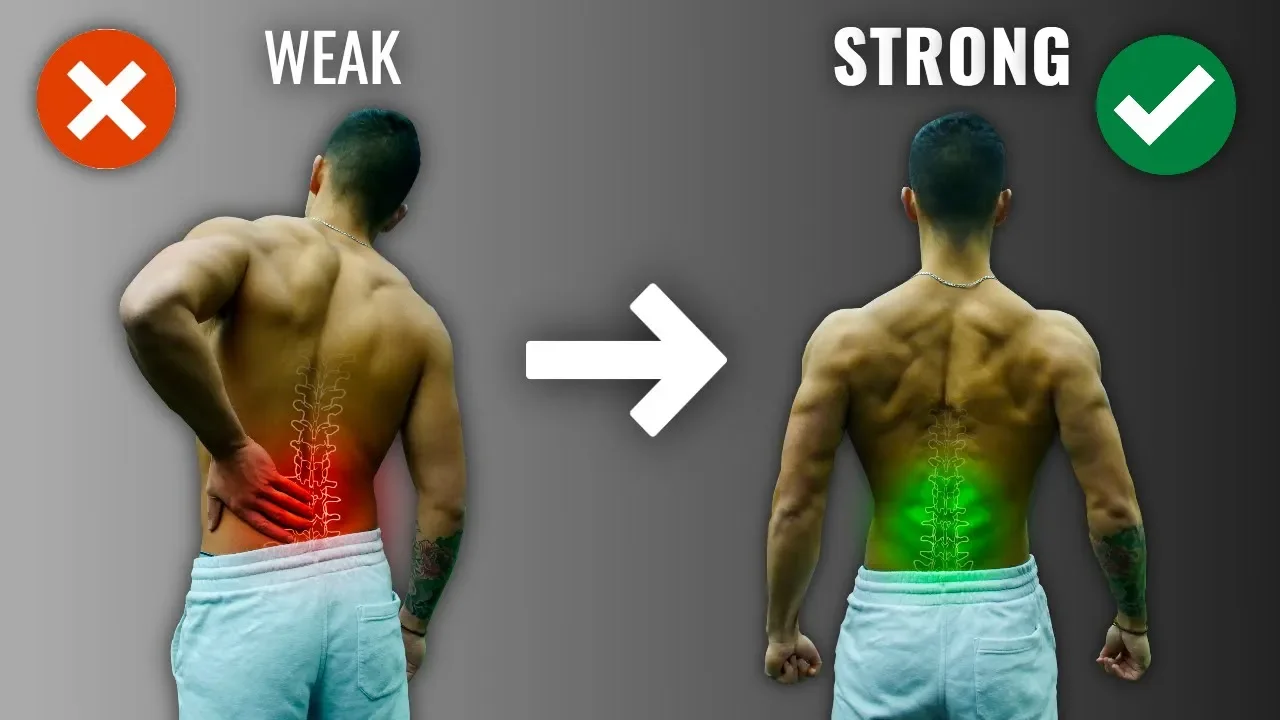
[Music] out of every 10 people it's estimated that roughly eight of them will experience lower back pain at some point in their lives now although lower back pain can stem from numerous factors multiple reviews and case studies have found that people with lower back pain often tend to have issues with lower back strength and neuromuscular control and that improving their strength and coordination of their lower back seems to be an effective intervention to prevent and reduce the pain that they experience and what's interesting is that research indicates that even well-trained individuals who regularly train in
the gym seem to have this lower back imbalance as well which is thought to be due to a lack of lower back specific exercises within their training routines meaning that including exercises that specifically target and strengthen the lower back into your current routine will be beneficial not only to potentially prevent and reduce lower back pain itself but to also minimize the risk of you developing lower back weaknesses or imbalances over time but unfortunately most people who attempt to do so go about doing it the wrong way and either end up choosing the wrong exercises or
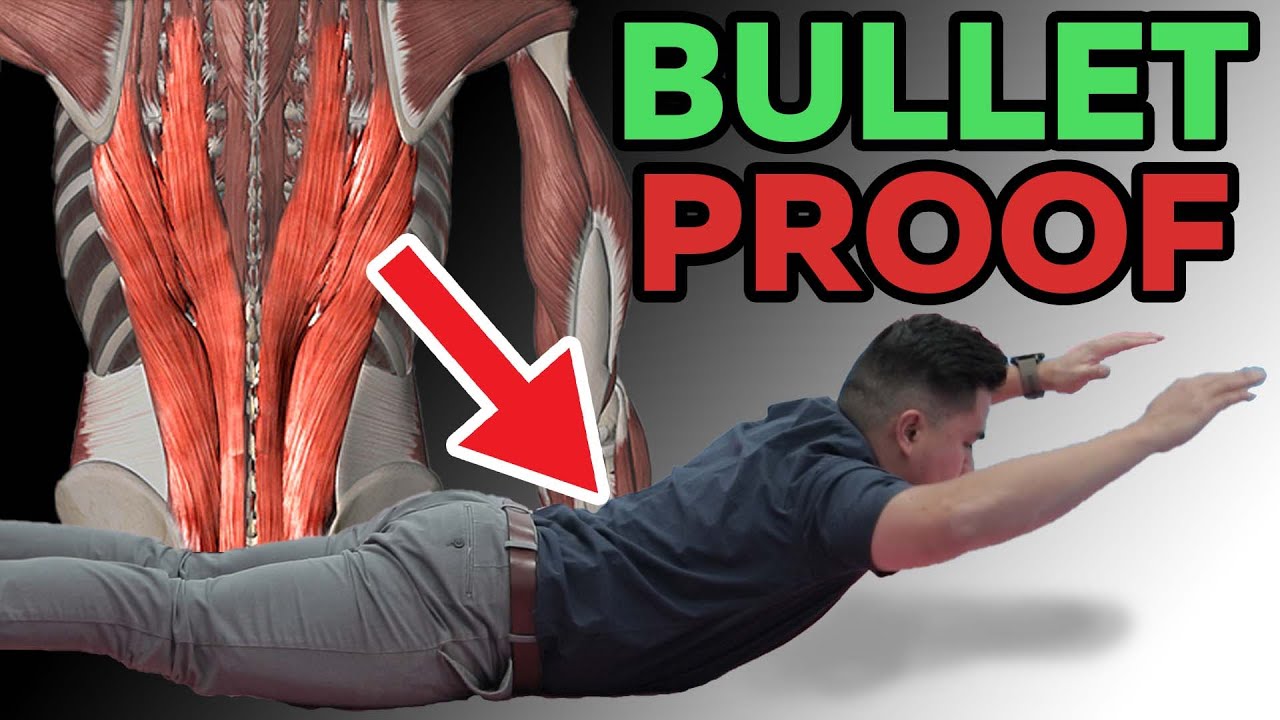
they'll implement and perform them in the wrong way which all just worsens the situation take a look at the commonly performed superman exercise for example where both the arms and legs move into extension although this does activate the lower back muscles quite well research by dr stuart mcgill at the university of waterloo has actually found that it also causes roughly 6 000 newtons of spinal compression and given that the national institute for occupational safety and health actually recommends the lower limit of spinal compression to be just 3 300 newtons we can clearly see how a
commonly performed lower back exercise like the superman can actually worsen the issue by creating a ton of excessive compression on the spine in this video though i'll clear everything up for you and show you how to properly and safely strengthen your lower back with a full routine that you can implement right away first off before diving into the lower back specific exercises we need to cover two compound exercises that should ideally make up the bulk of your lower back training squats and deadlifts because these two exercises especially deadlifts have been shown in multiple papers to
elicit very high activity of the lower back muscles simply meaning that free weight squats and deadlifts should definitely be a staple in your weekly routine given that they have not only been shown to be highly effective for lower back strength and hypertrophy but also because they are easy to overload with weight in order to continue adequately challenging the lower back muscles over time with that being said though there are a few problems with squats and deadlifts which may even explain why we still see lower back weaknesses and imbalances in individuals that perform them regularly first
off let's just face it not everybody does them secondly though we know that the heavier you go with these exercises the greater the activation of the lower back muscles but the truth is that a lot of people don't perform these relatively heavy enough to actually provide enough stimulus to their lower back and lastly for those that do perform them and may go heavy enough with them multiple studies have also indicated that without proper stabilization of the pelvis the much larger and stronger hamstring and glutes often tend to take over and do most of the back
extension work instead resulting in less stimulus and less strengthening of the lower back muscles themselves therefore to fill in this missing gap you want to incorporate the next two lower back exercises the first exercise back extensions does this perfectly by stabilizing the pelvis such that the lower back can be better activated and strengthened to a much greater degree than other exercises which it's been consistently shown to do with the literature however despite the effectiveness and popularity of this exercise most people don't perform it in a way that safely works and strengthens the lower back muscles
and instead just worsens the problem so to properly execute it you'll want to do the following steps which i'm going to demonstrate on a glute ham raise but the exact same tips apply to the roman chair back extension as well first you need to set up correctly by positioning your pelvis at the top of the pad or just past it then simply lower yourself down to the bottom position while keeping a neutral spine and then ascend back up by using your lower back muscles until your torso is in line with your legs but avoid going
past this point into hyperextension as this causes more and more spinal compression the further back you go instead keep your spine neutral throughout the movement and stop before you go into hyperextension positioning the pad too far forward which most people do is just going to cause your back to excessively round as you descend for this exercise you want to start out with a rep range of roughly eight to 15 reps with your body weight and then over time as your lower back strengthens and you can perform 15 reps easily you can continue overloading the movement
by holding on to a weight or dumbbells as you perform it now in addition to the previous exercise you want to also include an exercise that challenges your stability to a greater degree because as found in a paper from the australian journal physiotherapy although high loading of the back extensors as we've previously done is an ideal way to strengthen them an additional exercise that demands more stability from the lower back is required in order to selectively emphasize individual muscles that play a greater role in stabilizing the lower back like the multifidus shown here for example
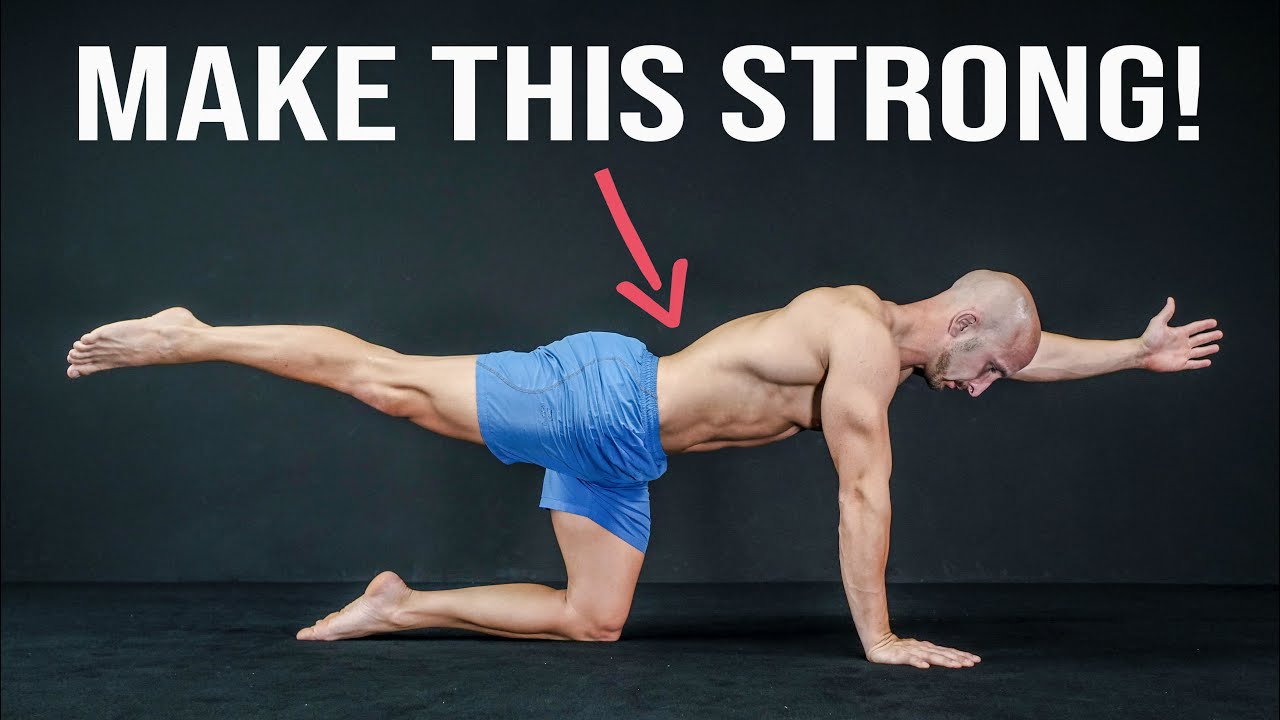
this is especially important since many people with lower back pain actually do have strong backs but instead they lack proper coordination and stability of their lower back and an effective way to improve this is by using the bird dog exercise shown here not only does this exercise elicit greater activation of the various stabilizer muscles in the lower back but it's also been shown to do so with minimal spinal compression in fact going back to dr stewart mcgill's research compared to the superman exercise this exercise brought out a much safer 2000 newtons of force on the
lower back but again it's vital that you perform it correctly and to do so you'll want to first get on all fours with your hands under your shoulders knees under your hips and your back in a naturally slightly arched position from here brace your core and reach with one arm all the way in front of you while simultaneously kicking back with your opposite leg until they're both straight as you do so push with your support hand down into the floor so that your upper back pushes off the floor slightly hold this top position for 5
seconds or so before returning to the start position and repeating with the other arm and leg and you want to avoid raising your arms and legs too high as this is just going to cause your lower back to excessively arch instead raise them until they're parallel with your body and focus on keeping your back neutral throughout the movement if this version is too difficult for you though to start out you can easily regress the exercise by reaching out with just an arm reach and then you want to progress to a leg reach and then finally
you can progress to both the arm and leg reach and as for reps i'd use dr stewart mcgill's recommendation of using the descending pyramid such that you start with eight reps aside for the first set go down to six for the second set and then down to four reps for the final set and over time you'll want to focus on increasing the length of the holes at the top until you're able to hold for roughly 10 seconds or so each rep now to sum this all up into a weekly routine for you here's what i
recommend so based on research on the training frequency and volume of the lower back you actually don't need much at all to see significant improvements in strength and you definitely don't want to overdo it in fact multiple studies have shown that even for well-trained individuals adding in just one lower back exercise one to two times per week was able to quickly and significantly increase their lower back strength therefore what i'd suggest is that if you're currently able to free weight squat and deadlift weekly then you'd likely just need to throw in the following two exercises
once per week for a few sets each and just overload them as you get stronger whereas if you're unable to do free weight squats and deadlifts or you just don't go very heavy with them you can opt to do these more often regardless of how you set it up though guys by including these exercises in some fashion within your current regimen you'll be able to significantly boost your lower back strength potentially reduce your lower back pain and minimize the risk of you developing lower back weaknesses or imbalances over time but at the same time you
need to be sure that you're not unknowingly overlooking other areas of your body as well and that's exactly why within my built with science programs we've taken the time to carefully select each and every exercise included in your weekly training routines such that you can build muscle and lean down while actually improving your posture and correcting your muscle imbalances in the process just like countless other members have successfully done with their bitly science programs and to find out which science based program is best for you and your specific body simply head on over to buildwithscience.com
and take the starting point quiz anyways guys thank you so much for watching i hope you enjoyed this video as always please do me a favor give the video a like leave a comment down below as to what you'd like to see me cover next subscribe to the channel and turn on notifications for the channel as well as this all really does help me out thank you all so much for the continued support and i'll see you next time [Music] you