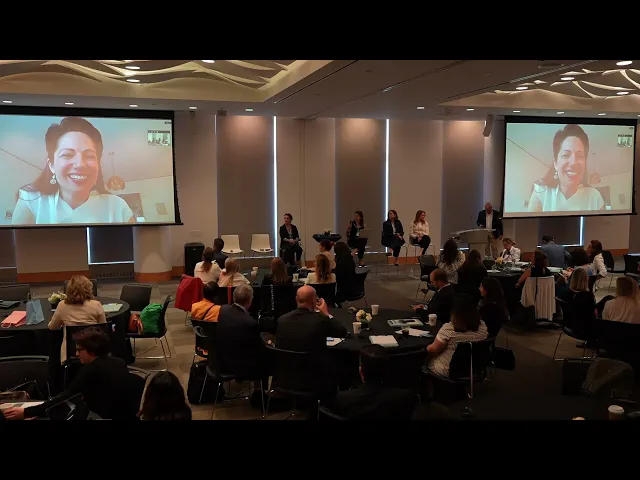
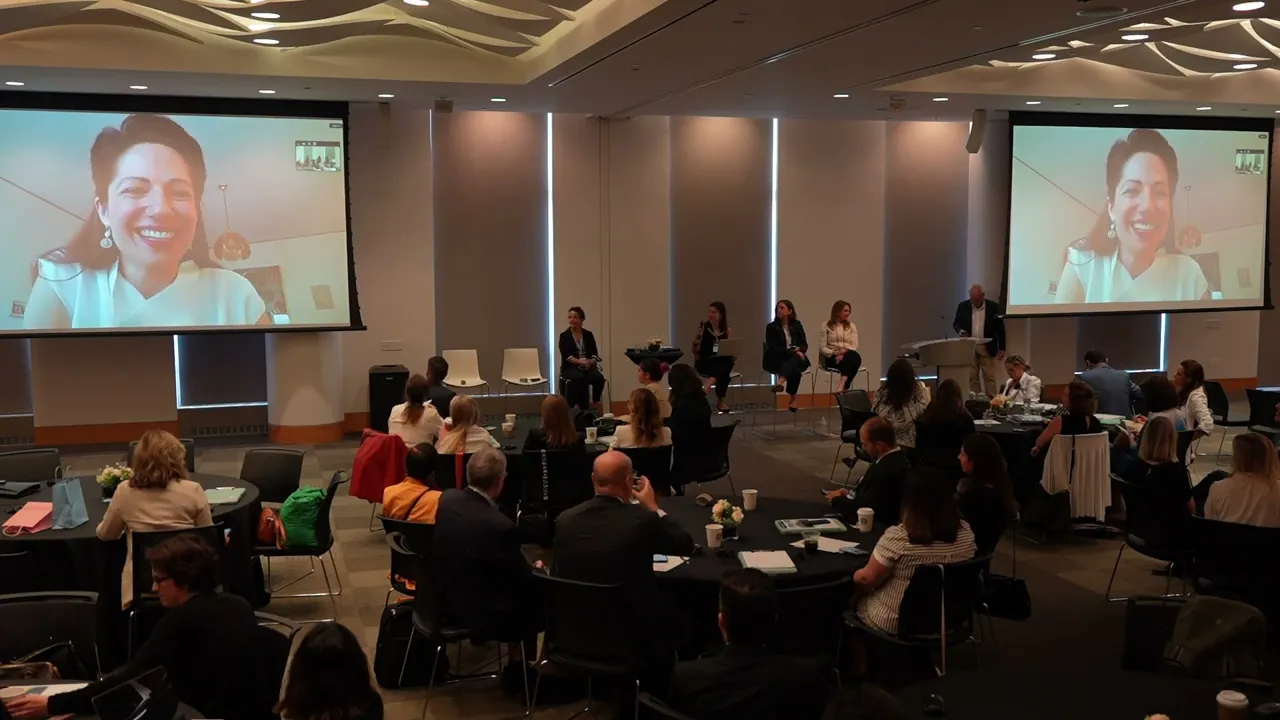
people um I just want to say our special thanks for this amazing team team of wonderful ladies here all of them they are absolutely outstanding wonderful and super girls including our friend L who is in Serbia she's from Serbia and she um very kindly um um accepted the invitation to be here with us unfortunately not in person but in Soul with us and image and she will um bring all her knowledge also and this beautiful team the captain of the team is or um if she's from kba I don't know how to say that we
are in the same we are from the same city something Co Hometown so it more because she's from my and some of you Hometown K so please her it's up to you the C thank you so [Applause] much hello everybody so my name isina I uh work at um the harbor mediation program in Cambridge welcome everybody it's a pleasure to be here today uh I want to thank uh the organizers for making this wonderful event happen especially Luc where are you um for your attention and kindness towards everybody thank you so much uh on a
personal note it brings me great joy to be here today as a CO National of most of you from Brazil um seeing so many familiar faces and discussing a subject that I'm passionate about and seeing that uh you know the the interest level from you all um say teach what we like to learn so I want to thank you in advance for the shared learning opportunity so it is my pleasure to moderate this all women round table on the subject of Education in alternative dispute resolution as the demand for alternative dispute resolution continues to rise
there's a pressing need for well-educated professionals who can facilitate these processing effectively ADR PR practitioners require specialized knowledge skills and training in negotiation in mediation arbitration and conflict resolution techniques they must possess a deep understanding of legal principles interpersonal Dynamics and cultural sensitivities to navigate complex disputes and facilitate constructive dialogues among the parties AGR has become an indispensable tool in modern legal and politic resolution Frameworks due to his efficiency due to his flexibility his interest B in interest-based approach and emphasis on collaborative problem solving the growing demand for ADR processes underscore the need for well-educated
professionals who can facilitate these processes effectively and contribute to more peaceful and just societies so with that I'd like to welcome our speakers uh we will start with uh Cecilia CA who's assist assistant Dean for international and non JD programs at foram University law school and she is our hes thank you [Applause] in um I'm happy to give some remarks in terms of you know what of law offers as far as ADR is concerned um we have an llm in international alternative dispute resolution one of our stronger programs we also do a conference every year
in the field of international ADR um it is certainly a growing field and an interesting one at that um I myself am a New York State Court certified mediator so certainly navigated the um New York the state or court system and have really come to both learn grow and appreciate within the space um of of mediation and of ADR you know I believe it is a super effective way to sort of resolve conflict um and I think we we need more of it all over the world um also have a background in uh business I
have my NBA from my Stern as well as my law degree and uh you know certainly my mediation skills have certainly come in handy during those tough times dealing with negotiations and um you know big deals uh and dealing with all of that so I do believe it's an extremely useful tool and I think that we do a lot of great work in terms of you know the school and you'll heal from from others in terms of the training involved in ADR I think it should be something more and more that gets infused in terms
of you know teaching and certainly being applied in the Judiciary as a whole um again as an effective way to sort of resolve conflict I look forward also I know at the end we'll leave room for questions so I look forward to any questions that you all have either about obviously ad about teaching within the space and also about forom we have a lot of amazing programs a lot of amazing non-degree pro programs and our idea is to continue to grow and expand um immensely sort of within that field and potentially even offer some ADR
sort of non-degree programs as well so if you have questions in here we see just Beau thank you cilia uh so I think next I'll follow the alphabetical order I'll pass it on to you Iana uh happy to have you here with us today thank you thank you Anna thank you and good morning to you all afterno to meia um it's wonderful to be with you today this a lovely group I wish I could be with your in person um so my name is I am a lawyer by qualification I've being a mediator and a
public policy consultant and currently I'm the chief steward of the international mediation Institute I um it is an International Foundation established 15 years ago uh to provide Global Leadership in the field of effective dispute resolution uh by creat being essentially a structure and standards for high quality loation um which I for shadow we will be talking about and by setting several in objectives which include for example providing independent information on the on mediation to the public of charge um taking an International Leadership role in policy issues um and serving in general the mediation um and
Eng communities so already 15 years of go um it was noted that the variability and the quality of mediation services um in different fa of entitling the growth of mediation as a voluntary process and so the founders of IMI um so organizations such as Triple A um uh Singapore mediation Center um users of big corporates um and then also organizations which joined in later on division such as J and P um they founded IM I um with the understanding that mediation ability um to grow um as and he recognized the professions depends on um essentially
degree of um consistency and delivering uh quality product um and so IMI was established to offer an internationally recognized trust Mark of high quality vator and vation training which we will be talking about um and it would recognize that internationally this cannot be done through um unifying mechanisms but actually we looked to harmonizing mechanisms such as peer reviews and client reviews and the code of professional conduct so I might cooporate um greatly with with or in organizations across the world and and I'm happy to say that we participated in for's last um ADR conference which
CIA mentioned um with topic I was told that it was I think one of the first um actually times that mediation was introduced to the to the the arbitration essentially New York arbitration week um and we we focused it on thean ethics um so I will be happy to talk about more um and I wonder at this point should do I have a little more time or should they depart for later uh As You Wish um maybe a few more minutes and then we'll have more time during the discussion in questions from the audience okay
perfect um so so it's um yeah you you hear me well right I can't see the audience too well so um yeah we hear you perfect perfect okay so so uh one more thing I would like to mention about I is a public benit initiative and it's not a med Association or a provider of Med Services um so um it emerges International standards for leaders and mediation Advocates and I've been uh told byana that the group here today is composed with a lot of lawyers so it's important to say that the gold stamps to IM
I certified um is not just designation for mediators but also for mediation Advocates um and therefore our unique Search tool relates to these professionals as well so lawyers who um have gone through um mediation of advocate and advisor training um and have been assessed uh as meeting basically the the competency criteria so the knowledge and skill set for essentially uh problem prevention um and resolution that's not exclusively um legal Centric but looks at the issue in a holistic way and is able to also include a mediator in an effective way so this is very important
to to watch out for us um I would also like to U mention that um so we stand set standard for training um and and this is actually the most recent um it was done was five years ago um and this was done because we recognized um across the world um it is very hard to to identify and actually to meet the the certified standards so an certified mediator is one who who has practiced U mediation and has at least 20 mediations and has a good feedback diges and can be successfully assess so we recognize
that across the world mediation is developing rapidly many people do not have the recis skilt and also me ancient training have been developing rapidly and what I said across the world is not um also up to part so I I a task force um and and they set up several criteria as guidelines on what is a good mediation uh basic mediation training programs and so organizations can apply to be recognized that my certified mediation training programs um and therefore the candidates are actually people who successfully finish these program have the possibility to have the recognition
of I my qualifies and in a way this way we have tried to to um be more um diverse with our mediator school um and also um the latest changes pricing system which reflect um the income and AG Development Across the world uh reflects its need um and a desire to have agre their diversity of included within our mediator and mediation Innovation schol um I'm happy to speak today through them within our uh SEL SCH um of course has um with mediation Academy which um is an example of an organization which teamed up with the
local Tri provider so in India and has um four Indian purposes um and irine CP so it's so recognized program which meets both local standards as well as um IR International one um in most and we unfortunately do not yet have um an recognized training provider but of course we do who have um the recognized all assessments program and that isml um andl is also mediation Advocate um implementing organization and and also hold tus for um our online mediations foration um so and I have recognized also in certain um areas such as on online vation
practice and um specializations um for Intercultural competencies we do need additional skills um so we have emerged open source um criteria so competency criteria as well as a Prestige ver on how programs can be um assessed against these standards so that so that they can be recognize di certified um I'll be happy to expand more about our various programs and criteria um and we like to conclude with um Ju Just recognizing that IMI recognition it's not only about quality control but it gives you also a qualification and listing of the IM website as in a
way a central International hub for all things mediation um but also it allows for career Mobility um for example um the Lo certain local um Regulators such as the CC from the UK recognize an certified mediators so if one is um aniz certifi mediator from Brazil and for personal or or professional reasons wants to um move to the UC they can be recognized as a high level um mediator provider of and benefits from now a lot of the public policy changes that are happening in this country with respect to to increase of mediation um so
yes um also just to add that um so it's not only a listing but this listing enables you to contribute to um the greater thought leadership that I provide um and that is within the policy field for example we participate within um in the US within the the uniform Standards Commission which has approved um essentially the green L for the US designed the the Singapore convention um the bries with various local um setting B with related in India with um drafting of the B foration quality insurance um and generally interface with uh with users so
that may be um promoted um and yes with like to thank you very thank you thank you so much I uh so next uh we will hear here from Robbie wein Robie Weinstein who's the director of cardoo universityan Clinic good morning everyone um I just would like to begin by thanking Lana um for the invitation to be here and to my co-panelist and to Forum all for hosting this beautiful event today um so I'm here to tell you um I have two roles at cardoo one is as the associate director of the cucin program for
conflict resolution at the law school um and the second role is as director of the mediation clinic so first I'd like to tell you a bit about the conflict resolution program at the law school um we have a certificate in dispute resolution that we offer to JP students for the students that are uh participating in a three-year law degree at the law school and then we also have an llm degree in dispute resolution and advocacy uh that's a one-year program mostly uh International students from all of the world um are coming participating in that program
um for our curriculum we are focused at cardoo we have mediation we have arbitration both domestic and international um we have forces in restorative justice um and we also have forces in negotiation um we also have recently expanded to include dispute systems design courses and other sort of broader courses such as a course on the law of settlement looking at systems more broadly and how matters resolv systemically um and this includes some cour work or some uh programming on online dispute resolution but we don't have a specific dedicated course in that direction yet but maybe
someone will want to come and teach with them um so we offer these many different types of specialization in dispute resolution and students that participate in the certificate program and the llm program can really choose what they want to uh study their offer they're required to take a certain number of credits in dispute resolution but they also I think one of the particularly unique things about the program at cardoo is that we have an experiential requirement uh which means that the actually have to do something or work with an organization that engages in dispute resolution
um and so to do this we have four programs we have my clinic the mediation Clinic we have something called a Securities arbitration Clinic we also have a divorce mediation Clinic um and we have something called the dispute resolution field Clinic um and the field Clinic is one of our most popular with the Ln students where we work at and partner with organizations throughout the state of New York um throughout New York City we're very lucky here we're very rich in dispute resolution uh organizations government agencies doing dispute resolution work courts doing dispute resolution work
so we place students with these organizations and they get to see the process in action um sometimes they'll do research work or um additional projects for the organization um in addition to these things at the law school we have journal in conflict resolution that publishes scholarship uh from Scholars really throughout the globe um it's one of the top ranked conflict resolution journals um it's accessible online there's a print version as well and it's a student run Journal um with and it's published three times a year lastly we have something called the dispute resolution Honor Society
competition team and this is a group of students that travel globally competing Ironically in dispute resolution competitions um so they're participating in negotiation competitions mediation advocacy competitions competitions where they need to show they're the best mediator arbitration advocacy competitions um and many different contexts of thep resolution they engaging in the practice but in a controlled setting where they can engage with it they can engage with professionals um so there's many different activities um that theud students are engaged in and there's also Society at the law school of students that are interested in dispute resolution they
host and organize events around this um so that's sort of the broad overview of our program um and then I just want to tell you a little bit more about my the asan clinic that I oversee so the way the clinic works is the students apply almost a year in advance of participating in the clinic um I got about over a 100 applicants for 16 spots um to participate in this clinic and the students um are trained they receive basic training as mediators before the start of the semester um this is State Court approved mediation
training um so this is something that we've applied for and been approved for by the state court system we offer this to students and they get that certificate when they're done and then they actually engage in mediation throughout the course of a year coupled with in a seminar course that I teach once a week and I meet with the students for three hours so they're getting the practice of mediation and they're also learning theory um debating different policies around the practice learning ethics learning you know the laws surrounding you know issues that arise in mediation
really getting an indepth experience and understanding what the practice of mediation is what you know the thought leadership is saying about the practice um and they understand by the end of the year they're to me it sounds like they're mediators they're when we're discussing in class and talking in class um and when they're finished with a clinic they most of them have completed 20 mediations um to do this mediation Clinic we partner with the local community dispute resolution center um and we also partner with the local PT so we get cases referred directly from a
court we get cases referred from a Federal agency that does employment discrimination cases um and then I also a member of a federal court panel and so we'll get referrals sometimes from the court as well um and the students participate actively as mediators in many of the different types of cases that we do um so that's a bit about our program and the mediation Clinic um and I'll pass it to you Anna thank you um almost uh Susan uh next we'll hear from you Susan Edwards who's the co-founder at uh Edwards mediation Academy can you
hear me yes okay so first of all thank you Louisa for putting together this amazing organization we've only been here for two days and I feel as though not only relationships been made but a lot of learning Ur this has been really nice um you've gone far and above so congratulations um I'm also I have to say I'm flattered to be on now with someone from ardoa someone from borom and someone from Harvard I mean that's pretty darn impressive um we at Edwards mediation Academy you know we're not an academic institution we are a training
organization and we train mediation and mediation advocacy skills um I want to start kind of reminds me of a little story that Bruce usually tells when he started um training he was 25 30 years ago he was called by Randy Lowry the head of the pepperd program the very beginning if he would come and teach a course with Randy and Bruce said why me I'm not I'm not a professor I'm a mediator that's what I do full-time and Randy's response was exactly that's what I need as a Parton someone who has been at the head
of the table and made all those Nuance decisions day day out so that's really where um that's probably kind of where the seed of our Edwards mediation can came from just the ability to get those lessons out those lessons right by the um mediators the people that started commercial mediation in our country so we started back in 2013 or 14 and it was really a result of the constant request that Bruce and his other colleagues that are now in our course that we use in our as our we call them experts we don't call them
instructors but that's a semantic um but it was really a response to the request that they were getting constantly and if you think about it it makes sense Bruce has a full-time practice and he has for years and so all the these other pioneers of commercial mediation in the US do as well and it was getting very difficult to respond to the constant request to come out either to our country or to other countries for 40-hour training course so we started by doing research on who's doing what in the online training World unrelated mediation at
the time it was very new the concept of doing this in mediation everybody thought it had to be live um and we just had conversations I went back to my Stanford colleagues and I talked to people I talked to my professor negotiations Bruce meanwhile was having conversations with all of these experts all of our his colleagues and we decided we kind of came up with a list of best practices for online um training our wish list if you will so our goal was pretty darn simple we wanted to provide expert training to to as many
people around the world and make it accessible and affordable and that was it um so that's the how and the why our online courses we have courses in mediation skills basic mediation skills mediation advocacy for train for lawyers who want to learn how to work most effectively for their clients in the mediation process and then Advanced mediation for um those Medi who want to take their practice to the next level they're all designed for adults and how adults learn which is very different than kids younger people um they include commentary from our experts and each
depending on the course we have probably 12 to 17 full-time mediators as our experts um they're all different styles and they all have different personalities we have a number of retired judges a number of lawyers and then we have a few that are come from the therapeutic Sciences so as you're learning the skills and techniques in the course you're watching them in acting in a filmed mediation so imagine you're you're learning about how to conduct an opening statement an opening session you may read something you're going to listen to a few experts talk about how
they do it and their different styles and then you'll watch it in action you'll watch the mediation that part of mediation and then afterward you're going to hear some feedback either from our experts or from groups on why decisions were made and then you're you're going to be able to witness this is probably the most important part of it you'll witness the impact of those decisions on the mediation process as you go through it so it's a very very deep very pragmatic course um let's see they're designed around the mediation process so our mediation skills
Force for example will start with convening as a module and opening early stage mid-stage and late stage closing negotiations and then there's also very intense um modules between those on other topics that are very relevant and crucial to the mediation process on emotions there's a separate module on communication and listening and then e um oh and and bias and bias so um right so anyway those are our courses the action of courses themselves we deliver our courses with our affiliate partners and as you probably guessed our affiliate partner in Brazil is Luciana and SE our
connection so just like we talked about yesterday there's no way you could take a training course to the us and just poop it into the Brazilian context it's not going will work there's so many cultural differences there's legal differences there's organizational differences so the way we work is students will take an online course they'll do take one module at a time and then they'll meet with our local local facilitator and they will discuss how to localize the training how can we use this what are the differences in the way I may speak with you or
I may speak with you so it's all is very localized because it just doesn't work otherwise and we all know that um after they probably one or two sessions with the local facilitator then we get together with Bruce and the sessions with Bruce are all driven by the students uh questions there's no rhin or there's no there's no method to it other than the students are directing the learning so the learning is all about what they need um and I can go into examples of our different programs around the country but that's really it that's
EMA and a nutshell um we are I just asked me to to mention this we do have programs as as even a recomend mentioned that are IMI certified and our mediation advocacy course we're in the process right now of preparing an application with CR connection for IMI certification we're also in the process of translating our mediation skills the mediation athy course by the way is in Portuguese Brazilian Portuguese um our mediation skills course of the process of Translating that right now so is that is my time up or should we talk about Trends I don't
think anybody's talked about Trends but that was one of the questions that was asked of us we going do that now um we can do that now another option is we can uh I can say a few words about what we're up to at Harvard and then we open to discussion we can even start with you does that again then open to the audience to whatever questions you may have first how does that sound good it's okay thank you so much again thank you Susan R CIA thanks for your attention so I'll just mention quickly
uh what I have been on to at Harvard and what are some of the things uh on the ADR front that we're doing over there uh so there are the theoretical courses uh main one being the mediation course thought by Professor Dave Hoffman that's offered um for JD uh in the graduation um diploma and then as Robin was mentioning there's the experiential learning part uh done at the clinics which would be that I had in my time I don't know if that still exist uh but the the university I think puts more emphasis and students
definitely spend more time in these clinics uh so that's what we call clinic just so you have an idea that's the Practical aspect of it so there there are clinics in all areas of the law I'm under the umbrella of the mediation and negotiation clinic inside it there is the Harvard mediation program and the dispute system design clinic so at hmp the har mediation program I'll just say hmp uh the idea there is to so teach uh mediation skills so we provide a course every semester and then to address the issue of uh you know
the chicken and egg issue as we call it with new mediators right you don't get cases because you don't have any experience but you don't have experience because you don't get cases so how do you how do you start right and and and not to just new mediators anyone wanting to implement those skills one thing is to say you know you should summarize you should reframe and another is to actually verbalize it what what Bo should come out of my mouth uh and so to actually make people do it and practice makes all the difference
and so in addition to the to the mediation training we mediate real cases in the courts with the students always in a co-mediation model so there are always two mediators there and that way you're able to level of experience sometimes we're able to mirror diversity of the parties when that an issue and all sorts of things um uh so whoever takes our course there's a requirement to mediate with a with the program at least a semester so to in order to complete the course and then there's a lot of feedback that's provided you know I
think a lot of a lot of learning is done through feedback and round table and talking to each other you know there's sort of a confidential of cases within the the members and you know what are some difficult aspects that you faced because there's an aspect of the mediation work that it's very lonely to right you don't get to discuss your cases because there's confidentiality so how can you improve so we have these ground table sessions so we can exchange experience then the second um thing I wanted to mention is the dispute system design Clinic
uh and so a group the way it works is a clinical instructor will work for the period of one semester with a group of around two to three students sometimes more but that's generally it and um with clients who can be anywhere from court systems it can be um it can be noos it can be startups uh any organization coming with a question of problem how can I handle a certain type of dispute in a better way how can we manage this more effectively so students are sort of doing consulting work for the period of
one semester at the end of the semester there's a work product later today I'll be talking about a case we're working with st jop in Brazil as our client um and then finally oh and then there's which some of you might have taken the classes already you heard about the P the program on negotiation and that is the Executive Education part of uh the university uh so there are courses that last one semester in mediation or negotiation some that last a week some that lasts two days and you can easily find them the Google program
negotiation Harvard University law school deal fund them um so I guess that's it I am curious uh later on to hear about you know experiences in Brazilian universities that there are such things as these uh CT connected programs or anything of the sort I don't know of any and would love to hear from you all if there are any um so I guess with that we can um move on to questions um oh oh yes please and then we will open up to questions okay thanks so I mean I I would love to hear what
you guys think about Trends in online Comm training as well but when I would say what we see and what we hear um i' put it in three buckets one would be obviously more um technology to bring these skills and techniques to those areas where they just don't have experience professionals um we have a program that we just completed literally last week and it was from a very small African country she the head judge said to me no one ever visits because there's no direct flights there's no easy flights here we our first meeting with
them was a zoom meeting and we they barely had BWI so Bruce and I and our other um plan to each other were like do we even want to can we can we do anything for them can we offer them anything and they ended up getting from a large International Organization dongles so every person was able to take the course and able to interact with us with absolutely no interference so there's ways around it and I think that's just going to increase um the flipped classroom I think more of the flip classroom where people are
doing the work beforehand and then going and asking questions of being those with the experien of professors and then the last one was referred to yesterday um by both Bruce and then Louisa from Ukraine there's so much going on in this world so many opportunities and so much dispute and war that these skills and techniques uh we try not to think of them as mediation skills but rather mediative competency skills and that's really where I see the big increase going around the world so Louisa referred to the program we've been doing now it's very different
than any other training than the training of the commercial mediation training we did in Ukraine because they don't have that possibility they they don't have that need so there's um I think it's just going to be incumbent upon all to figure out ways to get these skills out to people that need them not in the context of legal dispute so that's [Music] sense thank you Susan um I would very much agree Susan with your last Point um as I'm thinking about what direction I want to push the clinic or what skills I want to bring
to the students um living through the last year with them surrounded by so much conflict um really helping to think about how they can activate the skills they're getting in the mediation context and apply them outward to their community um and empowering them to do that and using the mediation training as a vehicle for that um I think the second thing or Trend I would add would be and I think this is coupled with this but um the idea of how you prepare for a mediation I think more and more attention is being placed on
that uh not only how The Advocates prepared but also how the mediator prepares and how the mediator builds Rapport and connects with the parties and strategizes about managing the conflict and so I think more and more training about that and I see it in the context of um there are two people I wish I could remember the name of the organization right now but Howard Herman and Claudia Bernard are doing workshops um about how to have difficult conversations and crafting groups um about them so I think um and a lot of it involves intense preparation
um and so I think the emphasis that is a trend I think one of the key trends too and you know I mean I think we can't go to any conference without talking about AI which is um I guess sort of the new era of all of this but I sort of have a counterargument to AI which is yes sure it will exist and it will continue to infuse itself sort of in I think every aspect of Life as we know it but I think actually what becomes really valuable in AI is actually that human
element and I think that's really what AER sort of does right and something that Ai and way cannot do which is I think speak to the parties which is sort of gauge the room on an emotional level on even an energetic level in terms of facilitating conflict sort of through that way and I think that that's really the trends that we're seeing in terms of education is really that right is sort of the human aspect of of it all right of conflict of legal practice of business is um and so you know that idea of
well AI will replace you know every job out there in my opinion is is just a misom right at the end of the day what all of you do and I think what this s purpose of this conference is that ultimately you know ADR will have such a deep emotional space that will be forever important in our society thank you I want to give you the opportunity to uh add anything you want absolutely um well from the international perspective I would definitely like to timee in and and confirm anything that uh that has been said
um also you know the fact that we have representatives of three of you know the best um universi law schools um in the US um speaking about their ADR programs in your clinics I think we have to to mention that and honor the fact that uh we come such a long way on your undergrad and um llm higher level uh in incorporating um mediation and people Miss design into program that is incredibly important um internationally we also see this trend um so for example in Europe clly Medan Clinic is doing a fantastic job they also
have um an online forum for medician clinics um I would also like to mention that actually um we see more and more LM programs um uh requesting IMI certification uh because that differentiates them from the academic purely academic um LM and mediation programs uh because I I actually scrutinized of how much role play how much actually practical um interaction with one yet and in a Bic leader training um so having this recognition um is um additional um Trend and and um and something that that many um programs have requested um now especially for example in
in India uh where um now under the the legal framework of University left in corate ADR into their learning um and most recently we have approved from a Latin American countries she um their State University this will be announced soon um I would like to also mention so what what suan said about uh online training it's very important so some four years ago around Co um I I was very adverse to online training and of course um Co had accelerated considerations how much online training can we incorporate and how can we also certify so we
have emerge criteria where we also uh do approve um online training but under certain very meticulous um considerations including how much actually synchronous and as synchronous um training one guess and interaction so that is very important and that is actually something that I might will be refining I think in the next year or two um because of the accelerated Trends in this area um and one more trend is actually just to confirm what was mentioned so thean training is not um you know used and taken up only by um by people who want to to
become mediators and independent mediation professionals um especially in the UK andin European countries we see companies such as NHS so you state company um we see uh you know major um corporations um training their HR teams training their managers um on basic mediator training field so that basically um they may perform their jobs better so that just in a way underlines also what Cilia mentioned that in business EDR is extremely important and and I'm happy to see that so thank you thank you I uh I fully agree with everything that's been said I will emphasize
what you just said about you know not only those who want to become full-time mediators should should uh take mediation training that's actually applicable on so many levels it's really a communication skills right we are negotiating communicating all the time and actually people who took take our forces it's mostly to apply those skills to whatever they're already doing uh much more than to become full-time mediators it's the same yeah the same um and uh you know applicable in all areas including with your partner and your children and uh Beyond work and be life um I
would add as a trend maybe um you know that notion I think it's been said that Community conflict and how mediation can be applicable way more beyond the places we already commonly know you know the commercial cases family um environmental multiparty disputes as well uh yeah uh International crossw and that notion you know that comes with a cultural sensitivity uh and definitely online resolution and we already heard today what's the role of AI in all this and and I have a question of also where does confidentiality stays and all this um you know the use
of AI and if we're in data of the case so maybe calling you can tell us more about that later so we have about 10 minutes or less now this um I need to to call the um EMA students former EMA students that have done the online course of uh EMA in Brazil which yeah with CR connection uh which are Mar V please stand up Mar um we um um delivered that that course last year so Mario mar please Angela where are you Angela yeah Angela who else who else and ah C all please C
all yeah these are all our uh former students in EMA uh course and that's why I I guess one of the reasons that they are here is because of the course and maybe U I don't know if they want to to say something about the the course and the last thing is we have also the facilitators okay so we have here so we have here Gabriella which is one of the facilitators F Hoffman which is one of our who else who else me and uh of course ver of course ver so if you want to
say just few words about the about the course you want to say something can I say for to [Applause] get anyone else from the audience no we have a few questions I'm looking at the the the app and maybe we can address one or two if any on the time anymore um okay so how do you help students or newly trained mediators is an anonymous question how do you help students and newly trained mediators make the transition from education to actual real world mediation another question um so that's exactly what I'm trying to do um
when the students finish this clinical experience that they have they have 20 cases on purpose that number is on purpose because when you need to apply in New York the way it works is you have to apply for a universal application to the New York state court system to become a mediator on The rosters um and there are lots of different types of roster Court rosters that exist that have different levels of qualification both at the state court level and in the federal courts um and there are also appellant uh mediation programs as well and
so the students need to get that experience it's it's a big deal and when I meet lawyers that have already you know they've taken a training I always advise them to do some form of apprenticeship program um that's connected with their training after they get Tred um so the students should be very well set us to based on the experience they have based on the training that they have they need 40 hours they get 40 hours for this Clinic um that they can apply to the court PS directly and usually they have to start small
they'll start with small claims they'll start you know $10,000 or less or maybe cases with $25,000 and less in the Civil Court um but they start small and the more experience they get the more they're able to um jump into higher levels the challenge of this is they do it as volunteers they don't make money doing that but they have to get that experience to succeed um and even you know in my previous life I would advise uh lawyers at the top top firms they would come from the best firms they would have the best
educational background that they would want to trans position into mediation they say I made a website why don't I get picked and I would have to send them the same way I do with the students because when you're mediating you the experiences everything um and so the volunteer work is just right now how the field is set up um to help people grow that experience I mean I I do think that it is the million dollar question in a way but I mean I sort of I think have a different take in terms of how
I view the idea of ADR and mediation and even negotiation is that frankly it's something that we do every day right and so if we wake up in the morning and you know we're already in some way or another negotiating something mediating something right using some skill within mediation active listening in some capacity um and so all of that so I argue that it isn't all of a sudden you end a program and then you turn on a light switch and now all of a sudden you're this miraculous mediator right but the idea is that
you start and potentially have started acquiring these skills way before you ever did any training and you will continue to engage in those skills way after and so I see it as an evolution and frankly of forever study right I don't know that even the top mediators out there even the top arbitrators out there if their sort of work is done in terms of the training that they do or how they sort of incorporate that so I think especially when you are starting with people that are more junior or you know with students that are
quite young I think the idea is to say go out there and do it right go out there and negotiate something right so um you know I think that in acquiring those types of everyday skills and it really become a part of who you are as a person and how you show up to every situation whether it's you know an interaction with your friends or your partner or your children or whatever that looks like that that becomes who you are right it's not something that youve Acquire it's just you just far that thank you uh
I've been asked to wrap up but I want to give you the opportunity if you want Even and Susan for super quick comments sure okay um I would agree with both of those statements so we most of our programs obviously are internationally or International with our mediation skills course the part of facilitation is there's role play a lot of role play experience and um as we talked about Q&A uh lots of exercises with the local in the local context every group is set up on WhatsApp and so afterwards what we spend a lot of time
doing is encouraging the students to stick together as a group as a reflective practice and continue as they're working on their skills and as they're working to become mediators whatever type of mediator we have a lot programs with banks or with corporations we we try we do them as a group so it may be One Bank in FL um we encourage them to stick together and Bruce does a great um discussion on the importance of reflective groups as you're going forward in your career in terms of what you were saying about these skills or life
skills that's pretty much we spend a lot of time talking with them about that because it's that's all a matter of form your experience and yes you may not have any true mediation experience if you have a lot of mediation experience it's the way you work it so we work with them with that and then working for the various support programs around the country is huge and a lot of our programs that's a great funnel but what's interesting in certain countries they really do not want to do a fe free service and they they're afraid
that if they become a a court appointed mediator or mediating for court cases for free they're going to be stuck and I'm constantly telling them no no no look at our country a lot of really well-known out paid professional commercial mediators started out working through the courts and it's so interesting how people just don't they're afraid of doing that and I just don't get that but that's why I think you know the the the university has an important role there because while they students that I think it's more likely to accept that volunteer work yes
yeah and I would I think everything has been said the importance of role play and and you know providing actual skill oh sorry Eva and I see your hand just now go ahead please just just briefly it's an excellent question and um that's actually why um I my criteria for training um introduced also a facilitation of further development of a mediator as one specific criteria so all of the programs um that have been approved R have to um show how they are doing this it might be through shadowing it might be through facilitating opportunities uh
to observe actual obligations or mentoring um or meetups as as suan mentioned um and also we used to have this program I Y my mentorship program so practically if you're um I'm I qualified mediator so you've been trained byp um you can uh look which mediator of our certified mediators are within um uh this program and physically apply to be to have um a certified mediator as your mentor and um I I know P anecdotal experience and what they've uh relate to me that this has been very useful and actually there's quite a lot of
leaders who want to give back and it's nice to actually have international um exchanges so new leader from Singapore and the young leer from France or um or vice versa um that gets you talking also about other other um communication issues and and um meeting colleagues from across the world so that's that's nice expence thank you thank you thank you to all our speakers thank you so much thank you all for [Applause] listening you think I'll take a picture with you but please stand up in front of the the thing so she can be on
the picture also and we have gifts for you and while the uh we're taking the picture uh we're going to go now to our Workshop uh that's going to happen so the thing we're going to do is I'm going to speak in English because then everybody doesn't need to change the the translation devices uh for all this line this line here everybody on this side is going to discuss uh pen pen which is AI and everybody on this side is going to discuss pedal one which is the sexual harassment one so we're going to uh
deliver to every table uh some pens and paper so you guys can discuss the subject of the panels please have your attentions still I ask you guys choose on each table one representative excuse me I table one represent to make a little fore for [Music] foree we have already done Focus Whoever has a few people on the table then that's so [Music] be you therex yeah where okay I'm yeah night