Life around the Sea of Galilee was simple, heavy, and often uncertain. People worked hard just to make it through the day, carrying quiet worries about money, family, and the future. Into that ordinary world, Jesus began to call a small group of people who would change history.
He did not look for famous teachers or powerful rulers. He did not walk into palaces or schools to find the best and the brightest. He walked along the shore through small towns and simply said, "Follow me.
" Those he called came from everyday jobs and normal families. Some were used to rough hands and long days. One was used to counting money and facing angry looks.
They were not impressive in the eyes of the world. They had real weaknesses, real fears, and real failures. Yet Jesus chose them on purpose.
The number 12 was not random. It mirrored the 12 tribes of Israel and showed that God was beginning something new while still fulfilling his ancient promises. Jesus wanted these men to be with him, to watch him, to learn from him, and later to carry his message to the world.
In this video, we will walk through the story of each of the 12 disciples of Jesus. As you listen, try to see not just who they were, but what their stories say about what Jesus can do in your life, too. Peter's name was originally Simon.
He was a fisherman from Bethsider, who later lived in Capernaam. He worked with his brother Andrew, fighting waves and weather to bring home enough fish to survive. He was strong, passionate, and quick to speak.
One day as Simon and Andrew were throwing their nets into the water, Jesus walked by. The Gospel says that Jesus said, "Come follow me and I will send you out to fish for people. " Simon and Andrew left their nets at once and followed him.
That simple decision opened a new life. Jesus later gave Simon a new name. He called him Peter, which means rock.
When the disciples were talking about who Jesus really was, Peter spoke up and said, "You are the Messiah, the son of the living God. " Jesus blessed him and said that this confession would be like a rock under the future church. Peter had incredible highs and painful lows.
When Jesus walked on the water, Peter was the one who stepped out of the boat. For a moment, he actually walked on the waves. Then he saw the wind, became afraid, and began to sink.
Jesus caught him and asked why he doubted. Peter showed both brave faith and real fear in the same story. On the night Jesus was arrested, Peter promised he would never leave his Lord.
But before morning came, he denied knowing Jesus three times. When the rooster crowed, Peter remembered what Jesus had said and went out and cried with a broken heart. After the resurrection, Jesus met Peter by the sea again.
Three times he asked, "Do you love me? " And three times Peter answered, "Yes. " Jesus gave him a mission to feed and care for his people.
The man who had failed was restored and trusted again. In the book of Acts, Peter became a main leader in the early church. On the day of Pentecost, he preached boldly and thousands believed.
He healed the sick in the name of Jesus and even saw a dead woman called Tabatha brought back to life through prayer. According to early Christian tradition, Peter later went to Rome and preached there. During the rule of Emperor Nero, he was sentenced to death.
It is said he asked to be crucified upside down, feeling unworthy to die in the same way Jesus did. Peter's story shows that God can use someone who is emotional, inconsistent, and even deeply broken. Jesus did not give up on Peter, and he will not give up on you when you fail and come back to him.
Andrew was Peter's brother. He was also a fisherman used to long nights on the water and the weight of wet nets in his hands. Before he followed Jesus, Andrew had been a disciple of John the Baptist.
That means he was already searching for God and waiting for the Messiah. When John the Baptist pointed to Jesus and called him the lamb of God, Andrew followed Jesus and spent time with him. After that meeting, he did something very simple and very important.
He went and found his brother and said they had found the Messiah. Then brought Peter to Jesus. Again and again, we see Andrew doing that same thing.
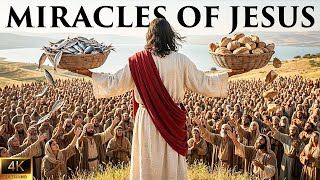
When a huge crowd was hungry and the disciples did not know what to do, Andrew noticed a boy with five loaves and two fish. He brought the boy to Jesus, even though he did not know how such a small lunch could help so many. In Jesus' hands, it was enough.
When some Greeks came and said they wanted to see Jesus, they spoke to Philillip. Philillip went to Andrew, and together they brought the request to Jesus. Andrew seems to be the kind of person others trusted and approached easily.
Andrew is not at the center of many stories. He is not part of the three closest disciples who saw some of the most private moments of Jesus. Yet his simple habit of bringing people to Jesus had huge results.
Without Andrew, Peter might not have met Jesus in that way. Without Andrew, the boy with the loaves might have stayed hidden in the crowd. According to church tradition, Andrew preached the gospel in many places, including areas around the Black Sea and in Greece.
It is said that he was killed for his faith in the city of Patus, nailed to a cross shaped like the letter X. Even as he suffered, stories say he encouraged those who stood nearby to stay faithful. Andrew's life teaches us that you do not have to be in the spotlight for God to use you.
You may never preach to thousands, but you can bring one person at a time to Jesus, just like Andrew did. James was the older brother of John. Their father, Zebedee, had a fishing business on the Sea of Galilee with hired workers and strong boats.
James and John were partners with Peter and Andrew. Their family was likely respected and stable. Jesus called James and John while they were in the boat with their father mending their nets.
They left the boat and their father and followed Jesus at once. [music] That choice showed courage and a willingness to let go of comfort. Jesus gave James and his brother a special nickname.
He called them sons of thunder. This probably pointed to their passionate, intense personalities. There is a story where a Samaritan village refused to welcome Jesus.
James and John asked if they should call down fire from heaven to destroy the village. Jesus rebuked them. He did not come to destroy lives but to save them.
James was part of Jesus' closest inner circle along with Peter and John. He was present at the transfiguration when Jesus face shone like the sun and his clothes became bright as light. He was there when Jesus raised the daughter of Gyrus from the dead.
He also went with Jesus deeper into the garden of Gethsemane on the night of the arrest. At one point, James and John with their mother asked Jesus for seats of honor in his kingdom. Jesus replied with a question that pointed to suffering.
He asked, "Can you drink the cup I am going to drink? " They said they could, but they did not yet understand what that would mean. That prophecy came true in James's life.
In the book of Acts, we read that King Herod had James put to death by the sword. He was the first of the 12 apostles to be killed for his faith. His life as a disciple was not long compared to some of the others, but it was complete.
He followed Jesus all the way to the end. James's story reminds us that following Jesus is not always safe or easy. It calls for courage and sometimes it costs everything.
Yet in that cost there is a deeper victory that the world cannot see. If this message is clear to you, hit subscribe. May the Lord draw us closer to him.
God bless you. John, the younger brother of James, grew up on the same boats and in the same nets. Like his brother, he left [music] everything to follow Jesus.
At first, he was also a son of thunder, strong and intense. Over time, he would become known as the apostle of love. John was very close to Jesus.
In his own gospel, he calls himself the disciple whom Jesus loved. This does not mean Jesus did not love the others. It shows how deeply John felt the personal love of Christ.
John was there at the transfiguration and at the raising of Gyrus's daughter. At the last supper, he sat close enough to lean against Jesus and ask him questions. When Jesus was on the cross, most of the disciples had run away.
John stayed near, standing beside Mary, the mother of Jesus. From the cross, Jesus looked at his mother and at John and entrusted them to each other. From that day on, John took Mary into his home.
This shows the deep trust Jesus had in him. John was one of the leaders in the early church. He worked alongside Peter, prayed for the sick, and stood before rulers to testify about Jesus.
Later he became a key teacher in the churches of Asia Minor. Christian tradition says that John lived to an old age. During a time of persecution, he was exiled to the island of Patmos.
There he received the visions recorded in the book of Revelation. He is also traditionally seen as the author of the Gospel of John and three letters. In his first letter, John wrote simple and powerful words about God.
One of the most famous lines is, "God is love. " That short sentence sums up what John had learned by walking closely with Jesus. Unlike many of the other apostles, John is believed to have died a natural death.
His long life gave him time to see the church grow and the message of Christ spread through the Roman world. John's story shows how Jesus can take a fiery young man and turn him into a gentle, wise shepherd of souls. He teaches us that the [music] deepest mark of a follower of Jesus is love.
Philillip came from Betha, the same town as Peter and Andrew. He was one of the first to be called by Jesus. When Jesus found Philillip, he simply said, "Follow me.
" And Philillip did. Philillip then went to his friend Nathaniel and said they had found the one Moses and the prophets wrote about Jesus from Nazareth. Nathaniel did not believe anything good could come from Nazareth.
Philip did not argue or debate. He answered with three simple words that still echo today. He said, "Come and see.
" Philillip had a thoughtful and practical mind. When a huge crowd followed Jesus into the countryside, Jesus asked Philillip where they could buy bread to feed everyone. Philillip quickly calculated the cost and said that even many months of wages would not be enough.
He was honest about the problem, but he had not yet fully understood what Jesus could do. At the last supper, when Jesus spoke about the father, Philillip said, "Lord, show us the father and that will be enough for us. " Jesus replied that anyone who had seen him had seen the father.
Philip's question opened the door for one of the clearest statements about who Jesus is. After the resurrection and Pentecost, Philip continued to preach the gospel. Early Christian tradition says he traveled through areas of Asia Minor such as Friia and that he died as a martyr for his faith.
Philip's story is encouraging for people who think a lot and ask questions. Jesus did not push him away for wanting clarity. Instead, he walked with him patiently and used his questions to reveal deeper truth.
Bartholomew is often identified with Nathaniel mentioned in the Gospel of John. [music] Bartholomew is a family name that means son of Tolmi, while Nathaniel is a personal name. Together they likely describe the same apostle.
Nathaniel was from Kaa in Galilee, the town where Jesus later turned water into wine. He seems to have been a man who loved truth and did not pretend. When Philillip told him about Jesus of Nazareth, Nathaniel answered, "Nazareth?
Can anything good come from there? " In that moment, he was honest about his doubts. He knew the scriptures and did not expect the Messiah to come from a small unknown village.
But Nathaniel agreed to go and see for himself. When Jesus saw him coming, he said that Nathaniel was a true Israelite in whom there was no deceit. Nathaniel was surprised and asked how Jesus knew him.
Jesus answered that he had seen Nathaniel under a fig tree before Philip called him. Whatever Nathaniel had been doing there must have been deeply personal because this small detail opened his heart. Nathaniel then made a strong confession.
He said, "Rabbi, you are the son of God. You are the king of Israel. " The skeptic became a believer in a single meeting.
After the resurrection, Nathaniel was among the disciples who met the risen Jesus by the Sea of Galilee. He was also part of the group that received the Holy Spirit at Pentecost. Tradition says that Bartholomew took the gospel to places like Armenia, parts of Asia, and perhaps India.
Many accounts say he was killed for his faith and some describe a very cruel death. Even so, the church remembered him as a faithful witness. Bartholomew shows that Jesus is not afraid of honest doubts.
If we bring our questions and meet him face to face, our skepticism can be turned into strong and simple faith. Thomas is often remembered by one nickname. People call him doubting Thomas, but his story is much richer than that.
[music] His name in Aramaic means twin, and the gospel of John also calls him Ditimus, which means the same thing in Greek. We do not know who his twin was, but the name stuck with him. Thomas appears in a few key moments.
When Jesus decided to return to Judea to see Lazarus, the other disciples were afraid. People there had tried to kill Jesus before. Thomas spoke up and said they should go with Jesus so they could die with him if needed.
That is not the voice of a coward. It is the voice of a loyal friend willing to face danger. At the last supper when Jesus said he was going to prepare a place for them, Thomas replied, "Lord, we do not know where you are going, so [music] how can we know the way?
" Jesus answered with one of his most famous lines saying that he is the way, the truth, and the life. After the resurrection, Jesus appeared to the disciples, but Thomas was not there. When they told him they had seen the Lord, Thomas could not accept it.
He said he would not believe unless he saw the nail marks and touched them. A week later, Jesus appeared again, and this time, Thomas was present. Jesus invited him to see and touch his wounds.
Faced with the living Christ, Thomas did not stay in doubt. [music] He made one of the strongest confessions in all scripture. He said, "My Lord and my God.
" Jesus then said that Thomas believed because he had seen and blessed those who would believe without seeing. That blessing is for people like us. Tradition says that Thomas traveled farther east than any of the other apostles.
He is believed to have brought the gospel to India where ancient Christian communities still remember him as their founder. Stories say he died as a martyr there pierced with spears. Thomas shows that doubt does not have to be the end of faith.
Honest struggle can lead to a deeper and more personal trust in Jesus. Matthew, also called Levi, had a very different job from the fisherman. He was a tax collector in Capernium.
That meant he worked for the Roman government, collecting money from his own people. Tax collectors were considered traitors and cheats. Many of them charged more than the law required and kept the extra money.
They were often grouped together with sinners when people talked about them. Most religious Jews wanted nothing to do with them. One day, as Jesus walked by Matthew's tax booth, he said two words that changed everything.
Follow me. Matthew got up, left his booth, and followed Jesus. Leaving that job was not like walking away from a simple wage.
It was leaving a rich and secure life to join a poor traveling teacher. Soon after, Matthew held a large meal at his house for Jesus. Many tax collectors and others came and sat at the table with him.
The religious leaders were shocked and asked why Jesus would eat with such people. Jesus answered with a picture from everyday life. It is not the healthy who need a doctor, but the sick.
He said he had come to call sinners, not those who thought they were already righteous. Matthew is later listed among the twel apostles. He likely used his skills with writing and records to serve the early church.
From very early times, Christians have believed that he wrote the Gospel of Matthew, which starts with the family line of Jesus and shows how he fulfills the words of the prophets. That gospel speaks often about the kingdom of heaven and includes many of Jesus's teachings in clear order. Matthew, who once counted coins for Rome, may have carefully gathered and ordered the words of the true king.
Tradition says Matthew later preached in places like Ethiopia or Persia, calling people who were far from God to repentance and faith. Some accounts say he died as a martyr. Others say he died peacefully after many years of service.
[music] Matthew's story reminds us that no one is too far gone for Jesus. Even a man known for greed and betrayal can be forgiven, changed, and trusted with the message of the kingdom. James, son of Alfus, is one of the most hidden figures among the 12.
The gospels mention his name in the lists of the apostles, but we do not have a story that focuses on him directly. He is often called James the less or James the Younger. That could mean he was younger than the other James, smaller in size or simply less prominent.
What we know for sure is that Jesus chose him, called him by name, and included him as one of the 12. There is a possibility that Matthew and James were brothers since Matthew is also called the son of Alfus. But the Bible does not clearly confirm this.
If they were, two men from the same family were called out of very different lives to follow the same Lord. James would have walked the same dusty roads, heard the same parables, and seen the same miracles as the other disciples. He heard the sermon on the mount.
He saw people healed and set free. He saw Jesus after the resurrection and received the Holy Spirit at Pentecost. Later traditions say that James, son of Alfus, preached in places like Egypt and maybe parts of the Middle East.
Some stories say he was killed for his faith, possibly by stoning or crucifixion. James teaches us an important lesson. You do not have to be famous to be faithful.
The kingdom of God is built not only through well-known leaders, but also through countless men and women whose names are rarely repeated, yet whose obedience matters deeply to God. Thaddius is another disciple with several names. In some lists, he is called Thaddius.
In others, Jude, son of James. These different names help separate him from Judas Escariat, the traitor. The name Thaddius may carry the idea of heart or courage.
Jude means praise. Both suggest a warm and strong character. The Bible gives us one important moment where Jude speaks.
During the last supper, as Jesus told the disciples that he would show himself to them, Jude asked a question. Lord, why do you intend to show yourself to us and not to the world? Like many Jews of his time, Jude may have expected the Messiah to reveal himself in open glory, overthrow enemy powers, and rule on earth in a visible way.
He struggled to understand why Jesus spoke of revealing himself to only a small group of followers. Jesus answered by speaking about love and obedience. He said that those who love him will keep his words and that he and the father would come and make their home with them.
Jesus showed that his first coming would be about living inside people by the spirit, not about political power. Jude's question gave space for that beautiful answer. It shows that he was paying attention, thinking deeply, and brave enough to share his confusion.
After the resurrection and Pentecost, Jude joined the other apostles in mission. Traditions say he preached in areas like Syria, Mesopotamia, and Armenia. Some stories connect him with the healing of a sick king and with the start of churches that lasted for many generations.
Most accounts agree he died as a martyr, possibly killed with clubs or axes. A short New Testament letter is called Jude and begins with the words, "Jude, a servant of Jesus Christ and a brother of James. " Many Christians through the centuries have believed, "This is the same man.
" That letter warns against false teachers and urges believers to keep their faith strong. Thaddius shows us that Jesus welcomes honest questions from sincere hearts. Questions when brought to Jesus can lead to deeper understanding and stronger faith.
To avoid confusion with Simon Peter, the Gospels call another disciple Simon the Zealot. In some places he is called Simon the Canonian, which comes from an Aramaic word that also means zealous. This title might mean he had once belonged to a strict movement that resisted the Roman rulers.
The Zealots were known for their fierce love for Israel and for their hatred of foreign control. Some even believed in violent resistance. If Simon had been part of such a group, his presence among the 12 is very striking.
In the same small circle of disciples, we find both a former tax collector who had worked for Rome and a possible former revolutionary who had hated Rome. Matthew and Simon would have stood on opposite sides before they met Jesus. Jesus did not build his team from one social group or one political view.
He brought together people who would normally never walk side by side. And he taught them a new and higher loyalty to the kingdom of God. We do not have a story that focuses on Simon during Jesus ministry.
We only know that he was there learning to turn his zeal away from human enemies and toward love, truth, and the spread of the gospel. After Pentecost, traditions say Simon traveled widely. Some accounts place him in Egypt, North Africa, or Persia.
Many of those stories say he died as a martyr, sometimes linked with Jude, as if they worked together as a missionary pair. Simon's life reminds us that Jesus does not erase passion. He redirects it.
A heart that was once burning for political struggle can be transformed into a heart that burns for God's glory and the good of others. Judas Escariat is the most tragic of the 12. His name has become a symbol for betrayal.
Yet he was not forced into his role. He was chosen by Jesus, given the same chance as the others, and walked with him for years. The word is Scariot may point to his hometown, a place in Judea.
If so, Judas may have been the only apostle from that region, while the others were from Galilee. That could have made him feel different or even special. Judas was trusted with responsibility.
He kept the common money bag for Jesus and the disciples. Later, John's gospel tells us that Judas sometimes stole from that bag. Greed slowly grew inside him.
When a woman poured expensive perfume on Jesus, Judas complained that the perfume could have been sold and the money given to the poor. His words sounded caring, but his heart was not honest. At some point, Judas went to the chief priests and made a cold offer.
What are you willing to give me if I deliver him over to you? They paid him 30 silver coins, the price of a slave. From then on, he looked for a chance to hand Jesus over.
At the last supper, Jesus told the disciples that one of them would betray him. One by one, they asked if it was them. Jesus gave Judas a piece of bread and told him to do quickly what he had decided to do.
The Bible says that Satan entered into Judas at that moment. Yet Judas was still responsible for his choice. Later that night, Judas led soldiers to the Garden of Gethsemane, a place he knew Jesus often went to pray.
To show who Jesus was, Judas walked up, greeted him, and kissed him. A sign of friendship became a signal of betrayal. When Judas saw that Jesus had been condemned, he felt deep regret.
He tried to return the 30 coins and confessed that he had betrayed innocent blood. The leaders did not care. Judas threw the money into the temple and went out and hanged himself.
His end was full of despair. The field bought with that money became known as the field of blood. Judah's story is a warning.
Being close to Jesus on the outside does not guarantee a changed heart. You can hear his teaching, see his work, and still hold on to secret sin and never truly surrender. The difference between Peter and Judas is not that one failed and the other did not.
Both failed. The difference is that Peter ran back to Jesus in repentance while Judas moved away from him into hopelessness. Yet even this terrible betrayal did not stop God's plan.
God used the evil choice of Judas as part of the path that led Jesus to the cross where he died for the sins of many, including the sins of betrayal and [music] denial. We have walked through the stories of the 12 disciples of Jesus. Peter, the bold leader who fell hard and was lifted up again.
Andrew, the quiet brother who kept bringing people to Jesus. James the fiery fisherman who became the first apostle to die for his faith. John the son of thunder whom Jesus shaped into the apostle of love.
Philillip who asked honest questions and invited others with the simple call to come and see. Bartholomew also called Nathaniel who moved from sharp doubt to clear faith. Thomas, whose road went through doubt but ended in the strong confession, "My Lord and my God.
" Matthew, who left a corrupt job at a tax booth to write about the kingdom of heaven. James, son of Alfus, who served faithfully in the background where few would notice. Thaddius, who asked deep questions and may have warned the church through his letter.
Simon the Zealot, whose passion was turned from earthly struggle to eternal mission. Judas Iscariat, whose tragic fall, warns us to guard our hearts and run to mercy when we fail. None of them were perfect.
None of them were chosen because they were the most qualified or respected. They were normal men with weaknesses, sins, and fears. Yet Jesus called them by name and walked with them day after day until they were changed.
Their lives show us that Jesus does not look at us the way the world does. He is not impressed by titles, money, or human success. He looks for people who are willing to leave their old life behind, follow him, and let him shape their hearts.
Maybe you feel a little like Peter, full of passion, but also full of mistakes. Maybe you feel like Andrew, always in the background, not sure if what you do matters. Maybe you are like Thomas, wrestling with doubts and questions.
Maybe you feel like Matthew, marked by a past you are not proud of. Or maybe you are like James the less serving quietly where almost nobody sees. Whoever you are, the same Jesus who walked by the Sea of Galilee is still calling people today.
He takes ordinary lives and writes extraordinary stories through them. If these stories helped you understand the disciples better and brought you closer to the heart of Jesus, keep going deeper. Open the Gospels for yourself.
Read their stories again. Ask God what he wants to do with your life, just as he did with theirs. And if you want more Bible content like this, you can keep watching and learning with us.
Share these truths with someone who needs encouragement. You never know whose life might be changed by hearing how Jesus used 12 ordinary men to reach the world.