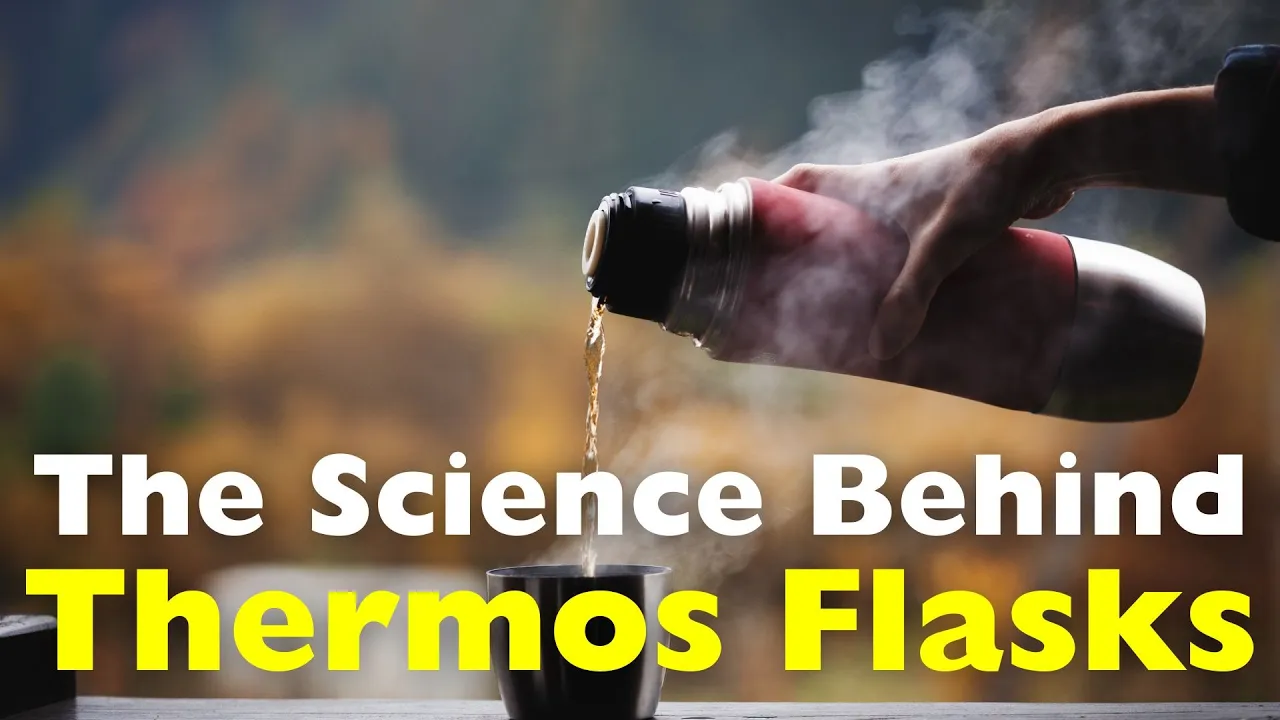
welcome to the history of simple things where we delve into the fascinating history behind the little things that shape our world hey there have you ever wondered how your coffee stays piping hot or your iced tea remains refreshingly cold hours after you've poured it into a thermos flask it's one of those everyday objects we often take for granted but once you realize the clever science behind it it's actually pretty mind-blowing let's dive into the fascinating world of thermos flasks and I'll break down exactly what's going on when you pour your drink inside one of these
insulated wonders first off what's a thermos flask exactly you've probably seen them around maybe in your kitchen or on a camping trip it's that sturdy container usually made of stainless steel or plastic that somehow manages to keep your hot drinks hot and your cold drinks cold but how does it do that the key lies in the way it's designed to control heat transfer and the three main ways heat can move are through conduction convection and radiation each one of these plays a part in how thermos flasks work but they're also what the thermos is designed
to prevent let's unpack each one and see how it all ties together okay first up conduction this is the transfer of heat through direct contact you know when you touch a hot metal spoon and it feels like it's burning your hand that's conduction at work in a thermos flask the last thing we want is for heat to be conducted out of the flask making your coffee go cold or for heat to be conducted in warming up your chilled water so what the thermos does is it creates a barrier most thermos flasks have an inner and
outer layer and between these two layers there's usually a vacuum the reason for this vacuum is simple it's incredibly effective at stopping heat conduction there's no air and without air molecules bumping into each other and carrying heat away conduction is pretty much [Music] halted next we've got convection which is all about the movement of fluids like air or water transferring Heat have you ever noticed how a hot air balloon Rises that's because the air inside it gets warm becomes less dense and Rises taking the heat with it inside a thermos though we don't want convection
to happen either again the vacuum between the inner and outer walls helps with this with no air inside the vacuum to circulate there's no way for heat to escape through convection it's like a fortress of heat containment finally there's radiation this one might sound like science fiction but it's just another Natural Way heat moves you felt it anytime you've stood near a fire and felt the warmth on your skin that's heat radiating toward you now thermos flasks are built with materials like shiny reflective coatings on the inner walls that bounce this radiant heat back into
the flask if your coffee is giving off heat it's reflected right back in helping to keep it warm longer so we've got the vacuum and the shiny walls helping to stop heat from escaping through conduction convection and radiation but there's one more thing to consider insulation many thermos flasks are designed with an extra layer of insulation that helps regulate the temperature even further the insulation acts as a buffer minimizing any heat loss that might still manage to escape some Modern thermos designs use foam insulation or other materials that add an extra layer of protection between
your drink and the outside environment and here's something cool insulation isn't just about keeping things hot it works both ways it keeps cold drinks cold too by preventing heat from entering the flask that's why your ice water stays chilly even after sitting in the sun for hours the insulation is there to keep the outside heat from getting in let's Circle back to the vacuum for a second because it really is the unsung hero in all of this without the vacuum your thermos would just be another regular container the vacuum doesn't just slow down heat transfer
it practically stops it it's what allows your thermos to work so well for both hot and cold drinks this vacuum flash design was invented back in 1892 by Sir James darar a Scottish scientist he wasn't actually trying to keep drinks hot or cold though Dar was trying to store liquid gases like oxygen and nitrogen at very low temperatures for scientific experiments he needed a container that wouldn't let any heat in and voila the vacuum flask was born it wasn't until later that people realized this invention could be used to keep beverages at the right temperature
and the thermos flask as we know it came to life now let's talk a little bit about the materials used in thermos flasks because this also plays a crucial role in how well they work most thermos flasks are made out of stainless steel these days and there's a good reason for that stainless steel is durable resistant to corrosion and doesn't transfer heat very well which is exactly what we want some older thermos flasks used glass instead of stainless steel glass has the advantage of being a poor conductor of heat but it's also fragile and prone
to Breaking that's why stainless steel has become the go-to choice for modern flasks it offers The Best of Both Worlds strong heat retention and durability the lids of thermos flasks are also carefully designed to prevent heat loss A poorly designed lid could easily let heat Escape defeating the purpose of the flask that's why the lids are usually screwed on tightly and made from insulating materials like plastic or rubber which don't conduct heat very well let's switch gears a little and talk about how the thermos flask Works in real life whether you're packing a hot soup
for a winter hike or keeping your iced coffee cool on a summer day the thermos flask has become a staple for anyone on the go it's not just about convenience though it's about how thermodynamics something we often think of as complicated has been cleverly engineered into something simple and accessible by stopping heat transfer in its tracks thermos flasks allow us to enjoy our beverages at just the right temperature hours after we've packed them at the end of the day the science behind the thermos flask is all about controlling heat transfer by using a vacuum to
stop conduction and convection and reflective materials to combat radiation the thermos flask is able to keep hot drinks hot and cold drinks cold for much longer than they would stay on their own it's a perfect example of how science can make our everyday lives better even in small seemingly simple ways next time you pour your coffee into your thermos or grab that ice cold drink hours later you'll know exactly what's going on inside thermodynamics may sound complicated but when it's applied to something as useful as a thermos flask it becomes a lot more relatable thank
you for watching if you have suggestions for our next video feel free to share them in the comments below we'll be sure to give you an acknowledgement for your [Music] contribution thank you for joining us on this journey through the history of simple things don't forget to like subscribe and stay tuned for more stories woven through the smallest details [Music]