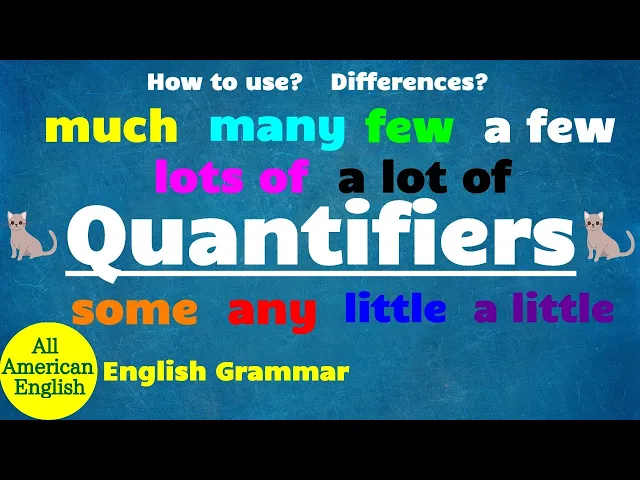
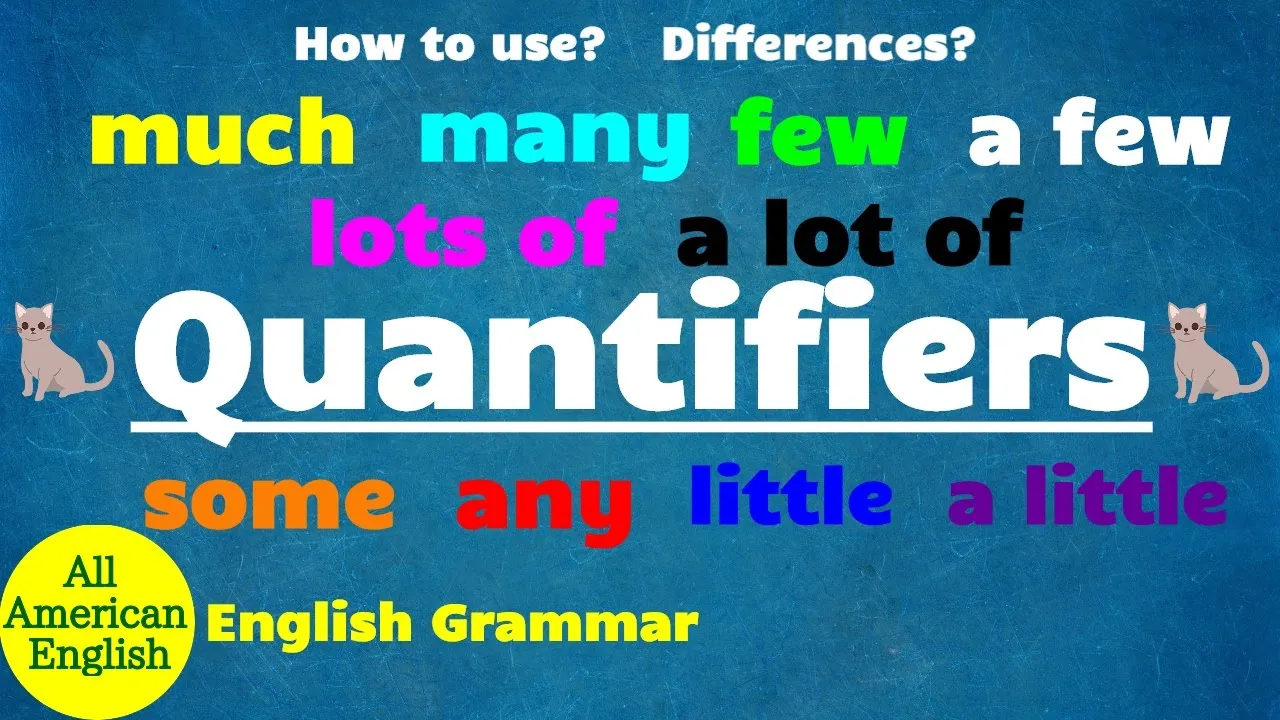
[Music] hello again everyone this video is about quantifiers now what are quantifiers quantifiers indicate amounts or quantities of things and in this video we are going to look at how to use and the differences between the following quantifiers they are much many lots of a lot of few of you a little little some and any but before I get to the quantifiers I had to talk about countable and uncountable nouns I made a video earlier about nouns and I discussed what accountable and an uncountable noun was and to determine which quantifier to use you have
to know if the noun that you are describing a quantity for is a countable noun or an uncountable noun let's look at the examples in the first set of examples we have the countable noun Apple okay Apple is a countable noun we can count apples so in the first sentence there is an apple on the tree this is another way to say there is one apple on the tree in the second example there are apples on the tree we can count them so we can add an S and say that there are apples on the
tree there are more than one apple on the tree alright so countable nouns we can make them plural in this particular case I just added s to Apple to make it plural but other countable nouns have other ways to make them plural which again look at my video on nouns if you're a little bit unsure right now okay so let's go to the next set of examples with uncountable nouns in this case we're talking about sand sand is what we call a mass now a mass noun is a group of something and we count a
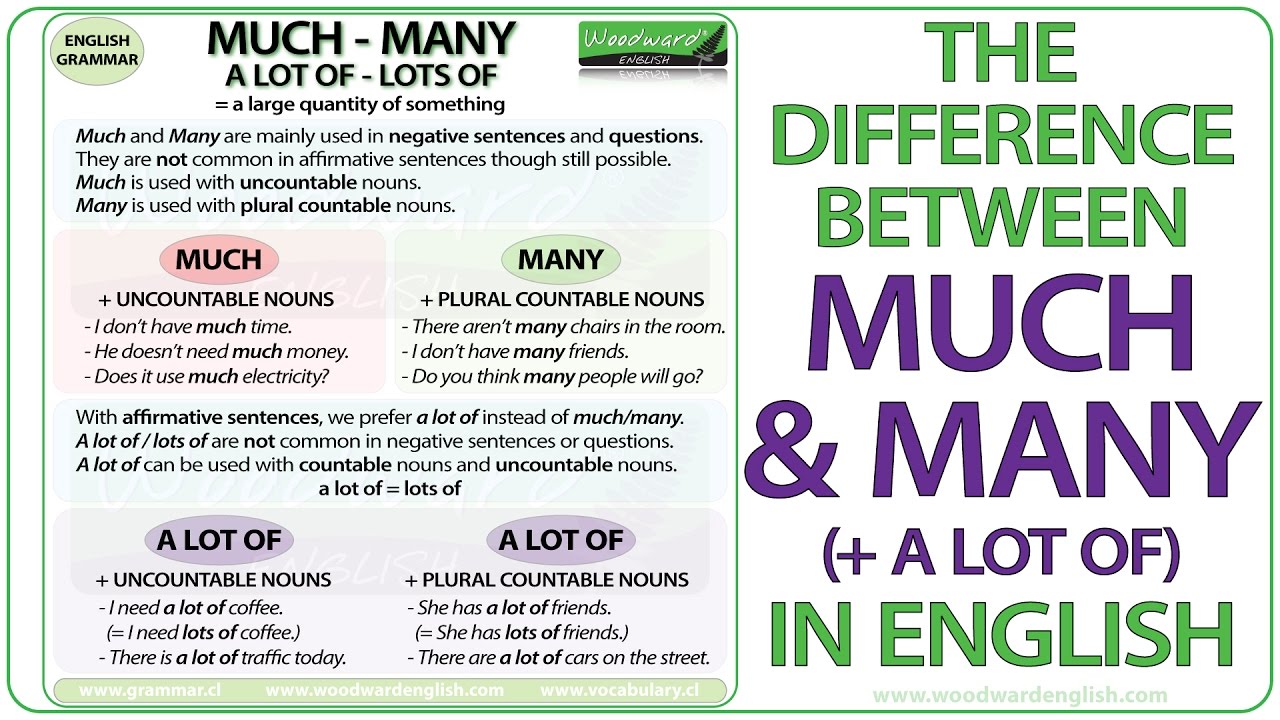
group as one so they're singular for example number three here there is sand on the beach you see it's counted as one sand okay and we would never say like number four there are sands on the beach we can't PluralEyes it we can't add the s alright so if you can determine if the noun is a countable noun or an uncountable noun you'll be able to use quantifiers with no problem whatsoever and the first one we're going to look at is the quantifier much much is used to determine the quantity of uncountable nouns and it's
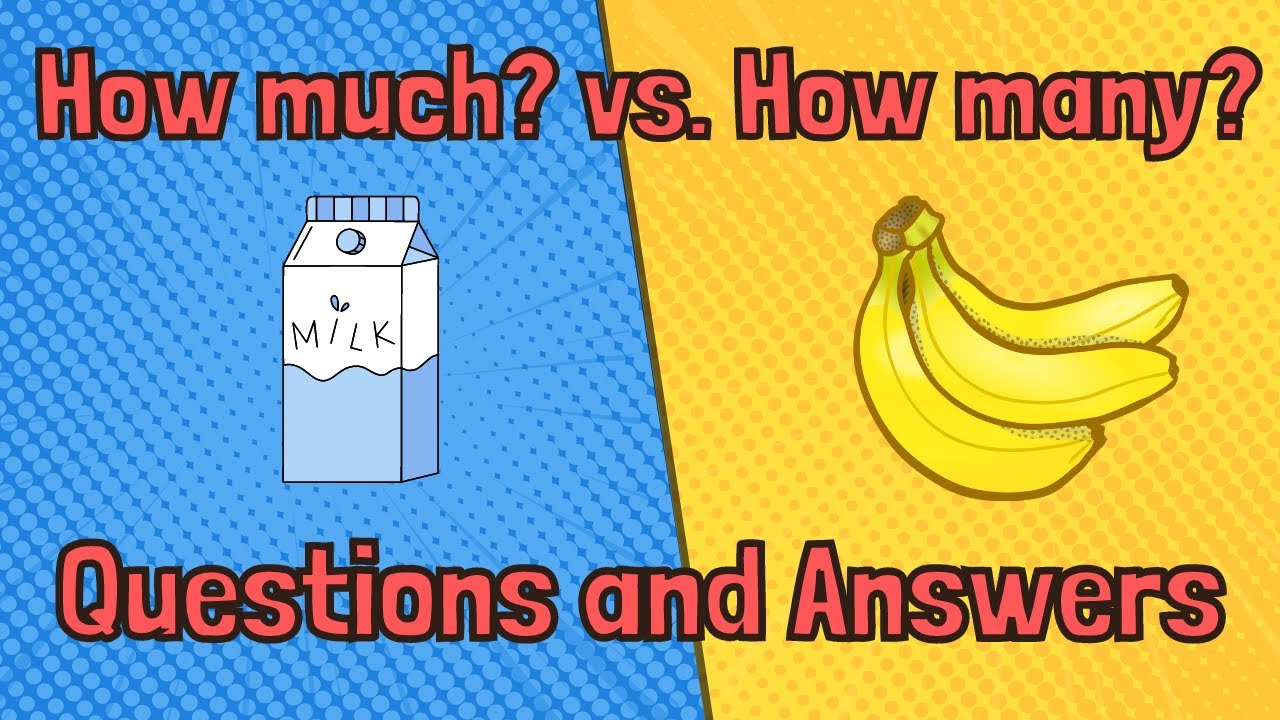
usually used in questions and in negative sentences let's look at the first example one how much ice cream do you want here much is describing or determining the amount of ice cream ice cream is an uncountable noun so we use much right we can't count ice cream remember it's one of those mass nouns a group is counted as a group and in the second example you don't have much time before the bus leaves here this is a negative sentence we're talking about you don't have enough time and time in this example in this particular use
of time it is uncountable so we use much all right time is counted by how it's kind of by minutes and seconds and hours those things you can count but time the way it's used here you can't count it so we use much all right now let's look at many many is used with plural countable nouns it's mainly used in questions and negative sentences similar to much it's a large quantity of something but many is the alternative to much because many quantifies countable nouns like in the first example number one how many cookies do you
want cookie is accountable now I can count cookies one two three in the second example you'll see it there aren't many cars on the highway today alright so many means a large quantity so if we say that there aren't many we mean there are not a lot of cars on the highway ok cars car countable now that's how you know which one to use now let's look at a lot of and lots of this should be very easy for everyone ok because they're used with uncountable and plural countable nouns B usually used in positive sentences
and like much and many they are used to quantify large amounts so in the first example we have there is a lot of bread on the table bread is bread accountable or an uncountable noun hmm uncountable now we can also say number 2 there is lots of bread on the table they both mean the same exact thing so you can use a lot of or lots of with uncountable nouns all right and look at number 3 and 4 let's do 3 first there are a lot of windows in that house window is a countable noun
so we can PluralEyes it right and put the S on this in this case there are a lot of windows and number 4 there are lots of windows in that house 3 & 4 mean the same exact thing you can use a lot of lots of next we're going to look at few and a few and they're used with plural countable nouns and they usually mean a small amount or a quantity of something let's look at the examples in the first one few students walk to school in the country when few is used like this
in this particular sentence the emphasis is on the small amount of students who walk to school in the country in example number 2 we have a few students walk to school in the country in this case the emphasis is on well there are a small amount of students that actually walk to school but there are at least some students that walk so one is implying that there are a small amount maybe in a negative way and then in number 2 a few students is saying that well I know there's a small amount but some students
do walk to school ok now you have to be careful all right because there's an exception that is if you put quite in front of a few it changes everything let's look at the example quite a few students walk to school in the country in this sentence it means that many students quite a few means many so you see the big change so that one little word quite will change the whole meaning of the sentence so you can still use it just remember what it means okay now we're going to look at little and a
little little and a little are used with uncountable nouns and they usually mean a small amount or a small quantity of something alright let's look at the examples we had little time to prepare for the test now in this sentence we had little time this means that we had maybe not any time at all this means a very very small amount or no time to do it to prepare and in number two you'll see you can really see the difference here we had a little time to prepare for the test this also means a small
amount of time but it's saying well I know it's a small amount but it was still some time you see how different it is from the first one in the first example we had little time it means small amount or no time to do it and then the second one we had a little time which actually means we had some time but it was only a small amount alright got it now let's look at how some is used some is used with both countable and uncountable nouns it's used in positive sentences it's used when we're
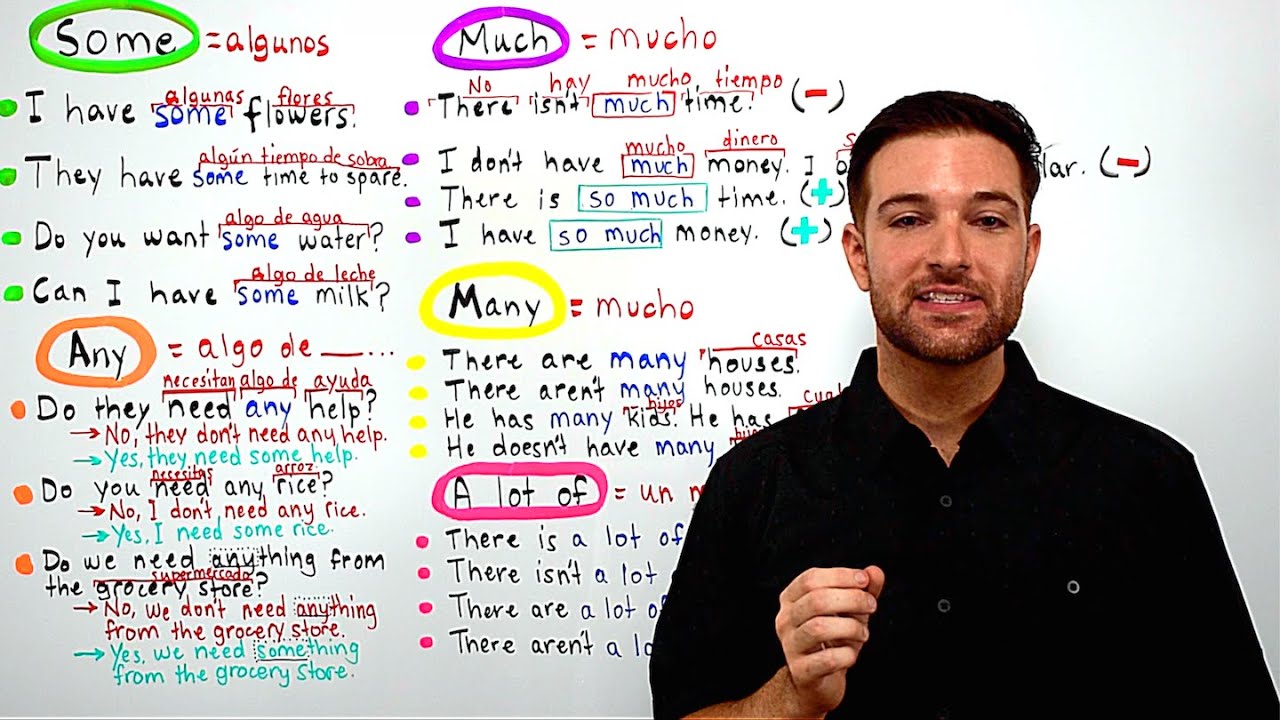
offering something and it's used with requests let's look at the first one number one he has some friends with him all right friend is accountable now so we can use some with countable now it's positive right he has some friends number two he bought some iced tea for his friends now iced tea is an uncountable now you see but we could still use some so it can be used with countable and uncountable nouns in number three we have an offering would you like some coffee here we're using some for the person is offering that the
other person wants something to drink and in number four we have a request could I borrow some money please now some is used other ways in English but these are are pretty common ways now let's do the final quantifier which is going to be any any is used with both countable and uncountable nouns and it's usually used in negative sentences and questions let's look at the examples in the first sentence number one she doesn't have any friends at this school this is implying it's a negative right she doesn't have friends and again it's accountable now
friends right friend is a countable noun number two there isn't any milk left in the refrigerator another negative right there is no milk milk is uncountable and in the third example we have a question is there any money in your bank account this is neutral question right it's not a negative or it's not a positive it's just pushes just asking is there any all right and that's how it's used all right okay that's all for this video take a look at the summary here first you can pause the video if you want so I hope
this video was helpful look for my next video which is going to be a test on quantifiers all right so like I always say keep practicing see you next time [Music]