If you've been working as an instructional designer or researching the field, then you've probably realized by now that a lot of the training out there is either boring or downright ineffective and unnecessary and the biggest reason for this is because a lot of learning designers and training teams just completely skip analysis and design training because someone says that they need it. So in this video we're going to look at the five different types of analysis that you can use on your next instructional design project. Alright, so, analysis is the name of the game today and I'm not even kidding when I say that like if we as instructional designers could get this right and had the opportunities to conduct these analyses we could probably contribute like a massive amount to the global GDP just because of how much more we would help be helping people and companies that we support.
So again we're looking at five of like the main types of analysis. These are the traditional types of analysis that you would learn about in a master's program but there are some more streamlined approaches to creating efficient and effective training which we'll talk about later in the video. So for now, we're just going to take a look at these five different types of analysis.
You could take a look at these if you want but we are going to get to each and every one of them. Now, needs assessment. This is probably the one that you've already heard of the main question we're asking and answering here is why aren't people performing at the desired level right and we can explore this by interviewing people by observing them by talking to the star performers and also the people who are really struggling.
There are many different approaches to this. It might just be asking the client or the internal stakeholder a series of "Why? " questions until you feel like you've really drilled down into what's causing the problem.
Sometimes the client or internal stakeholder won't know and you will need to speak to the actual audience that you support and I'll do a little disclaimer here and say like that is what analysis is all about. We want to make sure that we are supporting our audiences with what they actually need to perform better instead of assuming oh it's a course on effective communication or it's a course on this. We want to really speak to our people, observe our people, empathize with them, and get to know how are we really going to support this person in the best way possible so they can perform better on the job?
That's really the overarching question and theme when it comes to analysis. So, why aren't people performing at the desired level and what will help them perform at the desired level? So, not just why aren't they doing it right but also what will help them do it better and in a lot of cases when we take the time to ask these questions and talk to our people and see where they're having trouble we might find these problems are being caused by environmental factors like the technology they're using or the reward systems that are in place.
We might be getting rewarded for doing the wrong thing or we might not be getting properly incentivized to do the right thing so there are a lot of things at play that may not mean oh we should design training for this specific audience maybe you're designing training for their managers or maybe you're investing in new technology or new systems but we can't throw training at every problem. Now, training can help when there's a gap in skill or knowledge. So that's the main problem we solve as learning designers, right?
When people are at point A we need to get them to point B. They currently know how to do this. We need them to know how to do either that same thing more efficiently or some other things so that they can properly contribute to the organization.
So if you're going to take away one thing from this it's that we only want to design training when it's solving a gap in skill or knowledge and we don't want to assume that the audience has a gap in skill or knowledge and we don't want to assume that that gap is what's causing the problem. Usually, it's a combination of multiple things. There's a gap in knowledge or skill, there are environmental factors, there are inappropriate reward systems in place.
It's usually a combination we just want to be clear about exactly how we're helping solve that problem as learning designers. So again this is like the first and most important form of analysis that you can conduct. It tells you whether or not you even need training, so if we're experts in designing learning experiences you can see why this piece is so important.
We don't just you know when you're a hammer like everything is a nail like that kind of saying like we don't want to look at every problem as a learning problem. We want to be very picky and do this diagnosis to determine can my efforts here where I'm going to spend many many hours you know speaking to subject matter experts, writing content, developing that content, we only want to use this skill set and use these hours if it's actually going to make an impact to make a difference. And again this is in an ideal world the reality is there are a lot of cultural issues working against instructional designers where we're kind of not being incentivized to put in this upfront time but for those of you who are newer or fell into your ID role and didn't learn much about analysis, this is kind of like the proper approach and the proper the way to determine if training is even necessary.
And sometimes on some teams that are learning consultants and they do just this or performance consultancy may also refer to them as and then when they do decide or determine that yes training will help solve this problem in this way that's when we would turn it over to an instructional designer. So it's okay to just design the content or design the practice activities if there is someone like upstream who is doing that hard upfront analysis work and it doesn't have to be that hard or that difficult but it does take a little bit of time to dive deeper into these problems. But this right here is the most important one we can do a whole video on this, just let me know in the comments if you'd like to.
We also maybe could do like some some live events where we do like some mock needs assessments like we could have some fun with this but it is such an important skill set and it really does not have to be very difficult, it's just digging deeper asking questions. So the next one is job task analysis. So you also may see this abbreviated as JTA.
My impression is that this was much more popular back in the day when I was doing my master's program one of our professors who was like a veteran practitioner he used to say I paid for my first house doing JTAs, so he would he would just get hired by companies to come in and conduct this and then the output here is a list of all of the tasks that we should prioritize training for. So let's talk a bit about what it actually is. So this is where we would interview or observe people to determine which tasks they actually have to perform.
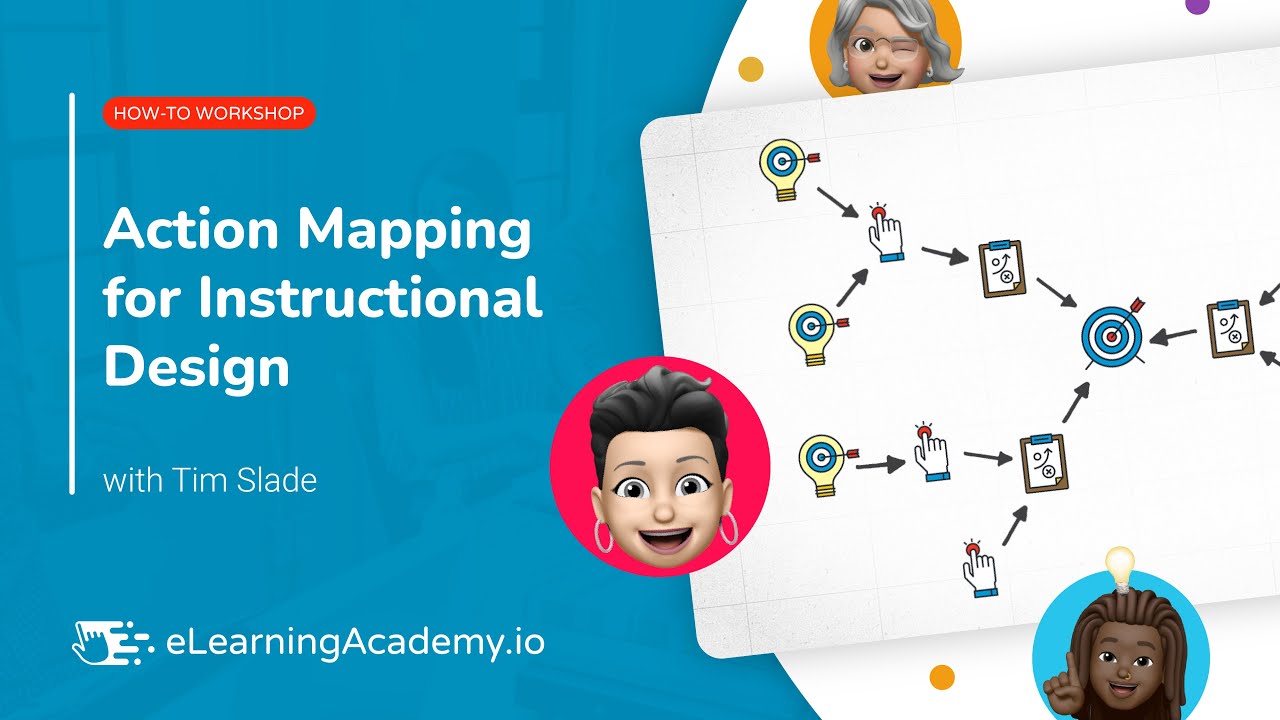
Some of you may already be familiar with action mapping that is kind this definitely is kind of wrapped into that in some ways but the way we were taught this in our master's program is that this was like very like an exhaustive inventory of every single task that someone would perform in the context of achieving a given goal right? So we need someone to operate this machine, so we would document like every single thing like walk up to the machine, like press this button to turn the machine on, check this mirror, check this thing. Like a lot of the times if you're just sitting down with a star performer or one of these employees and asking tell me every single thing you need to do to have to get this done it's only natural that they're going to skip some steps because the experts and again this is who you'd want to interview for this, we want to interview the people who are performing at the desired level but they might be doing things and not even realizing that they're doing things and that's where as an instructional designer it's important to to be very meticulous and drive very deep into these tasks.
So they might skip steps so you would ask do you do anything in between those steps or observation can help a lot to you there's a form of this called cognitive job task analysis where you even talk about what decisions and what processes the employee is going through like in their head so look into those. Again I get the sense that they're a bit more traditional. I have seen some opportunities come up in the freelancer contract space like over the past four years I've maybe seen like one or two people ask for someone who's really good at job task analysis so I don't know if this is a dying art or what and again there are more modern approaches that let us focus on the right actions it's called action mapping.
In particular if you've been following me for a while you know I love that process and we've done some content on it so we have a whole action mapping playlist if you want to see a more modern streamlined approach to focus on which actions people need to perform. So once you have this exhaustive list of actions for this job task analysis, we would ask the employee to rate each and every single one of those tasks in terms of frequency, difficulty, and importance. So how often do you do this?
How difficult is it to do this? and How important is it that you do this? For another way to say that is maybe like How severe are the consequences if you do not do this?
and the idea is that you would do this with maybe it's just one star employee but probably more like three to five so you get a pretty exhaust you know a pretty exhaustive rating system on these tasks from multiple employees and then you as the instructional designer you can identify which one of those tasks are the most important. So if we see a pretty decent list of tasks where it's very frequent, very difficult, and very important, clearly that's where we're going to get the best return on investment when we foc- you know when it comes to focusing our training efforts. So look into this if this approach sounds appealing to you but again action mapping I would probably recommend as the modern equivalent and action mapping wraps up a little bit of everything like it wraps up some needs assessment it wraps up some of this but this may help just from like seeing where our field has come from and seeing like the proper traditional way to conduct these analyses Alright, so, learner analysis.
So this is a very important one too that is often overlooked. You can go to different levels of depth with this but what it is really about is we want to understand our audience's needs. Basically, we want to be able to empathize with them really, really well so that we can wrap that into our design decisions for the solutions we're designing and developing.
So mostly this will look like interviews and surveys so we're talking to our people we want to determine what their preferences are in relation to technology and delivery mechanism and we also want to know where they're at with the task at hand or the topic at hand. We want to know their background knowledge. So, how comfortable are they with this content?
So again what's their comfort with the tech, with the topic? What are their preferences for art style, modality? So you know do they really prefer videos?
Have they taken e-learning before and they're comfortable using those navigations? Have they never used technology before or what are their language preferences? Are they bilingual?
Are they very fluent, educated english speakers? That's another thing: how educated are your audiences? All of these things and art style right how do they respond to like the illustrated art style?
What are their favorite websites to go to? How do they use technology already? What are some of their favorite training experiences?
Sorry I'm kind of like rattling all of these off but I hope you get the idea like we're asking questions so that when it does come time to do the actual instructional design and development and graphic design we can design something that we're very confident that our audience will be comfortable with and will be able to navigate with ease and all of the above. It will also help us make decisions around like scaffolding because, for example, if our audience isn't very good with technology or if they've never taken an e-learning experience before we're probably going to want to devote more time to navigation instructions and maybe we're going to use some bigger buttons and instead of using like a hamburger icon like you can find on websites, maybe we'll just use like plain text like open menu for example. So when you know more about your audience, you can design more for that person and that's probably clear from this but the end result is a learning experience that's more tailored, appealing, and effective.
So get to know your people, right? A lot of the times you just get stuck working with our subject matter experts or our clients and we can complete entire projects without once hearing from someone in our actual audience who we're supporting and yeah sometimes we you know sometimes we ask for feedback so we get some survey information but that's that's not really what this is right we're not asking for specific feedback about a learning experience. We want to learn more about who that person is, what their daily lives are like, and just get a really strong sense of that.
So our learning solution will really hit the mark when it gets delivered. Okay, so these two are maybe not as popular. I don't see these really talked about a lot but I remember when I learned about instructional context analysis and job context or performance context analysis which is the next one I was like that makes so much sense and I can see how if you skip these it can lead to some very big problems.
So essentially we're this is the question we're answering: what context will people be in when they engage with the learning experience? So where am I going to be? Am I going to be in front of a desktop computer in an office building and I'm going to be clicking through an e-learning experience?
Or am I going to be sitting in a conference room listening to a facilitator with five of my co-workers? So, again, think about when the people are actually taking you know going through the learning experience that you design whether that's face to face or e-learning, what is the context in that environment? So for face-to-face learning experiences, we want to look at that context and figure out how many seats do we have available to us, right?
Do we have enough seats for the amount of people that we need to accommodate? Do we have a projector if we need to show slides? Is there a computer there to even load up a PowerPoint?
Like we basically want to see what do we have available to us in this space or in this context so that we can make sure we design accordingly. We don't want to design a PowerPoint for the facilitator to use if we don't even have a computer or a projector in that room. It just doesn't make much sense and that's where we can lead to a lot of wasted money for e-learning.
It's still very, very important because we want to know what devices are people using, right? Are they going to be on cell phones or are they going to be on computers? What is the screen size?
Should we be designing a nice full screen wide screen type of experience or maybe everyone maybe all the computers on the or in the office have like a vertical orientation? What's the processing power, right? What is the internet speed?
Like we want to we want to figure out is it okay to include some very high quality media that needs to get downloaded onto their computer because if we don't have the right hardware to run that then it's going to be pretty ineffective like the training isn't even going to work or it's going to be very frustrating and people might just dip out of it. Sound cards. So there's a big example with this one.
So if we're going to include sound in our learning experience, we want to make sure that the computers opening them up have sound cards and maybe this is standard and is default these days but there was a story that one of our professors told us in the master's program and it was just about this training program where a company invested millions into this really like slick high production value like narrated e-learning and then when it came time to deliver it to the audience they found out that none of the computers in the office had sound cars so they would have to re-outfit every single device in the space to experience that learning project. So you can see these things are important maybe we can take sound cards for granted these days but I hope this just illustrates the point that we need to be careful with this context analysis. We need to make sure that we're designing for things that are available in the spaces where people will be engaging with the training.
And then performance context is very similar but instead of you know which context will people be in when they go through the training experience, we want to know what context people will be in when they have to apply what they've learned. So what is it like on the actual job, right? We want to make sure that the solution we're designing works for that context.
Maybe people have desktop computers back in the office where they go for training but if these people are working in the field and they're working out of their cars and out of clients houses or businesses maybe all they have with them is a cell phone, so if we design this nice wide screen learning experience that we want people to be able to access like from the job it's not going to be a very good time if they're trying to refer back to that on a mobile device. And similarly like maybe we think oh it will be great to design this job aid that lists all these like important communication principles but then if the person on the job is constantly in front of clients or in front of people it might not make sense for them to pull out like a paper job aid and look at that while they're having a conversation. So you can see and then similarly if I'm working from a computer we want to know that the specs of that computer, what it can handle.
Maybe if we're designing tools we want to make sure that it works for the technology that our people have available so this one should be clear but again just let's make sure we have a very, very clear picture of how people are applying what they've learned because not only do we want to make sure the solution works but we also can emulate this context in the learning experience so the more we know about the actual struggles of the job and the actual really just the context like what are the common things that happen that can make things go wrong how are people feeling when they're on the job what resources do we have available on the job all of these questions we can bring those you know the answers we can bring those elements into our learning experience. So the more realistic we can make the learning experience and the more that we can prepare our learners for what the actual job site will be like, the more effective your e-learning or your face-to-face learning projects will be. So let us know if you have any questions about these ones or have you heard of these before I'm also curious about that and do you use them or how good of an understanding do you have of the people you support of the context they learn in and of the context that they work in because when we have a really clear picture of that our learning design will just go to a whole new level and you will hear it from your audience like they'll tell you how happy they are with the relevant training and solutions that you're designing.
So overall right proper analysis it can really save our audience time and they'll be happier because the training they're going through is actually helpful instead of having to just click next and try to get through it as soon as possible. But proper analysis can also save the organizations we support countless hours, countless dollars like I literally don't think it's an exaggeration to say that billions of dollars a year are being wasted by skipping analysis or doing improper analysis there are so many programs out there that you know we've invested whole teams of times like effort into for months and then we roll it out and deliver it to 50 000 people who are getting taken away from their work to go through it and then nothing happens or changes so again skipping analysis I would say hands down the biggest cause for all of that waste and money and you're wasting your time, you're wasting your audience's time. So you know it may have sounded like a lot this video is probably getting a little bit long but we can create templates to make this process easier and faster and I'm sure there are templates out there but I'll you know if we want to do this, if you think that would be helpful, maybe we can do some content where we create templates together.
So if you want me to maybe create some freebie templates or maybe we can do a live event together where we build templates together I'd totally be happy to do that. Again the more we can conduct analysis and learn more about our audiences I think the better off we'll be as an industry and we can do so much more content about how to have these tough conversations with stakeholders who maybe don't see the value in it again just let me know in the comments what kind of analysis content would be useful to you and then also if you've made it at this point and you do not know about action mapping I think that would probably be the best next step for you because Cathy Moore laid out like a very streamlined approach to creating results as learning designers and you'll see, especially after you learned about these things, you'll see how a lot of them are kind of baked into Cathy's approach but it's just a simplified like easier to implement approach. So check out action mapping again I'll link that playlist in the description if you did enjoy this video please go ahead and give it a thumbs up just to let me know that me talking to you all for however long this has been isn't missing the mark completely and I'll see you in the next video.
Again if you did make it this far I really do appreciate you and please subscribe because there's a lot more content like this coming your way. Bye!