How did you get here? You didn't dream of this. Nobody grows up thinking, "I want to play the violin while a ship sinks in the middle of the Atlantic.
" You were an ordinary musician, perhaps playing in smoky pubs in Liverpool or modest halls in London. Maybe you were a violin prodigy or a trumpeter who livened up weddings. But a musician's life was never easy.
And when the White Star Line offered a contract to play on the Titanic, it seemed like a golden ticket. Decent pay, plenty of food, and a chance to perform for the creme de la creme of society. You signed without a second thought.
But there was a catch. You weren't an elite employee. The musicians on the Titanic were contracted by CW and FN.
Black, an agency in Liverpool, not directly by the White Star Line. This meant you were a secondass worker despite playing for the first. Your contract, a poorly drafted piece of paper promising four pounds a month and a scratchy uniform.
Nobody mentioned icebergs or insufficient lifeboats. When you boarded in Southampton, instrument in hand and a nervous smile, you had no idea you were stepping into a floating nightmare. The choice wasn't exactly yours.
Maybe you were recommended by an envious colleague, or perhaps the agency pointed to your name on the list because you were available. Either way, you were now aboard the largest ship in the world with an uncertain future and a musical score in hand. You grew up in Victorian England, where music was a refuge, but not a guarantee of stability.
Perhaps you came from a working-class family with a father who worked in the shipyards and a mother who sewed until her fingers bled. By age 10, you were already holding a violin taught by an elderly teacher who charged little and coughed a lot. Or maybe you were self-taught, coaxing notes from a borrowed trumpet while your siblings fought over bread.
Your childhood wasn't a fairy tale. It was a world of muddy streets, freezing winters, and the constant fear of ending up in a workhouse. Music was your escape, but also your prison.
You dreamed of stages in London or Paris, but reality was noisy bars and weddings where the groom was already drunk. Your talent brought you to the Titanic, but not without scars, calloused hands from constant playing, sleepless nights, and the certainty that deep down life was a gamble. As a musician on the Titanic, you were part of an eight-man band, divided into a quintet and a trio under the leadership of Wallace Hartley, a violinist with a serious gaze and a passion for hymns.
Your routine seemed glamorous, playing in the first class lounge, the cafe Parisian, or on the prominard deck, while millionaires like John Jacob Aster sipped champagne, and ladies in long gowns danced. But the truth was less brilliant. You played for hours with short breaks and a uniform that felt more like armor.
The quintet, where you probably were, performed in the dining salon with Strauss waltzes and ragtime to keep passengers entertained. The trio, more intimate, played in the first class lounges. There was no real time off, even during free moments.
You rehearsed or cleaned your instrument because a scratch on the wrong note could cost you your job. When the Titanic collided with the iceberg on the night of April 14th, 1912, at 11:40 p. m.
, you were probably sleeping in your cramped thirdass cabin, or perhaps finishing a set in the lounge. The impact was a slight tremor, almost ignorable. But when officers started shouting and the deck began to tilt, you were called to play.
Yes, play. As the ship sank, your mission was to maintain calm as if a waltz could erase the panic of 2,200 people. You and your colleagues were rushed to the deck with your instruments and a bone chilling cold.
The temperature was below freezing, and the Atlantic wind felt like a knife. Wallace Hartley, with his usual calm, said, "Let's play. It's what we do.
" And so amidst the chaos, women crying, men screaming, lifeboats being lowered halfway, you began to play the songs. Lively ragtime at first, like Alexander's ragtime band, to pretend everything was fine. But as the ship tilted more, and the lifeboats disappeared, the melodies changed.
Hymns like Nearer My God to Thee echoed in the dark while passengers clung to their last hopes. You saw the panic in their eyes, but you kept playing because to stop would be to admit the end was near. Your fingers achd in the cold.
The violin strings felt like ice, and the trumpet trembled on your lips. Water was already lapping at your shoes, but you couldn't stop. It was your duty, or perhaps your way of facing fear.
Every note was a battle against despair, an attempt to bring order to chaos. You knew there were no lifeboats for you. Musicians weren't a priority.
Even so, you played because it was all you had. Your instrument was your life, but also your burden. A stratavarious violin, if you were Wallace Hartley, or a heavy cello you carried like a child.
The trumpet with its valve that always stuck in the cold, or the piano in the lounge, which you never played on deck because, well, pianos don't float. You cared for your instrument as if it were a relic, polishing it, adjusting it, because a bad sound was unforgivable, even in the middle of a shipwreck. On deck there was no waterproof sheet music you played from memory with trembling hands and a racing heart.
The uniform now soaked clung to your skin, and the life vest, if you even got one, was more of a hindrance than salvation. All this while the ship groaned like a wounded animal and the sea swallowed the deck. As a musician, you lived in a social limbo.
You weren't a first class passenger nor a coal stained sailor. You were an artist, but treated like a servant. The rich applauded you, but never invited you to their tables.
The other crew members saw you as an eccentric with your delicate fingers and your way of not belonging to their world. You shared a cramped cabin with another musician, perhaps Roger Briu, the French chist, or John Hume, the violinist who laughed even on the worst days. You formed a brotherhood bound by music and the certainty that you were all in the same boat, literally.
But outside the band, you were a stranger. You had no time for friendships and dating. Who had the energy for that between rehearsals and endless shifts?
When the ship began to sink, your loneliness became even clearer. Nobody came to save you. The officers were busy with first class passengers and the lifeboats were already full when you picked up your violin.
Your only company were your fellow musicians playing until the very end. You ate better than the stokers, but don't expect caviar. Your meals were the leftovers from the thirdass galley, stale bread, potato soup, and if you were lucky, a piece of meat that didn't feel like rubber.
While first class passengers savored filet minion and French wines, you wolfed down your food between sets, your stomach rumbling with anxiety. Sometimes you dreamed of your mother's meals, a warm stew, freshly baked bread. But on the Titanic, eating was a chore, not a pleasure.
During the sinking, hunger was the least of your problems. You didn't even think about food as you played on deck, with the water rising and the cold engulfing you. None of the eight Titanic musicians survived.
You knew deep down that your chances were minimal. Lifeboats were few, only 20 for over 2,200 people. And musicians weren't on the priority list.
As you played, you watched the boats being lowered, some with empty seats, others with crying women and children. But you couldn't abandon your post. It was the music or nothing.
You survived by instinct. You learn to read Wallace Hartley's mood to ignore the passenger's panic, to keep calm even when the deck tilted 45°. Each note was a small victory, a way to tell the world you were still there.
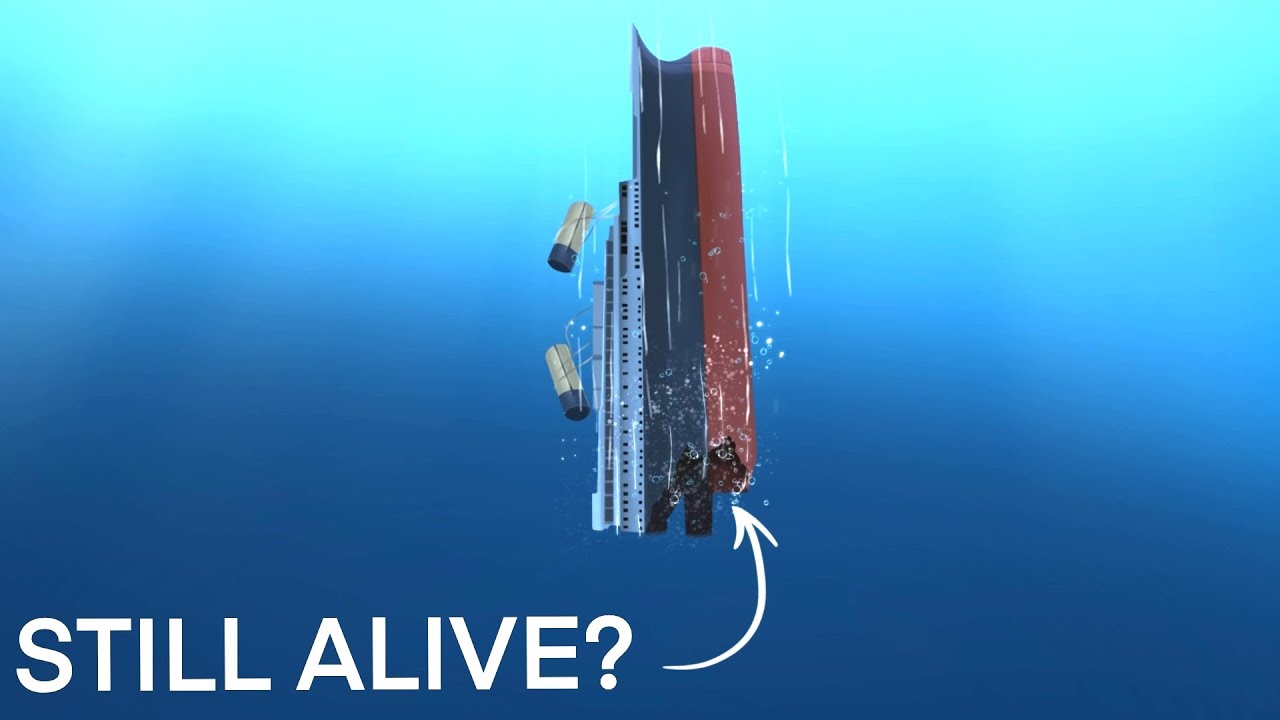
But when the water reached your chest and the ship broke in half, you knew the end was near. Your last note was swallowed by the sea. You didn't survive, but your story lived on.
Survivors recounted how the band played to the very end, an act of courage that became legendary. Newspapers in 1912 called you heroes, but that brought no comfort. Your families received meager compensation.
The White Star Line paid little and the black agency even less. Your violin, your trumpet, your cello, lost at the bottom of the Atlantic along with your dreams. Your colleagues like Wallace Hartley were remembered in memorials, but you, an anonymous musician, remained a footnote.
People spoke of your bravery, but no one understood the fear, the loneliness, the feeling of being trapped on a stage where the only finale was death. Your music calmed others, but it couldn't save you. Being a musician on the Titanic was a privilege that turned into a curse.
You played for the rich, but died with the poor. Your music was the soul of the ship, but also your anchor, holding you to the deck as the world crumbled. You weren't a caped hero, but your courage, playing as the ship sank, became a symbol of humanity amidst chaos.
Your story isn't in history books, but it's in the notes of nearer my god to thee in the tales told by survivors in the echo of a waltz lost to the ice. You were just a musician with an instrument in your hands and a cruel fate. But in the end, your music was stronger than the Titanic because it survived even when you couldn't.
The musicians of the Titanic are a legendary part of the sinking's history. The band led by Wallace Hartley was composed of eight men. Five in the quintet violins cello piano and three in the trio violin cello piano.
They played in different parts of the ship entertaining from the dining room to the first class lounges. When the ship collided with the iceberg, survivor accounts confirmed that the band played on deck to calm passengers, transitioning from lively tunes to religious hymns. No musicians survived, and their bodies, if recovered, were identified among the victims.
The story of their courage inspired books, films, and memorials, but also raised questions about the exploitation of workers by the White Star Line, which treated them as secondclass contractors. The Titanic with its 2,224 passengers and crew had only 20 lifeboats, enough for about half the people on board. The tragedy exposed safety flaws and social inequalities with first class having priority for the boats.
England in 1912 was a rigid society where musicians like you lived on a tight rope between art and survival. Music was seen as a lesser craft, and the Titanic musicians, though talented, were treated as mere service providers. After the sinking, the band's story became a symbol of sacrifice, but also a reminder of the human cost of technological and social arrogance.
This narrative is a fictional exploration of what it meant to be a musician on the Titanic, inspired by historical accounts and the legend of the band that played to the end. You didn't choose to be a hero, but your music was an act of resistance against despair. Your story is a testament to how art can shine even in the worst circumstances, but also to how the system failed those who gave everything.
Good luck, Maestro. You played to the end, and that was more than the Titanic deserved. If you enjoyed this, please like it, subscribe to the channel, turn on notifications, and leave a comment.