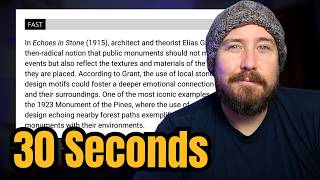
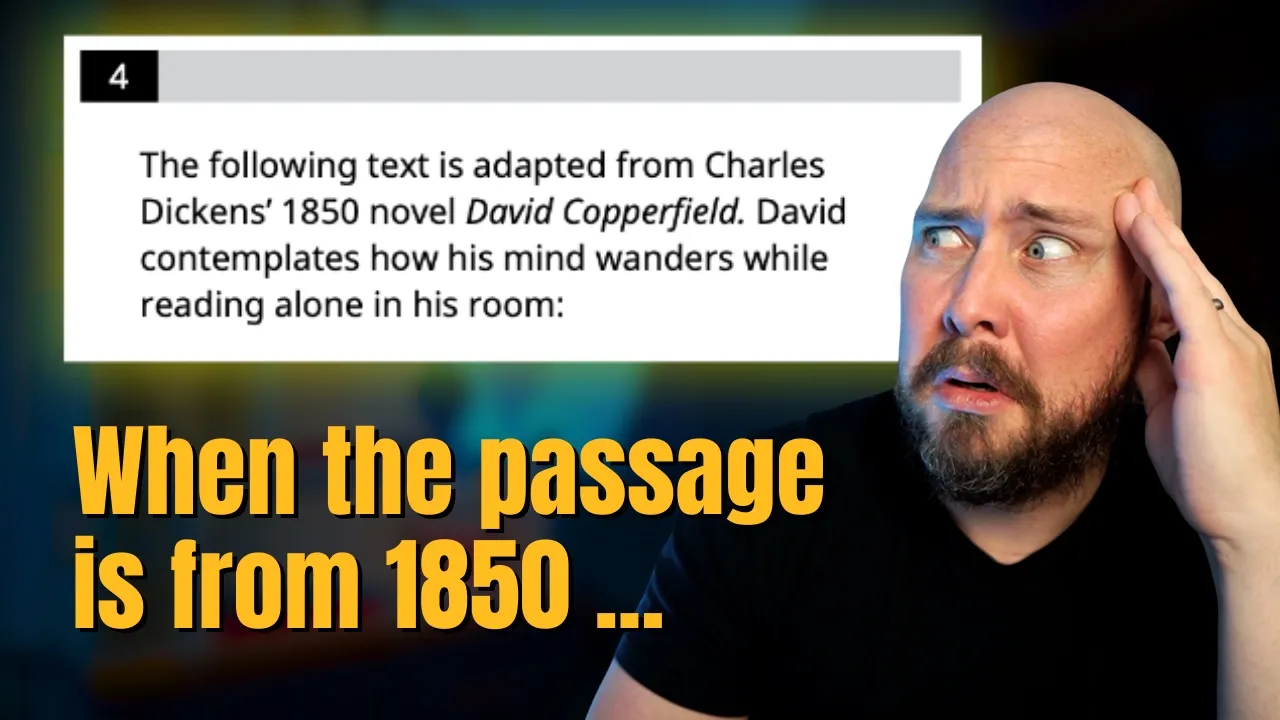
So, the crazy thing is knowing the definition of a word can actually hurt you on the SAT. That's right. You're all cooked.
You're cooked. >> Okay, I'm just kidding. You're not all cooked.
Um, but let me show you what I'm talking about and how you can avoid it so that you can get that beautiful score that you deserve. So, the reason I'm making this video is that one of my wonderful students brought up a really great point about this problem right here. So, in this question, we get this little excerpt from a story and we're trying to figure out what does a singular most nearly mean.
And here's the comment from Sync 213 basically asking, "Hey man, what the heck? Singular means one. " The issue is if we know the definition of the word singular, we are indeed going to be looking for something that has to do with the number one.
So, lonely looks pretty good, right? >> I'm not lonely. However, in this particular passage, singular means extraordinary.
So, like I was saying before, you're all cooked. >> If it turns out bad, you're cooked. >> But no, this is a definition of the word as well.
We just didn't know that because it's not freaking 1837 anymore. So, the trick with these types of questions is don't go with the most common definition, aka the definition that you're familiar with for these words because 99% of the time, that's going to be wrong. The SAT is a big jerk and it likes to throw these 200-year-old passages at you which either use words that you aren't familiar with at all or use words that you are familiar with in ways that we haven't used them for nearly 200 years.
Now, the key to getting these questions right, even if we don't know this 200-year-old alternative definition, is all in the name of the question type. The SAT dubs these questions words in context and indeed you just need to pay attention to the context come up with a prediction solely based on that. So in this question for example contextually we see that after the word singular in this sentence we get this really dramatic description of what happens when the flower like basically comes back to life.
So for me, as I'm reading, I'm going to predict the word dramatic because that next sentence paints us a very dramatic change, a very dramatic picture. Then when I go through and start eliminating answers, I'm going to get rid of any answer that doesn't line up with dramatic in some way. And the closest thing that I get to dramatic is extraordinary.
And that's how I end up with the correct answer. Now, normally in this kind of video, I would do some more examples for you, but I want you to practice by yourself. So, go ahead and click the link in the description, and I will send you 10 practice questions just like the one I showed you, and I want you to work through this strategy.
This is a crazy thing for a YouTuber to say, but I want you to get off YouTube, go and do these practice problems.


![Boost Your SAT English Score 100+ Points [Logically Completes the Text]](https://img.youtube.com/vi/XAg1L8uPHn0/mqdefault.jpg)