the idea is expressed in the following presentations those of the speakers and do not minis I'm hoping that this next presentation that what we can try to do is talk about a number of the things that influence successful vibration how does a mix design impact things what about the element characteristics or the consolidation actions that are being taken how does some of these things work together and I don't have a single equation at the end of this thing that tells you exactly what to do but we certainly need to look at how things work together
what we're going to talk about from the overall outline of the presentations all right what are the desired outcomes the consolidation we heard about that a little bit in the last presentation but then we're going to talk about concrete mixtures placement techniques and consolidation techniques so what are the desired outcomes of consolidation pretty straightforward again we talked about it earlier we want to get maximum density of the concrete so that we ensure durability ensure compressive strength all the things that we designed this building or this element for right we want it to hold up what
it's designed to hold up we will certainly want to remove the air pockets and large entrapped voids and I'll talk a little bit on the next slide about what's the cost of poor surface vintage from poor consolidation and then certainly we want to ensure encapsulation of the reinforcement and actually this is not just in cast-in-place concrete is also in precast pre-stressed concrete right if I got prestressing strand a runner through a bridge girder I definitely want to make sure I've got good consolidation around that strand so that when it's cut the next day we don't
have something crazy happening in the precast plant and certainly you can see everybody always likes to throw up these crazy pictures of poor consolidation or issues that may occur and some of them certainly are mixed design related some of them are the reinforcements detailing usually in my experience in concrete and construction it's not just one thing that happens it's usually a combination of a couple of different things so maybe if the rebar are too close together what's not just because the rebar too close together maybe the aggregates were too big to go through that rebar
so there's two things happening so it's usually some sort of combination of issues at the end of the day there's a cost right and I think Amon knows this and there's probably a number of folks in here that know that there's a cost to poor consolidation and I'm not even talking about necessarily the big issues where you've got a significant void left behind let's just talk about surface imperfections someone's going to go about sacking or rubbing an element that stuff can be a dollar to dollars a square foot and that's a conservative estimate for gray
concrete you talk about architectural concrete then you're really starting to get into costs okay because then you'd have to do color matching and all kinds of things so there is certainly a cost to this whole issue of surface imperfections this whole issue of poor consolidation so you know customer satisfaction is a big one for a contractor or for a precast producer I talk to a lot of pre-stress precast producers and even when their elements are being buried underground their elements are being transported by truck down the highway with their names stamped over them so they
still care mom and her kids are driving by and they look up and they see whatever the name of the precast producer is and they see what they're making that's an important thing for producers company image is important an ability to win future projects so there is a cost with respect to consolidation let's talk a little bit about concrete properties and boy we all know about slump right that's not an issue we can go from low slump concrete moderate slump flowing concrete super plasticizers concrete self-consolidating concrete and anywhere in between at the end of the
day when it comes to concrete consistency or the workability level and it's just measured by this technique we can get anything along that whole continuum right we can get anything and 309 does tell us that it's important and we know that I know I'm speaking in general terms that everybody already knows but we know that the slumps important but you know what at the end of the day it's not just the slump I'll get to that in a second let's focus on slump and then we're going to talk a little bit about the cohesive pneus
or what we'll talk about in Rio logical terms the viscosity to the concrete what are the concrete properties how do they influence this whole consolidation effort and actually that's kind of what I'm trying to get at as consolidation effort which encompasses a lot of different things but this first video I'm going to show you is on your left the two columns this is actually concrete beta in the lab it's actually the exact same batch of concrete the column on the left was before the addition of a super plasticizer so it's about a two inch slump
then we added super plasticizer mixed it up for 60 to 90 seconds and then we cast the second column now what's the first thing that you see though they haven't even started being vibrated yet they were just scooped in and placed in those columns that concrete on the Left doesn't like to fall into itself too much right so there's a lot more air void trapped in that form and I think that's one thing even when we talk about self-consolidating concrete talk to folks I always ask the question before you put concrete in that form what
else is in there air and that airs got to get out is either going to get trapped somehow right but you got to get it out and that's what we want to make happen so let's just watch the difference when we vibrate those sitting on a vibrating table subject to the same amount of vibration or the same amount of time and we all know that slump makes concrete respond to vibration more easily right but here's an interesting thing what if when this concrete's being vibrated I'm done what if Jim on the job site I want
to vibrate a little more I'm done it's the same thing that 309 says the same thing a man was saying it's not just the vibrator it's not just the mixed design it's not just the form it's how long you do it how long am I going to do it and that's a individuals responsibility on that job site and what you'll notice is that as the concrete consolidates and the air wants to leave the small bubbles all come together to form bigger ones and then leave you're also going to see here in a couple minutes we're
going to talk about a higher viscosity mixture what's the rate at which those bubbles can actually get out of the form based on the rheology of the concrete so now we're going to talk about rheology is sore a little bit and I've got a couple of videos here just to show when I talk about plastic viscosity of the mixes and these are to SCC mixes but it's just to get the point across about how different mixtures move from a practical perspective so this is an SCC mixture and so you'll just see how rapidly it flows
once the cone is pulled right lower viscosity this is a higher viscosity mix doing a little slower okay think about dropping both of those two mixes into a form or maybe a tall slender wall form what are they going to do how much concrete's going to pile up how fast in my place in it how fast is that concrete in that little thin section going to move not very versus the top one right regardless of whether it's SCC or whether it's nine inch slump concrete a higher viscosity mix moves more slowly so talk a little
bit about rheology right we talked about two different things we talked about yield stress amount of stress required to initiate flow and that's really negatively correlated to slump they got a high yield stress that means I got a low slump at a low yield stress I got a high slump you can see the graph down there at the bottom the viscosity though viscosity is that thing and if you sit in committee 238 and we talked about the workability of fresh concrete we talked about this cosseting this stuff all the time as if everyone knows it
and everybody lives it but at the end of the day in practice and the real world the vast majority of concrete out there we only look at the slump we're not looking at this viscosity and this viscosity component is a big part of consolidation consolidation time removal of air voids etc especially let's say you're building a high-rise building typically the columns on the bottom are a very high strength and as you go up mix designs usually change and for economic purposes but a little bit lower and lower strength I mean relatively speaking what happens when
we go to lower and lower strength usually a water cement ratio change which goes up water cement ratio change means more water in the mix which means lower viscosity as I go up so now all of a sudden I've got different rheology of the mix as I go up in columns but if it got the same guy consolidating those columns or whatever okay mix designs change on a project even four columns now if you look in the research yield stress is really changed by vibration so I got a low slump concrete I vibrated it looks
like and changes into while that vibrations there a higher slump mix now vibrations influence on the viscosity of the system is a little more vague I've found a few references and we've looked at a few things that there's minimal change to the overall viscosity of the system but viscosity still plays a role and there's a couple of references i want to point out here and one is by Professor band fill that okay at the end of the day we talked about radius of action of an internal vibrator the radio vaction decreases write the rate of
action around decreases as the yield stress goes up so as my slump goes down so that means my insertion points have to be closer together for the lower slope mixes when he says though and like to see more research on this quite honestly is but the radius of action increases as the viscosity increases I'd like to see some more research for some of you folks out there on that I think that would be pretty interesting to know what are those insertion points need to be as I go higher and higher and strength to ensure that
ID air the system but for sure this next one is important viscosities influence on the rising behavior of air voids as the viscosity of a system goes up the internal movement of things slows down so if i'm trying to dr a system and i'm making an eighteen thousand psi mix the time i have to vibrate that concrete assuming that my vibration techniques the same is going to be longer than for a 10,000 PSI because i'm going to take longer for those air bubbles to escape yeah now we're talking about how the rheology influences vibration time
and all these things i'm not going to go crazy on this my point here is in general yield value that slump plastic viscosity let's say I'm actually starting down here if I started to mix down here and I start to take water out of a mix my yield value goes up if I don't change anything else in my slump goes down and my viscosity goes up when I add super plasticizer to it my yield stress goes down meeting my slump goes up but my viscosity is essentially stayed the same super plasticizer addition like we showed
in that first video primarily only influenced his slump primarily there are some differences in supers and I'm an admixture guy and we could talk about that afterwards but the big lever in concrete and rheology is water if I want something to flow more like water well guess what I got to put more we've got mixed designs to change we've got water contents to changing how rapidly air bubbles and other materials can move through concrete as it's being consolidated what if I'm dropping by a bucket what if i'm placing by pump do I have the end
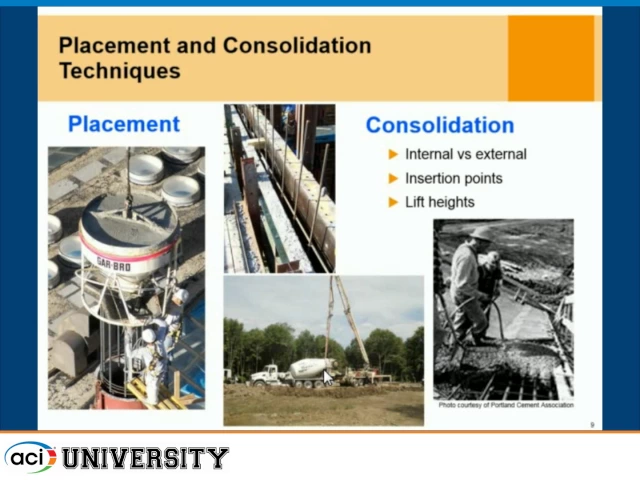
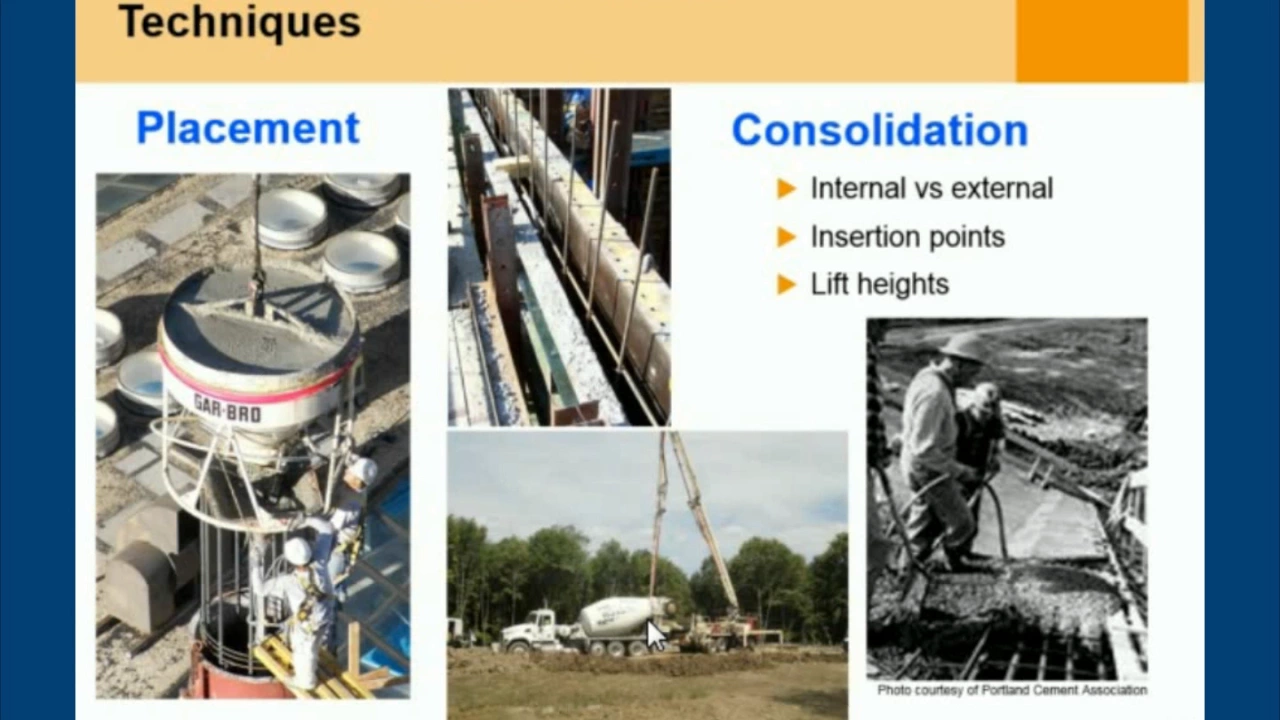
of that pump line below the surface of the concrete because now my placement technique can trap voids in the concrete I'm just letting that concrete fall in on top of itself how does my placement technique determine how long i do vibrate the concrete again all these things interact and people need to know how these things interact when you're on a job site or what if it's a thin wall what if it's a column so now we need to talk about again we talked about internal versus external consolidation what are the insertion points what's the spacing
and what are the lift Heights again if I'm trying to get rid of all those voids these are some things I can control let's talk a little bit about how these things interact so if my concrete gets more sticky my viscosity goes up the rate at which its going to consolidate or move is influenced by the dimensions of my member so if i have a tall thin wall versus at all more open wall that more narrow section as my concrete viscosity goes up it has a big influence on how well the concrete materials will move
past each other because remember when I'm consolidating concrete that's I pour this thin 1i fill it up to the top that concrete at the top is moving down right there's movement happening both the concrete and the air in a thinner section the viscosity of the system plays a bigger role than in a wide of section now all of a sudden I need to change my vibration time depending on the dimensions of the wall on my vibrator size or did the amplitude whatever I've got other things that I need to look at if I treat it
all the same I'm going to get different results depending on what's happening so the point is I can't treat it all the same right and then if I have a higher viscosity mix that doesn't want to move rapidly I'm going to build up a higher section that all of a sudden these air voids at the bottom have a longer distance to travel to get out again it's all these things are interrelated how quickly do I poor what's the dimensions of my form work and what's the rheology of my concrete mix all those things come to
to determine what i need to do with respect to my consolidation effort when it's not sec it's what i tried to do was put a real easy graphic there isn't it to understand the basic point is high consolidation effort that doesn't necessarily just mean time it could be time it could be lift height it could be frequency and amplitude all I'm saying is that when my plastic viscosity is high and my yield stress is high that's a much more difficult place I need to put a lot more effort into consolidation when they're both low meaning
its spin and runny and really fluid my efforts not as high these two other corners okay it kind of shifts around a little so that I put inside that box usually SCC's down your summer right SEC is a low yield stress flowing mix but it can have a wide range of disgust what about high performance concrete meaning low water cement ratio generally speaking we try to use a high dose normal type of minutes so meaning the yield stress level and my viscosity is typically high because of the low water so that kind of puts me
in this way but i can also creep into this more difficult range depending on the level of strength right again these are just kind of a relative thing to put an idea in place that's all this is meant to do Haven conakry typically low slump and relatively speaking higher water cement ratios than say a high-strength column X so again what we try to get at is how do my mix properties influence the effort that is can take for me to consolidate and then I can start to think about how the form dimensions come into it
should I have shorter lift heights how long should I vibrate and what should my insertion points be how close should they at the end of the day I'm building this building that's got this dimension to form right and I got to use this mix so what are the things that I can changed and ensure that my consolidation effort is correct again as we're going into a project need to think about how all of this stuff interacts thank you my question is how do you measure the viscosity and the illustris of the you should join committee
238 on the workability fresh concrete you can help us out there the primary way to do that today on conventional slump concrete is with a concrete rheometer and there are a number out in the marketplace it is not to standardized test today there are also systems and units that consider that they have the ability to measure rheological parameters inside of a truck as it's turning so there are some of those things and they're pretty new into the market but in terms of say what we would talk about here in the US is an ASTM standard
for the viscosity measurement of conventional slump concrete there really isn't one in SCC there's a relative way to judge that which is the t-50 time the flowing time but in conventional some concrete's really the only way to measure it today accurately as a concrete rheometer but you can know a relative idea all right if I go from a mix that's got a lower water content to a higher water content I know that my viscosity is going to go down all other things being equal you can have those rules of thumb relationship my question has to
do more with a testing preparation of cylinders and flex beams using use of a vibrator versus use of a conventional compaction with a rod are there any instances other than self-consolidating or you should not use the vibrator for preparation of test specimens well where you should not use consolidation effort whether it's a vibrator or a rod and hammer is out you're saying right eat right does conventionally it's a rod and a rubber mallet yeah but you're also allowed to use the vibrator certain certain type vibrator are there any conditions for instance with high performance concrete
or you should not use a vibrator I don't think so from my perspective known and I actually managed our concrete technology lab at basf for 10 years and we did beam tests and ce4 94s and all that sort of stuff and we vibrated all of our flex beams and things like that and so we never saw any issues there alright thank you