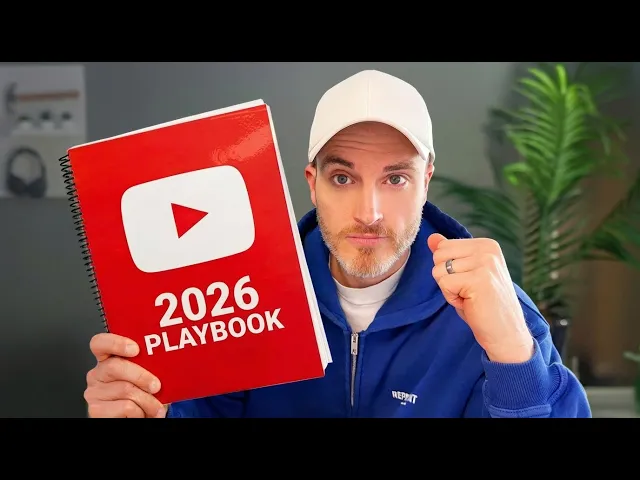
What if you could see what's actually working on YouTube right now before everybody else backed by data? One of the largest studies of 50,000 YouTube channels was conducted and it actually revealed 12 new shifts that are driving YouTube growth right now. This isn't opinion.
They actually spent $10,000 on this study and your cost is $0. I've got this broken down into the 12 insights based on questions. And this is one of the biggest questions that comes in all the time, right?
What is the best video length on YouTube right now? Well, there's actually an answer based off real data. So, check this out.
The ideal video length if your videos are going to be under an hour is between 16 and 26 minutes. The actual range in the study is for videos under an hour, the sweet spot is 15 to 25 minutes for your videos. And they revealed that the danger zone is 30 to 60 minutes.
Now, how does this data show up? Well, there's a lot of information on the page here, but right there you can see the danger zone. Shout out to Top Gun One with Tom Cruz.
And there's kind of a dip if your videos are in between 30 minutes to one hour. And what's fascinating though is if we get into longer videos like 150 minutes to 180 minutes long, then they really start to overindex with views. Fascinating.
And that's because longer videos means more watch time, which means stronger recommendations. So here's the big insight. How long should your videos be?
Well, longer videos that are over an hour tend to perform better on average. But if your videos are going to be under an hour, the sweet spot is 15 to 25 minutes. Now, this is probably the best YouTube tips video on the internet because this isn't just some like regurgitated info.
This is some new stuff. And shout out to Richard the YouTube Strategist from oneof10. com.
That's where this study came from. They sourced 300,000 viral videos, actual outliers, um 62. 6 6 billion views from 52,000 different channels and they spent $10,000 on this study and these are some of the biggest insights.
Here's the second one of 12. Number two, does the best video length depend on your niche? Well, fascinating.
Now, there's a lot of information on screen here, but for example, this channel, Think Media, is a tech channel and the ideal video length is 28 minutes. And the way they're studying that is again those you're getting more views, median views based on the length of the video. And it's it's a big range, but if you're doing gaming or entertainment or sports, 15 to 30 minutes.
Finance, business, or tech, 25 to 40 minutes. I will link to the study in the description so you can look into it for yourself. Or just rewind the video and zoom in.
But here's the thing. Most creators ask, "How long should my video be? " Here's the better question.
How long does my viewer expect the video to be? Because different niches, the expectation of the audience is going to determine really your ideal video length. And so the answer on video length is there is really no oneizefitsall.
You want to be thinking about viewer expectations about your niche. Gaming, commentary, entertainment. um niches consistently support longer form content.
Food DIY tutorial videos kind of peak with shorter to mid-length videos. Now, number three is how long should your titles be? This is where things get interesting.
And actually towards the end of the video, I'm going to be breaking down the four things you need to consider for coming up with a personalized strategy for you. But here is the interesting things when it comes to how long should your YouTube titles be. Well, here's the sweet spot.
Five, six, seven, or eight words before things really start going downhill hillill. That's not a lot of words. So, the shorter the title, the better.
Now, I was looking up some of the videos on our Think Media podcast channel. By the way, if you want a good weekly YouTube podcast, check out the Think Media podcast. And this video crushed and it has a total of six words.
The biggest legal mistakes creators make and it really outperformed a lot of our other videos. There's a lot of other things going on there as well. How about this one?
This one's eight words. The future of YouTube. Do this before 2026.
Now, this is interesting. This is a podcast interview, longer form. I mean, an hour and 30 minutes, but check out the title.
Genius personal branding tips with the guest interview. uh the person I'm interviewing. So that is a total of seven words if you count the W with the slash.
So titles around 30 characters get nearly 60% more views. 30 characters, that's short. So shorter titles are better than longer titles.
In fact, if you dig even deeper, you can see here that the just the the view count drops, that blue line in the middle, as the title gets longer. And then also right here where uh the red arrow is pointing, that's 70 characters, which is also important to know. This is where YouTube begins to cut the title off on certain displays.
You understand that, right? Like some even if you have a really long title, it gets like a dot dot dot. It gets cut off depending on where the viewer is engaging with the video.
So really, shorter titles are better. However, there's kind of a exception here, and that's education versus entertainment. So, what we're looking at here is that entertainment videos are the red line.
And if you're doing entertainment content, five words, six words is way outperforming. And then the line starts to drop pretty significantly, the red line, as you add more words to your title. If you notice on education, it's really not that dramatic.
I would still prefer to get more views on the left side, right? But it's it's more of like a flat line. So, title length matters far more for entertainment videos than it does for education videos.
Remember, entertainment content is clicked on on impulse. So, it creates, you know, you want to trigger curiosity, trigger emotion, you want to win attention. Here's the big takeaway.
Shorter titles win. And educational videos can be a little longer, but still shorter is still safer if you can condense your thoughts in the title. Keep it simple, clear, fast to understand.
And titles around 30 characters get way more clicks than long ones. Number five, should I put my face in the thumbnail? This is fascinating.
What they discovered in this report is that there's actually minimal difference in performance. So what you see in the education on the left, entertainment on the right, and education, if you have a face, it actually does a little bit better than not having on a face. And on entertainment, no face does better.
Okay, so no face does better in entertainment. No face does a little bit weaker in education. What's the big takeaway?
Is that actually pretty close. However, this shocked me. If you dive into this, I know this is small.
might need to zoom in on your mobile phone, but let's just look at business content. So, business content that has a face does not as well as no face in business content. Now, here's a couple disclaimers, right?
You have to start thinking about there's faceless channels. Maybe they're talking about repurposing content, other people's content, and people are just clicking on the topic itself and they want to learn something versus they're clicking on your face because you have some level of awareness as a personal brand. You should consider those things.
But let's dive a little bit deeper. If you look at lifestyle and vlog, of course, having a face outperforms not having a face, probably because they know you. However, lifestyle and vlog is also probably because they could relate to you.
So maybe if you want to reach new people with your vlog, you know, people watch people of all kinds of different shapes and sizes, but like if I'm a particular millennial mom that's blonde with five kids shopping at Costco, I might follow other creators that I can kind of relate with. So seeing who you're following matters in lifestyle and vlogging. Whereas, you know, even in tech down here, still having a face outperforms not having a face, but it's it's pretty close.
Now, this is even crazier. Depending on how many faces, no face outperformed one face, but if you've got two, three, or four faces, it jumped up even higher. So, that's interesting.
why the uh one of 10 who did this study and again I'll link to the Twitter of it and you can also actually download the full thing uh in the link of the uh bio of the account you know they revealed that if there's multiple faces it could be there's a moment happening um a reaction of conflict maybe or multiple people in the conversation it's going to be interesting there's something happening there and again this is based on real data not just somebody's opinion so should you have a face in your thumbnail Well, it's going to depend on your niche, but overall there's minimal difference in performance. If you are a finance creator, you're doing business or education, a face in general can signify trust, like I'm going to learn from a person and it's not just some like Chad GPT AI script. Whereas, if it's gaming, it's maybe, you know, Donkey Kong in Mario Kart World and that's like the hero speedrun.
You're actually seeing the game. You're seeing the character. If it's like a movie trailer, a movie reaction, maybe it's the, you know, the movie trailer of some kind.
And so, what's the star? And we learned that two faces can outperform one face in a thumbnail. Number six, should I add text to my thumbnail?
This these will should rock you. Let me know if you're surprised and hit the like button if you like content like this. Um, median views by text versus no text.
No text radically outperformed thumbnails with text in them. In fact, thumbnails with text get 19% fewer views on average. Wow.
So, you should try and attempt to publish thumbnails with no text in them. Now, look at this. You can see this strong amount of median views hold strong.
If you do include text, it is only up to 7% of the thumbnail. Now, let me put that in perspective. That's not a lot of the thumbnail.
That is what 7% is. The little red box of an entire YouTube thumbnail. Basically, nothing.
So, the big takeaway was if you can keep text out of your thumbnail, views go up, clickthrough rate goes up. You know, on Think Media here, um, we do a lot of tech content and we have been always attempting to have no text in the thumbnail. Great example, best webcams for every budget, no text.
Here is a good example of just one word that looks like about 7%. It's kind of almost perfect to what it just said. Maybe that's like 10% and then a little arrow pointing to it.
So like a simple emotion, something about, you know, whatever. And a lot of times, again, we're striving to go no text. Let the title do the heavy lifting.
You could see some stacked principles here. This Canon R six video, one, two, three, four, five, six, seven, eight. Eight words.
So trying to keep your title short, punchy, and still clear. But when necessary, remember in education, you can certainly go longer with the title because there's a different education viewers have intent to learn usually where entertainment viewers are really driven off emotion. You're trying to get the click-through rate, get suggested, and browse features.
And here's a great thumbnail that does the storytelling. I think that's what we're after. There's no text in the thumbnail title, I tested 36 wireless microphones.
here are the best in a 14x outlier here on our Think Media channel. So, the question of should you include text in your thumbnail, usually no. Show the idea.
Don't label the idea. If you do use text, keep it under 10 characters, not words, 10 characters. And make it tiny or keep it really minimal.
And bottom line, let the image do the talking. Number seven, how bright should your thumbnails be? Your thumbnail should be bright is the answer.
The brighter the thumbnail, the better. And they did a bunch of ninja stuff based off of grayscale zero and measuring the thumbnails. And ultimately, like natural brightness 99 to like 100 is good, but a little bit brighter, like if you go into Canva or Photoshop, right?
and a little bit brighter than even 100% is where the uh higher performance was when it came to how bright should your thumbnails be. Bottom line, brighter equals better. Darker thumbnails get skipped.
You want to pop in the feed. They're easier to see. They get more clicks.
Number eight, what thumbnail colors work best? This is a gangster report, huh? Are you enjoying this?
Um, ultimately cyan green and yellow orange performed the best. you see in the middle there. Now, quick caveat for this whole report is, you know, I think you could overanalyze some of these things because of course I want to get the uh median views of 63,000 or 62,000, but you know, I'll still take 47,000 over here with like a white background or something.
So, you know, be realistic. However, virality is not accidental. Like, these things do matter.
So, understanding that these colors win, cyan, green, yellow, orange, because they pop against YouTube's most neutral feed, mostly neutral feed, they signal energy and clarity without visual fatigue. I was surprised that red perform so poorly because some marketers like use red like it's really going to get attention. Like that'll shock people, but maybe there's resistance to that, you know?
Let me know your thoughts about these um insights. And when you think about where YouTube is consumed, are people in dark mode? Are they in white mode on their device?
You want to preserve contrast even after YouTube's compression. So the bottom line for what colors win most often in thumbnails, green, cyan, yellow, orange. Now number nine is, do numbers help in your title?
Should you put a number in your title? Well, videos with numbers get 11% fewer views on average. Okay.
So, if a title has numbers, the median views across the niches and the uh videos they studied was around 42,000. With no numbers, it went up to to um 48,000 views. So, out of the study, 35% of the videos in the study included numbers in the title.
So, three out of 10 videos that they studied had numbers in the title. But what it revealed was that if you can get the number out of the title, you can get your views to go up. And so why is that?
Well, numbers signify lists, explainers, tutorials, but they ultimately they they they clarify structure, but what people click on YouTube videos for is emotion. And I think you could apply this in education as well. A number is like, oh, I got to actually learn some things.
Now, you're watching this video cuz you want to learn some things, but you know, usually want to click because of the emotion and then you get into the things you're going to learn. Like, it's okay to have a list in your video. So, if you can package the video without a number, it's interesting.
Then, don't include numbers in your titles. People click for emotion, not structure. Numbers can still work, but they're not a cheat code.
And by the way, these rules are meant to be broken because of course, you know, if I tested 36 mics, that's part of the story. You know, if if you click on the fact I visited 13 states. So, take this information with a grain of salt, but also understand that the knowledge of this video, I'd probably even re-watch this video and save it just because it's it's pretty technical, but this is real stuff.
Number 10, what emotions get the most clicks? Hm. So across their study, the emotions that get the most clicks were joy and funny content, second controversy, third anger, fourth, fear, and then nostalgia, curiosity, relatable, sad, and desire.
Desire is way down there. And this is a well-known marketing principle that most people will avoid pain much more often than they will pursue pleasure. And so we have this desire and this thing we want to achieve.
Of course, we click on that, but more often we're going to click on, oh, pain could be coming or change is coming. So, that's super interesting. In fact, you know, you talk about fear.
Uh, one of the videos that popped off for us, 25x outlier, was why YouTubers are getting sued. Fear and controversy. The biggest legal mistakes creators make.
Also, fear. Am I making those legal mistakes? And again, what is this?
Six words. one, two, three, four, five, six words. So, a lot of best practices proving true.
And then, of course, the strength of the topic itself. So, the answer to this one is what are the top emotions that get the most views is humor, anger, and controversy. It doesn't mean that's the only content you should create, but it does mean that you should create some of that content.
And your title's job is not to explain everything. It's to make people feel something. Number 11.
Are negative titles better than positive ones? We just touched on that, but check it out. In education on the left, positive titles did the worst.
Neutral did the next best, and then negative did the best. In educational content, in entertainment, it was the same thing. Positive entertainment titles did the worst, neutral did better, and negative did a little bit better.
And so ultimately negativity in titles generally performs better. And whether that's educational or entertainment content. And you might go, well, you know, I don't just I don't want to go into the doom and gloom or I don't want to be that type of creator.
Well, great. That's totally fine. But it might be a tool in your tool belt that you want to use sometimes.
And there might be a way to package things where you can still be aligned with your ethics, your values, and like the kind of content you want to make. Well, like also what we'd call ethically click click baiting. You know, clickbait insinuates deception.
But if you're ethically click baiting, you're ultimately skilled at getting people to click on your content, but delivering in the video in such a way where it's all all authentic and not deceptive in any way. And so I thought about this, you know, the Think Media team packaged a really good video about the Roadcaster Video S and you know, creating a little bit of drama. Did Road just destroy the ATM?
Of course, that's one of the best switchers historically. Road dropped a new product. So the positioning of the video kind of came into, you know, somewhat of a negative or a dramatic approach.
And that's a great way to package something. And maybe 99% of tech creators wouldn't do it that way. Hence, you know, we continue to uh have high performing videos here at Think Media.
Answer. Should you have negative titles or do negative titles perform better than positive ones? Yes, they most of the time perform better because negative titles create tension.
They trigger curiosity and they feel more urgent. Neutral is safe. Negative is clickable.
Now, in just a second, the big takeaway here is the question of how do I apply this to my own channel and how do I apply all these things whether I'm in entertainment or education. I've got four things we all need to know. I'm going to share that in just a second, but let's hit number 12 based on this report.
What niches blow up easiest right now? It's a juicy question. What are the best channel topics if you want to blow up easiest?
There's actually a formula for this I'll share in a second, but here is what they shared in this report. You want to be in the uh upper right towards the top. So median views is on the left, that's the y- axis, and the outlier score is on the xaxis.
So what are the if you're going to have breakout videos consistently, you want the best of both worlds. And so in the top right, what you see is movies and TV. You see music, you see sports up there, and then you also see other.
Well, what does other mean? Well, other includes uh animals, politics, history. Now, there's a really strong insight we're going to learn in just a second, but what these combine is strong baseline demand, frequent external trends, and a high outlier potential.
A lot of fancy words. So, you want a lot of baseline demand. How big is the niche?
How many people are interested in this? Frequent frequent trends. If I was taking notes, that's what I would write down.
Does my niche have frequent trends? And is there a high outlier potential in my niche? The best ones combine these things.
So trends manufacture breakout videos. Massive insight. So if your niche has frequent trends, you have the opportunity to have frequent breakout videos.
For example, in business and finance, usually that wasn't one of the hottest blowup niches. And I know a lot of people that subscribe to us are in that niche. They have lower medium views, lower outliers if you're in business and finance.
And that is that doesn't mean it's a bad thing. It just means that, you know, finance is way down in the lower left there. Business is on the right side, a little bit further along.
And it just means that it's harder. So, it's like depending on the channel topic you select, breaking out consistent consistently might be a little bit more difficult. So, here's the answer to the question.
What is the best niche to start? Well, let's summarize it into a formula. You want a big audience and constant trends.
You want a big audience. There's a marketing term, a business term called TAM, and it stands for the total addressable market, which speaks to the size of the market. How big is the potential audience?
And then the second piece of the framework or this formula is is there consistent trends happening. Is there constant trends happening in that topic? Because if there is, you constantly have things to talk about and new things to talk about and then there's a big enough audience that even if competition is fierce, there's a big audience for it.
And so in the report they talked about movies and TV, music, politics, animals, history. And yes, trends happen in business and finance. But you always got to know that even people that are pursuing building a business or, you know, personal development and stuff is always way smaller than people that are looking for movie content or history content or animal content.
You know, what are the coolest snakes on a plane? You know what I mean? And so one of the big insights here is virality isn't actually random.
Like it really can be architected. And so this report reveals insight is step one. And I got four ways to apply this for you personally, but insight is step one.
Like knowing these 12 things, but execution is step two. Knowing is not enough. Most people fail because they actually fail to apply this information to their channel.
And this includes things like delivery. Can you talk on camera? Confidence, structure, consistency.
So, by the way, if you're committed to doing YouTube this year, we have an event coming up. It's three days. It's free.
It's going to be amazing. It's called the YouTube growth sprint. It's all about helping you get results fast.
There's a link in the description if you want to register. ytsprint. com.
Three days of live training of a community. And we're not just talking about what works. We're talking about how to apply it.
It's a kick in the pants. It's lighting a fire under your butt. We're going to go deep on making videos people actually want to wa watch.
How do you actually structure your content so that your retention doesn't fall apart? How about speaking on camera? How about making videos in the first place?
and how do you actually build momentum instead of just posting random content? So, this is going to be a lot of fun. And by the way, we do a ton of giveaways.
We give away software, cameras, light kits, microphones, all that kind of stuff. So, you can register for free. ytsprint.
com. You know, it's our biggest event of the year. We always do that stuff in January.
Highly recommend you register, attend. It's going to be fun. And uh ytsprint.
com is where you can get registered for that. If YouTube matters to you, matters to you this year, don't sit on the sidelines. Get registered.
It's completely free. Now, I talked about four things. Here's what the right YouTube strategy depends on.
Number one, your niche. So, education or entertainment. That's number two, intent.
Education or entertainment. So, what's the right YouTube strategy for you? Entertainment is like five words in the title, simple concept, you know, simple storydriven thumbnail.
For educational creators who are sitting down and teaching someone to code, you could be getting millions of views or ranking videos in an entirely different way. You know, you might want to do an AI tutorial that's like how to master chatgpt in 2026, GPTs projects. You you might want to even still tap into searchable aspects of YouTube.
So, it depends. So, what niche are you in? What's the intent of your audience?
Are you an entertainment or education? That's the question of the day. Do you have an education channel or an entertainment channel?
Let me know. Also, your channel size and then also the viewer expectation. Very underrated insight.
What is the viewer expectation? Meaning, how well do you understand your audience? And here's some homework.
People hate homework, but I'll give you it anyways. Have you studied your niche? So remember, we want to look and and see that the median amount of views that different topics get varies depending on niche or channel topic.
So if you're out here thinking, you know, you're making 22-minute videos or an hour and a half videos, does your niche support that? What are the best practices and video lengths and title formats of outliers in your niche? These are really good questions to ask.
So the right YouTube strategy depends really on dialing in it personally for you. It's one of the things we'll be doing on the YouTube sprint. And this report reviewed a few other a few other deeper things.
Again, want to shout out one uh of 10 and um definitely dive into the report more. It's a full like a 100page thing. And so there's a few other insights that I sh saved for the end.
And one of the kind of interesting things that the whole report reveals is that creators are optimizing for what's easy to control, not what actually matters. Here's what I mean. Most people's videos on YouTube overall are 4 to 10 minutes across the platform, but peak performance is closer to 18 to 24 minutes.
So, it's like the majority is still just doing what everybody's doing, but the data shows like 4 to 10 minutes. Again, you can break the rules, but like 18 to 24 is better. Like, are you making data driven decisions?
Well, now you have this video and this report. 84% of thumbnails include text. 84% of thumbnails include text, but text reduces views by 19%.
So, creators are optimizing for what's easy to control or what everybody's doing instead of what actually works. Titles average 10 words across YouTube, but performance drops sharply if you go longer than six words, exception for educational content. So, really, this reveals uh like creators copy norms.
They don't copy what works. It's smarter to do what works. And then one big takeaway is lower uh cognitive load wins everywhere.
Let's define what that means. A lower cognitive load wins everywhere. So title length, the shorter it is, the easy every word adds more cognitive load, makes your brain work harder.
So all of us education or entertainment should ask how can we simplify our concepts and make the viewer work less to be able to click on this video. So creating a lower cognitive load wins across niches. That's your title length.
It's your title character [snorts] count. Reading ease scores like how easy it is to read text in your thumbnail. Thumbnail text size and even fewer characters in thumbnails.
If you're going to use titles, bottom line, it's like simple packaging, okay? Simple packaging and you are responsible for your own content. If you oversimplify too far, you might lose clarity.
So, it's like this process that we have as entrepreneurs and creators to refine our concepts down to make them as simple as possible just to reduce cognitive load because lower cognitive load wins everywhere. To summarize, make it longer than people expected. Long videos are crushing YouTube.
Make it simpler than you think and make it easier to click on than everything else around it. And by the way, we've been covering how to get views, but now let's talk about how to make money. I actually did a video on how small channels are making $50 per day.
It's already a 7. 8x outlier. People love this video.
You can click or tap the screen to watch it. My name is Sean Kel, your guide to building a profitable YouTube channel.