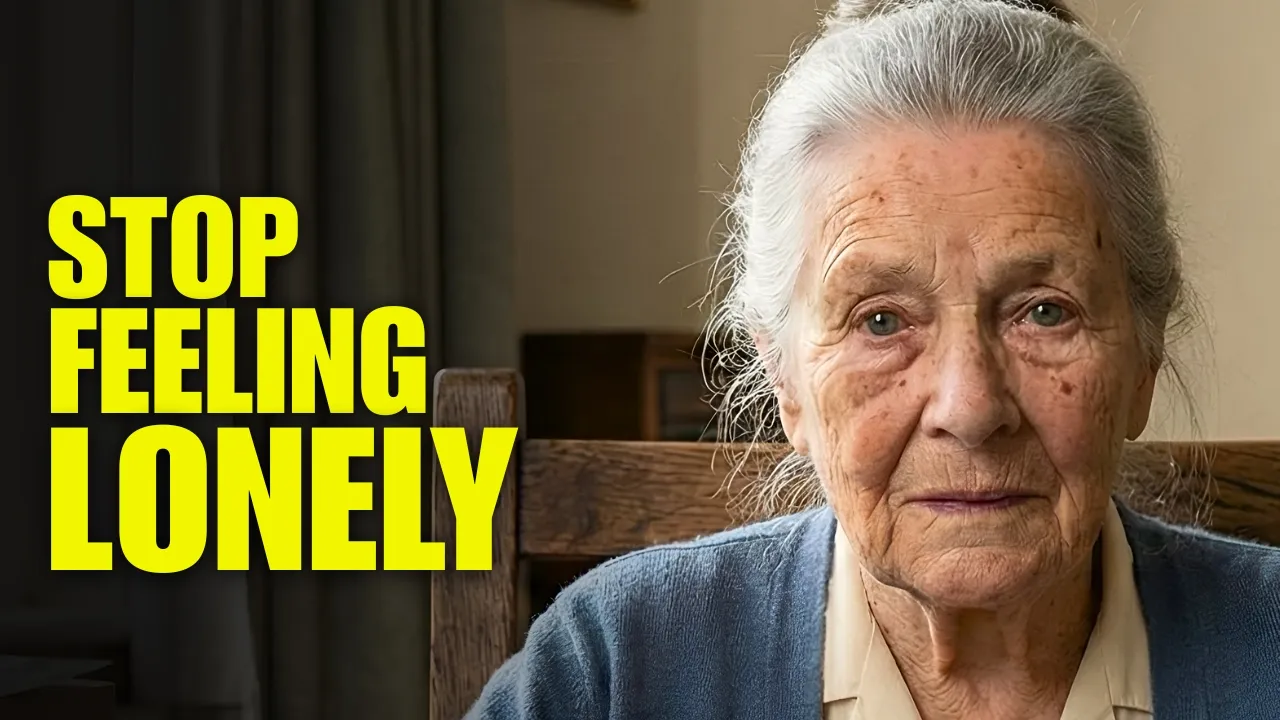
I'm 87 years old and I've lived alone for 22 years. And I need to tell you something that might surprise you. I've never been lonely, not once.
My name is Iris. I'm 87. And when my husband Jack died in 2003, everyone expected me to fall apart.
My children wanted me to move in with them. My friends said I'd never manage alone. The neighbors kept checking on me like I was fragile, like being alone would break me.
But here's what nobody understood. I wasn't afraid of being alone. I was ready for it.
And these last 22 years living by myself have been some of the best years of my life. Not because I didn't love Jack. I did, but because I finally learned the difference between being alone and being lonely.
And once you understand that difference, everything changes. I need to share what I learned because I see people all around me who are terrified of being alone. Who stay in bad relationships because they think anything is better than loneliness.
Who fill every moment with noise and people in activity because silence scares them and they're suffering. They're surrounded by people and they're more lonely than I've ever been sitting by myself in my quiet house. So, let me tell you my three tips for living alone without feeling lonely.
These aren't things I read in a book. These are things I figured out over 22 years of actually doing it, of making mistakes and learning and finally getting it right. Tip number one, understand that alone and lonely are completely different things.
This is the most important one. Most people think if you're alone, you must be lonely. But that's just not true.
Loneliness isn't about how many people are around you. It's about connection, about feeling known and understood and valued. You can be alone and perfectly content because you have real connections even if they're not constant.
Or you can be surrounded by people at a party or living in a house full of family and feel desperately lonely because none of those connections are real. I learned this when Jack was still alive. We'd go to these big family gatherings, dozens of people, lots of noise and activity, and I'd feel so lonely in those rooms because nobody was really talking to anyone, just surface conversations.
How are you? Fine. How's work?
Fine. Nobody actually connected. But then I'd be home alone reading a book and feel completely fine because I had real connection.
I'd talk to my daughter on the phone once a week and actually tell her how I was doing. I had two close friends I'd meet for coffee and have real conversations with. That was enough connection for me.
So when Jack died and I was suddenly living alone, I didn't lose my connections. I still had my weekly call with my daughter, still had my close friends, still had people who knew me and cared about me. I just didn't have someone in the house with me all the time.
And I realized I didn't need that. The constant presence of another person wasn't what made me feel connected. It was the quality of my relationships, not the quantity of time spent with people.
Some people need more social contact than others. That's fine, but figure out what you actually need, not what society says you should need, not what other people need. What do you need to feel connected?
For me, it's those weekly calls with my daughter, coffee with my friend Margaret once a month, my book club every six weeks. That's it. That's enough real connection to keep me from feeling lonely.
The rest of the time, I'm alone. And I'm fine. Better than fine.
I'm content because I'm not confusing being alone with being lonely. Tip number two, build a structure for your days. When you live with other people, your day has built-in structure.
You wake up together, have meals together, go to bed together. Your schedule revolves around another person's rhythms and needs. When you live alone, all of that disappears.
And if you're not careful, the days start to blur together. You wake up whenever, eat whenever, do things randomly with no pattern. And that emptiness, that lack of structure that can make you feel lost.
So you have to create your own structure, your own routines, your own rhythms. I get up at 7 every morning, not because I have to, because I decided to. I make tea, the same kind every day.
Earl Gray with milk. I sit in the same chair by the window and I watch the birds at my feeder for exactly 20 minutes. Then I do the crossword puzzle from the newspaper.
Then I have breakfast. Oatmeal on weekdays, eggs on Sunday. It sounds boring, maybe rigid, but it's not.
It's grounding. It tells me this is a real day with a shape and a purpose. I'm not just drifting.
When Jack was alive, we always had dinner at 6 because that's when he liked to eat. After he died, I realized I wasn't hungry until 7 most nights. So, I changed it.
Started having dinner at 7. my choice, my rhythm that felt powerful, not lonely, powerful. I also give myself things to look forward to each week.
Tuesday, I go to the library. Thursday, I have coffee with Margaret if she's available. Saturday, I deep clean one room in the house.
Sunday, I call my daughter. These anchors keep me from feeling like the days are just passing by. Each day has purpose, has structure, has something that makes it different from the day before.
Without that structure, living alone can feel empty. With it, living alone feels full. Tip number three, have something that depends on you.
This is the one that saved me. After Jack died, I felt untethered, like I could disappear and nobody would notice. Not for days, anyway.
That feeling was dangerous. made me feel like I didn't matter. So, I got a cat.
Her name is Beatatrice. She's orange and fat and extremely demanding. And she expects to be fed at 7:15 every morning.
If I'm late, she sits on my chest and meows directly into my face until I get up. That cat gives me a reason to get out of bed, even on days when I don't feel like it. And there are days I don't feel like it.
days when I'm tired or sad or just feeling the weight of being 87 years old. But Beatatrice doesn't care. She needs breakfast.
She needs her litter box cleaned. She needs attention. And I get up and take care of her because something living needs me.
It doesn't have to be a pet. Could be plants. Could be a garden.
Could be birds you feed. Something alive that counts on you showing up. I also started keeping a weather journal.
Every day I write down the temperature, what the sky looked like, if anything interesting happened with the weather. It's silly maybe, but it gives me something to pay attention to, something to notice. Because when you live alone, you need things to notice, things to pay attention to.
Otherwise, the world gets very small and you get stuck in your own head. And that's when loneliness creeps in. Having Beatatrice and my weather journal and my birds to watch, these things keep me engaged with the world, keep me noticing things outside myself, keep me from disappearing into isolation.
These three tips, understanding the difference between alone and lonely, building structure into your days, having something that needs you. These are what kept me from being lonely for 22 years. But I want to be honest about something.
Living alone isn't always easy. There are hard moments. Times when I wish I could turn to someone and share something I just saw or thought.
Times when I'm sick and I have to take care of myself. Times when something breaks and I have to figure it out alone. And I miss Jack still.
After 22 years, there's an empty chair at the dinner table that never stops being empty. I think about him every day. Wonder what he'd say about things.
Mr. laugh. But missing someone isn't the same as being lonely.
Grief isn't loneliness. They're different. I carry Jack with me.
He's still part of my life even though he's not here. And I also have a full life without him. a different life than when he was alive, but still full.
My children worried about me when I refused to move in with them. Said I was being stubborn, that I was too old to live alone, that something might happen to me and nobody would know. Maybe they're right.
Maybe something will happen one day. Maybe I'll fall and won't be able to get up. Maybe I'll have a stroke and die alone in this house.
But I'd rather have that than give up these years of living on my own terms, of waking up when I want, eating what I want, spending my time how I want, of being alone but not lonely. Some people are built for solitude. I'm one of them.
Took me 65 years to figure that out, but better late than never. I'm not saying everyone should live alone. Some people really do need more constant company.
That's fine. But if you're someone who actually likes quiet, who likes your own company, who finds peace and solitude, I want you to know there's nothing wrong with you. You're not broken.
You're not missing something everyone else has. You're just built different. And that's okay.
I'm 87 years old. I've lived alone for 22 years. And I've never been lonely because I learned these three things.
The difference between alone and lonely. The power of structure. The importance of having something that needs you.
And now I have a life that's mine. Quiet, simple, full of small rituals and routines that matter to me. Full of enough connection to feel known without feeling crowded.
Full of purpose even in small things like feeding my cat and watching my birds and writing about the weather. It's not the life I expected, but it's a good life. Maybe even a great life.
And I'm grateful for every quiet morning of it.