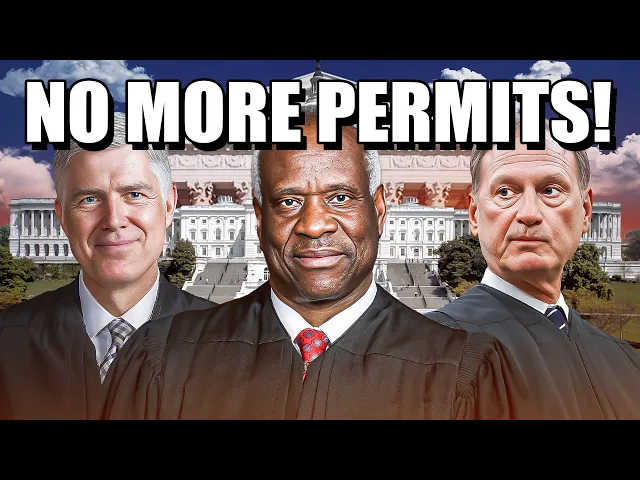
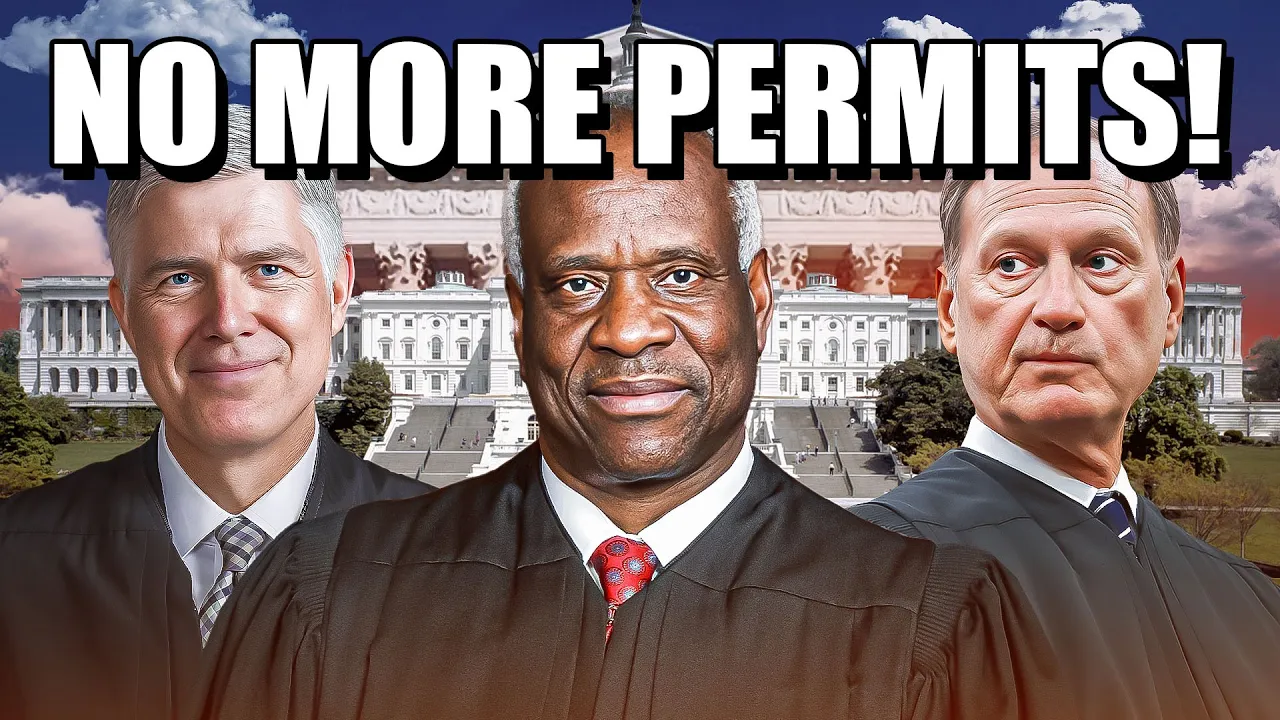
So the DOJ, AG Bondi, 25 states, and now multiple toy organizations have joined together to support the fight against statewide concealed carry ban laws. And now the state here is going to have to respond in front of the Supreme Court. So let's break down what is happening.
Now, before we jump into this video, I want to ask you guys if you want to support the channel for free, if you just want to give free support to the channel, please consider subscribing to the channel. That of course helps the channel to grow. It also tells the algorithm that you appreciate this type of 2A content.
And then just drop a positive comment down below. again because that tells the algorithm that 2A content is valuable and to share my video and other videos to other people. So, as I mentioned in the intro, in this video we're going to be talking about a very critical challenge which is currently in front of the Supreme Court.
This challenge here impacts multiple states like New York, California, Hawaii, and others who are currently facing attempts to ban concealed carry statewide. This case comes out of Hawaii and it's the Wolford versus Lopez case and it's currently seeking emergency Supreme Court intervention and it's gained a lot of support and momentum. This challenge revolves around a preliminary injunction and the Ninth Circuit who found that the states here could put in place catchall public property bans and essentially make permits useless even if you got one.
Recently, to the surprise of many, the DOJ and AG Bondi have stepped up in support of this challenge and they're pushing the Supreme Court to grant review to this case. The Trump administration in the AG's office said that it's time for the Supreme Court to review these types of statewide concealed carry bans and it's time for them to review what's happening in the lower courts and how states are directly defying what the Supreme Court said in Bruin. They also snuck in a mention saying that it's time for Supreme Court to review rifle magazine bans as well and what's going on with those type of statewide restrictions.
This effort has been joined by 25 protoayaway states and also multiple toy organizations like NHGR, GOA, CRPA, A&G RPC and others. And all of this is revolving around the defiance that happened directly after the Supreme Court issued the 6 to3 decision in Bruin. And now this case is heading to the Supreme Court.
It's in front of the Supreme Court on emergency basis. And the state of Hawaii has a lofty task now of rebutting all the arguments that were put together not just by the plaintiffs here in this challenge but also the Trump administration 25 states and multiple tour organizations. Now this case is a challenge to Hawaii's new laws on concealed carry which were passed in response to brewin.
This law, like others, tried to add more restrictions to concealed carry and create a default rule where individuals can carry firearms on private property only if the owner of that property provides them express permission. Keep in mind this was done after May issue licensing schemes were struck down. And also keep in mind that Hawaii had already had in place a really bad permit system where they had issued only a handful of permits over 18 years.
Now, on review, a federal district court issued a temporary restraining order, also known as a TTRO, which was later then converted to a preliminary injunction. The district court determined that there was no history to support this type of catch-all provision that was put in place in the state of Hawaii. This case then made its way to the 9th Circuit Court of Appeals along with the California carry ban case, which dealt with California's SB2.
And California put in place very similar restrictions. You know, those were not the only states. You had New York, New Jersey, and others who did almost the identical thing.
Now, the Ninth Circuit on review upheld the catchall public property ban and reversed the injunction issued by the lower court. The Ninth Circuit relied on older restrictions on hunting on private property to support the statewide concealed carry ban that was going on in Hawaii. After that, the plaintiffs then asked for the Ninth Circuit to review the case on Bon, but that was denied by the Ninth Circuit.
Now there were multiple judges like judge van Djk who was joined by other judges on the ninth circuit. In that descent they kind of called out their colleagues in the ninth circuit and they said that of course the ninth circuit once again is treating the second amendment like a secondass right. That has now led this case to seek emergency supreme court intervention.
Now this case like other preliminary injunction cases and other interlocatory cases has a long shot of getting Supreme Court review. But this case now has a lot of momentum and a lot of support behind it because like I mentioned the DOJ the Trump administration jumped in in support of this challenge and you also have 25 states who said that it's time for Supreme Court to review this issue. In the recent amicus brief filed by the United States government they stated that the nearcomplete ban is flatly inconsistent with Bruin and the long history underlying it.
Bruin recognized that an ordinary law-abiding citizen has a general right to publicly carry arms for self-defense. Just as states may not limit that right to those who show a special need for self-defense, states may not limit the right to those who aimlessly wander the streets. So there the DOJ is pointing out that the way that the state has structured this whole, you know, law here, it makes it so that you can only lawfully carry if you're just aimlessly wandering the streets.
But that's not even necessarily true because some of these restrictions also, you know, regulate sidewalks, parking lots, you know, areas attached to some of these buildings. So maybe that's not even lawfully true either because even if you're wandering aimlessly along the streets, you could still get caught up and violate this law. Now, one of the interesting things in this brief filed by the Trump administration was that the government pushed the Supreme Court to take this case on the plinary injunction stage despite the court's recent track record.
This is important because we've seen the Supreme Court generally avoid interlocatory two-way cases. But the Trump administration is telling the court that there is no general dispute here. You know, the legal dispute here is pretty much already on the merits.
Nothing will get resolved by, you know, doing the merits analysis at the lower court level. So, the Supreme Court might as well actually review this. Now, the government also snuck in a mention that it's time for the Supreme Court to finally review other issues like rifle bands and magazine bans.
and they should do that when they get a proper case in front of them and stop all the statewide bans on those items. Now, these arguments are echoed in the brief that was filed by the 25 protoy states and they're saying yes that the Supreme Court should grant review to this case even though it's in an interlocatory posture. In the brief filed by the 25 states, they argue that Breuan reassured law- abiding gun owners that the Second Amendment was no longer a secondass right.
But lower courts have largely failed to follow through on that promise, resorting to manipulative onbong practices, ahistorical interpretations of covered arms, and improperly calibrating the level of generality for Bruins inquiry. These incursions on citizens publicary rights will continue to grow unless this court intervenes. They go on to state that each of these pus chips away at the scope of citizen second amendment rights and if unchecked by this court Bruins reassurance will be little more than an empty promise.
Now the two-way organizations like CRPA go argue in support of the case that if this court denies there will be no meaningful right to carry in Hawaii for at least several years while the litigation proceeds. The Ninth Circuit's hostility towards the Second Amendment is well documented, having recorded an undefeated 50-0 record of upholding gun laws before Breuan. Breuan changed nothing for the Ninth Circuit, and the Wolfford ruling is not even the most recent example of the court giving a judicial middlefinger to this court.
Unfortunately, the Ninth Circuit has been encouraged by this court's reluctance to take Second Amendment cases in an interlocatory posture. But if there was ever the perfect case in which to make an exception to this court's preference of not deciding interlocatory matters, it would be this one. So here the organizations like the 25 states and like the Trump administration say that even though this is in an interlocatory posture, the Supreme Court should still grant it right here and now because there's really no merits disputes.
Yes, you can get a final determination by the lower court, but we all know how that's going to play out. We know how the Ninth Circuit is going to rule on this. The Ninth Circuit kind of said that there was no legal merits issue here.
So, it's pretty much right already for the Supreme Court to review. Now, in this case, Hawaii's response is due in just a week. So, next week, Hawaii will have to respond, file the reply brief to everything that was argued, not just by the petitioners, by the plaintiffs, but also by the Trump administration.
Um, they're going to probably have to address what happened with the 25 states in their briefs. And it's going to be interesting to see, you know, what organizations jump in to support the state of Hawaii. Maybe you're going to have other states, these anti-gun states like California, New York, New Jersey, Maryland, who jump in and say, "No, you know what Hawaii did was proper.
You should defend these laws. " They're probably going to argue that this case is not right for review. It's in an interlocatory posture.
Supreme Court punt this issue. Let the lower courts and the ninth circuit review this on the final merits. You know, that's typically what they tend to argue.
Um, so I see that happening. I'd see Hawaii trying to make those type of arguments. And then we're probably going to see also u many anti-gun organizations like givers in every town file a brief in support of the state of Hawaii saying that yes Supreme Court should not grant review to this case.
But this is still great news coming out of the Trump administration. We've seen them course correct multiple lawsuits and we've seen them kind of generally get behind concealed carry issues. Recently they put out a notice that they're going to be taking a look at LA County's permit system and them not issuing permits and delaying.
So this issue of concealed carry is a high priority for the Trump administration probably for the new 2-way task force. So that's probably also why they jumped in on this lawsuit saying that it's time for Supreme Court to grant review to this case even though it's still at a preliminary injunction stage interlocatory. Uh they're saying that really doesn't matter.
All the defiance is going to continue. The final merits determination this case doesn't really matter and it's time finally for the Supreme Court to kind of get up, get off their butts and finally review this case. So, that's what's going on in the critical permit case in front of the Supreme Court.
The state of Hawaii will now have to file the response in just a week. So, as we get more information, as this develops, I will let you guys know. But, as always, thank you all for watching.
Don't forget to like, comment, and subscribe. And don't forget, this nation was built scholars, and this nation will be maintained by scholars.