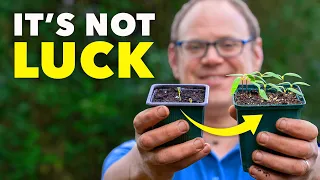
good day I'm Mark from self-sufficient me in this video I'm going to show you how to directly sew tomato seeds into the ground or a garden bed for maximum success let's get into [Music] it firstly why would you want to sew tomato seeds directly into the garden bed instead of into pets for planting out as seedlings later well directly sewing tomato seeds into the garden has several advantages such as stronger root development tomatoes grown from direct seeding develop deep undisturbed root systems making them more resilient to Drought wind and pests no transplant shock seedlings started
in punet or trays need to be planted out and this transplanting can cause problems like stress or shock because you disturb the root ball slowing the plant's growth or in severe cases even killing it you get more of a normal growth cycle have you heard of the expression leggy plants well this can happen when seedlings grow too long in a protected environment like a greenhouse waiting to be planted out into the garden direct sewing seeds germinate and grow Compact and strong immediately adapting to the Natural outdoor environment leading to Hardy plants that are better adjusted
to local conditions there's no need to harden the plants off you know how you've been advised to take a Seedling in its punet and then remove it from the greenhouse for a few hours put it back in expose it to sunlight really slowly so that it can adapt to the conditions and then finally after few days or sometimes a week you can then plant it in its outdoor location well well you can skip all of that and finally direct sewing is less work and lower cost there's no need for seed trays grow lights heating mats
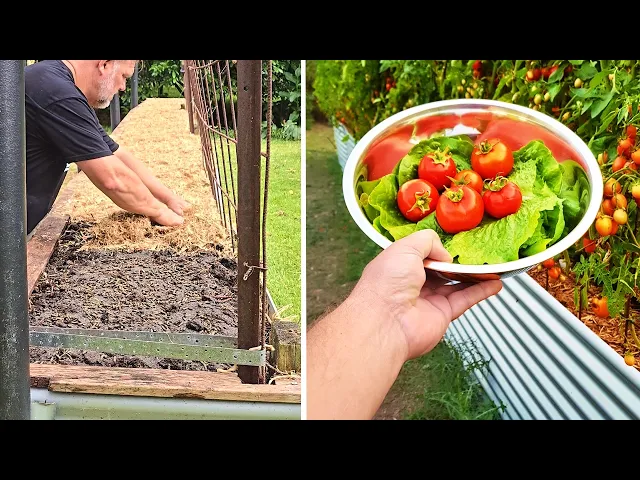
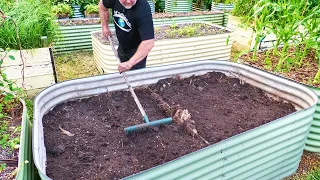
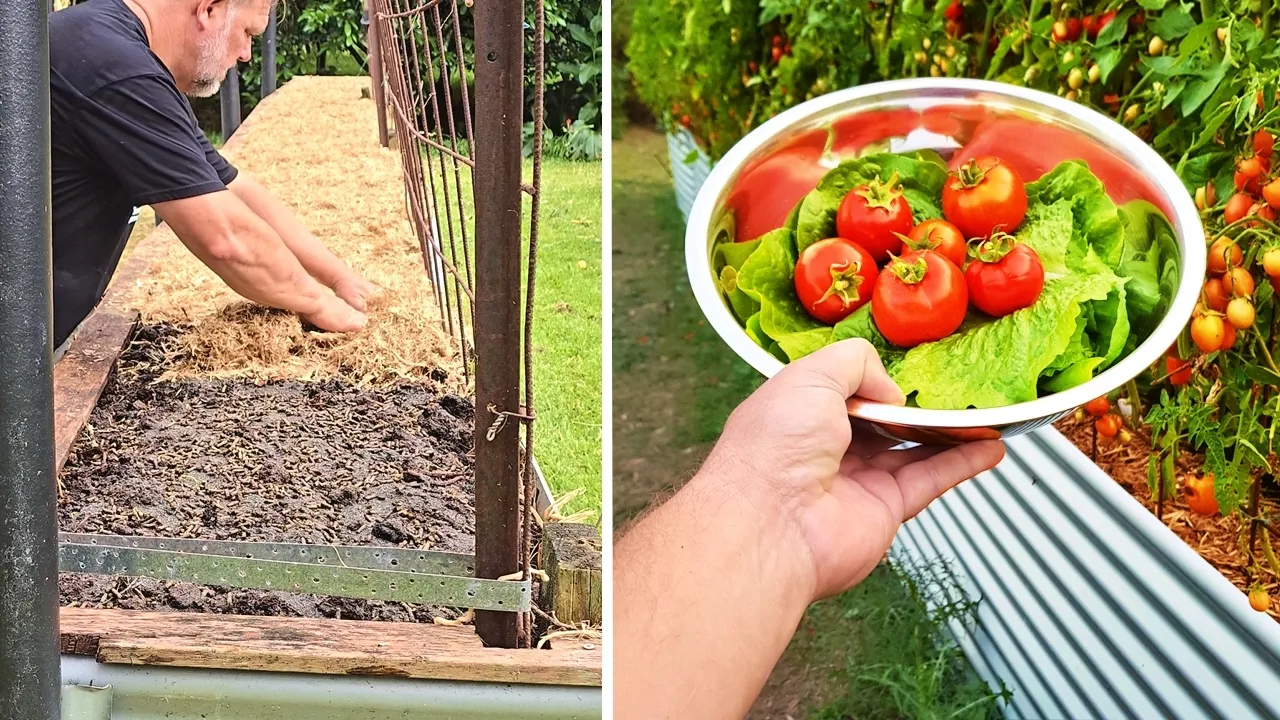
or indoor space this saves time and money compared to starting seeds indoors in a greenhouse and using all that equipment in this example I directly sewed several varieties of heirloom and organic tomatoes in this G tunnel raised bed configuration the crop I had in before was some bitter gourd that had taken over the tunnel and one of the problems in our subtropical climate is the rainfall we get a lot of it and this constant barrage of rain mostly through the summer months can wash away nutrients so before sewing the seeds I had to do a
lot of refurbishments to these raised beds to ensure that the tomatoes had enough nutrients and good soil structure to grow well out of all the crops I grow tomatoes especially the larger varieties get the most pre-planting soil preparation because it's a hungry plant it grows big fruit takes a lot of energy to grow and it's also susceptible to disease and pest attack so you want to get these plants off to the best start possible in this case I rated the last of my compost bays and had just enough to top up both long garden beds
with Rich compost made mostly from banana plant waste the structure of the compost means it holds water for longer giving the tomatoes access to moisture and nutrients for longer the next product I added was some rock minerals now depending on your soil adding extra Rock minerals might not be completely necessary but it can't hurt what it might do is just give your tomato plants The Edge those missing micronutrients and Trace elements that can make your tomato plants go from good to excellent and improve productivity after the rock minerals I add organic fertilizer in this case
the fertilizer is plant-based the reason I use organic fertilizer whether it's plant or animal-based is because it's more sustainable than synthetically made fertilizer it won't add extra salt to your soil it encourages microbial activity and besides feeding your plants it adds extra fill to your growing medium I then give the whole lot of good watering in and this settles the additives down and helps to combine them into the soil before I go adding the mulsh and remember mulsh mulsh mulsh I prefer a seed free straw or sugar canane mulsh loosen is good too but it
can be extra expensive and what this does is it locks in the moisture it protects the roots from excess heat or cold it suppresses weeds it keeps the topsa from crusting over and repelling water it slows heavy rain down so less nutrients get lost I always give newly laid Mula watering to hold it in place it reduces dust and it makes it easier to part which is the next step I've decided to sew several different varieties of tomato from survival seeds Australia which are also in the USA mostly larger varieties and sewing them now in
Early Autumn in our subtropical climate is because I want the fruit to be ripening in winter when there are less fruit flies around I don't want the fruit ripening in spring or early summer even though the tomato plants do like the warmer Spring weather here the problem is that the fruit fly which is different to the kitchen fruit fly this is a European and Queensland fruit fly that stings the big Tomatoes which is a favorite of theirs and it lays a maggot inside which then eats the fruit from the inside out turns it to a
garbage mushy rotten mess which is really disappointing you can bag the fruit or you can try to net the whole tomato plant but it's a real pain to do that you can also grow cherry tomatoes they're more acidic and the fruit fly don't tend to sting them as much but this year I wanted to grow some nice big juicy heirloom Toms so this is what I'm doing so the next thing I do is part the mulsh making small circles about a foot apart or slightly less close to the base of the trellis for the vines
to grow up in each circle I add some of my homemade seed raising mix made from sifted compost and the reason why I add some of this compost on the base is just to give the seeds a buffer from any concentrated additives that might burn the seed or seedling when it first germinates I then sew the seeds on top of the compost base and cover with some more of that compost seed raising mix I sewed the front row in batches of four for each variety and on the back row I sewed with the ticker variety
only because I have never tried growing it before and apparently it has excellent taste it's an early Cropper and has very good disease resistance so I'm Keen to find out how well that goes on that back row there I se the tomato seeds generously to give the best chance of at least one of the seedlings coming up in each spot if they all germinate I will then thin them out and keep the strongest one to grow on when you direct sew anything can happen you're out in the wild you can have rodents dig them up
you can have snails and slugs chew them off other types of insects you can have possums come along and and chew them as well as the seedlings emerge and some seed might just fail to germinate so I find over sewing is a good strategy I do keep watch over the beds to see of any signs of rodents or pest digging up the seeds or eating the seedlings and if I do find this happening I will cover the area with a wire basket or plastic domes to protect them these domes can also be used to create
a slightly warmer environment like a mini Greenhouse except your direct sewing I'm doing that for some capsicum seeds that I've directly sewing over there and I just know that the capsicum needs a little bit of extra warmth at this stage so I've covered some of them over not all just kind of experimenting but yeah that can also be a good Ploy in a cooler climate if you want to direct sew create that little mini Greenhouse Effect and then it's just a matter of waiting for the seedlings to emerge and as you can see they are
coming up and that's the same for pretty much all 40 or so little areas that I've sewn I've had a really great success rate with all the seeds which is cool but what I'm going to do now is I'm going to wait till they get about 4 in high and their second set of leaves and then I will start thinning them out to the strongest seed seedling and then train that one plant up the trellis so why doesn't everyone direct so Tomatoes admittedly Tomatoes directly sell and grow best in a warm climate with a long
growing season tomato seeds need a soil temperature above 15° C or even a constant 20° C for them to germinate correctly and grow well people who live in cold climate with a shorter summer might prefer to sew their tomato seeds indoors or in a hot house earlier to get a head start on the season although I've often wondered myself is there a considerable difference between direct sewing and planting out from a greenhouse thinking about all that extra time it takes to plant out and the transplant shock I don't know I've never run that experiment before
I've never pitched a direct seed sewing against a transplanted tomato does that direct sewed seed catch up to that transplanted seedling and grow at the same rate or overtake it I'd be interested to know your experience maybe you can share that in the comments section below so yeah there are some legitimate reasons why you would want to not direct sew but I would encourage anyone that's in my climate with our conditions to give direct sewing a go I think it's the best way to do tomatoes and if you are wondering what I'm growing at the
moment in the veggie garden especially it's always been a little hard to go through the lists until now if you want to see an upto-date Garden plan or a full list of what I'm growing you can just go to the self-sufficient me garden planner online I'll post the URL below and you can check it out at your own Leisure yeah I think this Garden plan is a really interesting and good tool especially just to be used even for me to show you guys what is growing on at the moment in our garden so yeah check
out that garden planner and my own garden plan even if you don't want to join up you don't have to you can look at it online you don't have to sign up to anything but I would encourage you to sign up and give our garden planner a bit of a go you can do that for free and uh yeah let me know what you think um help improve it whatever well I hope you enjoyed this video if you did make sure you give it a big direct thumbs up that's direct and share the video around
subscribe if you haven't already and uh yeah thanks a lot for watching cheers bye