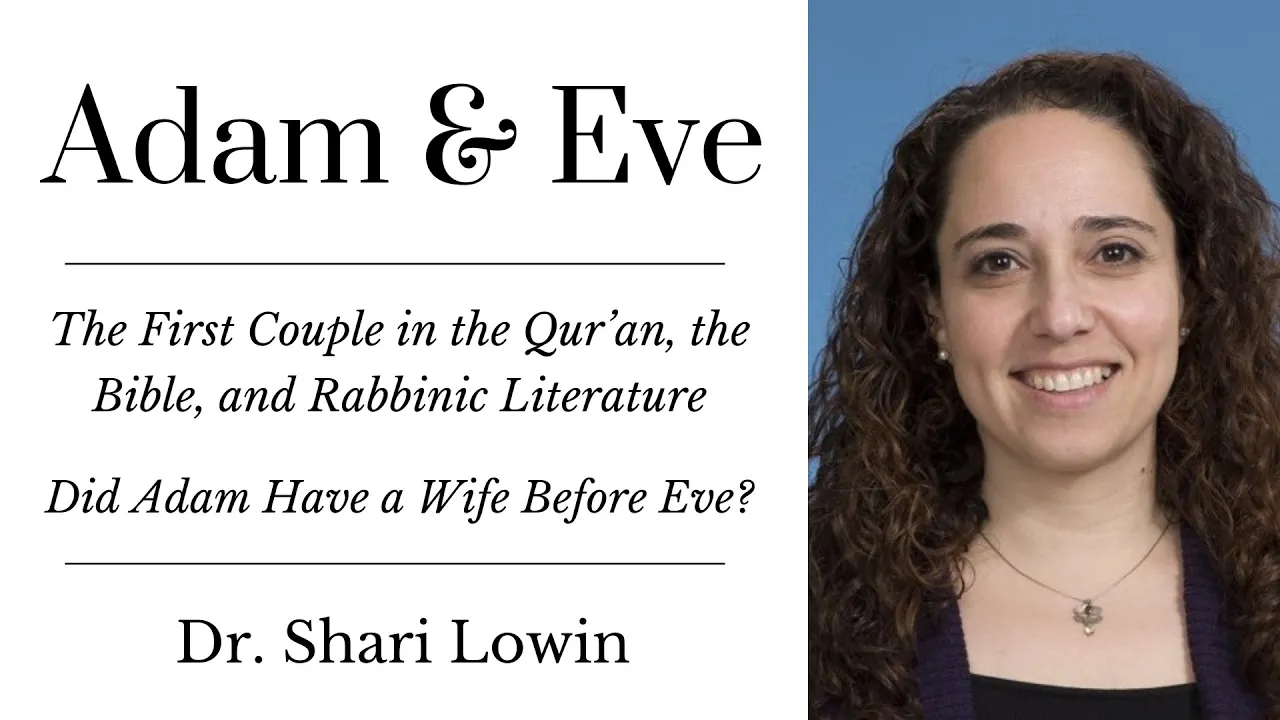
So Professor uh Sher loen would you say that in Judaism Eve as in Adam and Eve is good or bad uh I would say it's a little complicated the answer is a little bit complicated on the one hand a lot of the rabbi sources when they talk about the first sin this first sin they almost always talk about Adam sinning so he's the character that's that appears in the text right the rabbis are Talking about Adam sinning Adam was created Adam this God when he created Adam and not so much Eve on the other hand
there are ribonic sources that talk about specific characteristics that are inherent to the female body that are sort of punishment for Eve's behavior um or a consequence for Eve's behavior and those are some of them are things that make women impure um sort of biologically impure like menstruation or child birth and so something that knocks Women into a category that's that's bad I guess you should say I mean Purity and Badness are not the same but it's not good to be impure um and so women's suffering as a consequence of that um would indicate that
Eve is less good maybe um and there are there are other sources also that talk about you know why was Eve created from a rib as opposed to anywhere else on Adam's Body and um the idea that a rib is Crooked is sort of seen as a uh sort of influences who she becomes as a person that she's sort of this crooked thing in there rein ex sources but I I don't think it would not be accurate to say that Eve is is bad uh spec like in in the original sin terms of bad yes
um I think the bit about the Crooked rib into the Hadith in Islamic yeah yeah it does so and signals not only Eaves uh crooked character maybe it Sounds harsh but but something more General About Women yeah something about women that's not great and that that goes back to her to Eve the first mother but she's not um like this seductress that we sort of think about in modern maybe in medieval art where she like sort of seduces Adam with her WS there are texts that actually talk about it you know how did she get
him to eat I mean the biblical text is very clear That she get she takes a bite and she just gives it he's like standing there and so he's he shouldn't be free of blame he seems to be present for the entire conversation and doesn't pipe up um but there are rinic texts that try to figure out what what was it this thing that she gave him and and how did she get him to eat so you know on the one hand she's kind of a neutral character like other than the fact that she's complicit
in this first Violation of God's command um and she is not a neutral character um yeah I want to Circle back to the what was it bit uh and how medieval commentators understood what really went down between Adam and Eve and the serpent uh but first everyone welcome to exploring the Quran and the Bible I'm really delighted to be with a good friend and a great great scholar Professor Sher loen she's professor in the religious studies and theology Department of Stonehill College Which um I just learned is in Easton is that right Easton Massachusetts and
uh she's the author of many many Works she's been working recently on the various statements attributed to the Jews in the Quran I'm hoping and that will be another episode uh of this podcast um she's published you know among her many works the making of a forefather Abraham in Islamic and Jewish exegetical narratives as well as Arabic and Hebrew love poems of Al andalus um So uh and it's she's been with us before so we had a great uh conversation very popular episode of exploring the Quran and the Bible which by the way you should
uh subscribe to you should also like this video please thank you um but in our earlier episode uh which you should watch we spoke about sort of you know prophets um Behaving Badly or characters known to the Islamic tradition as prophets behaving badly in the Bible and how that complicates a Conversation about these characters uh but today we're speaking about Adam and Eve um and we're starting with Eve and then uh Sher you mentioned that in medieval Jewish sources um even though it seems like the account of the first book of the Bible Genesis uh
in chapters 2 and 3 I guess especially three it seems like it's kind of straightforward you know the serpent speaks to Eve and um you know Eve eats from The Forbidden tree and then just gives to Adam and Then he eats but they kind of read more into that yeah there's there's an attempt to figure out what how because the the rinic understanding of human nature or the classical rinic understanding of human nature is that people are created with Free Will and not not sort of like the the the Christian more idea where they were
created sort of innocent and pure which would and and in sinning they introduced sin into the world that Doesn't really exist in the rinic in the rinic mindset that they're constantly they were always capable of sinning but how did they they had one measly commandment and and how was it that the very first couple who had this intimate relationship with God god um more than the rest of us even closer how did they violate God's command how did that happen and so um and when did it happen how long were they on Earth before it
happened and there's a lot of wrestling With it in the rinic sources and what does it mean for us for that for that that they sin does it actually mean something bad and you can see in the in the early rinic sources um people always say that Judaism doesn't have a concept of original sin which doesn't have a concept of original sin but you can see in some of the sources that there's something there that seems to maybe lead to the Concept original in other words the connection between what's going on in the classical sources
and the development of that Concept in Christianity is not crazy it's it's there is a connective tissue but that that what went down in the garden uh had consequences for yeah for everyone including us to day yeah I mean not the same consequences that we find in Christianity yeah it didn't U necessitate maybe that's a wrong verb Because it's a theological problem but it didn't lead to some necessary there is again atonement or redemption or some divine intervention in a way that Christians understand the life of Jesus right there is actually what's really fascinating is
um I was I had the source ready to look at it but now I'm like a little I'll find it in a second there there is a there are two classical sources in their vinic um in their rinic system that talk About why are you it seems that something happened that hit everyone and the revelation of of the Torah on Sinai they don't use this word but cleansed the Jews so that which parallels right if Jesus is the word of God made flesh and the Torah is the word of God yes and both of them
sort of like cleanse you of whatever it was that happened yes in the garden I me there's like a parallel situation there Um and so this idea that the Torah gets rid of whatever it was that happened in Eden but whatever it was that happened in Eden is still not the same exact thing that Christians might see it um and there's nothing that anybody has to do now right it's not it it was a cleansing that happened and then it's done it's done everybody's fine or at least the Jews are fine so I mean just
to remind uh those Who may not know the account hopefully I'll describe it relatively accurately that um so you know we hopefully folks kind of generally have a sense of the biblical story uh that you know the Israelites um end up in Egypt and then you know they go through the sea and Moses and then they're at Mount Si and um I mean my sense is that generally Christians and Muslims uh don't appreciate uh how um Central the idea of uh the Covenant or maybe it's better Speak of the revelation of the Torah is to
Moses on Mount Si um and the Covenant or contract that subsequently takes place between God and all of Israel Mount Si um I mean could you sort of explain that for you know Muslims and Christians like you know why is that such a big deal obviously it's in the Christian Bible as well also in the Quran you know you have you know references to the T in Arabic the T so there's something similar there Moses Received Revelation but it's kind of Next Level I think in in Judaism so yeah what should what should Muslims and
Christians know I mean I think that what you just said is is what's the key important is that that moment is a moment of first of all theophany but also it's it's a moment of of a binding contract between the nation of Israel and their God and it's a contract that is not undoable so um uh there's this uh Christian idea this early Christian idea That comes and says basically the Jews sin so much and the and the contract like God this replacement theology right where God replaces right the supersessionism which is Christianity and Islam
does have it also as well as certain element of super sism that Islam is the the preferable religion of the three and and uh this idea that there was Islam recognizes the Quran recognizes there was a covenant or a contract Between God and um Israel but they violated the the rabbis classical Judaism recognizes that the Israelites and the Jews are constantly violating the contract but the way I describe it to my students is that the contract between God and the Israelites in Judaism is similar to a Catholic marriage which is that you can't get out
of it there's no such thing as divorce so you can do terrible things in your marriage that violate the Covenant of marriage but you can't get out of it and that's sort of a negative way of saying it but the the point really is that God makes this Covenant with Israel because he loves them it's a Covenant of Love um and because God is infinite his love is infinite and his promise is infinite and he doesn't change his mind when it comes to that Covenant so even though the Israelites and the and later their you
know the Jews can can mess up um it's still Binding on everyone and it's it's never violable and that traces back not just to the Covenant sin it traces back to Abraham as well who starts the Covenant and then there's this sort of nation I don't know what you how to call it really like this Covenant with the nation of Israel that happens at siai which is right after the Freedom From Slavery um and and on purpose right that that the Jews understand it that sort of the Jews Are are freed from slavery to humans
slavery to become slaves of God um which is a better a better type of slavery I me I don't think that maybe the the word is better translatable as Servants of God um and that's an amazing relationship so those two things are intimately connected and it and those two moments in Biblical history are defining for the the entire way Judaism understands itself and Jews are The Liberation and The Covenant yeah everything like every holiday goes back to if not for God redeeming Us From Slavery we would have still been slaves in Egypt and the fact
that we're free now is because of that moment and then God gave us the Torah which is the Covenant with God and like it's just it's an incessant repetition of those two things over and over and over so it's a really central point and I think Christians and Muslims or Christianity and Islam recognizes it but I don't know that they it's fully grasped how much it's over and over and over yeah for I mean try to summarize it and someone can you know push back in the comments maybe but I think for the Christian view
we're supposed to be speaking about adman we'll Circle back down a second but the I think the Christian view of um The Exodus Liberation from slavy plus the Covenant of Mount Si is basically kind of just blurred fuzzy like you know everything Ultimately is part of the Salvation history that leads to Jesus Christians would say to to Christ uh for Muslims you know all prophets you know basically are similar you know they receive divine revelation um they remind people of their sort of uh natural obligation to worship God Alone um so it's not really punctuated
by this like yeah intense uh sort of or these two intense events um which Mark Israel's experience um is okay if we Circle back to admin e now Sure yeah um I thought we we'd start I mean I plann things a little differently but I think it might be helpful for us to get into the Genesis narrative a little bit I mean uh many Muslims will not be familiar with it uh you know um reason or another uh that's another topic um even many Christians will not be Familiar of it and it could be something
that they just kind of think of uh I mean in light of stuff they hear from Someone maybe in church maybe somewhere else maybe on Tik Tok so I mean um the the narrative um if we start with Genesis chapter 2 so the second chapter of the Bible uh it starts with this at least the bit I'd like to discuss starts with this intriguing um line so I'm uh going to read here from Genesis chapter 2 begin in verse 18 this is the revised standard the revised standard translation excuse me for my cough uh which
you know you You can correct um if you see something that may not uh explain the Hebrew very well but uh so Genesis 2:18 um then the Lord God said it is not good that the man should be alone I will make him a helper fit for him so maybe if we just start with that I mean what's going on there like maybe how do the rabbis understand that like why is it not good that man should be alone does he need a help or how did what did they understand from that so first first
I I wanted to I Know in some of your your one of your questions was about this word the man which gets I think is translated mostly in the English translations we find the man but that's not what the text actually says in Hebrew and the which this is why his name is Adam um because the Hebrew is he doesn't have a name actually what's what I find fascinating about this is she has a name but he actually doesn't have a name and what he is and I think in the Translations sometimes you'll see Adam
as if as if he did have a first name but he doesn't the word is haadam which in Hebrew means the human or even the word why is he called Adam because he comes from Adama so it's really which is Earth so he's really I guess the most accurate translation would be um God saw that it wasn't good for the Earth creature to be because he is I mean a little earlier in Chapter 2 he's actually created from the dirt from the earth yeah he's created from the earth so he's called the Earth creature and
then it says I will make him and then fitting counterpart is that the translation that you had um helper yeah so the Hebrew is Azar KGO which is such a difficult phrase and one that I don't know that I've ever seen anything particularly satisfying to me in AAR kdo and as AER is a Helper but KGO means either in front of you or somebody it's Like a mama sort of in Arabic like someone who's up front of you but also um facing you and and it it also has the sense of against you so um
like not a yes man right is this other yeah or woman is the sort of this implied idea that it's a it's um it's not good for a person to be alone but it's also what's not good is or what is better is for the person to have someone who challenges them a little bit is is Why right so that's a that's one interpretation you had this helper I don't know did you have against him or a fitting helper um a helper fit for him yeah so the translation that I'm looking at which is the
JPS the Jewish publication Society has fitting counterpart and I think that the word counterpart also has that counter in there as well right this idea of counter downplaying the first Hebrew word which I'll mispronounce but which has Something to do with help right the first one yeah air which has to do with with helping and more kdo so what's going on there why does he need one yeah I don't know you don't know yeah yeah but we do see that the very next thing that happens is that God makes animals so it's bad I mean
I think that after all of us after covid and zooming and not being isolation I think are intimately aware of how bad it is to be alone and to be to have nothing and Nobody and that what I think is interesting here is that having God is not enough to say that maybe blasphemously but it's it's not enough uh to have God is God going to bring you soup when you're feeling sick and and you know things along those lines like it's not good for people to be alone without people and and uh that's in
in the chapter 2 narrative animals like they're not they're not the answer it doesn't no in this Nar they're not the Answer right he brings all the animals and all the birds and he brings it to go to Adam to this earth creature to see as it says here Mayo what will he call it what will he name it which is also an interesting thing what what do you mean what will you name it and um which in the Quran uh I mean sorry I don't want to uh interrupt you too much which I'm already
joined but in the Quran of course it's God who uh gives the names to Adam but Genesis Adam himself gives Right and I think the significant difference right that God and in the Quran it's also perceived as like a way to show the angels that that Adam is the preferred creature because God gives him the secret information that he doesn't give to the angels but here it's not there's no secret information that's coming from God it's that God brings him these animals and says let's see what you call them and what does that mean let's
see what you call them and I think There's some sort of implied like will he recognize them as being something that belongs with him or will he not recognize them um and and it says he just calls them he calls them by their names or he gives them names these animals and these birds and then in verse 21 it says there but no but he did he did not find a fitting counterpart for for this Earth creature and in the way the Hebrew is who is the pronoun he did not is it God did not
or Adam did Not because it doesn't say Adam did not find it says and to Adam Adam so for the Earth creature he did not yeah so who's there's like a little ambiguity in the text there now if I can just ask about this contrast between Quran and Bible on um Adam naming all of the things uh even eventually the woman I think uh he gives gives her the name uh woman um and then uh whereas in the Quran it's God tells Adam what the names of all things are and I Mean just as you
said I think the point in the quranic context in Chapter 2 of the Quran is that um you know Adam sort of demonstrates his superiority to the angels uh but in a pical context people are kind of like oh look you know the Bible gives more agency to humans um God sort of is empowering uh Adam you know you have autonomy whereas the Quran is just like God tells you everything and you just kind of obey and follow along uh what do You think of that argument um I I think that there is a sense
in the in the biblical story that there is a lot more Agency for people but I don't think the quranic story is meant to take away the agency from people I think there's I think there's some other like you said this pmic going on there with this relationship between Adam and God I I mean I know I'm jumping ahead but I think what's fascinating about the quranic story is that Adam does pen In the quranic story and he does not in the biblical story there's no Penance there so um that tells us something about Adam
in the Quran that he does have a lot of agency he he recognizes his his misstep his wrongdoing and and he he apologizes and and and asks for forgiveness which we don't we don't find that in the Bible so if you want to make a pical statement you could definitely point to that yeah yeah but I mean what would you say um to The idea that I mean the quran's just like a completely different kind of thing um you know even this account which seems similar to gen so this account meaning you know the stories
about Adam uh in the garden um in the Quran you know they look like genesis 2 and 3 but you know the the Quran is basically really religious you know it just wants to kind of drill into its audience that God is Lord that humans should obey him if they mess up they Should repent and that's it sort of carries that out through the Adam story but the Genesis 2 and three account is really not religious I mean maybe it's the wrong word really not religious or spiritual at all it's just like a story uh
is that going I don't think it's not religious at all okay yeah I I don't think at all that that's what's going on I think that there's a lot of um a lot of messaging about about human nature and and a lot of things that are Stupendously ambiguous I think on purpose that things are ambiguous and that I think this is a story in which the Bible does what it does best which is that it purposely is ambiguous to invite you in to wrestle with the with the stuff so I I think that wrestling is
inherently religious and inherently about what's the relationship the readers or the interpreters yeah it's it's pulling you in exactly the way you started off the conversation what do we Make of this what what are we supposed to do about that and and what do it what does it even mean to say who is this AAR kto and what we haven't mentioned also Gabriel is the fact that this is not the only creation story in Genesis which is that the the other creation story is a is a completely different story the first the first chapter of
the Bible right the first chapter of the Bible which we don't have Eve created out of Adam's Body and we don't have um this Whole naming of the animals and we don't have this whole counterpart help me whatever a situation going on there it's it's a different story and how do you what is going on with that right what are we supposed to understand from those two stories and does that story affect how we're supposed to read this story which I would say yes that that story affects how you're supposed to understand this story um
and I think you know the rabbis also they they also Would say like well given what it says in the first story how can we understand this second story what's going on there MH or are they two different stories and if they're two different stories what's the point of those two different stories yes um sorry I look like you have a question no I mean that's like a huge issue for I mean because Genesis is the first uh book of the Bible this is where people start and you know they read Genesis 1 and it's
just I mean I guess Up to is it does that story sort of go up to the first few verses Genesis 2 whatever uh but in and then they read the next story in the garden and it's like you know so different um I mean part of the difference is what uh people might call sort of like the mythical or the storytelling quality of the the garden episode uh Genesis 2 and 3 I mean and maybe the best uh example of that is uh a talking snake yeah so uh I mean people I think are
kind of I don't do to The shocking nature that you have an animal that's talking yeah he's not the only animal that talks in the Bible which is interesting but I guess yeah there's there's a donkey yeah the donkey yeah in the Quran ants ants talk yeah I love those ants they're very C the story of Solomon there's probably some others that I'm not thinking of right now but definitely the ants talk um yeah I mean uh so I mean what's going on here why is there a snake that's talking in the Quran there's it's
not a snake it's Satan which maybe we could speak about the difference but yeah why do we have this talking snake yeah so yeah why do we have a talking snake and also um if you look at the description of the talking snake um he's he's called in Hebrew arum that he is the it's often translated as the most crafty or shrewdest and and he if you look at his punishment in the Bible and the and the Punishment is not what I find fascinating not that the snake won't talk anymore because it's his talking that
causes the problem right it's that the that would be kind of a logical punishment would be yeah logical punishment would be like God comes in and says snakes can't talk anymore because look what they do but instead What God Says is they're going to lose their hands and feet so it looks like this original snake was like some sort Of lizard with with feet hands and feet and which you find in Islamic Traditions too by the way that bring in the snake anyway yeah yeah feet were longer than a camel or his legs were longer
than a camels I think some of the so this you know he loses that and he also like has to eat dust like lick the dust which is I think clearly an image of sort of like the tongue darting in and out of a but he doesn't lose his power of speech okay so then we have to ask why that doesn't Make any like it you would think that it should um and what does it mean to be that he's the most crafty and and why is he involved and this word arum again you know
when you read it in English I find this a lot with the early stories of Genesis that they're told as if they're children's stories that we're so used to them as you're saying that like we get these little children's stories and they're super complicated like they're not Children's stories um you know the whole Noah Noah's Arc which is a children's story frequently is also super complicated in the Bible so one of the things that happens is what does it mean to say that this Nash Nash which is the Hebrew word there um for the SN
yeah for snake is arum and the word arum is also the same word in Hebrew it's the same consonant for aom which is Naked so and we know that there's a nakedness thing that happens in the story right that they discover that they're naked not that they discover that they're crafty so it looks like the text is playing on these words right that that this snake which is a room leads to them understanding that they are a Rome um which I think is really an interesting parallel but there's also a rinic text that says that
the snake this is kind of gross but the snake um was Watching Adam and Eve in the garden who were naked and having sex with each other and he developed Lust For because the question thees are asking is what does the snake get out of this why does he insert himself into the story yes what is this craftiness and is this craftiness related to nakedness why is this the word that's used to describe him so the idea was that he fell in lust with Eve say the rabbis and he thought if he Could cause a
a wedge in this relationship he could get Eve as well doesn't work but that was his that's why he inserts himself into the story but I think it's also maybe I don't not coincidental that snake snake is it's kind of a phallic image also right this idea of this snake so this snake which is naked and in love or in lust with Eve that's trying to that's watching them have sex and then wants to get involved wow we are yeah this it's Pushing back the boundaries of uh exploring the Quran and the Bible this is
yes yeah that's why I feel like it's a there's a lot going on in these in these stories and I mean is it okay if I jump in with a question about the Quran just to for a point of comparison because I mean in some ways the Quran seems to solve this problem by um well first of all the snake's not there at all it's just you know uh a shayon so you know Satan coming from the Hebrew Word for Satan which we could I guess speak about too maybe at some point but I mean
the reason why Satan in the Quran quranic episodes on the garden wants to cause trouble is because the man I mean it seems pretty clear I don't think it's no it is said explicitly because there's this bit about anyway the man has caused his downfall from Heaven uh when God commanded all the angels to bow down to the man and obviously the devil does not And then he's cast out of the heaven or the highest heaven so the whole thing is an act of revenge against you know the the causing causing Adam to slip from
there slip from the Garden I guess uh with the Arabic verb um you know it's an act of Ren so it's kind of like you know it solves a problem or maybe uh uh makes less ambiguous what is ambiguous with the snake in Genesis Yeah well yeah I think that it's a it gets a lot of that information from Christianity but the Quran yes um yes has it's there in early Christian text right the whole replacement of the snake with with Shan is um not in the rinic texts or not in the biblical text right
Satan doesn't come into the Hebrew Bible until like way way way further on but don't the rabbis there's another name there I'm not thinking of right now that's connected with the devil somehow and identified with a snake in later Jewish text oh Um s or something s right SEL right SEL is it's he's supposed to be an angel okay but um you know it's because Judaism goes through some changes right the Jewish text like there's a lot of different groups there's there's no real concept of which we do find in this story in the Quran
and also in Christian sources there's no real concept that that Satan was an angel who fell from heaven that sorry let me back that up I think that that Story comes from Enoch from The Book of Enoch which is actually a Jewish Source in it's very core um and so so to say that Judaism doesn't have that concept is a little inaccurate because it's I think it I think it goes back if I remember correctly to three Enoch okay but three Enoch is not accepted into the canonical um Hebrew Bible or rabic texts right even
in kind of like the library of author resour for the Rabbi right like fan is a source that Jews don't know unless they're in academic Jewish studies right it's not it's not a source that's studied and it doesn't affect you're not reading througha okay they don't even know about it right like it's not it's um but I mean to me this is a really nice example like the sort of clarity of the quranic sequence of events where first you know the devil is uh cast out of Heaven because of Adam and then seeks to have
Revenge on Adam in the garden like it just kind of works and kind of sort of satisfying in a way um whereas you know in the Bible uh you know obviously the text uh at least the garden story um was written I don't know maybe 1600 years or 1500 years earlier so like it's whole another world or maybe that's not the right number but anyway centuries earlier like you just have lots of ambiguity and to me that's kind of I don't know if you agree with this but it Seems to me sort of paradigmatic or
something else of a larger kind of thing which is um in Islamic intellectual tradition there is kind of an emphasis on certainty Clarity one thing leads to another uh everything kind of works and in Jewish not only scholarship but I think maybe spirituality there's kind of just more comfort with ambiguity yeah you know let's talk about this you think hey I think be the other guy I don't think it's even Comfort I Think it's like relishing in the amb ity okay and um I think that it's seen as a value that I don't know that
that is true of Islamic intellectual um wrestling in the same way right that this this idea that it o that it opens up a door for the conversation and I think this is actually I mean this is slightly off topic but I think this is actually a very important distinction between Islam and Judaism in the way that they each Deal with their their texts which is that the actually dates back to my other project but the rabbi understanding of the rabbi project is that God purposely makes things ambiguous in the text to invite us into
the conversation okay and so so the really like a fault or a defect like no it's on purpose right it's like as if you know when you're teaching a class you would do I'm sure you would do this also You' put a text up on the board and then you'd say like What do you see here let's talk about it and that's sort of what God is doing like putting something up and saying like I'm inviting you in to have this conversation with me and with each other and this wrestling and let's learn sort of
the the polyvalency I guess of the text is part of the important and that idea that God is inviting us in in Partnership is sort of Blasphemous for Islam what do you mean that we are partners with God right that it's not That's not an acceptable way to talk about God in Islam that humans are part partners with God whereas in in Judaism that's really the rinic way of of seeing of seeing the text so the fact that it's ambiguous I don't know that there's again I I I would say more that there's a relishing
of the ambiguity more than there's a comfortable with it right that like that's part of the job of being a Jew is to is to read The text and figure it out right and if it came like on a platter here's what it means what are you g to do yeah excuse me yeah what's left what's left for you right so I mean to me it's just yeah it's an important point that actually has larger lessons for us about how different uh Judaism Islam and Christianity are in kind of like the experience of you know
people in in those traditions and you know there's so much kind of like mus she I don't know Generalization and has been Amplified by this notion of abrahamic religions plus just like at least in the US definitely at Notre Dame but I think generally in the US like this kind of what you're supposed to say is we're all basically the same and you know um can I read a bit from the Quran now turn to the Quran is that okay sure I'll I'll ask you I'm just going to read a bit from Quran 7 about
the garden story and then you know if you could Just comment on like what you see here you know as someone who knows the Quran and the Bible Well um what's going on in the Quran what do you see as kind of like I don't know like purposeful or strategic differences from uh the Genesis story so this is Quran Quran 7 starting in verse 20 um I'll just read the English here but Satan whispered to them to expose to them their nakedness uh it's the duel there the them duel uh which was Invisible to them
he said your lord only prohibited you from this tree so that you do not become Angels or become Immortals next verse and he swore to them I am a sincere advisor to you next verse so he lured them with deception and when they tasted the tree their nakedness became evident to them and they began covering themselves with the leaves of the garden and their lord called out to them did I not pro prohibit you from this tree and say to You that Satan is a sworn enemy to you next verse they said our Lord we
have sinned against ourselves unless you forgive us and have mercy on us we will be of the losers so what do I see in there um so I see pieces that that um are similar to what's in the Bible and I see pieces that aren't similar to what's in the Bible and so you know some of it echoes I can you hear Echoes and then some of it are not echoing the Bible the Hebrew Bible um this idea about Satan Whispering um uh I think there are two two of my favorite words in Arabic are
chicken and Whisper I don't know why but this this word Wasa which is such a great anopia here right that it's it's what it sounds like when you're Whispering was um is not at all first of all satan is not in the Bible it's it's that comes in from some other place um and he's not whispering in the Hebrew Bible he's having an actual out Conversation there's no hiding what's going on here in the Hebrew Bible I mean do you see the Quran then as having in mind not like the the action in the garden
itself but rather you know like watch out uh Muslim uh reader or listener um this is Satan might be whispering to you right now I think it's it's a different depiction of what Satan's job is okay that that we get in the Quran and that we get in the Hebrew Bible and that this Feels to me more like the Christian understanding of what Satan's job is how he's portrayed uh that that he's like this seductive [Music] um Force I don't know what what whether usey enemy of humans enemy of humans and a seductive force and
trying to lead you into T and and like the whispering in someone's ear is very seductive like it it creates an intimacy between the two People between the listener and the Whisperer you have to lean close you have to listen it's a secret that just I'm telling you and it creates this intimacy between the two characters where which is what Satan is getting at here right that that there's he's trying to pull them after him and away from God yeah the last verse the last uh Surah of of the Quran speaks of he whispers into
the breasts of humans right into the right the So I think that that's it's a different and and also I don't think it's by accident that we have here that he's Whispering something that was hidden from them so it's like a whole the the whole um not oh what's the word I'm looking for here Gabriel like not the whole shadiness of the story and the word right is is is not um is is there right they don't know something he's whispering to keep it a secret Everything but and yet God knows despite the whispering and
the hidden and the everything that's not manifest to people God is still going God still understands what's going on there and God still sees where in the Hebrew Bible we don't have any of that we have this conversation that's an out andout conversation between them and ALS we don't have Satan and when we do have Satan in the Hebrew Bible he's not an enemy of humanity he's actually God's like it says here uh I don't know what the what the the English word that you had in verse 21 where Satan says I'm your sincere adviser
what was the English that you had there yeah sincere adviser yeah yeah so in the Hebrew Bible it's almost like Satan is God's advisor I guess you could say and the the best story just to bring in another complication is the story of Job where this this feels to me a little little bit like there's some sort of job In here where he's leading sorry I'm GNA say that again Satan in the in the story of job is is understood to be like a a prosecuting attorney and he's prose he's Prosecuting people not an enemy
to people so he comes to God in the story of Job in the Hebrew Bible just different what's in the Quran the Quran has very small like I think it's mentioned twice in the Quran and it's very very very yeah Exactly very limited in its information but the story of Job in the Hebrew Bible is that you know God is walking around walking around and uh he says oh look there's my guy job he's stupendously righteous and Satan comes in and says he's only righteous because he has everything magnificent in the world has ever happen
to him if he starts to suffer you'll see that he'll curse you and God says you're on and Satan starts to sort of like poke which is what the Hebrew word really means right um to challenge and to and to poke at job to try to make him to show God that job is not really righteous and Satan loses that bet because job ultimately doesn't curse God um he's not this type of Seducer Whisperer in the Hebrew Bible that we get really more in develops out of Christianity this idea about Satan as this Seducer Whisperer
and we see it also here in the Quran the Seducer Whisperer but we don't see that not in The Hebrew Bible story of Adam and Eve and not in the Hebrew Bible story of anything this in fact we see L Lano in in the Hebrew Bible as we see it as a verb to Satan somebody which generally means to to like to get in their way and try to prevent them from doing something to to uh not challenge is the other word I'm trying to think of yeah but to be an obstacle be a yeah
be an obstacle yeah yeah thank you yeah so I mean the the There's also clothing like nakedness and clothing it's not really nakedness in the Arabic actually um obviously in Genesis 2 and 3 uh it's a thing and I think uh the rabbis you know have different kind of options that they explore about how to understand I mean there's different sequences of things you know what were they initially like Adam and Eve in terms of clothing and bodies and what happened next once they ate from the Tree but I mean the Arabic just to maybe
uh start us off in terms of thinking through the contrast in the the first verse I read um so in English we had um to expose to them their nakedness which was invisible to them um you know the uh the Arabic speaks of so not nakedness literally but I mean it comes from the word that means evil or bad which is right interesting so some translations I think have their forbidden parts or something like that uh but there is this You know a subjunctive in um like Satan did this whispering and then the only purpose
that's at least explicitly stated is to expose to them uh basically you know so to expose to them their um forbidden parts or their evil Parts uh so I mean what do you think of that um later on actually after the passage I didn't read it but I think it's versus 2425 26 God gives them kind of uh new clothing I think I I could look it up but I think God you know Sends down there's a problem because there's a word that literally means feathers but sends down clothing lias I think in Arabic to
them so uh I mean how can knowledge of Genesis help us understand what's going on with the quranic rhetoric on nakedness and clothing so this that he he wanted to show them their shameful Parts really reminds me of of Augustine and what he says about this in original sense and I don't know if People are gonna early fifth century late fourth fth century Christian the master of the Latin language tradition of early patristic theology yeah that he and really the the um use no not to better words he's sort of like the author of the
doctrine of original sin really as Augustine and this idea that August Augustine correctly asks you know looks at the Hebrew Bible and says like what do you mean that their nakedness was Revealed to them in the Hebrew Bible that that didn't they know like let me just go back to the exact phrasing what it says here in the HEB Bible it says um right verse 7 Genesis 3:7 then their eyes of both of them were open and they knew that they were a rim there's that nakedness and they swed for themselves fig leaves same root
of the craftiness that word yeah crafty snake yeah the and then here it's so what does it mean that they Their eyes were opened Austin asks right and that they know that they were they were naked like how do you not know that you're naked which of course begs the question why would they think that I always ask this to my students right like why would they think that they were naked nothing's wearing clothes so why all of a sudden are they looking down and saying oh my God I'm naked right it's not like ducks
are wearing pants and Anything why all of a sudden they think that they need to be clothed and the other thing is that this is a married couple who doesn't actually need to be clothed around each other so married but I mean this is they they're a part this couple yeah it was you know not a civil marriage it was some other kind of marriage yeah right so so why why suddenly they're like oh I'm naked and I can't be seen I can't be walking around naked all the time and so you know Augustine has
this whole thing um where he says it's not that they I mean there's more than one way to there's some sources that say like they actually couldn't see their naked their genitalia before then and then like this veil was removed from their eyes and they and they could see it or their veil was removed from somewhere else um but Augustine also says that they it's not that they knew that they were naked it's that they suddenly lost control of their Um sexual arousal that that sexual arousal used to be like anything else in your body
that's not um like the internal things so if I want my arm to move to the right my brain sends a message I'm not talking about like your heartbeating which you can't control and now it becomes sort of like your heartbeating you can't control it it's something that happens outside of your control so this um this this Quran thing the the hidden from them of their Shame and talking about in the Bible just to be clear about excuse me in contrast to in verse 20 in the Bible uh this is not what is never stated
that um the serpent wanted them to be naked right whereas in the Quran explicitly the Quran declares that That's what Satan was up to he wanted to show them their nakedness right or show them their genitalia yeah or better yes so at yeah right and and then there's also this qu why does he want to show them their Genitalia which you know first of all makes me think of that story where the midrashic story where Satan wants to sleep with with Eve right that that sort of thing and the connection between crafty nakedness in the
Hebrew right that there's something going on with that connection which we don't see in the Arabic the Arabic doesn't you canot I mean just to be historical critical about this I mean you can kind of see obviously the Quran has a particular Agenda theological teaching but you can kind of see how the rabbis and presumably the early Christian thinkers are are sorting through some of the ambiguity in the Quran is engaging not directly with Genesis 2 and 3 but with a whole sort of stream of conversations about about Genesis 2 and 3 yeah I I
mean to say that this is sort of the Genesis story is like a little um dulling of the differences right like what you were saying that People say like oh Jews Christians Islam Judaism Christianity Islam's all the same no that's you know you've taken a nail file and you've like DED all the edges and the edges are the are the key to what makes each a different right what makes them different systems um so here I think like it does seem to be I like that verb like that it's engaging with the whole tradition here
um and has this idea about like why does he want to show them their nakedness I mean we need To ask ask that from the Quran also like do they not know that they're naked and what's the connection between him saying like God forbade you from this tree lest you should become Angels or Immortals why is that connected to nakedness yes in the Quran it's like a non seor in in sorry for this persistent C in Quran 722 God calls out or rather reprimands both Adam and Eve at least a sequence of the Arabic and
you know the exes might do something else but immediately after Adam and Eve cover themselves with leaves it's you know so I mean may just kind of be one thing after another but there could be some connection there and I mean in Genesis uh I mean what does God say to them why are you hiding or something why you hiding where are you what yeah first he says um he says why are you hiding basically he says where are you and then go Adam answers and says I heard you yeah I heard your voice or
your sound and I I was afraid because I was naked so I hid yeah yeah and then God says we told you that you were naked which is actually a really great what do you mean you're naked who told you that that you were naked and that that's bad yeah and in both cases I mean I'm not just kind of you know doubling down to this point because I don't know it's edgy and people like about nakedness and sex and stuff but like in both cases it seems to be a thing like there's some concern
about Nakedness and yeah it seems what's interesting is that it's God's question here who told you that you were naked it it doesn't seem like it's bad that he knows that he's naked it's just what do you it's such a strange question who told you that you were naked like I feel like the question that I might ask if I were in that position if somebody said I hid from you because I was Naked might be why is naked a bad thing what do you mean naked yeah everything's naked not who told you that you
were naked yeah right so there there's something interesting going on there and and I think in the Quran as you you were saying before like it's a little clearer that this is what Satan's goal was the whole time was to do this of course why is this Satan's goal why is this the goal yeah I mean he wants revenge he wants revenge clearly But why is he carrying out this Revenge by making them aware of their nakedness right uh yeah and then the Quran has this you know uh kind of transitions to a lesson you
know in verse uh 26 uh you know the Divine voice of the Quran addresses all um All Humans you know all children of Adam so we're not we're kind of outside of the um the setting of The Garden now where on it's kind of zoomed back or however you put it and is now just addressing all of Humanity and kind of uh you know transitions to this lesson we have certainly sent down to you lias garments or clothing uh to cover um your uh your nakedness um and for adornments I mean that's the word that's
actually feathers but usually translat something like a dorant and then there's this kind of spiritual lesson which is but the Garment or the clothing of tawa uh God weariness um that's the best so you just get a a feel for the konic flavor of Like just you know always returning to the spiritual theological ethical legal uh lesson um this story kind of is second is not as important that can be cast aside what in the Quran kind of rushes to uh the lesson the moral of the story um anyway I don't know if you have
more thoughts on that I mean the what's yeah what's interesting in both cases right is that they they both clothe themselves and then God gives them other clothing yeah Right so oh is it 3:21 in Genesis uh God them I mean uh I'm actually looking at different translation now the New Jerusalem translation my translation has tunics of skins could could you explain that like why is God and he seems to do it yeah it's I don't I find it really fast it looks like leather right God makes them leather my my my my instinct is
always to say like God made them leather pants I don't know like um is the Hebrew something like ctin kot or kote kot or yeah and and konet is the same word that's used for Joseph for the cat of Many Colors that Joseph has that leads to problems uh later on because his brothers are then jealous that that Jacob makes for him this this it's we often say in Scot of many colors in English but it's stripes in in Hebrew it's right on pasim so it's like a a Striped garment I from the movie yeah
from the play they made it yeah whatever okay yeah Joseph in his amazing technol dream code yeah yeah yeah um because the song is cod of Many Colors but it's a pasim which are like okay um so it's the same word here as there which um if you sort of to zoom back and look at the biblical stories is is there something inherently I I don't mean to say it this way it's going to Sound crazy is there something inherently bad about us being clothed that that clothing leads to problems because people then get jealous
of each other's clothing and and it's a marker of hierarchy with clothing and you know and it looks like God's original intent maybe for us not to have that hierarchical marker but then on the other hand God does give them they made themselves leaves so why do they make themselves they make themselves Leaf Clothing and he makes them skin clothing skin clothing which sounds like Le I mean to me it just sounds like leather or does it mean that they didn't have skin before that they were they looked like which goes back to this feather
thing right that in the Quran that there are midrashic texts that that say like that Adam was covered with something else First that wasn't skin and I I get confused a little bit between between the midash and the Islamic texts because they sometimes bleed into each other in my mind um but there's there's I think one that says that Adam was created I'd have to look it up out of like he was covered in um uh nails like your nails yes it's definitely there in the Syria Christian I think it's in I I maybe eim
on Paradise or something yeah The the material of fingernails that was his skin right and then he gets this right it gets changed into into skin painful at least for efim I think it's painful when it's sort of stretched over his body the skin that you know we now have and yeah so but is this bit where God kind of personally making uh clothing out of skins uh for humans is this meant to be like uh I don't know a signal that God has sort of um at least continues to have providential care for Adam
and Eve or maybe has forgiven them and he's sort of like you know how your um you know when your your kid goes back to college you know Mom or Dad will make like a goodie bag like oh here's some food for you for your journey you know for God and this story it's making skins like it's going to be rough out there here's some nice clothing like it how do the rabbis take it and how do you read it like is it a sign that God has forgiven them and still loves them and I
Don't know that forgiveness is the word that would be used here because it's actually before the punishments and um right right it comes before the punishments and before the very important thing that God says in the next verse if we're reading it sequentially which is that um this is bad that he's eaten and he's going to become like God which is a whole other what does that mean yeah um and then Hasa you know sends them out of banishes Them from Eden oh actually is it before after the punishments the skin well the the sort
of listing of punishments for the snake the woman and the man comes right before but then like the banishing the banishing in in a sense is the ultimate punishment comes after right and it's not just Vanishing it's actually like a really um sort of intense visual that you get that they that God says he like banishes them from the Garden of Eden and to work The land from which they were taken right to work the Earth from which they were taken so this whole like life of luxury is now over and then it says it
again in verse 24 Genesis 4:24 uh Genesis 3:24 that that he um the word is VES which is like to chase out and the first one in in three it's which is to send away which is not necessarily you would send a messenger like that's the same verb for that you would send a messenger a message but then in verse 24 It's to chase away like yeah like it's super intense yeah and he stations a cherub with a fiery sword yeah should anybody try to get back in there's no way not like a uh yeah
uh parent uh children loving relationship no this is like you are threat and there's precautions taken to neutralize that yeah you cannot come back like there's a Divine blockage forever coming back so um so for I mean I think forgiveness um you know it's a tricky It's a tricky word to to use here for this for this because they don't ask for forgiveness and and they don't they don't even apologize none of them neither of them apologizes right Adam says the woman that you gave to me she gave me and I ate and the rinic
sources are very unhappy with that you know that this sort of passing the buck and not confessing and not taking any responsibility and also the way that When you ask the original question is Eve bad here God gave them God gave him this amazing gift and all he could say about it was the woman that you gave me she gave right like that thing it's your fault okay so that this might be a nice moment to bring in the name of the woman so there uh what's do you know what the Hebrew is there when
he's kind of uh you know um Throwing Shade on the woman uh does he called her Eve there or does he no it says the woman yeah um where is it So um yeah I mean verse 12 the man replied it was a woman you put with me she gave me some fruit from the tree right it says um uh oops sorry the woman that you that you g it's not even gave to me it's gave with me right that so like you put next to me at my side um which also goes back to
why is she like how are we to understand the power differential between them Adam here says it's sort of more of a partnership the woman that you gave with Me she gave me and I ate and then God doesn't actually even engage that right I I I often in my head it sort of feels like God's so disappointed he can't even come back with a with a second rejoiner like and he turns immediately to Eve Eve and he said what did you do and she says um the serpent like duped me and I ate so
what's interesting is that Adam sort of tries to blame her but he doesn't say and this I think is super important we always think of the story is telling us That Eve seduced him there's no evidence in the biblical story that she seduced him that the story has him standing basically next to her when the whole thing goes down right that that when she takes a bite of the of the fruit it says she gave it to him who was standing there and he ate it there's no she I was think of like an apple
and you hand it to the next person yeah there's no seduction here and he doesn't he doesn't say that she seduced me he just says she Gave it to me and I ate she says the snake led me aect like the snake sort of seduced me um and then God then doesn't even ask the snake a question he automatically like he doesn't even seem to care why the snake is doing what he does he starts automatically with the cursing of the snake um it does say the snake temp at least in my translation tempted me
uh that's what the woman says yeah uh so that I mean if the Translation reflects at all the Hebrew I mean that's bad right tempting is bad usually so but God never says to the snake what are you doing why' you do this yeah right which yeah the Quran he doesn't really ask Satan why I mean they do have conversation I don't know if it's in Quran 7 but there's a couple places where right says something like that so you are whatever that is cursed or something Sometimes stoned but it isn't made Stone uh and
then this you know this sorry Satan speaks back and is like listen give me give me time to go and tempt uh the man or humans and God is like okay uh you have a respit so you could go off and do that I just wanted in terms of the woman in Oh by the name the name so she it's only I think in Genesis 3:20 that we hear that the woman which I think it Hebrews Isa or something like that yeah that she she's named Eve I Mean Genesis 320 said says the man names
his wife Eve and down here someone how do you say it Hava okay yeah so which has something to do with the common Semitic root that uh we find also in Arabic and actually for the name of Eve in Arabic um which is something to do with life right um yeah it's not the man it's the human first of all the the human named his wife or his woman his wife kava because she was aim Kai the mother of everything That lives um uh but that's before but is she I mean if you read this
the animals are first they're living and yeah and she's not pregnant yet a good point right so and this is also what an interesting thing that happens here which is that if you look right she's he names her first of all no one names him he doesn't get a name so it's part of the go sounds like it's hearkening back to God brought everything to see if if Adam would Recognize it um and he names her this mother of all living things which she's not because animals don't come from her but also it's in the
next chapter that we find after the already banished that Adam and his wife know each other and she becomes pregnant so it's an interesting placement of the story and this leads to you didn't ask this question but I'm just going to say it anyway this rabbi understanding sorry let me take a step Back there's an association in Christianity between the sin and sex right that that becomes that becomes Associated to with each other which hearkens back to Augustine right who makes this association between sexual arousal and the sin and and therefore this is why it
sort of sticks to all of us that that um that the sexual knowledge comes after sorry the sexual uh interactions between Adam and Eve come after the sin so there's something That happens in Christian theology where where sex itself becomes sort of fruit of the Forbidden tree right sex and so therefore that's why you get this early these early attempts in Christianity to sort of like limit sexual intercourse between married couples to only the only thing that purifies it is if you're going to have children right this obviously not what happens in the modern church
but sort of um yeah I don't I don't know I just don't know enough About that but yeah yeah well like sex is not you're not supposed to this is why you're not supposed to use contraception because if it's not going to lead to procreation then it's not a it's not a permitted um yeah 100% in human Vite and you know sort of magisterial teaching now I just don't know the early church I don't know the attitude anyway doesn't matter so that's the earlier nowadays they don't say that right there's there's another value for Sexual
interraction couples but but um but here we have what the rabbis end up doing which is so interesting is if you look at chapter 4 verse one you can see this in the Hebrew and not in the English is that the verb that's used here for Adam and his Adam knowing his wife is is in the past tense um which is that he knew um but in Biblical Hebrew the I don't know how to say this super clearly in Biblical Hebrew the past tense is almost always written with the future tense and this VV meaning
and stuck onto it and that V knocks the future tense into the past tense so when you have an actual past tense it means um what do you call that in English grammar it's past that's already complete yeah like to perfect or something yeah like that so like not I was I it's like it's not I had been eating when this happened yeah but I had finished eating when this Happened y right so if you see here it says the man knew in the past tense it's that the man had known his wife so yeah
so the rabbis say she was pregnant when they were banished yeah and that the reason that he's calling her the mother of all living things is she's already pregnant and that they had been they' been having sex before in the garden yeah in the garden yeah and that sex and the sin are not connected right where Augustine makes This connection um there Orin ex sources don't make that connection between them and also if you look at the first creation story in the first creation story the whole reason right what is it that that first commandment
that God uh gives them is not don't eat from the tree but the first commandment is let me just find it about Dominion in the garden that kind of stuff there uh be fruitful and multiply be fruitful and multiply Exactly here let us make humankind in our image they shall rules the fish of the sea and he creates them creates them male and female and the very first Direct command he gives to Adam and Eve is not Dominion but be fruitful and multiply yeah that's the Commandment yeah which you you need sex to do what
you need sex to do exactly right and so yeah there's this different thing that's going on there and so you know when we look at the Quran Story and the nakedness is part of a satanic thing it's like a different it's coming from a different like window than the rabbis are looking through when the rabis look at yes yes um I want to ask uh two more questions uh uh and then you're so patient with me thanks for still being oh thank you um one is you know a little bit out of left field it's
not directly connected but um uh as I was um reading some stuff in advance of our chat on this I looked at Some Hadith and uh there's uh one here which is a bit I don't know curious um uh so it's from bukari and you know in terms of like isad criticism or whatever people seem to say you know that you know uh there different versions of it now some people say yeah but it's narrated by abua and some people think you can just eliminate anything abua reported but whatever that doesn't really matter uh what
is not criticism leads to here but the Hadith says um the Prophet said quote were it not for Ben is were it not for the Israelites um meat um uh so uh meat would not Decay um and were it not for Eve no woman would ever betray her husband um so that's that's intriguing because it kind of signals something yeah not original sin leading to atonement and things but just like there are implications for evees action uh I mean in the Quran it's kind of weird because Eve doesn't do anything Independent they always act together
so um it's not whereas their actions are disambiguated or something they're independent in Genesis so I mean in I guess it's kind of combining both questions we could just do them both at once I mean definitely in the Hadith there's some negative stuff about Eve and a way of sort of signaling women generally Disobedience of women like women generally are a problem uh you know especially you know disobedient Women um so what about in you feel free to comment on Hadith as well uh the decaying meat we could speak about that separately some other time
maybe but like how does this work out in Judaism I mean I'm even interested in like you know uh medieval modern contemporary discourse obviously lots of different positions like I mean to return to where we began you know when Jewish um uh Scholars or you know Jews generally think about Eve like what is kind of the Vibe there so I me I find that Hadith is super interesting because it does seem it doesn't match what's in the Quran right that there's right clearly bukari and the Hadith are talking with some other knowledge right that it's
and we get this whole if you look illusion to meet decaying signals biblical knowledge of probab probably mana and quailes in Exodus I don't know yeah right also that and and you know um Uh yeah I mean when you look at like thalab and and all of them not I mean whatever so we don't say that he's a from tradition or not but still like there's all of this in cir that that when you look at the the exegetical read of the quranic story it starts to sound much more like the biblical SL midrashic information
it's sort of like rereads the Quran through the lens of not the Quran um which is fascinating because the I think the Quran does a very Impressive job of not blaming one of them over the other and it's a much more unified front um and from a from a feminist perspective like I'd rather that that the that you know like or from a female perspective that I'd rather not have her as the ancestros be dinged for in sorry I'll take a step back what happens in the story is that Adam sort of is C cleansed
of the story she seduces him but that's not what what's in the with the biblical text and the Quran does a much better job of keeping that out of the story that she seduces him which is not in the Hebrew Bible and then in the Hadith they put it back in which is like disappointing that they put it back in um but what happens in the um in some of the gamarra text some of the ttic text some the rinic texts is that they do blame her for they I said this earlier they say things
like um there are specific Commandments that are Given to women because of Eve's sinh so this idea that because she did something women have specific Commandments and there's also 10 hardships that women are said to suffer because of Eve's sin and one of them is menstruation and the other is um bleeding at the first night of intercourse s sort of like a virginal breaking of the highman sort of situation that there are things that that without her having done that there Would have been none of this in the world is what it says and so
there's like a a parallel sort of with it's not women wouldn't betray their husbands but um which is fascinating that it's phrased that way and not that they wouldn't violate God's Commandment that it's betraying their husbands is sort of a a fascinating thing um in in the Jerusalem tud there's a there's a text that says that evees sin brought menstruation into the World yeah the word I mean just on the betray sorry I I don't want to forget that we go back to the the L point but just the the word rendered as betrayed uh
is from the root a in the feminine it is ambiguous but it can imply like cuckolding him you know actually betraying him through right so I don't know where how that connects to Bible or Quran but um yeah yeah yeah I mean I think I think if I'm not incorrect I think that that's the Same word that um the wife of L and the wife of Noah totally yeah are accused of right it's the same it's the same word there um which is also interesting uh what type of betrayal are they doing is it sexual
betrayal of their husbands or is it religious betrayal of their husbands and um yeah so so there there is this this ribonic blaming of her for things as well and this idea that what she did also like still sticks To us in humanity of women for now and had she not sinned then menstruation wouldn't have existed in the world so what's the problem with menstruation right why is that oh without Eve first of all it's not in the text of the Bible at all so I think I think clearly there's like some patriarchal tradition that
gets uh infiltrating these renic text right looking at women's bodies through sort of patriarchal lens and what's the Problem with ministration is really that it knocks a woman into ritual impurity um but it's it's a temporary ritual impurity so I don't know why the rabbis are so upset about like it knocks women into a temporary ritual impurity and during that ritual impurity stance there are certain things that you can and cannot do um one of which is have sex with your husband to go back to the Hana thing right like that this this um betrayal
as babbe sexual betrayal so There's a whole there there is there is this idea that you know Eve is not neutral in a way here in the rinic tradition um have there been attempts in maybe we really should wrap up but just like feminist or other sorts of Jewish authors more recently of like uh I don't know what the right word is but sort of like uh recapturing the the virtues or the heroism yeah painting yeah painting even heroic colors in one way or another well I think people point Out that she doesn't actually seduce
him and that all of this like all of this a tendency to see her in a bad light is really much later with their rabis okay who are working at a point in time and that the biblical text doesn't say that okay um and she doesn't do anything bad the rest of the time right that that uh I mean the next time we see her she's giving birth and then that's that's all and she names her sons which is also fascinating in in Genesis right Adam who's naming everything she names the sons um or at
least Cain uh so you know there's there is a read of her in which it's becomes clear that that there's like the patriarchy has come in here and re and read bad into the into the story um I will say that this is only slightly connected but you know the the story of Lilith was embraced by feminist by modern Fe Jewish feminists which is that Okay I don't know how familiar I this is slightly off topic but that there's a character in Jewish tradition called Lilith who in the Hebrew Bible is really just the word
for a female demon um but she becomes in the rabbi tradition personified into a person um kind of like a succubus who kind of like sneaks into your house in the middle of the night in a Salem witch kind of way um and she um is said to have it's an attempt to to explain why There's two creation stories and so that there's the first creation story in which Adam and Eve are equal is this results in a wife named Lilith and she runs away because do you know this story um like not really my
kids talk about it I don't know why there's something on she's in the comic books I don't know social media people make a deal about it like but I don't know it from the real the real sources yeah so this I think the earliest written source That we have is the is a book called bener and it's from like the eth to 10th Century which is fairly late but the the story is told that Adam and e sorry Adam and Lilith are created and again everything goes back to sex in these stories but um that
she was refusing to take the subordinate position in Sex and she said to Adam I would like to be on top please and he said no you are not worthy of it you're created to be underneath me and she said what are you Talking about we are created exactly the same both of us from Earth and he said no and so she said well there's no point in arguing with you I'm out of here and she like utters God's ineffable name and flies away by feminist authors so she leaves and Adam comes back to God
and complains the woman that you gave me she left and now I have no companion so God dispatches these three angels and says to these angels go go get her tell her to come Back but if she doesn't want to come back she doesn't have to except that a hundred of her like demon children have to die every day but and if she wants to come back that's fine so the Angels find her and they start threatening her which is not what God Said and they start threatening her and saying like if you don't come
back we're going to throw you into the Raging Waters and she says like I don't care and ultimately they tell her what God told her and she says I'm Not coming back I'm okay with my hundred of my demon children dying every day and on top of that I will I was only created in order to kill human babies it's clearly there's two stories that are being sewn together here in this text but I was only created in order to um kill human babies but if I see the names of the three of you on
an amulet above the baby heads I won't I won't kill those babies so then you get these am like these birth amulets that happen so What ends up happening yeah with these Three Angels names and um or even Lilith sometimes Lilith's image um that's supposed to be on there um yeah and then we see in the rinic text that Lilith I mean that's sort of the biggest personification but Lilith is supposed to be this character with long hair and like sneaks up you shouldn't sleep alone at night because a Lilith will come in and get
you um in the retic materials but the feminist Movement in the 70s named a modern feminist magazine called was called Lilith and then there's a why would you name a magazine after a demon and you would name this magazine after a demon because she won't accept a subordinate position and justifiably so um and she says like there's no point talking to you anymore you're not listening and you're making up you're making up stuff that's not there right it's sort of like the rabbi equivalent or the equivalent Of saying that Eve seduced which is not there
in the text um and they uh yeah and also God doesn't God kind of like lets her be to a certain extent right he doesn't say like force her to come back he if she wants to come back okay if she doesn't she doesn't want to she doesn't have to that sort of thing so that's there's that like Lilith becomes a little bit more of a a character in in modern feminist circles but Eve like I think the most feminist rereading of modern feminist of Eve is is to point out that what they Bic sources
say is going on in the text is not what the text actually says which raises I mean for another time I guess but it raises interesting questions about you know how you uh think through religious questions relationship of tradition scripture reason uh all these things um I think we should probably wrap it up uh every everyone so in Addition to subscribing Toth Bing the CR of the Bible uh liking this video I mean thank you for if you're still watching for being here still uh we will link um down below uh in the description uh
Professor Len's um works and continue to update that and I really hope we can um Sher uh have another chat um at the right time about your ongoing work in regard to what the Quran says that the Jews say um I think it's a really important um topic not only because um You know there's still a lot of kind of uh um nuts and bolts work to be done there but obviously it has implications for you know dialogue and that kind of thing so anyway thank you thank you so much Sher thank you sir





![What You [Probably] Didn't Know About Jesus in the Qur'an | Jesus & Isa | + A Big Announcement](https://img.youtube.com/vi/w7TUTlPYaXY/maxresdefault.jpg)