I recently read about a desalination breakthrough that got me looking deeper into water issues as you may know most of the water on Earth is in the sea so the obvious solution seems to be desalination however current methods of desalination aren't without their challenges but now a team from MIT and a Shanghai University have potentially solved them during my research for this video I came across kirbas a country of islands in the Pacific between Australia and Hawaii for the people of low-lying islands like Carabas this new desalination system could turn the very thing that threatens
them into a Lifeline of freshwater production cats might seem far from home but even for parts of the US and UK this new device could provide cheap fresh water from the oceans in times of hot sun and no rain and according to the researchers all at a cost below the average price of us tap water inspired by the Sea and fueled by the sun this is a very exciting breakthrough for a team who have been working on desalination Technologies for some time so let's get to the bottom of how this works of course desalination itself
is not a new technology it can actually be dated back to the ancient Greeks they would boil salt water turning it into water vapor and then collect the fresh water that condensed this is a simple type of thermal distillation as thermal energy is the driver of the whole process thermal distillation still makes up around half of the global market but usually in a slightly more advanced manner for example multi distillation think of multi effect distillation like a chain of steps it starts by turning salt water into water vapor in one chamber then it uses the
warmth from this Vapor to heat up salt water in a second chamber this makes the water in the second chamber turn into vapor 2 the vapor from the second chamber goes goes on to do the same thing in a third one and so on so the heat in the vapor that would normally be wasted in one chamber is instead used to heat the water in the next one pretty neat from what I could find the other main technique is a membrane based desalination an example of membrane based desalination is reverse osmosis where the seawater is
filtered through a semi-permeable membrane to filter out salt and other substances this is done by pressurizing the salt water on one side of the membrane which starts forcing it to pass through however the pores in the membrane are too small for salt ions to go through so only fresh water makes it to the other side from what I can see reverse osmosis desalination is the method currently being used in kabas but that's not actually how they get most of their water and it's not the method used in the new system from MIT and Shanghai kabas
is made up of 32 breathtaking Coral of tolls strung around seawater lagoons and one Reef Island it's home to over 100,000 people and is the only country in the world to be in all four hemispheres like other low-lying islands kabas is on the front line sea levels are rising and the fresh water is disappearing in the past and up till today kirbas has relied on underground water from rain that seeps into the porous Limestone and coral sediment substrate the fresh water floats on Deep Pockets of dense sea water and pushes it down to form stores
of fresh water shaped like lenses as more rain falls lenses thicken these lenses have been a stable and reliable source of fresh water but things are changing rising sea levels make lenses less likely to form and extreme weather brings giant waves that flood them with salty water water scarcity in Carabas is also compounded by development most people live on South taraa and it's more densely populated than Tokyo for many households harvesting rain is the only way of getting fresh water but if there's no rain which happened recently in a period of prolonged drought there is
no fresh water it may seem like a distant example but kiras is only one of many places with water issues according to the ipcc half of the world's population already experience severe water scarcity for part of the year so what can we do desalination to me seemed like the Silver Bullet I mean 97% of Earth's water lies in the oceans so if we just remove the salt problems solved right already islands like Malta the Bahamas and the Maldives get most of their water from desalination worldwide one study estimates daily production of fresh water from the
sea to be around 95 million M cubed that's enough to fill the Great Pyramids of Giza about 30 36 times every day so what is stopping kirbas from just completely relying on desalination before getting to that I have to tell you about this other awesome water related technology and that is the eight sleep pod I've recently been trying to optimize my sleep because it's so important for productivity and Recovery I mean you're asleep for almost a third of your life but maintaining the right temperature has been really tricky especially because me and my partner want
different temperatures this is important because being at the right temperature is a key factor for high quality sleep it also seems inefficient to control the temperature of my whole room during the night anyway thankfully the eight sleep pod fixes this it fits your bed like a fitted sheet and controls each side of the bed independently it also has discrete sensors that track your health and sleep which means I don't have to keep wearing my large Smartwatch during the night it's super comfy to sleep on and eight sleep have shown that users get 34% more deep
sleep every night which you can see with the eight sleep app as you get a personalized my sleep report each morning this comes with the eight sleep membership which also has another great feature which stops me and my partner waking each other up with our different alarms this is a vibration and thermal alarm that only wakes up the person it's meant to if this sounds good to you use my link in the description and code zeroth for $200 off and transform your sleep with the eight sleep pod cover now back to desalination which has a
few problems for cbass the first is more obvious and that's the cost it's not surprising that half the world's salinated water is produced by wealthy countries in the Middle East big plants pumping water from the sea to land are expensive to build distillation is also heavily energy intensive and although reverse osmosis uses less energy the salt that's removed accumulates and clogs the membranes so it can require expensive maintenance a case in point is a raised Reef island of Carabas called banaba during the long drought a couple of years ago two d salination plants were built
both broke because they cost too much to run and maintain banaba suffers the same weather extremes and droughts as the rest of the country but also has a second problem it's very rich in phosphates and historical mining left lasting damage one article I read said that by 1979 when mining was stopped 90% of Baba's surface had been Stripped Away mining also pretty much completely destroyed all of their underground freshw waterer reserves or filled them with hazardous waste so for the 300 or so people living back on banaba today there is no source of fresh water
apart from rain besides the financial and energy costs another problem from traditional desalination is the very salty brine that it leaves behind the hypine concentrate that's left behind from desalination can be twice as salty as the ocean water this is often pumped back into the sea without being properly treated creating low oxygen high temperature dead zones where nothing can live and the thing is conventional desalination actually produces more brine than it does fresh water if the daily production of desalinated water could fill up 36 Great Pyramids the amount of hyper saline concentrate created would fill
54 researchers in Saudi Arabia are working on mining the hyper saline waste for sodium chloride salts magnesium calcium and other minerals but this this probably isn't going to help places like kabas although there are plans in kabas for a grant-funded desalination plan it would be great if there were cheaper options that had less issues with hypine Wastewater on top of that if the problems of salt accumulation and clogging the membrane could be solved it would be a real game Cher well that's precisely what the research team from MIT and Shanghai have been working on the
Breakthrough came by applying the principles of deep ocean circulation on a micro scale the oceans have a complex Global Network of current circulation driven in part by differences in temperature and salinity known as thermohaline circulation Thermo means temperature and haline salinity I think I'm pronouncing those words right but apologies if not in the deep ocean it's the salinity and temperature of the water making it more or less dense around the poles the formation of ice makes water more saline and more dense so it slowly sinks down this downwelling creates deep water masses that move along
ocean basins towards the equator where they warm and up well to the surface causing it to evaporate What's Left Behind from the evaporation becomes saltier and more dense so it starts to sink back down again through this movement of thermohaline circulation surface water is continually replacing deep water it moves Marine nutrients and heat around the planet it's often called a conveyor belt because it's a significant driving force for energy and species Transportation before making their breakthrough inspired by this effect the team from MIT and Shanghai have been working on a few other desalination systems powered
by solar radiation this use of solar radiation is important because using energy directly from the Sun is much cheaper and more efficient than turning it into electricity first these desalination systems that are using solar radiation also have membranes just like the Reverse Osmosis System we looked at before but these membranes are different they're hydrophobic which means they repel water so no liquid water whether it's fresh or salty can get through them what can pass through is water vapor this membrane works because when the salt water heats up it evaporates and turns into vapor this Vapor
then moves through the membrane and turns back into fresh water on the other side leaving the salt behind the first device from the research team did work but the salt it left behind quickly clogged up the system their second device was able to mitigate some of this but it had a very low rate of fresh water production but once they applied the principles of thermaline convection everything changed their third attempt was just right a bit of a Goldilocks moment that resulted in a device directly powered by the sun's radiation that produced High volumes of fresh
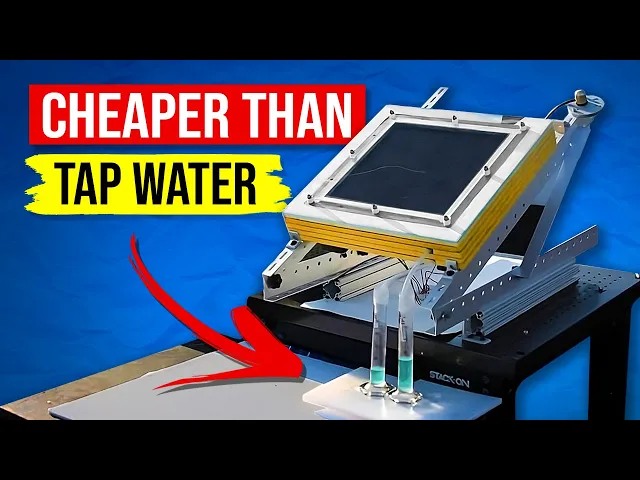
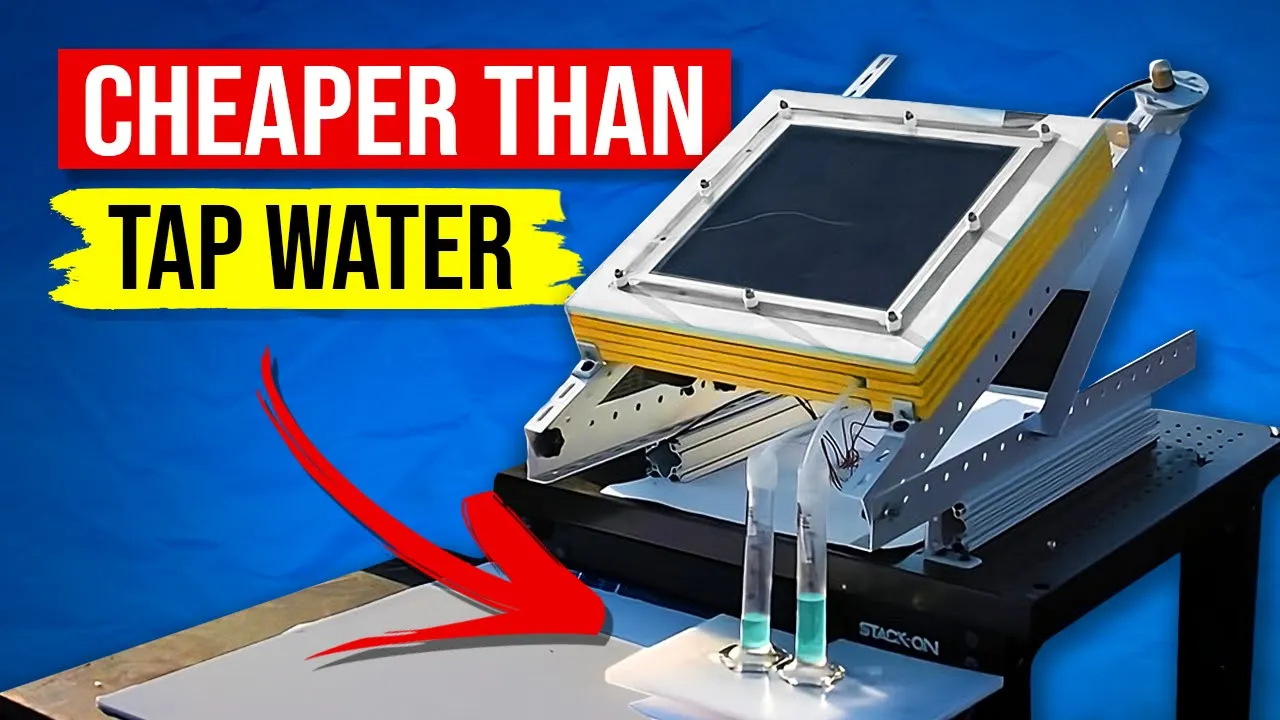
water and most importantly doesn't accumulate salt that clogs the membrane so how exactly does this work well there's a lot going on here but I've tried my best to distill some of the Core Concepts the whole system is contained within a box that is submerged underwater due to gravity the water pressure at the bottom is higher so it FS water up up to the top through a number of tubes one for each layer or stage of the device if we focus on one of these layers we can see that they are made up of a
top and bottom section as the salt water flows up into one of the layers it is confined in the thin insulated top section that's quickly heated by the Sun so the water starts to evaporate The Vapor that's formed then passes through the hydrophobic membrane into a bottom section in this section the vapor condenses and cools into fresh water where it can run into a collection pot what's left in the top section is now a slightly concentrated saltier bit of water that has started to cool now instead of leftover salt starting to accumulate and clog up
on the membrane the thermaline effect starts to cause currents that Wicks it away from the membrane With a Little Help from the angle of the device the thermaline effect creates these small Eddy currents these keep pushing new water to the warm part of the top section and keep the salt in circulation transferring it away from the membrane stopping the salt clogging the membrane is the big breakthrough of This research project because it makes the system highly efficient and reduces maintenance costs significantly the reason for having multiple layers is similar to the thermal distillation system we
saw earlier the heat in the bottom section of one layer that would otherwise be wasted is instead used to start heating and evaporating water in the top section of the layer below it tests on this ingenious distillation device showed amazing results it solved multiple problems at once record high water production efficiency extreme resistance to Salt accumulation it also runs on its own for 180 hours without any reduction in performance all of this makes this method of freshwater production cheaper say the researchers than you us tap water I'm not sure how their estimated cost of 1/5
of a cent per liter compares to the tap water in the rest of the world but I'd love to hear about it in the comments below but beyond this cost estimate having a passive device powered by the sun with high efficiency and no sot accumulation for clogging is amazing what's more because the device is tilted it also means that saltier water starts to sink to the bottom because it's denser this natur Al flushes out salty water from each layer before it can become hypine and damaging to the local ecosystem solving yet another problem the researchers
say that a device scaled up to the size of a small suitcase could produce up to 6 L of drinking water per hour it could also apparently run for several years before needing maintenance so small scale infrastructure like devices for households could become a real possibility and a Lifeline for places like Carabas as you're still watching please subscribe to the channel as I think you'll like some of the other videos I make like this one on bionic propellers inspired by Nature thanks for watching