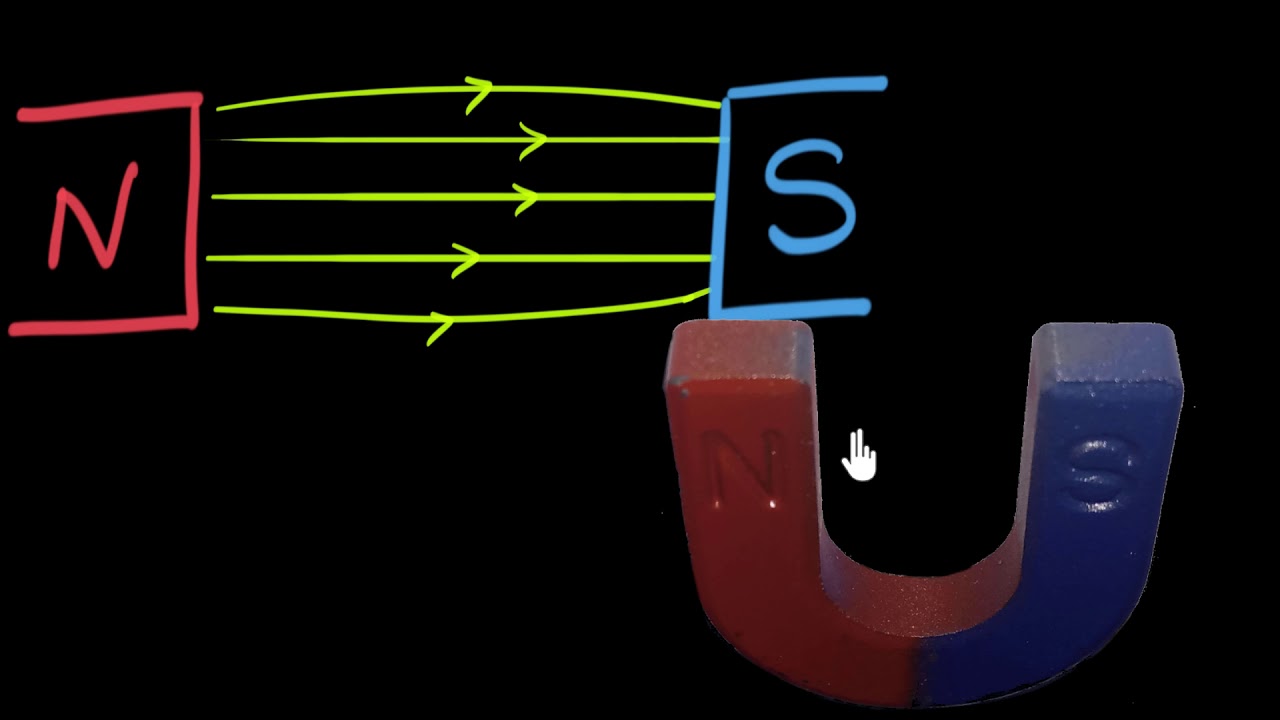
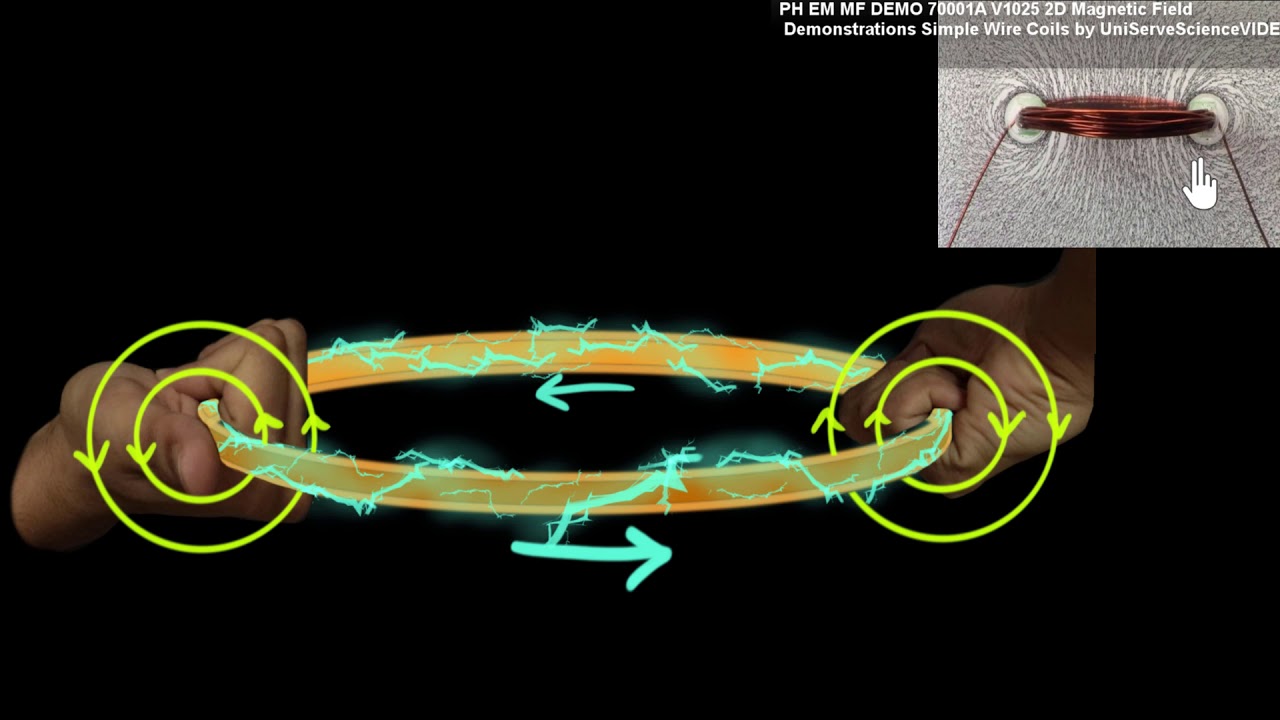
in a previous video we saw that if you have an electric current carrying loop then it generates a magnetic field that's very similar to that of a bar magnet but it doesn't quite resemble a bar magnet because if you look inside the bar magnet over here then you can see that there is this long region where the magnetic field is pretty straight it's not exactly straight but pretty much straight and parallel to each other can you see that over here however if you look at our our artificial magnet over here then notice that that this
region where the magnetic field lines are straight is very short and so this resembles not a big bar magnet but a very tiny bar magnet so now the question is how do we create something that generates a magnetic field perfectly like a large bar magnet where we have a large region where the magnetic field lines are pretty straight inside that's what we should find out now so how do we do this well what if we bring in another current carrying coil over here so let's say we bring in another current carrying coil and place it
down here somewhere then it's identical to this one so it's going to produce an identical magnetic field of its own and i'm going to show that in a different color over here but remember magnetic fields can never ever intersect and so the total magnetic field of these two coils together won't look like this because they are here they are intersecting so you know what's going to happen the two magnetic fields are going to merge together and give us a new magnetic field that's going to look somewhat like this look at the combined magnetic field we
now have a straight region over here we also have a straight region over here but in between it's kind of bulky so how do we straighten this out well i'm pretty sure you can guess now let's add one more current carrying coil in between over here and let's see if it straightens out so if we introduced another current carrying coil again it's going to generate its own magnetic field which i have shown in another color and i'm pretty sure it's looking like a mess right now but again the magnetic fields don't ever intersect so now
this magnetic field will merge with the previous magnetic field and together the magnetic field of all the three coils together is going to look somewhat like this hey look at this magnetic field we are getting close to what we want but again we have these little bulging out regions we have little wings over here and i'm pretty sure you know what to do next well just keep adding more and more coils in between so you know what let's go crazy let's say we add 50 coils in between i'm not going to show all the 50
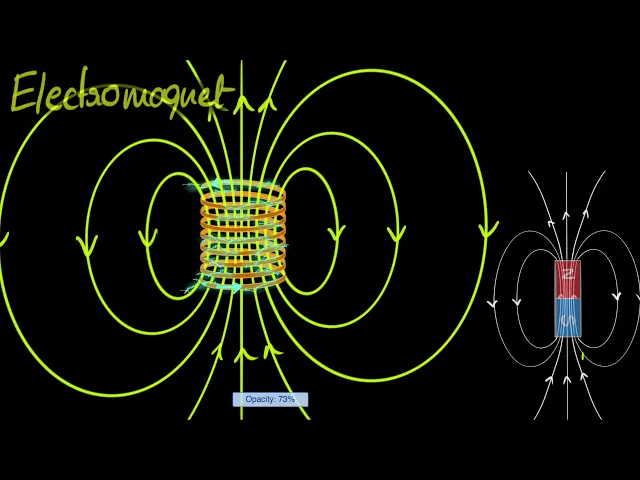
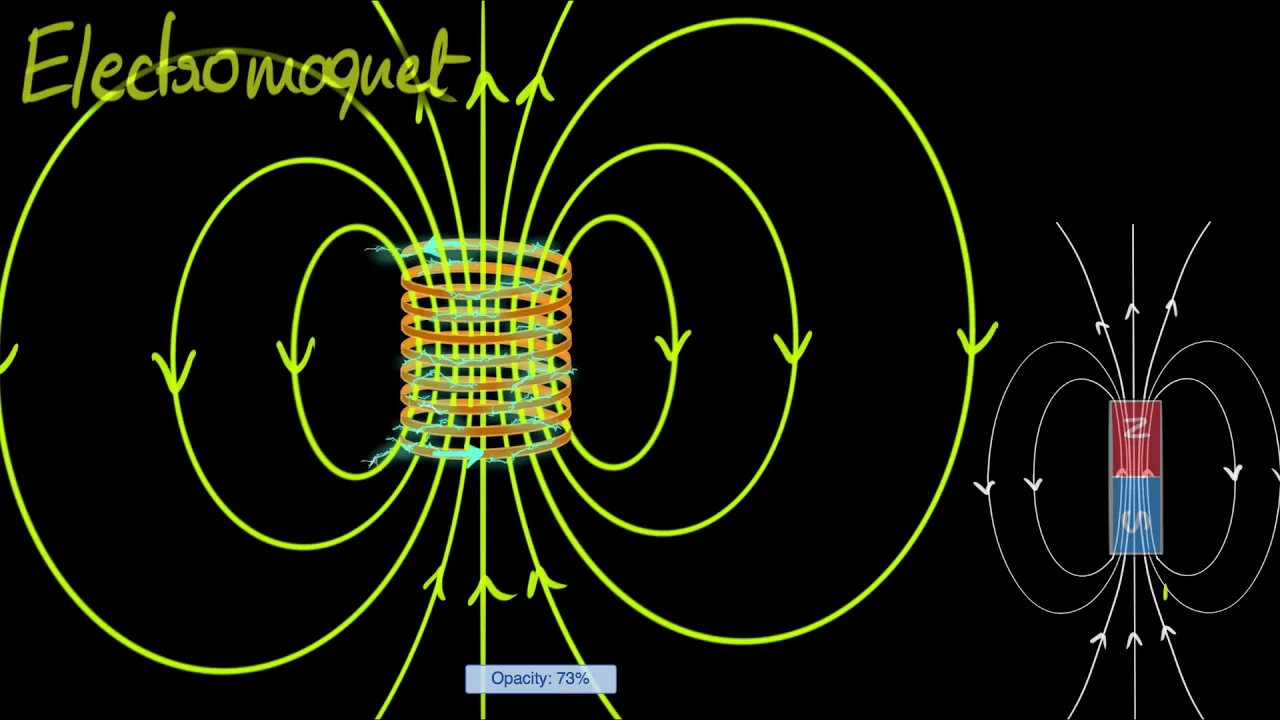
coils and we also want to show only a few one but let's imagine we add something like 50 coils i'm pretty sure you can guess what's going to happen the magnetic field inside is going to become almost straight now and these regions are also going to straighten out and so the new magnetic field of all these coils together will look like this and tada we have done it this looks exactly like what we wanted so if we have lots and lots of current carrying coils then it resembles a bar magnet now of course to make
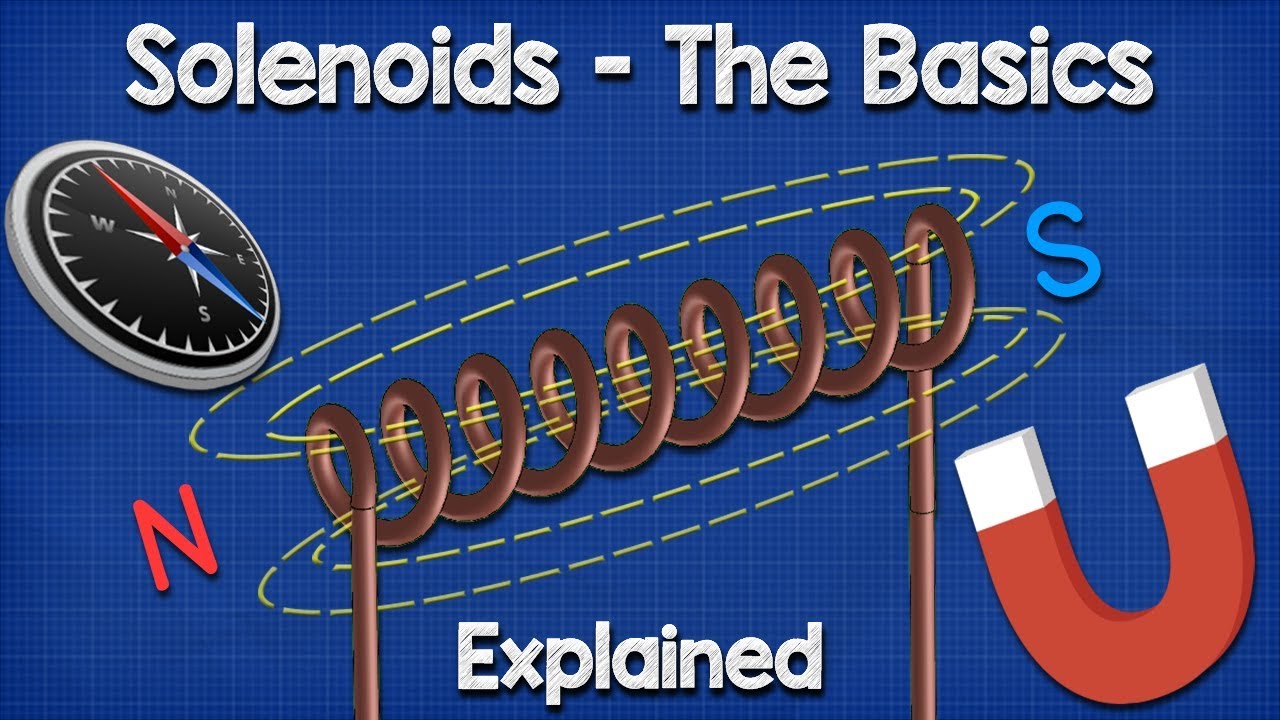
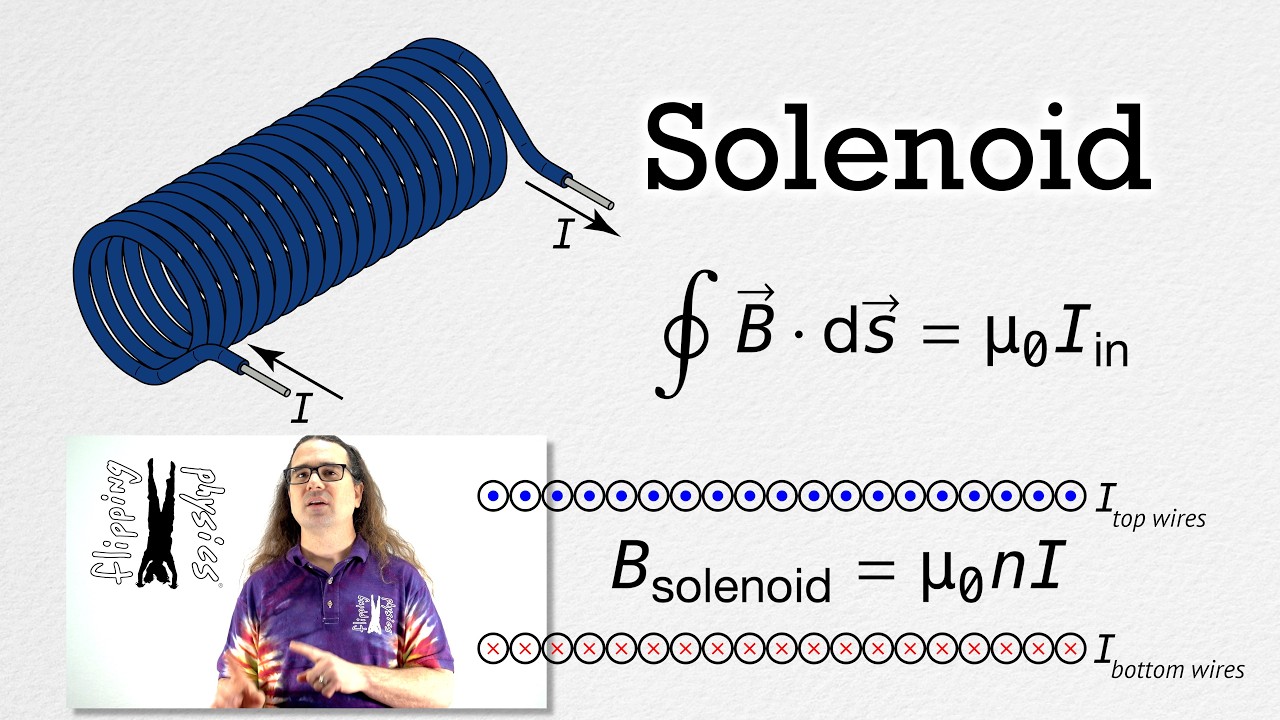
this construction easier instead of taking different different loops and keeping it on top of each other we could take a single wire and then coil it like a spring to give us multiple loops somewhat like this so you have taken a wire you call it multiple times and pass current through it and since we are getting a magnet due to electric current we call such magnets electromagnets and this particular electromagnet which has a shape like a pipe or a tube because of so many coils we give it a name it's called a solenoid and the
word comes from german solen which means pipe and oidis which means shape so whenever you coil something so much that it looks or resembles like a tube or a pipe we tend to call it a solenoid and when you pass current through it it behaves like a bar magnet where one side of it acts like the north pole and the other side acts like a south pole and guess what electromagnets have great advantages over permanent magnets you see as the name suggests these have their magnetic fields permanently fixed you can't change them but in electromagnets
if you increase the strength of the current you can increase the magnetic field strength if you switch off the current the magnetic field disappears and the electromagnet gets turned off if you reverse the direction of the current the magnetic field will reverse and as a result you can reverse the poles so it's very versatile in the sense you can control its magnetic field but the only the only disadvantage is that if you want to use it for a long time you have to continuously supply electric power to it it runs on electricity but if you
have to use permanent magnet for a long time go ahead it's free of cost so depending upon what we want in some cases like in mri machines in magnetic trains where we want to keep changing the magnetic field we're going to use electromagnets but in some cases where we don't want the magnetic field to change it makes it makes perfect sense to use permanent magnets over there and lastly we can make electromagnets way stronger by introducing a soft iron rod you see iron is a magnetic material this means when you place it in a magnetic
field it gets magnetized starts behaving like a magnet and adds on to the magnetic field already generated making it much stronger but soft iron the word soft here does not mean it's it's soft like a pillow soft irons are kind of ions that can be easily magnetized and when you switch off the current they will easily demagnetize they're sort of like temporary magnets that's what we need over here for electromagnets right but there's another class of iron called hard iron these are the ones which are extremely hard to magnetize but once you magnetize them they're
extremely hard to demagnetize as well these are the materials that we will use for making permanent magnets so what did we learn in this video we saw that if you take a wire and coil it many many times around to make a shape like a pipe we'll call it as a solenoid and when you pass current through it it generates magnetic field very similar to that of a bar magnet we call such material we call such devices electromagnets and by introducing soft iron a kind of ion that can be easily magnetized and demagnetized we can
enhance the magnetic field and make the electromagnets way stronger