If you happen to travel 4,900 ft below the ocean surface, you'll start to notice that the cuter creatures you once saw on shallow water were now anything but cute. Their bodies stretch, their eyes grow huge or are completely missing altogether. And they start to grow appendages in places where they really shouldn't be growing appendages.
It's like evolution itself injected some deformed genome straight into the DNA of these once normallooking animals. But among the worst and most horrifically affected by this phenomenon are squids. Some squids turn completely transparent while others developed hooks instead of suckers.
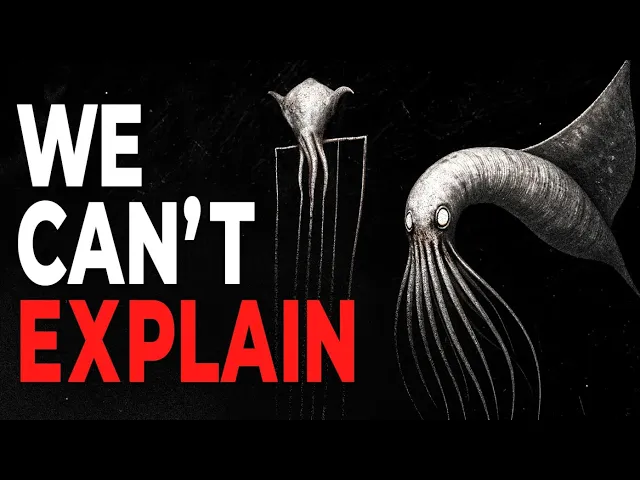
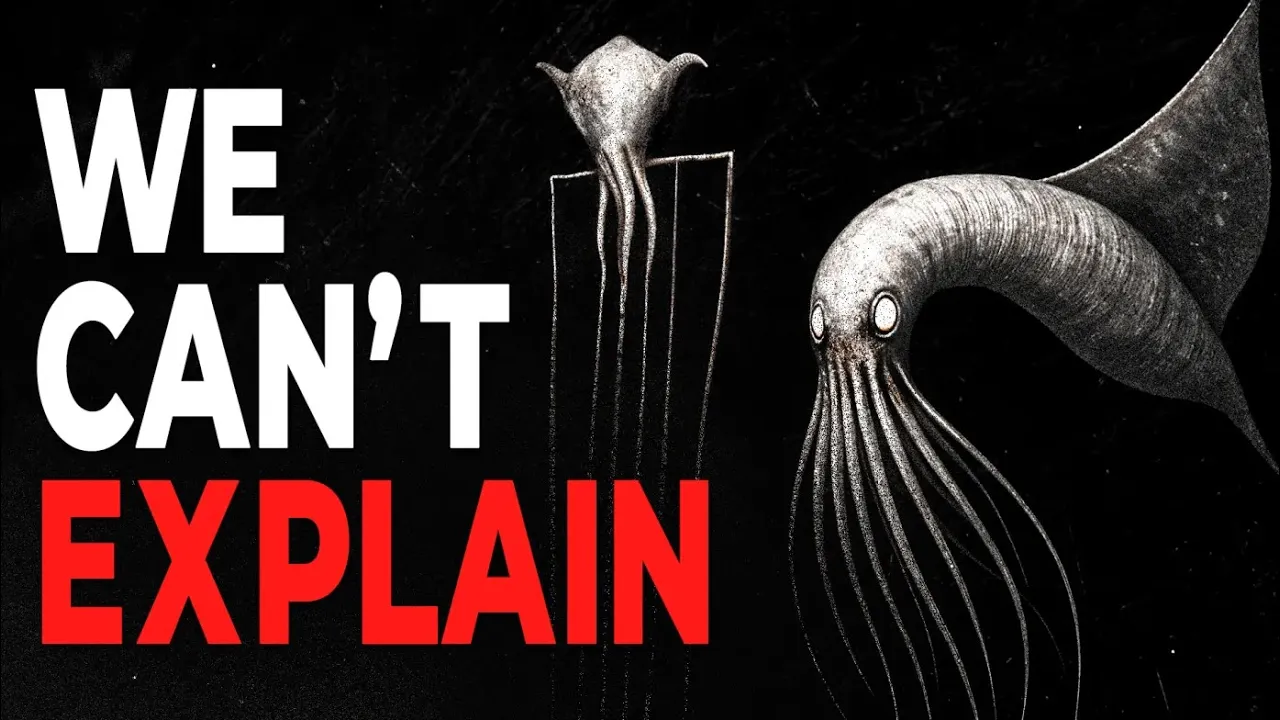
And the worst affected amongst the squids turn into something more like this. These are creatures that live even deeper than giant squids live and thus have become even more disturbing. Why do these creatures seem to get creepier and creepier the deeper down in the ocean you go?
And why are squids specifically so vulnerable to this crepifying effect? To understand why this phenomenon even happens in the first place, we first have to take a look at where these squids even are. It's not like you'll accidentally stumble across one of the creepier squids accidentally, because most squids end up looking more like this guy.
This is the reef squid and it lives in the Apipelagic zone and it's the typical normallooking squid that comes to mind. But once you descend into the twilight zone is when you start to see the phenomenon taking effect. Squids start to acquire some pretty weird traits like in this guy, the firefly squid.
They've adopted bioluminescence, which honestly is more pretty than creepy. Glass squids turn transparent, almost as if they were made of glass. But while definitely stranger than the reef squids, they aren't necessarily creepy yet.
But at the deepest part of this zone is the humbult squid, which is the first case of real deep sea crepifying. These guys are over 6 ft long and up to 100 lb and are also the first squids to develop hooks designed to actually rip flesh apart. Unlike any of the previous squids, these squids will actually hunt each other, literally eating weaker members of their own species.
They're known as the red devils of the sea, not just because of their color, but because of their hyperaggressive and almost unnerving behavior. Most squids hunt alone, but humbult squids attack in coordinated groups, flashing red and white patterns across their skin to communicate mid hunt. They can move up to 25 m an hour, which is definitely faster than you could ever swim.
But are they really a threat to us? Well, they are quite terrifying, and yes, they can actually hurt you with their hooks, but it's very unlikely they would consistently hunt down something as large as a person. They usually prefer smaller prey like shrimp, crab, or smaller versions of other squids, and there haven't been any reported human deaths from humble squids.
We're safe for now. But if you descend even further into the Midnight Zone, the squids you'll encounter here have fully been deformed by evolution and have reached the point where everyone can accept that they're terrifying. Enter the Promatch Touis, the squid with human teeth.
I honestly don't know who would have ever even thought this would be a good idea to design, but this squid unfortunately does exist. Despite this looking absolutely terrifying, these aren't actually teeth. their folded lips of soft tissue that surround the squid's beak, which it still uses for slicing tiny prey.
I'm honestly not sure if that makes it more or less creepy. However, only one specimen has ever been caught, and it was barely an inch long. Part of the reason we haven't found any more is due to us not being able to easily find creatures so far in the deep.
But also, these are just highly rare squids altogether. That's probably for the better, though. On the complete opposite end of the size spectrum in this zone is the longest squid in the world, the giant squid.
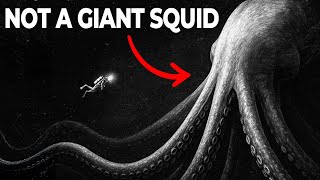
This squid is the most blatant cause of deep sea gigantism, and it can grow up to an estimated 45 ft long, although so few have been found that we still don't even really know the limits to their size. It has the largest eyes in the entire animal kingdom, larger than dinner plates. And because these squids are so heinously massive, they're actually dangerous, too.
They're known for fighting sperm whales, which dive thousands of meters to hunt them, and they're the main reason we even knew they existed. Scars from giant squid tentacles have been found on whale skin, and beaks from squid have been discovered in whale stomachs. Most people honestly think this animal is what the Kraken myths were based off of.
The squid's giant autonomy has been designed for deep and the deep only with a huge mantle of straight muscle, two tentacles tipped with suckers and lined with teeth, and a solid beak that can actually cut prey. So, they're absolutely terrifying, and that's why they're so famous. Cool, I guess.
>> But are they aggressive towards humans? Well, we don't really think so, but that's mostly because no human ever meets them down there. In normal conditions though, they're ambush predators and lurk in pitch black water before striking something like midsized fish or once again even other squid.
There's a lot of selfeing amongst the creepy squids. So why do they get so big? It's a mix of multiple reasons, but one theory is that in the deep ocean where it's cold and there's basically no food, larger bodies conserve energy better.
They could store more nutrients and move more efficiently over long distances. Another idea is that bigger animals can travel further to find food or mates in such an empty environment. But despite them literally being absolutely heinously massive, and yes, I mean massive, we still don't really know anything about them.
We don't know how many there are, how long they live, how they reproduce, or where they lay their eggs. In a way, that's what makes them so interesting. But these aren't even the creepiest of squids yet, since we haven't even reached close to the bottom of the ocean.
Even deeper than the Midnight Zone is the Abyssopolgic Zone, also called the Abyssal Zone, or you can just call it the Abyss, because that's basically what it is. An endless pitch black void stretching from 4,000 to 6,000 m below the surface. And at this point, it's impossible for any sunlight to break through here.
The pressure here is immense. And since there's no sunlight, the temperature is just a little above freezing here. All life here seems to move in a kind of eerie slow motion.
There's no plants and most food is just marine snow that falls from above. So what lives here? Only highly specialized creatures like deep sea worms, sea cucumbers, deep sea jellyfish, and of course squids.
Asperotus aanthadoma is an insanely thin but insanely long squid reaching up to 15 ft. And all it really does is just drift. It's almost fully gelatinous, and we don't really know much about it because of how deep they're located.
It likely hunts with the trailing thin arms that extend out of it, and it might be able to sense vibrations. But the answer to some of these squids is still just unknown. But at the bottom of the abyssal zone is the only squid heavier than the giant squid, the colossal squid.
Listen, I know these names are starting to get confusing. I'm having a hard enough time just trying to pronounce them, but stay with me. The colossal squid is actually a completely different species of squid than giant squids and aren't really closely related at all.
They're from the crunchy day family, which is the glass squids. Although the colossal squid isn't transparent, and the giant squid is from the Arcatou Day family. So, what's the difference?
The giant squid is long, lean, and fast, hence why it's an ambush predator. On the other hand, the colossal squid is shorter, but still nearly 35 ft, thick, and massive. It's also an ambush predator, but in a slightly different way.
It spots faint movements in the dark, then strikes with hook tentacles that twist and dig into flesh. Once it's got a hold, the squid drags the prey in and tears it apart with its giant beak. And this beak is capable of slicing through bone.
It's a literal heavyweight champion amongst the squid. The heaviest one recorded was over 1,000 lb, reaching about 495 kg. It's expected that the heaviest ones could reach up to 1,300 lb.
Each eye is also gigantic, about 11 in across, and in some of the larger adults, they can be even bigger than giant squids, which makes it the only animal possible beating them in eyes. So, who would win in a fight? Honestly, it looks close.
The giant squid has the reach with the long tentacles that can strike from a distance, and it's faster and more agile. But the colossal squid is such a tank and being heavier, thicker, and armed with rotating hooks instead of simple suction cups, it would likely be able to hook the giant squid and rip it apart. In a close-range brawl, the colossal squid would probably overpower the giant with brute strength alone.
But this would never really happen because they don't live in the same place. The giant squid sticks to the bargic zone, the midnight zone, where it hunts in slightly warmer, more oxygenrich seas. The colossal squid, on the other hand, is only really found in the abyssal zone of the Antarctic and is just too deep for giant squids to venture to.
What they do have in common, though, is that both the giant squid and the colossal squid are hunted by one massive enemy, the sperm whale. These whales dive thousands of meters into total darkness just to hunt them, using echolocation to find them. When whales come back up from those dives, their heads are often covered in long circular scars.
Because these hunts aren't easy. There are sucker marks and hook wounds from battles with both of these squids. And sometimes it can be hard to tell which is from which.
Inside the whale's stomachs, scientists have found giant beaks. The only part of a squid that doesn't digest because of how solid it is. So, what's even deeper than this?
The only thing below the abyssal zone is the had zone, the absolute bottom of the ocean. It starts around 6,000 m deep and goes all the way down to the deepest point on Earth, the Mariana Trench, nearly 11,000 m below the surface. The Haddle Zone is made up mostly of ocean trenches and deep troughs.
And what lives here is, well, basically nothing. Because it's so deep, nothing really lives down here past some simple life organisms like worm or microbes. And the most terrifying squid to ever exist.
All the way at the bottom of the ocean exists the Magna Pinner, aka the big fin squid. I'll let the photos explain this squid. What this squid does is, well, we don't really know.
We've never caught one alive. We've never studied a full adult, and we only know they exist from grainy camera captures like this. It's suspected that they don't really swim, but more just drift.
And the ones we've found are about 20 ft long. still smaller than giant squids, but I would honestly rather find a giant squid than whatever this thing is. We don't really know the size limits on this thing because we've only really found juveniles in the deep.
Even the hadle zone is so deep that these squids have only ever really been found at the upper had zone. So, why did this squid evolve to become so creepy? Well, it's suspected that a lot of it is to do with survival, not just to make nightmares in the bottom of the ocean for fun.
Movement burns energy, and energy is hyper precious down so deep. So instead of swimming around, the big fin is better off not being designed to constantly hunt or run from predators. Unlike most higher up in the ocean, it looks like it's designed to just hang motionless, drifting and waiting for something, which is kind of what it seems like it does.
The elbow bend in each arm helps it control its net of tentacles. By keeping its arms angled, the big fin can hover and steer them without tangling them up. Even its colorless translucent skin is practical.
Even though light doesn't exist down here, if a predator happens to glow or use bioluminescence, transparency means the big fin reflects almost nothing. This, of course, is speculation since we have no real proof. But it's the most likely and best answer we have so far as to why they've become so terrifying.
Of course, terrifying doesn't necessarily mean dangerous. For all we know, these squids could be completely harmless to humans. But honestly, the creepy part about them is how much we literally don't know.
They live so deep that we know much more about giant squids compared to them. And we barely know anything about giant squids already. If something like the big fin squid exists down there, what else could be lurking that we haven't seen yet?
The truth is, we've explored less than 5% of the deep ocean, which means there could be dozens of undiscovered squid species, some potentially even bigger than the largest ones we know. Some scientists think there might be larger relatives of the big fin we've never caught on camera that move so slowly that submersibles might pass right by them without noticing. Even the squids we do know, the giant, the colossal, the glass squids, were all basically discovered by accident.
We only knew of their initial existence from sperm whales. And sperm whales don't go deep enough to reach the hadle zone. But as much as I think squids are cool, I'm not particularly eager to find something creepier than this.
If you'd like to watch my video about the world's deadliest jellyfish, check it out here. Thanks for watching.