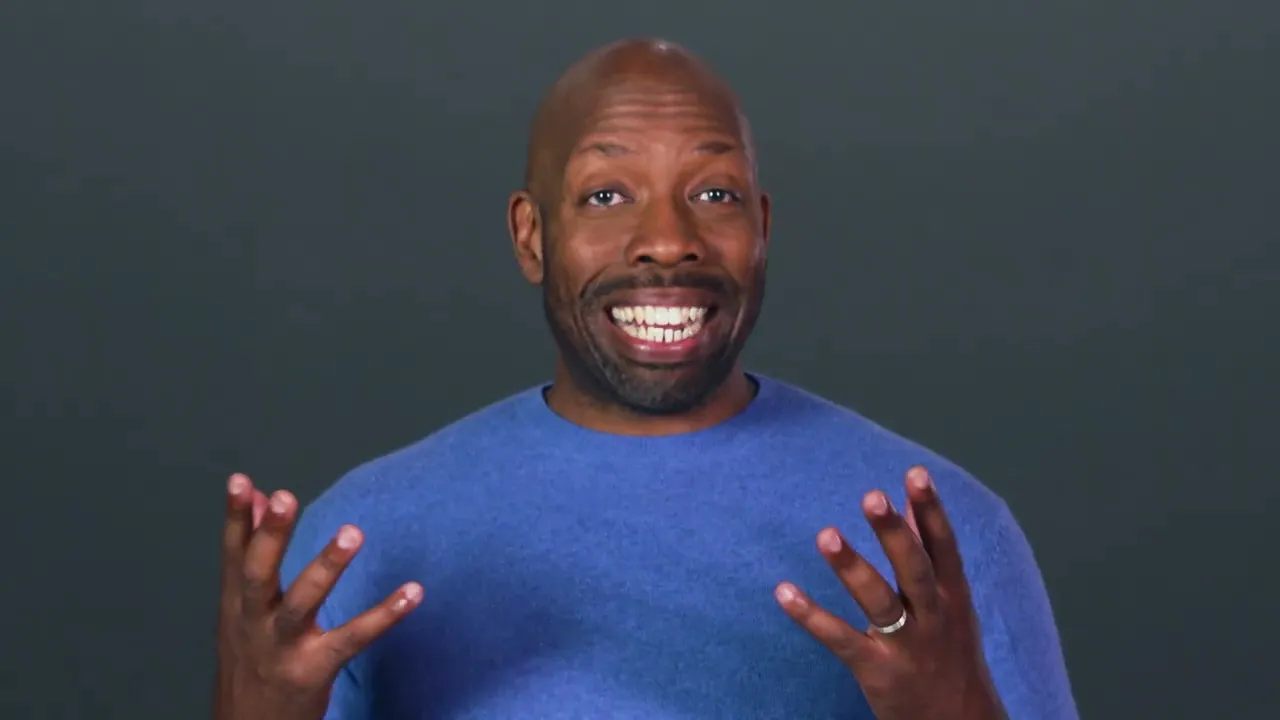
Hello everyone! My name is Akil, and I'm delighted to bring you with me on this course about climate change adaptation. Together we will see why adaptation is a crucial issue for organisations.
But let's face it, this subject raises a lot of questions, and sometimes generates misunderstanding. So, what is climate change adaptation? … The climate is changing.
Human activity has warmed the world by about 1. 1°C since pre-industrial times. You may be thinking 1 degree.
. . What’s the problem?
Except that the climate is not the weather. . .
Climate is an average. An increase of a few degrees actually means a lot of disruptions. And increasingly frequent and severe climate-related disasters.
Pakistan, 2022. Massive flooding. 1,700 dead, 33 million displaced.
. . In California, the same year, thousands of hectares incinerated, with victims and the region paralysed for several weeks.
August 2021, historic floods hit Belgium and Germany. 200 dead, colossal damage. Around the same time, a heat dome formed in Canada.
Up to 49 degrees. . .
Nearly 100 victims in the Vancouver area. Fires, droughts, floods. .
. Scientists are clear: these events are directly linked to ongoing global warming. As you can see, plus 1.
1 degrees, well, it’s a big deal. And then there are the gradual changes, such as rising sea levels or water stress. That’s our situation today.
But what does the future hold? Well, the IPCC, the Intergovernmental Panel on Climate Change, has presented several scenarios for 2100. We'll look at three of these scenarios.
1. 5 degrees of global warming, the most optimistic. .
. 2 degrees. And 4 degrees.
Let's look at droughts. In the 1. 5 degree-increase scenario, the number of severe drought episodes would double compared to the pre-industrial era.
. . This would have cascading consequences: agricultural yields would fall.
Food safety would be SIGNIFICANTLY threatened. At plus 2 degrees, these droughts would be multiplied by 2. 4.
At plus 4 degrees, it would multiply by 4. 1. And in that scenario, by the way, extreme temperature peaks would occur 9 years out of 10.
. . And then there are the other phenomena: extreme precipitation.
. . .
. . reduced snow cover tropical cyclones.
. . Etc.
etc. So, which of these three scenarios is the most likely? In the 2015 Paris Agreement, states pledged to set measures holding global warming well below 2° by 2100, and to pursue efforts to limit it to 1.
5°. In reality, with current climate policies, the likely estimates range between plus 2. 2 and + 3.
4 degrees. That's already too much. And that's only if these policies are maintained.
Which is by no means guaranteed. . .
So, with that said. . .
what can be done? There are two main ways to act. Firstly, acting on the causes of climate change: .
. . essentially reducing greenhouse gas emissions.
This is called mitigation. Secondly, acting on the consequences of climate change. We are already starting to face these consequences, and, as mentioned, these will get worse.
And that's what we call A-DA-PTA-TION. Adapting, adjusting, and coping with the impacts of climate change. So be careful, adapting doesn’t mean giving up mitigating.
Both go together, we'll come back to that. In this course, we're going to talk about organisations. They are often unprepared.
Yet, the physical risks, . . .
i. e. , climate change’s tangible impacts, concern your organisation directly and at every level.
They affect your resources, your operations, your employees, your suppliers, and your customers. Worldwide. And there's another good reason to adapt.
. . Your stakeholders are demanding more and more TRANSPARENCY.
Especially on how you anticipate climate risks. Your investors and customers could, for example, ask you to comply with the TCFD, the task force on climate-related financial disclosure. It is a baseline framework for climate reporting.
In some regions, reporting about climate risks has even become compulsory. In Europe, the CSRD and the green taxonomy include a section about adaptation. So that's the key message: we need to adapt to the already ongoing changes, now.
And to anticipate future developments. So, now, what do we do? Let’s look at this together, in the next videos.