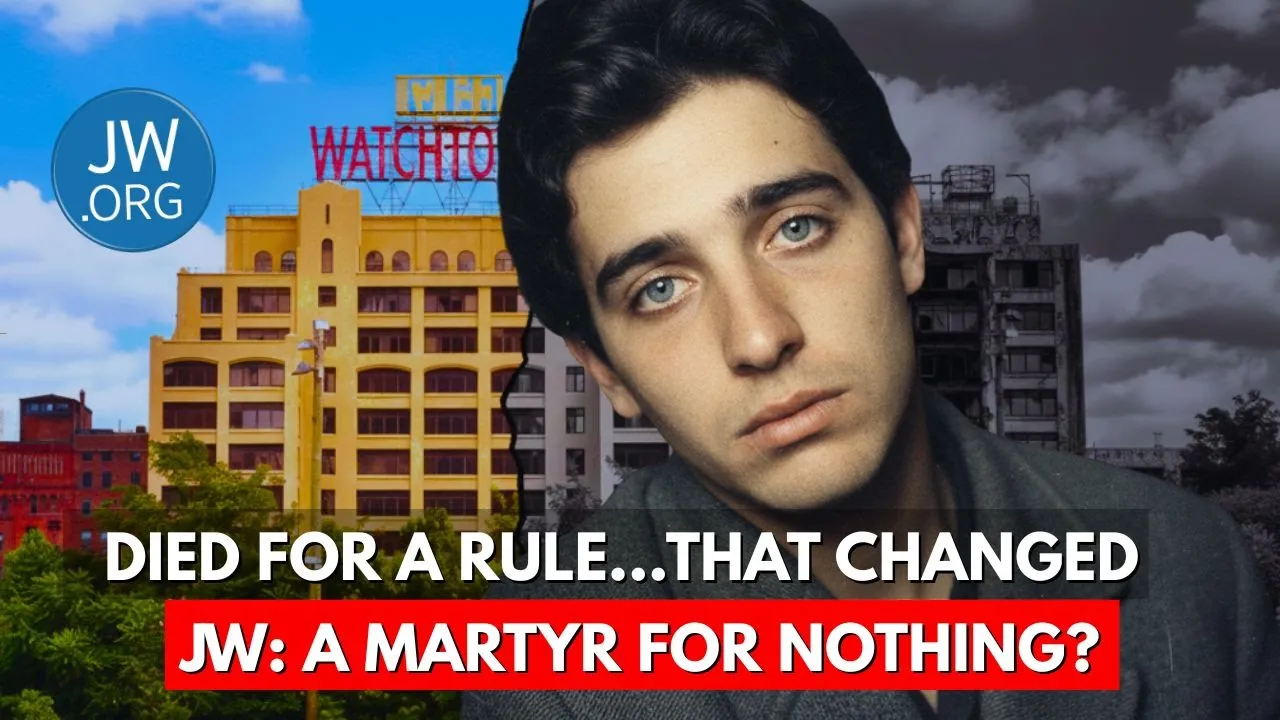
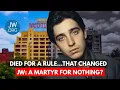
In 1982, a young man named Alfredo Oscar Fernandez died while in military custody in Argentina. He was 19 years old. His crime was not violence.
It was not theft. It was not any act that most people would consider worthy of imprisonment, let alone death. His crime was obedience.
He obeyed a religious directive that told him he could not, under any circumstances, accept any form of military service or any alternative to it. He refused to wear the uniform. He refused to participate.
He refused everything because that is what his religious leaders told him God required. Before his imprisonment, Alfredo wrote a letter to his family. The words are haunting in their simplicity.
I never wish to write a letter like this, but circumstances have made it necessary. He thanked his parents for their moral support. He knew what was coming, and he accepted it.
Alfredo did not survive his imprisonment. He died believing with absolute certainty that he was doing exactly what God demanded of him. He died trusting that the men who gave him this directive were speaking for Jehovah himself.
He died faithful. 14 years later in 1996, the very same organization that demanded his sacrifice made an announcement. The rule had changed.
Alternative civilian service was now a matter of personal conscience. No young man would ever need to go to prison for this reason again. If Alfredo had been born 10 years later, he would not have needed to refuse.
He could have accepted an alternative. He could have served his time and returned home to his family. He would be alive today.
Now, in 2025, that same organization has published a book called Walk Courageously with God. And in that book, they use Alfredo's story. They hold him up as an example of faith and courage.
They show his face to young witnesses around the world as a model of what true devotion looks like. But there is something the book does not mention. It does not mention that the rule Alfredo died for was later declared unnecessary.
It does not mention that his death was the result of a policy interpretation that the organization itself eventually abandoned. It does not mention that what was once presented as God's absolute requirement became just 14 years after Alfredo's death merely a suggestion. This is the story of Alfredo Oscar Fernandez.
This is the story of the rule that killed him. And this is the question that no one inside the organization dares to ask. Who is responsible for the lives that were lost in the name of a temporary truth?
To understand what happened to Alfredo Fernandez, we need to understand the Argentina he lived in. In 1976, a military hunter seized power in Argentina. What followed was one of the darkest chapters in Latin American history.
The regime launched what it called the dirty war, a campaign of state terrorism against anyone deemed subversive. Over the next seven years, an estimated 30,000 people would disappear. They were taken from their homes, their workplaces, their schools.
They were tortured in clandestine detention centers. Most were never seen again. The military government was intensely nationalistic.
It demanded absolute loyalty from every citizen. Any form of disscent was treated not as disagreement but as treason. And for young men, there was one fundamental obligation that could not be refused, military service.
In this context, the Jehovah's Witnesses faced a unique and terrifying situation. In 1976, the same year the Huna took power. The government formally banned all activities of Jehovah's Witnesses in Argentina.
Kingdom halls were closed. Meetings were driven underground. Children who refused to salute the flag were expelled from schools.
To be a witness in Argentina during these years was to be an enemy of the state simply by existing. And for young witness men who were called up for military service, the situation was impossible. The doctrine of total refusal.
The leadership of Jehovah's Witnesses known as the governing body had developed a specific doctrine regarding military service. It was not enough to refuse to carry a weapon. It was not enough to refuse to fight.
A true witness, according to official teaching, had to refuse all forms of service connected to the military system, including any civilian alternative that might be offered as a substitute. The reasoning was presented as theological. The 1951 edition of the Watchtower stated, "Jehovah's witnesses are, according to God's word, no part of this world which is governed by the political systems.
" For this important Bible reason, they tell officials of the government that they conscientiously object to serving in any military establishment or any civilian arrangement that substitutes for military service. The argument was simple but absolute. If civilian service was offered as a substitute for military service, then accepting it was equivalent to accepting military service itself.
The substitute by definition stood in place of what it replaced. To accept the substitute was to compromise one's neutrality. Raymond Fron, a former member of the governing body who later wrote extensively about his experiences, explained the logic in his book Crisis of Conscience.
The reasoning behind this was that because this service was a substitute, it therefore took the place of what it substituted for and came to stand for the same thing. Since it was offered in place of military service and since military service involved potentially the shedding of blood, then anyone accepting the substitute became blood guilty. This was not presented as a suggestion.
It was not described as a matter for individual conscience. It was the position of the organization taught as divine truth and enforced through the threat of dysfellowshipping being cut off from family, friends, and community. For a young witness in Argentina, this created an impossible situation.
The military dictatorship demanded service. The religious organization demanded refusal. And the penalty for refusal in Argentina in 1982 was not a quiet stay in a civilian prison.
It was detention in military facilities under the control of men who had made torture and disappearance into instruments of state policy. Alfredo Oscar Fernandez was 18 or 19 years old when he was called up for military service. He was a young man who had been raised to believe that the governing body of Jehovah's Witnesses spoke for God.
He had been taught that accepting any form of military service, even non-combat roles, even civilian alternatives, would make him blood-guilty before Jehovah. He had been taught that faithfulness meant absolute refusal. And so when he was called, Alfredo refused.
He refused to serve. He refused to wear the uniform. He refused to participate in any way.
He knew what the consequences would be. He was not naive. He understood that he was defying a military dictatorship that had made thousands of people disappear.
But he believed that God required this of him and he was willing to pay the price. Alfredo was not sent to a civilian prison. He was taken to military facilities.
In those facilities, young witnesses like Alfredo were subjected to physical and psychological torture. The goal was to break them, to force them to put on the uniform, to make them renounce their position. The military officers did not understand conscientious objection.
They saw only subversion, only betrayal of the nation. Before he was taken, Alfredo wrote to his family. "I never wish to write a letter like this," he told them, "but circumstances have made it necessary.
" He thanked his parents for their support. He knew he might not come back. In 1982, Alfredo Oscar Fernandez died while in military custody.
He was 19 years old. Alfredo was not alone. Across the world, during the decades when this policy was in effect, thousands of young Jehovah's Witnesses were imprisoned for refusing both military and civilian service.
In Spain, during the 1960s and 1970s, the number of imprisoned witnesses reached nearly 1,000 at various times. In Italy, a survey found that witnesses had collectively spent nearly 10,000 years in prison for conscientious objection. Historian Sergio Albasano observed that Jehovah's Witnesses made up the vast majority of youths who were imprisoned for refusing to render military service.
In Greece, before the introduction of alternative civilian service in 1997, hundreds of witnesses were imprisoned, some for 3 years or more. In Armenia, in South Korea, in dozens of countries around the world, young men went to prison rather than violate what they believed to be God's command. The total number of years spent behind bars is almost impossible to calculate.
It is measured not in hundreds but in thousands upon thousands. But Alfredo's case stands apart. He did not simply go to prison.
He was held by a military dictatorship that had institutionalized torture and murder. He was not facing months of discomfort in a civilian facility. He was facing men who had made disappearing people into routine practice.
and he faced it because his religious leaders told him that any other choice would make him blood-guilty before God. The question of choice. The organization presents these stories as examples of extraordinary faith.
And in one sense they are. The young men who endured imprisonment, who faced torture, who died rather than compromise, showed remarkable conviction. They believed they were suffering for God and they accepted that suffering.
But here is where the story becomes complicated. These young men were not making free choices based on their own study of scripture. They were following a directive handed down by their religious leaders.
They were told that accepting civilian service would make them blood guilty in God's eyes. They were told that the only faithful path was total refusal. And they were told that anyone who made a different choice would be dysfellowshipped, cut off from everyone they loved.
Alfredo trusted the governing body. He trusted that they spoke for Jehovah. He trusted that the rule they had established reflected God's own requirements and he died for that trust.
The men who made that rule did not face the Argentine military. They did not face torture. They did not die in custody at 19 years old.
They sat in comfortable offices in Brooklyn, New York, and they issued directives that would cost young men their freedom and their lives. Under those circumstances, how free was Alfredo's choice? The May 1st, 1996 issue of the Watchtower contained an article titled Paying Back Caesar's Things to Caesar.
Within its pages was a paragraph that would change everything. The article asked, "What though, if the state requires a Christian for a period of time to perform civilian service that is a part of national service under a civilian administration? " The answer was remarkable.
Here again, Christians must make their own decision based on an informed conscience. That is his decision before Jehovah. Appointed elders and others should fully respect the conscience of the brother and continue to regard him as a Christian in good standing.
After six decades of insisting that accepting civilian service was equivalent to compromising Christian neutrality, after thousands of years of collective imprisonment, after the deaths of young men like Alfredo Oscar Fernandez, the rule had changed. Civilian service was now a matter of personal conscience. A young man could accept it without losing his standing in the congregation.
He would not be dysfellowshipped. He would not be considered unfaithful. Alfredo had been dead for 14 years.
If this announcement had come in 1981 instead of 1996, Alfredo could have accepted an alternative to military service. He would not have needed to refuse. He would not have been taken to military facilities.
He would not have faced torture. he would have lived. What is remarkable about this change is not just the change itself, but how it was announced.
There was no acknowledgement that the previous policy had been wrong. There was no apology to the thousands of young men who had spent years in prison following a directive that was now declared unnecessary. There was no recognition of those who had died.
The organization framed the change as new light, a progressive understanding of truth that Jehovah reveals to his faithful servants over time. The implication was that God had always intended for civilian service to be a matter of conscience. It had simply taken the organization time to understand this correctly.
Two years later, the Watchtower published what might be considered an explanation for those who had suffered. The August 15th, 1998 issue stated, "In the past, some witnesses have suffered for refusing to share in an activity that their conscience now might permit. For example, this might have been their choice years ago as to certain types of civilian service.
Note the language, their choice. The article continued, "In the past, some witnesses have been very strict in their view of what they would or would not do. For that reason, they suffered more than others.
Later, increased knowledge helped them to expand their view of matters. But they have no reason to regret having earlier acted in harmony with their conscience, even when this possibly brought extra suffering. " This passage places the responsibility for the suffering entirely on the individual witnesses who chose to be strict.
It suggests that their suffering was the result of their own personal strictness rather than a mandatory policy enforced by the organization under threat of dysfellowshipping. Alfredo did not choose to be strict. Alfredo followed the rule that the organization told him was required by God.
And now the organization was saying it had been his personal choice all along. The dead cannot object to being misrepresented. The Bulgaria connection.
There is an additional layer to this story. In the 1990s, the Jehovah's Witnesses organization was seeking legal recognition in Bulgaria. The Bulgarian government had concerns about several of the organization's policies, including its stance on military service.
Documents submitted to the European Commission on Human Rights show that the organization agreed to modify its position on civilian service in order to gain legal recognition. The timing of the 1996 policy change coincides closely with these negotiations. This raises a troubling question.
Was the change in doctrine driven by genuine theological reconsideration? Or was it a practical accommodation made to achieve legal status in a European country? If doctrinal positions can be adjusted to meet governmental requirements, then the claim that these positions represent absolute divine truth becomes difficult to sustain.
And if the rule was flexible enough to be changed for legal convenience, why was it ever rigid enough to cost young men their lives? In October 2025, the Jehovah's Witnesses organization announced a new publication at their annual meeting. The book was titled Walk Courageously with God.
The book features examples of faith and courage throughout history. It is designed to inspire modern witnesses to show the same devotion that faithful servants of God have shown throughout the ages. Among the examples it highlights are young men who were imprisoned for their refusal to participate in military service.
Among those examples is Alfredo Oscar Fernandez. The book presents Alfredo's story as an example of courage and faithfulness. It quotes from his letter to his family.
It describes his refusal to compromise his neutrality even in the face of military pressure. It holds him up as a model for young witnesses today. What the book does not mention is that the rule Alfredo died for no longer exists.
A young witness reading about Alfredo in 2025 would have no way of knowing from the book itself that the organization changed its position in 1996. They would have no way of knowing that a young man today could accept civilian service without any spiritual consequence. They would read Alfredo's story and assume that he died for a timeless principle, an unchanging requirement of God.
They would not know that he died for an organizational policy that was quietly abandoned 14 years after his death. This is not an isolated case. The organization regularly celebrates the sacrifices of past members while quietly moving away from the policies that required those sacrifices.
Young witnesses who died refusing blood transfusions are honored as martyrs. Even as the organization has quietly modified its blood policy over the years, creating an increasingly complex list of acceptable blood fractions and medical procedures, witnesses who shunned family members for decades are praised for their faithfulness, even as the organization has recently begun softening its rhetoric about the treatment of former members. Witnesses who gave up educational and career opportunities because the end was coming within this generation are told their sacrifice was meaningful.
Even as the definition of this generation has been changed multiple times, in each case the suffering is remembered, the policy change is forgotten and new members are inspired to show the same devotion without ever being told that the devotion of their predecessors was directed toward requirements that no longer apply. This brings us back to the question, what is courage? Is it courage to follow orders from religious leaders even when those orders lead to imprisonment and death?
Or is courage something more? The willingness to think critically, to question authority, to take responsibility for one's own moral choices. Alfredo showed a certain kind of courage.
He was willing to face a military dictatorship rather than violate what he believed to be God's command. That willingness to endure is in its own way admirable. But there is another kind of courage that the book does not celebrate.
The courage to ask whether the command was right in the first place. The courage to question whether men in Brooklyn had the authority to issue orders that would cost young men their lives in Buenus Aries. The courage to wonder whether God truly required the death of a 19-year-old boy for a rule that would be changed 14 years later.
Raymon Fron showed this kind of courage when he began to question the teachings of the organization from within. He was expelled and shunned for it, but he was willing to follow his conscience even when it cost him everything. The organization does not put Raymond Fron in its books about courage.
When a policy causes death and is later changed, who bears responsibility for the deaths? In any other context, we would hold leaders accountable for the consequences of their decisions. If a government implemented a policy that caused young men to die and then quietly reverse that policy without acknowledgement, we would call it a scandal.
We would demand answers. We would demand accountability. Religious organizations operate under different rules.
When they claim to speak for God, they position themselves as merely channels for divine truth. If a teaching is later changed, the change is attributed to God's progressive revelation rather than to human error. The leaders who taught the previous position were simply following the understanding available to them at the time.
This framing makes accountability impossible. If every teaching is provisional, subject to change as new light arrives, then no teaching can ever be definitively wrong. And if no teaching is ever wrong, then no leader can be held responsible for its consequences.
Meanwhile, the people who died under the old teaching are reframed as heroes who had the privilege of demonstrating their devotion. Their deaths become evidence of faithfulness rather than evidence of failed leadership. Alfredo Oscar Fernandez is now an inspiration.
His death is now useful. His face appears in a book designed to encourage young witnesses to show the same obedience. The men who made the rule that killed him faced no consequences.
They issued no apology. They accepted no responsibility. And now they use his death to demand the same obedience from a new generation.
The silence of the dead. Alfredo cannot speak for himself. He cannot tell us whether knowing what we know now he would make the same choice.
He cannot tell us whether he feels his sacrifice was worthwhile or whether he feels betrayed by leaders who changed the rules 14 years after he paid with his life. We can only imagine. Perhaps Alfredo would say that his sacrifice was meaningful regardless of later changes.
Perhaps he would say that what mattered was his faithfulness in the moment, his willingness to follow God as he understood him. Or perhaps if Alfredo could speak, he would ask why he had to die for a rule that the organization would later declare optional. Perhaps he would ask why the men who made that rule faced no consequences while he faced torture and death at 19 years old.
Perhaps he would ask why his face is now used to encourage other young men to show the same blind obedience. We will never know. The dead cannot question.
The dead cannot hold anyone accountable. And so Alfredo's story is told as an example of courage. his face shown as inspiration.
While the context that might complicate that narrative is quietly omitted. If there is one lesson to draw from Alfredo's story, it is this. The courage that is demanded today may be declared unnecessary tomorrow.
The organization continues to require its members to make significant sacrifices based on its current teachings. Witnesses refuse blood transfusions for themselves and their children. They shun family members who have left the faith.
They make educational and career choices based on the organization's guidance. These requirements are presented as divine mandates. Members who follow them are praised for their faithfulness.
Members who question them are viewed with suspicion. But the history of the civilian service doctrine shows that what is presented as an absolute requirement today may become a matter of personal conscience tomorrow. The organization has changed its position on numerous issues over the years.
Each time the change is presented as new light. Each time those who suffered under the old teaching are told to be grateful. The pattern continues.
If you are watching this as a current Jehovah's Witness, I want to speak directly to you. I am not asking you to abandon your faith. I am not asking you to stop believing in God.
Faith is deeply personal and I respect that. What I am asking you to consider is this. If an organization can demand total obedience to a teaching and then later change that teaching while accepting no responsibility for the harm caused, what does that tell you about the nature of that organization's authority?
If the same leaders who told Alfredo Fernandez that refusing civilian service was required by God later said it was a matter of personal conscience, were they speaking for God the first time or the second time or neither? And if they were wrong about that, wrong enough that a young man died for it, what else might they be wrong about? These are not easy questions.
The prospect of questioning everything you have built your life upon is terrifying. But I believe that a faith worth having is a faith that can survive honest questions. Alfredo Fernandez was not allowed to ask questions.
He was told that the governing body spoke for God and he believed it. He trusted them with his life. They were wrong and he died.
Alfredo was 19 years old when he died in military custody in Argentina. He was a young man who trusted his religious leaders completely. He followed their instructions exactly.
He refused to compromise even when compromise might have saved his life. I never wish to write a letter like this, he told his family, but circumstances have made it necessary. 14 years after his death, the men who made the rule that killed him announced that it was no longer required.
They did not apologize. They did not acknowledge their responsibility. They simply moved on.
Today, Alfredo's story appears in a book designed to inspire young witnesses to show the same courage. His face is used to encourage obedience. His death is used to demand sacrifice.
I do not know if this is courage. I think it might be exploitation. Alfredo deserved better.
He deserved leaders who would take responsibility for what they demanded. He deserved an organization that would acknowledge the cost of its mistakes. He deserved to be remembered not as a tool for demanding obedience, but as a human being whose life was cut short by a policy that even those who made it would later abandon.
He deserved the truth, and so do you.
![I Died & Saw EVERY Level of Hell [An Atheist’s NDE]](https://img.youtube.com/vi/uoQzsUVYZtA/mqdefault.jpg)