Translator: Leonardo Silva Reviewer: Mile Živković "What sort of genitals do you have? " "Can I see them? " "What sort of underwear do you wear?
" "Which bathroom do you use? " "Are you a boy or a girl? " "Wait, what's your real name?
" Imagine being asked those questions on average at least once a week, for the rest of your life. It seems pretty intrusive, impolite and just downright rude, right? Well, for me, this is a reality.
"Why on earth would anybody ask you those questions? ," you might wonder. Before I tell you that, I want to go through a few basic concepts, so that we're all on the same page.
First, I want to talk about sex. And no, not sex as in having sex, but sex as in biology. You see, our sex is a combination of our bodily features, such as chromosomes, hormone production, fat distribution, genitals, hair growth, and so on, and we refer to them as sex characteristics.
When a person is born, we usually assign them male or female, based on these sex characteristics, because it's just that simple, right? Well, it isn't really that simple. In fact, sex characteristics are so vastly different between people that there are at least forty recognized variations of sex.
Usually, when a person falls outside this binary of male and female, we refer to them as intersex. When an intersex child is born, whose genitals do not fit into the binary of male and female, surgeons will often perform medical interventions to surgically alter their bodies in order to normalize them, often without their parents' consent, and certainly not their own. I don't know about you, but to me, this seems like nothing but a clear violation of someone's human rights.
Secondly, I want to talk about gender. When we think about men and women, boys and girls, we get a certain idea in our head. We associate women with femininity, and we associate men with masculinity.
We expect men and women to dress differently, do different things, and have different roles in society. And this is partly what gender is, the socially-constructed idea of what men and women are, and what we expect them to be, because it's all so "just that simple," right? Well, not really.
Gender is also much more complicated than just two binary categories of men and women. In fact, gender is different between different societies and different cultures and it changes through time. So, gender and the way people identify their gender are therefore often much more complex, and the reality is much more diverse.
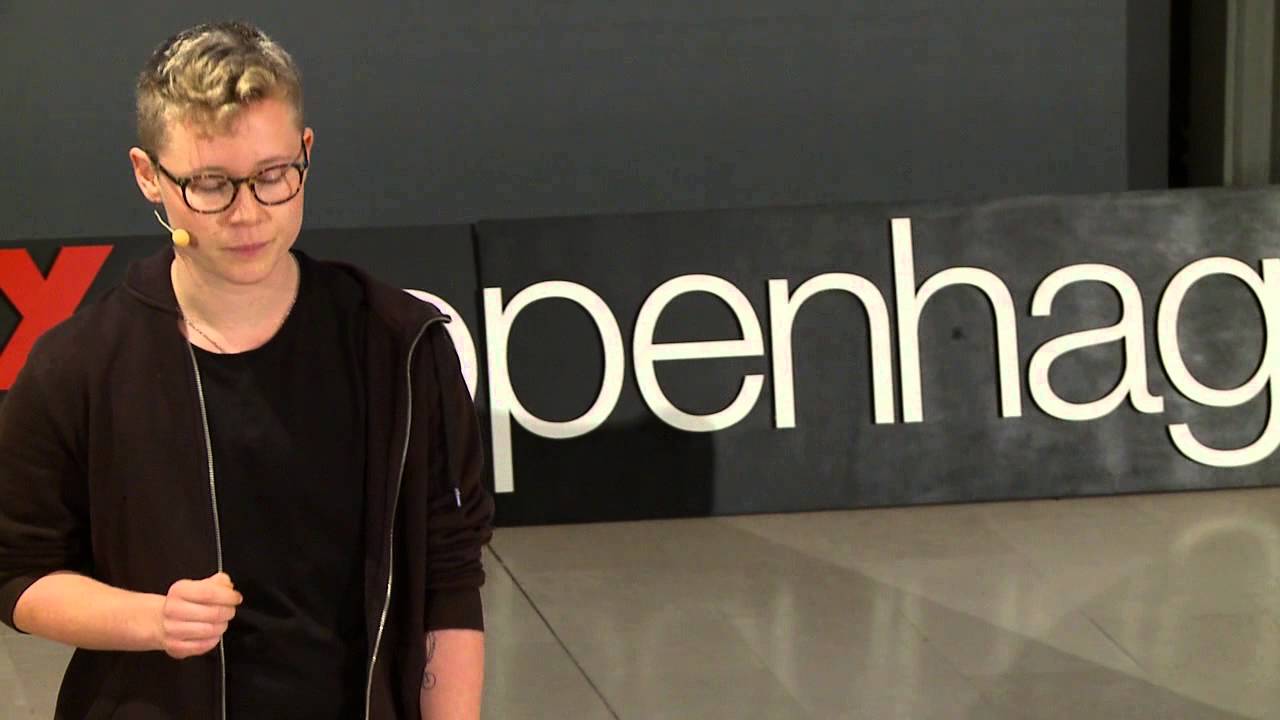
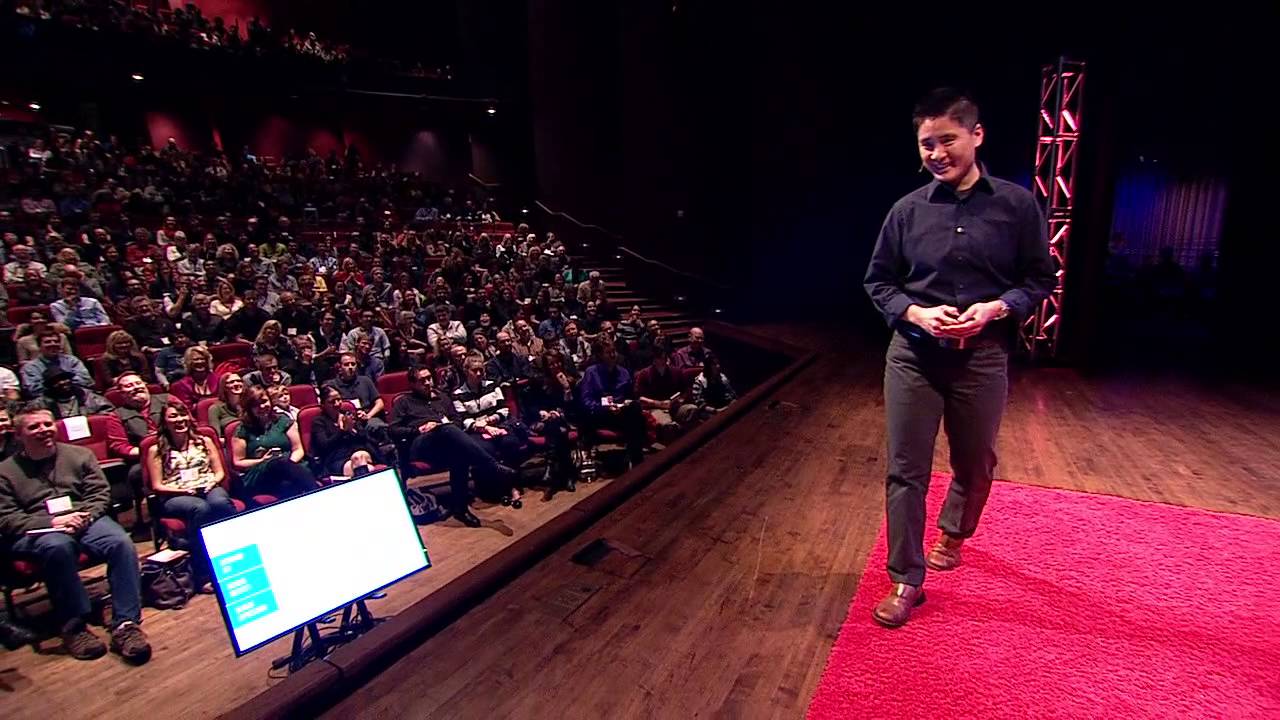
Now, this is where I come in and tell you a little bit about myself, and why I get asked these questions all the time. When I was born, I was assigned boy, based on my genitals. Despite this, I am most certainly not a man, nor have I ever been.
It's shocking for some of you, I'm sure. Usually, when a person is born, we assign them, as I said before, a certain gender based on their genitals, and usually it's right, usually it fits, but sometimes it doesn't, and I am an example of a person [with whom] that doesn't happen. And I'm also not just a gay man that took it "a bit too far," before someone asks, (Laughter) because to be a gay man, you need to, first, be a man, which I just established that I'm not, and you need to be attracted to other men.
Being gay has to do with your sexual orientation, while being trans, like I am, has to do with your gender identity. When I was 14, I started playing an online game called "World of Warcraft. " In this game, you can create a character and play with people from all over the world, through the internet.
In this game, I introduced myself as a girl to the people that I met there. I don't really know why I did it at the time, or what was going through my head, but it helped me realize something that I'd been struggling with for years. It was something that I had never really said out loud, or even admitted to myself at that time: the fact that I was not a boy.
As time went by, I got to know the people in this game a bit better, and eventually, they wanted to meet up in real life. Now, this is where things got a bit tricky for me. You see, I was 17 and I had not told a living soul that I was trans, and I actually had no opportunity to explore my identity at this point.
So, I confided in my best friend and I somehow convinced her to travel with me and meet these people. Now, this included that I had to go shopping for new clothes, I needed to learn some basic make-up tricks, and generally learn "how to be a girl. " Now, if this doesn't show us effectively what a performance gender really is, I don't know what does, but as no one actually knew about this, we'd be very secretive about everything that we did.
We'd spend whole afternoons in the shopping mall, pretending to be shopping clothes for her, when in fact we were shopping clothes for me. I'm sure you can imagine the look on the store clerks' faces when we were buying clothes that didn't really fit my friend. (Laughter) She would often get questions like, "Ma'am, are you really sure that dress fits you?
" When we finally traveled abroad and met the people, it was a roller coaster of emotions for me. I remember getting off of the train at the train station, and we walked up a flight of stairs. At the end of the hallway, I see the group of people that we were going to meet.
In this moment, I completely froze. I turned to my friend and I said, "I can't do this. " She took a deep breath, looked at me and said, "I did not go all of this way and do all of this so that you can back out of this now.
So, you're going to take a deep breath, pull yourself together, and we're going to meet these people. " And then she grabbed my hand and pulled me towards the group of people. This trip really couldn't have gone any better for me, and it was the time of my life, really, because, at this point, I was finally living.
On the way back home after this trip, we met two Icelandic women on the same train to the airport, and as Icelandic people do when they meet abroad, we of course said hello and introduced ourselves, because Icelandic people are kind of tacky like that. (Laughter) As soon as we get back to the airport, I go and change my clothes to more neutral clothes, as I still had my old name and gender marker in my passport. As soon as I step on the plane, these two women we had met greet me as the flight attendants of that very flight.
I'm sure you can imagine the look on their faces because they were just as confused and surprised as I was, but for me, this moment represented something. It represented the two worlds meeting, the world I had created for myself over the internet, and the reality back at home. So, for me, this moment was pivotal.
When I got back home, I started telling more people that I was trans, and when I was 18, I had my big "coming out. " I announced to everyone that I was a girl and, for the longest time, I totally conformed to all of the socially-constructed rules of what we expect women to like, what we expect them to do, how we expect them to dress, and so on. I told everybody how I loved to dress up in dresses all the time, I told everybody that I always knew I was a girl, and I told everyone that I always loved make-up.
I also told everyone that I loved to play with dolls, and my favorite movies were chick flicks such as "Mean Girls," which, by the way, is the best movie that I've ever seen, just to be clear. I always had this haunting feeling though, that I was just fulfilling a stereotype. You see, I wanted to prove to everyone that I was in fact a girl, and I actually had to prove it to medical professionals in order to get the healthcare services that I needed.
So, I played the role, and I played it so good that I even managed to convince myself that this was who I really was. Eventually, though, I realized that everything I was constantly doing wasn't necessarily because I really wanted to. It was mostly because of society and the messages I was getting from people around me.
Eventually, when I realized this, I started living more as my authentic self and stopped worrying about the pressure to conform, and what I should like, and what I should do. I indulged myself, and I allowed myself to do the things that I really loved again. I allowed myself to be me.
And if you think that you have it tough trying to live up to gender standards, you don't know the half of it. It's so multiplied when it comes down to trans people that we have to accept having a "mental disorder," and we have to fill requirements of medical professionals, who are complete strangers, while they evaluate, judge and decide whether they are convinced that you actually are the person that you know you are. So, of course I played the role and told them everything that they wanted to hear.
It was honestly very easy, because it's very tragically stereotypical. I honestly sometimes felt like I was in a factory, and they were making sure that they made the perfect men and the perfect women, that conformed and did not rock the boat too much. Today, I identify more as genderqueer, or nonbinary.
This means that I don't identify with the categories of men, nor women. The reason for this is because I don't feel comfortable being lumped into these categories because I feel that they are oppressive. I feel like people expect me to conform to certain things that I have no interest in conforming to.
So, for me, it's personal, as well as political, but that's because life is political. As you can see, my expression is mostly feminine, and I am not entirely uncomfortable with being classified as a girl, but I don't feel like I fit neatly into this box. I also reject the notion that I am inherently male because of my genetic make-up.
You see, sex is also a social construct, just like gender. The meaning that we put into these categories isn't made by nature. It's made by us humans, through social interaction.
I alone had the power to define myself and my body; no one else. Sometimes you'll get people who will tell you that, "You aren't this," or, "You are this," or, "You're not that," and, "You're not this. " This is a message that I want everybody to take in, that nobody has the power to define anyone, but the people themselves, and that's one of the most important things.
Imagine being constantly questioned about everything that you do, people constantly harassing you and berating you about who you are. Trans people don't only face this, but we also face a serious threat to our mental and physical safety. We are prone to developing anxiety, depression and other mental problems, as well as an overwhelming majority of trans people trying to, or committing suicide.
Access to healthcare is often severely limited for trans people around the world, and even nonexistent. Trans people are, therefore, often at the lowest class of society, with no chance or opportunity to live out their true and authentic lives. And this is just one way that the current ideas about sex and gender affect people in seriously harmful ways.
And this is something that I want all of you to take away with you today: the way that we think about sex and gender today is harmful, oppressive, and unrealistic, and it has to change. It's not just harmful for trans people like me, or to intersex people, or people who somehow don't conform. It's harmful to all of us as a society, because it affects all of us in different ways.
And when things are starting to harm people for simply being themselves, we need to stop and think: "How do we change it? ," because we actually can change it, but it's going to take a bit more than just showing up at a Pride Parade once a year, waving a flag. You need to speak up about injustice, and you need to confront prejudice actively.
You need to help us deconstruct the idea that sex and gender are binary categories and that they are unconditionally tied together, because it's this that's causing harm. Before I leave, I want to use this opportunity to pay my respects to all of the trans people who have fought before me, all of the trans people who do not have the same status and privilege as me in society. I want to use this opportunity to pay my respects to all of the trans people who have lost their lives due to prejudice, discrimination and violence that these binary categories produce.
As we say in the trans community, "May you all rest in power.