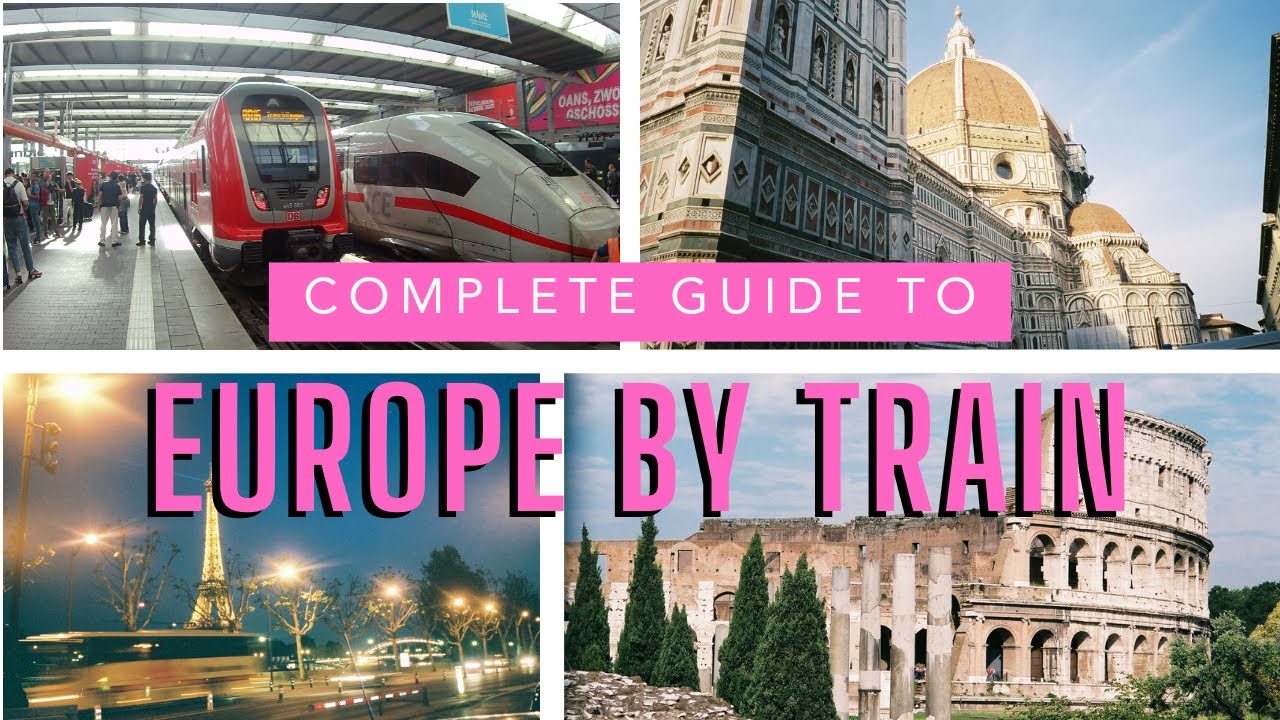
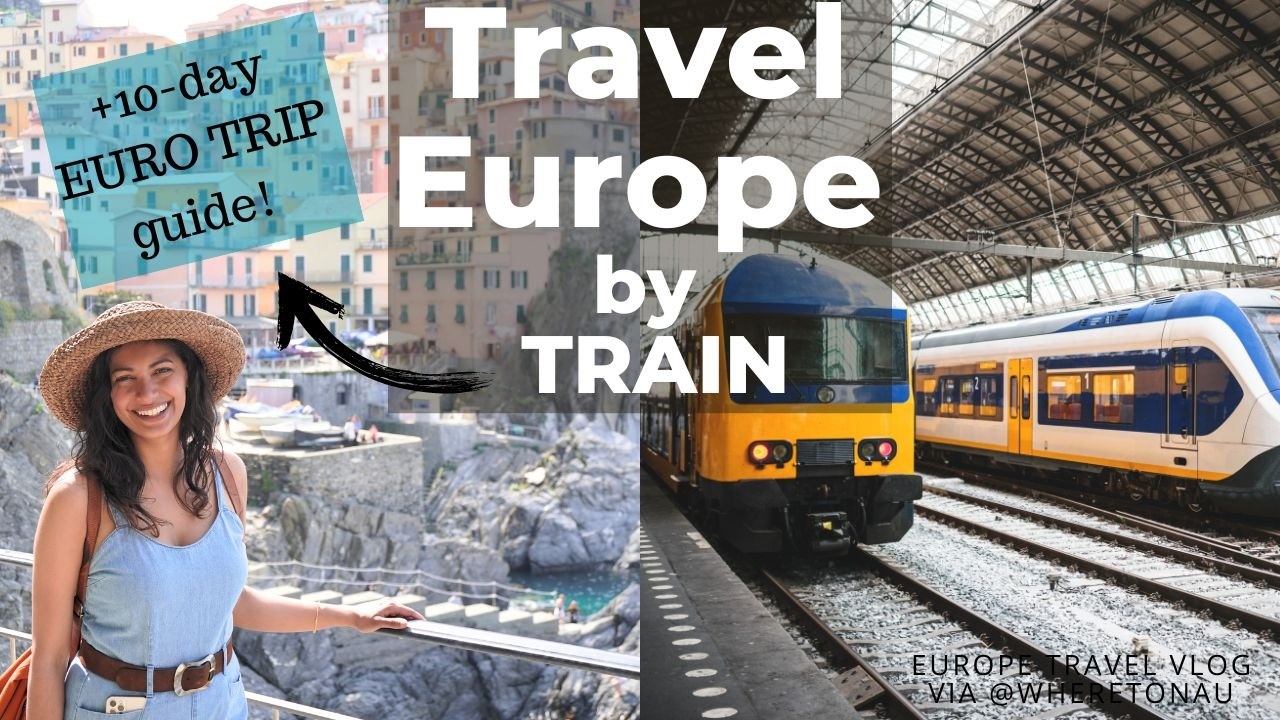
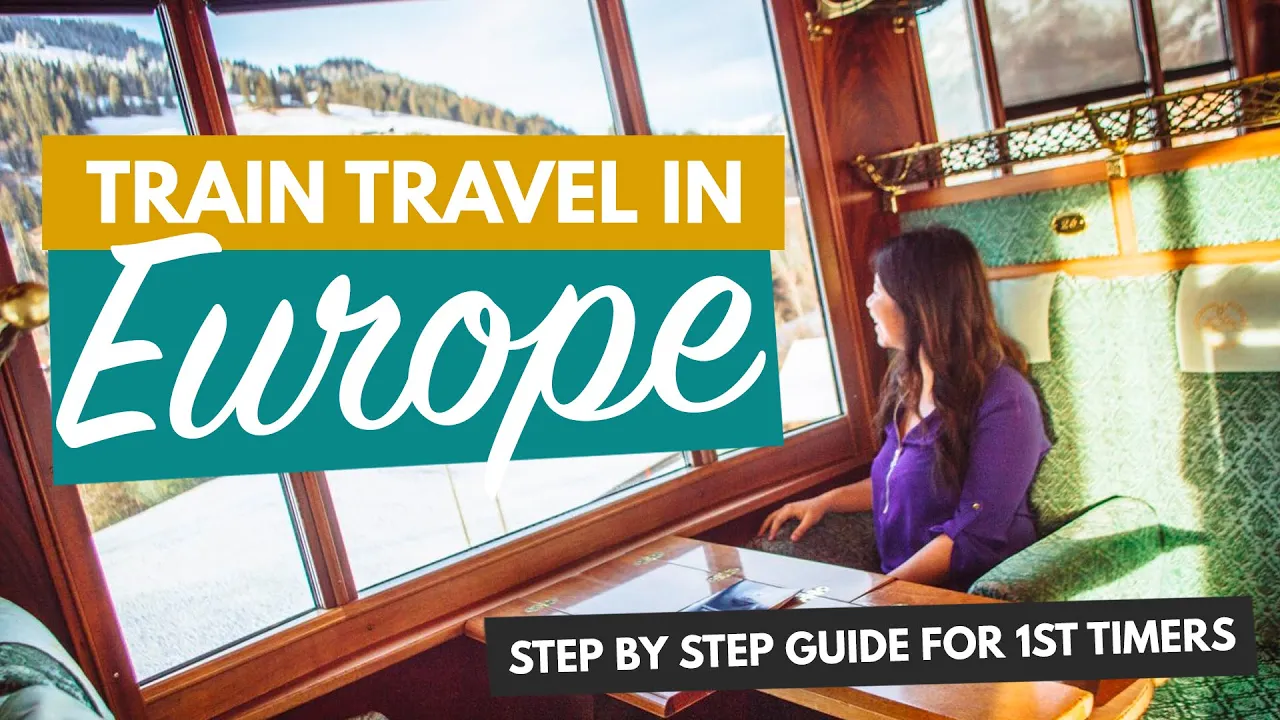
If you are new to train travel, attempting to travel Europe by train on your own can feel as daunting as it does whimsical. Well allow me to step into the very made-up role of fairy-train-mother. Hi, I'm Christina from HappyToWander.
com and I've been traveling around Europe by train for almost a decade, so I've done most of my learning the hard way, with knowledge I will now share with you in this compact step-by-step guide. This video will walk you through how to take trains in Europe from start to finish. Of course, it's worth noting that train travel does differ from country to country so this video will speak in very general terms but let me know in the comments if you'd like any country-specific guides.
Now let's move on to step one, which is deciding if train travel in Europe is right for you. First off, I have to say I adore train travel but it isn't always the best option in every country or circumstance. Depending on the length of your trip, your destination and your priorities, it may be worth looking into other options.
One app I love for this is Omio, which shows you planes, trains and flights from point A to point B. Generally speaking, I think train travel is great if you're looking for convenience, comfort and scenery. Budget-wise, however, buses and budget airlines can often be cheaper and maybe a better option as well, in countries where the rail system isn't as expensive.
With that out of the way, if you've decided you do indeed want to take the train then we move on to step two, buying tickets. Depending on the country, the pricing of trains in Europe is either fixed based on distance, like in the Netherlands and Belgium, which means the price will be the same whether you buy in advance or on the day of. Or more commonly, the pricing is dynamic based on the timing of your purchase and general demand, like in Germany, Italy and many other countries.
If you find yourself in a dynamic pricing country, then the cheapest way to get tickets is to pre-book far in advance. This is most ideal for those whose priority is budget. For those who are prioritizing flexibility and ease, however, a rail pass may be a better option but whether or not that's worth it depends on many factors, which I cover in my full Eurail Pass review video, so be sure to give that a watch if you're considering it.
Now when you go to buy tickets, you can either do it in person or online. I would highly advise booking online beforehand to minimize stress and save money. Online, you can either buy tickets directly through the train company or through a third-party website.
The benefit of booking directly is usually it will be the cheapest but I found some rail company sites aren't the easiest to use or the most intuitive. For me personally, more often than not I actually booked through third-party sites like Omio or Trainline. Yes, you do pay a bit extra in service fees but with third-party sites you get the benefits of simple user experience, a familiar interface across countries and often you can save your payment information as well, which is handy if you plan to buy multiple tickets from multiple companies.
They're also great for keeping all your tickets organized in one place. Whether you buy from the train company's official website or from a third party though, there are several considerations to keep in mind when buying tickets. First of all, the type of train.
Most rail systems in Europe have a mix of high-speed trains intended for intercity use or longer journeys, as well as slower regional or suburban trains meant for shorter journeys. Generally, the higher the speed, the higher the price but do pay attention to the type of train when booking so you can make an informed decision. Second, there's peak or off-peak trains.
In some countries like the UK and the Netherlands, pricing can also depend on the departure time of your train, with peak periods like just before and after work costing more than off-peak periods like in the middle of the afternoon or late at night. I would recommend booking your journeys for off-peak periods even if there's no discount because it still has the benefit of being much quieter and less chaotic. Third, is first versus second class.
In most cases, there isn't a dramatic difference between first and second-class seats on European trains. The main perk of first-class is it's generally quieter and sometimes the seats are slightly comfier or more spacious. On longer journeys, there may also be additional amenities like food service to your seat but the difference isn't as stark as say, first-class versus economy when flying.
That said, I do often prefer to book first-class when possible because it's calmer and less chaotic. Fourth, we have to consider reserved seats. Depending on the country and train type, seat reservations may be mandatory, optional or not available at all, as is the case with many regional trains.
If you're anxious about your trip and especially if you are traveling during a peak season or time, then I'd highly advise booking a reserved seat. Often this doesn't cost more than 10 euros extra and the ease of mind it can bring is priceless. If you are traveling in a very off-peak time though, you can usually get away with not pre-booking a seat.
If reservations are available then a further consideration is the different seat or cabin types. In some countries there are special carriages fit for different purposes, like sometimes there's a silent and quiet carriage or there's one deliberately meant to be a cell phone zone, so be sure to carefully consider where you're reserving a seat. Lastly, if you're traveling with a bike or with a pet, know that there's often add-on tickets you must buy to bring bikes or pets on board.
Now when buying tickets, if you're looking to save some money, here are a few discounts to look out for. Age: many companies will offer discounted tickets for children, youths up to around age 26 and also seniors. Group tickets: in countries like Germany and the Netherlands there are often tickets you can buy for a group which work out to be cheaper than buying tickets on your own.
Weekend discounts: many companies will offer special deals and discounts for travel on weekends or holidays, like in Belgium. Day tickets: often you can save money by paying a set price for unlimited travel in a day, which can be very good value for day trips. And lastly, attraction bundles: some rail companies offer discounted prices for train travel when combined with an attraction ticket, so be sure to keep that option in mind.
And if you're planning a longer term trip, then another thing to look into would be a rail card or discount pass that costs a set fee but then gives you discounts for up to a year. Many countries have these and they can save you quite a bit if you're booking many journeys. Now with your tickets booked, it's time to move on to the day of your journey, with step three which is to get snacks.
Now before heading to the station, I highly recommend making sure you have some snacks or drinks to bring with you on the train. Eating and drinking is allowed in most trains and while some larger inter-city ones will have meal options on board, they're often quite expensive and mediocre. At the very least, make sure you have some water or something to drink in case you're hit with a delay.
There are also usually options at the train station themselves but I find it to be less stressful to just have something in advance. Now let's move on to step four, which is arriving at the station. First off, before leaving do double check that you are headed to the right station.
Many major cities in Europe will have multiple stations so it's important you don't get them mixed up. Now if it's your first time at the station, I recommend you arrive 30 minutes or more in advance of your departure time. Train stations in Europe can be overwhelming for first-timers, especially if you end up at one of the mega monster stations in larger cities which have multiple levels, shops and upwards of 20 platforms.
Now if you're arriving at the train station through public transport in a big city, you might find it tough to find where the trains actually are because often these stations are multi-level transport hubs that service metros, trams and buses as well. In any case, all you need to do is look for train symbols like this, or this, which will point you in the direction of the platforms. Now when you get to the main concourse of the train station, your primary priority is finding out which platform your train is on.
Often apps will tell you in advance but again, in big stations sometimes trains won't even know which platform they'll be on until they arrive. In these cases, you'll have to wait until the platform is announced. Simply wait at the big board, usually where the crowds are and find your train, then wait for the platform to show.
When you're looking at this board, remember that trains will not necessarily say your destination but rather the final destination of the train. So if you don't see the name of where you're traveling to, don't panic, instead look for your departure time and train number and underneath the main destination for the list of stops to see if your destination is listed. When the platform number is announced, then it's on to your next mission, which is step five: getting to the platform.
Platform numbers will generally be very well marked so just look for signs before making your way. When you are going towards the platform be sure to have your ticket ready. Some countries, like the UK and the Netherlands, have electronic gates that require tickets to be scanned.
Others, like Italy, may require you to physically validate your ticket before stepping on board, so double-check if your ticket needs to be validated at a machine. When you get onto your platform, double-check it's correct by confirming either on a screen or on the side of the train that you're in the right place. Then it's onwards to step six: finding your carriage.
When walking to the train, if you have an assigned seat, take note of whether there's a map or any kind of legend on the platform that shows you where your seat will be. This can be helpful because some European trains are super long so if you stand in the right section, your life will be a lot easier when it comes time to board. If you do not have an assigned seat when you're choosing your carriage pay special attention to the following: first, the class number of the carriage, second, whether they are special carriages meant for a certain purpose, like quiet zones or bicycle zones, and third, most importantly, check whether the carriage number is going to your intended destination because in some countries, trains can actually sometimes split to go off in separate directions or some cars get left behind at certain stops.
If you don't have a reserved seat, then usually I find the farther down you walk, the emptier the carriages will be. Once you find or choose your carriage then it's time to hop on board. Now if the door isn't opening automatically, then look for a button like this and press it.
This goes for the train doors as well as the carriage doors. Now it's time for step 7: finding your seat. First off, if your seat is assigned, try to make sure you go through the correct door.
There's of course, usually two doors to each carriage, one on each side, so as you're walking look through the glass windows to see which end your seat is closer to so that you don't have to squeeze past people coming from the other door. If you have large bags, keep an eye out for large luggage racks when you enter. These will usually be found on the ends of the trains.
With a small carry-on bag there is usually space above your seat for it, although if the train is very empty you can probably get away with just keeping your bag with you at your seat. Otherwise, in some countries with back-to-back seat formations you can sometimes just store your suitcase in between those gaps. Of course, this doesn't apply to all trains, sometimes regional or suburban trains meant for short distances will not have special areas or compartments for luggage.
In these cases I sometimes find it more comfortable to simply stand in between the train carriages and use my luggage as a seat. Now before sitting down, make sure your seat isn't reserved and that you're not taking up a priority space if the train is looking full. Now on to the fun part, step 8: getting comfortable and enjoying the journey.
On longer distance trains there's often outlets, a pull-out table, hooks for your coat and if you're lucky, Wi-Fi as well, so have a look around to get familiar with your seat and the nearby amenities. Now while it's important to get comfortable, remember to keep your ticket handy in case ticket controllers come on board. This happens in pretty much every country, although they vary in how frequently they do it.
It's definitely more common with high-speed or long-distance trains than regional ones but regardless, just make sure you have your ticket and also some form of ID, preferably your passport because they sometimes want to verify your name if it's a reserved ticket and especially when you are using some kind of discounted ticket, they want to make sure you're actually how old you say you are or who you say you are. Longer-distance trains may also have additional amenities like a meal car or even seat service in first-class, so be sure to take advantage. Lastly, of course, keep an eye out for the WC symbol to find the nearest onboard toilet but make sure to bring any valuables with you, just in case because better safe than sorry.
Now when you're near the end of your journey, it's on to step 9: disembarking. If you're not getting off at the end destination, then I would advise you start prepping for disembarkation about 10 minutes before your arrival time. This gives you plenty of time to gather your belongings in a stress-free manner.
Upon arrival, if the door isn't opening then again, look for a button with these symbols and be careful getting off the train as there's often a gap. During this time, it's important to keep hold of your ticket in case you need to scan it again on the way out and be sure that your valuables are secure as train stations are often a hot zone for pickpockets. To navigate your way off the platform and onwards to wherever you need to go, keep an eye out for signs like these that will point you in the right direction.
If you need a place to drop off your bags while you explore, most major train stations will have a paid left luggage area with lockers or a drop-off service. This is a great option if you're too early to check into your accommodation or just dropping in for a day. Lastly, remember that your train ticket is usually only valid for the specific train that you boarded, so unless you bought a special ticket or pass, you won't be able to use it for onward travel on the metro or bus.
Thanks so much for watching, I hope this video was helpful and be sure to like and subscribe for more practical travel videos just like this one. I'll see you all next week, bye!