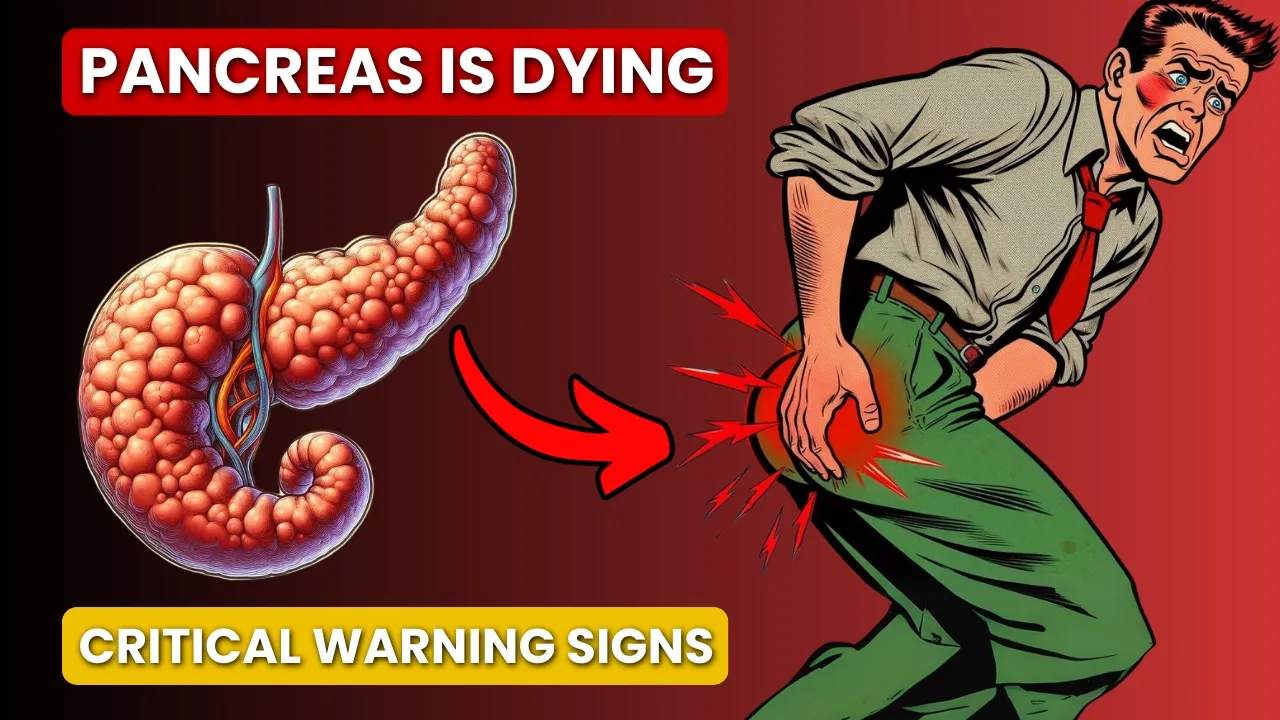
Eight symptoms of pancreatic cancer that will shock you. >> Did you know that pancreatic cancer claims more lives each year than breast cancer, yet receives far less attention? What if I told you that by the end of this video, you could recognize critical warning signs that most people miss completely?
Pancreatic cancer is one of medicine's most challenging adversaries with a 5-year survival rate of just 11%. This silent disease affects over 60,000 Americans annually. And studies show that 75% of patients don't recognize their symptoms until it's reached an advanced stage.
But here's what's truly shocking. Many of these symptoms appear months before diagnosis, hiding in plain sight. Your pancreas, an organ roughly the size of your hand, works tirelessly behind the scenes, producing vital hormones and enzymes that keep you alive.
Its location deep within your abdomen makes it particularly tricky to examine, which is why knowing these warning signs is absolutely crucial. Today, we're breaking down eight surprising symptoms that could indicate pancreatic cancer. Some of these signs are so common that you might be experiencing them right now without realizing their significance.
What's even more interesting, recent research from John's Hopkins suggests that combining just three of these symptoms increases the likelihood of early detection by 68%. Disclaimer: This video is for educational purposes only, not medical advice. Consult a qualified health care professional for any medical concerns.
All information presented has been thoroughly researched and verified. You can find source links in the video description. If this video helps you, smash that like button and subscribe for more health tips.
Now, let's dive in with sign one. Dark yellow or brown pee. Your urine color can tell a powerful story about your health.
When pancreatic cancer develops, it often affects your bile duct leading to a condition called jaundice. This occurs when bilerubin, a yellowish compound produced during the breakdown of red blood cells, accumulates in your body. Normally bilerubin is processed by your liver and eliminated through stool giving it its brown color.
However, when pancreatic cancer blocks the bile duct, this system gets disrupted. Even if you're staying well hydrated, your urine might take on a dark yellow or brown shade similar to the color of cola or strong tea. This change happens because your body is desperately trying to eliminate excess bilarubin through alternative routes.
Many people dismiss this symptom, attributing it to dehydration or dietary changes. However, if this color persists for more than a few days despite proper hydration, it warrants immediate medical attention. This discoloration often appears before other visible signs of jaundice, such as yellowing of the skin or eyes.
Understanding this early warning sign could be crucial for early detection. Two, tummy or back pain. The location of pancreatic cancer pain can reveal crucial information about tumor location.
When cancer develops in the body or tail of the pancreas, patients often experience a distinct type of discomfort that's hard to ignore. Imagine a dull, persistent ache that feels like it's coming from deep within your upper abdomen. This pain often radiates to your back, creating a band-like sensation across your torso.
Unlike typical stomach aches, this discomfort tends to worsen after meals or when lying flat. Your pancreas sits in a complex network of nerves and organs. When a tumor grows, it can press against these surrounding structures, triggering pain signals.
Some patients describe it as a gnawing sensation, while others compare it to a constant heavy pressure. The pattern of this pain is significant. Initially, it might come and go, giving you periods of relief.
However, as the disease progresses, the pain often becomes more persistent and intense. Understanding your pain's characteristics helps doctors differentiate between pancreatic cancer and other conditions. The timing, location, and nature of the discomfort provide valuable diagnostic clues.
Three, gas or bloating. Pancreatic cancer can dramatically affect your digestive comfort in ways that might surprise you. When a tumor develops, it can interfere with your pancreas's normal function, leading to unusual sensations of fullness and bloating.
Your pancreas plays a crucial role in digestion, producing enzymes that break down food. When cancer disrupts this process, you might feel uncomfortably full after eating just a few bites. This sensation known as early satiety occurs because the tumor can press against your stomach or small intestine.
The bloating associated with pancreatic cancer feels different from regular digestive issues. It's often persistent and doesn't significantly improve with typical remedies like antacids or dietary changes. Your abdomen might feel swollen and tight even when you haven't eaten much.
This discomfort can be particularly noticeable after meals, but it might also persist throughout the day. The sensation isn't just uncomfortable. It's your body signaling that something isn't right with your digestive system.
Many people initially mistake these symptoms for common digestive problems or stress related issues. However, when these sensations persist for weeks, they deserve medical attention. Four, swelling of gallbladder or liver.
When pancreatic cancer develops, it can create a cascade effect in nearby organs, particularly affecting your gallbladder and liver. These changes occur because pancreatic tumors often obstruct the bile duct, the vital pathway that carries bile from your liver to your small intestine. Your gallbladder, normally about the size of a small pair, can become noticeably enlarged when bile backs up.
This enlargement happens because your gallbladder continues to store bile but can't release it properly due to the blockage. Similarly, your liver might become swollen as bile accumulates within it. This swelling can sometimes be felt during a physical examination appearing as a firm enlargement beneath your right rib cage.
Modern imaging techniques like CT scans and ultrasounds can clearly reveal these changes. The relationship between these organs is delicate and interconnected. When one system is affected, it creates a domino effect that impacts the others.
Understanding these connections helps doctors piece together the diagnostic puzzle. Health care providers often check for these organ changes during routine examinations as they can be crucial indicators of underlying pancreatic issues. Five, blood clots.
One of the most overlooked complications of pancreatic cancer is its effect on blood clotting. This cancer can trigger a state of hypercoagulability where your blood becomes more prone to forming clots particularly in your deep veins. Deep vein thrombosis DVT often develops in the legs presenting as swelling, warmth, and redness in the affected area.
The danger intensifies if a piece of the clot breaks free and travels to your lungs, causing a potentially life-threatening condition called pulmonary embolism. These blood clots form because pancreatic cancer releases inflammatory substances into your bloodstream. The inflammation disrupts your body's normal clotting mechanisms, creating a perfect storm for clot formation.
Warning signs of a pulmonary embism include sudden shortness of breath, chest pain that worsens with deep breathing, and a rapid heartbeat. These symptoms require immediate medical attention as they can be life-threatening. Six, fever and shivering.
Fever in pancreatic cancer often signals your body's response to the disease's inflammatory effects. When your pancreas becomes inflamed, it triggers your immune systems natural defense mechanisms. These temperature fluctuations can be particularly confusing because they often come and go.
You might experience episodes where you feel intensely cold and shivery followed by periods of high fever. This pattern differs from the steady fever you might experience with common infections. The combination of jaundice and pancreatic inflammation can create a perfect storm for temperature irregularities.
Your body is essentially fighting on multiple fronts, dealing with bile duct obstruction, inflammation, and the cancer itself. When these fevers occur, they're often accompanied by night sweats and general discomfort. Unlike viral infections that typically resolve within a week, these temperature variations tend to persist or recur.
Seven, fatigue or physical weakness. Pancreatic cancer can profoundly impact your energy levels in ways that extend beyond normal tiredness. This fatigue feels like an overwhelming exhaustion that doesn't improve with rest or sleep.
The cancer cells essentially compete with healthy cells for nutrients, leading to a state of physical weakness that affects your daily activities. Even simple tasks like climbing stairs or carrying groceries might suddenly feel overwhelming. This fatigue often accompanies emotional changes, including depression and anxiety.
Your sleep patterns might become disturbed, creating a cycle of physical and mental exhaustion. The combination of physical weakness and emotional strain can significantly impact your quality of life. Cancer related fatigue differs from normal tiredness because it doesn't follow the typical pattern of energy use and recovery.
You might wake up feeling exhausted despite a full night's sleep. These energy changes often occur gradually, making them easy to dismiss or attribute to other factors like stress or aging. Eight, digestive problems.
Pancreatic cancer can severely disrupt your digestive system through multiple mechanisms. The pancreas produces crucial enzymes necessary for breaking down fats, proteins, and carbohydrates in your food. When a tumor interferes with enzyme production or blocks the pancreatic duct, you might experience a range of digestive issues.
Food may sit undigested in your stomach, leading to nausea, vomiting, and a persistent feeling of discomfort. The relationship between your pancreas and digestion is complex. Poor appetite often develops because your body struggles to process nutrients effectively.
This can lead to unintended weight loss and nutritional deficiencies. Changes in enzyme production can cause specific digestive symptoms. You might notice your stools becoming pale, greasy, and particularly foul smelling.
This occurs because fats aren't being properly broken down and absorbed. Understanding these eight warning signs of pancreatic cancer could make a crucial difference in early detection. If you found this information valuable, please like this video and subscribe to our channel.
We have more health rellated content that could be life-saving. Check out our other videos on the screen. Your support helps us reach more people with crucial health information.