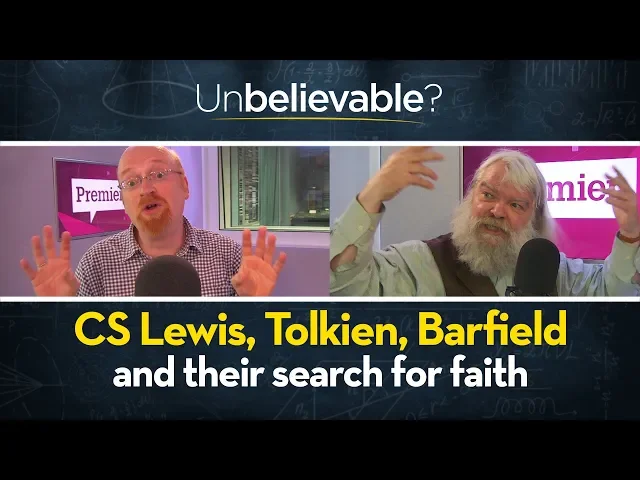
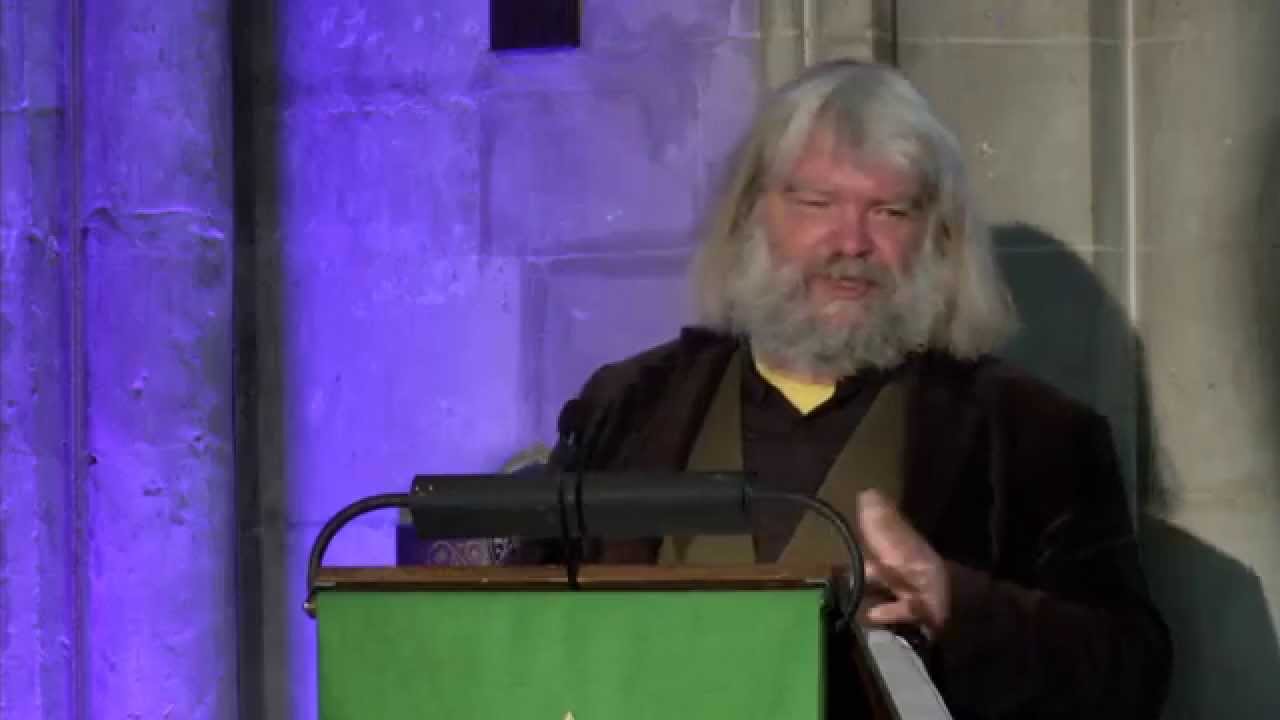
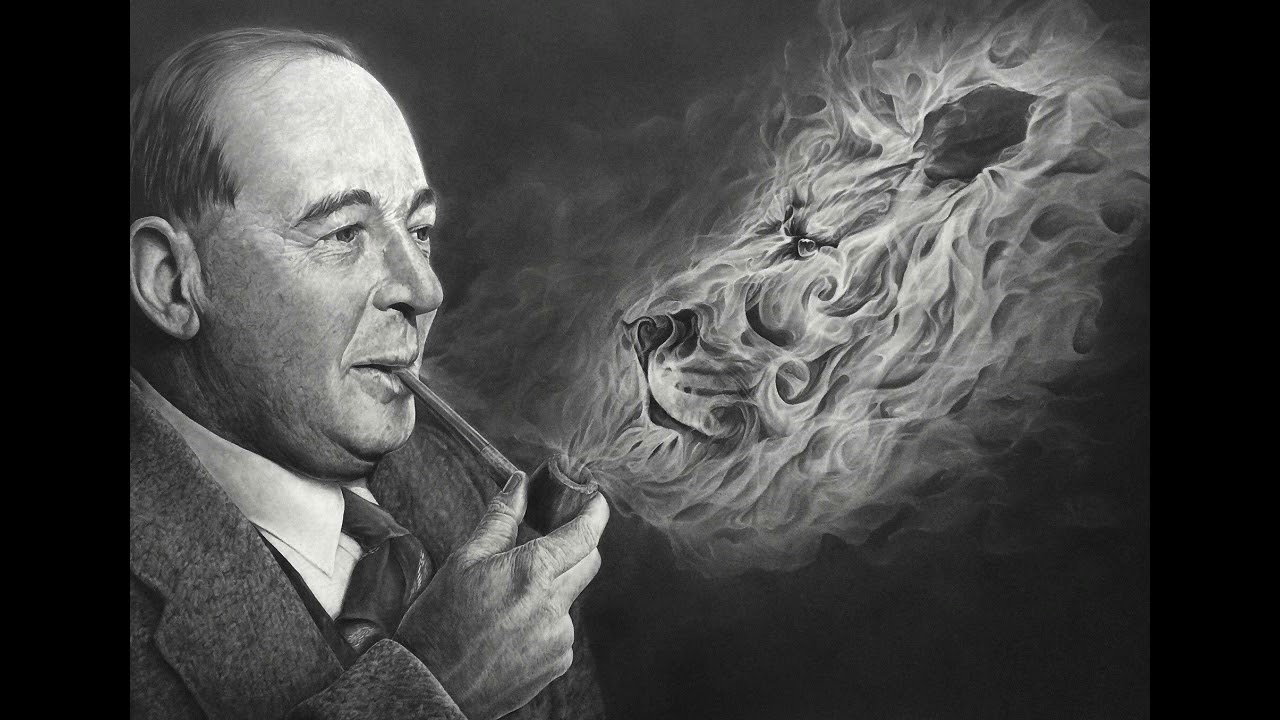
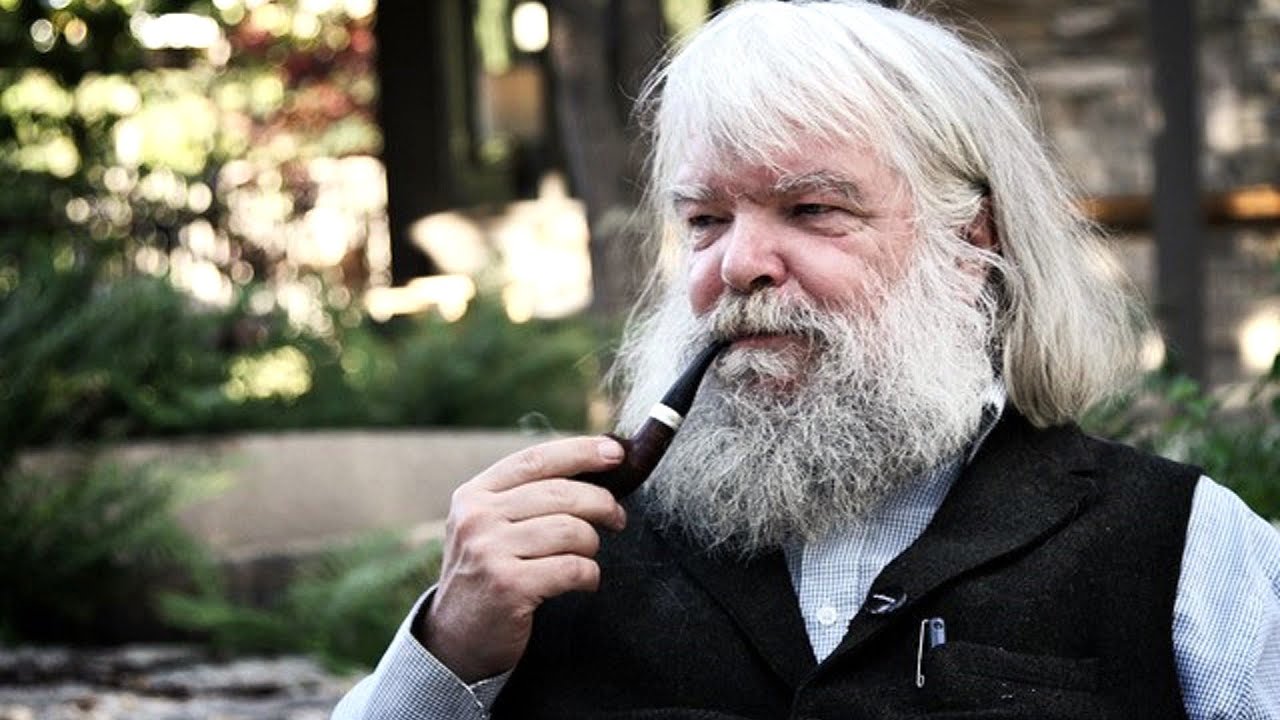
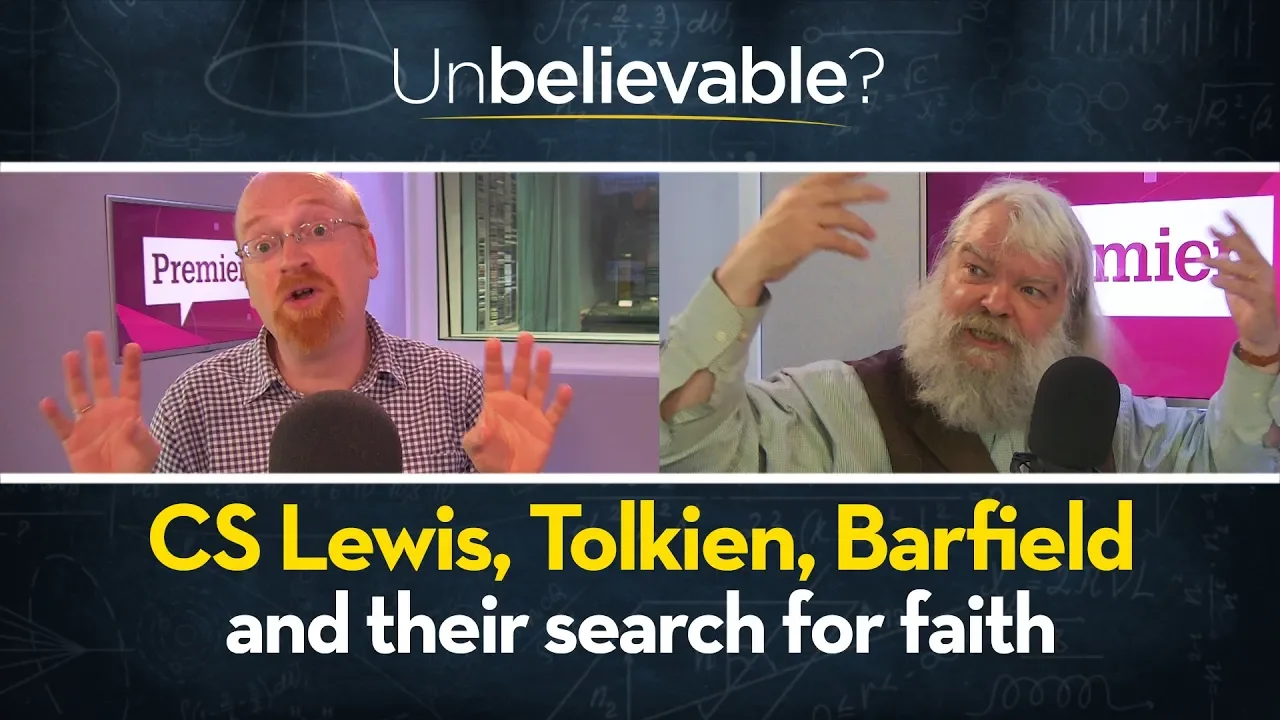
Well today on the show we're discussing CS Lewis jr. our Tolkien and Owen Barfield how the Inklings made sense of faith joined today by Mark Vernon and Malcolm Gates now the Inklings was the name adopted by a small group of academics and writers who in the 1930s to the 50s met regularly to talk literature philosophy and faith at the eagle and child pub in Oxford it was there that early drafts of the Lord of The Rings by JRR Tolkien and the Narnia chronicles by CS Lewis were first read and critiqued and other writers such as
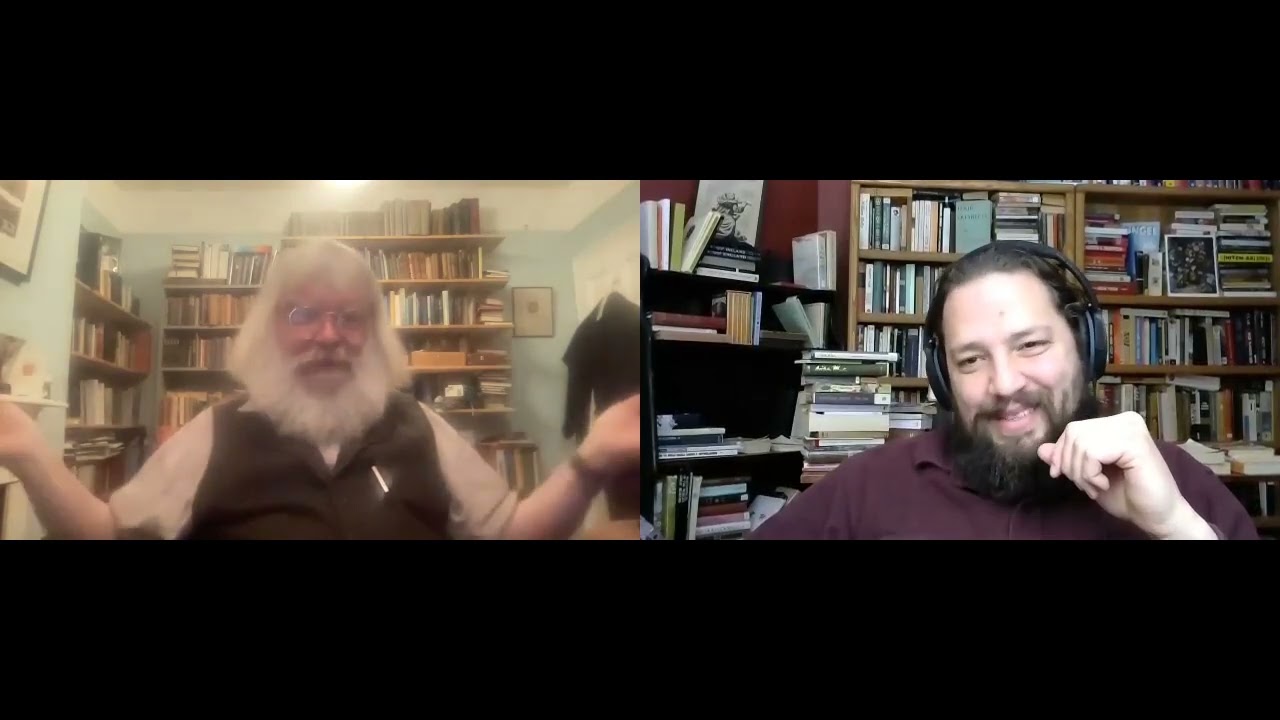
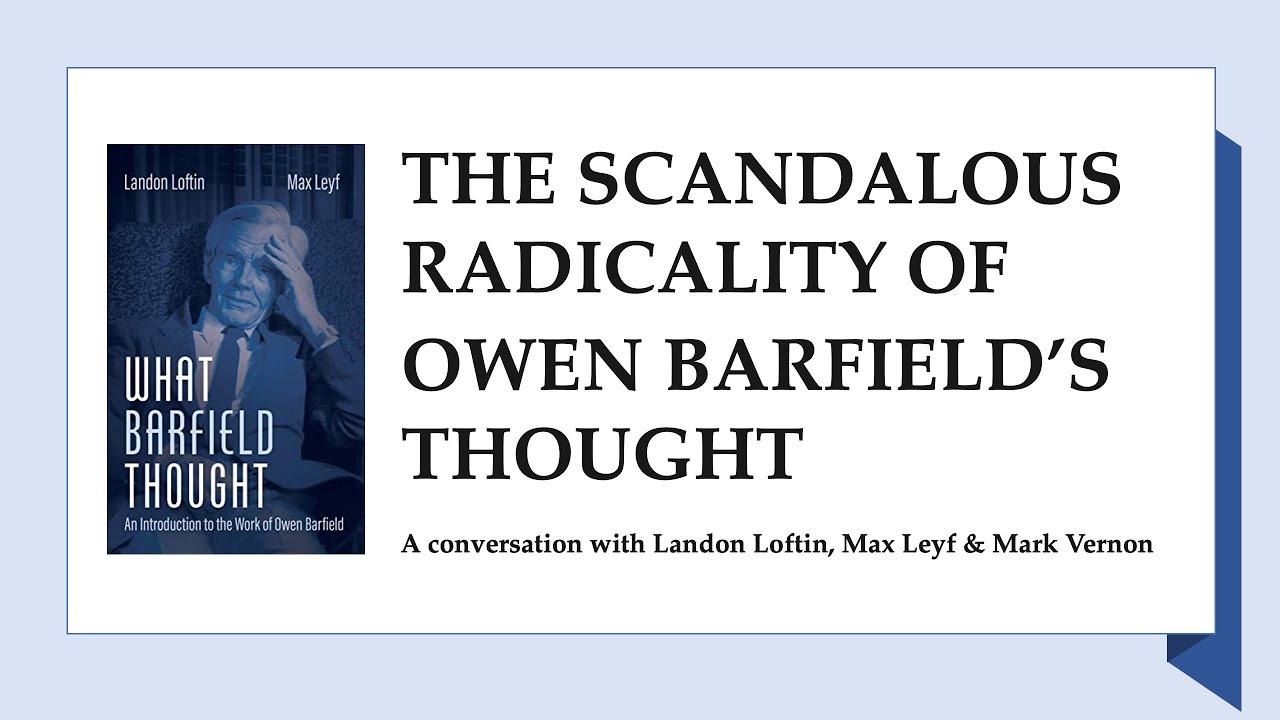
Owen barfield Charles Williams and Hugo Dyson were also regular contributors well today on the show we're going to be talking about some of the philosophical and theological influences some of those members brought to that group Lewis and Tolkien of course well-known om Barfield less so but he greatly influenced her Lewis's own journey towards Christian Faith and to talk about this I'm joined by writer and philosopher mark Vernon and poet theologian Malcolm Gates in his new book a secret history of Christianity Jesus the last inkling and the evolution of consciousness mark Vernon charts how Barre fields
view of Jesus has been integral in his own story of making sense of faith he says his view is not a DeMuth ollege izing or liberal 1 but it's really about A radical transformation of perception and consciousness we'll find out more about that shortly Malcolm gite is ordained in the Church of England a poet and a musician and a chaplain at Girton College Cambridge he's the author of books such as Mariner a voyage with samuel taylor coleridge in fact if you search back in the profile' archive our other podcasts from premier Christian radio you'll probably
find my interview with Malcolm about his life faith and Mariner but Malcolm is someone who's familiar with bar fields Thornton poetry he'll be engaging with mark today so Malcolm and mark welcome along to the program today thank you it's great to have you both in studio with me for this I just think this is gonna be a most fascinating conversation between the three of us today I'm looking forward to learning a lot as well in the course of it from you both let's introduce you you first of all mark you've been on the Show but
a number of years ago and the last time you were actually in was to talk about a book you'd written on agnosticism and at the time you were identifying as gnostic but you're here today to talk about how you're kind of gradually putting the pieces together a bit bit further down the journey as it were so tell us what's happened in in the intervening years since you had asked on the show yeah well thank you it's very Nice to be back and I mean in a way Barfield has happened to me in intervening years I
was a I was a certain kind of agnostic I wasn't I don't know whatever kind of agnostic I was an agnostic a searching agnostic you know kind of hovering on the brink as it were and found figures like Socrates really inspirational in that position and when I look back now I think one of problems which I perhaps always have with Christianity you know it was I was A kind of cradle Christian brought up in a Christian family Christians all around me you even had a spell where you were looking at ordination in there Chloe no
I was I was an Anglican priest that's right yeah yeah so I did a sort of three-year curacy it's called as an Anglican priest but one of my struggles always was the figure of Jesus in fact and which might sound strange for a Christian but I never really had a problems with an awareness of God in my Agnostic phase I wondered but you know looking back that has always felt like a keen presence to me but I really did struggle to get a deep sense of Jesus if you like so um you know that the
story of Jesus are clearly moving especially as it's enacted in this ages there's no problem with that Jesus as an important figure in our culture no problem without a moral teacher and but when it came to I know the way that Jesus actually changes the fabric of reality you might Say the really deep theological stuff I've always struggled with that and it was bar fields take on that which finally made me feel like this is an account of it which I can really own and an experience directly myself that's really interesting will obviously get into
the depth of that shortly when we come to talk about the book and kind of what you lay out there as your way forward great pleasure to also introduce to the show Malcolm gite mellow lovely To have you on someone I've wanted to have on this program for a long time because whenever I do anything around imagination when it comes to apologetics and theology people often bring your neighbor say I love the poetry of mountain guide and that sort of thing but you you've you've been if you in a sense marrying both the the imagination
the poetry and so on with pastoral side yeah you do so so just Would you encapsulate just quickly what you do now how you got to do it and why you love doing it okay let's say I was some I'm very lucky in that I'm having as it were my third goat Cambridge home I think I came up actually to Cambridge as an agnostic myself also having been brought up in faith by having sort of rejected it for largely I mean both promotional but also for it for intellectual reason so we didn't think it was
the case but but then of course I Began to read some proper philosophy and read Augustine and things again but I'm like first love then and still one of my deepest love was simply poetry's just delighting in poetry and myth and and storytelling and I realized that that was preparing me for a deeper encounter quest and I love the phrase in CS Lewis's surprised by joy where he says I suppose in a way my imagination was baptised before I was and the rest of me just took a bit longer to catch up so I I
became a Christian in my final years as Cambridge I went off I was an English teacher after that for a while and I loved doing that but then I realized God was in fact calling me to the priesthood so I have another go at Cambridge and came back and read theology and actually funnily enough I actually wouldn't I found quite disturbing about reading theology was the way the Bible was read was very very analytical very taking it all into bits and leaving the bits on The floor and either on the one hand you had people
being very literal istic in a sort of slightly naive way or on the other hand you had people being hyper analytical but nobody seemed to be reading the Bible poetically or imaginatively or letting it soak into them so in a way I then found myself reading the Inklings and Barfield and Coleridge almost to help me cope with the dryness that's interested of that theological training so then I went off And was ordained and then lo and behold I had a third go coming back and this time I decided it was time to to really think
how my love of poetry and my Christian faith you know how my my my fairly Orthodox transcend theology on the one hand and my feeling for for intuition and imagination on the other might talk to each other a most what I've written in the last 10 years or so has been an attempt not to prove that they can work together because in me They're working together all the time but to discover a little bit more about the mystery of how they work together yeah and I think it's really helpful your story is like so many
others one in which the imagination and the the theology and the the experience come together and very often I do this show on apologetics and the vast majority of the time we're talking about you know logical arguments and philosophy and that sort of thing and and it's always a Shame when almost they pass like ships in the night in the fact that actually most people's journey might involve a bit of that that intellectual kind of putting the pieces together philosophically stuff but a lot of it is also about the kind of world we want to
exist and and the way we engage our imagination and what would it look like yes most important things I discovered and in a way both Barfield and Coleridge helped me to do this just as indeed they Helped Lewis was to realize that the word imagination doesn't only and always cash out in imaginary right ie made-up non really there that the imagination is also involved in in clothing everything with meaning in making a synthesis of everything and that it's a yeah I mean to sort of put it in one sentence it's the discovery which is a
glad discovery that the imagination is a truth bearing faculty that in its capable of this bringing us to certain things that Really are the case which we could apprehend in no other way i I sometimes like to think that if I had been a fly on the wall at the Inklings regular get-togethers down at the eagle and child in Oxford Mark it might have felt a little bit like an unbelievable show of sorts of different people coming with their different ideas and you know literature and things and just having a great conversation over beer and
pipe smoking pipe from whatever I mean it's Always actually become some something almost a folklore or something among something you know there is this whole strain of Romanticism around CS Lewis and his Oxford clique and so on in in certain parts of the world but what what's your understanding of who the Inklings were and what they did and you know the influence that obviously Tolkien Lewis Barfield had in that group I mean it might have been a lot more combative Than even some of your yeah so there are though I'll record the remarks of someone
saying oh not more hobbits but I think what they were though on sort of parallel journeys and it was very much about this link between the imagination and the poetic and then truth you know as it's often discussed in more rational terms now for us and I think the key linkage there is perception and it's as a world what your mind what you can see with your mind's eye and and this is I Think they also found this very much in the Christian tradition I think this is quite true but just on a casual reading
I think probably Jesus is most common remark certainly the synoptic Gospels is have you got eyes to see have you got ears to hear and I think the parables which are probably a more or less distinctive teaching method of Jesus only has it's really helped me was realizing they're not actually moral tales and because someone magic white Amoral if you read them in that way and what they are though are attempts to try and take you to an edge and see whether you can see the world in a completely different way and Barfield got onto
this because in his early life when he was Oxford with Lois when they first met in the 1920s and he went for a period of depression you know pretty serious and feeling that life was not up to it and poetry helped him but because he did what he tried to do with poetry was stay With the experience that words can give you that a new world is opening up before you staying with that felt perception not trying to close it down not trying to sort of rationalize it away but just seeing where that channel can
can lead you and for me too that was a key moment when I started to listen to Jesus as it were as someone who was doing a similar thing who was as William Blake but it was Christ the imagination and that that was a pivotal moment for Me to see that this was almost an invitation to move into worlds that are right here but that at the time I had absolutely no conception of at all what what at the time that he began you know contributing to the Inklings was bar field position where on faith
is it well what what kind of did he describe himself as a Christian at that point no I mean he grew up in a sort of neutral family and he was very influenced to and though when he was Doing his work on on poetry he was very influenced by anthroposophy which is a sort of a Christian heretical group you might say it's unorthodox in least and he felt that the founder of anthroposophy Rudolf Steiner discovered a lot of things which he was onto as well he was subsequently baptized as an Anglican I think one of
things about that early this is pre Inklings really yeah with Barfield precedes all of that and we think of a lot of people now Think I won't Louis is a bit more orthodox and he's got to bring Barfield along with him you know but Barfield helped Lewis out of it but when they met of course when they actually met for the first time Lewis was radically and angrily atheist an essentially materialist in his philosophy and processing the sort of anger that came out of the experience of the great war and and as it were trying
to find in a very influenced by his his Sixth form tutor whom he called the great knock you know who was it was a source of old-fashioned 19th century scientific rationalistic atheist so Lewis describes his life at that time as being completely divided where with his mind he was like yeah I'm not having any of this stuff and nonsense we are all hansoms concatenating about in the emptiness of the cosmos you know but meantime he was secretly loving the Norse legends and reading up about inner Dials of the Hesperides so he meets Barfield and at
that point it would be perfectly fair to say that Barfield was a far more religious person than lewis was even they wasn't fully Orthodox Christian at that point and it was Barfield who began a comment long conversation with Lewis which was friendly but also competitive in fact they nicknamed it the Great War which four characters are actually been through the ground wasn't quiet anyway Michael here basically one of the things that made Barfield huge the attractive person to Lewis was that it gave Lewis the first for the first time the hope that his guilty pleasure
which was mythology might have a grain of truth in it right and that was so exciting and that actually acknowledging that became an important part of of Lewis's journey to Christianity I think would you do with that yeah I think that um it's well known if you're interested Slowest that he has his conversation we're talking yet night that's been so there was at work tipped him over the edge into Christianity but I think the deep work for long work over many years through this discussion called the Great War was done very much with Lewis and
Barfield and Louis you know dedicated books to Barfield Lucy and the Narnia stories is named after Barfield eldest child you know this isn't you don't have to infer much actually it's pretty Explicit once you start looking that that's interesting and and just just to kind of explain where Tolkien fits into this minx did he come along a little bit later after this friendship it had been established between Barfield and Lewis and what was his role you mentioned briefly that he's often spoken of as this stroll through maudlin gardens or something that sort of meant that
the penny dropped in some way for Lewis but what was in your view is that is that a Good explanation of what happened yeah I think I mean while talking was at that little bit older so he was already an academic when they were there as undergraduates and talking and Lewis met first of all then I guess Baffert got drawn into the orbit as well yeah I think Barfield had was at the slightest devotion he didn't at that stage actually live in Oxford you know he was kind of practicing as a lawyer which he hated
you know and then sort of sneaking Up to Oxford to have a real life over my odious friend but there is a so the talk talking friendship is sitting very important and I I do to take the view that that famous stroll on Addison's walk really was what what made the difference when talking said the things you love in mythology in this one instance in the story of Jesus and actually become history the true miss there become the true myth so your your rational mind and your imagination Finally not only point towards but actually in
the end come from the same source which is Jesus the longest but I don't think that conversation could have happened without Barfield the interesting thing that talking and barfy is that talking who was a professor at anglo-saxon you know the youngest professor rank besides them yeah and so knew his linguistics inside out was so moved by bar fields book poetic diction witch's takes the view that earlier Languages indicate not just older ways of saying things but actually an older way of seeing things that the earlier language is a kind of more unified consciousness talking says
somewhere in a letter to Lewis I think that as a lecturer he would be just about to say something in his most full professor anything oh I can't say that because of our fear you know bar fields theories of language have an in fluid a huge influence on talking and I like their Fault I think also get talkie in confidence I mean Barfield was really saying it's not the case that story and myth or an accidental byproduct of language of a language of grunts and grains but much more that our myth mythopoeic imagination is the
very thing that produces language languages itself myth patterned as it were an elephant and obviously Tolkien was was a committed Catholic pretty much you know most of His life I think and and in in that sense were as as Lewis and Barfield were going on their own theological explorations and so on would would you say that he acted in some way as a sort of mentor to both of them in any way or I mean I'm just interesting what the kind of relationship was between the three of them as they started to work things out
yeah my sense of it's more as interlocutor but I think Barfield did have this deep impact upon Tolkien Whereas in a way he had this transformative amp impact upon Lewis right so I mean words were a key to all you know they're all amazing linguists and philologists yeah and and in a way a way of summarizing ballfields insight was he felt that words have soul that they're they're alive they're not just signs that we used to point in grunt as Malcolm was just saying and but they themselves convey the sort of living vitality of what
it is to to be Conscious to have experience and that's why poetry works you know why novels work to is why when you read a novel you don't just feel you've been told you told a report of a life you experience the life that is how deep the transformative and powerful words can be so could you explain for us then just what impact Barfield has had on your Rome journey at this point obviously it was significant on Louis and perhaps you can tie into how that's become Significant for you yeah so he what he did
was he gave me a big picture about the significance of Christianity and particularly why this figure of Jesus became so seminal in the West and and then globally I think and it was to do with this idea about words so if you take the idea that words have this kind of living quality then if you study the history of words you can see how consciousness has changed how people's experience of what it is to be human has Changed over time and they could they become fossils of consciousness as he questioned and what he did was
do that very work in fact ballfields first book was called history in English words when he tried to tell us a history over the British Isles through the words as they that they pop up over the centuries and what he realized was that there was a kind of pivotal moment when words instead of conveying meaning from the outside in which is what they did say in The time of the ancient Greeks homer and I think actually in the oldest bits of the Bible the way if you be the very oldest bits of the Hebrew Bible
the Old Testament it's very clear that Yahweh's being experienced as this presence force in nature you know he is sort of identified with Mount Zion and that presence moves from the outside in and forms who you are and that gradually shifts in the centuries particularly before Jesus's birth where a kind of Inner vitality starts to emerge and baffle thought you could you can literally track this with words and Jesus comes at this pivotal moment where the inside has sort of fully come to life and I think it's one of the reasons why Jesus makes otherwise
quite old comments about it's not what you take him that counts but what comes out of you that counts and so on this is normally reduced to a kind of moral imperative but I think it's saying Something more profound which is that we now have become almost well certain we we now experience life in a very very different way we become individuals in the sense that you and I experience it and that what happens inside us and the microcosm if you like can mirror the macrocosm but with full responsibility full freedom and full imaginative engagement
were called into a completely different way of engaging with the divine that got caught up in The figure of Jesus and then in people's reflections upon him and launched this new dispensation and would this be sort of along the lines of what Jesus says about the kingdom of heaven is within you is that the the sense in which Jesus has kind of taken it from the outside to this experience from within by which we engage yeah very much I mean I mean that's a really pivotal remark certainly in Luke you know the kingdoms not here
it's not there it's within you and I Think that it's one of those comments which Jesus must have said himself because it's pretty clear that a lot of his early disciples and followers didn't really understand what he was talking about they kind of wrestled with it I think you see it particularly in the the in a way the first great Christians struggle with the notion of the second coming of the Apocalypse and you can read st. Paul a series of different stances that he takes I think As he tries to wrestle with what Jesus was
really revealing and then finally I think comes to the sense in the awareness that actually he himself is taking on the mind of Christ that he's becoming a co-worker with Christ and that is the sort of the full new sense of things which Jesus revealed too just before I bring Malcolm in on this just just - you're obviously putting a lot you know from the book into a very short sound bites there but but when you speak Of Jesus the last inkling in the evolution of consciousness Oh in what sense is Jesus sort of this
new paradigm for for a sense of consciousness and an experience and that sort of thing is it just that he's the right person at the right time to kind of be that that shift into a new way of understanding God and oneself I think he is the person who for the first time in the fullest possible sense has a notion of you might say his own i am-ness as a human individual that Can be completely transparent to the divine I am as is revealed in the Old Testament and that a sort of complete ex bringing
into the world of the divine I am in the human individual I think that's what people sensed in the person of Jesus and then try to work out well we'll come back to how that cash is out in terms of the Trinity typical Trinitarian theology and so on but Malcolm what is this kind of a where you've read Barfield oh yeah Yeah I think it might be helpful just to sort of in summing up bar fields and just use a couple of terms that Barfield himself used about consciousness use this phrase a evolution of consciousness
but he thought we as human beings were kind of on a on a journey of development and he thought the first stage was what he called original participation what he means by original participation original just means in the beginning was that um and he has very strong linguistic Evidence of this he says we tend to think of out there as just a bunch of dead stuff mmm like and it happens to be you know there's a wind blowing yeah but and then what people used to think was everybody always thought saw the world is full
of dead stuff and then if somebody wanted to to express their inner thoughts they said oh the wind is a little bit like a spirit blowing or the wind is a little bit like breathing and I can draw a little person blowing The wind out as though they'd made it up afterwards basically what Barfield showed but pretty definitively was that when you look at the actual words that people used in the back then in greek for example the word pneuma mm means wind blowing it means breath breathing but it also absolutely and always means spirit
right and everything we mean by spirit both if you like the holy spirit out there and the inner spirit there now the Greeks weren't short of a word or Two you know and pretty sophisticated language so Barfield says why is it that they would have the same word for three things that we split up in a different word life like to take the latin words taken from nuuma and numericals lived to spirit spiritus we've got we've got respiration on the one hand and inspiration on the other and we think they're separate things but Barfield showed
pretty conclusively because it's the same in Hebrew and in Latin they're Actually for an ancient person with his original participation you couldn't breathe in without feeling that God had breathed into you you couldn't breathe out you couldn't feel the wind without knowing that was the breath of God but all that stuff we think of as personal was always everywhere out there which is great except that it's not yours you don't have a personal spiritual experience you just are part of a bigger thing So what Barfield thought was that way of changing gradually changes and the
world is as it were it says that all the meaning that was out there gradually comes in here now that can be traumatic for us because suddenly we look out there and it's just a bunch of dead stuff right so Barfield thought there must be a turning point where having had all that meaning as it were and joy and beauty and personhood that we used to think was everywhere all the gods and Goddesses as being no it's just me in my little island it's go that that could not be the endpoint of the story because
that would leave us as like meaningless little bubbles of consciousness yeah Steinem otherwise dead universe yeah so he said wait a minute that got to be a turning point where this time we've received that so we can have the gift of being persons and free now can we actually breathe it back out in such a way that the world is clothed with it Again but we're in a personal relationship and as he began to articulate he realized wait a minute what I'm talking about is divinity coming down being inside a person being breathed out again
and redeeming the world now where if I had where am I heard that story and he began to see that in the story of the Incarnation actually death which is experienced mailee ination resurrection pen especially the sending of the Spirit you Know he breathed on them that I mean at its most remote you could say this is an analogy or an example mmm but actually I think Barfield believed that Jesus was himself that turning point of the cosmos when everything that been sent in can now be shared and that we can share Christ's consciousness which
is both personal like ours but also totally as you said open to the divine and transparent to the divine so make sense it it does I'm just wanting you're Fascinating I mean these are these are new ideas or at least the ideas I've heard but be interesting to see how they though they were already catalyzed in the thinking of our field and so on in and obviously how it all linked him with the person Jesus we're going to go to our first break and then we'll continue to dig in and unpack this whole tough topic
today my guest today talking about Lewis Tolkien Owen Barfield the Inklings of Making sense of faith are mark Vernon and Malcolm guide mark Vernon's new book a secret history of Christianity is what we're talking about today and we'll continue the conversation in a moment time for more conversations between Christians and skeptics subscribe to the unbelievable podcast and for more updates and bonus content sign up to the unbelievable newsletter got a really interesting discussion for you today on the show looking at CS Lewis JRR tolkien And Owen Barfield how the Inklings made sense of faith today
my guest mark Vernon and Markham gite and we've heard a little bit about the history of the Inklings this group of academics thinkers and writers who met regularly through the 30s and 50 to the 50s and in Oxford and the most famous members of course being Tolkien and Lewis Berta Owen Bothell was a significant sort of influence on both of them and others and has been a significant influence on mark Vernon one of my guests on today's show who until relatively recently I think mark would would have described yourself as agnostic I don't if you
have a label for what you are now I mean are you happy to call yourself a Christian now what what it do you just prefer not to use label yeah that's fine I mean if we get a chance to talk about what that means of course that's always helpful would you do so that's great yeah that's what we're doing today I spaced and Obviously we've just heard in that last section Malcolm sort of giving a sort of helpful kind of history almost of of how Barfield in his thinking sort of saw Jesus as this this
conduit for afro for a radical change and and almost the instantiation I suppose of this new way of understanding the world around us and that the divine having you know become very personalized now reaches out again into the world and fills it in the Person of Jesus so that's all I just find it all utterly fascinating the question is I can hear a lot of people saying well that sounds great but where does it leave us in terms of you know reality let's say it was Jesus the Son of God did he it was you
know did he change reality will was somehow history pivoted on this unique person in that very time in place in a small neato corner of the world so what's your take on that how do you kind Of does does this all Center down ultimately on on one individual I think you can certainly point to quite concrete things that start to become possible to experience and think about in the first centuries after Jesus that result from the life of Jesus so for example there was no notion of free will in the ancient world and it's about
the second century we Justin Martyr and that the notion of free will starts to be really talked about as if an individual Can make free choices in life and choose to know who they really are that was the sort of older sense so free will now is taken to be absolutely fundamental to who we are as human beings but it has a history and the history is deeply connected to the notion of Jesus a slightly more flippant example is that the notion of plagiarism starts to come in as well so it was pretty standard in
the ancient world to say call your text after Plato even if You weren't Plato because you saw yourself in the Platonic tradition it's much more collective sense of what it is to be a human being which Malcolm was talking about but plagiarism starts to pop up poets start saying wait a minute did you really write that this isn't quite you it's actually me so that sense of being an individual with a kind of autonomy starts to emerge as well so you can look to things like that um in a way a more direct experience for
me that I Think I can see comes about because of what Jesus brought actually comes from psychotherapy I work as a psychotherapist actually now and one thing that's really fascinating about psychotherapy is in a way the effort to help people break out of a kind of two dimensional experience of life you know for various reasons people can get locked into a very flat earth you might say and it causes them a lot of trouble often and causes a lot of suffering and In what you're trying to do in psychotherapy I think is to ease up
on that so that you can start to move into a 3-dimensional world and that 3-dimensional world you particularly notice it in the therapy room quite tangibly when time starts to take on a different shape so you know if you know you're in the flat earth when the clock is ticking and you're watching the clock and five minutes feels like half an hour and so On and you're sort of struggling to to work out how to shift things in the room but the minute time starts to become a bit more timeless you know you're sinking to
a deeper level of what it is to be human and I think that increasingly that level it's moving away from as whether the material human being the biological human being you might say and moving into the spiritual dimensions of who we are the soulful dimensions of who we are and ultimately I think it's Even possible to to discern the kind of eternal dimensions of who we are and again you feel this quite tangibly in psychotherapy because one things you realize is that something that happened to you 40 or 50 years ago even 60 or 70
years ago if you're old enough it's quite as alive inside you now as it was when it first happened and this is sort of you know in a psychological fact now that how we treat very young children impacts them for all their lives and for Me by my own psychotherapy you know which I went through as part of my training and that realization helped me with my own struggles but it was also a spiritual realization that this timeless sense this divine sense is actually all around us and we can realign ourselves to it and again
I think that Jesus first sort of brought that into the world in a full and possible sense because it's a kind of wisdom it's not just like something you need to be told it's a Sort of practice it's in unfolding and it is sort of passed down the eight down the generations I think because you first get a whiff of it when you have sense it in someone else I think this is what it means to be a mystic or to be a saint and the use of you you get you get a smell of
it and you want it and then you have to do the work on yourself and gradually unfolds and reveals itself to you I think the saying of Jesus that might speak particularly into what Mark's just said particular about time and about the kind of consciousness that Jesus offers to those who are in him and he's in them is the very mysterious saying you know in some John eight I think where he says Abraham rejoiced to see my day he saw it and was that and they saw you're not even 40 years old and you seen
Abraham and he says he says before Abraham was I am now that's a very immense mentioning playing with Texas isn't and navour Abram was I am it's not like I used to be or I was then now as we know he's actually riffing on the divine name that you know Yahweh I tell the children of Israel system Moses that I am has sent you and he seems to be linking to the idea that one of the things that God is isn't he's got his person time and that our own ability to say I am our
own ability to be a person in the present is it where is given by God it sort of Wells up from God if it were made in his In his image and part of the image is the proud to say I am but Jesus clearly says in a very big way when you had a capital letters and they pick up stones in it Estonia me I mean uniquely you might say Jesus is saying that Yahweh that I am is standing in front of you hmm but he's also saying to everybody who follows him you too
can in some sense participate in this let my father will come and dwell in you you know if You see and like he's just a woman at the well you know I will give you well of water welling up within you to eternal life yeah eternal life doesn't mean actually necessarily going on forever it means beyond time altogether and I would say that one of the characteristics of a certain form of Christian mysticism right the way through history and sometimes it's more more hidden than others depending on the culture that it's flourishing in his People
in in Christ contemplating Christ's aliveness now suddenly feeling that the depth of who they are in him is untouched by time is is already you know it's like Paul when he says you have died and your life is hidden with knows about say the exact same verses so remind so the trouble is I think in a weird way even though there's lots of stuff about own bar field and anthroposophy and stuff that Lewis had problems with and I would prepare Problems there's something about the way he writes that makes you thrilled and you say wait
a minute he's talking about a real Christian mystical experience here and he's not just talking about it in a pious way he's saying that's an actual objective reality that anybody can have because that eternity is around you know and that's very exciting yeah this is this sort of the way you've begun to conceive of your own for want of a Better word relationship with Christ or ability to to engage with with with Christ as the center of reality in that way yeah very much I mean in a way that's like a therapy to just to
mention that again that's that's a lot of personal stuff you know kind of working out my own neuroses and so on and and the impact of my immediate past and but what completes it is the sense that it doesn't actually just stop with me and in some other white some way what Psychotherapy enables you to do is not just be caught up in your own stuff but begin to be able to put that to one side create a bit of a sense of space and see that there's a whole lot more that becomes available to
you you can become aware of that in a ways is much bigger than you is his return to a different kind of participation and you know often call it final participation it's interesting - you mentioned the psychotherapy thing because about a year Ago I was contacted by someone who's came on the show a long time ago as a very sort of materialist atheist but who was involved in psychology and that sort of thing and and he got in touch he said I didn't know who else to ask this off Justin but he'd gone through an
emotional crisis of sorts really where he thought he sort of had the world worked out essentially and the way things work but he'd done something to an ex-partner that he felt utterly Ashamed of and suddenly his well thought out ways of understanding the world no longer seemed to make sense because he and I think he's been somewhere influenced by people like Jordan Peters and others to talk about the malevolence that somehow is there at the heart of people and he saw that expressed and something he couldn't control and he couldn't give an account for it
in the way you know that the way he thought the world worked and and it'll it's begun to Lead him on a quest sounds a little bit like what you guys have been describing of there's more to me than those simple the synapses and brain working in psychology that sometimes it gets reduced to and I need to find a bigger a bigger explanation for this and why I am the way I am and why I would do that thing that I just find so uh Turley which I can't believe I did you know essentially and
and it just strikes me that sometimes people do Reach this point and it's that where they realize that the the kind of the metaphysic that has up to that point given them some kind of expiration well no longer seems to do the job in terms of who they are and that sort of thing and I suspect very often this isn't just an intellectual journey but an an emotional one for many I mean completely I mean I think that the intellectual rationalization follows on from the direct experience and we're in the Medieval period someone might have
gone on pilgrimage if they've had an experience like that you know visited a shrine and then taking time out of life in that way I think it's increasingly common now for people to turn to some sort of psychology or psychotherapy in order to go on that this inner journey in that way I mean III think there's a lot of evidence for a roundabout in our culture the need for this you mentioned Jordan Pederson the Jordan Peters a Phenomenon but you might look to Buddhism as well and these kind of inner practices which in a way
it's a sort of technique that you kind of learn to pay attention to inner life in order the inner life can then show itself and for me that's been very helpful purely a sort of practical level learning the technique but it's again it's led me sort of back into a new appreciation of Christianity and what that might be about I was going to ask as well then From your point of view Malcolm a lot of people will hear what's being said but certain sort of concerns will be raised it sounds an awful lot like Eastern
mysticism a new agey stuff Deepak Chopra or whatever and and we've all been told that's all a bit dodgy and we shouldn't really you know go too near that stuff but how is what you're describing as this kind of understanding of Christianity in Christ distinctively Christian as opposed to a sort of a kind Of we're all part of the universal consciousness and yeah and that kind of I think well I think first of all you can use a language of that there is consciousness first that there is I am and that we are given our
consciousness that language is in a sense it's either the case or it isn't and it seems to be the case is where it becomes Christian is clearly where it focuses unto onto the person of Christ you know I mean the classic statement you know Corinthians Would be you know when this very question about with the wise man in the D major of the age he says I resolved to know nothing among you save Christ Jesus the pattern crucified the power of God and the wisdom of God very interesting so we also want power and wisdom
here so I would say for a thing to be distinctively Christian we have to take all those big fields and say yes but how does that come to us in Christ and the thing that allowed Luis to stay friends With and feel in christian fellowship with Barfield in spite of the fact that barfy of brownfields anthroposophy and Rudolph Steinem and lost and it's got some pretty weird ideas but both Steiner but and but Barfield specifically really thought that in Christ Jesus that divine consciousness is is made fully available within a human life and changes things
and is a turning point not just for us as individuals but in a sense for the cosmos the other thing I would throw in In terms of keeping weii I mean why I still still kind of stay in conversation with Barfield even though I don't you know agree with everything that he said I think this my worry about Barfield is that his feeling of your change of consciousness and that you've got to involve this that can become as it were a work right of salvation you can become like oh I've got to get my country
certain level of I want more room for the divine action okay but so that's my Reservation but one thing that I think is really important about Lewis and Barfield and Lewis's friendship with Barfield is that it's not yes it's about an emotional change yes it's about conversion and all those things but for both men it was also always about reason about the search philosophically for truth about what is the case so there's a wonderful poem of CS Lewis's where he's struggling with the fact that he's got This great capacity for logic on the on the
one hand and he's got this deeply imaginative emotional life in he he says that one of them is like the goddess Athena you know and the other is like the goddess Demeter and in Athens and he says you know tempt not Afeni but will not in her fertile plains Demeter and he says oh who will reconcile in me both made in mother who made it make a Concord of the depth and height who make imaginations dim exploring touch ever Report the same as intellectual sight now that was also a quest for Barfield and however different
they were in other ways both men wanted something which was not only imaginatively satisfying but rationally could be shown to be tenable yes both men thought the meeting of reason and imagination in an event that you can get hold of with both sides of your mind happens in the Christ event hmm now one of them maybe much we're more oddly Mystical than the other and the other may be prone to what Lewis in a bit of self-parody called my bow well dogmatism but at the end they both felt that the resolution of these big different
ways of seeing things the quest for an objective truth the realization of a subjective transformation that Christ was the way those two things came to somehow managed it to bring together a clinched work for me is the word Incarnation and I feel quite sitting yet But this is the meaning of the Incarnation it is something that happened 2,000 years ago but what that facilitates is the possibility for incarnation now and this has always been picked up in the Christian mystical tradition I think that we are were stood after the Reformation when a lot of that
became suspect amongst the Reformers in a life particularly became problematic again I understand this now is like another term of this development of Inner life it's like another moment of disenchantment with the world and when you say this do you mean sort of in the the post rationalism enlightenment world we live in where everything's been explained in a kind of by atoms and molecules kind of in the way that Lewis had kind of adopted his atheism yeah we're now swinging back to a kind of okay that story's not going to do enough for us yeah
so we're rediscovering like you say about the Story of the person who contacted you we're rediscovering things about ourself often in very painful ways this is the dying and rising I think that that's another reason why it's very Christian it's because it's always dying and rising it's not just as it were a step into a perfect future there is a real struggle here there's a real passion here so both the Incarnation and the passion and the two pivotal parts of the Christian story absolutely essential not And so I'm you know Bo feel completely bought into
that he really saw that what do you think of yourself as more a Barfield than Lewis then at this point mark in terms of the way you engage Christianity I do I mean it's partly just a sort of question of taste I've always been more a talking man than a Lewis man you know the laws of the Rings really got me the the Narnia story is kind of interested me is that because does Lewis just lay It on more thick with the Narnia stories and Tolkien never kind of has to very explicitly give the the
the correlation the analogy between Christ and Gandalf or whatever but it's it's there if you're willing to see a sort of thing my suspicion is that Lewis never quite fully trusted the imagination his truth bearing he he certainly moved on from his earlier life where he thought it could add color to things but at times he lets himself go into it but on the Whole I think that he's just that little bit worried maybe this is the bow-wow dogmatism but side to him whereas I think you know talking and Barfield really trusted the imagination they
did see it as the spirit speaking to them what's your view on on that differentiation between yeah and I know that Lewis and Tolkien had some differences and they was about about the way to do this I think I think that's a very fair comment I think there are Definitely two sides to lose and even though in the end I think he did know that Christ reconciled his reason in the imagination he had quite a strong sense of the fall quite a strong sense of the way in which all these faculties in us are disordered
and as it were facing the wrong direction and he was much more afraid I think than Barfield was that the imaginative stuff which could of course potentially bring truth might also deceive and therefore he always Wanted to as it were hold it to account in a particular way Barfield I think trusted much more in a few like the Lord the spirit you know shaping things for us it's interesting looking I had I read the the chapter on CS Lewis's a poet for the for the Cambridge companion to CS list so I really got into Lewis's
poetry one of those it occurred to me as I read it was that Lewis is much much more bile filled in as a poet right it's almost as Though when he allows himself to be a poet you know he's he saw he his imagination is able to imagine what original participation might have felt like was there just I was there's a wonderful poem of his called the atom at night in which Lewis is basically imagining what it would have been like to being an unfallen human being genuinely as it were close to God in there
and I as I read it I thought this is like a perfect description of what Far fields part original participation is you know the sense would have melt like so his the idea is that Adam doesn't you don't need sleep before the fall okay so this is a description of Adam as it were altering his mode of consciousness to partake of the whole earth to have a kind of planetary consciousness which you know sounds very kind of channeling is in a bar field I think it's beautiful it goes like this he the he here is
Adam right hmm he Would lie relaxed enormous under a sky starry as never since he would set ajar the door of his mind into him thoughts would pour other than days he rejoined earth his mother he melted into fair nature gradually he felt as though through his own flesh the elusive growth the hardening and spreading of roots in the deep garden in his veins the wells filling with the silver rains and thrusting down far under his rock crust finger like raised from the heavens that Probed bringing to blue the gold and diamond in his dark
womb the seething central fires moved with his breathing it's not amazing feels like you're feeling earth consciousness and having it now then then in the poem finishes in the morning they wake up and they become more distinctively human again and walking the garden yeah but for a while because they are as it were there the consciousness and intelligent arisen Physically out of the earth that God has put into the earth to be conscious for it now those are all pretty Barfield lien ideas and I think I think when Louis is in the Med where he's
either imagining before the fall or beautifully imagining the kingdom restored mmm then he really lets his Barfield you out do you as in where you stand now on Christianity but have have a an understandable concept of the fall in that way that there's some sense in Which we we have been if you like cut off from this this original participation or whatever it you know word you want to use and and in what sense does Christ open the door to I suppose a restoration of that relationship yeah I mean I pick up on the Christian
tradition that can in this strange way say oh happy fall that there was something in God's wisdom that actually became possible because of the fall a slight less et cetera we're Putting it would be to say that it's when we become fallen that we've become individuals it's when we when we experience maybe to a small degree maybe to a large degree our sense of cutoff nurse from God if that's what the fall is then we get a sense of ourselves through that experience of alienation and lostness of falling short over limitation but it doesn't stop
there and you know that fall can lead to Redemption and so that it's part of this Process of both knowing you're an individual but knowing you can become an individual that's fully transparent again to the divine but with all the benefits of being an individual and and what role does Christ playing that because in a if you like standard understand Nino doctrinally you we would took speak of Christ's death and resurrection as being the vents that kind of when we trust in it will bring us into that relationship With God now I don't know if
that kind of is in any way translated into your kind of take on Christianity and then and what role those particular aspects of Christ's life obviously have to play I mean I think the trusting in it is the first step but they're really knowing it is the full step right that's what it is to be converted I think and there is a kind of moment you might say of conversion where you trust it but that's just the beginning of your conversion And and Christ is called set the second Adam by Paul and I think that's
a deep deep insight into the nature of Jesus which both brings all that the fall was as it were into the present but then realizes the other side of the fall which is the return to the divine which is to know God once more this is a good moment to just pause again and go to another break and we'll be able to wrap up this really interesting conversation between my guest mark Vernon and Malcolm Gates on the show today if you want to read more about this mark the new book is called a secret history
of Christianity Jesus the last inkling and the evolution of consciousness I'll make sure there are links to both my guests as well from today's show you want to check out some Americans recent stuff as well he's got volumes of poetry available and Marriner a voyage with samuel taylor coleridge was the big book that came out A couple of years ago on the huge sort of look at the that famous poem and the life of samuel taylor coleridge but and will continue and finish off today's discussion in a short moments time if you listen to unbelievable
Justin brierley on premier Christian radio and enjoy the conversations between Christians and skeptics then this is the perfect app for you for the latest updates podcasts videos articles bonus content and mutton Download premiere unbelievable app today [Music] so in such an interesting time talking about Lewis Tolkien Owen Barfield the Inklings making sense of faith with Mark Vernon and Malcolm gite on today's show again there's links to both of them from the show page if you want to find out more Mark Vernon com you can find more about the book there it's called a secret history
of Christianity Malcolm guide.com guide spelled GUI T if you want to find about more about Malcolm's work and so on but and I've sort of this has opened up new information to me and you know about the journey that Barfield and Lewis and Tolkien went on but but which just seems to key into a lot of what's going on currently in the present sort of cultural conversation between people like Jordan Peterson and Sam Harris and others who are talking about in a Post-christian materialistic age how do we get meaning what you know the fact that
people are flocking to these debates and talks by these you know intellectuals makes me feel like there is something there people are still feeling like I can't be satisfied and just piling on more technology more ability to amuse ourselves isn't ultimately going to do it and so so do you feel Barfield and what you've been talked about in your book here mark has A message for the church today and how we're going to engage this this generation which is feel like is a you know getting on for 100 years on now from from when Barfield
and lewis and others were putting their finger on these issues in their in their age yeah I do and it comes in with people like Peterson and Sam Harris I mean you might just observe that it's often consciousness that they're talking about it may be what is the nature of Consciousness that's sort of the objective side of it if you like but it's also what is our experience of what it is to be human how might that change you know so Peterson he says many things but quite a common theme in what he says is
you've got to take responsibility of your own life and for me that feels like this taking in and trying to get some account some fuller awareness of what's going on for you in your in inner life in your interior 'ti because that's Always the first step to discovering there's more than just your integrity that says why trying to speak the truth about yourself has always been realized to be a way of finding a cure for your trouble because it actually enables you to see much more than just your trouble it's often very painful and very
difficult and takes a while and what what would this look like then in terms of I didn't average Christian or Church girl what what what changes at this Point in their their the way they communicate Christianity the way they reach that generation who are obviously on that search yeah I would like to see the church get much more into personal transformation okay I put it like that I think the Church of England so the church which I know the best is very very good at things like social justice it completely understands that the kind of
moral imperative the gospel but what for me it often falls short is providing The context and also the discernment intellectual engagement that helps people to really develop their inner life and to know that the Incarnation can happen in them as much as it happened in the story that they celebrate around Jesus so it's good I think there's a shift away from a kind of the moral impact of the gospel and more to what always was the mystical tradition again I think this has sort of got rather long since the Reformation It's a very deep and
wonderful tradition it but it was ripped out in ten years in this country at the Reformation with the closure of the religious houses that's not surprising it's a sort of trauma but I do feel that the broader culture now is telling the churches in a way that people want this they want to recover this sense of in life this mystical tradition and Christianity has got the full resources to unpack that for people yeah absolutely I mean I think that's There in again I mean we're Christian John's gospel lots it's interesting which is the kind of
mystical gospel but you know Nicodemus going well like what exactly do I have to do you know give me the task-oriented thing you know and Jesus using this extraordinary language saying you must be born again which one thing say but and often you get you get that phrase is used and was in the States used as as a badge of a certain kind of Christianity and I'm Born again but I think Jesus says you must be born again of water and the spirit now that's these flowing things that sustain all life the thing you breathe
it's a process it's a changing you know it's taking what's out there beautiful flying things in the world and realizing they can be in here it's so I think there's a constant invitation to em to sort of personal transformation I agree with mark that we need to do that I also do think that we need to be a bit more upfront about being intellectually serious about the questions okay like one of the things that I think we sometimes do I see this in some Union universities where particularly the more kind of conservative Christian groups are
almost saying to people forget about your questions here's my answers right and one of things I see chaplaincy is doing is is is saying let's stay with the question for quite a long time what Is it were after I mean I'm not so familiar with the Jordan piece and stuff but I do know that this question of meaning has been ran along it has been erected so there's an essay by Barfield which i think is one of the best ways into Barfield it's called the rediscovery of meaning there's a that's now been published again by
Barr fields grandson also called Owen Barfield it's really weird I once got a message on under Cambridge said Owen Barfield wants To speak to I he wrote this in the he wrote this in the 60s right in the late 50s yeah of the last century but listen to how contemporary this feels go on and made all the menacing signs that surround us in the middle of this 20th century perhaps the one which fills thoughtful people with the greatest foreboding is the growing general sense of meaninglessness it is this which underlies most of the other threats
how is it that the more able man becomes to Manipulate the world to his advantage the less he can perceive any meaning in it that's a really sharp question I mean if I was a young atheist or agnostic and somebody of any faith openly said that I'd be interested in the conversation right yeah maybe just answer I think there's a reason why consciousness is often at the nub of these questions you know what is consciousness because it's almost like it's like the grit in the materialist shell and that won't be Won't won't go away but
might the pearl it's fascinating stuff look I've just so enjoyed this conversation both of you Malcolm and mark thank you so much for taking the time to to come in obviously a good starting point for continuing to look into this secret history of Christianity Jesus the last inkling and the evolution of consciousness by Mark Vernon I think you have provided a an endorsement as well I have yeah I think it's a I think it's a very good book I Mean there's lots of course I want to have the conversation in a way I think for
example my friendship with Mark there's a little bit of an echo in a smaller way between the the Lewis barfy of rape you're bossy as I'm Melissa but I think I want I've endorsed this book and I want to keep this conversation open right because mark is putting his finger on something really important for the church I think and even though I mean you were a priest and I'm still a Priest so there's a difference I'm I'm hanging on in there with organized Christianity you know and you you've set aside for a lot of steps
aside for it but I still think what you're on about here is is something central to the renewal of the judge very good thank you both for being with me it's been fascinating as always but if you want to find out more there is links to both my guest mark Vernon and Malcolm gaita from today's show premier Christian radio com Forward slash unbelievable for the moment mark and Malcolm thank you very much for being with me today thank you thank you for more conversations between Christians and skeptics subscribe to the unbelievable podcast and for more
updates and bonus content sign up to the unbelievable newsletter you