[Music] hi it's Mr Anderson and this is AP Physics Essentials video 102 it's on wave amplitude amplitude is the maximum displacement of oscillations in a wave and so let's say we have a tsunami which is an earthquake underneath the surface of the ocean if the ocean was totally flat that would be the dotted line and so way out in the ocean you're going to have an amplitude that's really really low maybe only 12 in as far as amplitude go and that's because they have these really long wavelengths so you won't see that tsunami coming as
it approaches land the problem is that the amplitude gets greater and greater and greater as the wavelength gets shorter and so you can have deadly consequences of a tidal wave or a tsunami as it crashes upon land but the humans didn't know it was coming so scientists are working on sensors that can measure the amplitude changes over time way out in the ocean and they can give us some warning so we can reach safer ground and so waves transfer energy through oscillations those waves could be longitudinal where the oscillations are in the direction of the
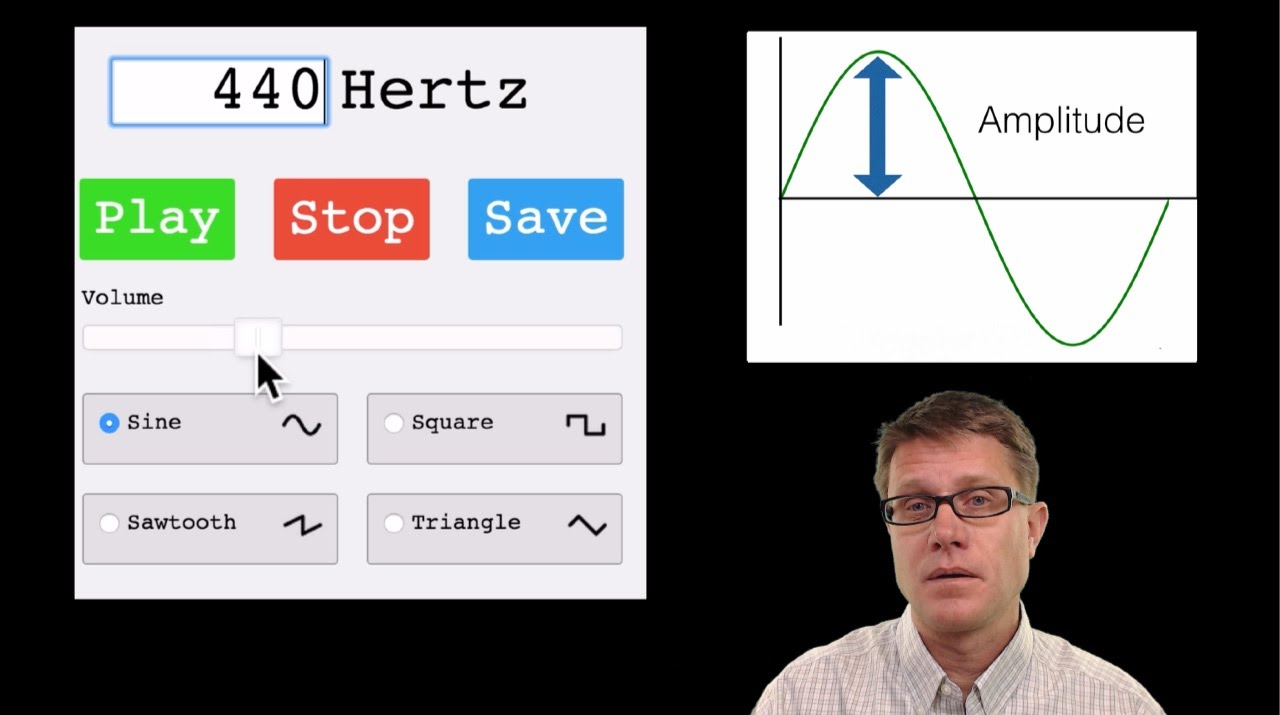
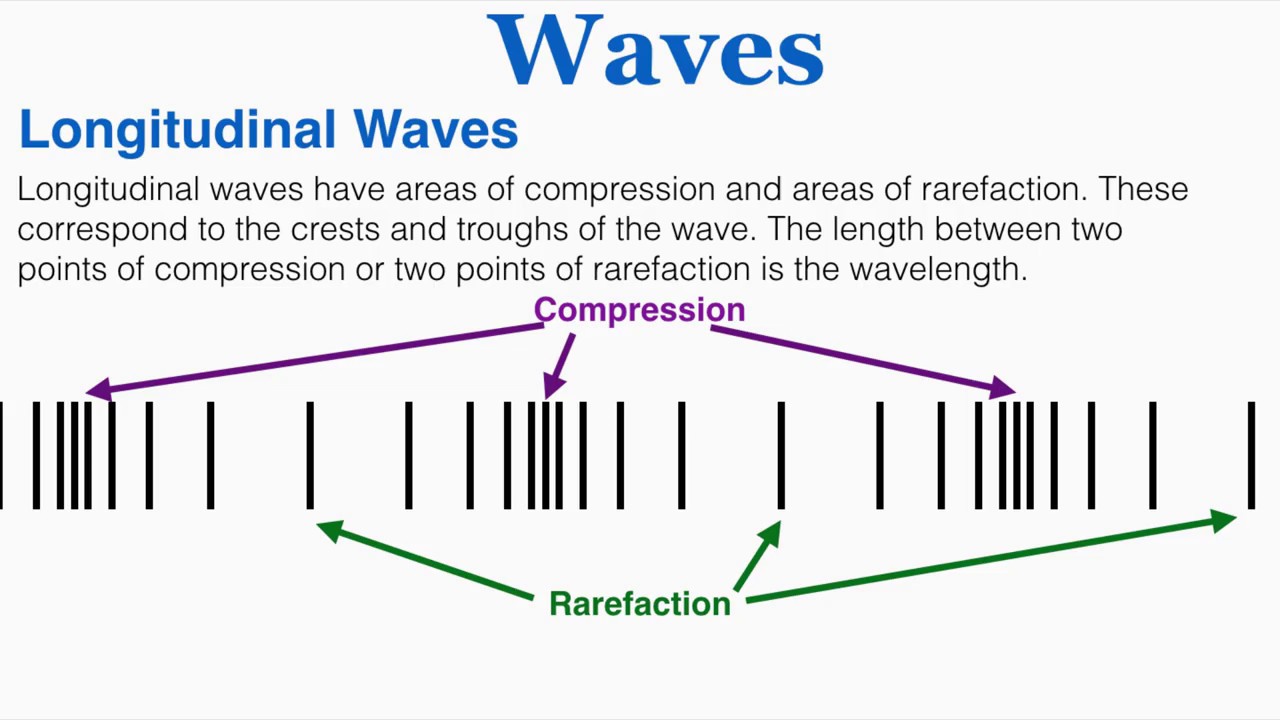
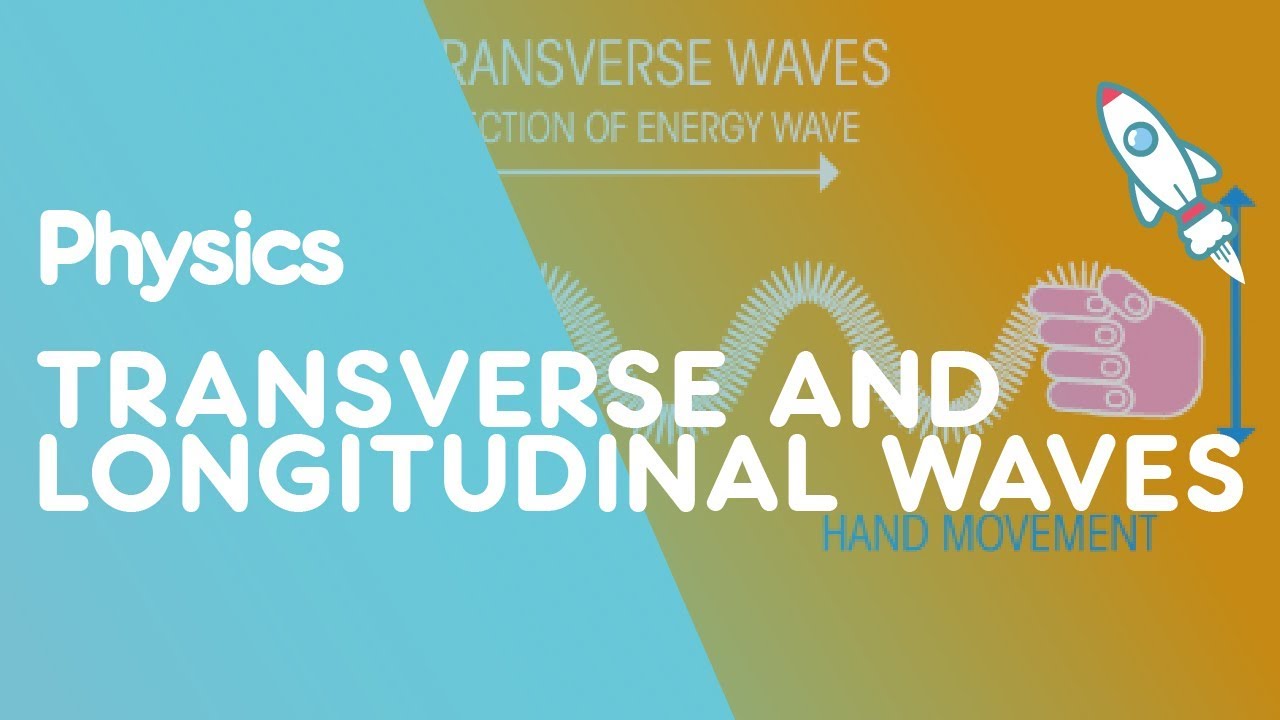
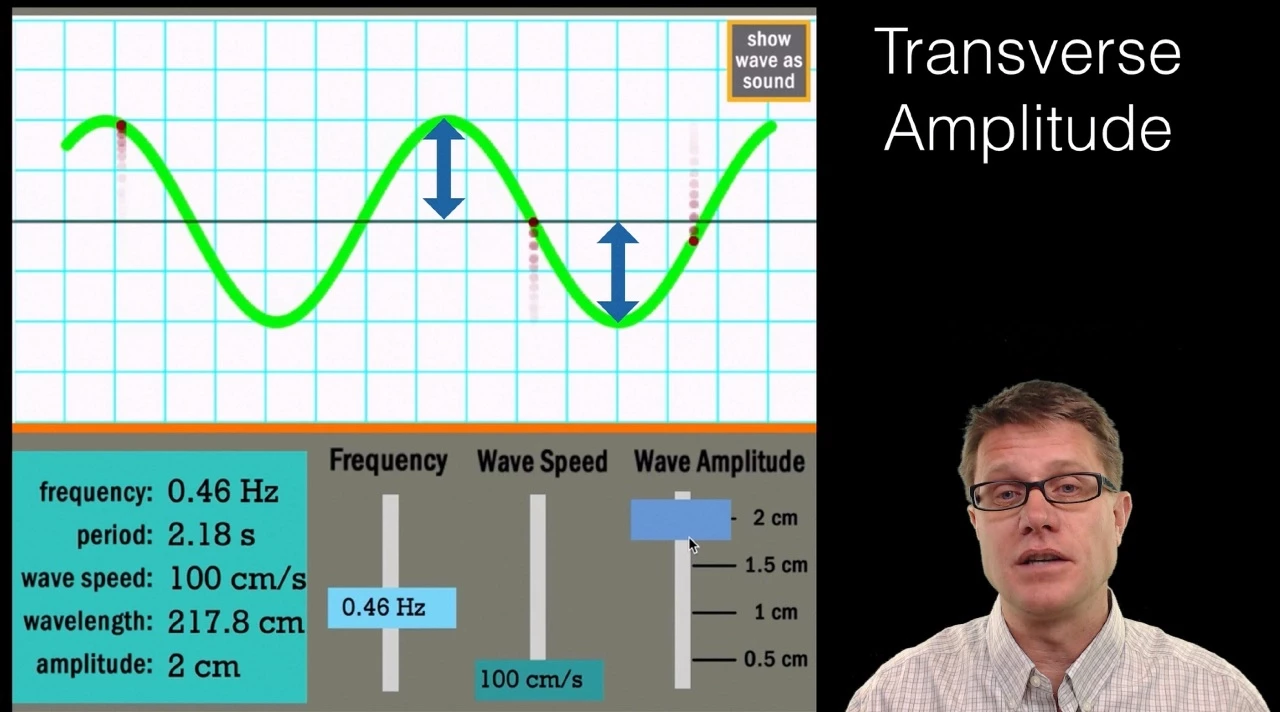
movement of the wave or they can be transverse where it's perpendicular but in both of those the maximum displacement of the wave itself is called its amplitude and so we can measure that in a longitudinal wave by looking at the density of the compressions in the wave it's easier in a transverse wave all you do is look at it at rest and we measure how high it's going up or how high it's going down and so if we model that a transverse amplitude if I have a we've got a Sim bucket simulation here we've got
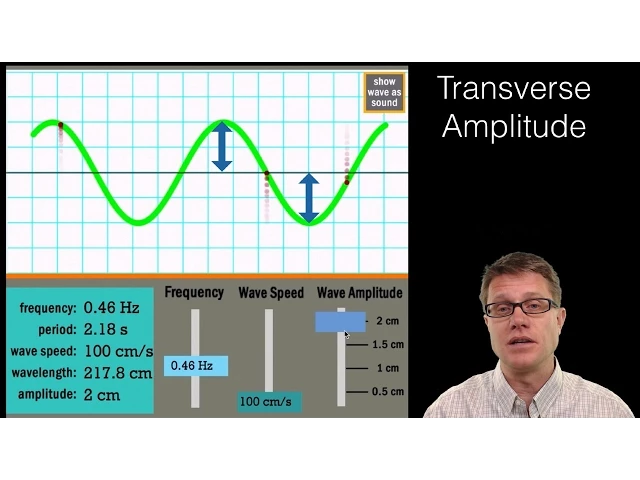
a rope wave so the wave is moving from left to right so the oscillation is perpendicular but watch what happens as I increase the amplitude so now we have an amplitude to 1.5 cm and we amplitude it up to 2 cm what's happening well there's more energy in that wave there's a greater amount of oscillation how could I if I'm given a picture like this measure the amplitude it's pretty simple you just me measure how high we are above or below equilibrium so in this case it would be 2 cm now if we're looking at
a longitudinal wave like a sound wave it's a little bit different in a longitudinal wave the oscillations are in the direction that the wave is moving so the dotted line just represents the direction but you can see as I increase the amplitude what's happening well we can see the wave more now so we're getting more density where that wave Peaks out now how could you calculate the wave amplitude if you're just given a picture of a longitudinal wave it's more difficult but a good way to do it would be to look at the crest or
the the highest point of the wave and I could count the number of particles inside here I think I counted it to be around 30 and then I could move to an area trough of the wave and it's going to be around 15 so the density of particles within that area tells me something about the amplitude and therefore the energy carried within the wave itself and so did you learn to use graphical representations of mechanical waves to study the amplitude I hope so and I hope that was [Music] helpful