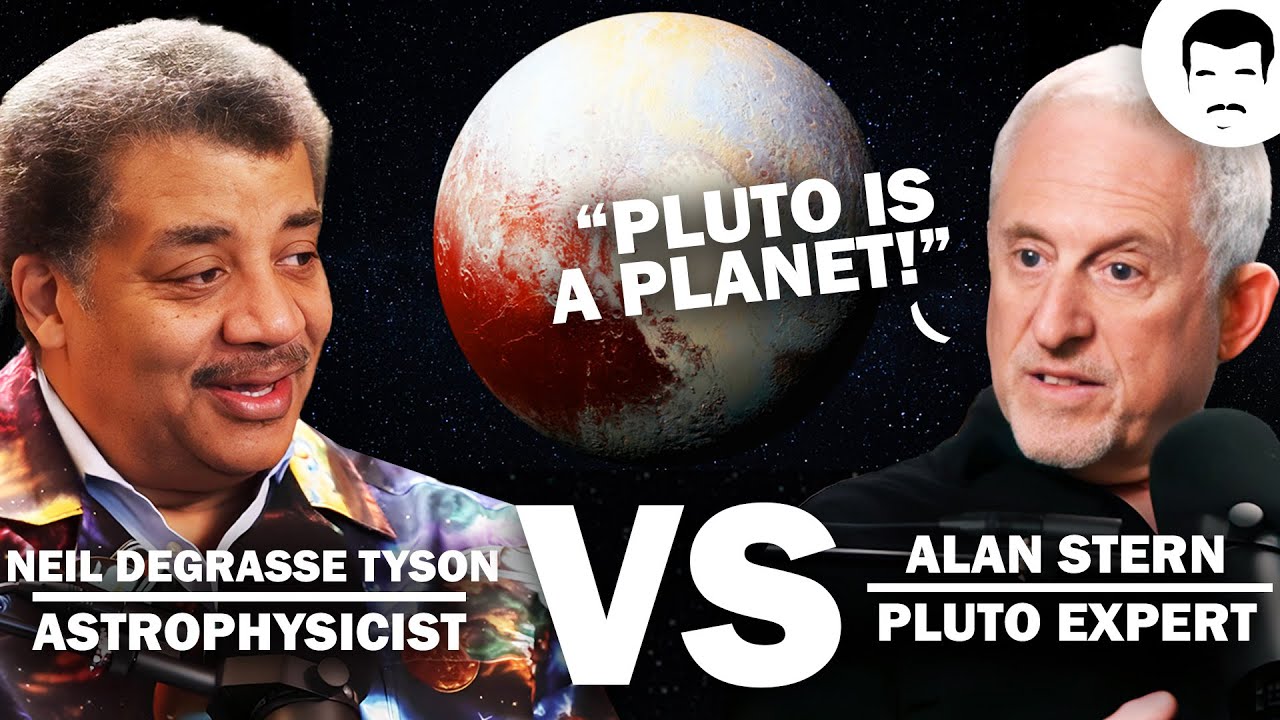
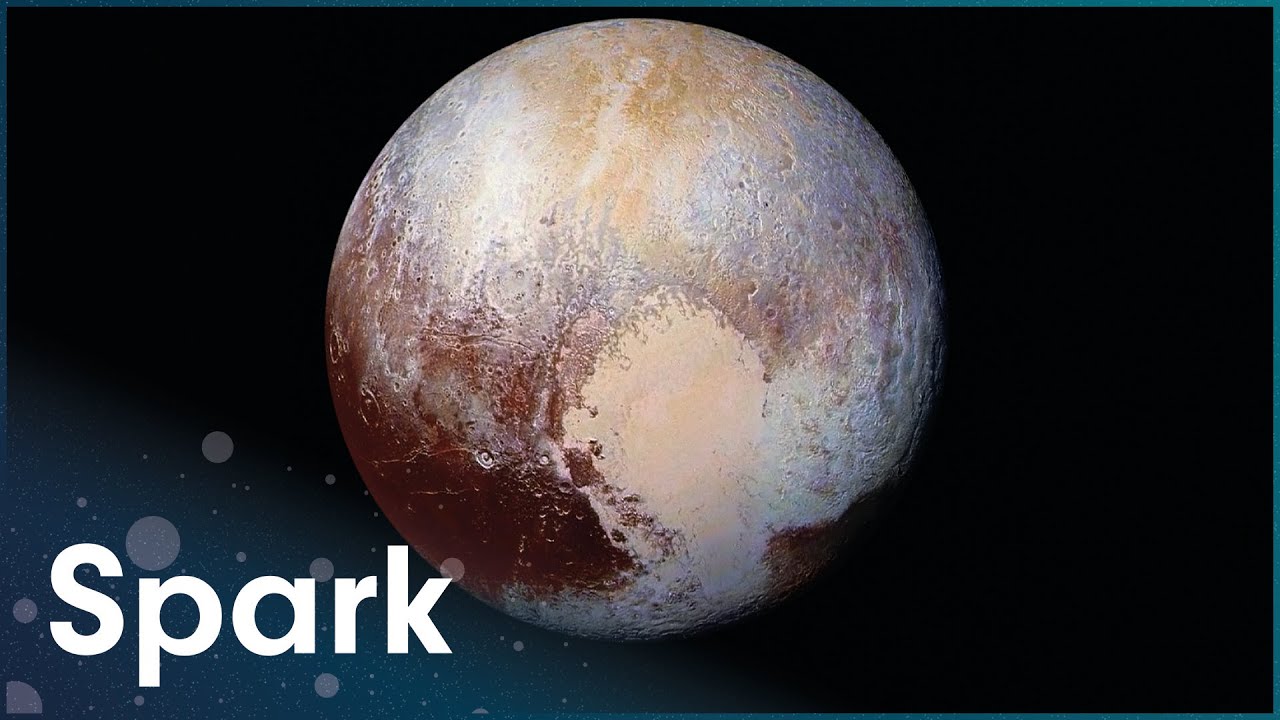
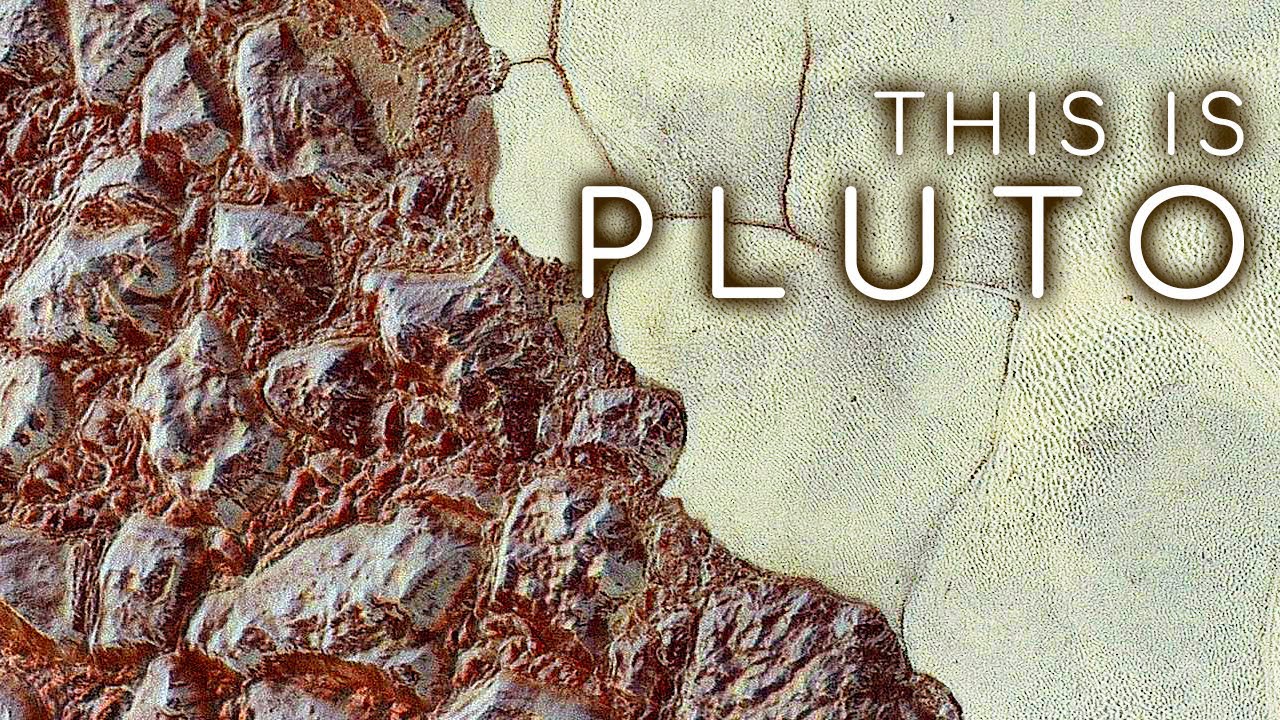
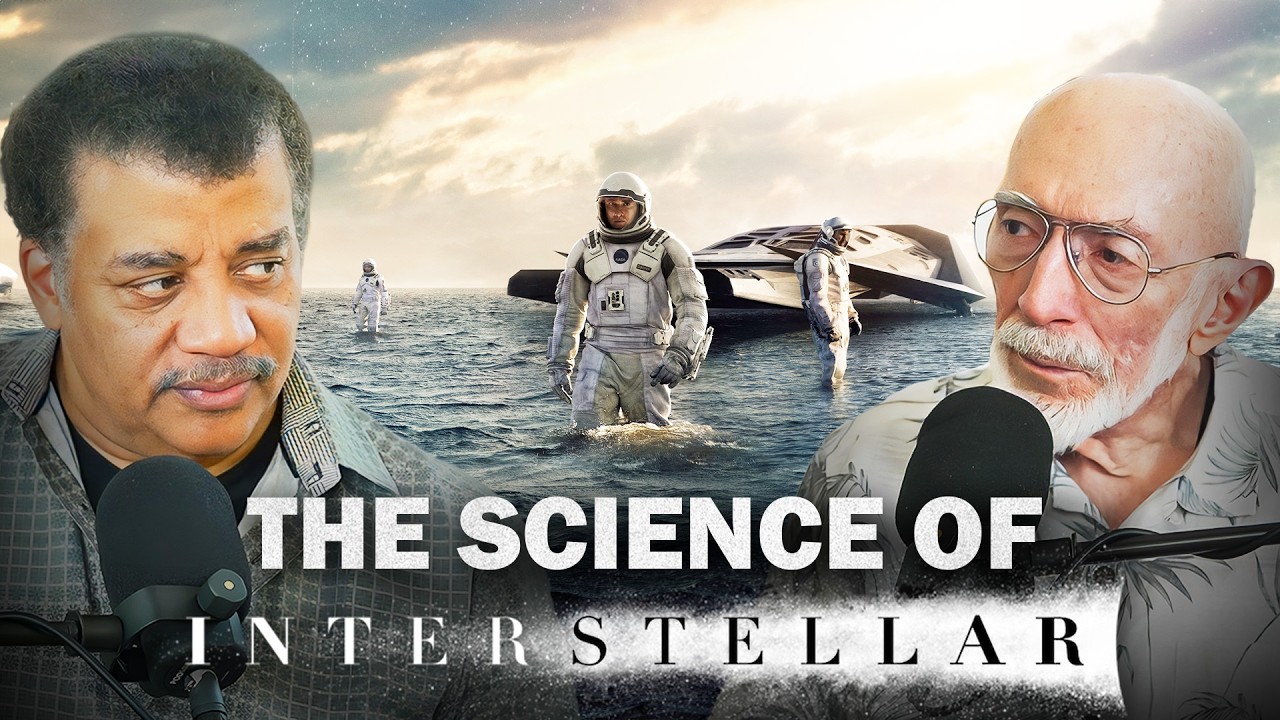
Pluto had it coming from the beginning it was it was like it was never really belong Pluto's orbit crosses that of another planet that's no kind of behavior for a planet Pluto is a distant and mysterious dwarf planet which was once a member of our solar systems planetary family however recent startling announcements by Leading astrophysicists Neil degrass Tyson and meio Kaku have brought Pluto back back into the spotlight with a shocking Revelation they suggest that this icy world is on a potential Collision Course with Neptune but how could this happen and what would be the
consequences of such a massive event are we witnessing a rare astronomical phenomenon or is there something more to this impending Cosmic Collision join us as we explore the possibilities of a Pluto Neptune impact Pluto a former planet that was demoted to a dwarf planet partly due to its peculiar orbit remains a subject of Fascination and study in the astronomical Community according to recent predictions by Leading scientists Pluto's trajectory is dangerously close to Neptune's leading astrophysicists Neil degrass Tyson and Michio Kaku are both raising the red flag of a possible hazardous collision between these two planets
that could be a huge threat to Earth how is such an event even possible Pluto's Journey around the Sun is unlike any other planet in our solar system it takes a staggering 248 years to complete a single orbit meaning since its Discovery in 1930 it hasn't even finished one full Revolution but the Intrigue doesn't stop there Pluto's path is marked by its highly elliptical shape deviating significantly from the near circular orbits of the major planets what makes Pluto's orbit even more peculiar is its inclination angled at 17° to the ecliptic plane the path Pluto traces
is much steeper compared to the other planets this inclination and elliptical nature add layers of complexity to its orbital pattern one of the most intriguing aspects of Pluto's orbit is its intersection with Neptune's path for about 20 years in each orbit Pluto actually comes closer to the Sun than Neptune defying what we might expect from their positions in the solar system this leads to the Natural question why hasn't Pluto collided with Neptune the answer lies in the gravitational influences of other planets the study of Pluto's orbit began soon after its Discovery initially astronomers struggled to
understand its unique trajectory unlike the other planets whose orbits lie relatively close to the ecliptic plane Pluto's path stood out with its steep inclination and elliptical shape the mystery deepened with the realization that Pluto's orbit actually crosses Neptunes the stability of Pluto's orbit amidst these complexities is proof of the complexities of space mechanics the three body problem in space is about figuring out how three things in space like Pluto Neptune and the sun move and affect each other with their gravity it's like trying to predict where they will go based on where they start and
how they pull on each other in Pluto's case this problem shows how its path Neptune's path and the Sun's gravity all work together in a complex way the terms azimal libration and latitude libration along with the vzk oscillation are part of this puzzle according to astrophysicists what's keeping all planets in their orbits is azimal libration in the context of Pluto and Neptune this term means that whenever Pluto crosses Neptune's orbit it's positioned at least 90° away from Neptune this spatial separation is crucial in preventing their paths from colliding latitude libration on the other hand refers
to the vertical movement of a Celestial body in its orbit for Pluto this means that when it comes closest to Neptune or any other giant planet it's situated significantly above their orbital plane providing an additional layer of protection from potential collisions another crucial component in this equation is the vzk oscillation this is named after three scientists Von zipel liov and Kai who studied how things move in space it's about how three space objects like Pluto Neptune and the sun pull on each other with their gravity this pulling affects how they move in Pluto's case vzk
helps us understand why its path around the Sun is so unusual even though Pluto's path seems all over the place this oscillation helps keep it moving smoothly for a long time the vzk oscillation shows that even if things in space seem wild and random some patterns and rules keep everything in order all of these components help keep Pluto's orbit stable making sure it doesn't crash into Neptune or get thrown off course this three-body problem helps in understanding how these paths change because of the way these space objects pull on each other studying this helps us
learn about Pluto and our solar system and Distant Worlds and their Stars numerical simulations in the late 1980s revealed that despite these stable properties Pluto's orbit is technically chaotic with minor deviations in initial conditions leading to significant differences over millions of years however these unique properties of Pluto's orbit have been found to maintain stability over incredibly long time scales effectively keeping the chaos at Bay recent computer tests have helped us understand how the big planets like Neptune Jupiter and Saturn affect Pluto's path around the Sun Neptune has a special connection with Pluto where for every
two rounds Pluto makes around the Sun Neptune makes three this connection helps keep Pluto's path steady but Neptune isn't the only one helping Jupiter's gravity also plays a big part in keeping Pluto's orbit safe and stable and Saturn helps a bit too these tests show that Jupiter's gravity alone is strong enough to make sure Pluto stays on a stable path for a really long time even billions of years so it's like Neptune Jupiter and Saturn are all working together to make sure Pluto keeps moving safely in space without running into trouble these phenomena are essential
in the context of the universe for maintaining the order and predictability of space bodies movements without these mechanisms the solar system as we know it would be a place of much greater chaos and unpredictability bodies like Pluto could potentially collide with others or be ejected from their stable paths leading to a domino effect on other celestial bodies for Pluto especially with talks about it possibly crashing into Neptune in the future understanding its orbit is really important this gives us a clearer picture of the Solar System's Dynamic nature the case of Pluto demonstrates how even the
most seemingly unstable orbits can achieve a state of equilibrium through the complex interplay of gravitational forces and orbital mechanics it also shows the importance of continuous observation and study of these phenomena to grasp our place in the universe better exploring the depths of space often leads us to confront the unpredictable nature of celestial bodies and Pluto's orbit is a prime example of this unpredictability the concept of orbital chaos which refers to the sensitive dependence of a Celestial body's path on its initial conditions is vividly Illustrated in the case of Pluto this means that even slight
variations in the dwarf planet's position or velocity can significantly change its long-term orbit using computer simulations has been super helpful for scientists to figure out how Pluto Moves In Space these simulations used tricky math to mimic how Pluto and other space things like Neptune pull on each other by changing little details in the simulations astronomers can see how even small tweaks can make a big difference in where Pluto goes back in the late 1980s these simulations showed something really interesting about Pluto's path even though it has things like azimal and latitude libration to keep it
steady its orbit can still be pretty wild and unpredictable if you start off with just a tiny in where Pluto is or how fast it's moving over many many years its path can end up looking really different but even with all this chaos Pluto's orbit stays stable for a super long time like billions of years this means Pluto's Journey around the Sun has a kind of order to it even though it seems all over the place at first predicting Cosmic events especially when it involves chaotic orbits like Pluto's poses significant challenges the inherent unpredictability of
these systems means that long-term forecasts are often fraught with uncertainties while numerical simulations provide a powerful means to understand and anticipate the future Paths of celestial bodies they also highlight the limitations in our predictive capabilities these models rely heavily on the accuracy of initial conditions and the complexity of the interactions they simulate any slight error or oversimplification can lead to vastly different outcomes making precise predictions a daunting task moreover the chaotic nature of celestial orbits like Pluto's reminds us of the ever evolving and dynamic nature of the universe while we have made significant strides in
understanding space the case of Pluto reminds us how our knowledge about the universe Still Remains limited understanding the gravitational influences of the giant planets on Pluto's orbit provides valuable insights into the broader dynamics of the solar system it shows how the presence and position of each planet can have far-reaching effects influencing the stability and trajectory of other bodies within the system so why are major astrophysicists only now raising concerns about a possible collision between Pluto and Neptune despite all these complex forces trying to keep such an event from happening Neil degrass Tyson a prominent astrophysicist
and a pivotal figure in popularizing astronomy provides a unique perspective on the mysteries of our solar system particularly the Intriguing case of Pluto Tyson known for his role in the reclassification of Pluto from a planet to a dwarf planet offers insightful commentary on the evolving nature of celestial mechanics and the Public's fascination with the unknown Realms of space Tyson's stance on Pluto's reclassification is rooted in the ever expanding knowledge of our solar system he views the reclassification as not a demotion but a necessary adaptation to our growing understanding of The Many Bodies orbiting our sun
Tyson's approach to to Celestial mechanics is one of continuous learning and adaptation he sees the complexities of orbits such as Pluto's as a reminder of how much there is still to discover in Space the Intrigue of these unknowns according to Tyson is what makes astronomy so captivating furthermore Tyson keenly knows how space events and discoveries shape public interest in astronomy he believes that events like Pluto's reclassification or its Orbit's peculiarities are opportun ities to engage The public's imagination and curiosity about the universe by discussing the dynamic and sometimes counterintuitive nature of space mechanics he opens
up a window for the general public to appreciate the Wonders and Mysteries of the universe alongside other scientists Tyson is at the Forefront of warning the public about the potential danger of Pluto's randomized course after studying Pluto for many years Tyson has raised concerns that the three body problem might be an actual concern when it comes to Pluto and a collision with Neptune is long overdue moreover he emphasized how such a collision could completely change the universe's balance and Trigger catastrophic consequences all the way to Earth if Pluto and Neptune were to collide it would
be a rare and catastrophic event in our solar system the Collision would release an immense amount of energy likely shattering Pluto given its smaller size and icy composition debris from the Collision could spread across the solar system potentially creating hazards for other planets and their moons for Neptune such an impact could alter its atmosphere and potentially its orbit depending on the specifics of the Collision mokaku a renowned theoretical physicist known for his work in string theory and a popularizer of science brings a unique perspective to this debate as well his views on the future of
space exploration and the interplay between Celestial mechanics and theoretical physics offer deep insights into the mysteries of space phenomena like Pluto's orbit Kaku sees the study of Pluto and its orbit as a window into the future of space exploration he believes that understanding the complex gravitational interactions and orbital dynamics of celestial bodies like Pluto can provide crucial insights for future space missions this knowledge can help in navigating the solar system more effectively predicting potential hazards and even in the planning of missions to the outer reaches of our solar system and beyond Kaku emphasizes that the
lessons learned from studying Pluto's orbit can be applied to explore other celestial bodies offering a blueprint for how we might approach and understand Distant Worlds when it comes to the physics of planets Kaku often discusses how Celestial mechanics and theoretical physics are deeply related he believes that the movements and interactions of planets such as the gravitational dance between Pluto and Neptune are not isolated phenomena they are connected to the fundamental principles of physics kaku's work in theoretical physics particularly in string theory seeks to understand these principles at the most fundamental level he often suggests that
by studying the complexities of celestial mechanics like the orbit of Pluto we can gain insights into the underlying laws of the universe much like Tyson mokaku announced this impending Collision as well connecting this to his theories about the universe if Pluto and Neptune were to collide it would be a Monumental event in astrophysics offering a unique observational opportunity that could potentially relate to string theory String Theory a theoretical framework in which the point-like particles of particle physics are replaced by one-dimensional strings seeks to describe the fundamental forces and matter in the universe a collision of
such magnitude in the solar system could produce extreme conditions of energy and gravity potentially creating scenarios where effects predicted by String Theory might become observable for example the high energy impact could offer insights into the behavior of fundamental particles and forces under extreme conditions a key interest area in string theory furthermore the gravitational waves produced by such a collision could provide valuable data for testing predictions of string theory related to gravity and SpaceTime these waves could potentially carry signatures or anomalies that align with or challenge the predictions of string theory while the direct impact on
Earth would be negligible due to our distance from the outer solar system the scientific implications of such an event could be profound potentially contributing to our understanding of the fundamental nature of the universe as described by string theory and other areas of theoretical physics Pluto's orbit is a remarkable example of celestial mechanics at play demonstrating both stability and Chaos within our solar system system the unique characteristics of its orbit influenced by the gravitational forces of neighboring planets particularly Neptune showcase the intricate and dynamic nature of space the three-body problem is not the only mystery of
the universe that we have yet to find answers for many other potential catastrophes are predicted to occur the possibility of Planet collisions in space while extremely rare cannot be completely ruled out the Dynamics of planetary orbits can be influenced by various factors including the gravitational interactions described by the three-body problem in space there are systems with many planets close together like the Trappist one system which has seven planets about the size of Earth these planets can pull on each other with their gravity this pulling can create a kind of Rhythm or pattern in the way
the planets move called orbital resonances over time these rhythms can shake things up and make the planet's paths less stable this means that the planets might start to move in ways that could lead to them bumping into each other but even in crowded systems like trapist one collisions aren't happening right now scientists watch these systems closely to learn more about how planets can affect each other's paths understanding these patterns helps us learn more about how planets move in space especially when they are really close to each other rogue planets drifting through space without a star
add another unpredictable element these planets once part of a star system get ejected due to gravitational disturbances or other celestial events such as the close passage of another star or the dynamic instability in multi-planet systems over time these rogue planets a drift in space can travel vast distances potentially entering regions far from their point of origin during their lonely Journey they carry with them the potential to cross paths with other star systems if one of these wandering planets crosses into another solar system there's a small chance it could collide with a planet in that system
however space is incredibly vast and mostly empty making the odds of a rogue Planet directly hitting another planet very slim the sheer scale of interstellar distances and the relative Rarity of planets in open space act as buffers against frequent collisions additionally rogue planets are not very common compared to the number of stars and planets in stable orbit orits making such encounters even more unlikely in cases where galaxies merge their respective star systems can be thrown into disarray the vast Interstellar distances make it somewhat improbable for planets to collide directly during these Cosmic events however the
immense gravitational forces at play dramatically alter the orbits of stars and planets within the merging galaxies this turmoil can lead to planets being violently ejected into the cold dark expanses of Intergalactic space becoming Rogue worlds untethered to any Star alternatively these gravitational disruptions could potentially lead to scenarios where planets are ejected from their orbits collide with each other or crash into their host stars in some cases the gravitational reshuffling can even trigger the formation of new celestial bodies or lead to the ignition of new stars as gas and dust are compressed under extreme conditions in
our own solar system theories about the late heavy bombardment suggest that a period of increased Comet and asteroid collisions occurred due to gravitational disturbances from the outer planets this phenomenon believed to have taken place approximately 4 billion years ago indicates a time when the solar system was a much more chaotic and violent place the gravitational disturbances are thought to have been caused by the migration of the gas giants which would have disrupted the orbits of numerous smaller bodies in the Kyper belt and asteroid belt as these objects were thrown into erratic paths many found their
way into the inner solar system leading to a spike in impacts on the terrestrial planets including Earth while not involving planet planet collisions it demonstrates how gravitational interactions can lead to significant changes in Celestial bod's trajectories this bombardment likely played a crucial role in shaping the surfaces and even the geological histories of these planets including the potential delivery of water and organic materials to Earth over the very long term as stars evolve and lose Mass the orbits of planets can expand and potentially intersect this process is particularly evident in systems Where Stars end their life
cycle as a star ages and burns through its nuclear fuel it often undergoes significant changes in Mass especially during stages like the red giant phase or when shedding material in a planetary nebula these changes in Stellar Mass can dramatically affect the system's gravitational balance causing the orbits of surrounding planets to drift outward or become more compact this is more likely in multi-star systems where complex gravitational interactions can lead to unstable orbits more easily in such systems the gravitational pull from multiple Stars can interact unpredictably worsening the orbital shifts and increasing the likelihood of orbital Crossings
this can lead to scenarios where planets may be captured by another star in the system collide with other bodies or even be ejected into Interstellar space in all these scenarios the actual occurrence of a planet Collision is still considered highly unlikely the vastness of space and the relative smallness of celestial bodies make direct collisions rare events however these possibilities are of great interest to astronomers and astrophysicists as they provide insights into the Dynamics of planetary systems and the evolution of galaxies the study of Pluto Pluto's orbit represents the continuous quest for knowledge and understanding in
the field of space exploration as Tyson and Kaku have shown every Discovery and every piece of new knowledge brings us closer to unraveling the complex nature of our universe it's a journey that challenges our perceptions expands our Horizons and inspires future generations of explorers and scientists and this constant observation can help us predict major catastrophic events that might occur in the future such as the Collision of Pluto and Neptune thanks for exploring with us on Beyond Discovery if you enjoyed these Revelations click now on the next video that pops up on your screen it's unbelievable