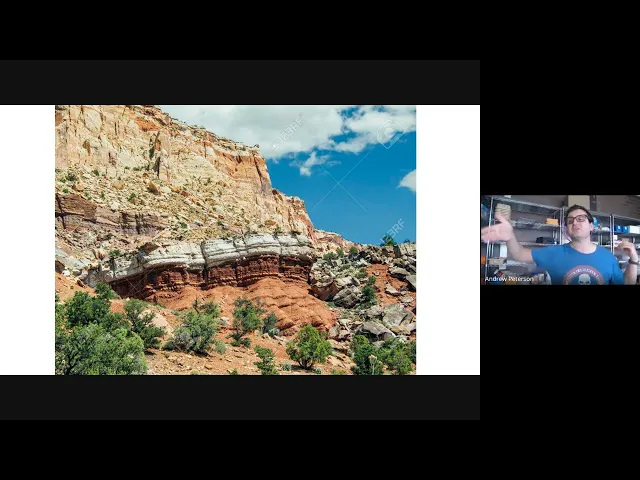
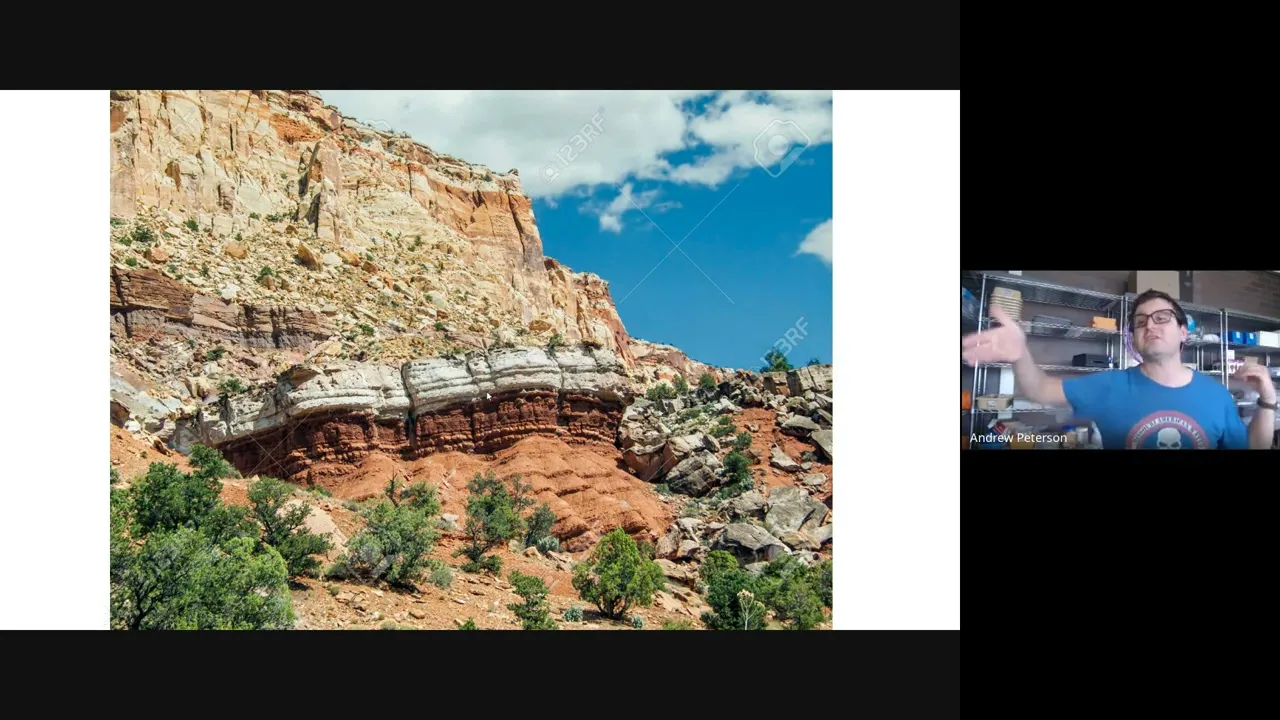
so notes Compass the tilting dip what causes dip so remember uh so remember back to our previous notes layers are tend to be formed flat or and horizontal original horizontality uh layers tend to be formed flat however often we have layers um that do not stay flat and it's mostly for one of three things uh hor izontal compression which we'll talk in the next unit faulting which we'll talk in the next two units about and then vertical settling which we'll talk about next semester okay in general minus a couple examples and of course whenever there's
a rule in geology there's always exceptions to the rues but in general a layer first needs to form flat and horizontal and then gets tilted so when we talk about relative dating I could always conclude that the tilting occurs after formation so this happened the formation happened and then the tilting happened after it okay lastly something confusing erosion features uh so erosion aut topographic features caused by like uh water like valleys and Hills valleys and Hills being the most common almost always form the most recent water and erosion works on like 10 to 100e time
windows okay well rock formation and tilting occurs over thousands and millions of years so in general if I have like a mount a hill shape or something that always was the last thing to occur okay uh by the way those Hills and stuff are caused by water flowing down into certain patterns we'll talk about those patterns second semester but it's a good preview so back to this diagram we saw earlier once again if I look at this white and really dark brown layer I once I already said wow those weren't originally like that okay uh
and I and what's cool is I know for a fact that they were tilted after the formation so it was like brown layer formed then white layer side note the brown layer formed first because it's deeper down then the white layer form because it's higher up and then they were tilted what's cool is I could further extrapolate relative dating using this basic information so if I see these layers underneath it I see those layers were tilted with these layers so what probably happened is these layers formed then these layers and then these layers so one
two three I know that because once again layers towards the bottom tend to be older than layers towards the top what's cool is if I not that these layers up here these Rock layers I note that those are not tilted okay so if I go one two three and I label this as layer four so layer one layer two layer three layer four I can conclude that the history of this was the formational layer one the formational layer two the formation of layer three they got tilted so layers one two and three got tilted and
then this formed I know this formed after the tilting because it's not tilted if it was there and then it was tilted it would also be tilted as well so once again form form form one two three tilting and then this layer and I know that because these layers are tilted and these layers are not and these and once again as I go up they get younger and younger and younger