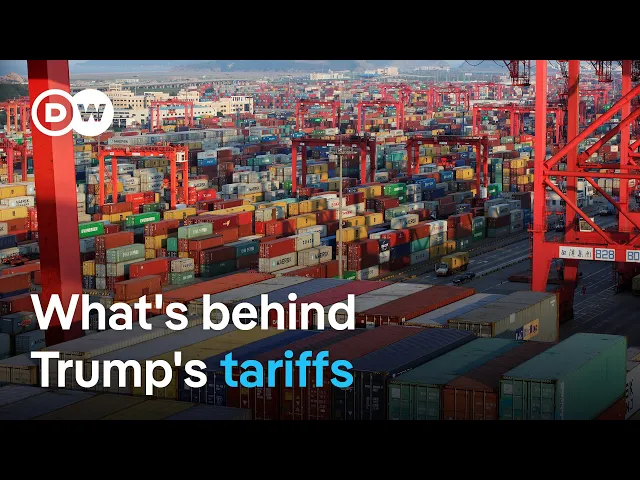
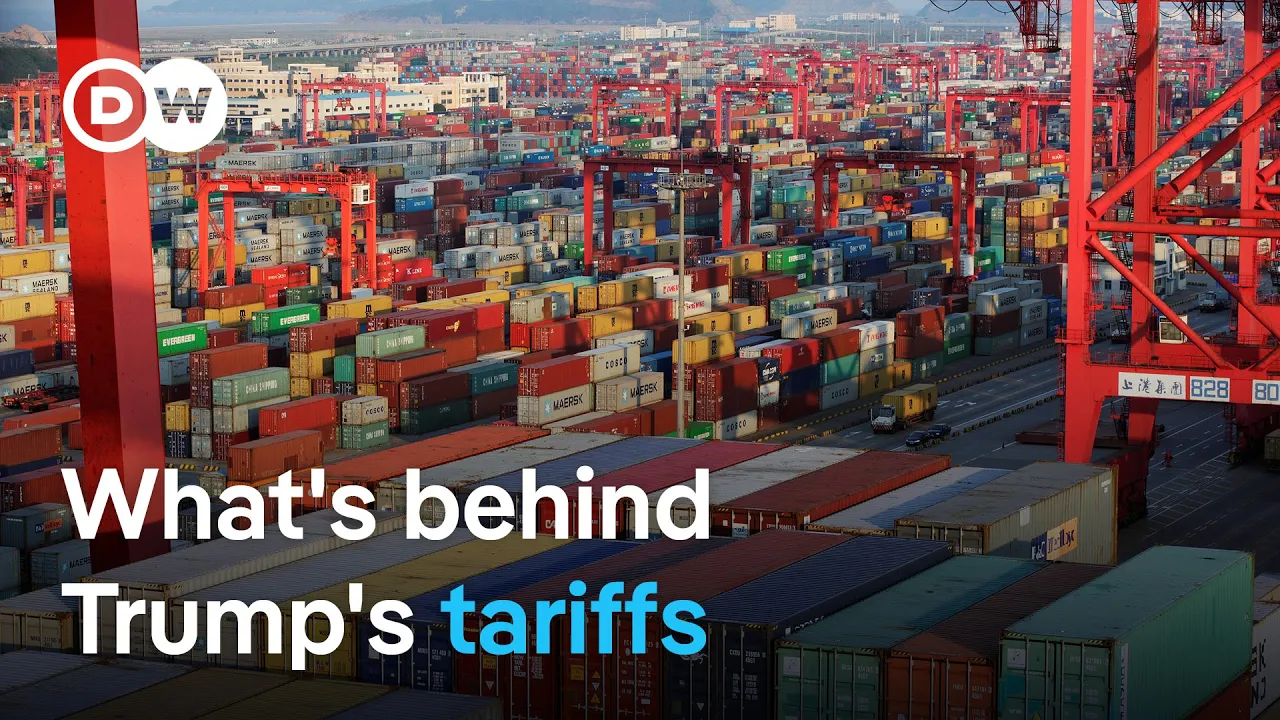
US president Trump has announced he's imposing tariffs on the US three largest trading partners Canada Mexico and China as soon as Saturday the White House says it will Implement a 25% tax on imports from Canada in Mexico and a 10% tax on goods from China Trump has also threatened the EU with similar measures but has offered no clear timeline Trump had pledged the measure to boost local Manufacturing in the US and to pressure its neighbors to do more to stop the flow of migrants and illicit drugs into the country now both Canada and Mexico have
said they're ready to retaliate but analysts say the US tax will likely deal a heavy blow to Mexico Latin America's second largest economy Factory workers in the Mexican border city of suad hes are producing metal parts to be packed up and sent to the United States stes it is one of Mexico's mail adoras these manufacturing plants often owned by Foreign companies pair cheap Mexican labor costs with the benefit of doing business in the US market a thriving industry that is threatened by US president Donald Trump's promise to impose High tariffs on Goods coming from Mexico
dis Advantage here at the US border is that 60% of formal employment is in the madora industry this industry could leave because of the tariffs because it would no longer be profitable to operate on the Mexican side of the Border Trump says he will impose tariffs on Goods entering the United States from Mexico Canada China in the EU these import taxes will create revenue for the US government whilst also giving locally produced Goods a price advantage over Imports Trump says that tariffs will balance out trading imbalances with these countries be a boon to us manufacturing
and are also punishment for what he perceives as a threat to US security we're thinking in terms of 25% on Mexico and Canada because they're allowing uh vast numbers of people Canada's very bad abuser also vast numbers of people to come in and fentol to come in his plans have put his neighbors on the defensive Canadian energy powers American manufacturing businesses and homes of America's top five trading partners Canada is the only one with whom the United States runs a trade surplus in manufacturing and Canada buys more goods made by Americans than China Japan and
Germany combined the introduction of tariffs could also have negative consequences domestically I'm just skeptical that that the way you get countries to sort of cooperate is by poisoning the well with the threat of of really crippling uh effectively economic sanctions uh that also hurt American consumers I think that's the the thing that that needs to be reiterated here is that that ultimately American consumers will bear the cost of these tariffs tariffs Donald Trump's favorite word in the dictionary but experts warn that high import duties could lead to retaliation and potentially a full-blown trade War Donald
Trump has promised tariffs on Canada and Mexico as early as this weekend we heard it there I asked Kimberly CL at UCLA School of Law whether he could actually do that given that these countries have a free trade agreement with his country if he implemented those tariffs it would certainly be contrary to the Free Trade Agreement the whole point of the Free Trade Agreement is actually to give uh countries that are close to you special better access to your Market not worse access to your market so uh like in many other areas Trump is being
somewhat uh Eon clastic here in terms of his application of tariffs but there are a lot of presidential authorities that would allow for unusual leving of tariffs including for national security reasons for emergency reasons or due to unfair Trade Practices I expect he would lean on the emergency rationale but I don't know what he will do and whenever we talk about tariffs the argument comes up that the American people will end up paying the price who do you think would suffer most from tariffs absolutely I think the evidence is crystal clear that the American people
would suffer the most and this happens in more than one way first the consumers will pay more for imported goods and evidence suggests that the vast majority of the burden if not all of the burden would fall on consumers in the form of higher prices this affects not just imported goods but also Goods that compete with Imports so if you're a domestic good and your main competitor is a foreign good then you're going to raise prices so you US Lumber might get more expensive when Canadian Lumber gets more expensive but it also hurts us production
one thing to remember is that our production is highly integrated across North America so if you are introducing new frictions into trade between us and our closest trading partners that certainly will reduce the competitiveness of us manufacturing it will reduce US exports and it will harm the supply chain in ways that could show up as recession so what's the upside for Trump what is he trying to achieve here I think Trump has always uh tried to blame foreigners and uh others for things that might be better solved domestically so this is one way for him
to tell working class Americans look you know your bad plight is because of other people and I'm going to levy tffs on other people he doesn't seem to worry about the fact that the evidence suggests that his tariffs would actually hurt the very people he's purporting to help and I think in a way it's sort of a smoke and mirrors distraction from a fiscal switch he's suggesting which is instead of taxing people through the income tax he wants to shrink the income tax which would fall disproportionately on those at the top of the distribution and
he wants to expand this inefficient and regressive Revenue source that would fall more heavily on those that are poor in the middle class and you can't just come out and say I want to increase taxes on middle class Americans to pay for tax cuts for those at the top but this is one way to distract people um through this mechanism of foreign blame and and achieve the same ends Trump has also promised to slap tariffs on China and the remaining bricks Nations what could the potential Global Fallout be of that move the broader the tariffs
the worse it's going to be for the world economy um if he levies tariffs on every country in the world you know that's more harmful than just singling out a few countri countries that said China Canada and Mexico are the United States three largest trading partners so when you start with those three you're already getting nearly half of us trade included in your trade barriers um I think the the cost to the world economy is that when other countries retaliate they're also going to be putting costs on their own consumers when their exporters have smaller
markets that's going to harm their exporters and so there's going to be sort of a combination of uh pressures that raise prices in the world economy and also pressures that hurt output and efficiency in the world economy and it's it's going to be a difficult decision for other countries about how to respond but retaliation is what I would expect and that just sort of adds insult to injury for the world economy even though it's it's probably a rational way to deal with this uh policy that was Kimberly clausing of UCLA thank you so much for
all those insights great speaking to you we can bring in now John kieron professor of political science at the University of Toronto so Trump says these tariffs are to help clamp down on illegal migration and the flow of dangerous drugs into the United States but Canada is responsible for around 1% of each of those according to the government so what exactly do you think is motivating Trump with these tariff plans I think he's made it very clear for a very long time um both on the campaign Trail uh before then and then since he uh
won his um Victory uh that he's the Tariff man uh and he's going to use them uh for so he says uh lower um the taxes uh that the United States citizens pay at home what was a bit surprising is that he chose to hit his closest neighbors and allies Canada the longest one and uh Mexico uh too because our economies are now so integrated with the United States he's going to harm Americans from the first second as well well as you were saying there Canada is one of the United States closest allies and has
an incredibly intertwined economy it's the third largest US trade partner so what effect do you think that these tariffs are going to have both on businesses and consumer prices oh it's going to be very bad news uh in Canada uh for sure um estimates uh say that there'll be a drop in Canadian uh gross domestic product of between 2.6% uh up to uh 6% uh the immediate uh effect if the Canadian government retaliates by putting tariffs on American exports into Canada as the Canadian Prime Minister has said his government will will be uh yes um
higher prices is um in the grocery stores uh right away and then um given the integrated Supply chains higher prices uh on many other things uh which we import directly from the United States orange juice so from Florida uh but all of the parts and components uh we import to build things in uh Canada out like cars well as you were saying there the Canadian government has already promised a response if Trump introduces these tariffs so do you think this could be the start of a trade War like we saw during the first presidency of
Donald Trump regarding China oh very much so um the president has just said within the past few hours uh that he's not going to put uh tariffs on Canadian Oil and Gas into the United States that's our biggest export sector he's going to wait until February of the 18 and then only put a 10% tariff on but once the Canadian government retaliates with dollar for dooll um tariffs on American Goods into Canada as the government said it would it's easy for Donald Trump just to raise uh the oil and gas tariffs up to uh 25%
that would mean of course Americans when they buy gas at the pump uh would pay well a dollar or two more and that's highly politically sensitive so we'll just have to see how much pain he's willing to impose on his fellow Americans in order to punish Canada and to show all of America's trade Partners the big ones uh with the European Union next in line that he going to hit them uh too all right we're going to have to leave it there that was professor John Kon at the University of Toronto thank thank you very
much for your expertise good to be with you