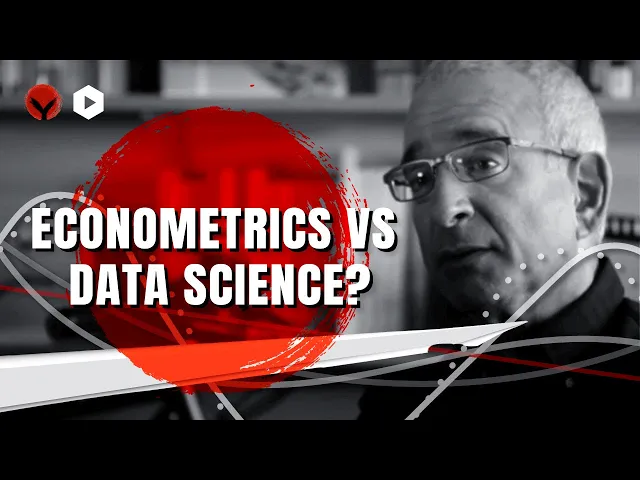
♪ [music] ♪ - [Narrator] What's the difference between econometrics and data science? - [Josh] I would say that the principal difference is the approach to the problem of prediction. Data scientists are often concerned with curve-fitting type approaches to prediction.
So any model that fits the data well will do. If it's past experience, we might be interested in using that to extrapolate to the future. A lot of the data science agenda is tied to somebody's marketing problems.
You're trying to figure out who will buy something, who will take some action. Econometrics, in my view, deals with kind of a harder class of problems. Econometricians are more concerned with causal relationships.
In other words, if we manipulate something, say, health insurance or monetary policy, what's the world going to look like in response to that change? We don't take it for granted that the past is a good guide to that because we understand that variation and variable is associated with lots of potential confounding variables -- we would say other things that are moving that also perhaps affect outcomes. The simple observed relationship there is often misleading because there are factors that are not well controlled, and we have in mind that there is a research design that involves more than curve fitting.
In fact, we're fairly indifferent to curve fitting in economics. I think we want to know, for example, whether it matters if you go to an expensive private college -- does that change your life course in the form of higher earnings? That's not really a curve-fitting question, that's a causal question.
♪ [music] ♪ - [Narrator] Ready to master econometrics? Click here to embark on an educational journey with Josh Angrist, aka Master Joshway. Or, if you'd like to watch more from this interview series, click here.