You may have heard a lot of talk in the media recently about the hydrogen economy that many industry commentators predict will be a major part of our lives as we move towards that magical 2050 net carbon zero target. Here in the UK our government published its long-awaited hydrogen strategy in August 2021 and it speaks enthusiastically of plans to achieve 5000 megawatts of what they refer to as low carbon hydrogen production capacity by 2030, which they reckon could deliver a CO2 equivalent saving of 41 million tons between 2023 and 2032. But hydrogen production mainly comes in four different colours, at least figuratively speaking anyway.
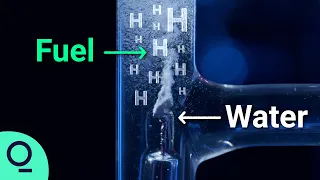
There's green hydrogen, which is a product of electrolysis of water that splits the H2O into hydrogen and oxygen. Then you've got brown or black hydrogen which comes from the gasification of coal releasing hydrogen and carbon dioxide. Then there's the rather drab sounding grey hydrogen, which denotes hydrogen that's obtained by a process known as steam methane reforming or SMR.
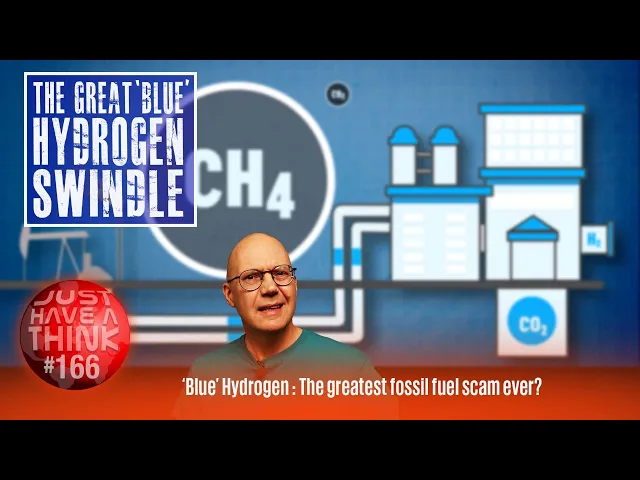
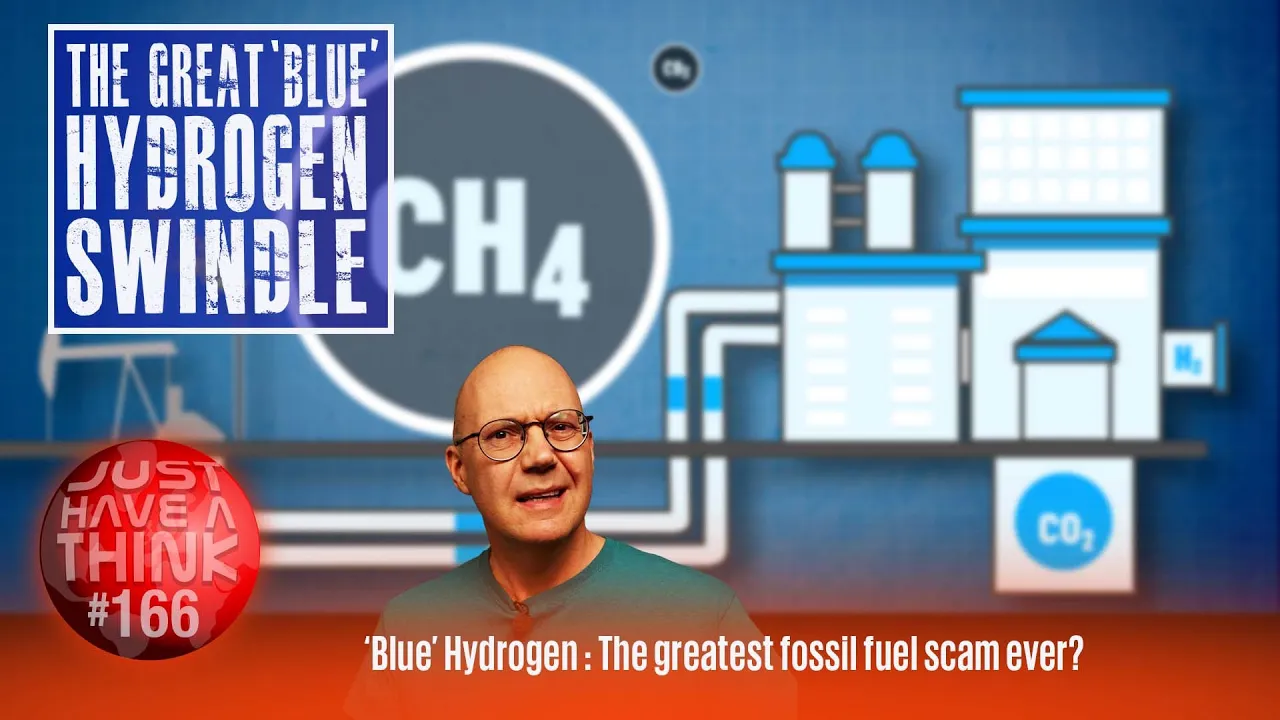
As the name suggests SMR involves bombarding natural gas with high pressure steam to force the methane or CH4 to separate into carbon dioxide and hydrogen. The eagle eyed among you may have spotted that one of the by products of the brown and grey hydrogen reactions is carbon dioxide. Sadly for the fossil fuel industry, quite a few other people also spotted that, and some of them were environmental scientists.
And those people can be really quite picky when it comes to inconvenient little production details like hundreds of millions of tons of greenhouse gas emissions. So a new category has now been dreamt up, I mean developed, by the fossil fuel industry. It's called blue hydrogen.
It's exactly the same as grey hydrogen except the production facility operators promise to capture all the carbon dioxide and do something jolly grown up and responsible with it. And that neatly solves the problem for governments all over the world including here in the UK. Now we can keep pumping natural gas out of the ground and by turning it into hydrogen we'll hardly need to alter our pipeline infrastructure at all and the fossil fuel industry can more or less continue business as usual safe in the knowledge that no one can any longer accuse them of contributing to the whole climate change thing.
The only slight snag is that a new peer-reviewed scientific research paper published in August has done precisely that! How very dare they! !
Hello and welcome to Just Have a Think. The paper in question is called 'How green is blue hydrogen? ', and it was published in the Energy, Science and Engineering journal on the 12th of August 2021.
It's the first peer-reviewed study that looks at the entire life cycle greenhouse gas emissions of blue hydrogen, accounting for emissions of both carbon dioxide and fugitive methane. In other words the stuff that either escapes from the pipelines or gets deliberately burned off through operational practices like venting. It's a fairly technical paper with a whole bunch of equations and calculations to show as transparently and precisely as possible how the authors arrive at their numbers.
There really isn't enough time in a single video to go through it line by line so we'll just cut to the results and conclusions. As always though, I will of course leave a link to the full paper in the description section below so that you can read it for yourself if you want to get the full detail. The vast majority of hydrogen produced today is grey hydrogen derived from steam reforming of methane complete with that inherent problem of high carbon dioxide emissions.
Blue *hydrogen is seen by many as a quick and easy solution to that emissions problem. But what this paper found is that, far from being a low carbon process, greenhouse gas emissions from the production of blue hydrogen are actually quite high, particularly due to those pesky fugitive methane emissions from the gas extraction process. For their calculations the report's authors used a default assumption of a 3.
5 percent emission rate of methane from natural gas and they applied a 20-year global warming potential or GWP to methane rather than the 100-year GWP that many industry and government bodies use. So what does that mean and why did they choose those parameters? Well methane doesn't stick around for anything like as long as carbon dioxide.
What the scientists call its half-life in the atmosphere is only about 12 years. But during that period, mass for mass, it's a hundred times more potent as a greenhouse gas than carbon dioxide. That doesn't look very good on annual reports and stuff like that so a neat solution is to compare the two gases over a hundred years instead because on that basis you can show methane's global warming potential to be only about 23 times that of carbon dioxide, which is much less scary isn't it?
And so that's generally the time frame the industry uses. The trouble is though that our climate emergency is playing out right now in front of our very eyes and not in 80 or 100 years from now. About a quarter of the net global warming that's occurred in recent decades is estimated to be due to methane.
In a recent report the United Nations Environment Programme concluded that methane emissions globally from all sources needed to be reduced by 40 to 45 percent by 2030 in order to achieve the least cost pathway for limiting the increase in the earth's temperature to 1. 5 degrees Celsius. So by far the more realistic and logical course of action is to consider the effects of methane over the shorter term.
An increasing number of scientists have called for using a 20-year integrated time period instead of, or at least in addition to, the 100-year period. In fact the 20-year time frame is now mandated by law in the state of New York as part of the Climate Leadership and Community Protection act of 2019. So that's what the paper's authors used.
And over that time period the GWP number for methane is 86. In other words, mass for mass, the methane in this paper's calculations was 86 times more impactful than the carbon dioxide. That's how the phrase 'carbon dioxide equivalent' or CO2e is derived.
As for the 3. 5% fugitive methane emissions assumption - well that's based on results from 20 other studies analyzing 10 different gas fields in the United States, plus estimates for emissions from gas transport and storage. 3.
5 percent was in the middle of a set of research figures ranging from a high value of 4. 3 percent down to a lowest value of 1. 54 percent.
Based on those parameters the researchers found that total carbon dioxide equivalent emissions for blue hydrogen are only 9 to 12 percent lower than for grey hydrogen. While the local carbon dioxide emissions from the steam reforming process are obviously lower with carbon capture, the fugitive methane emissions for blue hydrogen are actually higher than for grey hydrogen because the vast majority of processing plants will use their readily available supply of natural gas to provide the power for the carbon capture process. And that means more natural gas is being used and more fugitive emissions occur as a result.
There was an even bigger surprise in the results though, and just like in many other industries, there's no such thing as a nice surprise in fossil fuel production! It turns out that, based on the author's parameters, the greenhouse gas footprint of blue hydrogen is more than 20% greater than simply burning natural gas or coal for heat and some 60% greater than burning diesel oil for heat. The paper's authors even plugged the lowest fugitive methane emissions number into their calculations to see if that made a significant improvement but even at that level greenhouse gas emissions from blue hydrogen are still higher than burning natural gas and were only 18 to 25 percent lower than emissions from grey hydrogen.
The research has also assumed that all the captured CO2 can be stored indefinitely. That's generally regarded as a pretty optimistic assumption, and it's certainly unproven at this stage. In fact there's no experience at commercial scale with storing carbon dioxide from carbon capture, and most carbon dioxide that's currently captured is used for enhanced oil recovery which we've talked about a couple of times on this channel.
That process liberates CO2 that had been safely locked up underground for millions of years and spews it straight back out into the atmosphere. Oh yeah, and the oil producers get a multi-million dollar tax incentive called '45Q' from the US government for extensively capturing and sequestering carbon. Always makes me smile that one.
At the time of writing the report in 2021 there were only two of these so-called blue hydrogen facilities using natural gas to produce hydrogen at commercial scale - one operated by Shell in Alberta, Canada and the other operated by Air Products in Texas, USA. Nevertheless the use of blue hydrogen is being enthusiastically promoted by the fossil fuel industry. In Europe, a recent report from 'Gas for Climate', an association of natural gas pipeline companies, envisions large-scale use of hydrogen in the future for heating and electricity generation.
The Hydrogen Council, a group established in 2017 by BP, Shell and other oil and gas majors has called for heating all homes with hydrogen in the future. From the industry's perspective switching from natural gas to blue hydrogen is a fantastic option. Not only do they get to keep their gas fields and pipelines open but they actually see an increase in gas demand to generate the same amount of heat using hydrogen.
And that brings me back to that UK government report I mentioned at the start of the video. Here's what they say in their intro. .
. "developing a hydrogen economy requires tackling the chicken and egg problem of growing supply and demand in tandem, and the UK offers favourable conditions for both to readily expand. When it comes to production our twin track approach capitalizes on the UK's potential to produce large quantities of both electrolytic green hydrogen and CCUS - enabled blue hydrogen.
CCUS stands for carbon capture, utilization and storage, and the utilization part usually refers to that enhanced oil recovery I mentioned a moment ago. The UK government report even provides a useful map of where the proposed facilities will be located, including a couple of very helpful arrows showing how we'll get rid of the captured carbon dioxide. Your first impression may be that there are more green hydrogen facilities planned than blue hydrogen, but a glance across to the box on the left tells us that those green hydrogen facilities are made up of 10 locations with under 5 megawatts of capacity and 12 with more than 5 megawatts which in reality probably means less than 10 megawatts.
By contrast, the 9 blue hydrogen facilities are all more than 100 megawatts each. So that's at least 900 megawatts of blue hydrogen versus less than 200 megawatts of green hydrogen. A cynical person might suggest that blue hydrogen looks set to become yet another piece of governmental obfuscation by clever accountants with sharp pencils and a wealth of experience in making Excel spreadsheets look acceptable, rather than a genuine step towards real reductions in global greenhouse gas emissions.
In fact the government's proposed strategy prompted Chris Jackson to resign from his role as chair of the UK Hydrogen and Fuel Cell Association, saying " I believe passionately that I would be betraying future generations by remaining silent on the fact that blue hydrogen is at best an expensive distraction and at worst a lock-in for continued fossil fuel use that guarantees we will fail to meet our decarbonisation goals. " It is fair to say that hydrogen could and hopefully will play a very important role in the tricky to decarbonize industries like steel making, cement production and many of the chemicals and pharmaceuticals that provide us consumers with the comfortable lifestyles we've become used to. And if that hydrogen is produced via electrolysis of water powered by renewables like wind and solar then those industries really will be decarbonizing their activities.
But if the majority of hydrogen comes from steam reforming methane, even with carbon capture, then we'll be absolutely no better off than we are today. And using hydrogen for home heating and cooking makes even less sense. We've already seen that the numbers don't stack up for blue hydrogen, but to be honest even if you use green hydrogen for every single UK home, you still need to provide electrical energy for the process of electrolysis.
And we're talking a lot of electrical energy to break the hydrogen oxygen bonds in water molecules. So if you're installing all that renewable power to run electrolysis, why not just use it to run electric ovens, hobs and heat pumps for our domestic homes, and cut out a very energy-hungry middleman. We really have arrived at a critical crossroads in energy policy, not just here in the UK, but in all industrialized nations.
The decisions our leaders make in the next few years will be set in stone for generations to come. Blue hydrogen has been aggressively pushed upon our policy makers by fossil fuel lobbyists whose goals are clearly profit driven rather than climate driven, and if they get their way then it looks like we can wave goodbye to any prospect of keeping atmospheric warming below the levels of the IPCC tell us would be safe for our planet's ecosystems. I'm sure there'll be a whole host of different opinions on this thorny topic, and as usual the place to share them is down in the comments section below.
That's it for this week though. As always a big thank you to the folks at Patreon who keep these videos completely independent and ad free, and a quick shout out to the folks who've joined since last time with pledges of $10 or more a month. They are Dee Ann Campbell, Chris Blaxland, Paul Miller , Betsy G, Bethany Gordon, Robin Anne McDuff, Darran Ford, Adrian Horhstrasser Kevin Brown, Tony Heydeman, Phil Beauchamp, Douglas McIntosh Tim O’Brien and Robin Mann.
And of course a big thank you to everyone else who's joined since last time too. You can join the team at Patreon and get the opportunity to exchange ideas and information with like-minded folks, plus watch exclusive monthly news updates from me, and have your say on future programmes in monthly content polls, by visiting www. patreon.
com/justhaveathink and you can hugely support the channel absolutely for free by subscribing and hitting that like button and notification bell. It's dead easy to do all that, you just need to click down there, or on that icon there. As always, thanks very much for watching, have a great week and remember to just have a think.
See you next week.