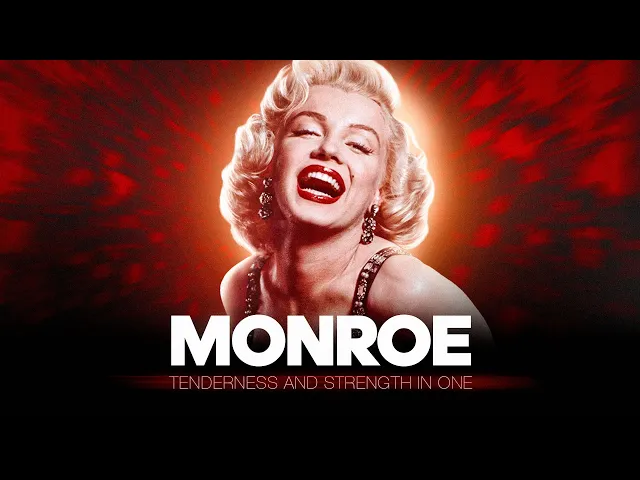
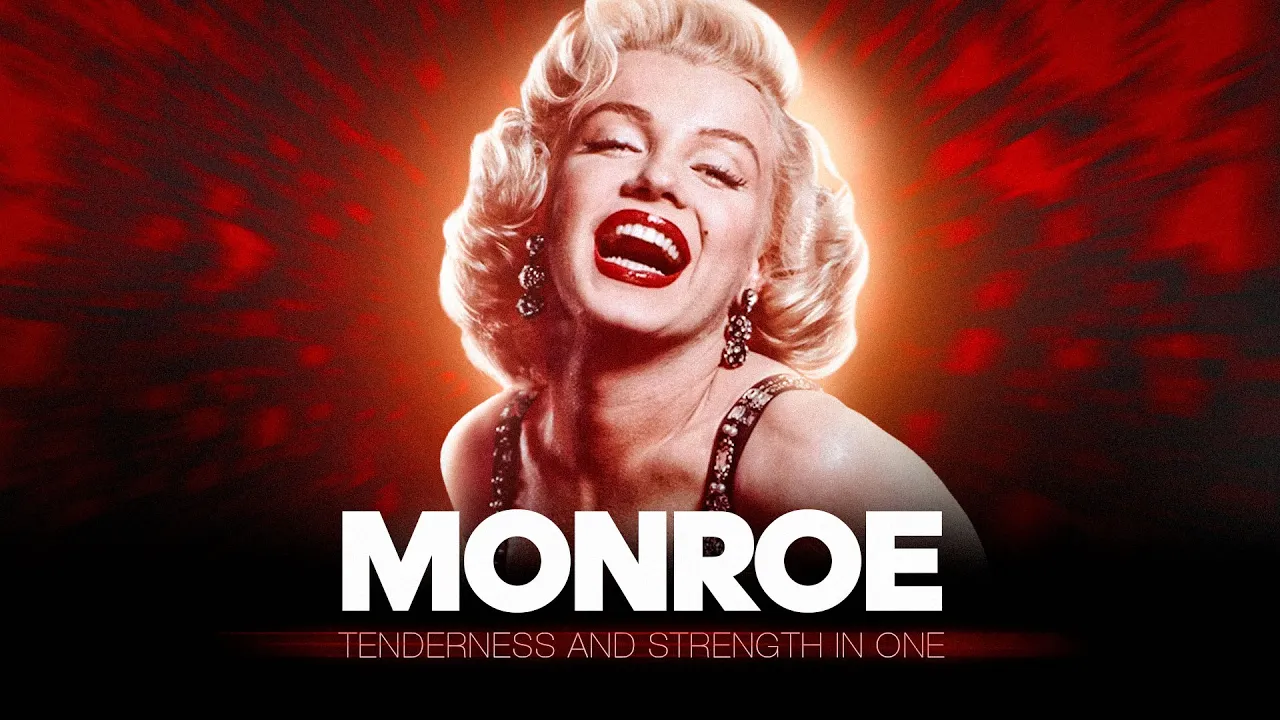
She is a Hollywood sex symbol and the most famous blonde in history, which even the American president could not resist. Her success story is called a fairy tale about Cinderella, and movies about her life are still being shot. But was Marilyn Monroe truly happy? What hides her charming, carefree smile? There were three divorces, sexual abuse, the humiliation of producers, drug addiction, and several miscarriages. And this is not a complete list. The life of Marilyn Monroe is a series of tragic and mysterious events, ups and downs. And today, on the Biographer channel, we will try to
figure out who this amazing woman was. CHILDHOOD AND YOUTH The future star was born on June 1, 1926 in Los Angeles. Not everyone knows, but Marilyn Monroe was a pseudonym. Her real name was Norma Jeane Mortenson. The girl owed her name to two famous Hollywood actresses - Norma Talmadge and Jean Harlow. Her mother, Gladys Pearl Baker, worked as an assistant editor and film negative cutter. For a long time, it was not known who Norma's real father was. In her birth certificate, Gladys' second husband, Martin Mortenson, was named as her father, but the woman left him
even before she found out about the pregnancy. Later, another version of paternity arose, repeatedly named by Norma's mother. She claimed that Charles Stanley Gifford, an employee of Consolidated Studios, with whom she had a short-lived affair, was the girl's father. Her words were finally confirmed in April 2022. There was a DNA test, while working on the documentary Marilyn, Her Final Secret. It was based on a lock of Monroe's hair obtained from an auctioneer and a saliva sample from Charles Stanley Gifford's great-grandchild, and proved the theory. Gladys Baker was hardly a good mother. Her two children from
her first marriage were taken by her husband, having achieved full custody. And the situation has not changed much with the third child. Being a party lover, she didn't want to dedicate her life to nappies and rattles. In addition, her mother was far from ideal and advised her to give the baby to someone. Therefore, the woman quickly got rid of her daughter at the age of two weeks, giving her into the care of a foster family, which had a family-type orphanage. It was a common practice back then. Ida and Albert Bolender were very pious people, and
the girl was brought up with strict moral principles. Any entertainment was forbidden in the house. For example, they thought that cinema was a diabolical temptation. The couple was sure that cinemagoers would receive a ticket to the first place in hell as a bonus. Inset quote: ‘You see, [...] I was brought up differently from the average American child because the average child is brought up expecting to be happy.’ However, we cannot say that Gladys completely abandoned the child. She fully paid for the girl's maintenance and visited her daughter on weekends. Those few hours a week spent
with her mother were a breath of fresh air for Norma. Gladys, at least, allowed herself to be called mom, in contrast to the pointedly cold Aunt Ida. However, the mother's lifestyle and behavior were so different from what Norma was taught in the foster family that the child felt dissonance. The only girl's friend was a stray dog named Tippy, whom the Bolenders allowed her to keep. But the happiness did not last long. After Norma turned seven, a neighbor shot Tippy because the dog often barked loudly. Poor Norma cried for days. Shortly, Gladys took her daughter to
live with her. However, do not rush to rejoice because the reason for that was not awakened maternal instinct at all. Having a small child allowed her to take out a loan for a house near the Hollywood Bowl, But for that, she had to raise her daughter herself. Having moved into a new house with Norma, the woman also took a couple of actors as guests to improve her financial situation. At first, it was difficult for the child to get used to the new way of life. Norma was surrounded by people whose world view was different from
her previous mentors. If the Bolenders strictly forbade cinema, Gladys and her guests idolized it. One day, her mother showed her a photograph of a man whom she called her real father. It was the same Charles Stanley Gifford. For a little girl, deprived of her father's love, that photo became a kind of unattainable dream, which she would chase all her adult life. She would look for fatherly love in every man she met, trying to make up for what she lacked as a child. Although Norma lived with her mother, she was left to her own. At school,
the girl quickly fell into the category of lagging. Gladys was distracted from raising a child not only by partying, but also by her psychological state. There was a belief in her family that all its members sooner or later went crazy. Gladys was terrified of inheriting that curse, and her fear was so strong that the woman gradually began to withdraw into herself. Plus, difficult life circumstances led her to a nervous breakdown in 1934. One day, eight-year-old Norma witnessed her mother kicking and screaming wildly before calling the police. The woman was taken to a psychiatric clinic, where
she was diagnosed with paranoid schizophrenia. Norma was once again homeless and without protection. Inset quote: The lack of any consistent love and caring. A mistrust and fear of the world was the result. There were no benefits except what it could teach me about the basic needs of the young, the sick and the weak [...] I have great feeling for all the persecuted ones in the world.’ (Marilyn Monroe) Norma was threatened with an orphanage, but, to her great joy, Grace McKee, Gladys' best friend, with whom they worked together at the film studio, took custody of the
girl. The woman fell in love with the girl and treated her like her own daughter. Grace instilled in Norma's young head the idea that she should become an actress. So it is not true that Monroe became an actress by accident. The woman bought her beautiful dresses and did not get tired of repeating how beautiful she was. Grace, like her friend, took Norma to theaters and her work to introduce her to filmmaking. Grace opened the doors to the fascinating world of cinema for her. Everyone was happy, loved and rich there, unlike Norma. Unfortunately, the girl's misadventures
did not end. Grace soon married Erwin Goddard, and he brought a daughter from his first marriage into the house. The family was sorely lacking money, so Erwin began to persuade his wife to hand over her stepdaughter to an orphanage. She was not her daughter, after all. After another quarrel, he still managed to insist on his own. Reluctantly, Grace took Norma to the orphanage, but continued to visit her every Saturday. Another betrayal of an adult, the ridicule of other children from full-fledged families, And loneliness greatly affected Norma's psyche. She would carry that trauma through the years.
Around the same time, Monroe was sexually assaulted for the first time. Having already become famous, she talked about a certain man named Mr Kimmel (she used a fake name for him) who called her into his room one night, locked the door, and then said, “Now you can’t escape.” Monroe never specified what exactly happened next. When the girl turned 11, Erwin got a good job and Grace, who was still very attached to Norma, took her back. However, the stepfather was not pleased with that. One evening, while Grace was at work, Erwin got drunk, burst into Norma's
room and tried to rape her. However, when Grace found out what had happened, she didn’t react as Norma expected. Grace blamed the girl for everything. Allegedly, she provoked the man. It’s classic, don't you think? That incident left the victim with a stutter, which she would try to get rid of for a long time. Grace found Norma's great-aunt and sent the girl to her. Despite the incident, the woman continued to communicate with Norma and even gave her new guardian a dollar or two to support the girl. Did it make her life easier? Of course not. Moreover,
around 1938, Norma was forced into an intimate relationship by a cousin. The details were unknown, but one could only imagine how the young girl, who had no one to complain to, felt. From that house, Norma moved to other relatives. A lonely girl, who was an orphan with a living mother, was increasingly immersed in dreams of the magical world of cinema, spending all her pocket money on going to the cinema. Inset quote: Some of my foster families used to send me to the movies to get me out of the house and there I'd sit all day
and way into the night. Up in front, there with the screen so big, a little kid all alone, and I loved it . Surely, Norma already, at that moment, dreamed of being on the other side of the magic screen, delighting and surprising the viewer. One day it will happen. In the meantime, we have not yet come to this point, so you can write in the comments which Marilyn's films you like the most. We are interested in your opinion. At the age of 12, Norma Jeane found out that she had an older half-sister, Berniece. Delighted by
that discovery, the girl began to correspond with her sister, establishing a relationship that would last until the last days of Monroe. When she turned 15, Norma found herself in a difficult situation. She could no longer be supported by her guardians, and Grace and her husband had to move to another state. To escape returning to the orphanage, Norma married her neighbor, whom she had been dating for some time, James Dougherty. He was five years older than her, quite handsome and decent, but there was no question of great love. “I was greatly attracted to him as one
of the few young men I had no sexual repulsion for, - Marilyn wrote in her diary, - “besides which it gave me a false sense of security to feel that he was endowed with more overwelming qualities which I did not possess—on paper it all begins to sound terribly logical but the secret midnight meetings the fugetive glance stolen in others company the sharing of the ocean, moon & stars and air aloneness made it a romantic adventure which a young, rather shy girl who didn’t always give that impression because of her desire to belong & develope can
thrive on—I had always felt a need to live up to that expectation of my elders.” Marriage meant that she would have to drop out of school. In the future, Norma would regret her decision more than once and suffer from an inferiority complex. In the meantime, she was mastering her new role as a housewife. Did the girl enjoy it? We don’t think so. The longer their marriage with James lasted, the more distant her acting career dreams were. Who knows how her life would have turned out if in 1942, at the height of the Second World War,
James had not joined the merchant marine. The husband went to the navy, and Norma, on the advice of her mother-in-law, got a job at the Radioplane ammunition factory, mainly because it was close to home. The future Marilyn Monroe worked on the assembly line, first as a gutter layer and then as a glue sprayer. Many people know about the next event in her life. In 1945, an army photographer, David Conover, came to the factory and was commissioned to Take morale-boosting photographs of factory girls for the army magazine Yank. He noticed the pretty 19-year-old Norma and made
her the main character of the report. Having developed the film, Conover was so delighted with the result that he even returned to the factory to convince the girl of her talent and offer her to work as a fashion model. Norma was over the moon. Finally, someone paid attention to her. The future events were not very similar to the fairy tale about Cinderella, as some articles about Monroe liked to call it. CAREER START Norma Jeane didn't become famous overnight. She didn't get a million dollars in a bank account and a dream role. She just left the
factory and started working as a fashion model. Likewise, she was just like thousands of other girls in America. Her husband was not delighted with that idea, but Norma was already unstoppable. Conover held a photo shoot for her, after which he helped the girl contact the Blue Book modelling agency in Los Angeles. According to the recollections of the agency owner, Marilyn began her studies as the weakest. But she worked harder than anyone. And her stubborn desire to become better soon began to bear fruit. The girl became a popular model. In just half a year, pictures of
Norma appeared in more than 30 magazines. Eve Arnold, a photographer who would take many famous pictures of Marilyn Monroe in the future, said: Inset quote: "At photo sessions, she was in total control. She manipulated everything - me, the camera. She knew a lot about cameras and I had never met anyone who could make them respond the way she did." As you may have noticed, Norma Jeane has not been blonde since birth. The agents persuaded the girl to dye her hair a lighter color, since blondes could get more job offers. She obeyed. She was ready to
do everything for her dream. Over the next few years, the girl would try 12 different shades of gold before choosing her signature hair color. But the work of the model was not enough for her. Norma still dreamed of a film. In 1946, the Agency gave her a screen test at Twentieth Century-Fox. And they choose Norma! The studio offered the girl a contract. She was supposed to receive 75 dollars a week, regardless of whether she starred in a film or not. Before signing the contract, the head of the studio casting department, Ben Lyon, called Norma to
talk. He stated that Norma Jeane Mortenson was not a name for a movie star. It didn't take long to decide on a surname. Norma decided to borrow it from her grandmother, Monroe. The name was more difficult. They tried many options until Lyon suggested "Marilyn". Why? He once knew an actress named Marilyn, and she looked a lot like Norma. That is how Marilyn Monroe was born. The image that Norma Jeane Mortenson would diligently play for the rest of her days. In the meantime, her relationship with her husband had deteriorated. James wanted a big family and saw
his wife as a classic homemaker. And Norma had not tried to match that image for a long time. Therefore, in the same 1946, the couple divorced. It would seem that she received her ticket to the big leagues. But it was far from fame and main roles. For the entire time of her contract, she starred in only two supporting roles. By the way, during the filming, something unexpected happened. It turned out that a charming girl who had dreamed of becoming an actress all her life was afraid of a movie camera. She was horrified at the thought
of doing something wrong. That problem would torment her even when Marilyn became a famous and experienced actress. When there was no work, she still did not waste time in vain, but studied hard. Three hours a day, Marilyn was engaged in acting. Then she had lunch. After that, she spent an hour in dance classes, an hour in vocals, and another hour in fencing. Then, on a full-scale site, she was engaged in horseback riding. It wasn't enough for her to be a pretty actress. Marilyn eagerly absorbed knowledge, dreaming of one day becoming a professional worthy Of serious
roles. Ben Lyon recalled: Inset quote: I once asked her: Marilyn, why do you work out so much? You call other girls at 11 in the morning, and they are still sleeping off after yesterday's party. She replied: Mr Lyon, I work hard because one day chance will knock on my door, and I want to be ready. (Ben Lyon) And the chance didn't want to knock. Her contract was coming to an end, and there were no new offers. The reason turned out to be banal. Marilyn did not like Darryl Zanuck, the head of the studio. Ironic, because
he was famous for his love of starlets. Marilyn was not Zanuck's type and irritated him greatly. The young actress did not fit into his concept of a successful film, "make good consumer goods." According to Zanuck, she was not attractive enough for consumer films and not professional enough for serious cinema. In 1947, Marilyn's contract ended, and the studio was not going to renew it. Then she realized all the rigidity of the industry she got into. There was a huge amount of young, pretty girls. SECOND ATTEMPT Marilyn was depressed, but she was not going to give up.
She briefly returned to working as a fashion model. But all her thoughts were about how to return to the film industry. Then Monroe had to do what was expected of every young, pretty actress who wanted to get her part. She must sleep with anyone who could open the door to the cinema for her. Inset quote: God, I so wanted to become better, to change, to learn. I had no other wishes. I didn't need men, money, or love. Only the ability to play. (Marilyn Monroe) At that time, there were parties in Hollywood where many influential industry
representatives gathered. There were also young, attractive girls. Many of them tried to find contacts to get into the world of big cinema. Later, having already become famous, Marilyn would write an article entitled The Wolves I Have Known for a magazine. In it, she would condemn sexual harassment, which was considered normal at that time in Hollywood. By the way, it would anticipate the movement of Me Too, because few of the women who suffered from the harassment of Hollywood bosses openly admitted that. “There are many types of wolves. - Marilyn wrote, - Some are sinister, others are
just good-time Charlies trying to get something for nothing, and others make a game of it." Orson Welles recalled one evening when Marilyn was surrounded by men, and one reached out and ripped off her top, denuding her breasts. Marilyn, according to Welles, laughed along with the others at that humiliation. Laughter masked her fury. Inset quote: She was a simple and brisk young woman. She used to ride a bike. She was a decent girl who was ruined by Hollywood. It made her spread her legs. At that time, all young actresses were considered potential and legitimate prey for
men (Elia Kazan) However, Marilyn treated the need to sleep with men as a given, even if it traumatized her. Marilyn was pragmatic and openly stated: “Yes, I slept with the producers. Everyone did it. If you refuse, another girl is waiting outside the door who will do it.” She eventually turned her femininity into a tool to achieve goals and a weapon to fight by the rules made by men. Inset quote: "I don’t mind living in a man’s world as long as I can be a woman in it." Marilyn's famous quote perfectly explained how she felt about
her femininity and sexuality. Soon, her search for a sponsor began to bear fruit. At one of the Hollywood parties, Marilyn met producer Joseph Schenck and became his mistress. At that time, he was already at the age of 70. Marilyn constantly accompanied Schenck to various events and even moved into his guest house. It was difficult to call Schenck the owner since, at parties, he often gave Monroe to his rich and influential friends. However, none of them wanted to help her to build a career. For them, she didn't stand out from the crowd of the same pretty
starlets, ready for anything for the sake of a contract with the studio. No one has yet seen her potential. Once, Marilyn tried to talk to the famous director Howard Hawks. But he was not interested in her, considering her an ordinary fool. He even refused the offer of intimacy. Could Hawkes then have imagined that, in a few years, he would shoot her in the lead role in his film? Finally, Schenck helped his mistress. In 1948, Marilyn Monroe signed a six-month contract with Columbia Pictures. Then there were regular changes in appearance. Her hair became fluffy with the
help of electrolysis, and her blonde received a platinum shade. STUDY AND NEW LOVERS Marilyn also began to study with acting teacher Natasha Lytess. And very quickly, the mentor became the mother for Marilyn, whom she missed so much. Natasha played a major role in Monroe's development as an actress. Together they would work for 6 years on 22 films. Natasha helped create the actress's behavior and taught her how to work in front of the camera. The teacher recalled that initially, Monroe did not delight her. Inset quote: “Monstrously calm, constrained, she could not pronounce a word normally. Her
manner of speaking, without moving her lips, was unnatural, clearly imposed by someone. And the voice, God! Squeaky whine. He got on my nerves so much that I asked her not to speak unnecessarily until we made progress. But she loved to work. And she never missed a class. (Natasha Lytess) It was said that Natasha taught Monroe to speak in a whisper. Although, according to another version, that feature appeared due to stuttering. A long time ago, a speech therapist taught Norma to speak hoarsely to overcome that problem. But it cannot be said that Natasha was the only
merit in the formation of Monroe. The girl was actively engaged in self-education. She invented and created her new identity. She formed her body language and honed her speech technique with the help of the book The thinking body. In one of the exercises, it was proposed to imagine that a rope came out of her top, which was tied to a cloud. She had to walk like she was hanging from that cloud. The exercise helped her work wonder with her gait. Remember the long shot scene in Niagara where Marilyn moved away from the camera? That was the
longest gait in the history of cinema, filmed in a single shot. Monroe walked in the shot as much as 35 meters. According to legend, they did not plan such a long scene. But when the command “Motor!” sounded, Marilyn walked away from the camera with such grace that the entire film crew simply watched her in fascination, not daring to stop the actress. And we return to the Columbia Pictures studio, where Marilyn was assigned to learn vocals from a certain Fred Karger. The girl fell in love with him and even informed Schenck that she was moving out.
But Fred was not interested in a serious relationship, so he soon left the girl, leaving her with a broken heart. Marilyn was convinced again that no one needed her and that she could not trust men. Her consolation was to be the lead role in the low-budget musical film Ladies of the Chorus. However, released in 1948, the film was not a success, and the studio did not renew Monroe's contract. Marilyn was without work again. She was forced to return to the search for sponsors. Without Schenck's patronage, Monroe was completely defenceless against the men with whom she
made acquaintances. Once Marilyn, without her consent, was grabbed by two men, and the third tried to rape her. The woman miraculously escaped. She was broken, humiliated, and she had no money. In 1949, things were so lousy for Monroe that she was in arrears on rent and her car was confiscated. At that moment, the girl accidentally met the photographer Tom Kelley. He offered her participation in a photo shoot, for which he promised 50 dollars. But, there was one caveat. Marilyn had to pose completely naked. It was a bold proposal. At that time, the topic of sex
was taboo. The film industry had the Hays Code, which forbade any hint of intimacy in the shoot. Such photos could cause a lot of problems for celebrities. But, anyway, 50 dollars was money, so after two days of deliberation, Marilyn agreed. She posed on red velvet for about two hours, after which she quickly forgot everything. But that photo shoot would make itself felt a little later and become one of the most important for American culture of that time. In the meantime, Marilyn started a relationship with Johnny Hyde, the vice president of an acting agency. He fell
in love with the actress like a boy. His life goal was to make Marilyn a superstar. Johnny helped his lover to do rhinoplasty, as well as several more operations to change The bite. But that's not all. Thanks to him, Marilyn received roles in the films: The Asphalt Jungle and All About Eve. Both films were successful and received numerous Oscar nominations. And although Marilyn did not play the central character there, both the producers and the audience finally began to notice her. STAR'S ASCENT In 1951, 20th Century Fox and Marilyn signed a 7-year contract. Under its terms,
the actress was supposed to receive $500 a week. She began to offer minor roles. Marilyn appeared in such films as Home Town Story, As Young as You Feel, Love Nest, and Let's Make It Legally. The charming actress was quickly able to win the audience's love with her simple and, at the same time, noticeable roles in comedies. The press wrote that her roles brought more sexuality to the movies, and Marilyn was their decoration. At the 23rd Oscars, Monroe became the host. She began to receive the first letters from fans. And just at that moment, when Marilyn's
face was smiling on every newspaper page and TV screen, someone discovered her naked pictures in an old calendar. Of course, the photos were immediately leaked to the press, and a scandal erupted. The studio producers were horrified that it would ruin their rising star's career. They ordered Marilyn to deny everything. But Monroe did things her own way. And her tactics turned out to be much wiser than what her bosses offered. In an interview with a UPI reporter, Elin, Monroe told her sad story of an aspiring actress who didn't have a cent in her pocket. And who
once had the opportunity to earn a living with intimate photographs. The interview had an amazing effect on the audience. Since, while the rest of the actors carefully monitored not to get into a sex scandal, Monroe openly stated: "yes, I'm that naked blonde from the calendar." Moreover, there were no lies in Monroe's revelations. She was in distress. And she wasn't ashamed of what she had done. Her decision defined Western society's perception of sex and nudity for the next decades. In 1953, Hugh Hefner put the first issue of Playboy magazine up for sale. One of those nude
photos of Marilyn Monroe was on the first spread. Hefner bought her pictures for $500, but Monroe herself received nothing for the publication. Hefner also did not thank her in person, which he later regretted all his life. It was believed that Monroe's pictures made his magazine so famous. Meanwhile, the relationship with the lover who had done so much for her was coming to an end. Johnny Hyde offered the actress to become his wife, but to his great surprise, Monroe refused. She was not averse to sleeping with that nice guy, but marrying the unloved was too much
for her. Insulted by the rejection, Johnny stated that without him, Monroe would quickly lose popularity. But Monroe was adamant. Soon she would prove that she could do without his help. In the meantime, she was trying to find her father. Yes, all those years, the actress did not give up hope of meeting Charles Stanley Gifford. In 1952, Monroe managed to find his number, but when she called her father, the answer on the other end of the wire did not bring her joy. “Look, I'm married, and I have a family,” Gifford said sharply. “I have nothing to
tell you. Call my lawyer." A close friend of Monroe later said that the incident crushed her emotionally. She was alone again, rejected by the father she dreamed of all her life. After mourning her hopes of a happy reunion, Monroe pulled herself together and continued to fight for her place in the sun. Inset quote: First, I'm trying to prove to myself that I'm a person. Then maybe I'll convince myself that I'm an actress. And soon, she finally began to get the main roles in the movies. In 1952, as many as five films with Marilyn were released.
Monkey Business, Don't Bother to Knock, O.Henry's Full House, We're Not Married, Clash by night. In those years, Natasha Lytess was at all the shootings with her, who literally supervised everything that happened to her ward. That annoyed the directors, but they could not do anything since Monroe categorically refused to work without Lytess. Despite Monroe's growing popularity, Studio Head Darryl Zanuck treated her dismissively as a dummy. He saw her as a stupid blonde and gave the girl the appropriate roles. A sexy, mercenary fool who searched for a rich lover as her only goal in life. The audience
did not notice the difference between on-screen Marilyn and her real personality. At some point, the actress realized that she was trapped in the image of a sex bomb, but there was no turning back. ‘I’d like to be a fine actress,’ she said to photographer George Barris at the end of her life: ‘I wanted to be an artist, not an erotic freak. She desperately dreamed of serious roles. In addition to classes with Lytess, Marilyn began acting lessons from Mikhail Chekhov and mime from Lotte Goslar. But Marilyn's paradox was that she hated how superficially others treated her,
and in doing so, she played along with them. Norma Jeane built the image of Marilyn Monroe so carefully that she began to believe in it. The writer Karen Blixen, who met Monroe, once wrote: "I shall never forget the almost overpowering feeling of unconquerable strength and sweetness which she conveyed. I had all the wild nature of Africa amicably gazing at me with mighty playfulness." She was fascinated by her sexual nature. Inset quote: “We are all born sexual creatures, thank God, but it's a pity so many people despise and crush this natural gift. Art, real art, comes
from it. Everything.” Some believed that the orphan's need for love was the reason for her many relationships and short sexual liaisons. Lonely, unloved as a child, and abandoned by everyone, Marilyn was desperately looking for a man who would love her and accept her as she was. Sex was her tool, her key to Hollywood, and her attempt to get the missing love, even through the bed. Marilyn coped well with the challenges that Zanuck threw at her. In the studio's next film, Niagara, the producers offered Monroe a positive role as the main character, but Zanuck insisted that
she play the villain. So Monroe got the role of a femme fatale who planned the murder of her husband. The picture paid off well at the box office, and for Marilyn, her role was a great breakthrough in her career. At the same time, the star's salary for working in Niagara turned out to be even less than that of the make-up artist. Despite the growing popularity of the actress, she worked under the old contract with 20th Century Fox, where she had a fixed small fee. On the set of Niagara, Marilyn found out that she got a
role in Gentlemen Prefer Blondes. While working on the film, Monroe got her dressing room for the first time, which meant an increase in her status. It would seem that she should be happy. But the more popular the girl became, the more difficult it was. Therefore, the actress was terribly afraid of making a mistake. She could not allow herself to embarrass in front of experienced colleagues and let the public down. Marilyn came to the pavilion quite early and left the stage late, forcing everyone to wait. Often, the only person who could talk Monroe out of the
trailer was Jane Russell, who played The brunette. In her autobiography, she recalled that she got along well with Monroe. Monroe, however, was offended that Russell earned $200,000 for her role, and Marilyn, because of an unsuccessful contract, received only $500 a week. “After all I am the blonde and it is Gentlemen Prefer Blondes,” she once joked on the set. But, in the end, it was not Russell's fault, but the studio, which refused to renegotiate the terms of the contract. The problems did not end with delays and dissatisfaction with the fee. Monroe was overly critical of her
performance and continued to insist on reshoots, even when director Howard Hawks claimed previous takes had been successful. Also, the studio did not like Monroe's voice. They considered it too stupid and wanted to duplicate the actress. In the end, the idea was abandoned. Only two moments in Marilyn's song "diamonds are a girl's best friend" were voiced by Marni Nixon. That operatic "no, no, no" at the beginning of the song and the phrase "these rocks don't lose their shape". Marilyn continued to be late for the set of How to Marry a Millionaire. According to director Jean Negulesco,
Monroe never felt completely ready for filming. Therefore, she painted her lips for 2 hours and combed her hair for an hour and a half. She wanted to be perfect. But as soon as the “Action!” command sounded, a stormy romance began between her and the camera. Both films, released in 1953, were hits. Marilyn became a real superstar. SCANDAL WHITE DRESS Monroe married baseball star Joe DiMaggio in 1954. The press and fans were delighted, but family happiness did not last long. The athlete turned out to be another man who wanted to make a housewife out of Marilyn.
He was conservative and jealous and dreamed of children and a large family. Of course, Monroe did not fit into his concept of an ideal wife. Marilyn must be respected though. At first, she tried to live up to his standards and even began to learn how to cook. But it did not save the marriage. Joe was increasingly annoyed by the scandals that accompanied the actress and her status as a sex symbol. When Marilyn's friend asked why she married Joe, given that he was not her type and did not understand her work, the actress answered briefly and
clearly: "He's great in bed." Tensions continued to escalate for the couple, reaching their peak on the set of the famous grate scene in The Seven Year Itch. The scene took 14 takes and about three hours to shoot. There were not only a film crew on the set but also about 100 male photographers and about 2,000 ordinary onlookers. Every time the actress's skirt went up in the air, the crowd literally exploded with enthusiastic shouts. Just at that time, Joe DiMaggio appeared on the set. He saw a crowd of excited men devour his wife with their eyes
and reacted accordingly. Director Billy Wilder recalled: “DiMaggio’s face, rigid with tension, had gone white. He had the look of death,’... ‘What the hell is going on here?’ DiMaggio rasped. Marilyn was wearing two pairs of white underwear so no one could see anything, but that did not calm Joe. Later, recalling the shooting of that episode, Marilyn said that she wasn't thinking about sex when she posed, only about having a good time. "At first it was all innocent and fun," Marilyn said, "but when Billy kept shooting the scene over and over the crowd of men kept on
applauding and shouting, 'More, more Marilyn – let's see more." Then Billy brought the camera in close, focusing on her crotch. "What was supposed to be a fun scene turned into a sex scene." Later that night, guests at the St. Regis hotel, where DiMaggio and Monroe were staying, were awakened by angry screams coming from their room. It was said that Joe even raised his hand to Monroe, and the next day she returned to the set with "bruises on her hands, which had to be covered with makeup." Soon Marilyn Monroe filed for divorce due to "mental abuse."
Their marriage lasted only nine months. Meanwhile, tensions were mounting between the actress and 20th Century Fox over unfair contract terms. Marilyn was annoyed not only by the small fees but also by the inability to choose roles. "An actress isn't a machine," she once said in an interview, "but they treat you like One." In 1954, the conflict between Zanuck and Monroe led to the fact that the actress was suspended from work. However, she did not allow them to walk over her. Monroe left Hollywood for New York, where she founded her own production company with photographer Milton
Green. That stunt shocked everyone in the industry. It seemed that it was just a stupid whim of a dim-witted actress. But Monroe was serious. In January 1955, a year-long legal battle began between her and Fox. “Dim-witted actress”, by the way, had an extensive library of 400 books. In her collection, one could find everything that the soul of any intellectual could wish For, from Tennessee Williams' streetcar Desire and Fitzgerald's The Great Gatsby to Plato's Philosophy and Aristotle's Metaphysics. Marilyn greedily pursued knowledge, trying to overcome the complexities associated with incomplete schooling. In 1951, Monroe even enrolled in
evening classes in art and literature at the University of California in Los Angeles. When Monroe was asked how she chose a book, the actress replied that she went to a bookshop and picked up any book, turning the page to a random paragraph. If she liked what was written, she bought it. In 1955, photojournalist Eva Arnold photographed Monroe reading a volume of James Joyce's modernist classic Ulysses. Many then scoffed and said the stupid blonde wanted to look smarter. Arnold herself said that the photo appeared by chance. During the photo shoot, she asked Marilyn what she was
reading, and the actress pulled Ulysses out of her car. While the photographer was changing film, Monroe took out a book and began to read it. It was then that Arnold captured that moment. Norman Rosten, her friend and poet, said: Inset quote: “At premieres, at official receptions, she put on her mask. I knew her without the mask. She was constantly looking for answers. In life, in books, she loved poetry. For her, poetry was the quintessence of experience. She was easily given a complex form. She felt poetry intuitively". Among other things, Monroe collected art, and even tried
to paint herself. In 2016, several of her sensual sketches were sold at auction, with titles such as Lover Watching His Love Sleep, Jumping into the Frying Pan From the Fire and others. They were made by her as part of an art correspondence course at the Famous Artists Schools in Westport, Connecticut, that she started in the late 1950s. Her self-portrait stands out among them. That was how Monroe saw herself. Small and lonely. Taking advantage of a break in filming, Marilyn began to study acting with the famous follower of the Stanislavsky system, Lee Strasberg. ANOTHER FATHER Strasberg
was a teacher with an excellent reputation. He worked with the greatest actors, including Marlon Brando, James Dean, Julie Harris, Robert Deniro, Dustin Hoffman and many others. He saw potential in Monroe, and over time, thanks to Strasberg, she significantly improved her acting skills. But Strasberg's technique also had a downside. He turned out to be a harsh and often despotic mentor. In his classes, Monroe, who needed care and love, experienced strong emotional upheavals every day and became even more shy. However, the tough teacher immediately replaced Marilyn's father, and the actress was in his full power. Out of
habit, she tried to sleep with him, but he refused, believing that sexual relations Would interfere with their work. On the instructions of Strasberg, the actress began attending psychoanalysis sessions 4 times a week. In the classroom, the teacher forced Monroe to share with him the most painful memories, and use the traumatic experience in work. For example, once, he wanted Marilyn to recreate the moment when she was almost strangled with a pillow. Elia Kazan, Monroe's former lover, who advised her to turn to Strasberg, admitted after the death of the actress: Inset quote: “The more naive and self-doubting
the actors, the more total was Lee’s power over them. The more famous and the more successful these actors, the headier the taste of power for Lee. He found his perfect victim-devotee in Marilyn Monroe.” From that moment, Lee Strasberg's wife, Paula, was always on the set with Monroe. Her former mentor Natasha Lytess was forgotten. In 1956, Monroe sent her a telegram where she wrote that she no longer needed her services. In 1958, Natasha was diagnosed with cancer. She will try to contact Marilyn to ask for help and even come to her house in New York. But
Monroe won't even let her in. No one knew what prompted the actress to so brutally cut off the connection with the woman she once treated like a mother. Marilyn bequeathed most of her $1.6 million fortune and personal belongings to Lee Strasberg. Meanwhile, Fox gave up and made concessions. Zanuck admitted that cooperation with Monroe was more profitable for him than litigation. In 1955, Marilyn Monroe and 20th Century Fox signed a new seven-year contract. The actress was promised $400,000 for participating in four films and was given the right to choose projects, directors and cameramen. Monroe triumphed. At
that time, she was the only star who challenged the big Hollywood bosses and won. The first film made under a new contract with 20th Century Fox was Bus Stop. That role was iconic for Marilyn, as she became one of the first dramatic roles in her career as an actress and even brought her a Golden Globe nomination. Finally, she got a complex, multifaceted character, which Marilyn skilfully managed to embody on the screen. There were also changes in Monroe's personal life. Even during her divorce from Joe DiMaggio, Marilyn had a relationship with Arthur Miller. EGGHEAD WEDS HOURGLASS
An intellectual, a recognized playwright, and a Pulitzer Prize winner, he was not like her previous men. Marilyn fell in love for real. She was pleased that Miller saw in her not only an object of sexual desire but also a person. Finally, Marilyn could talk to her man about her favourite writers. In addition, along with Miller, she was a member of the Hollywood branch of Sane, the Committee for a Sane Nuclear Policy. Not surprisingly, Marilyn immediately put Miller on a pedestal and became dependent on his opinion in the same way she was on Strasberg. Inset quote:
“I love him - and he is the only person - human being I have ever known That I could love not only as a man to which I am attracted to practically out of my senses about - but he [is] the only person … that I trust as much as myself - because when I do trust my- self (about certain things) I do fully." Miller gave her the sense of security that Marilyn longed for so much. Their relationship was in the spotlight because of their stars' statuses and FBI surveillance of Miller at that time. He
was accused of belonging to the Communist Party. Fox was afraid that the relationship would hurt Monroe's career and demanded that she end the relationship, but she refused, calling the studio bosses "born cowards." Then there was a series of proceedings with the House Un-American Activities Committee. On one of those days, Miller told the press that he had applied for a passport to accompany the woman, who would soon be his wife, to England. That strange confession made Marilyn cry, not from happiness but from indignation and resentment. After all, Arthur did not propose to her before announcing it
to the whole world. He decided everything for her. He used Marilyn's fame for his purposes. However, the wedding happened. "Egghead weds hourglass" was written by Variety when Arthur Miller and Marilyn Monroe became husband and wife in 1956. They got married twice in a civil ceremony, and then, two days later, in a Jewish ceremony. For the sake of Arthur, Monroe converted to Judaism. As a result, her films were banned from showing in Egypt. Marilyn combined her honeymoon in London with the filming of her new film The Prince and The Showgirl, which was produced by her company.
Laurence Olivier directed and starred in it. Marilyn was happy to work with a great actor, but as a result, the filming was a complete disappointment for everyone. It turned out that Monroe and Olivier did not understand each other at all, and were not able to work in a duet. Marilyn had her own view of the film and the character. Olivier did not take the actress seriously and always tried to press Marilyn with his authority. Monroe subsequently told the Guardian: Throughout filming Sir Laurence Olivier "came on like someone slumming. He upset me a lot by telling
me to" – and here she imitated his voice – "Look sexy, Marilyn." It sounded condescending to me […] I started being bad with him, being late, and he hated it. But if you don't respect your artists, they can't work well. Respect is what you have to fight for." According to Miller, Olivier was simply jealous and spent most of the time competing with her like a coquette. As a result, the film did not gain popularity and received mixed reviews from critics. But Marilyn herself received a positive assessment of her work. The actress was even awarded the
French Crystal Star award. As derogatory as Olivier was about Monroe, he eventually had to admit that every time An actress appeared in a film, she set the stage on fire. Someone might think that it was good that Arthur was next to Monroe on the set, because he supported her, and listened to her complaints about the tyrant director. But Miller unexpectedly and painfully hurt Monroe. One day, Marilyn found her husband's notes on the table, in which, as he claimed, there were sketches for his new character. However, Marilyn was easily guessed in the character, and she was
presented not in the best light. Miller expressed disappointment in their marriage and criticized his wife, confessing that sometimes he was ashamed of her in front of friends. Monroe was morally broken, but she still loved Miller and hoped that the marriage would survive. However, the gap between the reclusive writer and the Hollywood sex symbol became larger Every day. Monroe's psychological state also worsened. “I am depressed with my whole life since I first remember,” she wrote in her diary. Marilyn began to suffer from insomnia and took various barbiturates to help her sleep. In addition, because of Arthur,
Monroe had to close his production company. He was jealous of his wife for her partner Milton Green, believing they spent too much time together. Marilyn dreamed of having a child with her beloved. In September 1956, she had an ectopic pregnancy, and the woman blamed herself for that since she abused pills and alcohol. Marilyn took a break and devoted herself to her family and studies, but her relationship with her husband deteriorated. I think I am very lonely—my mind jumps. - she wrote in her diary at that time ... Inset: …I see myself in the mirror now,
brow furrowed—if I lean close I’ll see—what I don’t want to know—tension, sadness, disappointment, my eyes dulled, cheeks flushed with capillaries that look like rivers on maps—hair lying like snakes. The mouth makes me the saddest, next to my dead eyes… In 1958, the filming of one of Monroe's most famous films, Some Like it Hot, began. Nowadays, the movie is considered a cinema classic, but not everyone knows that working on it was a real hell. Marilyn was disappointed that she had the role of a beautiful fool again. Being a sex symbol is a heavy load to carry,
especially when one is tired, hurt and bewildered. - Marilyn said. As usual, she was several hours late for work, but that was not the worst thing. Due to numerous pills, her memory deteriorated, so sometimes the actress needed to do about 80 takes to say one simple line. For example, do you remember that scene: Director Billy Wilder laid out sheets of paper with clues right under her nose. The entire film crew, led by Wilder, were annoyed and tired. The only one who got along with Monroe was Jack Lemmon. "She knew she was limited and goddamned well
knew what was right for Marilyn," he said. "She wasn't about to do anything else." The situation was aggravated by Paula Strasberg, who shamelessly intervened in the filming process and dictated her demands to the director. In the end, Billy Wilder and Marilyn Monroe quarrelled that the director did not even invite the actress to the party to mark the end of filming. However, a few years later, he relented, and told the press: “I had no problem with Marilyn Monroe. Monroe had problems with Monroe,” In addition, Wilder, despite all the problems that Monroe brought him, could not deny
her talent. Inset quote: ‘She was an absolute genius as a comic actress, with an extraordinary sense for comic dialogue ... Nobody else is in that orbit; everyone else is earthbound by comparison. Marilyn received her first and only Golden Globe for the role. Work stress and domestic scandals led to Monroe having another miscarriage in December 1958. Grieving another loss, and going through a crisis in her marriage, she became increasingly withdrawn from herself. The actress took a break for a whole year, and only after that, she started working on the musical Let's Make Love. At that time,
their marriage with Miller was bursting at the seams. On the set, she had a relationship with Yves Montand, right in front of their spouses. Montand even considered leaving his wife for Monroe but was afraid that he would ruin his career. The lovers broke up. And so, when Monroe's marriage to Miller was coming to a logical end, the two of them started working on the film The Misfits. The screenplay, written by Miller, was to be Monroe's Valentine's Day gift. The Misfits Miller had long promised Monroe to write a script for a film in which his wife
would be able to realize her talent as a dramatic actress. Working on the main character, Miller decided to take Marilyn as a prototype and copied many things from his wife's life for the character. But as Arthur's opinion of Monroe changed, her character also changed for the worse. It's hard to imagine the extent of the actress's disappointment when she read the script. ‘He was supposed to be writing this for me,’ she complained to a friend, ‘He could have written me anything and he comes up with this. If that’s what he thinks of me, well, then I’m
not for him and he’s not for me.’ The way Miller saw her, horrified Monroe. He seemed to be mocking his wife. But the Hollywood machine had already been launched, and it was too late to refuse filming. One of Monroe's partners on the set was supposed to be the great Clark Gable. The actress was horrified that she would stand on the same set with the actor she had adored since childhood. Living with foster families, she slept with a picture of Gable under her pillow and pretended he was her father. The night before their first scene together,
Marilyn had to take a large dose of Nembutal to sleep. As a result, she arrived two hours late to the set. Filming was terribly difficult for everyone. Miller rewrote the script as he went, sometimes changing a scene literally the night before it was supposed to be shot. Because of that, it was very difficult for Monroe to learn the text. A few weeks after the start of production, the couple settled in separate rooms at the hotel. The number of psychoactive substances that Monroe took grew steadily. It was said that the make-up artists began to work while
she was sleeping in bed because due to the action of the pills, she could not wake up. The doctor was always next to Monroe due to her health problems. Once on the set, Houston decided to take advantage of her weakness. The director was a gambler. And one evening, he lost 10 thousand dollars from the film box office in the casino, and thus stopped the shooting. To somehow explain to the studio the excess of the budget, Houston covered himself with Monroe's health. He said that she could not act, and the actress was hospitalized for a while.
When the shooting finally came to an end, Clark Gable said in relief: Christ, I'm glad this picture's finished. She damn near gave me a heart attack. By "she", he meant Monroe, of course. The divorce from Miller took place on January 20, 1961. Marilyn chose that date because of John F. Kennedy's inauguration on the same day. Thus, the actress hoped to divert public attention from herself. I guess I have always been deeply terrified to really be someone’s wife since I know from life one cannot love another, ever. Her hopes for a happy marriage were dashed. Popularity
was on the decline. And health problems became more and more evident every day. LAST YEARS After her divorce from Arthur, Monroe moved to Los Angeles specifically to undergo regular therapy with psychiatrist Ralph Greenson. He became another father for Marilyn. She obeyed him in everything, and, according to friends, she even called him Jesus. But Greenson's methods were highly dubious. He was criticized for crossing the line between therapist and patient. He established a close friendship with Monroe, introduced her to his family, and even allocated a separate room for the actress in his house. Greenson also tried to
rid her of those friendships that, in his opinion, harmed Monroe. For example, he forced Marilyn to fire her driver and friend Ralph Roberts because he suspected that he was making a dunkard of the actress. It seems to be a good impulse, but not professional and ineffective. When the woman had suicidal thoughts, another Monroe psychiatrist recommended her to go to the clinic, and she agreed. But what awaited her outside the building walls plunged Monroe into horror. It turned out that she was placed not in any boarding house, but at the Payne Whitney psychiatric clinic, with bars
and soft cells for especially violent patients. In a letter to Greenson, Monroe described her horrific experience:They asked me why I wasn’t happy there (everything was under lock and key; things like electric lights, dresser drawers, bathrooms, closets, bars concealed on the windows — the doors have windows so patients can be visible all the time, also, the violence and markings still Remain on the walls from former patients). I answered: ‘Well, I’d have to be nuts if I like it here’.” To keep her composure, Monroe tried to connect what was happening to her with the experience she had
on set. Finally, her role as the crazy one in Don't Bother to Knock came to mind. Marilyn slammed her chair against the closet and sat on the bed with the shard of glass, threatening to hurt herself if they would not let her out. Inset quote: … I said to them ‘If you are going to treat me like a nut I’ll act like a nut’. I admit the next thing is corny but I really did it in the movie except it was with a razor blade. I indicated if they didn’t let me out I would harm
myself—the furthest thing from My mind at that moment since you know Dr. Greenson I’m an actress and would never intentionally mark or mar myself. I’m just that vain.” After that, she was transferred to a more decent cage. Somehow, Monroe managed to write to several friends, begging to get her out of there, including the Strasberg couple. And who do you think came for her a few days later? No, not her adored Lee, but her ex-husband, Joe DiMaggio. He threatened to smash the institution brick by brick if Monroe was not released immediately. After that incident, Marilyn stubbornly
tried to get her life back on track. In 1962, she bought her first home in California's Brentwood neighborhood for $75,000 and appeared on the cover of Life magazine. At the same time, Monroe was offered a role in the film, Something's Got to Give. Inset quote: For years, I struggled to find emotional stability. But I had little success. Work is my only hope. A few days before the start of filming, Monroe had sinusitis. Doctors recommended that the start of work be postponed until she recovered. But Fox said that Monroe was faking and publicly spoke negatively about
her. The actress went to the filming. … but not for long. The disease took its toll, and for three whole weeks, Marilyn was knocked over with fever. On May 19, 1962, Monroe asked for a day off to sing a congratulatory song for President Kennedy. On that evening, she wore a Jean Louis dress embellished with over 2,000 hand-sewn crystals. It was so tight that the actress had to literally be sewn into it. Journalists later described it: "It's like she's making love to the President in front of forty million Americans." Everyone present in the hall understood that
it was not a simple congratulation. The song sounded too intimate, much more intimate than etiquette and decency allowed. From that moment on, the society began to speculate about a possible relationship between Kennedy and Monroe. But even now, we cannot certainly say what kind of relationship they had. Most likely, Monroe met the president at a dinner party in New York in early 1962. They managed to communicate closely during the weekends at Bing Crosby's home in Palm Springs. Monroe's friend, Ralph Roberts, claimed that, according to Marilyn, that was when they had their only sexual contact. Some believed
that for Monroe, it was just a fleeting connection. "It was OK to sleep with a charismatic president," Lee Strasberg’s daughter wrote in her memoirs, "Marilyn loved the secrecy and the drama of it, but Kennedy was not the kind of man she wanted to spend her life with, and she made that very clear." Others claimed that Marilyn had feelings for Kennedy and even called his wife Jackie to tell her that she wanted to marry John. One way or another, there is only one photo from that night of Monroe's performance, where both persons involved in that story
are present. It was also assumed that Marilyn had a relationship with Robert Kennedy. Monroe's biographer, Jason Spada, believed President Kennedy gave the actress away to His brother after he got fed up with the affair. But there was also a version according to which Monroe started a relationship with Bobby to spite John because she felt used. Anyway, the scandalous performance in front of Kennedy cost Marilyn her job. Fox fired the actress, using her absence as an excuse to sue her for breach of contract. Despite another blow, according to some biographers, during that period, Monroe was filled
with hope. With her lawyers, she wanted to organize an independent film studio and appeared on the covers of various magazines. She was also in talks to star in a biography of her screen idol Jean Harlow. Fox soon regretted her decision, renewed negotiations with the actress, and returned her to the set. It seemed that Marilyn had hope for a career recovery. But on August 5, 1962, Marilyn Monroe was found dead in her Brentwood house. She passed away due to acute barbiturate poisoning. The official version was that Marilyn committed suicide. In her room, they found an empty
bottle of pills that she had been prescribed a few days before, and she was supposed to take them one at a time at night. Another 12 to 15 medicine bottles were found on the bedside table. To this day, biographers, fans and journalists are wondering what happened on that fateful night. Someone suspected that she was killed by the Kennedy brothers' order. On that day, the world lost one of the most brilliant and underestimated personalities of the 20th century. Marilyn was buried in the Westwood Village Memorial Park Cemetery. The ceremony, which was organized by Joe DiMaggio, Marilyn's
half-sister Bernice Baker Miracle and manager Ines Melson, was attended only by relatives. But hundreds of spectators, who wanted to say goodbye to their idol, gathered around the cemetery. Or just stare. For the next 20 years, Joe DiMaggio sent half a dozen red roses three times a week to Monroe's crypt. Arthur Miller did not attend the funeral. “Instead of jetting to the funeral to get my picture taken I decided to stay home and let the public mourners finish the mockery,” he wrote later, “Not that everyone there will be false, but enough. Most of them there destroyed
her, ladies and gentlemen.” Even after 60 years, Marilyn Monroe remains an icon, a cult figure whose image is used in pop culture. And many may wonder: what is the phenomenon of Marilyn's popularity? Everything is simple. She died at the age of 36, in the prime of her life. We've seen great sex symbols like Marlon Brando, Elizabeth Taylor and Audrey Hepburn wrinkled. But Marilyn will forever remain for us a beautiful, flowering woman, a representative of the Hollywood golden age. She is a symbol of an era that can no longer be returned, but which you so desperately
want to get into. Her magnetism is transmitted through the screens. She seduces and enchants us, smiling from posters and old photographs. Marilyn is everywhere. Since childhood, she just wanted to be loved. In the end, Monroe received the love of millions, but did it satisfy her? In our other video, we tell the details of her death. Learn about the last day of Marilyn's life, the craziest theories, including the murder version. We also analyze her past to understand if Marilyn was a person capable of killing herself. If you are interested, click on the icon that appeared on
your screen and watch. Also, don't forget to like this video. And that's all for today. It was Biographer. Thanks for being with us. Bye!