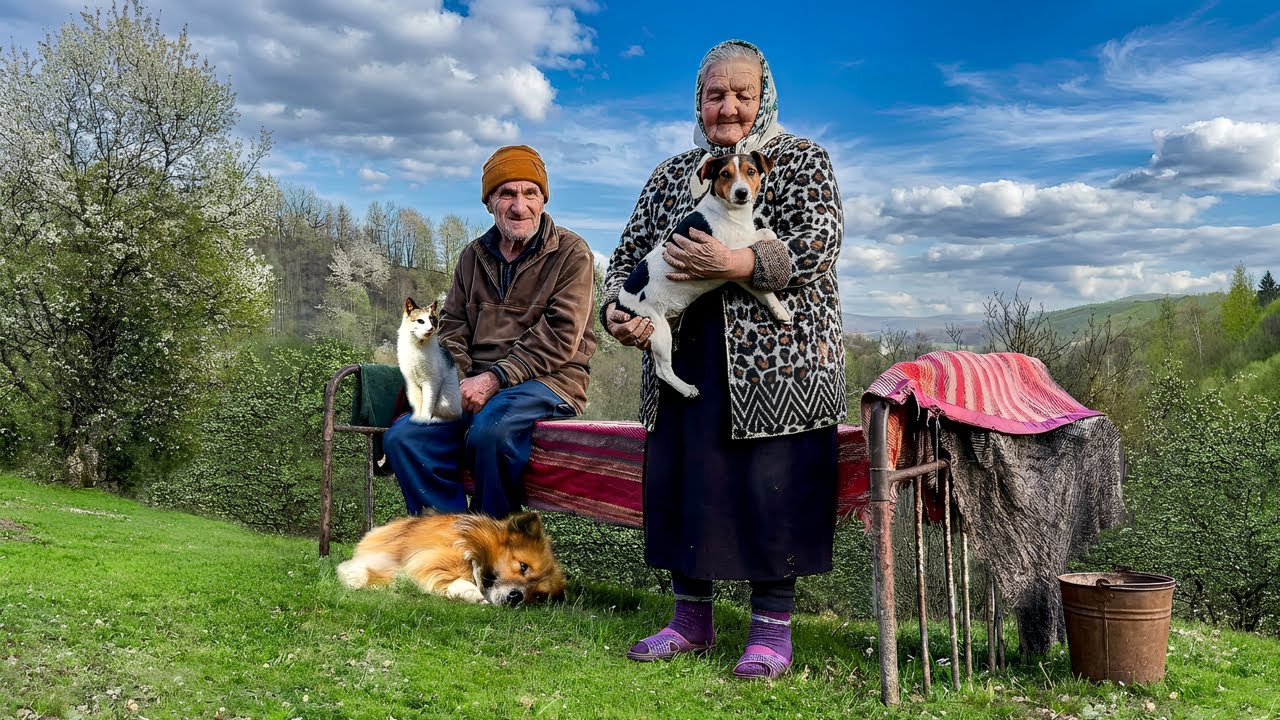
Have you ever wondered what really matters as you age? Many people think their children will be their main support in later years, but there's more to consider. In this video, we'll explore the crucial roles of a life partner, good health, and a solid retirement plan.
Watch until the end to discover how these factors can shape a happier, more secure future and why it's essential to prepare beyond just relying on family. Don't miss out on these key insights for a fulfilling and independent later life. Before we begin, I would appreciate it if you liked this video.
You can help me continue to spread the old age lesson. If you haven't subscribed yet, I recommend you subscribe and turn on the bell so you don't miss any videos. If you like this video, please comment number one; if you don't like it, comment number zero to let me know so I can make a better video for you.
Now let's get started. Don't rely on your children as you age. The following three things are essential supports for you in your later years: 1.
**Life Partner**: As we advance in age, the feeling of loneliness can become more pronounced, often more so than one might expect. The quiet of the night can magnify this sense of isolation, revealing a depth of bitterness that might not be immediately apparent during the day. Even if you have children who are busy with their own lives and responsibilities, their presence might not always be sufficient to fill the emotional void you experience.
The demands of life can keep them occupied, making it difficult for them to provide constant companionship and support. It's important to take proactive steps to enhance your quality of life in your later years, ensuring that you do not become a burden to your children. The responsibility of caring for an elderly parent can be overwhelming and stressful for them, and it's something that most would prefer to avoid if possible.
By focusing on improving your well-being, you can alleviate some of this pressure and maintain a sense of independence. Having a life partner by your side as you age can make a significant difference. A partner provides not just companionship, but also a source of emotional support and shared experiences.
When loneliness strikes, having a shoulder to lean on can be incredibly comforting. A partner can also offer conversation and activities that can help alleviate boredom and enhance your quality of life. While it's true that your children may be loving and dedicated, they cannot always be available to meet your needs or provide the companionship you might crave.
To ensure your happiness and avoid placing undue strain on your children, having a partner with whom you can share your life can be invaluable. This partnership not only enriches your own life but also contributes to a more balanced and fulfilling experience as you navigate the later stages of life. 2.
**Good Health**: Good health is arguably the most crucial aspect of life; it is the foundation upon which all other facets of our existence are built. While money, status, and material possessions can provide temporary satisfaction, they pale in comparison to the enduring value of good health. As long as you have your health, you hold on to the precious gift of hope.
Health grants you the freedom to pursue your dreams, engage in activities you love, and live life to its fullest. Without it, even the greatest wealth and societal standing become insignificant. As you advance in age, the importance of maintaining your health becomes even more pronounced.
The aging process inevitably leads to a gradual decline in physical strength and vitality. This natural progression underscores the need to treasure and protect your health with even greater diligence. It's essential to recognize that the aging body requires more care and attention to function optimally.
Consider the possibility of needing support from your children or loved ones as you grow older. While they might be there for you, it's also important to acknowledge that not all children may be willing or available to provide care. In cases where you have unfilial children or if they are preoccupied with their own lives, you could find yourself in a precarious situation.
Without good health, you may struggle to work, manage daily tasks, or even care for yourself, potentially becoming a burden to others. Even with assistance, if your health is compromised, the quality of life and your ability to enjoy it diminishes significantly. True happiness and fulfillment in life are deeply intertwined with your health; without it, even the support of others may not suffice to ensure a genuinely satisfying existence.
3. **Retirement Funds**: As you progress through life, you will inevitably face a variety of unforeseen circumstances. The future is uncertain, and no one can predict exactly what tomorrow will bring.
This is why it's essential to focus on living well and making the most of each day. With age, it is natural for your health to decline from the peak of your youth. Similarly, your work efficiency and earning potential are likely to diminish over time.
Therefore, it becomes crucial to prepare for retirement by setting aside sufficient funds to support yourself in the future. This preparation should involve accumulating a nest egg that can sustain your needs and provide you with a sense of financial security. Everyone experiences the stages of life: birth, aging, illness, and ultimately death.
As you grow older and potentially face health challenges, the prospect of your children spending time and energy caring for you might evoke feelings of guilt or regret. Conversely, if your children are indifferent or unable to provide the care you need, it could amplify your suffering. Thus, having a well-planned retirement fund is not just a matter of financial prudence; it is also a means of ensuring that you do not become a burden on others.
While many believe that having children. . .
will guarantee care in old age. Life's unpredictability makes this assumption risky. Relying on others for your happiness and well-being is a gamble that may not always pay off.
The most reliable approach is to aim for self-sufficiency throughout your life. Preparing financially for retirement not only secures your future but also grants you a sense of autonomy and contentment. This proactive planning is a form of happiness in itself, allowing you to live your later years with dignity and peace of mind, unencumbered by financial excess.
A reliance on others for young adults reaching the age of 18; many parents grapple with the challenge of letting their children step out into the world independently. The natural parental concern about their children stumbling, struggling with life's complexities, or lacking sufficient experience can be overwhelming. This anxiety often leads parents to remain deeply involved in their children's lives, managing everything from their meals and sleep to their family routines, which can leave them feeling perpetually on edge and unable to fully relax.
In focusing so intently on their children and grandchildren, parents may inadvertently neglect their well-being and the joys they should savor in their later years. To achieve a fulfilling and peaceful retirement, it is essential for older individuals to learn the art of letting go. This process involves embracing the concept that self-reliance and security are not the same thing.
It's crucial to encourage your children to become self-reliant, offering them support and guidance as they navigate their paths once they are prepared to face the world. Giving them the space to do so will reduce personal pressure and provide both you and your children with much-needed relief. This shift not only allows you to regain some freedom but also helps avoid the issues that often arise from living with grown children.
Many parents feel constrained by the cultural expectation of filial piety, viewing it as a fundamental principle of family life. However, it is important to recognize that children will develop their own lives and may not always be able to fulfill their parents' needs in old age. It's essential to acknowledge that old age can bring its own unique challenges and opportunities for enjoyment.
Beyond simply waiting for visits from children or focusing on familial obligations, elderly individuals often have their own interests and need opportunities to engage in conversations with peers, which might be difficult with their children. Concerns about financial stability and reliance on children for care can also impact happiness and well-being. Seniors need to assert their independence and make decisions about their living arrangements based on their preferences rather than waiting passively for circumstances to unfold.
Finding a peaceful and suitable place to live is a key step in this process. Today, nursing homes and retirement communities are evolving beyond their traditional stigmas and are increasingly seen as desirable options for senior living. These facilities offer comprehensive medical, mental, and physical care, and they can provide a sense of community and fulfillment.
Engaging in daily activities, receiving attentive health care, and enjoying a comfortable lifestyle contribute significantly to a positive retirement experience. If you learned a lesson from this, please leave a comment of gratitude below the comments section of this video. Moreover, advances in information technology have transformed the landscape of elder care, making it easier to stay connected with family members and monitor health indicators.
This progress helps bridge the gap between generations, allowing for regular communication and visits without the isolation or anxiety that might have been more common in the past. By embracing these changes and prioritizing self-determination, older adults can find greater joy and tranquility in their later years. Filial piety, traditionally understood as the duty to care for one's parents, must evolve to reflect modern realities and broader definitions of respect and care.
True filial piety is not solely about having your children physically present or expecting them to take on the burdens of caregiving, especially if they are unable to provide the best care. Instead, it encompasses a more nuanced understanding of support and respect. Elderly individuals often face the fear of loneliness, and choosing a nursing home for your parents can be a compassionate and respectful choice.
A well-chosen nursing home offers elderly people the opportunity to thrive in a community with peers, providing them with companionship, activities, and a supportive environment. It also reassures children that their parents are receiving quality care and are not alone. Life is fleeting, and old age arrives sooner than we expect.
Although it's challenging to address every aspect of human experience, gaining insight into life's brevity can help you live each day with calmness and joy. Losing even a single day of joy is a significant loss, as happiness and fulfillment are created by one's efforts and outlook. The pursuit of happiness, the ultimate goal of life, lies in appreciating the small moments and cultivating a positive attitude.
Money, while not everything, plays a role in our lives. It's important to maintain a balanced perspective on money; overvaluing it or obsessing over it can detract from genuine happiness. Understanding that money is merely a material possession that cannot accompany you beyond this life can help you use it wisely.
Generosity with your resources can bring immense joy, and if money can buy health, happiness, or peace of mind, it is well worth spending. The key is to manage your finances wisely, ensuring that you earn and spend in ways that serve you rather than being controlled by it. As life shortens, enriching it becomes increasingly important.
Elderly individuals should embrace change, abandon overly austere practices, and allow themselves to eat well, dress comfortably, and engage in enjoyable activities. Utilizing the benefits of advanced technology and improving life quality are central to fulfilling old age. In a society rich with diverse experiences and people, having a wide circle of friends is more valuable than having just one or two.
A group of supportive and engaging friends can add vibrancy. And joy to your later years! For those dealing with personal hardships, self-reliance and the passage of time are often the best remedies.
The crucial factor is how you choose to live and find solace during challenging times. In old age, it is common for people to experience a profound sense of nostalgia, looking back on the past with a mixture of reflection and longing. The later years of life often mark the conclusion of illustrious careers and accomplishments, transforming what was once vivid and tangible into memories that seem to drift away like wisps of smoke.
As individuals approach the twilight of their lives, they find themselves at a pivotal crossroads in their spiritual journey. In this phase, there is a deep-seated desire to reconnect with the past, rekindling genuine emotions, revisiting familiar places, and reestablishing bonds with loved ones. There is often a yearning to once again realize and embrace dreams and aspirations that may have been set aside.
Embracing gratitude and immersing oneself in heartfelt experiences becomes a significant source of joy in old age. If, despite your best efforts, certain unsatisfactory situations cannot be changed, it can be liberating to accept them as they are, recognizing that not all outcomes will be sweet. Understanding that health is the greatest treasure underscores its paramount importance in the grand scheme of life.
Health far outweighs wealth and happiness. In today's world, many people are caught in the relentless pursuit of success and financial gain, often at the expense of their well-being. They dedicate countless hours to their work, driven by the ambition to earn more, yet neglect to invest in their health.
But as emphasized, health is indeed gold; it is the most valuable asset a person can possess. It is crucial to not wait until it is too late to regret not paying sufficient attention to your well-being. If only we could master the art of balancing work and rest effectively!
Regardless of your endeavors, prioritizing your health and cherishing your body should always come first. Life is a mosaic of long days filled with both joys and sorrows. Ultimately, we are left to reflect on two primary aspects: the things we are most proud of and the regrets we hold.
Therefore, amidst the ups and downs, I hope that you will make the necessary changes sooner rather than later to avoid the weight of regret and to fully embrace a life well-lived. Always strive to be honest with those around you. Living dishonestly or deceiving others is one of the most significant sources of regret when reflecting on one's life.
Although surrounding yourself with individuals who offer immediate gains might seem beneficial in the short term, the cost is often steep over time. Dishonesty erodes respect and trust, and you may ultimately find yourself losing everything you hold dear. Many people end up living with deep-seated regret and anguish because of these choices.
To live wisely and with integrity, you must practice sincerity in all your interactions, avoiding hurting others with deceit or dishonesty. Being honest is not merely a matter of personal conscience and ethical behavior; it is also crucial in preventing future regrets and feelings of guilt. By committing to transparency and truthfulness, you build a foundation of trust and respect that will serve you well throughout your life.
In addition to fostering honesty, it is equally important to seize the opportunities to travel when they arise. Many individuals, despite having ample time and resources, fail to explore the world and witness its beauty and vastness. Instead of immersing themselves in the routine of work and home life, they may confine themselves to a limited existence, missing out on the enriching experiences that travel offers.
While work and financial stability are important, taking the time to travel and explore the world is equally crucial. Don't wait until your vision dims and your energy wanes to regret not having ventured out more. Traveling is not just about observing new sights; it's also about expanding your worldview.
It presents a remarkable chance for personal growth, offering a broader perspective on life and contributing to a richer, more fulfilling experience. Embrace travel as an opportunity to enrich your life and enhance your understanding of the world around you. Another significant regret many people have as they grow older is not knowing how to seize and make use of opportunities.
Seizing and making the most of opportunities greatly impacts a person's success or failure; therefore, it's essential to learn how to capitalize on them. First, learn to face reality. Start by changing your perspective; think of yourself as a very happy person.
This positive mindset will help transform past regrets and failures. It's not easy to confront past tragedies, but thinking positively will help you keep striving to live well, so that in the future, you won't feel like you've lost too much. Second, accept reality.
Accepting reality is the best way to reflect and find solutions. Life is like a long-running film, with its ups and downs. We must understand that we cannot change the past but need to learn to accept the results and move in a new direction to avoid repeating past regrets.
Some mistakes can be reversed; if you are still trying to change and feel that your efforts are leading to improvement, plan and act on it now. For example, if you and a close friend have a minor misunderstanding leading to silence from both sides, set aside your pride and reach out first. You might be surprised by the positive outcome.
Third, remember that everything will pass. Take a few minutes to list the pros and cons before making any decisions; this will greatly reduce mistakes. Get a good night's sleep to clear your mind.
At that point, making the right decisions will be easier. Many studies show that there will be many opportunities ahead, but if you lose control and don't know how to build. .
. A plan or fail to stay organized; you might face negative consequences. Fourth, avoid a loser's attitude.
Eliminate questions like, "What should I do? " or "Should I do this instead? " Ask decisive questions like, "What do I need to do?
" Constantly questioning will waste much of your time and make you feel uncertain when taking action. Let the past go; keep moving forward with the lessons learned from the past. Unfortunate events in the past are undesired and have their reasons.
The best approach is to learn deep lessons from those mistakes and avoid dwelling on negativity. The key is to focus on the present and future; living in the past will only lead to a lifetime of regret. Thank you for joining us today!
We've explored important aspects of living a fulfilling life, from cherishing sincere relationships and balancing work with rest to seizing opportunities and maintaining honesty. What have you learned from today's discussion? We'd love to hear from you: share one key takeaway and how you plan to put it into practice in your life in the comments below.
If you enjoyed this video, please leave your comments, like, share, and subscribe to our YouTube channel for more inspiring content. Your support means a lot to us!