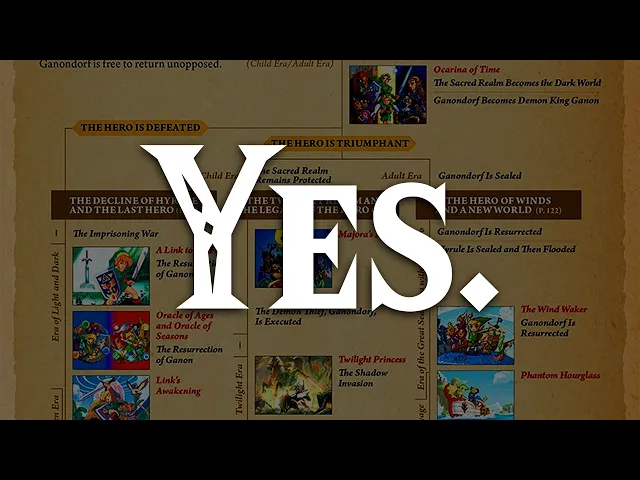
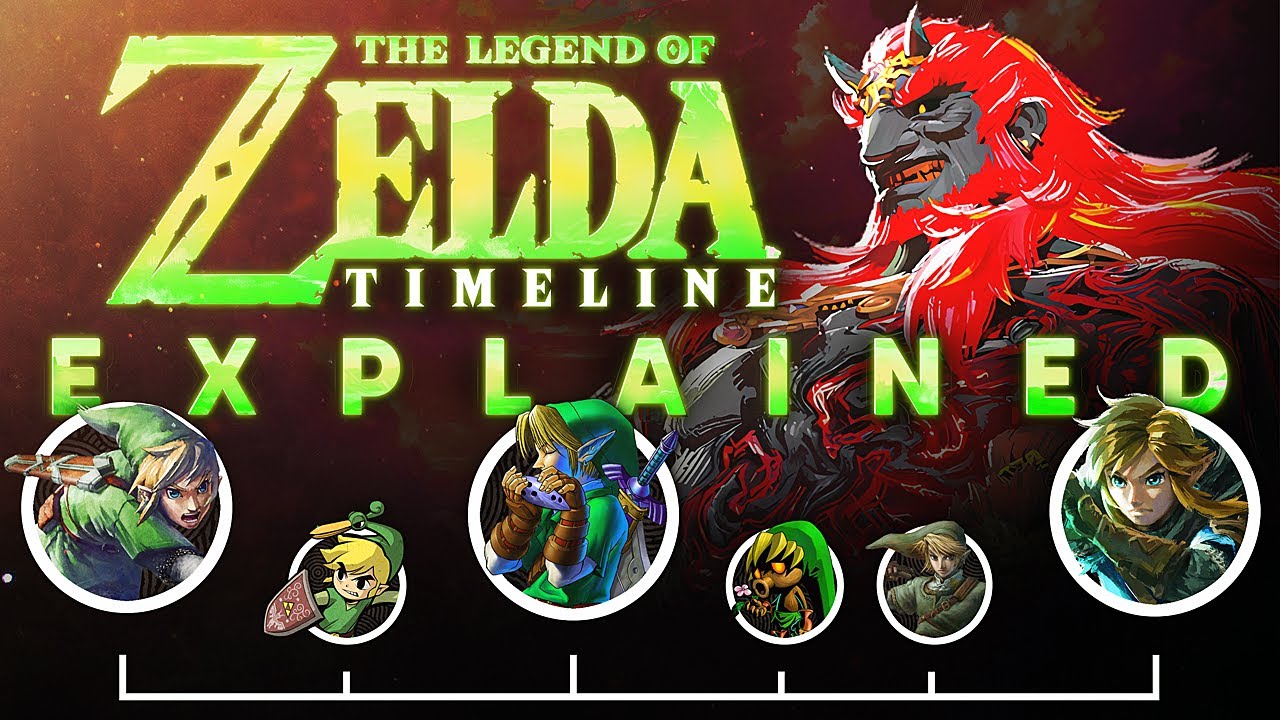
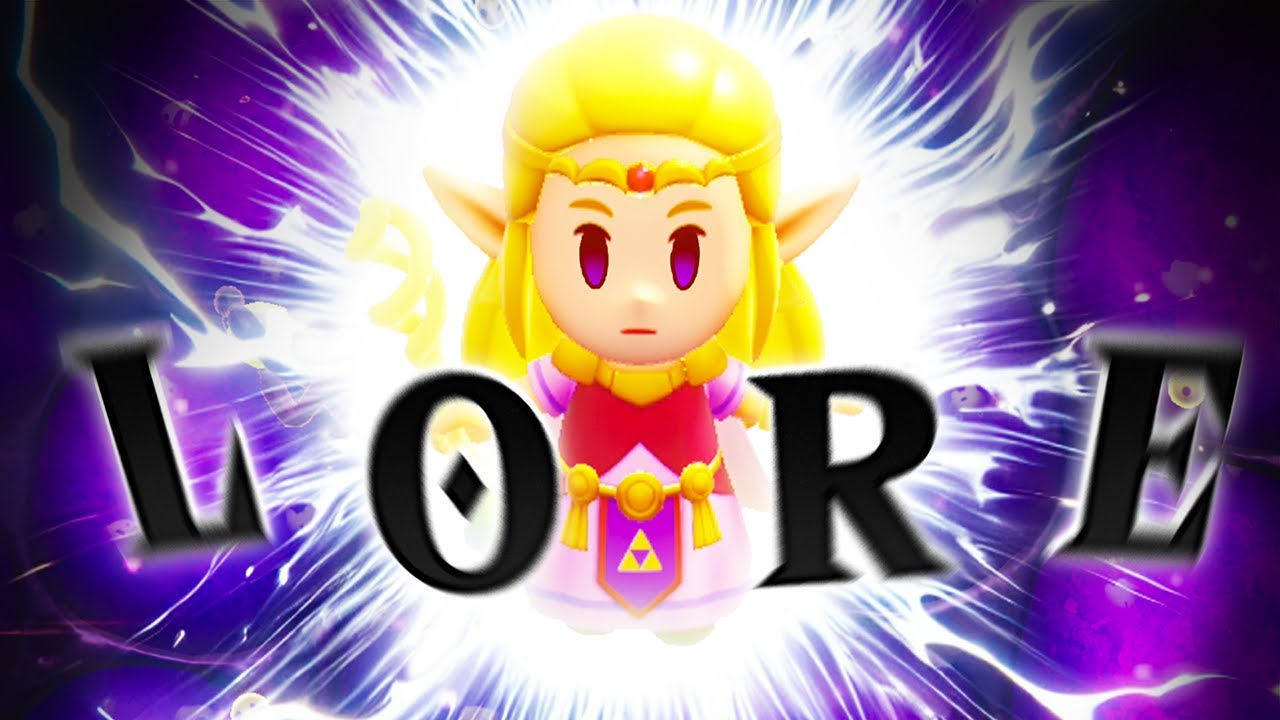
the Zelda Timeline a chronological ordering of the games in the series is perhaps the only thing that divides the Zelda Community more than tears of the Kingdom Nintendo recently posted an update to the timeline on their official website placing the newest Zelda game Echoes of wisdom in the downfall timeline Branch after Triforce Heroes but before the original Legend of Zelda and as is always the case when the timeline is mentioned this summoned a barrage of angry comments from those who hate the idea of a Zelda timeline and think it's pointless something that Nintendo cobbled together
only to appease the fans is this true is the Zelda Timeline just an afterthought something Nintendo came up within 2011 for the release of hyru Historia no whether you like the idea of these games being connected or not the Zelda Timeline has existed in some fashion since the release of the second game in the series today I'll run through the history of the Zelda series and show how these games have always been designed to fit together The Legend of Zelda released in 1986 and by virtue of being the first it was of course a standalone
title with a self-contained story explained in its manual but the next game to be released adventure of Link was designed to be a direct sequel to the first even featuring ing the very same link only older and stronger as described by the manual A Link to the Past followed set in a much more prosperous complete tie rule than the first two games and while the game story feels distanced from the NES titles the game's box confirms a connection claiming that in this game the predecessors of Link and Zelda face monsters on the March when a
menacing magician takes over the kingdom the Japanese box similarly notes that this game takes place before the others claiming it takes place in a world link has not yet known the era when Hyrule was still one United Kingdom A Link to the Past vastly enriched the world of Zelda and its story it set long after a mysterious conflict known as the imprisoning war when an evil Thief Ganondorf broke into the sacred realm and stole the Triforce a group of sages managed to seal him inside the sacred realm which changed to reflect his evil heart becoming
the Dark World link explores in the game and while the next game in the series links Awakening was designed to be a sequel to A Link to the Past another adventure featuring this same link as described by The Game's Japanese website the game that followed was a prequel to A Link to the Past Ocarina of Time this game tells the origin story of Gana the villain of a link to the past and the original Legend of Zelda beginning with the gudo thief Ganondorf and ending with his transformation into a familiar bore demon of the game
character designer satoru takisawa said that this time the story really wasn't an original we were dealing with the imprisoning war of the seven sages from the SNES Edition Zelda while there are discrepancies between the imprisoning war as old in A Link to the Past and as shown in Ocarina of Time the intention was still explicitly to design the game as a prequel to The SNES Zelda there is a somewhat confusing comment from series Creator shagaru mamoto around this time claiming that Ocarina of Time is the first story then the original Legend of Zelda then Zelda
to the adventure of link and finally A Link to the Past it's not very clear where Link's aw woning fits in it could be any time after Ocarina of Time this doesn't seem congruent with the history of the game's development and wouldn't be the first time mamoto has made confusing comments about the series law and this wouldn't be the last time that the law is shown to be malleable or open to interpretation but regardless of how he places the games he does still refer to them as all connected stories that take place one after another
another in a chronological series of events or timeline Ocarina of Time is the single most important entry in the Zelda chronology famously being the point at which the official timeline splits into three parallel branches this is likely what throws most people off about the timeline multiverses and Alternate timelines are confusing and often times narratively unsatisfying but even this part of the time line wasn't decided on arbitrarily at least not entirely Ocarina of Time was of course followed by a direct sequel Majora's Mask continuing the hero of time's Journey this is easy to understand and the
intention is clear after his quest is complete to the end of Ocarina of Time link is sent back through Time by Princess Zelda back to his childhood he then leaves Hyrule in search of Navi his fairy companion who had vanished and falls into termina a parallel world however the next 3D Zelda game The Wind Waker apparently also took place after Ocarina of Time but in a different way in a 2002 interview AG Aluma said that you can think of this game as taking place over a hundred years after Ocarina of Time you can tell this
from the opening story and there are references to things from Ocarina located throughout the game as well Ocarina of Time basically has two endings of sorts one has link as a child and the other has him as an adult this game The Wind Waker takes place a 100 years after the Adult Link defeats Ganon at the end of Ocarina this was the first mention of Ocarina of times splitting the Zelda Timeline but it does make sense considering the events of the game itself the game ends with Adult Link defeating Ganon 7 years into hyrule's future
before he's sent back to his original time Majora's Mask follows young Link's story from here but the idea was that the Wind Waker would continue on from the adult timeline a world without a hero now that link is gone this decision influenced the backstory of the Wind Waker which describes how Ganon returned after his defeat at the hands of the legendary hero of time but this time no hero arose to stop him in instead the gods themselves were forced to intervene calling forth a great flood and drowning Hyrule beneath a new ocean like Aluma says
the Wind Waker is explicitly a sequel to Ocarina of Time this link a new hero unrelated to any that came before must prove himself worthy of the Master Sword and the Triforce of courage and end what the hero of time started long ago and the next three 3D Zelda game would further cement this timeline split Twilight Princess Al Numa explains that the game takes place around the same time as the Wind Waker but in a different alternate timeline the child timeline following Majora's Mask The Wind Waker is parallel in Ocarina of Time link flew 7
years in time he beat Ganon and went back to being a kid remember Twilight Princess takes place in the world of Ocarina of Time 10 and something years after the piece returns to kid Link's time in the last scene of Ocarina of Time kids Link and Zelda have a little talk and as a consequence of that talk their relationship with Ganon takes on a whole new Direction in the middle of this game there's a scene showing ganon's execution it was decided that Ganon be executed because he'd do something outrageous if they left him be that
scene takes place several years years after Ocarina of Time Ganon was sent to another world and now he wants to obtain the power this is when we enter the wild west of Zelda theorizing in the 2000s it was clear to Zelda fans that a timeline did exist in interviews Shigeru mamoto and AG Aluma confirmed that there existed an internal document an apparently enormous paper that explained how the various games in the series connected to each other but it was confidential and only a very small number of people were allowed to see it but outside of
the main 3D Zelda games it wasn't clear where a lot of them should take place games like the Minish capap the oracles four Swords and for Swords Adventures were all wild cards and even the developers themselves seemed unsure Zelda forums were Rife with timeline debates different factions of theorists vehemently defend ended their takes on how the Zelda games fit together because while it was clear that there was meant to be a cohesive overarching story here the pieces didn't all fit together while the Wind Waker and Twilight Princess work very well as two parallel epilogues to
Ocarina of Time it seemed like they had obscured the placement of the game that Ocarina of Time was originally designed as a prequel to A Link to the Past 11 saw two massive additions to the Zelda Timeline skywood sword was released explicitly said to be the very first game in the Zelda chronology it serves as an origin story not only for Hyrule but link Zelda and even Ganon explaining the beginning of the Endless cycle of reincarnation that keeps these same characters locked in a battle throughout time but 2011 also marked the release of Hyrule history
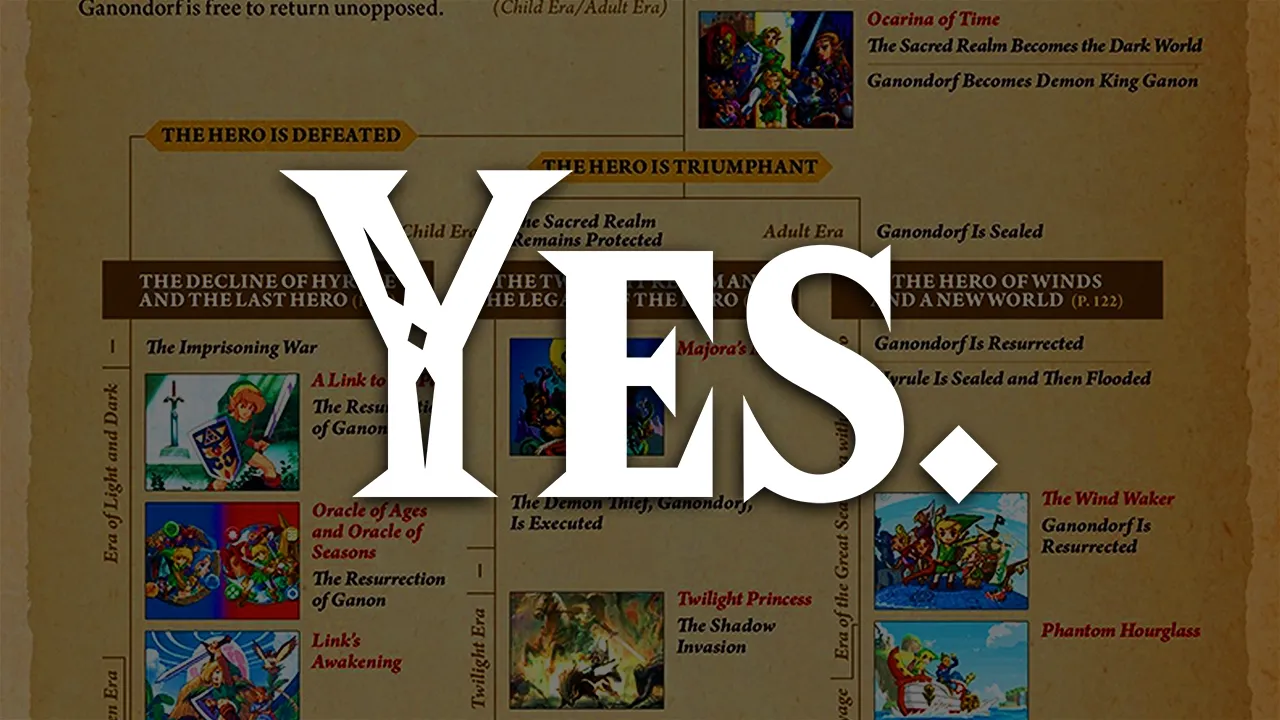
Storia a Zelda law book featuring for the first time the publication of an official Zelda Timeline as expected it began with Skyward Sword and split with Ocarina of Time showing the adult timeline With the Wind Waker and its sequels Phantom Hourglass and Spirit Tracks the child timeline with Majora's Mask and Twilight Princess but also the downfall timeline a new third branch restoring a link to the past to its rightful place as a direct sequel to the imprisoning war shown in Ocarina of Time this was a change nobody expected and one almost nobody liked while it
did fix the problem of placing A Link to the Past back where it belongs it did so by shoehorning it in to a what if ending of Ocarina of Time one where the hero of time fails to stop Ganondorf and he is sealed in the sacred Realm by the sages while the child and adult timeline branches are directly supported by what we see in the game itself the downfall timeline Branch isn't outside of any game overs the player might encounter but if a game over here leads to this Branch why can't there be other downfall
timeline branches everywhere link might have failed at any point in any of his adventures leading to their own series of alternate history Mysteries but it does seem to me at least that the downfall timeline was a necessary evil somewhere in creating the Wind Waker and Majora's Mask as direct sequels to Ocarina of Time the original Vision had been lost leaving A Link to the Past severed from the other games while the Zelda team had always been cognizant of how these games fit together and had always considered each game to be part of a wider narrative
the chronology had grown too large too complicated for them to control which they themselves admit like mamoto said this is pretty confusing for us too so be careful a rcon like this is messy and very unsatisfying when compared to the original timeline split supported by the game itself but it is easy to understand and it does make sense it was a duct tape fix to a broken idea but it does fix it and the Zelda Timeline as originally published in hyru Historia does make sense and more importantly its existence does enrich the games the Wind
Waker is far more satisfying as an ending to Ocarina of Time than it would be in isolation and when coupled with Twilight Princess we see two different endings for the story of Ocarina of times Ganondorf two separate versions visions of the same man shaped by different events Skyward Sword serves as the foundation of Zelda law albeit retroactively laying the groundwork for the series mythology and the conflicts which would occur in later games in the timeline then breath of the wild happened breath of the wild reinvented the Zelda series it was in many ways a spiritual
reimagining of the very first game set in an Untamed expanse the ruins of a broken Kingdom of Hyrule how or indeed if breath of the wild connected with the previous games was deliberately unclear Al Numa said that we realized that players were enjoying Imagining the story that emerged from the fragmental imagery we were providing if we defined a restricted timeline then there would be a definitive story and it would eliminate the room for imagination which wouldn't be as fun but despite this it was clear that breath of the wild did take place in the same
continuity as Skyward Sword and do Arina of time the game's director hamaru Fuji bayashi confirmed that it was not isolated and that it did follow on from other games it takes place in an age long long after any of the titles released to date it is the most recent age and this makes sense given the world itself the player can encounter not just the ruins of this game's Kingdom of Hyrule but from previous games too Ocarina of times Temple of Time and lonlon ranch or the Springs from Skyward Sword it was clear that the game
took place thousands of years after any other but not which timeline Branch it took place in the developers didn't offer any help when asked AG Aluma responded with well of course it's at the very end but I get what you're asking it's which timeline is it the end of and Fuji bayashi added that's up to the player's imagination isn't it the game's law book creating a champion clarified this placement setting the game so long after any other that what timeline it is part of doesn't really matter everything that came before this is consigned to a
period known as the era of myth a deliberate shroud to avoid having to give give a definitive answer this functionally makes breath of the wild a soft reboot of the Zelda Timeline which is why it is usually placed aside from the other games rather than at the end of a specific timeline Branch but it doesn't sever the connection to previous games entirely the game is explicitly part of the same continuity by Design but unlike games like the wind waker or Twilight Princess the answers aren't given to us nor are they particularly obvious instead the developers
want to encourage fan debate and discussion it's up to the player to decide how they believe the game connects to the others to imagine what might have happened in the long history of this Kingdom of Hyrule tears of the kingdom of course follows on from breath of the wild as a direct sequel where Hyrule must deal with the return of Ganondorf the gudo king who was the source of the Calamity Ganon faced in breath of the wild this game story sees Princess Zelda travel back in time to the era of the founding of the kingdom
of Hyrule where she meets its first king raru and helps fight against Ganondorf this is along with the introduction of the downfall timeline the most controversial addition to the Zelda story to date because the Time Zelda travels back to ostensibly the founding of Hyrule Echoes the story of Ocarina of Time it shows the gudo king Ganondorf Pledger false allegiance to the king of Hyrule gaining divine power and attempting to overthrow him then being sealed in an event remembered as the imprisoning war this either has to be considered as a rcon of Ocarina of Time a
game we've been told did happen in the same continuity as breath of the wild and tears of the Kingdom or as another separate imprisoning War which occurred long after all of the other games after the kingdom of Hyrule had been destroyed then founded once again by King raru this idea has been suggested by Fuji bayashi who in an interview with famitsu suggested that one possibility is that there could be a historical period where Hyrule was destroyed before the founding we didn't create things haphazardly but aim to leave room for imagination even in the Unexplained part
this last sentence could be used to describe Zelda law as a whole while much has been made of the fact that the developers don't consider these game stories until late in development that doesn't change the fact that they don't write them without thoughts or without consideration for the Zelda series as a whole while they don't let the Zelda Timeline restrict their creativity and will always prioritize gameplay and Innovation over abiding by the rules of Zelda Cannon the Zelda games do have a chronology and this has always been the intention of the developers it's quite disheartening
to see the online discourse every time the timeline is mentioned so many people are so quick to claim that it doesn't matter and has never mattered that these games are islands completely independent of one another and that you're silly for thinking otherwise and yes they do work by themselves each game has a contained narrative designed to be a fulfilling complete experience even if it's your first Zelda but it's disingenuous to claim that the Zelda Timeline was only created recently to appease the fans it's as long and as untidy as you'd expect for a chronology that
takes place over more than 20 games across almost four decades but the Zelda Timeline has always existed and to me it matters I love the idea that each game is only a chapter of hyrule's History a history that can change based on new discoveries or based on the interpretation of the player the timeline isn't set in stone it has changed multiple times much like our understanding of our own real world history and that's part of the fun these games are intended to take place in the same continuity with events and art s that are albeit
Ambiguously referenced in other games with this mindset every Zelda game you play enriches the others in a way that is far more satisfying than ideas like the literal Legend Theory which claims that every game is one retelling of the same Legend of Zelda and with Nintendo recently updating the official timeline to include the latest game in the series Echoes of wisdom it seems that they still feel the same way thanks for watching this video if you want a full rundown of the entire Zelda timeline in 15 minutes then check this video out Link in the
description if you like this video leave a like or subscribe if you haven't already for more Zelda content cheers guys and I'll see you next time [Music] he