. . .
so the blue Fairy shows up, so that's Nature. So what I'm saying is, that Nature will cut kid's a break. If you think of Nature and the guise of.
. . well, their mother for example, but even the biology of other people.
Because we're wired to accept behavior from children, that we wouldn't accept from other people. So, Nature will forgive. So she shows up, in her heavenly guise, and says: "What's going on?
", and Pinocchio. . .
Again - because he's naive, but also because he's not good. He's not evil either. He's neither, or both, it depends on how you look at it.
And. . .
He also has no idea how smart he is and how smart he isn't, or how smart the person he's talking to is. And uh. .
. Instead of admitting what he's done, he lies about it. And that's interesting, because it does suggest, that he understands at some level, that he set himself up for this.
Because you know, he could just say- he could have just told the truth: "This horrible Fox. . .
kidnapped me, and sold me to this slave holder. " Which is. .
. true, it's a lot more true than the story he tells. He tells a story about some monster.
You know, a fictional monster. He could've told even ¾ of the truth and have it worked, but he doesn't, he just. .
. obscures the story entirely. And this is the part of the movie that people remember.
Um. . .
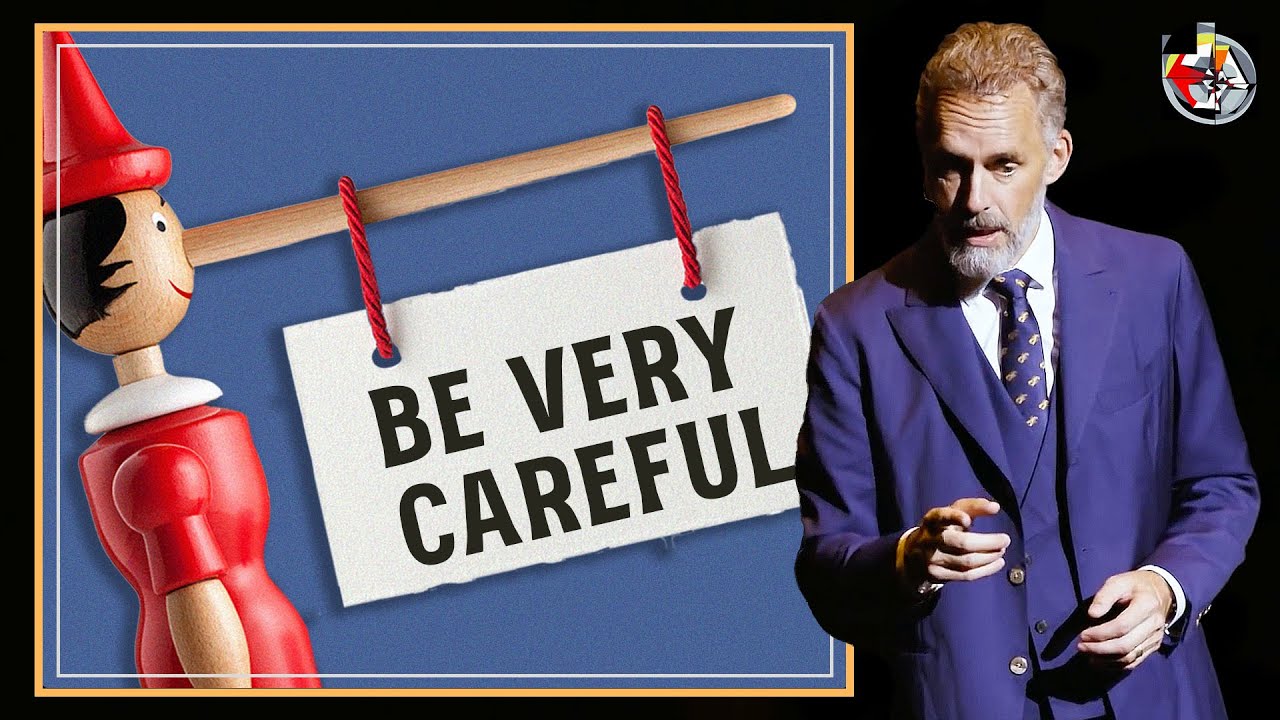
and I'd edited this out for years, when I was talking about this movie. [temporary stammer] I forgot why it was so significant. His nose grows, right?
And. . .
It- it grows to ridiculous length. And why is that? [Freeze-frame from the 1940 "Pinocchio"] I think it was Mark Twain, [a.
k. a. ] Samuel Clemens, I think, who said: "One of the advantages to telling the truth, is that you don't have to remember what you said.
" And that- God, that's worth listening to, because. . .
*sigh* So, there's a bunch of things I've learned as a clinician. And one of them is, cause you're often in really weird situations with people, if you're a clinician. Because things happen, that don't happen normally.
And you don't know what to do. And so, what I've learned, is I just say what's happening. Whatever it is, regardless of what it is, you know.
I'll just try to describe it, as accurately as I can, and not worry about - in some sense, not worry about the consequences. You know, like I'm not going out of my way to cause trouble, but. .
. If you're in a really. .
. And I'm telling you, this can save your life at times. Especially if you're dealing with someone who's paranoid, who's really paranoid.
You do NOT lie to someone who's paranoid and violent. Because as soon as you lie, you're aligned with the forces that are persecuting them. And they're gonna be wa- because paranoia makes people hyper-vigilant, like they're on amphetamines.
In fact, you can make people paranoid by giving them enough amphetamines, and you can make paranoid people MORE paranoid by giving them amphetamines. So they're hyper-vigilant, because they feel that everything is predatory and against them. And so they're watching you, like you would not believe.
WAY more than you're watching them. And if you flicker a lie while you're talking to them, and they're really on the edge, you- you're done. So it's one thing to really know, if you're ever in a really bad situation, and you don't know what to do.
You tell the truth minimally. Don't disclose too much, that's just another lie. You tell the truth minimally, and carefully, and hopefully.
And you MIGHT get out of it. You might get out of it, but if you falsify it. .
. Look the hell out. So.
. . The truth is a real mechanism of protection in dangerous situations.
You know, so if someone's trying to intimidate you, and you think they might get violent, and they ask you if you're afraid, then - you tell them, that you're terrified and that you hope, that things will go okay. Or you say. .
. *waves finger* I'll give you an example. One time I was in an airport, and uh.
. . We're in this lineup to fly back to Canada, that said "International Flights".
And so, it's a long lineup, like 50 people, and we got a- I got about three from the front, there's still like 40 people behind me, and the guy behind the counter decided, that he was just gonna shut down the line, and that we could all go to this other line, which was like 300 people long! And I suggested, that he. .
. not do that, because we'd been standing there for half an hour, and that he could just deal with the 20 of us that were left, and and, like, have a clue. So he called the sheriff, right away.
And this was down in Florida, and it wasn't that long after 9/11. And so these guys came up, and they were armed! And they came and said.
. . Looked at me, because of course, he told them that I was causing trouble.
Which I wasn't. I was just trying to not. .
. let. .
. What would you say. An arrogant, bureaucratic scum rat take advantage of me.
[laughter] So. . .
which is not the same as causing trouble. So anyways, as soon as the cops came up, I said "Look, I'm going to do exactly what you tell me to do, right now, and I'm not gonna cause any trouble. But I would like you to hear what actually happened.
" And so, that's a good example of a situation like that. It's like, if someone's got you, no bravado, it's a very bad idea. And I was going to do exactly what they told me, because you know.
. . They didn't know who I was.
And I didn't know what they had been told. So, anyhow. .
. The problem with lying, is that it's a hydra. And kids find this out very early.
Cause you tell one lie, and what happens, is it has one of the consequences that you expect, maybe you get away with it. But it has 3 or 4 others that you don't expect. And so, it's like it grows some.
. . some complexity.
Then you have to tack a lie on each of those little "Complexity-O-crops", and then they grow three more complexities, and soon this little lie turns into a great big Ball of Lies, and at some point it becomes painfully evident to everyone. And by that time, you're in such- You see this with politicians, like that guy who was sexting. Um.
. . [student] Anthony Wiener.
Anthony Weiner, yeah! Perfect name for him, man, it's so funny. [giggle] I shouldn't make that comment cause it's so obvious, but it's still funny.
[laughter] But you know, he. . .
That's exactly what happened to him, it's like. . .
It wasn't even so much the event. Because. .
. You know, people are stupid, they make mistakes. And actually, the public is somewhat forgiving, if you say: "Yeah jeez, I'm a real moron, and you know.
. . Like really.
Seriously. How could I do that? But I did, and like.
. . I'll try not to do it again.
" But what happens with politicians, is. . .
(and I'm not speaking specifically of politicians), is they'll make an error, and it gets exposed, and then they make three others trying to cover it up. Happened with Nixon, for example. And then the whole thing just turns into a complete scandal.
And maybe they could have got out of it at the beginning, by just - telling the truth. It's like "Yes. I'm an idiot, you know.
I'll try not to do it again. " Well, that isn't what happens in this case, and Pinocchio grows this elaborate series of lies, and the Fairy is willing to be a little generous to him, because he's little and cute, and he's still a puppet, and she tells him. .
. not to do that. And that she's gonna give him a pass this time, but that she isn't going to be able to intervene on his behalf again.