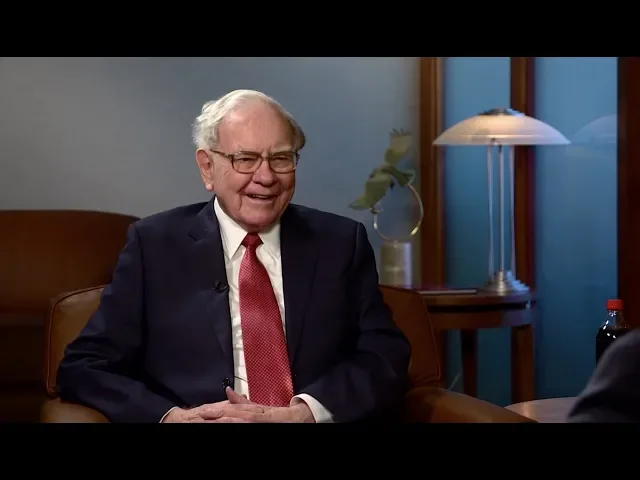
hi i'm jeff cunningham professor at arizona state university and i'm here this morning with legendary investor philosopher and ceo of berkshire hathaway warren buffett good morning warren good morning my first question for you i don't know if you've had a chance to google yourself but if you google warren buffett you get 25 million hits and my question is you're a sitting ceo you're wealthier than midas but everybody thinks you're a champ how do you do that well i don't know about that i think i think when you get older they forgive a lot of things so i think if i ever make it up to you know george burns's age or something and i just have a cigar in my mouth and people people will really love me that you're arguably the most interviewed ceo in history is it your ability to communicate that comes from instinct or is it something you've learned over the years well i certainly learned to speak in public at one time i was terrified of speaking in public when i was in high school i avoided any class that would require it and in college and then i finally signed up for a dale carnegie course when i got out of school i realized i had to talk to people and i spent 100 bucks i got this little diploma i proposed to my wife during the during the uh term of the course so i really got my money's worth there but in terms of public speaking i really had to force myself on that in terms of talking privately they couldn't stop me from the moment i started in school or i think i i've always i really like to talk how do you keep up with all the media and information that goes on in our crazy world and in your world of berkshire hathaway what's your media routine i just read and read and read i probably read five to six hours a day i don't read as fast now as when i was younger but i read five daily newspapers i read a fair number of of magazines i read 10ks i read annual reports and i read a lot of other things too so i i i've always enjoyed reading i love reading biographies for example you process information very quickly well i have some filters in my mind so if somebody calls me about an investment in the business or an investment in securities i usually know in two or three minutes whether i have an interest and i don't i don't waste any time with the ones i don't in which i don't have an interest i i always worry a little bit about even appearing rude because i can tell very very very quickly whether uh it's going to be something that will lead to something or whether it's you know it's just a half an hour an hour or two hours of chatter when uh i think he wrote in an annual report it was in 2009 speaking about the country about the economy uh we are certain for example that the economy will be in shambles throughout this year the problem was that wasn't the complete quote it led the impression that you were unduly pessimistic about the country uh how did you respond to that yeah well i wasn't at all pessimistic about the country in fact i wrote an i wrote an op-ed piece for the new york times in october of 2008 just when the world was kind of falling apart and i said the word i said the world is going to fall apart for a while but don't worry about it we're going to come out fine on the other side and i said buy stocks and i've i've never been pessimistic about the united states i bought my first stock in the spring of 1942 i was 11. and if you remember you would you don't remember no one watching this will remember but but we were losing the war at that time and we were getting we were we were getting uh totally creamed in the south pacific and the philippines fell and the death march at baton and all that sort of thing it was not until the battle of midway which was a little later the things started turning around but i was optimistic on the country then and i've been optimistic on the country ever since and incidentally the dow jones average then was 117 000 it's no one has ever been a success betting against america since 1776 and they're not going to be a success in the future doing it either i know when the dow hit a thousand it was a moment of euphoria yet if i'm not mistaken you plowed in and you even raised more funds has the doubt ever felt to you like it was way too frothy there were a couple of times when it looked too frothy to me but that's in 50 years and and you know the i wrote i gave a talk in 1999 and that's gotten reprinted in fortune subsequently and uh there have been a couple of times when it really looked to me like people have gotten too excited but even then i knew that the country would you know any any marker that we'd established we were going to surpass later on and and that continues true today i mean this country's just getting started i was reading a lincoln quote the other day with public sentiment nothing can fail without it nothing can succeed and of course he was talking about what led to the immense emancipation proclamation uh when i think about your world 330 000 people who are employees of berkshire hathaway or subsidiaries how do you send the message that they are being scrutinized under the microscope by the media at all times well i sent a message to their managers those 330 000 people work for maybe 70 or so ceos and in turn work for me so i i my job is to have those 7 70 ceos sending out the right message so every two years i write them a very simple letter it's a page and a half i don't believe in 200 page manuals because they put out a 200 page manual everybody's looking for for loopholes basically but page and a half it's very hard for him to argue about what i'm talking about so i tell them you know that my reputation berkshire's reputation is in their hands and not only and we've got all the money we need we'd like to make more money we got all the money we need we don't have an ounce of reputation beyond what we need and we can't afford to lose it so we never will trade reputation away for money and and they're the ones that are the guardians of that and that i want them to not only do what's legal obviously but i want them to judge every action by how it would appear on the front page of their local paper written by a a smart but semi-unfriendly reporter and who really understood it to be read by their family their neighbors their friends and it has to pass that test as well and i tell them i don't want anything around the lines i tell them there's plenty of money to be made in the center of the court and i'm 84 and my eyes aren't that good anymore i can't quite see the lines that well so just keep it in the center of the court and if they have any questions call me you know even the occasional dust up at berkshire there will be is big news yeah and i'll i'll pick on solomon only because it's history now it's got a lot a lot of time to reflect on that um when you think about what you went through there what advice do you have for a ceo who's on the media hot seat because of a similar situation well there's a couple pieces of advice on that the first is that when you find out about bad news correct it and if it's necessary to report it then the authorities reported it immediately the big problem with solomon was not what a fellow named mosher did which was to defy the us government not ever a very good idea but that could have been handled but he reported it he didn't report it john merriweather his supervisor uh picked up on it in late april of 1991 and went to the president and the chairman and the chief legal counsel of solomon and said here's what this fellow moser has been doing and they all agreed it was wrong they all agreed it was reportable to the federal reserve promptly and unfortunately nobody did anything and then in the middle of may moser went out and did it again and now you've got a terrible problem because you knew the guy was a bad actor a few weeks earlier and you hadn't reported it and now that compounded there and then you're you're in a real pickle so when you when you find bad news you know my i say get it right get it fast get it out get it over and get it right is important there wasn't any question that moser had done it there but to get it fast and get it out they missed on and so deal with bad you're going to get bad news i mean i got 330 000 people i mean i will guarantee you that probably dozens of them are doing something wrong right now and i just hope i find out about it early and the person below me finds out and lets me know if it's bad enough and that they stop it so you can't have a city of 330 000 without an occasional crime of some sort so it's going to happen and you've got to do something about it fast uh when it does happen i know you're acquainted with the concept that journalists write the headlines before they do the story what's your advice for this situation for instance walmart pays fewer than 6 000 of its 1. 3 million employees the minimum wage but the headline is unions decry minimum wage policies at walmart how do you solve that it's very tough because it's a better story from the standpoint of the writer and particularly the headline writer the second story is a better story than the first story and uh the biggest sin in journalism that i see and i think incidentally i think i probably as a ceo have spent more time talking to journalists than perhaps any ceo in the country partly that's because i'm 84.
but partly because i like to talk to journalists too but the the greatest sin they commit you've got to start a story with a hypothesis i mean you're looking into something because you have a working hypothesis but you have to give up that hypothesis if it turns out not to be correct or if it or if it's misleading in a major way so i always worry about the journalist that calls me they've decided what story they're working on and all they're looking for is confirmatory evidence so i call it quote shopping they'll talk to me for 45 minutes hoping they get one quote that confirms their story and ignoring the other 43 minutes when i tell them things that should limit the the story so it's it's very natural you know you get time invested in it you've got this working hypothesis you know terrible what walmart does with their employees or whatever it may be and you may have some people who who have an interest in it feeding you a lot of material along that line and once you've invested a lot of hours and your editor knows you've invested a lot of hours maybe it was the editor's eye working hypothesis to start with now you know you've got to go back and tell him he's wrong or her i mean there's there's a lot of there's a lot of momentum uh toward a bad story there's a lot of momentum toward a good story too but but you have to you have to you have to be able as a writer to say my hypothesis is no longer correct and all it was was a hypothesis that's no sin to say that but it's hard to do you're referring to what almost feels like ego on the part of the journalist but there's also the question of an anti-business bias and i'll just pick on a headline billions of penalties later diamond the chairman of jp morgan gets a raise but the truth was that there were billions of penalties there were fines there were cuts in salary the company was turned around and the salary was restored is that too much to ask of a headline right well i always worry about the headline writers of course the report always says well i don't write the headlines and i ask reporters occasionally i say you may not write the headline but before the story runs you should at least be okay with the headline i want you to be able to tell me after the story runs that you were okay with that line because the headline is what 10 times as many people are going to carry around in their mind later on as the story so don't tell me you're absolved of everything because you don't write the headlines and good reporters will do that incidentally uh they don't write the headlines i you know i know that but they if if they feel the headline misrepresents their story then they've got an obligation to complain to the editor but going back to the diamond example i mean you know most of the things that j. p morgan got penalized for were acts at wamu which they took over or bear stearns which they took over at the time they took over those two institutions the united states government was on their knees begging them to do it basically through the various agencies i mean they they were doing a something as a public service that doesn't mean they didn't think they'd benefit by it but they were they were totally following through on something that the government wanted to have happen very badly and they picked up unfortunately they wrote those contracts very fast and they picked up the sins of those organizations which they had nothing to do with now that doesn't mean that jp morgan hasn't gotten fined for some things they did as well but overwhelmingly those were huge fines from the past and when when a fine once when the government wants to levy a fine you just salute and smile and say do it again you know basically uh we gotta find 290 million dollars at solomon if the figure had been 100 million that had been 500 there was nothing i could do about it i had to agree to it and that's just the way it is uh so it's it could be a little tough and i would jamie divan runs a has done a terrific job of running jp morgan it was very fortunate for the united states uh citizens that that jamie dimon was running jp morgan during the financial panic it is true that one reason we won't necessarily call it haste but one reason for urgency was the companies they were buying were melting down they were gone they'd already melted down they may not have known it but they were gone and and and they were important institutions and wambu came along right after wachovia after freddie mac and fannie mae and all the dominoes were toppling and here was another very big domino and the fdic could have taken it on but that would have that there were a lot of problems connected with that and jp morgan stepped up the fdic did get involved but believe me the panic of 2008 would have been far worse if jp morgan hadn't been there and jamie dimon hadn't been running it there's a media example that hits a little closer to home you were quoted as being very interested and dramatically changing your opinion on a compensation issue but that you didn't divulge it to the board i'm wondering if that was just a misquote or bad fact checking i disagreed with the level of of options being authorized which the coca-cola company stated in the proxy material would likely be issued within four years i thought it was excessive i abstained from voting i announced my abstention after the vote i did not want to be leading a proxy contest or anything of sort i have i think the management of of coca-cola as first class i think they've got some difficult problems to take on but i think they've got some tremendous assets working for them as well and i thought that uh i thought they're very decent people and i thought if they were reasoned with and talked to that they might well change things and they have i mean they've dramatically changed that plan so that instead of over four years it'll be over 12 years that's cutting it by two-thirds the chairman of the compensation committee is is a very first-class person very smart she picked up on all the points on it and and they made the changes so the abstention accomplished something very significant for coca-cola shareholders uh the board of the board of berkshire wasn't involved with it i mean basically uh we talked about it afterwards and and and they approved of both the abstention and and and my suggestions to the coca-cola board there was criticism that you only abstained in the media yeah yours was what i would call the abstention heard around the world that reflects a lack of understanding of the boardroom on the part of many journalists does it not it really does i mean the look at what we've accomplished by the abstention you know we've we've still with the largest share of the coca-cola we want to be the largest shareholder we want to be helpful to coca-cola they want to do the right thing there is no basic conflict at all between us and the coca-cola company in fact there's admiration on my part for the coca-cola management i thought they made a mistake in doing what they were doing and the abstention has worked out in terms of vastly changing the plan and voting though and and creating a ruckus would be a very been a very dumb thing it would accomplish nothing they would have dug in their heels and all likely that's human nature it might have been more fun for the press but it wouldn't have accomplished the goal people people they like they don't really under i mean you're dealing with a human institution these are decent high-grade human beings as directors and i hadn't talked with them about the the plan i was not a director my son was the director but i wasn't the director i did not know they were going to say that they were authorizing those shares to be issued over four years when i read it i thought it was a mistake and what should i do should i start condemning all these people to coca-cola telling the world they're troubled people they're not terrible people what i should do is convey my feelings to them and i'm not going to vote for it and then talk to him afterwards i mean this was shortly before the annual meeting but i did abstain and and then i talked to him and now we've got a very sensible plan and and no personal relationships have been damaged people do not feel they've got an enemy out there which they don't have it just makes sense in terms of human behavior but it would have been a better story if you know if i'd taken out hands or something and said this is the worst thing that's happened in history the journalist pet peeve of course is the banks as we've been discussing they see headlines where bank of america has to pay 18 billion dollars in penalties and the follow-up is why isn't anyone going to jail why is it that journalists look at business results as a crime to be punished well i think that there there have been individuals do things in business that they should go to jail for and they have and they they have and sometimes they should and they haven't gone to jail but there's there's two different there are corporate sins i mean take the solomon situation uh the fellow that committed the original act i think he went to jail for four months i mean he he's the guy that caused our problems but the second problem was not reporting it now you send somebody to jail for that or something i don't think so you penalize the company big time i don't think you put them out of business or anything of the sort we paid a big price for the for the fact that that moser's actions were not reported to the fed in a timely manner it was important that the company uh pay that fine and that we acknowledge the fact that that was a very wrong thing to do you don't go around selling the united states government on its regulations for selling u. s bonds but for an action i think moser probably should have gone away for a lot longer period but i may be biased on that but i don't think other people should have and and you just have to make a determination about when the activity of some individual is criminal i think you know they should be they should be uh prosecuted but every time a something goes wrong at the corporate level we've had things go wrong at the corporate level there i will promise you that in the next five years something will happen at berkshire that is the wrong thing for the somebody at the corporate corporation to do i mean you know and we'll correct it but it's going to happen from time to time and i don't think i should go to jail if one of our 330 000 people does something they shouldn't do but we're in a sense we're speaking of two sides of the same coin the first one was the abstention where journalists don't understand the boardroom in a sense and how it works they don't participate in it the second one is a misunderstanding of civil versus criminal law it's not only a journalist issue it's it's a country issue is there something we can do to better educate journalists should they be taking sabbaticals and working for berkshire for six months or a year wouldn't be a bad idea the the you know it is very tough that uh you know that uh i quoted mickey mantle one saying uh one time that it's amazing how easy this game is once you get up in the press box i mean you know and and there is that problem the of course at the washington post they used to say you don't have to be dead to write obituary so it isn't necessary that you have experience and everything to write about it but but the if you're going particularly if you're going to be a business journalist or a political journalist you really should understand business and going back to our boardroom example boardroom boards are social and social organizations as well as having business responsibilities but it's very important to understand how human beings act and and and i've been on 19 boards i mean i i can tell you that most journalists probably and most americans and maybe maybe many uh you know many people are right about business they really don't understand the dynamics within a boardroom and and it's a little hard for journalists to be planted in boardrooms around the country but i do think that business journalists a they have to understand accounting you can't write about business without understanding accounting and i run into a lot of journalists that really don't understand accounting and that's that's too bad it's just that's the language of business and and that's important understand uh the best business journalist i've known has been carol loomis and she didn't she didn't start out knowing anything about business but she wanted to learn and she is smarter at the end of every day than she is at the start of the day not very many people you can say that about but she just wanted she learned about accounting she learned about about all aspects of business and as a result she became the best business writer in the united states or maybe the world you know that uh jim michaels my former editor at forbes and i were talking one day about carol loomis i will say this for carol i've seen her start stories and find out that she was wrong in her working hypothesis and and she she wrote according to the facts that she found out and she was very good at finding out facts very diligent and that's why she wrote relatively few per year but any story she wrote you were going to learn something by reading a lot by reading the world of journalism and media has changed and it it's reflective of the world that carol represented the detailed long-form story content today is a commodity and i'd first like to ask if the fact that it's a commodity had something to do with i'll qualify it as your change of heart about the washington post and your interest in media general i wouldn't say change it too much i mean the washington post was selling uh the newspaper basically and and that that changed my forever commitment to it and i also felt that i wouldn't be running berkshire someday and this would be a a uh a smaller commitment that they use we would usually make to marketable securities and there was a very logical uh deal that could be worked out to redeem our shares that would be good for both the company and for for berkshire so uh it was not really my feeling about newspaper journalism washington post was getting out of the newspaper business we were getting into it more at about the same time the newsstand is becoming social media in some respects if you look at these numbers they sound like a berkshire deal 1.
1 billion that's the number of visitors facebook gets per month 900 million is the number of visitors google gets per month so news is seen now through the filter of what our friends think is interesting everybody's a reporter how does that play out for us well it's it's really changed the world big time and you can see it you know in newspaper daily newspaper circulation united states i guess there's maybe 1400 or so daily papers left there were 1700 not so long ago and their numbers are going to go down and their circulation is going to get down and and then the earnings are going to go down so it it is the print daily newspaper is you know it's been in decline for some period it's going to continue in decline and people people with their computers you know their mobile phones whatever it is they they get things instantly i mean i used to have to wait till the next day to look at the box score of you know what the cardinals did the night before and you know find out how musical it hit and everything and now i can go to espn. com and you know get it play by play so the world has really changed and people are you know they have they told they've gotten used to and demand instant instant reporting basically and that means that they get a lot of stuff before the facts are out but it means they get the facts very quickly too they can get their they can get their financial news much faster now than when they waited the next day to see where their stocks had closed there's a silver lining you may not be aware of social media the the big play right now is twitter for news organization warren buffett and berkshire hathaway alone are 39 characters in a 140 character tweet but your partner charlie munger is primarily grunting and so he only takes up two or three characters he's a valuable asset in a social media world essential the key to our communication strategy i still love long-form journalism you can argue that a 10k is a you know really long-form journalism and that's how i get my information how does berkshire deal with social media or do you ignore it we we pretty much ignore it we if you look at our webpage for example and we didn't we came up with it 20 years ago it's the same thing we it it actually represents what we are now we communicate with our shareholders more than any other company that i know i mean we i've just gotten through writing the 2014 annual report 20 000 words and those are my words they're not some investor relations department or public relations department they're not part of a sales document we fell on our face in one respect last year and i talk about it i i try to write that as exactly as i would write it to my sisters assuming that they had virtually all of their net worth in berkshire they were interested in it but they didn't follow it day by day and they want to know what i think and what went wrong and what's going right and how i think the world will develop and a whole bunch of things so we want to communicate directly with people and i really feel that if if you want to talk to people honestly about a subject in which which they care about certainly they care about their money they'll listen i mean i i do not worry about the number of words when i write that report i worry about telling them the things i'd want to know if our positions were reversed and they were telling me about my investment in some respects you anticipated the social media world you mentioned earlier in our conversation the page and a half memo that you send to your your leadership every two years the the operative term today is tldr too long didn't read and you understood that if things were too long people wouldn't read it a long time ago so in some respects you're you've you've seen where social media is going and you anticipated it well perhaps but i i i also want to make it short because i there's really only a few fundamental ideas i want to give those managers and i want to make sure that they don't get lost on page 83 or something of the sort i uh people usually can't absorb 15 or 20 messages but in terms of writing about berkshire or talking about it i i feel we want to get people every bit of information that i would like to receive if i were on the other end it reminds me i i spent some time with mark mccormick who's the founder of img the sure famous sports manager but she didn't learn at the harvard business school exactly yeah law school though he he put a contract together and his uh his legal team got back to him and he sent back a note with crayon at the top this is too over lawyered get it back to me in one page and this is coming from a lawyer do you find that we're over lawyered these days in communications i'm in closing in our annual report this year the one and a half page contract we used to buy national indemnity for 8. 6 million dollars national indemnity now is the largest insurance company in the world by net worth and it was one and a half pages uh we've had one-page contracts for other companies i can't seem to pull this off anymore i mean i tell i i send these one pagers out to our lawyers and say let's get it down to this and let's get it done by next week but the world seems to change on that i still i still would go for the one-page contract you know that i like to deal with people where i feel a one-page contract will do the job if i have to have 50 pages in there to protect me against the guy i'm dealing with i'll always wonder whether i needed 51.